
REVIEW · TOKYO
Tsukiji Fish Market: Street Food & Culture Walking Tour
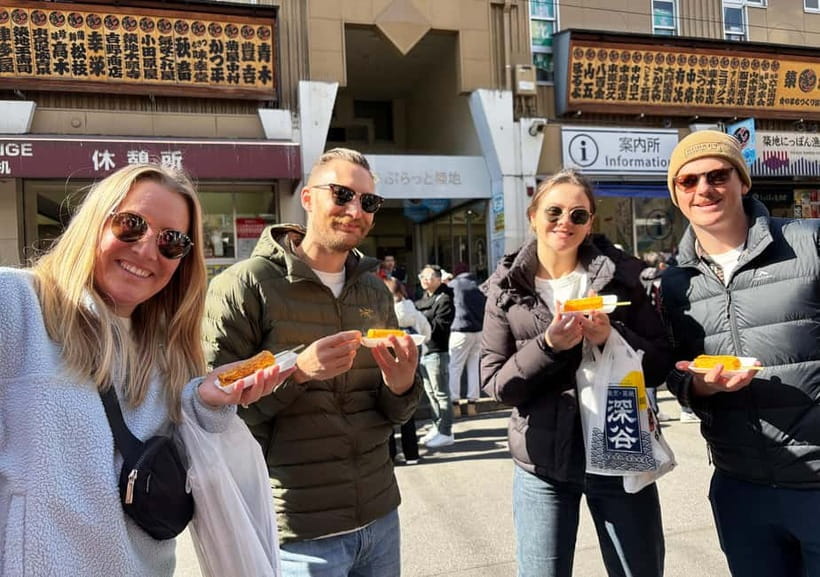
Tsukiji’s best lesson is learned one bite at a time. This two-hour walk takes you through the market’s food stalls, a traditional fish-cutting demonstration, and a seafood bowl tasting, then adds a short visit to Tsukiji Hongwanji Temple. It is a practical way to see how Japanese food reaches the table.
I like the small-group format, which gives the guide a better chance to explain unfamiliar ingredients and help you choose what to eat. I also like the fish-cutting show, since it adds craft and technique to what could otherwise be just a snack crawl.
The main drawback is the market crowd. Some parts can feel hectic, and the tour may include waiting or missed stalls when foot traffic is heavy. If you want a quiet history walk or prefer to browse at your own pace, this may feel too guided.
Key points at a glance
- Watch a whole fish become a meal: A skilled chef demonstrates traditional filleting methods, followed by a fresh seafood bowl.
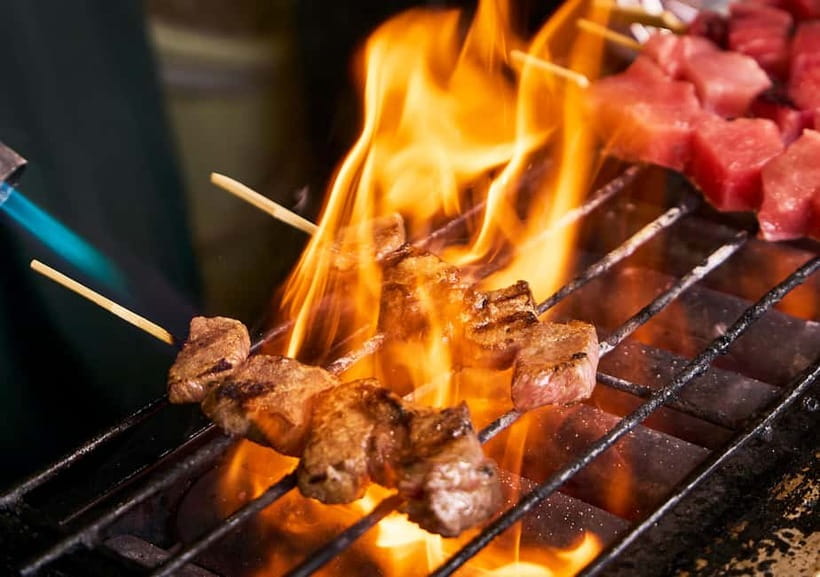
- Taste as you walk: The guide helps you find market eateries and explains Japanese ingredients and cooking customs.
- See two sides of Tsukiji: You visit the public food market and an area where professional fish traders work.
- Add a Buddhist temple: Tsukiji Hongwanji Temple provides a calm cultural stop after the food-focused market walk.
- Plan for a lively group setting: The maximum group size is 30, so the experience may feel intimate on some days and crowded on others.
- Good access and simple cancellation: The tour is wheelchair and stroller accessible, starts near public transportation, and allows free cancellation up to 24 hours before departure.
Why Tsukiji works so well for a food tour
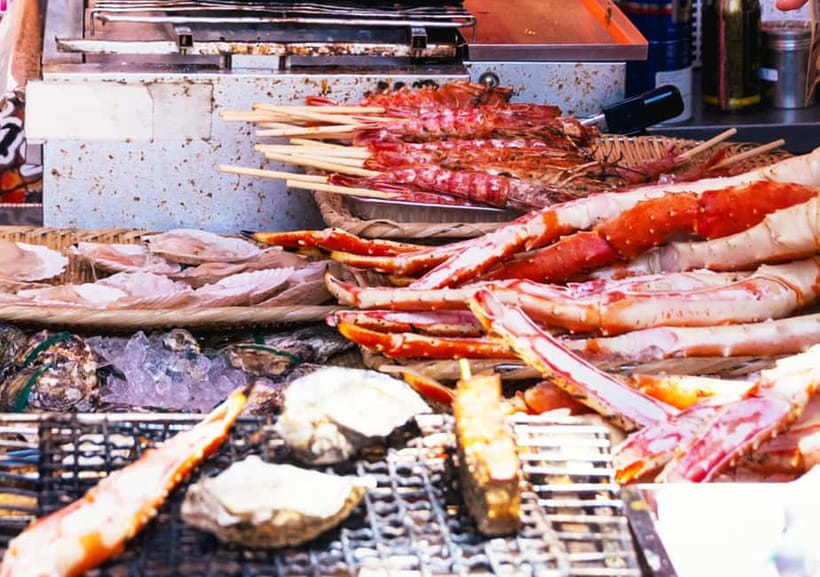
Tsukiji is no longer Tokyo’s main wholesale fish market. That role moved to Toyosu, but Tsukiji Jogai Market remains a major place to find seafood, cooking ingredients, knives, prepared food, and small eateries. For a first visit, the sheer range can be hard to sort out.
That is where a guide helps. Instead of walking past every stall wondering what it sells, you can ask about unfamiliar ingredients and get a clearer sense of Japanese food customs. The tour is built around tasting, but it also explains the market as part of daily life in Tokyo.
I like this approach because food gives you an immediate way into the city. You do not need specialist knowledge of fish or Japanese cooking. You can simply watch, ask questions, and try a few things with someone who knows how the market works.
Still, keep your expectations in check. This is not a long lecture on Tokyo’s past, and it is not a formal culinary class. The emphasis is on moving through the market, stopping at food stands, and learning through short explanations. If your main goal is historical detail, the temple and guide commentary may not feel substantial enough.
More Food Tours in Tokyo
- Tokyo: Shinjuku Food Tour (13 Dishes at 4 Local Eateries)
★ 5.0 · 6,603 reviews - Tokyo Tsukiji Fish Market Food and Culture Walking Tour
★ 5.0 · 3,184 reviews - Tokyo: Shinjuku Food Tour (15 Dishes and 4 Eateries)
★ 4.9 · 2,033 reviews
Starting at Tsukiji Hongwanji Temple
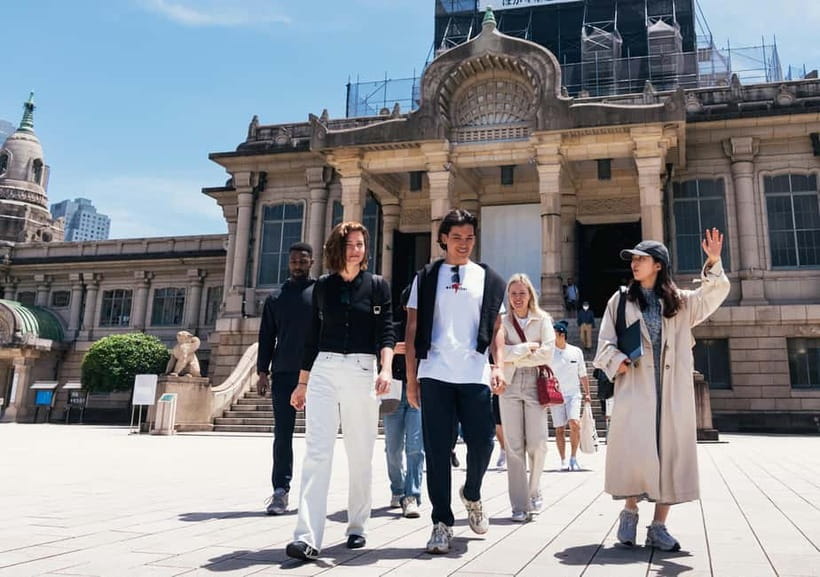
The meeting point is in front of Tsukiji Hongwanji Temple, at 3-chome-15-1 Tsukiji. Starting here gives the tour a clear landmark and places you near public transportation, which is useful in a city where a simple meeting point can save time and confusion.
The temple visit comes as the final stop in the scheduled route, although the exact order can vary in practice. Inside, the guide introduces the temple’s appeal and explains aspects of Japanese culture and Buddhism. The planned visit lasts about 15 minutes.
That short stop works best as a change of pace. After food stalls, crowds, and market activity, the temple offers a quieter setting and a chance to consider another part of Japanese life. It also keeps the tour from becoming only a sequence of tastings.
Do not expect a full temple tour. Fifteen minutes is enough for an introduction, not a detailed study of Buddhist practice or architecture. If you have a strong interest in the temple, return later and give it more time on your own.
Eating your way through Tsukiji Jogai Market
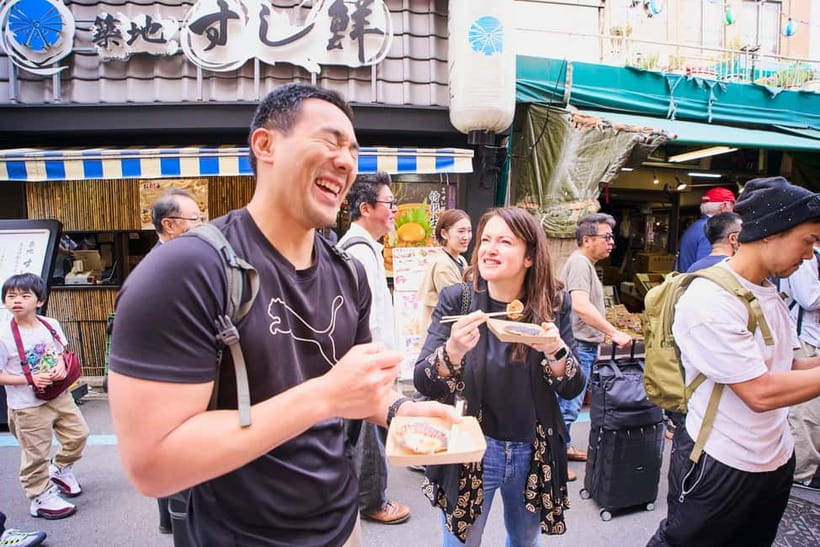
The first main market section lasts about 45 minutes. Your guide leads you through Tsukiji Jogai Market and points out places to eat, explaining Japanese ingredients and cooking along the way.
This is the part most people will remember. The market gives you a chance to see food before it is packaged for a restaurant or supermarket. Depending on the day and the stalls available, you might find seafood dishes, small prepared bites, and other Japanese market foods. The supplied tour details do not promise a fixed menu, so you should think of the food stops as a guided selection rather than a set meal.
That flexibility is useful. A guide can steer you toward good choices and explain what you are looking at. Guides named George and Tomo have been praised for finding worthwhile food stops and offering clear explanations. If you have never encountered certain Japanese dishes or ingredients, that personal help can be worth more than a printed food list.
The tradeoff is that food tours can become uneven when the market is crowded. You may stop to wait for the group, queue at a stall, or pass a tempting stand because the route needs to keep moving. Some people will love the chance to sample several foods. Others may prefer to spend the same time choosing their own lunch.
Ask your guide early about how the tastings work. The tour includes insights into cooking and ingredients, but meals are listed as not included. That means you should budget for anything you want to eat. The advertised price is $33.16 per person, which is reasonable for a guided orientation, but your total cost will rise if you buy several dishes.
The fish-cutting demonstration and seafood bowl
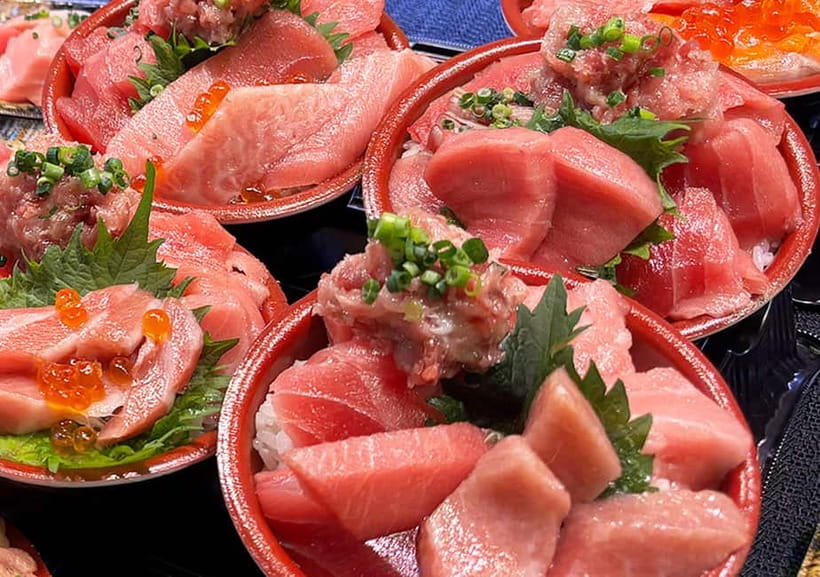
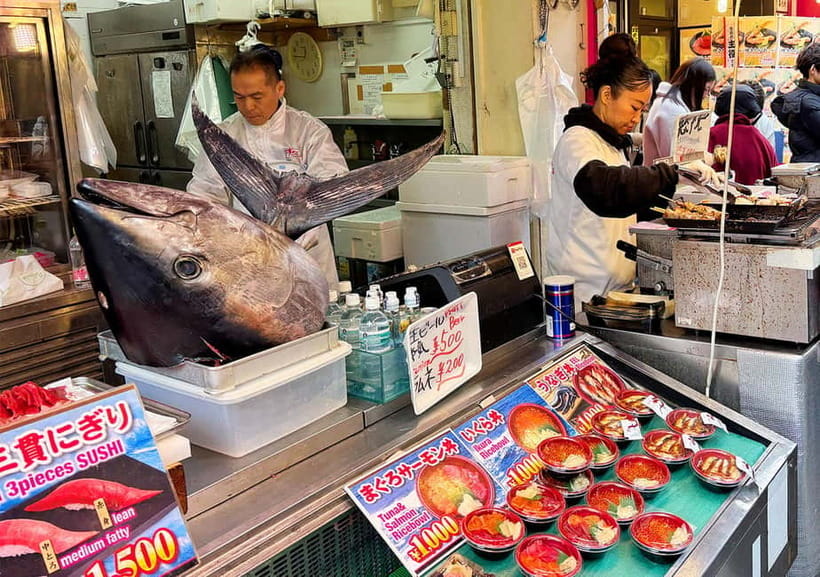
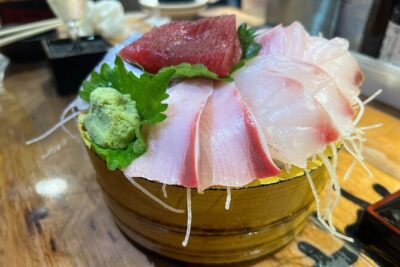
The most distinctive part of the experience is a fish-cutting show at Tsukiji Jogai Market. A skilled chef fillets a whole fish using traditional techniques, then you enjoy a fresh seafood bowl afterward. This section is scheduled for about 30 minutes, with admission included.
I think this is the tour’s strongest feature. A seafood stall can be interesting, but watching a whole fish handled by an experienced chef gives you a better sense of the work behind the food. The demonstration connects the market to the kitchen, and the seafood bowl lets you taste the result instead of simply watching.
The show also gives the tour some structure. Food walks can otherwise feel like a series of quick stops. Here, you have a specific event to watch and a dish tied to it. That makes the experience more memorable for anyone curious about Japanese preparation methods.
The seafood bowl is included in this part of the experience, but other meals are not. If you have dietary restrictions or dislike raw seafood, the available options are not stated, so you should ask before booking or at the start of the tour. The tour is centered on seafood, and that focus matters.
The quality of the explanation will depend heavily on the guide and the noise around you. One useful tip is to stay close enough to hear the commentary, especially during busy periods. A quiet guide may be difficult to follow amid market sounds and passing crowds.
More seafood tours in Tokyo:
- Tokyo: Tsukiji Fish Market Food and Walking tour
★ 5.0 · 1,724 reviews - Tokyo: Tsukiji Fish Market Guided Walking Tour
★ 4.9 · 1,397 reviews - Tokyo: Tsukiji Fish Market Food and Culture Walking Tour
★ 4.7 · 757 reviews - Tsukiji Fish Market Small-Group Food Walking Tour
★ 5.0 · 621 reviews
Seeing the working side of the fish market
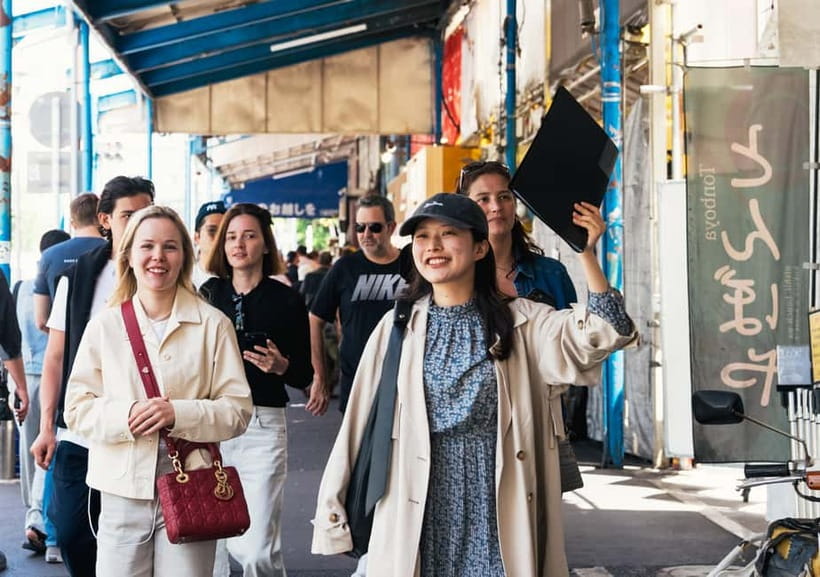
Another 30-minute section takes you through Tsukiji Fish Market, where professional traders operate. This adds an important contrast to the public food stalls. You are not only seeing what visitors buy, but also a working market environment connected to the seafood trade.
The distinction matters. Tsukiji Jogai Market is designed for shopping and eating, while the professional trading area gives you a look at the business side of food. Your guide can help explain what you are seeing, which is useful because market activity can otherwise look like a blur of boxes, movement, and transactions.
This part may appeal most to people who want context rather than just snacks. It gives the walk a stronger sense of place and helps explain why Tsukiji remains important to Tokyo’s food culture even after wholesale operations moved elsewhere.
At the same time, you should expect an active setting rather than a staged attraction. The market is a workplace, and the tour needs to fit around other activity. You may have to keep moving or pause while the group gathers. The group limit is 30 people, which is not especially small, so the experience will feel more personal when attendance is low.
How much history and culture will you get?
The tour promises history and culture through food, and it delivers that best in short, practical pieces. You learn about ingredients, cooking methods, market customs, and the role of seafood in Japanese eating habits.
The temple stop adds Buddhism and local culture, but the overall balance remains firmly food first. If you want a detailed account of Tokyo’s development or a serious study of Buddhism, this is not the right format. You may find the historical commentary too brief, particularly if the group is large or the market is noisy.
I would book it for cultural orientation, not for a long historical lecture. After two hours, you should have a better sense of how Japanese food is bought, prepared, sold, and enjoyed. That is useful knowledge for the rest of your Tokyo visit, especially if you plan to eat independently afterward.
Guide quality is important here. George and Tomo are names associated with especially strong explanations, but your assigned guide may be different. Good English, a clear voice, and the habit of waiting for the group can make a major difference. One poor experience involved a guide who spoke too quietly, while another involved a guide who did not always wait for everyone. Those are practical concerns in a crowded market.
Crowds, pace, and accessibility
The tour is described as wheelchair and stroller accessible, and most people can participate. It begins and ends at the temple meeting point, so you do not need to manage a separate return transfer. The mobile ticket also keeps the booking simple.
Accessibility in a market should still be understood in practical terms. A tour can be listed as accessible while the streets remain crowded, noisy, and full of people stopping at stalls. If you use a wheelchair or stroller, contact the operator with specific needs before setting out, especially if you need regular pauses or extra space.
The pace is about two hours, which is long enough for several stops without taking up half a day. That makes it easy to fit around another Tokyo plan. The weakness is that the schedule can feel compressed when the market is packed. You may not have time to linger at every stall.
I would choose an earlier or less crowded period if the available start time allows it, though the tour information does not specify a best departure hour. New Year crowds were a particular problem for one participant, with missed stalls and a guide who did not always keep the group together. The broader lesson is simple: seasonal and holiday crowds can change the experience.
Is $33.16 a fair price?
At $33.16 per person, the tour is priced as an affordable introduction rather than a luxury food experience. You are paying for a guide, market orientation, the fish-cutting demonstration, and the seafood bowl. Other food purchases are extra.
The value depends on how much help you want. If you are comfortable walking into Tsukiji and choosing your own food, you can explore the market without paying for a guide. The stalls are the main attraction, and nothing prevents you from building your own route.
I think the price makes sense for a first visit when you want someone to explain ingredients, point out useful stops, and connect the food to local customs. It is especially helpful if you are nervous about ordering unfamiliar dishes or want the fish-cutting show arranged as part of the outing.
It is less convincing for independent eaters who already know what they want. A few people may feel that the guide adds little beyond directing them between food stands, especially if the group spends time waiting. Your decision should come down to whether interpretation and convenience are worth the fee.
Free cancellation is available if you cancel at least 24 hours before the start time. Changes or cancellations made later are not refunded, and poor weather can lead to a different date or a full refund.
Who will enjoy this Tsukiji walk?
I would recommend it to first-time visitors who want a friendly introduction to Japanese food culture without committing to a full-day activity. It suits curious eaters, couples, families, and anyone who likes learning through small tastings and demonstrations.
It also works for people who want a little more than a food crawl. The professional market section and temple visit give you useful cultural context, while the fish-cutting show adds a clear focal point.
You may want to skip it if you prefer complete freedom, dislike seafood, or want a detailed history tour. It may also frustrate you if crowds make you impatient or if you expect every stop to include a full meal. The tour is at its best when you accept the market’s busy rhythm and treat the food stops as guided samples rather than a carefully controlled dining itinerary.
Should you book this Tsukiji experience?
Book it if you want a low-cost introduction to Tsukiji with a local guide, a fish-cutting demonstration, a seafood bowl, and a short temple visit. The strongest reasons are the practical food guidance and the chance to see traditional fish preparation up close.
Skip it if you already know Tsukiji well or would rather wander without a schedule. The market can be visited independently, and the tour may feel rushed or unorganized during crowded periods.
For most first-time visitors, I think it is a sensible two-hour orientation, provided you understand what you are buying: guided access and explanation, not a long history seminar or an all-inclusive meal.
FAQ
How long does the Tsukiji walking tour last?
The experience lasts approximately two hours. The planned stops include about 45 minutes in Tsukiji Jogai Market, 30 minutes for the fish-cutting demonstration and seafood bowl, 30 minutes in the fish market, and 15 minutes at Tsukiji Hongwanji Temple.
What food is included?
A fresh seafood bowl follows the fish-cutting demonstration, and admission to that activity is included. Other meals and food purchases are not included, so you should bring extra money if you want to buy additional items.
Where does the tour begin and end?
The tour begins at Tsukiji Hongwanji Temple, at 3-chome-15-1 Tsukiji, Chuo City, Tokyo. It ends back at the meeting point.
Is the tour wheelchair and stroller accessible?
Yes. The tour is described as wheelchair and stroller accessible, and most people can participate.
How large is the group?
The activity has a maximum group size of 30 people. The small-group format is intended to give the guide more time to focus on participants, though the experience may feel less personal when the group is full.
Can I cancel for a full refund?
Yes, if you cancel at least 24 hours before the experience starts. Cancellations or changes made less than 24 hours before the start time are not refunded. If poor weather causes the tour to be canceled, you will be offered another date or a full refund.
More Street Food Tours in Tokyo
- Dubai: Old Town, Creek, Museums, Souks, & Street Food Tour
★ 4.8 · 10,816 reviews - Ho Chi Minh City Street Food Tour & Sightseeing By Motorbike
★ 5.0 · 9,413 reviews - Medellin: Comuna 13 Graffiti Tour, Cable Car & Street Food
★ 4.8 · 9,046 reviews - Dubai: Old Town, Souks, Street Food, Guided Tour & Abra Ride
★ 4.9 · 7,170 reviews
More Market Food Tours in Tokyo
- Bangkok by Night: Temples, Markets and Food Tuk-Tuk Tour
★ 5.0 · 3,752 reviews - Chef Guided Food Tour of Pike Place Market
★ 5.0 · 3,733 reviews - Bangkok: Markets, Temples and Food Night Tour by Tuk Tuk
★ 4.9 · 2,371 reviews - London Bridge & Borough Market Food Tour with 7 Authentic Dishes
★ 5.0 · 1,972 reviews
Just added around Tokyo
- Eat/Drink like a LOCAL-Taverns & Ramen★ 4.9 · 23 reviews
- [1 Group Only] Tokyo Shinjuku Food Tour for Family★ 4.9 · 49 reviews
- Tokyo After 5: Authentic Japanese Food & Drink Night Tour★ 4.5 · 560 reviews
- Best of Shibuya Food Tour★ 5.0 · 612 reviews
- Tsukiji Fish Market Small-Group Food Walking Tour★ 5.0 · 621 reviews
- Tokyo: Tsukiji Fish Market Food and Culture Walking Tour★ 4.7 · 757 reviews
- Tokyo: Shibuya Food Tour (13 dishes and 4 Eateries)★ 5.0 · 770 reviews
- Eat and Drink Like a Local: Tokyo Ueno Food Tour-Taverns&Ramen★ 5.0 · 957 reviews
Food Tours in Tokyo, compared.
Shinjuku Food Tour (13 Dishes at 4 Local Eateries)
Read our review →
Tokyo Tsukiji Fish Market Food and Culture Walking Tour
Read our review →
Shinjuku Food Tour (15 Dishes and 4 Eateries)
Read our review →
Best of Shinjuku: Izakaya Food Tour (4 Stops, 14+ Tastings)
Read our review →
Tokyo Night Foodie Tour in Shinjuku – Seasonal Sushi, Wagyu Beef
Read our review →
Eat and Drink Like a Local: Tokyo Ueno Food Tour-Taverns&Ramen
Read our review →Browse the lists this tour appears in