
REVIEW · TOKYO
Tsukiji Fish Market Small-Group Food Walking Tour
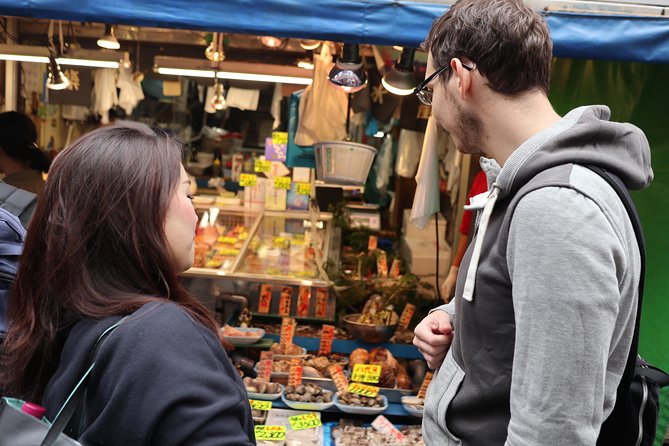
Tsukiji is no longer Tokyo’s main wholesale fish market, but it remains one of the city’s best places to eat seafood in a tight maze of shops and stalls. This three-hour walk pairs fresh market food with visits to a Buddhist temple, Shinto shrine, and a lookout with city views.
I like the small maximum of seven people, which makes it easier to ask questions and keep together in narrow lanes. I also like that lunch is included, along with several tastings such as sushi, tamagoyaki, scallops, crab, or eel, depending on the day. The main drawback is simple: if you expect to watch the giant wholesale auctions, this is not that tour. That business moved to Toyosu in 2018.
Key points
- A seafood-heavy morning: Expect tastings at several market shops, followed by a fresh seafood lunch.
- Small groups matter: The tour accepts no more than seven people, useful in Tsukiji’s cramped lanes.
- More than food: The route includes a Japanese Buddhist temple, Shinto shrine, and Tokyo city views.
- The market has changed: Tsukiji Outer Market remains active, but the inner wholesale market is now at Toyosu.
- Come hungry: Past food stops have included tuna nigiri, grilled eel, tamagoyaki, scallops, crab legs, and local snacks.
- Plan for heat: Summer in Tokyo can be hot and humid, so bring water and wear a hat.
What Tsukiji Market is today
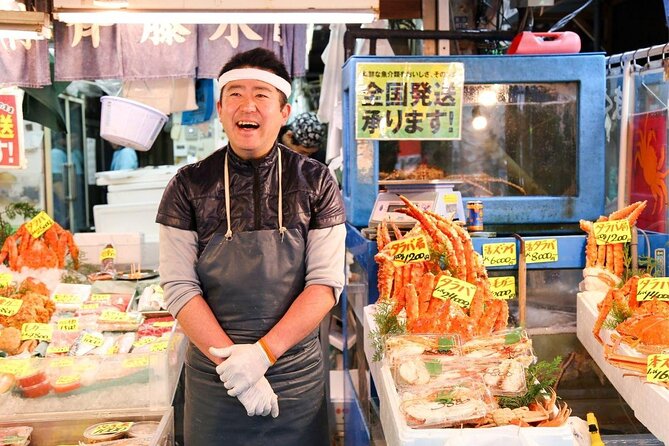
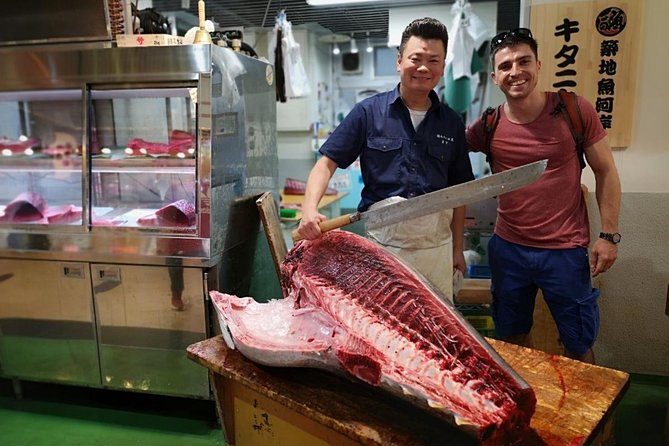
The name Tsukiji still carries the image of enormous fish auctions and workers moving giant tuna through a wholesale hall. That scene is now associated with Toyosu, where the inner market moved in 2018.
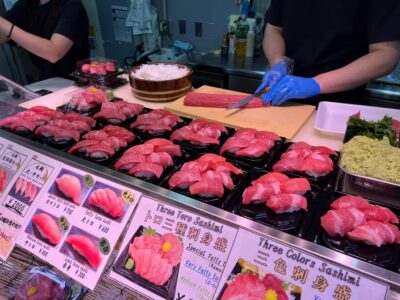
Tsukiji’s Outer Market remains in its original area, and that is where this tour takes place. You will find seafood counters, dried fish, seasonings, kitchen tools, tableware, fruit, vegetables, meat, and small food shops packed into a few lively blocks.
That change matters when you decide whether to book. This is not a behind-the-scenes tour of the main wholesale operation. It is a guided food walk through a working retail market, with enough local context to make sense of what you are eating.
I think that is still a good use of a morning in Tokyo. The market gives you a close look at everyday food culture, and a guide can help you understand products that are hard to identify on your own. You also avoid wasting time guessing which stalls are worth your attention.
More Food Tours in Tokyo
- Tokyo: Shinjuku Food Tour (13 Dishes at 4 Local Eateries)
★ 5.0 · 6,603 reviews - Tokyo Tsukiji Fish Market Food and Culture Walking Tour
★ 5.0 · 3,184 reviews - Tokyo: Shinjuku Food Tour (15 Dishes and 4 Eateries)
★ 4.9 · 2,033 reviews
Meeting at Tsukiji Station
The tour begins near Tsukiji Station, with the meeting point given as Exit 1 and the Tsukiji 3 Chome area. Your guide waits there before leading the group into the market.
Arrive early. The station area has several nearby streets and plenty of signs, and one person specifically found it useful to ask around for other people joining the tour to confirm the meeting spot. I would also keep the booking confirmation open on your phone, since the meeting details should be your final reference.
The ticket is mobile, and confirmation is provided when you book. Tsukiji Station is close to public transportation, so getting to the start is straightforward within Tokyo’s rail and subway network.
The group limit of seven is one of the tour’s better features. Tsukiji’s lanes can be tight, and a large group would make it harder to stop at counters without blocking shoppers. A small group also gives you more room to ask what a particular fish is, how a snack is prepared, or what a Japanese term means.
Eating through the Outer Market
The food portion is the heart of the experience. Rather than sitting down immediately for one large meal, you move through the market and sample items from several shops and stalls.
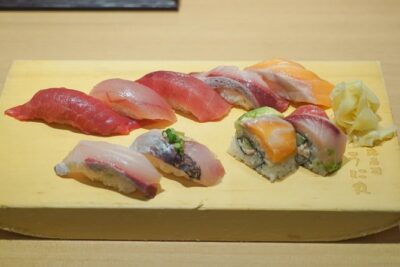
The exact stops can change, and you should not book this expecting a fixed menu. Food mentioned on past tours includes tuna nigiri, grilled unagi, tamagoyaki, scallops on a stick, large crab legs, dried seafood, yakitori-style bites, and other local snacks.
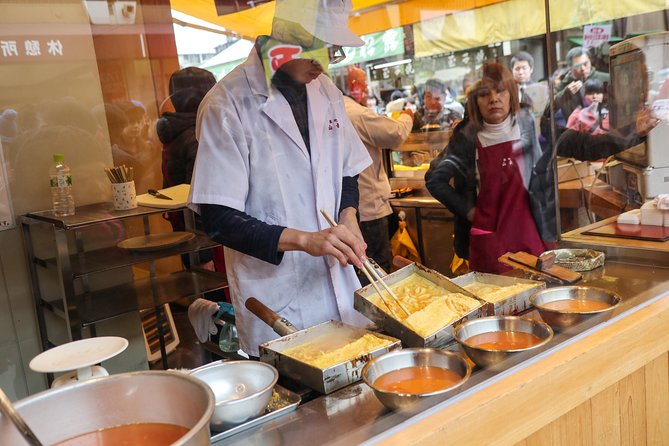
Tamagoyaki is a particularly useful introduction to Japanese market food. This sweet rolled omelet is simple to look at, but its soft texture and gentle sweetness make it very different from a standard savory omelet. A guide can explain what you are eating instead of leaving you to guess from a handwritten sign.
Seafood fans will get the most from this route. You might try raw fish, grilled items, shellfish, dried products, or prepared snacks, giving you a useful range of textures and flavors. If you are not used to Japanese seafood, the guide’s advice becomes more valuable than simply being handed a sample.
The narrow walkways are part of the character of Tsukiji, but they also require manners. Some areas have signs asking people not to stop and eat, so you may need to finish a bite in a designated spot or keep moving. This is not a relaxed café crawl with a table at every stop.
One weakness is that a crowded food counter can affect the experience. A long line at one planned stop may mean the group leaves without that item and moves on. That is normal in an active market, but it means you should see the tour as a flexible tasting walk rather than a guaranteed checklist of dishes.
The included seafood lunch
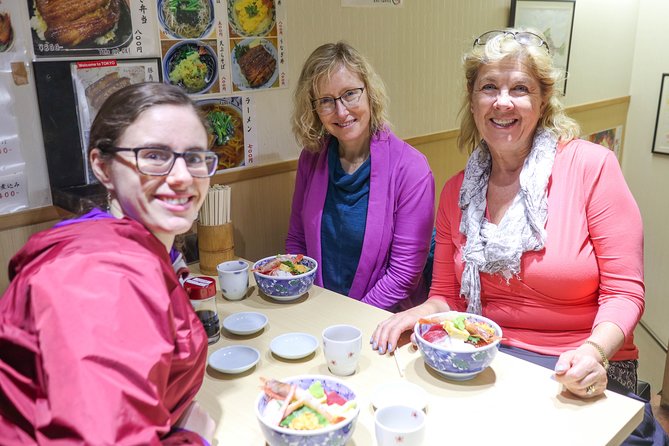
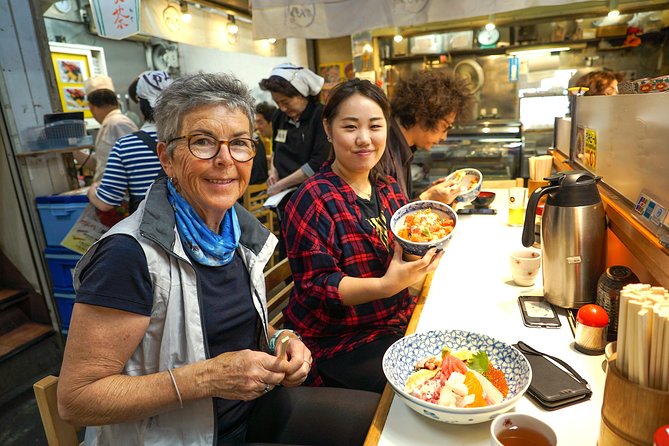
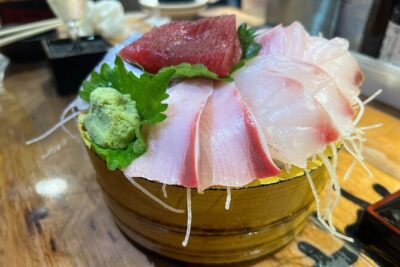
The tour includes a fresh seafood lunch, which gives the morning a proper finish rather than leaving you full of small samples only. The meal takes place at a local restaurant, and past accounts describe a small booth and excellent fish.
One useful feature is that the sit-down meal may allow you to choose what you want. The precise arrangement can vary, so treat that as a possibility rather than a fixed promise. Either way, lunch adds real value to the $87.37 price because you are paying for both the guided walk and a substantial meal.
Come hungry. The route can include more food than the basic description suggests, with several small bites alongside larger tastings. If you eat a full breakfast before meeting the guide, you may have less room for the best part of the tour.
The lunch is also a good chance to slow down. Market stops can feel rushed when people are standing in narrow lanes, while a restaurant meal lets you pay attention to the fish and ask questions without blocking anyone.
More seafood tours in Tokyo:
- Tokyo: Tsukiji Fish Market Food and Walking tour
★ 5.0 · 1,724 reviews - Tokyo: Tsukiji Fish Market Guided Walking Tour
★ 4.9 · 1,397 reviews - Tokyo: Tsukiji Fish Market Food and Culture Walking Tour
★ 4.7 · 757 reviews - Tsukiji Fish Market: Street Food & Culture Walking Tour
★ 5.0 · 669 reviews
A market guide makes the difference
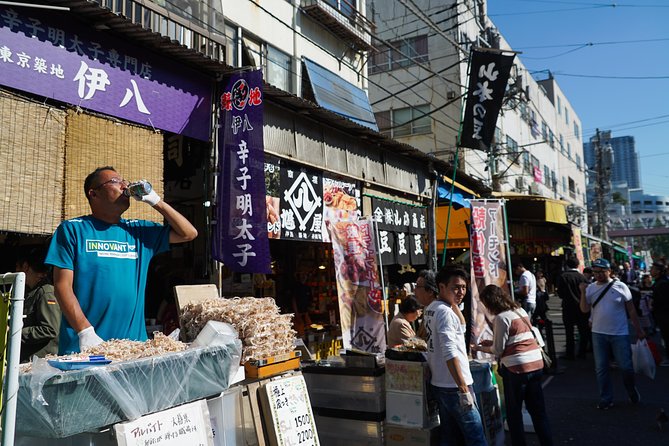
This tour depends heavily on the person leading it. Guides named in past experiences include Kazu, Yuki, Hitomi, Mark, Tiger, Mia, and Mummy. Their role is not only to lead you from one stall to the next, but to explain the food, point out useful shops, and fill in the story of the area.
The strongest version of the tour includes clear explanations before the tastings. You learn what different seafood is, how it is prepared, and why the market matters in Japanese food culture. A guide can also help you recognize products such as dried fish, seasonings, and cooking tools that might otherwise blur into a wall of unfamiliar signs.
The experience is not perfectly uniform. One account describes very little explanation and fewer tastings than expected, while another found some stall stops only average. That is worth keeping in mind. The small group improves the odds of personal attention, but it cannot guarantee the same guide, route, or pace every day.
Guides have also shown flexibility with food needs in individual cases. One guide went out of the way to find options for a person with celiac disease. Still, the operator does not guarantee allergy-free food or special diets, and substitutions may not be possible at every stop.
Temple, shrine, and a change of pace
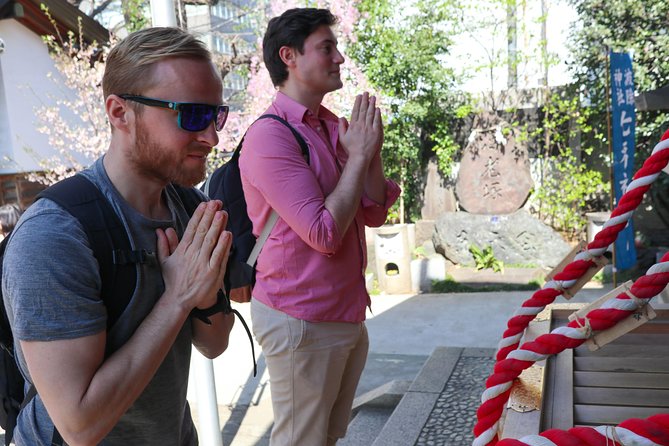
Food is only half the point of this walk. The route also includes a Japanese Buddhist temple and a Shinto shrine, giving you a brief look at two important religious traditions in Japan.
This is a valuable addition because Tsukiji can otherwise feel like one long sequence of seafood counters. A temple and shrine help place the market within the older neighborhood, where commerce, food, and religious life have long shared the same streets.
Your guide can explain basic differences between Buddhist and Shinto settings, along with proper behavior. You do not need to be an expert in Japanese religion to appreciate the contrast, but a little context makes the buildings and rituals more meaningful.
The itinerary also includes a view over Tokyo. The route finishes at Shiodome Tower, and the city viewpoint provides a change from the close-packed market streets. If the morning is clear, you can look out over Tokyo Bay and the surrounding city. The viewpoint is not the main reason to book, but it gives the three-hour walk a pleasant final scene.
How the itinerary fits together
The tour begins at Tsukiji Station, then moves into the old market area for food sampling and background on the neighborhood. The listed schedule gives about 20 minutes at the old Tsukiji Market and another 20 minutes around Tsukiji Jogai Market, but food stops and walking fill most of the experience.
The phrase old market can be confusing. You are visiting the former market district and the Outer Market, not entering the relocated inner wholesale complex. The route still takes you through shops selling fish, produce, dried goods, utensils, and tableware, but it does not put you beside the main wholesale auctions.
After the food sections, the route shifts to Japanese religious sites and a city viewpoint before ending at Shiodome Tower. That one-way design is handy because you do not need to return to the station. It also lets you continue sightseeing from the Shiodome area after the tour.
Is $87.37 a fair price?
At $87.37 per person, this is not the cheapest way to wander Tsukiji. You can enter the Outer Market on your own and buy food as you go.
The price makes more sense if you want several tastings, a seafood lunch, a guide, and a short cultural tour in one package. It also removes much of the guesswork. You do not need to decide which stall is reputable, how to order, or how to fit a temple and shrine into the same morning.
The maximum group of seven improves the value. In a group that small, the guide can usually keep the pace personal, and you are less likely to miss a question or lose sight of the route. The published rating of 4.9 from 621 ratings and a 97 percent recommendation rate suggest strong overall satisfaction, though the individual experience can still depend on the day and guide.
I would consider the price fair for first-time visitors who want an organized introduction to Japanese seafood. If you already know Tsukiji well, speak Japanese, and enjoy choosing every dish yourself, independent exploring may give you more freedom for less money.
Who should book this walk?
This tour suits food-focused first-time visitors who want a guided start to Tokyo cuisine. It is also a good choice for couples, small families, and anyone who prefers a social outing instead of eating alone at unfamiliar counters.
Seafood lovers will get the most from it, especially if you are keen to try raw, grilled, dried, and prepared fish in one morning. People who enjoy cultural context will also appreciate the temple, shrine, and market background.
It is less suitable for vegans, since vegan options are not available. It may also disappoint anyone whose main goal is to see the current wholesale fish market at Toyosu.
Summer requires extra care. Tokyo can be hot and humid, so bring water and a hat. Wear comfortable shoes, since you will be walking and standing through crowded market lanes for about three hours.
Should you book the Tsukiji food tour?
Book it if you want a guided tasting tour of Tsukiji Outer Market, not a wholesale auction visit. The included lunch, small group, range of seafood, temple and shrine stops, and final city view give you a well-rounded morning.
Skip it if you want complete control over every purchase, need reliable vegan or allergy-free food, or mainly want to see the market’s wholesale trading floor. For everyone else, this is a practical way to meet Tsukiji hungry and leave with a better sense of how Japanese market food fits into Tokyo life.
FAQ
How long does the Tsukiji Fish Market tour last?
The tour lasts approximately three hours.
Where does the tour begin?
It begins near Tsukiji Station, with the meeting point listed at Exit 1 in the Tsukiji 3 Chome area of Tokyo.
Where does the tour end?
The tour ends at Shiodome Tower in the Higashishimbashi area.
Is lunch included?
Yes. A fresh seafood lunch at the market is included, along with food samples at several shops and stalls.
Does the tour visit Tokyo’s current wholesale fish market?
No. Tokyo’s inner wholesale market moved to Toyosu in 2018. This tour visits Tsukiji Outer Market and nearby seafood shops and stalls.
Can people with dietary restrictions join?
The operator cannot guarantee allergy-free food or cater fully to dietary restrictions. Vegan options are not available, and substitutions may not be possible at every stop.
More Food Walks in Tokyo
- Reykjavik Food Walk – Local Foodie Adventure in Iceland
★ 5.0 · 18,952 reviews - New Orleans Food Walking Tour of the French Quarter with Small-Group Option
★ 5.0 · 6,118 reviews - Naples: Street Food Walking Tour with Local Guide
★ 4.9 · 4,976 reviews - Greek Food Walking Tour in Athens
★ 5.0 · 4,740 reviews
More Market Food Tours in Tokyo
- Bangkok by Night: Temples, Markets and Food Tuk-Tuk Tour
★ 5.0 · 3,752 reviews - Chef Guided Food Tour of Pike Place Market
★ 5.0 · 3,733 reviews - Bangkok: Markets, Temples and Food Night Tour by Tuk Tuk
★ 4.9 · 2,371 reviews - London Bridge & Borough Market Food Tour with 7 Authentic Dishes
★ 5.0 · 1,972 reviews
Just added around Tokyo
- Eat/Drink like a LOCAL-Taverns & Ramen★ 4.9 · 23 reviews
- [1 Group Only] Tokyo Shinjuku Food Tour for Family★ 4.9 · 49 reviews
- Tokyo After 5: Authentic Japanese Food & Drink Night Tour★ 4.5 · 560 reviews
- Best of Shibuya Food Tour★ 5.0 · 612 reviews
- Tsukiji Fish Market: Street Food & Culture Walking Tour★ 5.0 · 669 reviews
- Tokyo: Tsukiji Fish Market Food and Culture Walking Tour★ 4.7 · 757 reviews
- Tokyo: Shibuya Food Tour (13 dishes and 4 Eateries)★ 5.0 · 770 reviews
- Eat and Drink Like a Local: Tokyo Ueno Food Tour-Taverns&Ramen★ 5.0 · 957 reviews
Food Tours in Tokyo, compared.
Shinjuku Food Tour (13 Dishes at 4 Local Eateries)
Read our review →
Tokyo Tsukiji Fish Market Food and Culture Walking Tour
Read our review →
Shinjuku Food Tour (15 Dishes and 4 Eateries)
Read our review →
Best of Shinjuku: Izakaya Food Tour (4 Stops, 14+ Tastings)
Read our review →
Tokyo Night Foodie Tour in Shinjuku – Seasonal Sushi, Wagyu Beef
Read our review →
Eat and Drink Like a Local: Tokyo Ueno Food Tour-Taverns&Ramen
Read our review →Browse the lists this tour appears in