
REVIEW · COLOMBIA
Medellin: Comuna 13 Graffiti Tour, Cable Car & Street Food
Comuna 13’s murals are only part of the story. The real experience is reaching this hillside district by metro, cable car, and bus, then walking through streets where art, music, food, and local businesses reflect a community’s major changes. You get a clear introduction to Medellín’s public transport system along the way, plus wide city views from above.
I especially like the small groups of up to 10 people and the way the tour mixes big sights with simple local stops. A cup of Colombian coffee, a cheese arepa, a street dance show, and a drink at a high viewpoint give the four-hour outing a pleasing rhythm. Guides including Natalia, Santiago, Martin, Melina, and Lina are repeatedly praised for explaining Comuna 13’s past in a clear, personal way.
The catch is the walking. Comuna 13’s hills mean stairs and uphill sections, and the tour is not suitable for people with mobility impairments or people over 70. Food portions are modest, too, so think of the arepa as a taste, not lunch.
Key points at a glance
- The cable car is part of the lesson: You ride high above Medellín and see how public transport links hillside communities with the rest of the city.
- Comuna 13 comes with context: Your guide explains the meaning behind the murals and how the district changed over time.
- You travel like a local: Metro, cable car, and public bus are included, rather than using a private sightseeing vehicle.
- The food is a sample: You receive one cheese arepa, while the coffee tasting adds another small but worthwhile stop.
- The group stays compact: A maximum of 10 participants makes it easier to hear your guide and keep together on crowded streets.
- Bring comfortable shoes: The walking tour includes uphill sections and stairs, with weather able to affect the dance performance and transport.
Why this four-hour tour works
This is a useful first look at Medellín because it joins several pieces of the city in one outing. You see the urban center from public transport, rise toward the mountains by cable car, and then spend time in Comuna 13 with a guide who can explain what you are seeing.
At $18 per person, the price is unusually low for a four-hour tour that includes a live guide, metro, cable car, and bus tickets. You also receive a coffee stop, one cheese arepa, a drink at a bar, a walking tour, and a dance performance when weather allows. I would not book it as a full food tour, since the servings are limited, but the combination is strong value.
The experience is also practical. If you are new to Medellín, the metro and cable car ride help you understand how the city works. You are not simply driven to a tourist district, shown a few murals, and sent back. You move through the city’s transport network and get a feel for the distance between the central areas and the hills.
The pace is fairly full. The stated timing includes about 15 minutes on the metro, 20 minutes on the cable car, roughly 90 minutes for the guided walk, and several short stops. The return metro ride takes about 30 minutes. Allow some patience for crowds, weather, and the pace of the whole group.
More street food nights in the world:
- Dubai: Old Town, Creek, Museums, Souks, & Street Food Tour
★ 4.8 · 10,816 reviews - Ho Chi Minh City Street Food Tour & Sightseeing By Motorbike
★ 5.0 · 9,413 reviews - Dubai: Old Town, Souks, Street Food, Guided Tour & Abra Ride
★ 4.9 · 7,170 reviews
Meeting your guide in Poblado
The tour begins at the Poblado metro station, with the exact meeting arrangement depending on the option you book. This is a sensible starting point because the first part of the experience uses Medellín’s public transport rather than a private vehicle.
Your guide leads the group through the metro system and keeps everyone together as you change from train to cable car and later to bus. This matters more than it may sound. Public transport is straightforward once you understand it, but a group of 10 people can easily become scattered at platforms, stations, or busy street crossings.
The guides named in the feedback include Natalia, Santiago, Martin, Melina, Lina, Camilo, and others. Their styles will vary, but the strongest pattern is clear: expect the guide to do more than point out murals. The tour’s better guides explain the city’s past, answer questions, watch the group, and connect the art to life in the neighborhood.
If you meet Santiago, expect plenty of local background and regular stops that break up the journey. Martin has been praised for his clear explanations and personal connection to the area. Natalia is often noted for her patience and engaging storytelling, while Melina is described as especially attentive to the group. These details matter because the quality of this tour depends heavily on the person leading it.
Riding Medellín’s metro and cable car
The metro ride takes about 15 minutes. It is not just a transfer. Your guide can explain how the system fits into Medellín’s daily life and how the city’s transport network reaches communities on the hills.
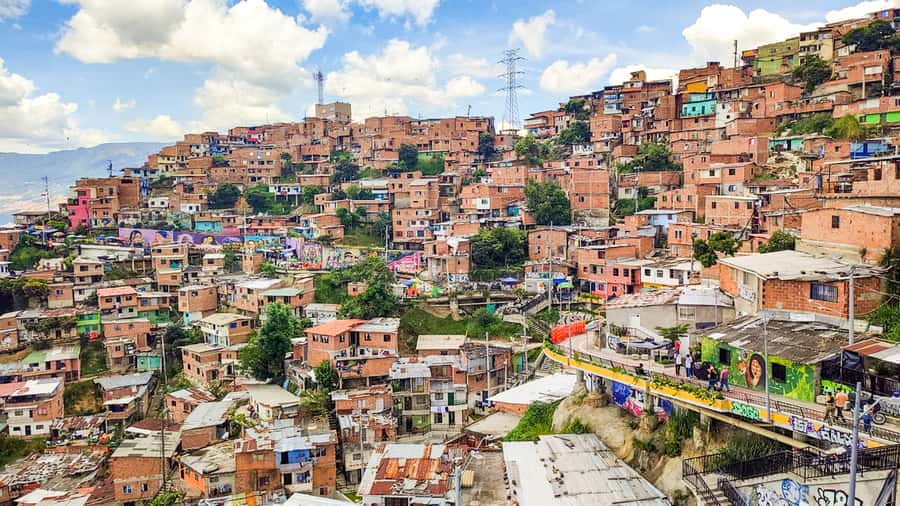
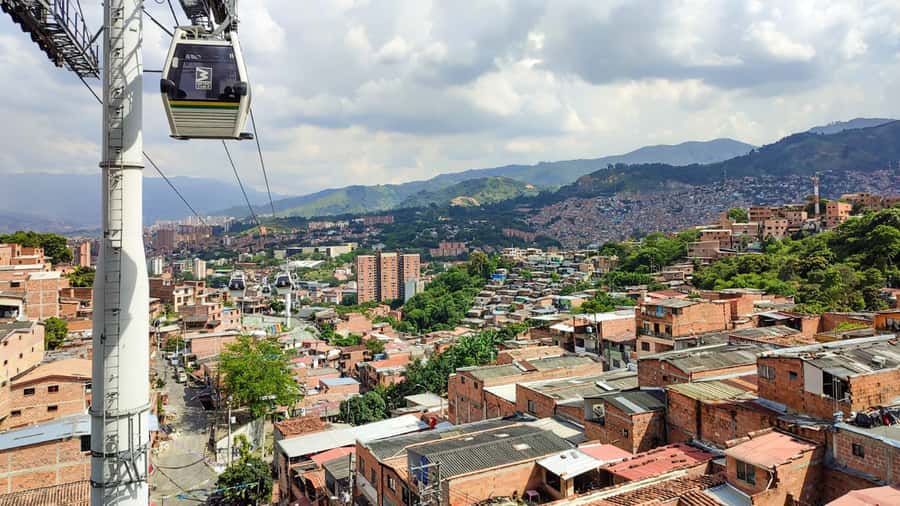
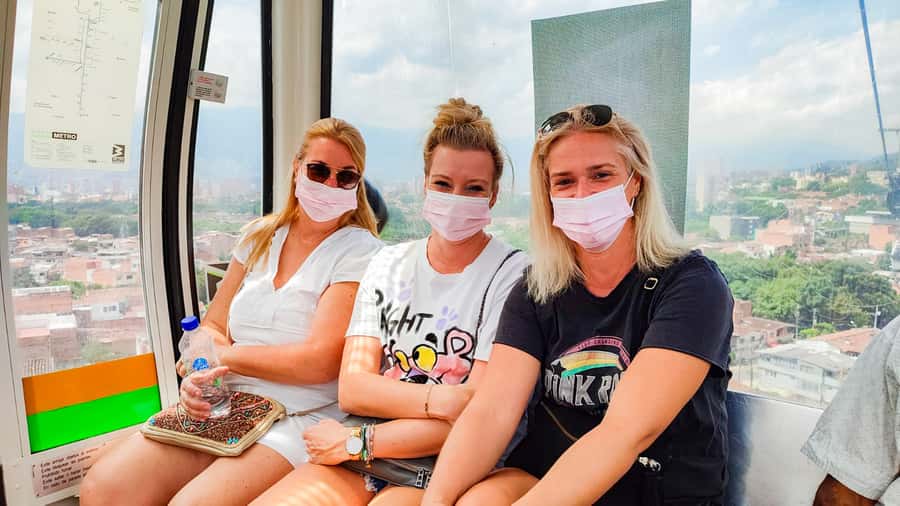
Next comes the 20-minute cable car ride. This is one of the best parts of the outing. As the cabins rise, Medellín opens below you, with dense neighborhoods stretching across the valley and hills climbing beyond them. The views help you understand the city’s shape in a way a street-level walk cannot.
The cable car is also important to the tour’s social and urban story. It gives hillside residents a direct connection to the rest of Medellín and shows how transport can change access to work, school, and services. Your guide can place the ride in that larger city context instead of treating it as a stand-alone photo stop.
The ride may be busy, and you will be sharing the cabin with other passengers. Keep your attention on the views, but listen to the guide before and after the ride because the noise and movement can make a running explanation difficult.
Weather can affect this section. Rain and lightning have caused delays, including a situation where a group had to remain at the top of the cable car and later use an Uber to continue. The extra transport cost was reimbursed in that case. The lesson is simple: allow flexibility and do not schedule a tight appointment immediately after the tour.
Coffee with a view into local work
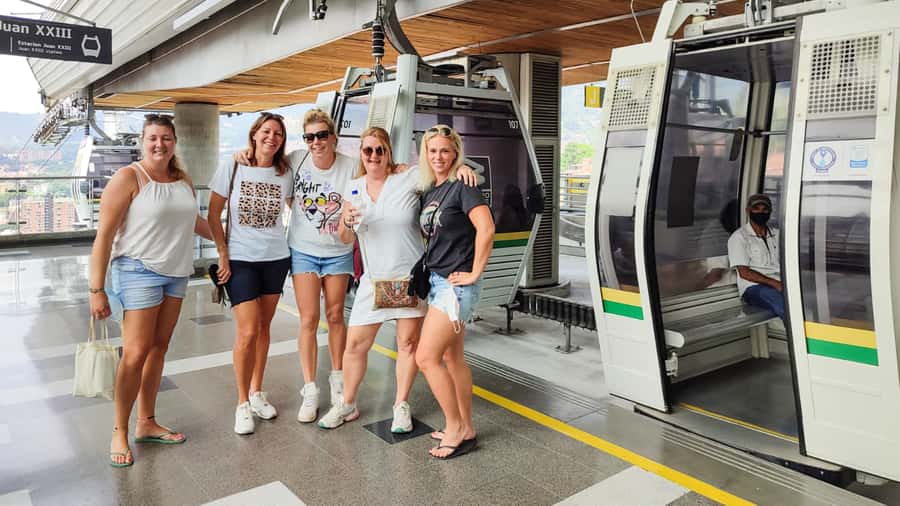
Once you reach Comuna 13, the tour includes a visit to a coffee museum or coffee stop. You taste a high-quality Colombian coffee and learn about processing, from the work of farmers to the steps that turn beans into the drink in your cup.
This is a small stop, usually around 10 minutes, but it adds useful depth. Coffee is often treated as a national symbol without any explanation of the labor behind it. Here, you get a short account of how the product is prepared and why farming matters to the region.
Do not expect a long coffee class or a full café break. The value is in the connection between a familiar drink and the people who produce it. If you do not drink coffee, the stop may feel less important, but it still helps set up the tour’s focus on local work and culture.
Some feedback also refers to a coffee cake or a small snack at this stage. The included food is best understood as a series of samples rather than a meal.
A few more food tours around the world worth comparing
- Reykjavik Food Walk – Local Foodie Adventure in Iceland
★ 5.0 · 18,952 reviews - Hanoi Jeep Tour: Food, Culture and Fun by Vietnam Army Jeep
★ 5.0 · 15,222 reviews - From Marrakech: Merzouga 3-Day Desert Safari with Food
★ 4.7 · 12,232 reviews - Madrid: Live Flamenco Show with Food and Drinks Options
★ 4.5 · 9,901 reviews
Reading the murals of Comuna 13
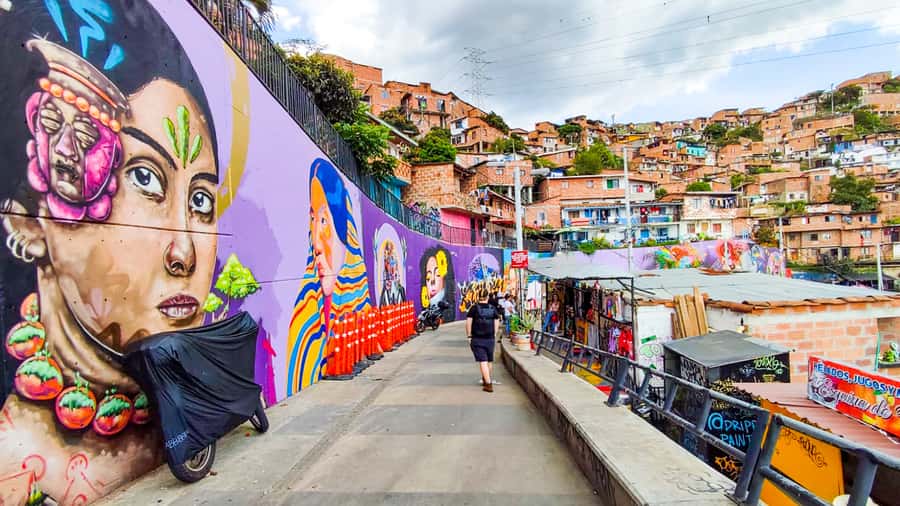
The main walking tour lasts about an hour and a half. This is where the outing earns its place on a Medellín schedule.
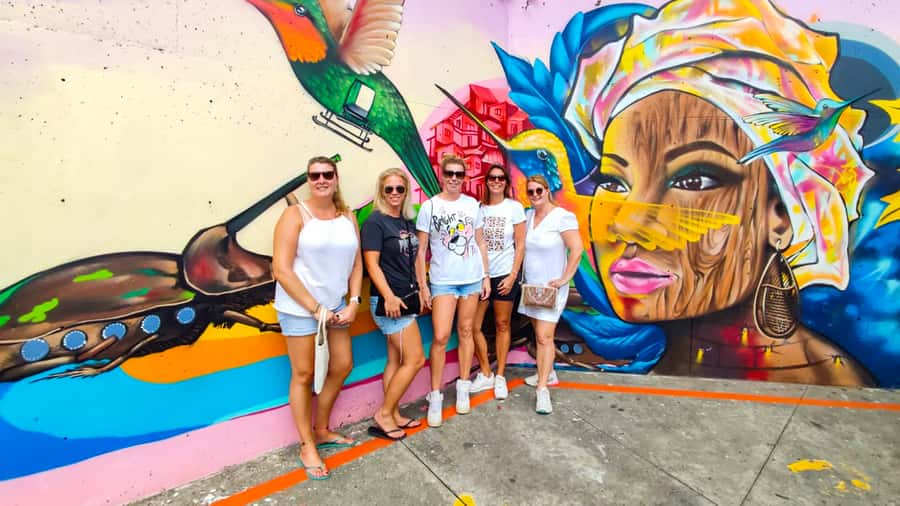
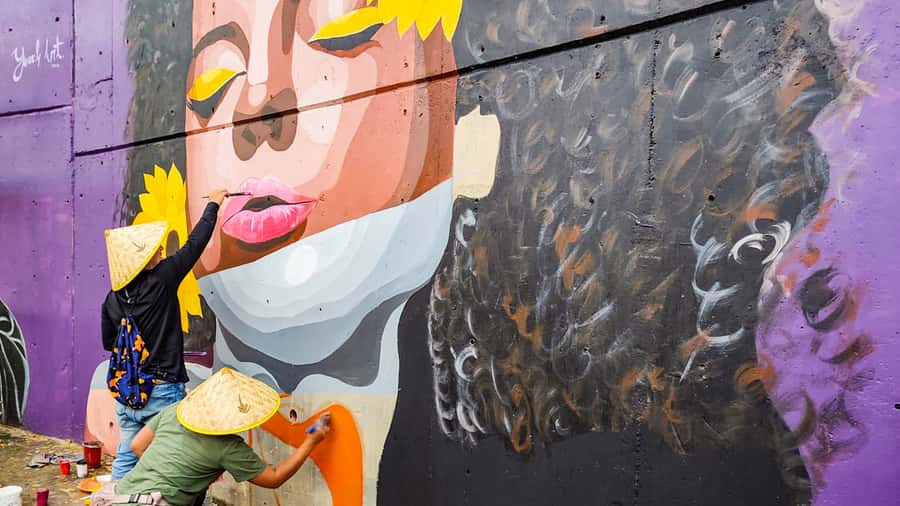
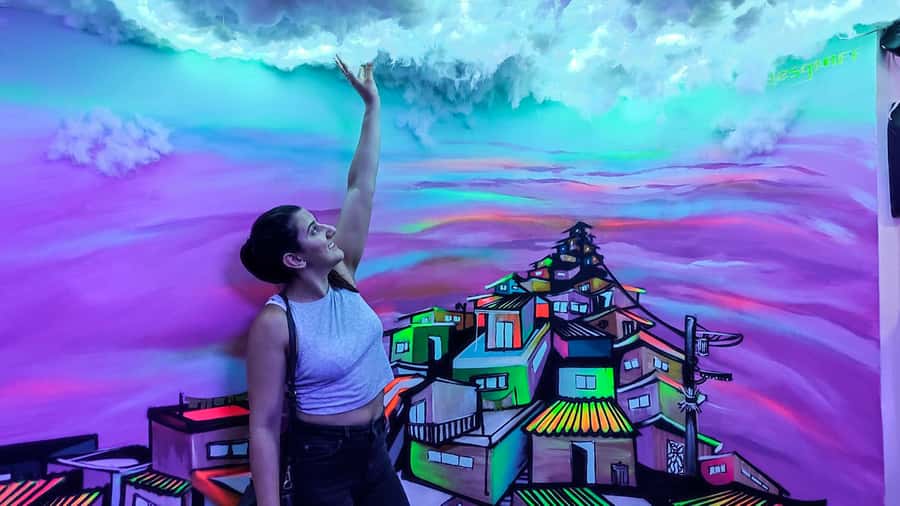
Comuna 13 is known for large murals, painted walls, colorful stairways, music, small shops, and entertainers. The art is attractive, but the guide’s explanation is what turns the walk into something more useful than a photo hunt. You learn how local artists use walls to speak about memory, identity, hardship, hope, and change.
Guides explain the meaning of particular images and the events that shaped the district. Several guides are praised for discussing the years of violence connected with the drug trade and for being honest about what families endured. That part may be difficult, but it gives the murals weight. Without context, you see color. With context, you begin to understand why the art matters to the people who live there.
The neighborhood is also presented as a living place, not a museum. You pass local businesses, art sellers, music, dancers, and residents going about their day. The tour includes both the popular visitor route and a look at less polished local corners, depending on the group and conditions.
This is where respectful behavior matters. Ask before photographing people, pay attention when your guide explains a mural, and remember that the streets are home to residents. The district’s story is not simply one of a troubled past followed by a cheerful tourist visit. It is a continuing story of local work, pride, and change.
Dance, music, and the street atmosphere
A street dance show is scheduled for about 15 minutes, although it depends on the weather. It may include breakdancing and other local performances. One of the most praised moments is the appearance of a talented rapper, which adds humor and direct energy to the walk.
This is a lively part of the route, but it is not guaranteed in poor weather. Bring a rain layer if the forecast looks uncertain. Rain can also slow the walking route and make steep surfaces less comfortable.
You may have the chance to buy art or graffiti printed clothing during the walk. These stops help you see how local creators earn money from the district’s artistic identity. You do not need to buy anything, but a small purchase can support neighborhood artists if you find something you like.
The music and dancing can make the tour feel light, even when the historical discussion is serious. That balance is useful. Comuna 13 is not presented only as a place of suffering, nor is its past brushed aside for entertainment.
Trying an arepa without expecting a feast
The food stop includes one Colombian arepa with cheese. The arepa is one of the country’s best-known street foods, and this gives you an easy introduction to it without taking a long break from the route.
The portion is small. You may also encounter other food stands during the walk, but the included offering is one arepa, not a series of tastings. If you tend to get hungry on active outings, eat something beforehand or plan a proper meal afterward.
A drink is not included with the arepa, though you receive one drink later at a bar. The tour is therefore better for cultural sampling than for replacing breakfast or lunch.
I like that the food is tied to the neighborhood rather than presented as a formal restaurant stop. You get to try something ordinary and popular while continuing to see how people use the streets. Just keep your expectations realistic.
Ending above the city with a drink
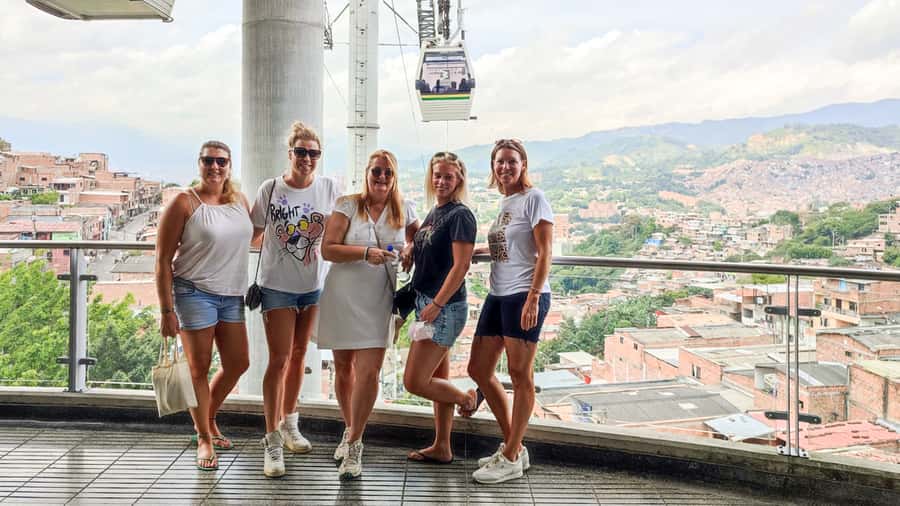
The final stop in Comuna 13 is a bar with broad views over Medellín. You receive one beer, soda, or water, and spend about 20 minutes taking in the view and getting to know the guide and the rest of the group.
This is a smart ending. After the stairs, murals, transport changes, and historical material, you get a quiet pause. The view also gives you another chance to understand how the district sits within the much larger city.
If you do not drink alcohol, the included soda or water keeps the stop useful. If you want more food or another drink, you may need to pay separately, but the supplied information only guarantees the one included drink.
The bar is not meant to be a nightlife experience. It is a short social stop before returning by metro. Still, it can be one of the most memorable moments because it brings together the city view, the group, and the story you have just heard.
Walking, weather, and comfort
You need comfortable shoes. The route includes uphill walking, stairs, and uneven sections through a crowded hillside neighborhood. One participant described the climb as hard on the legs, while another said the walk was manageable but could be difficult for anyone with mobility issues or pain.
The activity specifically is not suitable for people with mobility impairments or people over 70. That is not a minor footnote. The transport is accessible in parts, but the walking route itself is physically demanding enough that you should choose another way to see Comuna 13 if steep steps are a concern.
Bring water, even though water may be available for purchase and one drink is included later. A small amount of extra cash is useful for water, tips, snacks, or artwork. Rain can affect the dance show and transport, so a flexible attitude helps.
The tour runs in English or Spanish. Small groups are limited to 10 people, which is a good size for keeping the group together without the feel of a large coach outing.
Who gets the most from this experience
I would choose this tour if you want a first introduction to Medellín that combines history, art, transport, views, and a little food. It suits solo visitors and couples who want company, as well as anyone who prefers a guide to handle public transport and explain the neighborhood.
It is especially useful if you have only one day for a guided outing. You see the city from above, learn how to use the metro and cable car, and spend the main portion of the day in Comuna 13.
I would not choose it if your priority is a long food tour, private transport, a slow photography walk, or a route with little climbing. The arepa and coffee are samples, not a meal. The public transport is part of the experience, but it also means possible crowds, waiting, and weather delays.
The guide makes a major difference. The consistently strongest names include Natalia, Santiago, Martin, Melina, and Lina, all praised for clear explanations, warmth, patience, and group care. You cannot usually select a particular guide, but the tour format gives the guide plenty of room to shape the experience.
Is this Comuna 13 tour worth booking?
At $18, I think this is a very good buy for an active introduction to Medellín. The cable car views, public transport tickets, guided mural walk, coffee, arepa, dance show, and included drink add up to much more than a quick visit to a few painted streets.
Book it if you want the story behind Comuna 13, not just its most colorful walls. Skip it if stairs are a serious problem or if you expect a substantial food experience. For most fit visitors who want an affordable, well-organized first look at Medellín’s art, transport, and community life, this is an easy tour to recommend.
FAQ
How long does the Comuna 13 tour last?
The tour lasts four hours, including transport, the walking tour, food and drink stops, and the return to Poblado.
Where does the tour begin?
The starting point is in Poblado, with the exact meeting location depending on the option booked.
What languages are available?
The live tour guide is available in English or Spanish.
How large is the group?
The group is limited to 10 participants.
Are metro, cable car, and bus tickets included?
Yes. The tour includes tickets for the metro, cable car, and bus used during the experience.
What food is included?
You receive one cheese arepa, a popular Colombian street food. The tour is not intended to provide a full meal.
Is a drink included?
Yes. You receive one beer, soda, or water at the bar. The drink with the arepa is not included.
Is the dance show guaranteed?
No. The street dance show depends on weather conditions.
Is the tour suitable for people with mobility impairments?
No. The activity includes uphill walking and stairs and is not suitable for people with mobility impairments or people over 70.
Can I cancel for a refund?
You can cancel up to 24 hours in advance for a full refund. You can also reserve now and pay later, which keeps your plans flexible.
Just added around the world
- Milan: Street Food Walking Tour★ 4.7 · 180 reviews
- Milan’s Full-Meal Gourmet Food Tour – More Than Tastings★ 4.8 · 81 reviews
- Milan: Delicious Food Tour and City Center Sightseeing★ 4.8 · 111 reviews
- Kolkata Midtown Madness- A Street Food & Nightlife Tour★ 4.9 · 49 reviews
- Mexico City: Authentic Downtown Food Tour★ 4.9 · 260 reviews
- Miami: Intimate Sailing in Biscayne Bay w/ Food and Drinks★ 4.7 · 34 reviews
- Mexico City: Vegan and Vegetarian Street Food Adventure★ 4.8 · 65 reviews
- Mexico City: Mystic Markets La Merced & Sonora Culinary Tour★ 4.9 · 301 reviews
Food Tours in Colombia, compared.
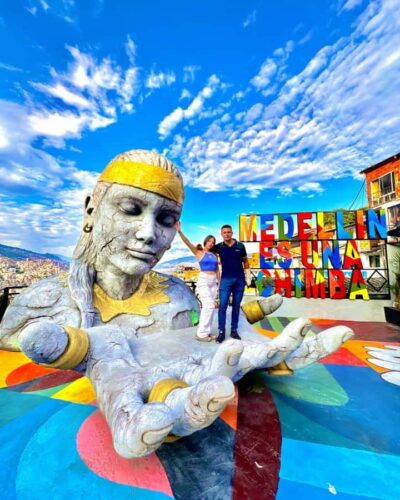
Medellín: Comuna 13 True Story and Street Food Tour
Read our review →
Cartagena: Guided Street Food Tour with Tastings
Read our review →
Street Food and Poblado Rooftop Tour with a Local
Read our review →
Browse the lists this tour appears in