
REVIEW · TOKYO
Tokyo: Togoshi Ginza Street Food Tour
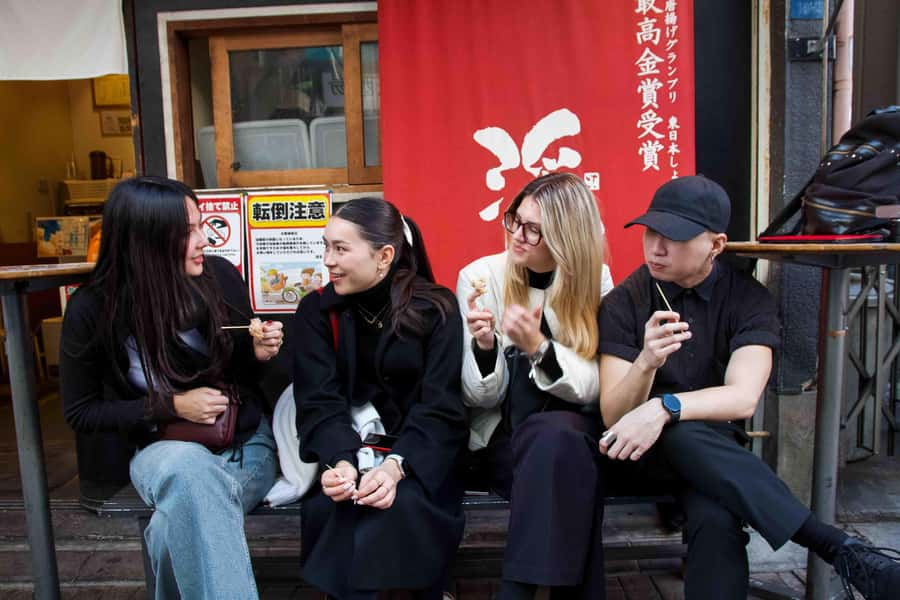
Tokyo’s best food memories often begin away from the famous sights. This two-hour walk moves from Musashi Koyama to Togoshi Ginza, where local shops serve yakitori, karaage, onigiri, curry bread, and pudding. I like the old charcoal-grilled chicken stop, open since 1929, and the chance to choose from more than 40 rice-ball fillings.
I also like the small groups, limited to eight, and the way guides such as Sahori, Daisy, Bunga, and Brian add local context while helping you order. The main drawback is simple: you walk about 3 kilometers and eat a lot in two hours, so this is not a good fit if you tire easily or prefer a slow sit-down meal.
Key points to know before booking
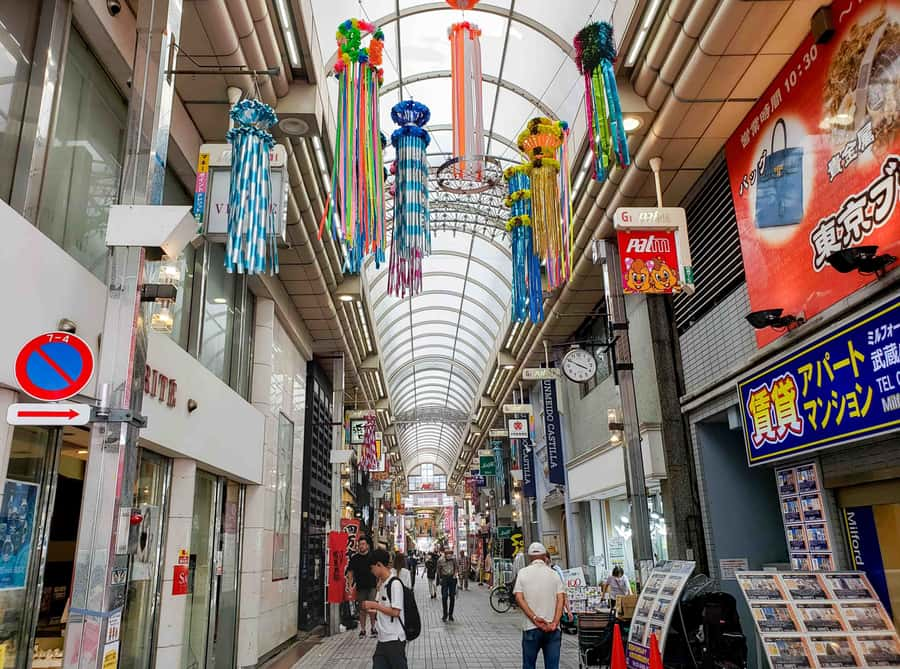
- Two shopping streets, one food route: You begin at Musashi Koyama Palm Shopping Street and finish around Togoshi Ginza, Tokyo’s longest shopping street.
- Seven food tastings: Expect yakitori, award-winning karaage, onigiri, beef curry bread, Japanese pudding, another dessert, and one alcoholic or non-alcoholic drink.
- A genuinely local side of Tokyo: The route passes through residential neighborhoods and shopping streets that see fewer international tourists.
- Small groups help with ordering: With no more than eight people, your English-speaking guide can explain dishes and help you choose unfamiliar fillings.
- Come hungry and wear good walking shoes: The tour covers about 1.86 miles, or 3 kilometers, with several food stops along the way.
- The price reflects the access: At $95 per person, you are paying for seven tastings, a drink, guidance, and help navigating shops where English may not be available.
Starting at Musashi Koyama Palm Shopping Street
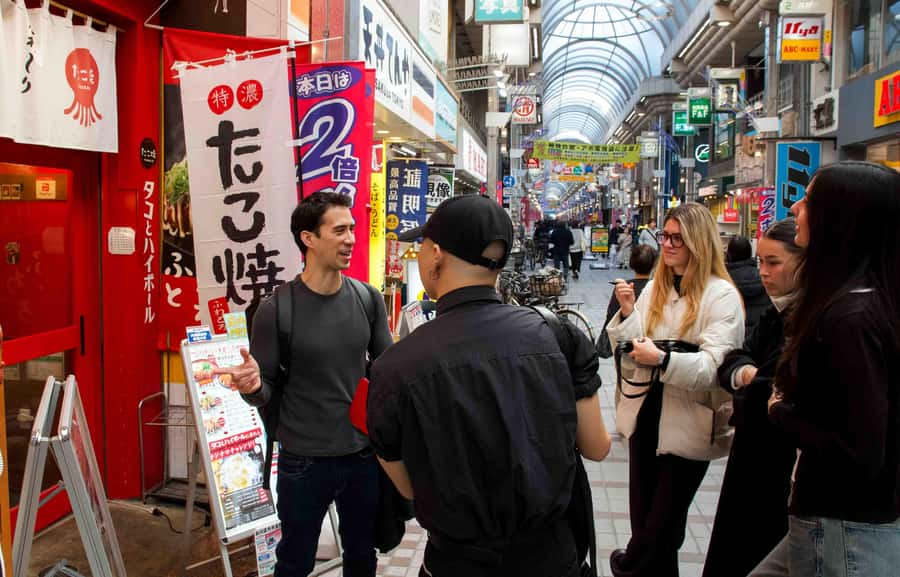
Your meeting point is outside the Starbucks at the entrance to Musashi Koyama Palm Shopping Street. Look for the guide holding a Food Tours Tokyo sign. This clear landmark matters in Tokyo, where station exits and shopping arcades can quickly blur together.
The tour begins in Musashi Koyama, not in the postcard version of Tokyo. You will see a working shopping street tied to daily life, with local residents buying food and running errands. That gives you a useful frame for the meal ahead. You are not just moving from restaurant to restaurant. You are seeing how food fits into an ordinary Tokyo neighborhood.
The guide leads the group on foot, so you should arrive ready to walk rather than expecting a seated tasting session. The route covers around 3 kilometers, and most of the experience takes place outdoors or in and around shops. On a chilly day, wear a warm layer. One past participant specifically found the outdoor format worth noting.
More Food Tours in Tokyo
- Tokyo: Shinjuku Food Tour (13 Dishes at 4 Local Eateries)
★ 5.0 · 6,603 reviews - Tokyo Tsukiji Fish Market Food and Culture Walking Tour
★ 5.0 · 3,184 reviews - Tokyo: Shinjuku Food Tour (15 Dishes and 4 Eateries)
★ 4.9 · 2,033 reviews
First stop: charcoal-grilled yakitori since 1929
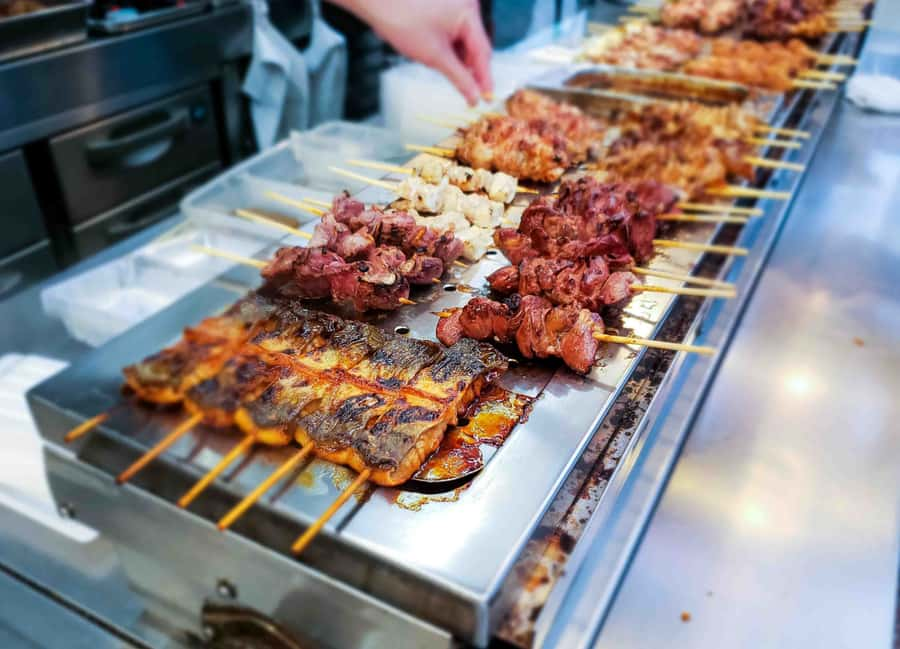
The opening food stop is yakitori, chicken grilled over charcoal on skewers. The shop has been around since 1929, giving this first taste a useful connection to the area’s food traditions. You can expect the smoky flavor and quick service that make yakitori such a natural match for a shopping-street walk.
This is a good first bite because it introduces a basic Japanese food without making you decode a complicated menu. Your guide can explain what you are eating and how the dish fits into Japanese casual dining. You also get one of the tour’s clearest links between food and place: a long-running local shop serving a familiar favorite to the neighborhood.
The stop may be less comfortable for anyone hoping to sit down for a full meal. This is a tasting walk, so the rhythm is brief stops, small servings, conversation, and more walking. If you prefer a long lunch with plenty of time at the table, this format may feel hurried.
Moving through Musashi Koyama toward Togoshi Ginza
After the yakitori, the walk continues through Musashi Koyama before reaching Togoshi Ginza. The two areas give the tour its strongest sense of place. You are moving through Tokyo neighborhoods where people live, shop, and eat, rather than spending the whole outing among major attractions.
Togoshi Ginza is known as Tokyo’s longest shopping street, with roughly 400 shops. That number matters because it explains the variety you see along the route. The street is not simply a food market built for tour groups. It is a long commercial strip with many kinds of everyday businesses, and the food stops are part of that larger setting.
This part of the tour is especially useful if you have already visited central Tokyo and want a different pace. You will not get the grand skyline views or famous temple entrances found elsewhere. Instead, you get a closer look at neighborhood Tokyo, with the guide pointing out food customs and local details you could easily miss on your own.
Award-winning karaage with a local guide’s help
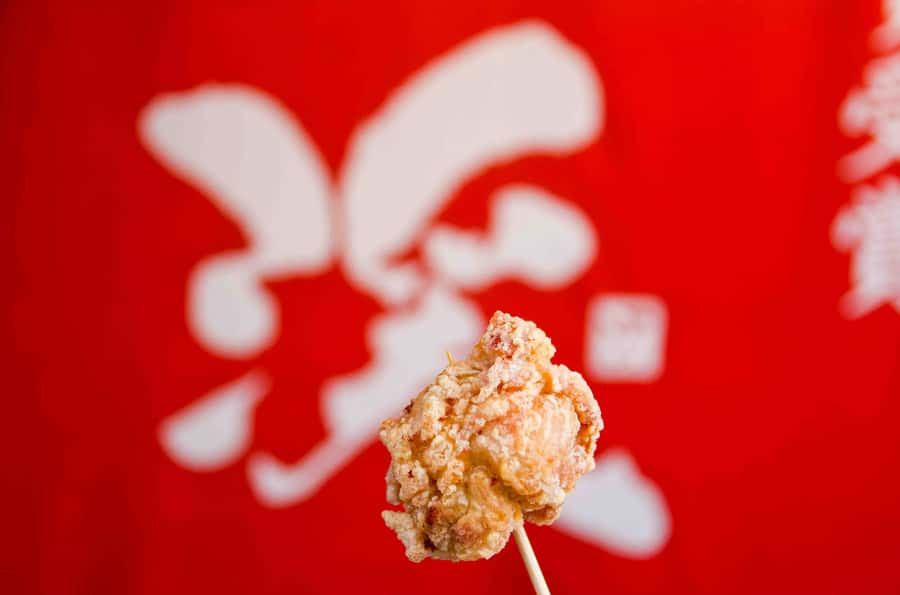
The next major tasting is karaage, Japanese fried chicken. It is described as award-winning, and it provides a hearty change from the grilled yakitori. Karaage is familiar enough for most people to enjoy, but the guide can still explain how this style of fried chicken fits into Japanese food culture.
This is one of the places where an English-speaking guide adds real value. Ordering at a small shop can be awkward when you cannot read the menu or are unsure how much food to choose. Your guide handles the explanation and keeps the group moving, which removes much of the guesswork.
You should also be prepared for a generous food schedule. Several people found the tour filling, and one person who regularly eats Japanese food still appreciated the quality of the tastings. I would not schedule a large lunch right before this walk. The tour is designed to replace a meal, not merely provide one or two samples.
More street food nights in Tokyo:
- Tsukiji Fish Market: Street Food & Culture Walking Tour
★ 5.0 · 669 reviews - Dubai: Old Town, Creek, Museums, Souks, & Street Food Tour
★ 4.8 · 10,816 reviews - Ho Chi Minh City Street Food Tour & Sightseeing By Motorbike
★ 5.0 · 9,413 reviews - Medellin: Comuna 13 Graffiti Tour, Cable Car & Street Food
★ 4.8 · 9,046 reviews
More than 40 onigiri fillings to choose from
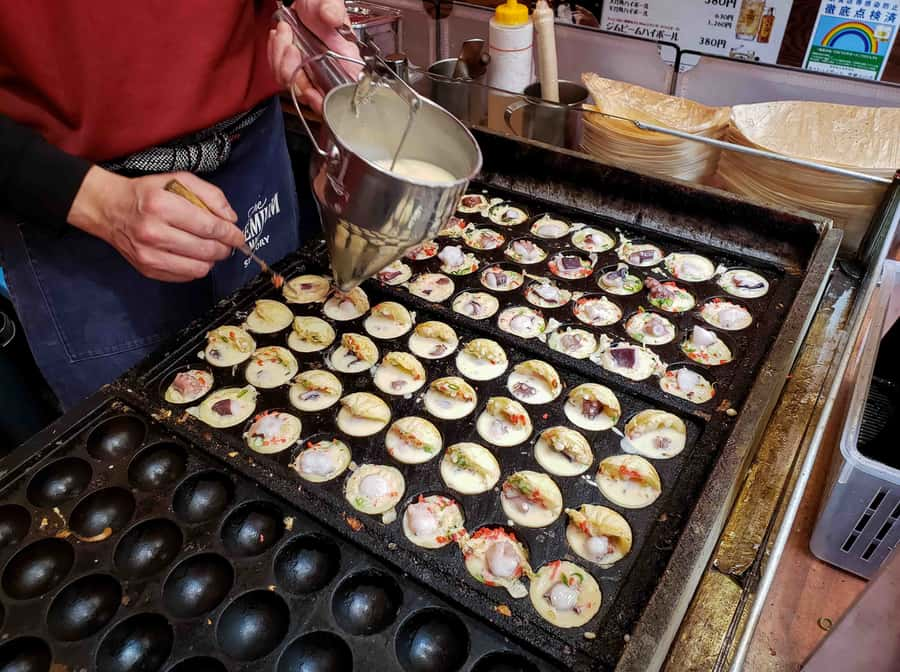
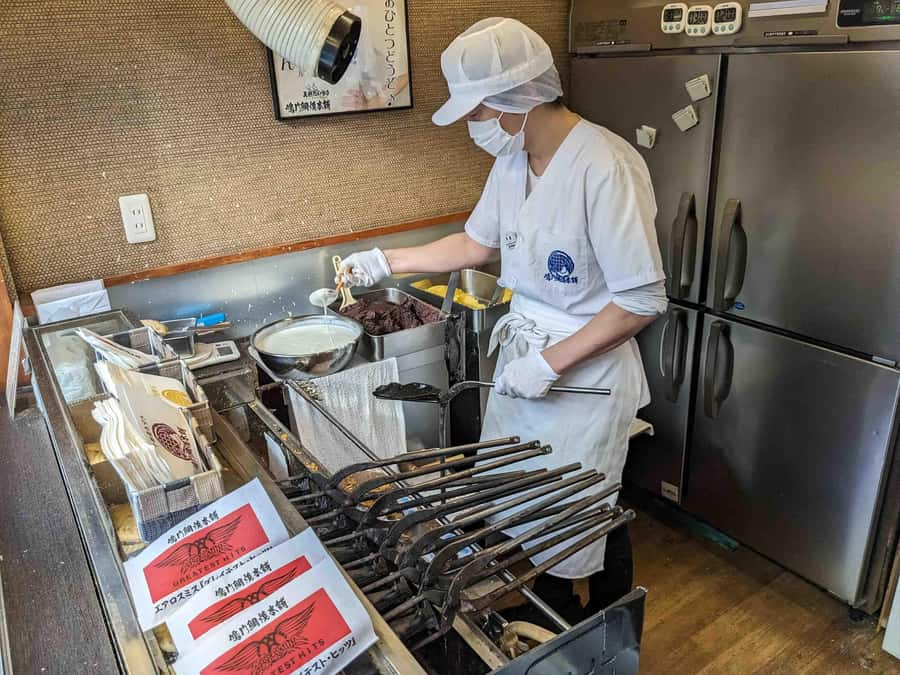
The onigiri stop is likely to be the most playful part of the route. These rice balls come with more than 40 filling choices, ranging from bacon with cream cheese to spicy tuna. That range shows how a traditional Japanese food can stretch beyond the combinations you may expect.
You get a choice rather than a single fixed sample, which gives you some control over the meal. If you like seafood, spicy flavors, or unusual combinations, you can try something that suits you. If you prefer familiar food, you can choose a safer filling. Ask your guide for help if the options seem overwhelming.
Onigiri is also a practical food for understanding everyday Japan. It is simple, portable, and common, yet the filling choices reveal how much variety can fit inside a small rice ball. This stop has more value than a standard food sample because it gives you a chance to make a small decision and learn what Japanese shoppers might grab for a quick meal.
The one limitation is that choice can take time in a group. If several people want different fillings, the stop may feel less quick than the yakitori or karaage tastings. A small group helps, though, and the maximum of eight people keeps the ordering manageable.
Beef curry bread and Japanese pudding
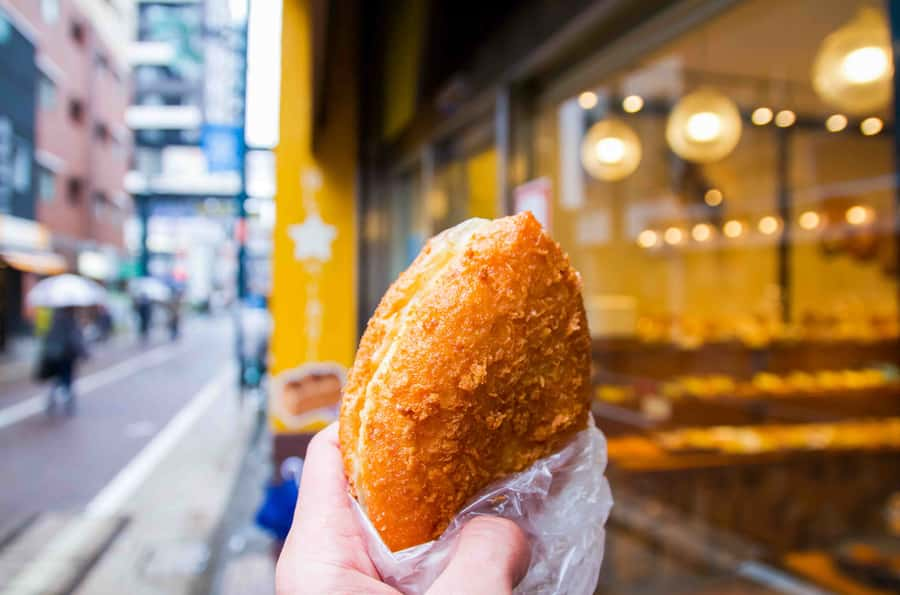
The route then turns to savory bread filled with beef curry. Curry bread is a classic Japanese bakery snack, with a crisp outer layer and a warm curry center. It is a useful reminder that Japanese street food is not limited to sushi, ramen, or grilled skewers.
This tasting adds texture to the food walk. You have already had grilled chicken, fried chicken, and rice, so the curry bread brings in the bakery side of local eating. Because it is portable, it fits the shopping-street setting well.
The final planned tasting is extra-rich Japanese pudding, followed by another dessert if you still have room. The pudding provides a sweet finish, but you should take the wording seriously: you may be quite full by this point. The food comes steadily, and the combination of rice, chicken, bread, and dessert adds up.
If you have children with you, the range of foods can make the tour easier than a more narrowly focused tasting. One guide, Sahori, was specifically praised for being good with children. Still, families should consider the walking distance and the need to keep moving between stops.
What the guides add to the experience
The tour is offered in English with a live guide, and the small-group format is one of its strongest practical features. Guides named in past bookings include Sahori, Daisy, Bunga, and Brian. The exact guide depends on the date, but the experience calls for someone who can explain food, culture, and local ordering customs as you go.
Sahori is known for warm communication and for helping with Tokyo’s complicated train system after the tour. Daisy has led private-feeling outings, including a tour with only two participants, and has offered area suggestions. Bunga has been praised for fun food facts, while Brian has guided visitors through the neighborhood in fluent Japanese and English.
You should not book this expecting a formal lecture. The value comes through short explanations at each stop, personal interaction, and help with the little choices that are hard to make alone. A guide can tell you what a dish is, explain why a shop matters, and keep the route flowing.
The small group also leaves room for conversation. Some departures may have fewer than eight people, and a very small group can feel almost like an afternoon out with a local friend. That flexibility is useful for families, couples, and solo visitors who want questions answered without speaking over a large crowd.
Is $95 a fair price?
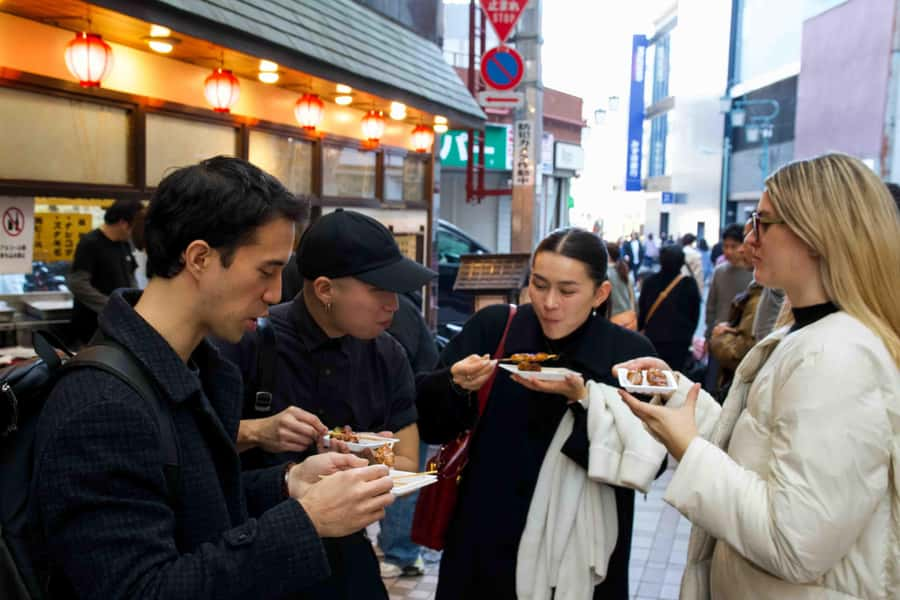
At $95 per person, this is not a cheap way to grab snacks. You are paying well above the cost of buying a few individual items from a shopping street. The question is what you want from the outing.
The fee includes a guide, seven food tastings, and one alcoholic or non-alcoholic drink. It also buys access to a route that can be difficult to arrange alone, especially if you cannot read Japanese or do not know which shops are worth trying. The food itself is only part of the value. Guidance, translation, neighborhood context, and a planned sequence all matter here.
The price makes more sense if this is replacing a meal and an independent afternoon of food hunting. It makes less sense if you only want a quick snack or are comfortable choosing shops and ordering without help.
The strongest case for booking is the mix of quantity and access. You will try several foods in one short outing, and you will visit a part of Tokyo many visitors would otherwise skip. The weakest case is that you may not need a paid guide if you already know the area, speak Japanese, and prefer to eat at your own pace.
Who should book this two-hour walk?
I would recommend it to first-time visitors who want more than the usual central Tokyo route. It also suits repeat visitors looking for residential neighborhoods, casual food, and a slower look at everyday shopping streets.
Food-focused families may enjoy the variety, especially with a guide who can explain the choices to children. Couples and solo visitors should also find the small group easy to manage. The route is social without requiring a large crowd.
You should think twice if you have a low level of fitness, dislike walking, or need a long break between dishes. The tour covers 3 kilometers in two hours, and the stops are spread along the route. It is not designed for someone who wants to sit in one restaurant and order a meal from a menu.
You should also plan around the weather. Much of the experience is outdoors, so comfortable shoes and suitable clothing will make a real difference. The tour does not include hotel pickup or drop-off, so you need to handle your own transport to the meeting point and after the final tasting.
Practical details that affect your decision
The tour lasts two hours and is offered at various starting times, depending on availability. It is conducted in English and limited to eight participants. You meet outside the Starbucks at the entrance to Musashi Koyama Palm Shopping Street, where the guide will hold a Food Tours Tokyo sign.
The package includes seven food tastings and one alcoholic or non-alcoholic drink. Hotel pickup and drop-off are not included. You can cancel up to 24 hours ahead for a full refund, and the reserve-now, pay-later option lets you hold a place without paying immediately.
Come hungry, but do not arrive starved if you become uncomfortable eating quickly. The tastings include substantial foods such as chicken, rice, and curry bread, followed by pudding and another dessert. If you have dietary concerns, the supplied information does not specify substitutions, so ask the provider before booking rather than relying on changes at the last minute.
Should you book the Togoshi Ginza food tour?
Book it if you want a friendly, food-heavy walk through a less visited part of Tokyo and value help with ordering. The long-running yakitori shop, the 40-plus onigiri fillings, and Togoshi Ginza’s 400-shop shopping street give the tour enough variety to feel like more than a simple snack crawl.
Skip it if you want famous landmarks, a seated restaurant meal, or a short and easy stroll. At $95, the tour is best value for people who will eat most of the seven tastings and appreciate the guide’s local explanations.
For many visitors, this is a smart way to spend two hours in Tokyo: plenty of food, a small group, and a neighborhood you might not otherwise reach. Just wear good shoes and leave room for pudding.
FAQ
Where does the tour meet?
Meet outside the Starbucks at the entrance to Musashi Koyama Palm Shopping Street. Your guide will be holding a Food Tours Tokyo sign.
How long is the tour?
The tour lasts two hours and covers around 1.86 miles, or 3 kilometers, on foot.
What food is included?
The seven tastings include charcoal-grilled yakitori, award-winning karaage, onigiri with more than 40 possible fillings, beef curry bread, Japanese pudding, and another dessert if you have room. One alcoholic or non-alcoholic drink is also included.
Is the tour conducted in English?
Yes. The tour has a live English-speaking guide.
How many people are in the group?
The tour is limited to eight participants.
Is hotel pickup included?
No. Hotel pickup and drop-off are not included, so you must make your own way to the meeting point and continue independently after the tour.
Just added around Tokyo
- Tokyo: West-Side Cycling and Food Tour with Guide★ 5.0 · 37 reviews
- Tokyo: Wagyu and Sushi Gastronomic Journey★ 4.3 · 24 reviews
- Tokyo: Allstar Food Tour★ 4.7 · 29 reviews
- Tokyo: The Best of Izakaya in Shinjuku Food & Cultural Tour★ 4.9 · 221 reviews
- Tokyo Tsukiji Food & Culture Private Tour Licensed Guide★ 4.9 · 28 reviews
- Tokyo: Locals´ Secret Food Tour // Eat like a Japanese★ 5.0 · 35 reviews
- Tokyo: Shibuya Food Tour (13 dishes and 4 Eateries)★ 5.0 · 178 reviews
- Tokyo: Best of Shibuya Food Tour★ 4.7 · 119 reviews
Food Tours in Tokyo, compared.
Shinjuku Food Tour (13 Dishes at 4 Local Eateries)
Read our review →
Tokyo Tsukiji Fish Market Food and Culture Walking Tour
Read our review →
Shinjuku Food Tour (15 Dishes and 4 Eateries)
Read our review →
Best of Shinjuku: Izakaya Food Tour (4 Stops, 14+ Tastings)
Read our review →
Tokyo Night Foodie Tour in Shinjuku – Seasonal Sushi, Wagyu Beef
Read our review →
Eat and Drink Like a Local: Tokyo Ueno Food Tour-Taverns&Ramen
Read our review →Browse the lists this tour appears in