
REVIEW · TOKYO
Tokyo: Locals´ Secret Food Tour // Eat like a Japanese
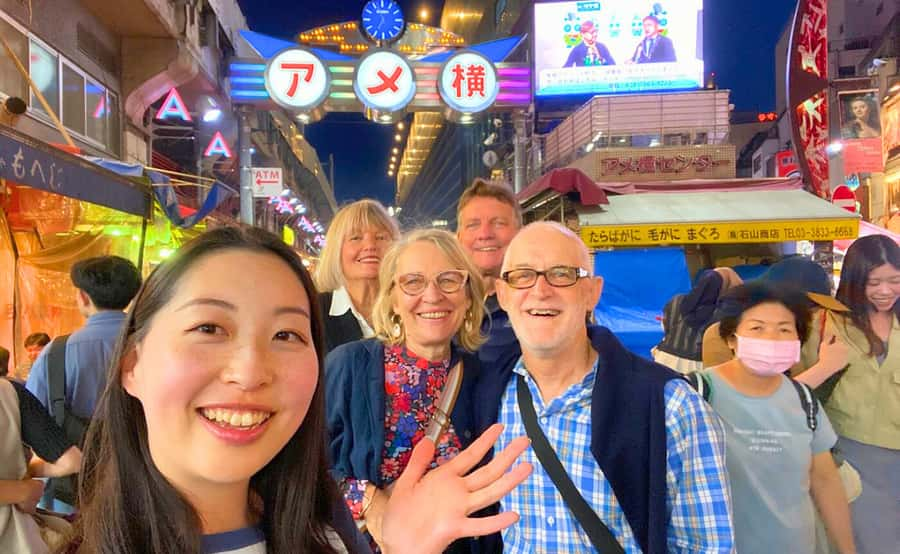
Ueno is one of my favorite parts of Tokyo for an evening meal because it feels like a working neighborhood rather than a polished sightseeing zone. This tour takes you through four useful food stops, from station sushi and gyoza to yakitori and a final bowl of ramen.
I especially like the relaxed pace and the guides. Kana, Nobu, Tatsuya, Mari, and Suzu have all been praised for being friendly, patient, and happy to answer questions. I also like that the tour works well for solo visitors, who can otherwise find Japanese pub dining a little awkward.
The main drawback is the food policy: this tour cannot accommodate vegetarians, vegans, or gluten-free diets. You may also wait in line at popular restaurants, and the experience is not suitable for children under 18, pregnant women, or wheelchair users.
Key points to know before booking
- Four classic Japanese food stops: Try three kinds of sushi, gyoza, yakitori, and chicken ramen in one evening.
- A local Ueno setting: The route focuses on neighborhood restaurants around JR Ueno Station rather than major sightseeing attractions.
- Drinks are part of the experience: Your yakitori stop includes one alcoholic or soft drink, with a Yuzu Sour suggested as a local-style choice.
- Guides make the difference: Kana, Nobu, Tatsuya, Mari, and Suzu are praised for warmth, cultural tips, and patient answers.
- Good for solo diners: The friendly, informal format is easier than entering a Japanese izakaya alone.
- Plan for queues and restrictions: Popular restaurants may require waiting, and the tour does not suit vegetarian, vegan, or gluten-free diners.
Why Ueno is a smart place for a Tokyo food tour
Many first-time visitors head straight to Shibuya, Shinjuku, or Ginza for dinner. Ueno gives you a different view of Tokyo. Its food and drinking streets serve commuters, neighborhood regulars, and people meeting friends after work.
That makes Ueno a useful place to learn how ordinary Japanese dining works. You are not simply eating dishes chosen for a foreign audience. You are moving between the kinds of places that make up a typical night out: a sushi counter, a dumpling shop, an izakaya, and a ramen restaurant.
I like the route because each stop has a different role. Sushi shows off fresh seafood. Gyoza gives you an everyday comfort food. Yakitori introduces the social side of Japanese drinking, while ramen finishes the meal with something warm and filling.
The experience begins inside JR Ueno Station, just outside the JR Central Gate. Look for the large area map near Hard Rock Cafe, across from the ANDERSEN bakery. Station buildings can be confusing, so save the Japanese meeting-point text on your phone: JR上野駅 構内、ハードロックカフェ入口付近。パン屋「ANDERSEN」の向かい.
The activity ends back at the same meeting point. Transportation is not included, so you need to pay your own fare to reach Ueno.
More Food Tours in Tokyo
- Tokyo: Shinjuku Food Tour (13 Dishes at 4 Local Eateries)
★ 5.0 · 6,603 reviews - Tokyo Tsukiji Fish Market Food and Culture Walking Tour
★ 5.0 · 3,184 reviews - Tokyo: Shinjuku Food Tour (15 Dishes and 4 Eateries)
★ 4.9 · 2,033 reviews
First stop: fresh sushi inside Ueno Station
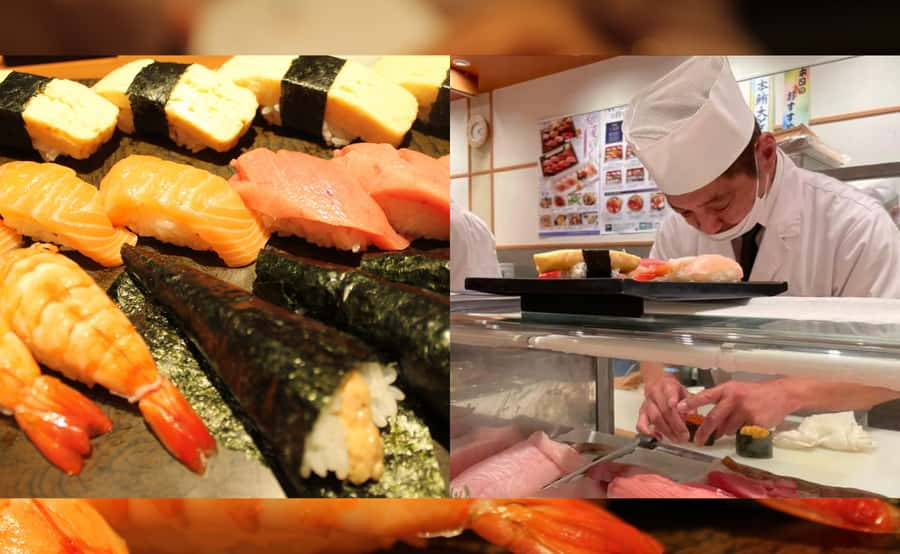
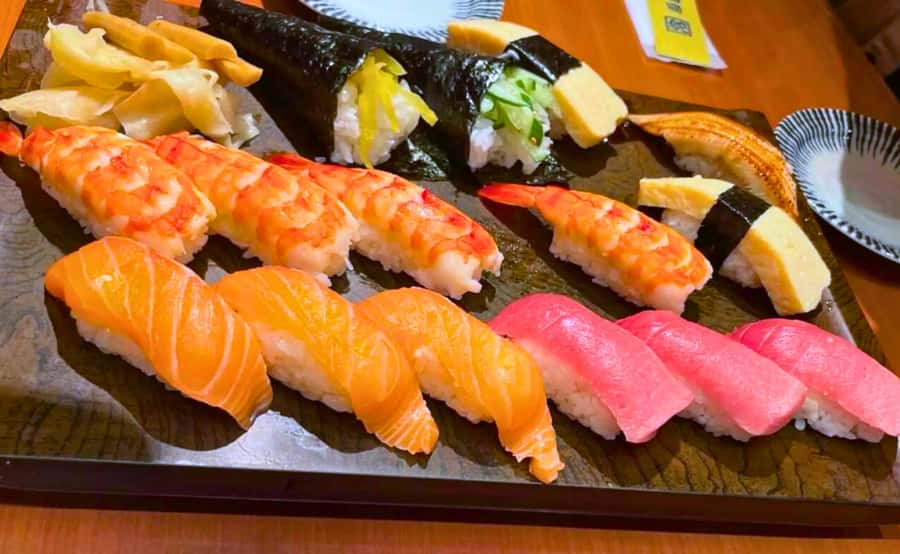
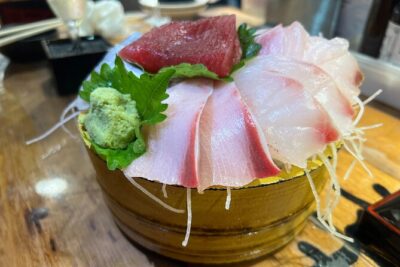
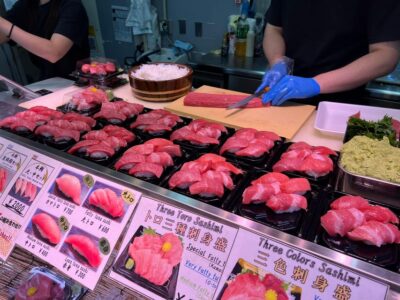
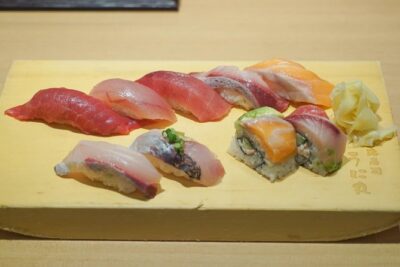
The opening stop is a sushi restaurant inside Ueno Station. The restaurant sources fish from the market each morning, and you receive three different types of sushi with green tea.
This is a sensible first course. Sushi is often treated as a special-occasion meal outside Japan, but in Tokyo it can also be a quick, practical meal near a train station. Starting here lets you see that everyday side of sushi, while still trying fresh fish.
The restaurant is popular with local diners, so a line is possible. That wait is worth keeping in mind if you prefer a tightly timed evening, but it also gives your guide a chance to explain what you are about to eat. Ask about the fish, the proper use of soy sauce, or how sushi fits into daily meals in Japan.
You should expect a modest tasting rather than a full sushi dinner. Three pieces or types give you a useful introduction, but this stop is one part of a larger meal. The included green tea also keeps the first course simple and refreshing before the richer dishes later.
Second stop: gyoza with room for different flavors
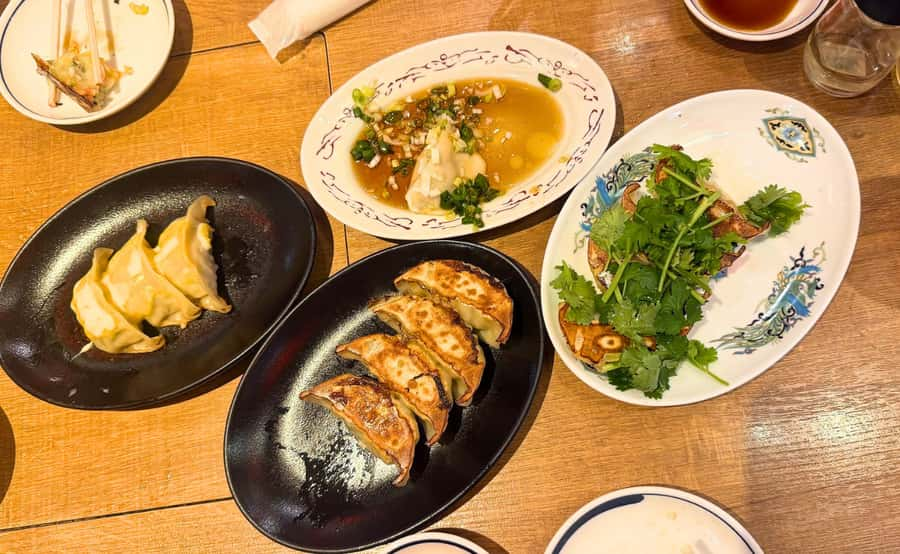
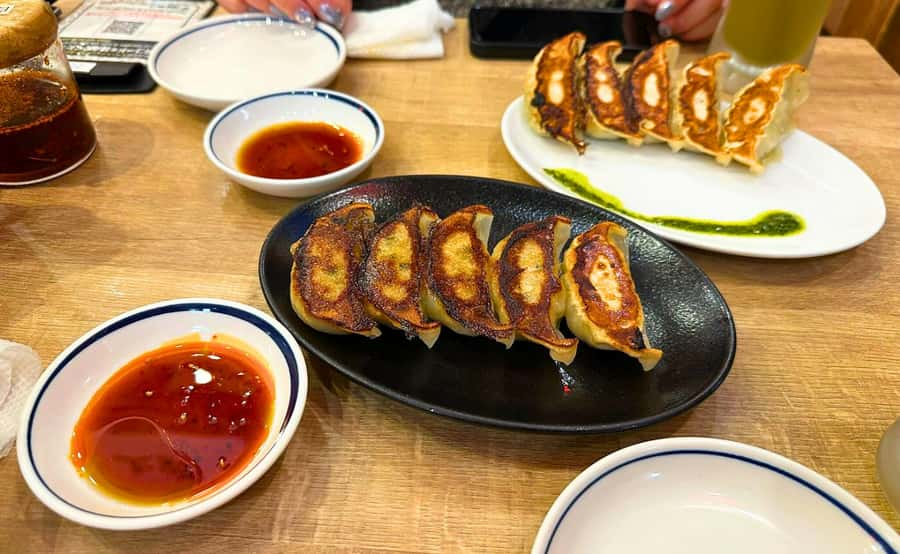
Next comes gyoza, the pan-fried Japanese dumpling that appears everywhere from casual noodle shops to specialist restaurants. You can choose one to four flavors, and water is included.
This is one of the most approachable stops for first-time visitors. Gyoza are familiar enough to feel comfortable, but the filling and seasoning can still show you how Japanese restaurants handle a well-known dish. The choice of several flavors gives you a little control over the meal instead of receiving one fixed plate.
The restaurant has a lively atmosphere, which suits gyoza. You will get a better sense of how casual Japanese dining works here: fast service, shared plates, and food designed to be eaten without ceremony.
I would ask your guide which flavors make the most sense together. If you are not used to Japanese seasonings, a guide can help you avoid choosing several similar options. The food is served with water, so this is also a quieter part of the evening before alcohol appears at the next stop.
Keep your appetite in check. The portions across the whole route are designed to make you full by the end, and gyoza can be surprisingly filling.
Third stop: yakitori and the social side of an izakaya
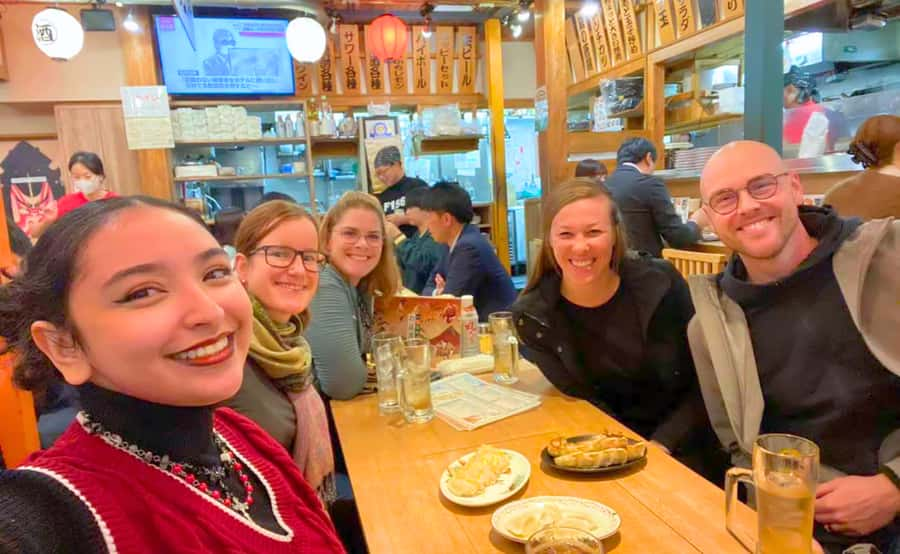
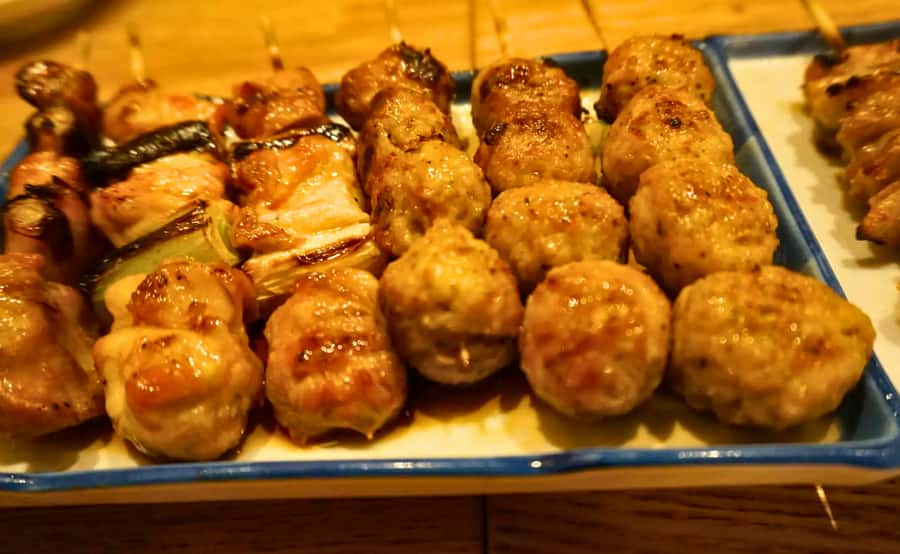
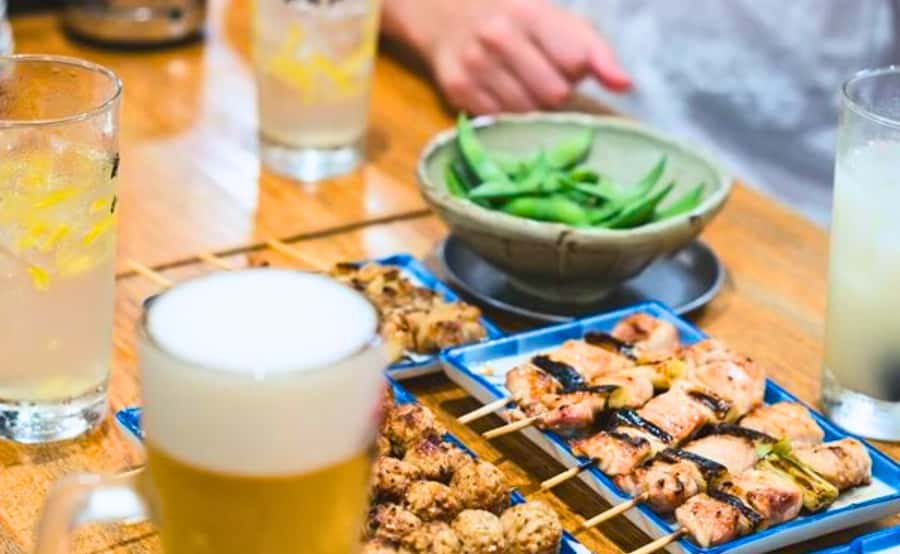
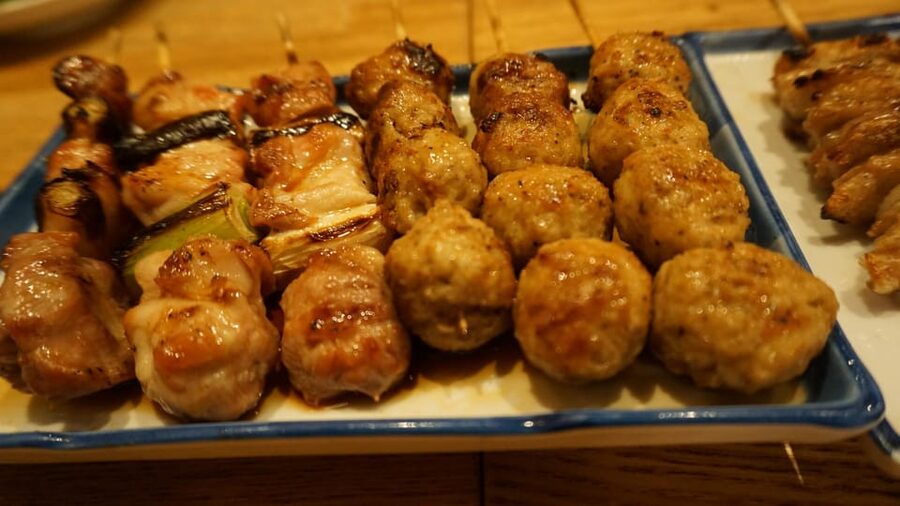
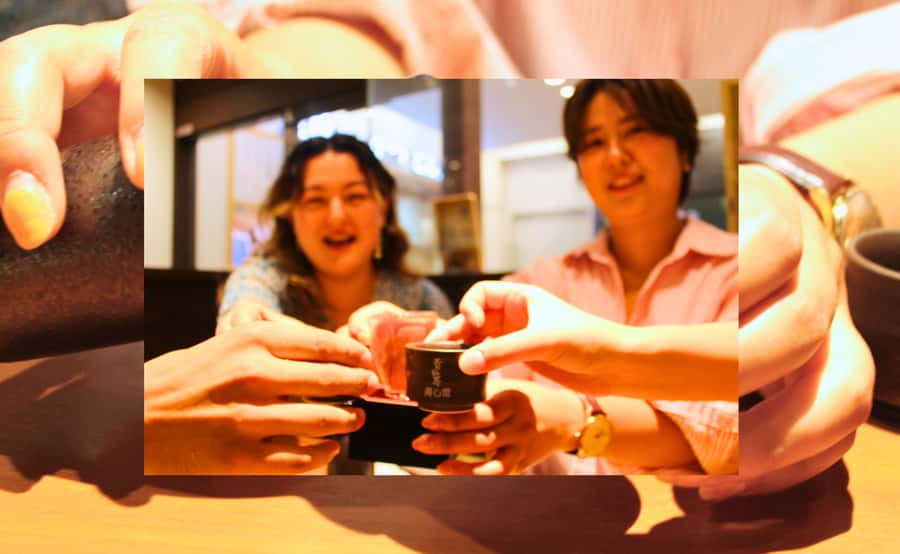
The third restaurant is an izakaya, a Japanese-style pub, where you try three types of chicken skewers. Yakitori is one of the best foods for understanding Japanese drinking culture because it is casual, shareable, and built around small bites.
The included drink is an important part of this stop. You can choose an alcoholic drink or a soft drink, and the menu offers more than 50 choices. The suggested Yuzu Sour combines yuzu liqueur with sparkling water. Yuzu has a citrus flavor that makes this a lighter choice than many strong mixed drinks.
You can also meet people from the guide’s recommendations for local customs. An izakaya is not just a restaurant with alcohol. It is a place where diners order several small dishes, talk over food, and stay for a while. This is the part of the tour most likely to feel like a night out rather than a tasting exercise.
If you do not drink alcohol, you are not left out. A soft drink is included, and the food remains the focus. If you do drink, take it slowly. You have another stop ahead, and the tour is more enjoyable when you can appreciate the food instead of rushing through it.
An extra alcohol package is available for sake and plum wine. This is optional, so check the booking choice carefully if those drinks are important to you. The standard inclusion already covers one alcoholic or soft drink with the yakitori course.
More off-the-list food tours in Tokyo:
- Tokyo: Secret Food Walking Tour
★ 4.7 · 38 reviews - Alicante: Secret Flavors Food Tour
★ 4.8 · 1,514 reviews - Southern & Secret Walking Food Tour
★ 4.5 · 1,413 reviews - Edinburgh Food Tour with Scotch, Haggis, a Secret Dish & More
★ 5.0 · 1,172 reviews
Final stop: chicken ramen to finish the meal
The final stop is a ramen shop serving chicken soba, with water included. The broth uses Oyama chicken, fresh vegetables, and Hidaka kelp. It is slow-cooked and strained twice for a smooth, full flavor.
This is a strong way to finish the route. After several small dishes and a drink, a bowl of ramen gives the evening a clear ending. You are not left searching for another meal after the tour.
The description refers to chicken soba, while one food review specifically enjoyed mazesoba ramen. That means the exact ramen style may vary, so you should ask your guide what is being served on your date. Either way, expect this to be more than a quick bowl of noodles. The broth receives careful preparation, and the ingredients give the dish a more focused flavor than a basic fast meal.
Ramen is also a useful lesson in Japanese food culture. It is often eaten quickly and casually, but regional styles, broths, toppings, and noodles can differ greatly. Your guide can help you understand what makes this bowl distinctive.
By this stage, most people should feel well fed. If you prefer light meals, this route may be too much, especially if you eat every dish at each stop. Come hungry, but do not arrive starved. A steady pace works better than trying to save all your appetite for the ramen.
The guides are a major part of the value
The food matters, but I would book this experience mainly for the guide-led context. Guides such as Kana, Nobu, Tatsuya, Mari, and Suzu are described as friendly, professional, and easy to talk with.
Kana receives especially strong praise for being authentic, helpful, and patient with questions about Japanese culture. Nobu is described as warm and willing to explain the food, while Tatsuya is known for making the evening fun and even continuing with the group after the official tour. Mari is noted for explaining Japanese food and culture in detail, and Suzu is praised for her friendly manner.
These details matter because Japanese restaurant customs can be hard to read at first. You may wonder how to order, how long to stay, what to do with chopsticks, or which drink makes sense with a dish. A good guide removes that small but real pressure.
The format is informal. It is meant to feel like dinner with a friend, not a lecture or a formal cooking class. I would expect the guide to answer questions as they come up, explain the neighborhood, and help the group move comfortably between stops.
Group size is not specified, so I would not book this expecting a guaranteed private tour. Still, the experience can feel personal when the group is small. One couple had the tour with only their guide, which made the evening particularly personal, but you should treat that as a fortunate possibility rather than a promise.
What $91 buys you in Tokyo
At $91 per person, this is not the cheapest way to eat in Ueno. You could certainly buy individual sushi, gyoza, yakitori, and ramen meals for less if you already know where to go and how Japanese ordering works.
The value comes from the combination. You receive three types of sushi with green tea, gyoza with a choice of flavors, three types of yakitori with one drink, and ramen. You also get a guide who connects the dishes to local customs and takes care of the route.
For a first night in Tokyo, that can be worthwhile. You avoid choosing restaurants at random, reduce the risk of ordering a dish you do not understand, and sample four major parts of Japanese dining in one evening. I especially see value for solo visitors, since eating alone at an izakaya can feel less comfortable than joining a friendly group.
The price is harder to justify if you are an experienced Tokyo diner, have a strict budget, or mainly want one large meal. It is also poor value if you cannot eat the menu because of dietary restrictions. Check those limits before paying.
Sake and plum wine require the extra alcohol package. The standard tour includes one drink at the yakitori stop, so you should not assume several alcoholic drinks are covered.
Practical details that can shape your evening
The tour is offered in English and Japanese. The meeting point is inside JR Ueno Station, not outside on a street corner, so allow time to find the correct gate and map area. The activity ends where it begins, which makes it easier to continue your evening or return to your accommodation.
Popular restaurants may have queues. Waiting in line is part of the experience in Japan, but it can affect the pace. I would avoid scheduling an important late-night reservation immediately after the tour.
The tour is not suitable for wheelchair users. It also does not accommodate vegetarian, vegan, or gluten-free preferences. Pregnant women and children under 18 should not book it.
You can cancel up to 24 hours in advance for a full refund, and the reserve-and-pay-later option keeps your plans flexible. Those details are helpful in Tokyo, where weather, jet lag, and changing plans can affect an evening.
Bring a healthy appetite and comfortable shoes for moving between stops. Your transportation costs are separate, and the exact time of the experience is not provided here, so confirm the schedule before arranging trains or other plans.
Who should book this Ueno food tour?
I would recommend it to first-time Tokyo visitors who want help making sense of Japanese food. It is also a good match for solo visitors, couples, and small groups who prefer conversation and guidance over a formal class.
You will get the most from it if you enjoy trying several dishes rather than choosing one restaurant and staying there. It suits people who want sushi, gyoza, yakitori, and ramen in one evening, with enough cultural explanation to make the food easier to understand.
I would skip it if you need vegetarian, vegan, or gluten-free food. I would also choose another plan if you dislike queues, prefer a private itinerary, or want to control every restaurant and dish yourself.
Should you book it?
Book this tour if you want a friendly introduction to Ueno dining and would rather have a local guide handle the food choices. The strongest reasons are the varied four-stop route, the relaxed guide style, and the chance to try an izakaya without figuring it out alone.
At $91, you are paying for guidance and variety as much as for the food. That is a fair trade for a first Tokyo evening, especially if you are traveling solo or feel unsure about Japanese menus.
Skip it if the dietary limits rule you out, or if you already know Ueno well and can order these dishes on your own. For everyone else, come hungry, expect a possible queue, and let the guide turn a simple dinner into a useful lesson in how Tokyo eats.
FAQ
Where does the tour begin?
It begins inside JR Ueno Station, just outside the JR Central Gate, near the large area map close to Hard Rock Cafe. The meeting point is across from the ANDERSEN bakery.
Where does the tour end?
The activity ends back at the meeting point inside JR Ueno Station.
What food is included?
The tour includes three types of sushi with green tea, gyoza with a choice of one to four flavors and water, three types of chicken yakitori with one alcoholic or soft drink, and ramen with water.
Are extra alcoholic drinks included?
Sake and plum wine are included only if you select the Extra Alcohol Package. The standard tour includes an alcoholic or soft drink at the yakitori stop.
Can vegetarians, vegans, or people following a gluten-free diet join?
No. The tour cannot accommodate vegetarian, vegan, or gluten-free dietary preferences.
Is the tour suitable for children or wheelchair users?
No. It is not suitable for children under 18 or wheelchair users. It is also not suitable for pregnant women.
Just added around Tokyo
- Tokyo: West-Side Cycling and Food Tour with Guide★ 5.0 · 37 reviews
- Tokyo: Wagyu and Sushi Gastronomic Journey★ 4.3 · 24 reviews
- Tokyo: Allstar Food Tour★ 4.7 · 29 reviews
- Tokyo: Togoshi Ginza Street Food Tour★ 5.0 · 34 reviews
- Tokyo: The Best of Izakaya in Shinjuku Food & Cultural Tour★ 4.9 · 221 reviews
- Tokyo Tsukiji Food & Culture Private Tour Licensed Guide★ 4.9 · 28 reviews
- Tokyo: Shibuya Food Tour (13 dishes and 4 Eateries)★ 5.0 · 178 reviews
- Tokyo: Best of Shibuya Food Tour★ 4.7 · 119 reviews
Food Tours in Tokyo, compared.
Shinjuku Food Tour (13 Dishes at 4 Local Eateries)
Read our review →
Tokyo Tsukiji Fish Market Food and Culture Walking Tour
Read our review →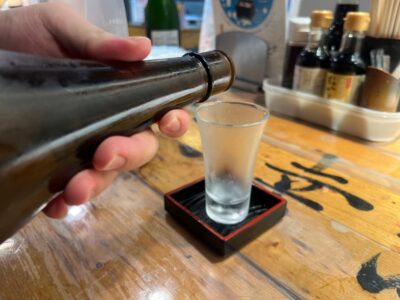
Shinjuku Food Tour (15 Dishes and 4 Eateries)
Read our review →
Best of Shinjuku: Izakaya Food Tour (4 Stops, 14+ Tastings)
Read our review →
Tokyo Night Foodie Tour in Shinjuku – Seasonal Sushi, Wagyu Beef
Read our review →
Eat and Drink Like a Local: Tokyo Ueno Food Tour-Taverns&Ramen
Read our review →Browse the lists this tour appears in