
REVIEW · TOKYO
Shibuya Tokyo: Sushi Making Class (Vegan/Vegetarian/Halal)
The best thing about this 90-minute Shibuya class is that you do not just watch someone make sushi. You handle the rice, shape the rolls, and make nigiri yourself, then sit down to eat the results. The short sushi quiz adds a bit of Japanese food history before the cooking starts.
I like the friendly English-speaking instruction, especially for first-time cooks. I also like the clear attention to dietary needs, with vegan, vegetarian, halal, and gluten-free choices available. The main thing to consider is finding the studio: it is about a seven-minute walk from Shibuya Station, and one participant advises allowing extra time to locate the venue.
Key Points
- Make and eat your own sushi: Prepare California rolls and nigiri, then enjoy the meal you created.
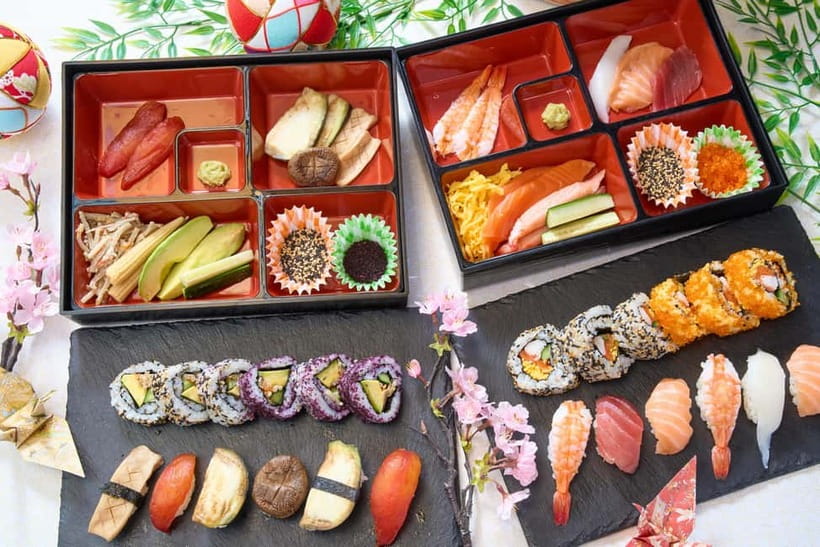
- Useful for plant-based diners: Ingredients can include eggplant, mushrooms, tomato, avocado, and other fresh vegetables.
- A quick sushi-history quiz: Learn the basics in a light, social way before cooking.
- English guidance throughout: Instructors explain the techniques clearly and help beginners keep pace.
- Dietary requests must be made ahead: Vegan, vegetarian, halal, and gluten-free options are available, but changes cannot be made on the day.
- Central Shibuya setting: The studio is roughly seven minutes from Shibuya Station, making it easy to fit into a day in western Tokyo.
Making Sushi in the Middle of Shibuya
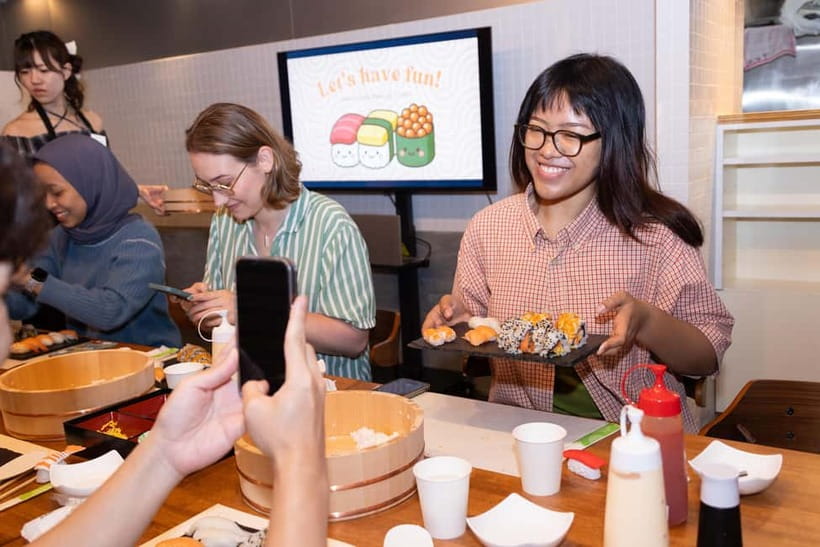
This class gives you a practical taste of Japanese food culture without requiring a full day or advanced cooking skills. At $58 per person, it costs more than grabbing a quick conveyor-belt sushi lunch, but the price covers instruction, ingredients, equipment, and a meal you prepare yourself.
I see the value in the hands-on format. You are paying for an activity as well as food, and you leave with techniques you can try again at home. That makes it a stronger choice than a standard meal if you want an activity that gives you something to remember and use.
The location also helps. You can place the class between shopping, cafés, and sightseeing around Shibuya. The studio is close to the station, but Shibuya’s streets and buildings can still make a short walk feel less simple than it sounds. I would arrive early, especially if you are carrying luggage or meeting friends.
The meeting point may differ depending on the option you book, so check the booking details carefully. This is a small but useful bit of planning that can prevent a rushed start.
More Food Tours in Tokyo
- Tokyo: Shinjuku Food Tour (13 Dishes at 4 Local Eateries)
★ 5.0 · 6,603 reviews - Tokyo Tsukiji Fish Market Food and Culture Walking Tour
★ 5.0 · 3,184 reviews - Tokyo: Shinjuku Food Tour (15 Dishes and 4 Eateries)
★ 4.9 · 2,033 reviews
The Sushi Quiz Before the Apron Goes On
The class begins with a short quiz about the history of sushi. It is not presented as a formal lecture. Instead, it gives you a relaxed introduction to how sushi developed and lets the group get comfortable before handling food.
I like this opening because it adds context without taking over the class. You learn a few facts about one of Japan’s best-known foods, then quickly move on to the part most people came for. Several participants found the history portion clear, light, and fun rather than dull.
This is also a good moment to ask about ingredients and dietary requirements. The instructors speak English, and the class is designed for people with different cooking backgrounds. You do not need to know Japanese food terms or have prior sushi experience.
If you are traveling alone, the quiz offers an easy way to start talking with the rest of the group. If you are with children, friends, or a partner, it gives everyone a simple activity before the cooking begins.
Fresh Vegetables and the Building Blocks of Sushi
The ingredients for the plant-based options can include vegetables such as eggplant, mushrooms, tomato, and avocado. The exact menu may vary, but the idea is to create sushi with fresh ingredients rather than treat dietary food as an afterthought.
You learn about the main ingredients first, including how they work with sushi rice and nori. This matters because good sushi is not just a matter of rolling anything into seaweed. The balance of rice, filling, shape, and seasoning affects both the taste and the final appearance.
The class also supplies the cooking utensils and sushi-making tools. That means you can concentrate on technique rather than wondering what equipment you need. For a beginner, having the right tools and an instructor nearby removes much of the guesswork.
The cooking is meant to be approachable. You will likely make mistakes while shaping rice or rolling the nori, but that is part of the point. The instructors can show you how to correct your grip, adjust the filling, or tighten the roll.
Rolling California Rolls Without the Usual Stress
California rolls are one of the main hands-on projects. You learn how to place the ingredients, manage the rice, and roll the sushi into a firm shape. This sounds easy until you try to keep the filling in place while forming a neat cylinder.
The instructors give practical tips as you work. That personal help is one of the stronger reasons to choose a class instead of simply watching a video at home. You can ask questions at the moment something goes wrong, and you can see the technique demonstrated again.
I would not book this expecting every piece to look like it came from a professional sushi counter. The goal is to learn the method and enjoy the process. Your first roll may be uneven, but it can still taste good, and the class is set up to make that feel normal rather than embarrassing.
Once the roll is finished, you cut it into pieces and see how the colors and fillings come together. This is a small reward, but it helps you understand why sushi making is as much about presentation as it is about flavor.
More sushi and ramen crawls in Tokyo:
- Best of Shinjuku: Izakaya Food Tour (4 Stops, 14+ Tastings)
★ 5.0 · 1,863 reviews - Tokyo Night Foodie Tour in Shinjuku – Seasonal Sushi, Wagyu Beef
★ 5.0 · 1,161 reviews - Eat and Drink Like a Local: Tokyo Ueno Food Tour-Taverns&Ramen
★ 5.0 · 957 reviews - Tokyo: The Best of Izakaya in Shinjuku Food & Cultural Tour
★ 4.9 · 221 reviews
Shaping Nigiri, Japan’s Most Recognizable Sushi
The class also teaches nigiri. This is the simple-looking style made from a shaped portion of rice with a topping placed on top. It may appear easier than a roll, but forming rice that holds together without becoming heavy or tightly packed takes some care.
For a vegetarian or vegan class, the topping is adapted to the menu. The supplied ingredients may include vegetables and other suitable fillings. The important lesson is the shape and handling of the rice, along with the balance between the rice base and topping.
Nigiri is a useful skill to learn because it shows the stripped-down side of sushi. There is nowhere for a loose shape to hide. You learn to handle the rice gently, keep the portion consistent, and create a piece that looks intentional.
The instructors are there to guide you through each step. Past participants specifically praised the patience and clear explanations from instructors including Momoyo and Kaito. Staff names and availability can vary by session, but you can expect English instruction and direct help during the preparation.
A Good Choice for Vegan and Vegetarian Diners
Plant-based food in Japan can require planning, particularly when sauces, broths, or seafood ingredients are not obvious. This class removes much of that uncertainty by allowing you to select a vegan or vegetarian option in advance.
The class can also accommodate halal and gluten-free requests. You need to state your preference or restriction when booking. The menu cannot be changed on the day, so last-minute requests are not something to rely on.
That advance planning is especially important for allergies. The class is designed to be accommodating, but you should provide accurate information before arrival. If you are booking for several people, make sure every person’s needs are included in the reservation.
I like that the food requirement is treated as part of the class design rather than a special favor. You still take part in the same central activities: learning about sushi, preparing the ingredients, rolling sushi, forming nigiri, and eating what you make.
Eating Your Own Work at the End
After the preparation, you sit down and eat the sushi you made. This gives the class a satisfying finish, especially after the concentration needed to roll and shape the pieces.
The meal is not separate from the lesson. You see the ingredients at the start, work with them during the class, and then taste the finished result. That connection makes the food more memorable than a dish simply placed in front of you.
The portion appears substantial enough to count as a proper meal for many people. Still, appetite varies, and the activity should be chosen mainly for the cooking experience rather than as a guaranteed substitute for a large restaurant dinner.
Staff can take photos of your finished sushi before you eat. This is helpful if you want a record of your first attempt, and it avoids the awkward business of trying to take pictures while your hands are covered in rice.
You also leave with practical ideas for recreating sushi at home. You will not become a sushi chef in 90 minutes, but you can take away basic rolling and shaping skills, ingredient ideas, and a better sense of how sushi is assembled.
The Atmosphere: Social, Clean, and Beginner-Friendly
The class takes place in a clean studio with a relaxed feel. The staff are described as polite, warm, and easy to talk with, which matters when you are trying a new food skill in a group.
The tone seems suited to solo visitors as well as couples, families, and friends. You have a shared task, so conversation comes naturally. Solo participants do not need to arrive with a group to enjoy the experience.
The class also works well for people who are not confident cooks. The instructors demonstrate the process, explain the steps in English, and offer help as you work. You do not need to bring specialist knowledge or Japanese language skills.
There are a few limits. Audio recording is not allowed, so do not plan to capture the entire lesson as a recording. You can still focus on the activity and take photos of the finished food when appropriate.
Is $58 Good Value in Tokyo?
At $58, this is not the cheapest way to eat sushi in Shibuya. You can find a quicker and less expensive meal elsewhere. The comparison is not quite fair, though, because this price includes an interactive lesson, ingredients, tools, an instructor, and the chance to eat your own work.
I think the value is strongest for three kinds of visitors. First, it suits anyone who wants a cultural activity with a meal built in. Second, it is useful for vegan, vegetarian, halal, and gluten-free diners who want a planned food experience. Third, it makes sense for people who prefer doing something rather than simply visiting another restaurant.
The 90-minute length also helps. You get a complete activity without sacrificing an entire afternoon. You can schedule it around Shibuya shopping or other Tokyo plans, though I would allow extra time before the start because locating the studio may take longer than expected.
The price is less compelling if you are only looking for the cheapest lunch or if you already make sushi regularly. For a first lesson, though, the combination of food, instruction, and a central location is reasonable.
Who Should Book This Shibuya Class?
I would recommend it to:
- First-time sushi makers who want direct guidance instead of a demonstration only
- Vegan and vegetarian visitors looking for a food activity built around suitable ingredients
- Families and couples who want a shared activity with an edible result
- Solo visitors who enjoy meeting people through a short, structured class
- Food lovers who want a little cultural background with their meal
- Visitors with limited time who can spare 90 minutes near Shibuya Station
It may be less suitable if you need a fully flexible menu, since changes cannot be made on the day. It is also not the right pick if your main goal is premium seafood or a formal sushi-counter meal. This is about learning, making, and eating approachable sushi, not watching an expert prepare an expensive omakase course.
Practical Details Before You Reserve
The class costs $58 per person and lasts 90 minutes. The instructor language is English, and the experience includes the welcome quiz, fresh ingredients, cooking tools, instruction, California rolls, and nigiri.
The studio is about a seven-minute walk from Shibuya Station. Check the exact meeting point for your chosen option, and give yourself extra time to find it. This is particularly wise for a first visit to Shibuya.
Tell the provider about vegan, vegetarian, halal, gluten-free, or other food requirements when you book. Do not wait until the day of the class, since the menu cannot be changed at the last minute.
You can cancel up to 24 hours before the activity for a full refund. A reserve-now, pay-later option is also available, which helps if your Tokyo schedule is still changing.
Should You Book It?
Book this class if you want a friendly, practical introduction to sushi and like the idea of eating what you prepare. The strongest reasons are the clear English instruction, the flexible dietary options, the chance to make both rolls and nigiri, and the convenient Shibuya location.
I would be especially quick to recommend it to plant-based diners. You get a meal that has been planned around your needs, plus useful cooking skills and a pleasant cultural activity.
Just plan your route carefully, give dietary details in advance, and keep your expectations realistic. You are signing up for a fun beginner lesson, not a professional chef course. For many visitors, that is exactly the appeal.
FAQ
How long does the sushi-making class last?
The class lasts 90 minutes.
Where is the sushi-making class located?
The studio is in the heart of Shibuya, about a seven-minute walk from Shibuya Station. The exact meeting point may vary depending on the option booked.
Is the class taught in English?
Yes. The class includes an English-speaking local instructor, and English is the listed activity language.
Are vegan and vegetarian options available?
Yes. Vegan and vegetarian options are available. Ingredients may include vegetables such as eggplant, mushrooms, tomato, and avocado.
Can I request halal or gluten-free food?
Yes. Halal and gluten-free options are available. You must provide your food preference or dietary restriction when booking, since menu changes cannot be made on the day.
What sushi will I make?
You will learn to make California rolls and nigiri, then eat the sushi you prepare.
More Workshops in Tokyo
- Shinjuku Tokyo: Authentic Japanese Home-Style Culinary Class
★ 4.9 · 125 reviews - Small Group Cooking Class & Market Food Tour in Florence
★ 5.0 · 1,574 reviews - Athens: Food Market Visit and Cooking Class with Wine
★ 4.9 · 1,087 reviews - Undiscovered Charleston: Half Day Food, Wine & History Tour with Cooking Class
★ 5.0 · 948 reviews
More Vegan Food Tours in Tokyo
- Tokyo: 2-Hour Vegan and Vegetarian Ramen Guided Walking Tour
★ 4.8 · 33 reviews - Ha Noi Walking Food Tour, Non Vegetarian,Vegan, vegetarian Option
★ 5.0 · 846 reviews - Vegan Street Food & Stories of Hanoi
★ 5.0 · 282 reviews - Vegan Walk Not Just Vegan Food
★ 5.0 · 266 reviews
Just added around Tokyo
- Tokyo: West-Side Cycling and Food Tour with Guide★ 5.0 · 37 reviews
- Tokyo: Togoshi Ginza Street Food Tour★ 5.0 · 34 reviews
- Tokyo: Wagyu and Sushi Gastronomic Journey★ 4.3 · 24 reviews
- Tokyo: Allstar Food Tour★ 4.7 · 29 reviews
- Tokyo: The Best of Izakaya in Shinjuku Food & Cultural Tour★ 4.9 · 221 reviews
- Tokyo Tsukiji Food & Culture Private Tour Licensed Guide★ 4.9 · 28 reviews
- Tokyo: Locals´ Secret Food Tour // Eat like a Japanese★ 5.0 · 35 reviews
- Tokyo: Shibuya Food Tour (13 dishes and 4 Eateries)★ 5.0 · 178 reviews
Food Tours in Tokyo, compared.
Shinjuku Food Tour (13 Dishes at 4 Local Eateries)
Read our review →
Tokyo Tsukiji Fish Market Food and Culture Walking Tour
Read our review →
Shinjuku Food Tour (15 Dishes and 4 Eateries)
Read our review →
Best of Shinjuku: Izakaya Food Tour (4 Stops, 14+ Tastings)
Read our review →
Tokyo Night Foodie Tour in Shinjuku – Seasonal Sushi, Wagyu Beef
Read our review →
Eat and Drink Like a Local: Tokyo Ueno Food Tour-Taverns&Ramen
Read our review →Browse the lists this tour appears in