
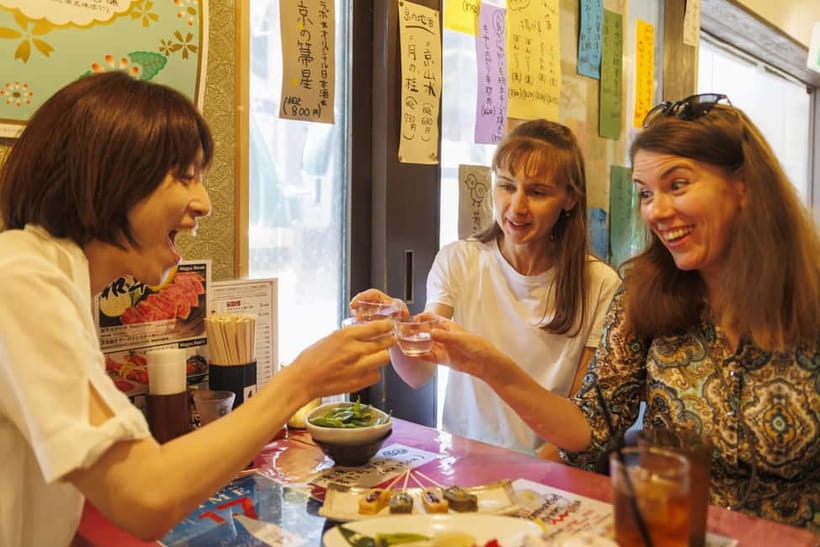
REVIEW · KYOTO
Kyoto: Local Food Tasting Tour at the Nishiki Market
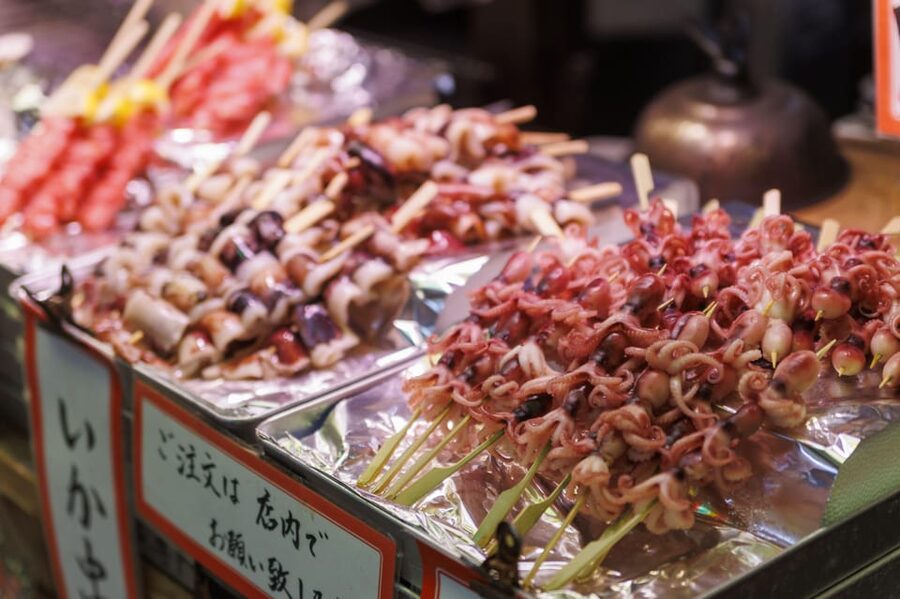
Kyoto’s Nishiki Market is easiest to enjoy when someone else handles the first round of decisions. This 400-year-old food market has about 130 stalls, and a good guide can lead you past the obvious snacks to foods such as yuba, obanzai, hamo tempura, and wagyu steak skewers.
I like the small group, limited to six, and the balance between eating and walking. I also like the local context: guides such as Ayu, Toshi, Takuma, Miho, and Saki have explained not only what is on the plate, but also how food fits into Kyoto life. The main consideration is that this is a tasting walk, not a full meal, and the tour cannot accommodate vegetarian, halal, kosher, gluten-free, or allergy-related requests.
Key points at a glance
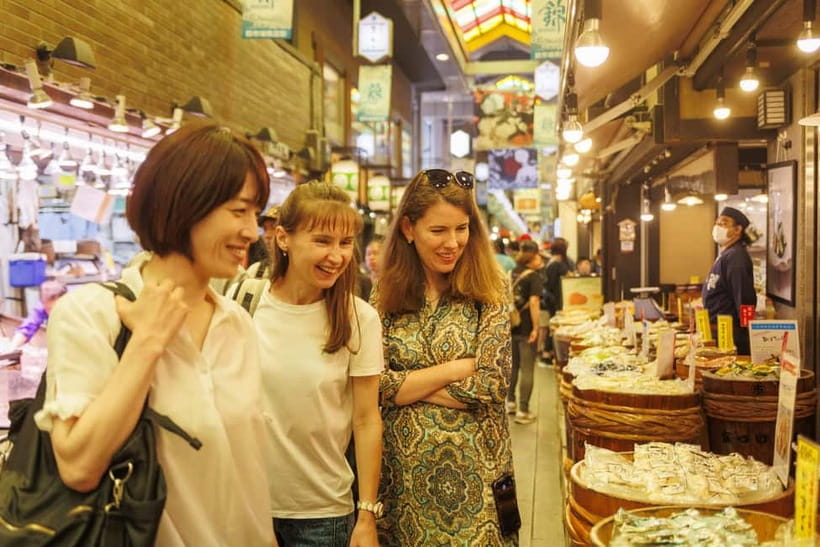
- Five Kyoto specialties included: Expect foods such as yuba, obanzai, hamo tempura, and wagyu steak skewers, plus smaller tastings of seasonings, crackers, and flavored honey.
- A six-person limit: The compact group makes it easier to ask questions and move through the market without losing your guide.
- More than a food stop: The walk includes Nishiki-Tenmangu Shrine, Shinkyogoku Shopping Arcade, Teramachi Street, and another less obvious stop.
- A practical first look at Nishiki: Your guide helps you understand what you are seeing before you return on your own.
- Optional tea ceremony: You can add a 90-minute ceremony with kimono dressing and instruction from a tea master.
- Good value for curious eaters: At $78, the price covers five food specialties, several small tastings, guiding, and local cultural background.
Why Nishiki Market works best with a guide
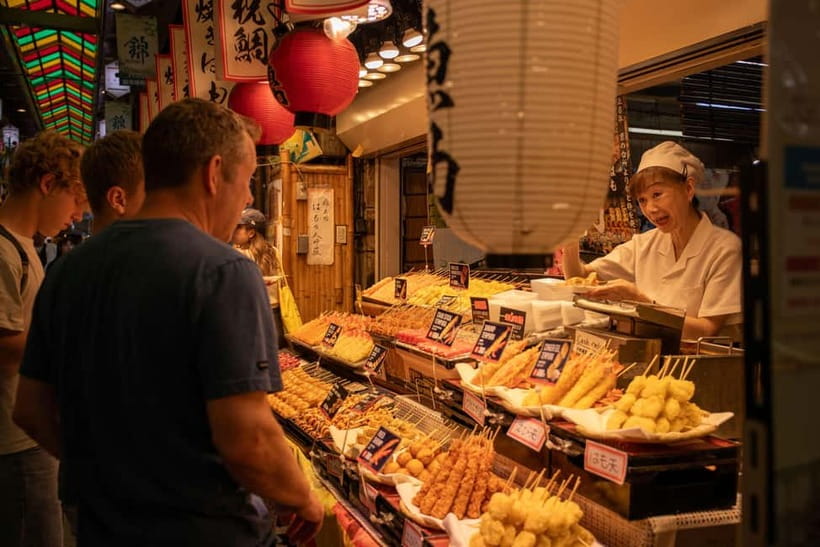
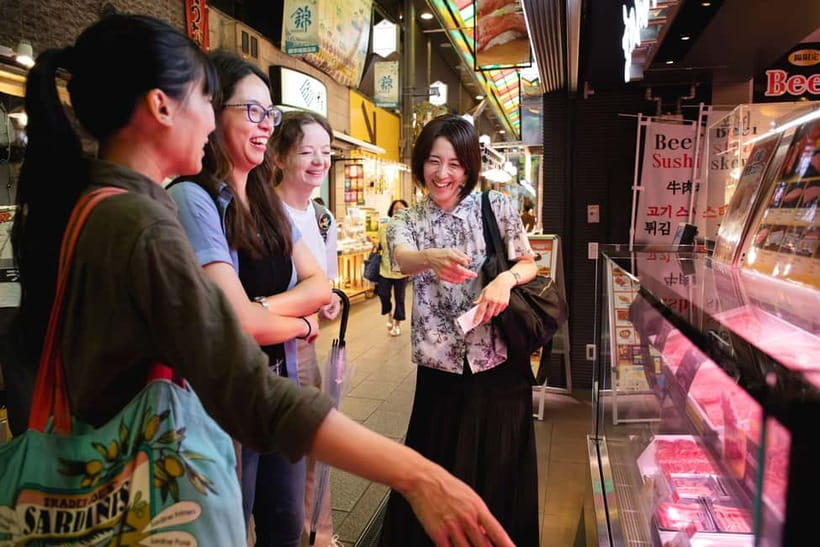
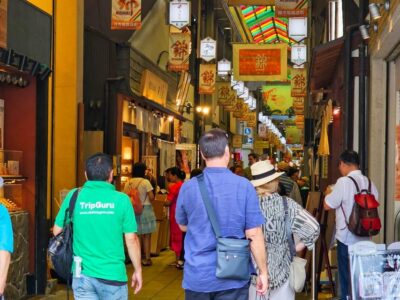
Nishiki Market runs through a narrow shopping street in central Kyoto. The setting can feel confusing at first, especially when several food stalls look appealing and menus are not always easy to understand. I like having a local guide here because the value is not simply finding something to eat. It is learning what the food is, why it matters, and how to approach the market respectfully.
The tour is designed around tasting rather than sitting down for lunch. That means you sample a little at several stops, then keep walking. You will not receive one large meal with a fixed table and long break, so plan a light breakfast and leave room for several bites.
The group size matters. With no more than six participants, your guide can explain a dish without shouting across a crowd. You can also ask the practical questions that make a food tour useful: how something is prepared, whether it is seasonal, and what else is worth trying later.
The guides have different personalities, but the strongest pattern is their ability to make the market less intimidating. Ayu has been praised for choosing a wide range of shops, while Toshi has combined food with history and cultural explanation. Takuma has helped families and encouraged people to try unfamiliar foods. Miho’s calm manner has been especially useful in crowded sections.
More Food Tours in Kyoto
- Kyoto Night Foodie Tour in Gion (9+ dishes + 6 Sake tastings)
★ 5.0 · 1,762 reviews - Nishiki Market Brunch Walking Tour (7 Tastings + Brunch)
★ 5.0 · 1,355 reviews - Kyoto: Insider Sake Brewery Tour with Sake and Food Pairing
★ 5.0 · 704 reviews
The five tastings: a small tour with plenty to try
The included food is the heart of the experience. You receive five special foods, with the exact selection centered on Kyoto specialties. The named examples are yuba, obanzai, hamo tempura, and wagyu steak skewers, along with another food chosen during the walk.
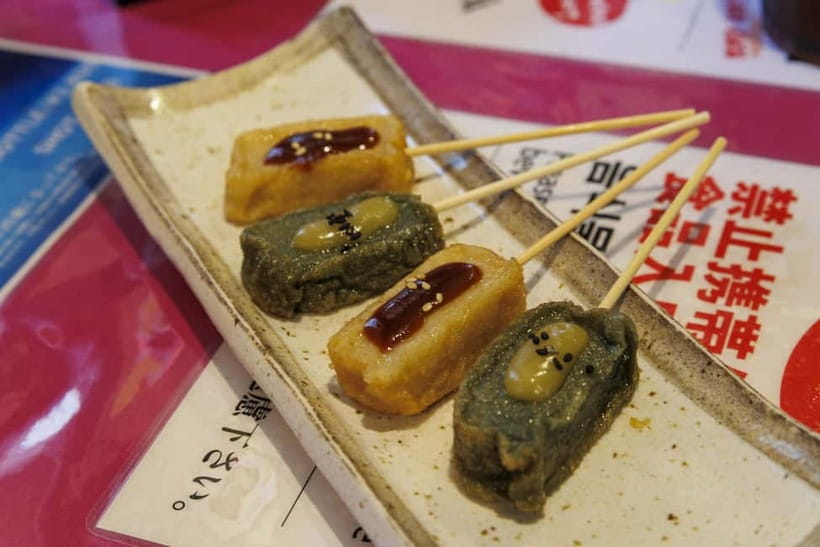
Yuba is tofu skin, made from the thin layer that forms when soy milk is heated. It has a delicate texture and is closely linked with Kyoto’s traditional cooking. If you have only eaten heavily seasoned Japanese food, yuba may seem quiet at first. That is part of the lesson. The guide can help you notice texture and subtle flavor rather than expecting a strong sauce to do all the work.
Obanzai refers to home-style Kyoto cooking. It is useful because it shows a side of Japanese food that is different from sushi, ramen, or fried street snacks. The point is not only novelty. You get a taste of the everyday cooking tradition that shaped local meals.
Hamo, or conger pike eel, appears as tempura. This is one of the more distinctive samples because hamo has many fine bones and needs careful preparation. You do not need to know anything about it beforehand. The guide explains what you are eating and why it appears in Kyoto cuisine.
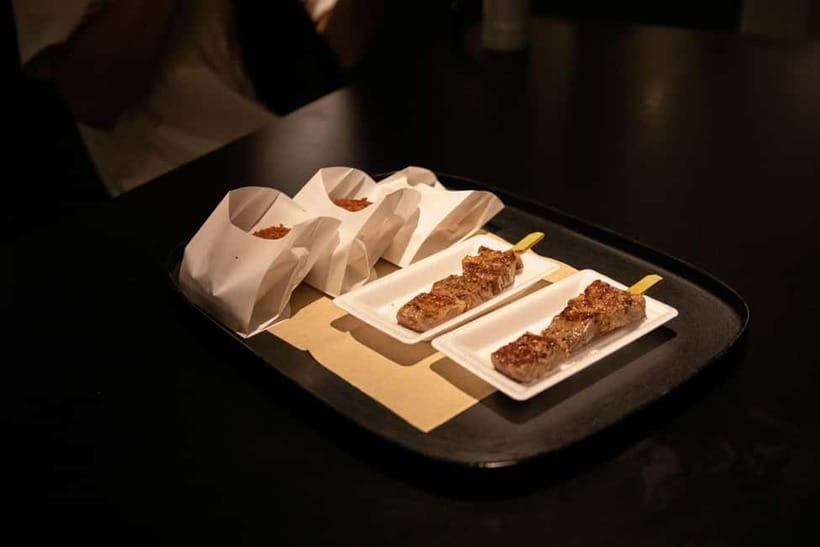
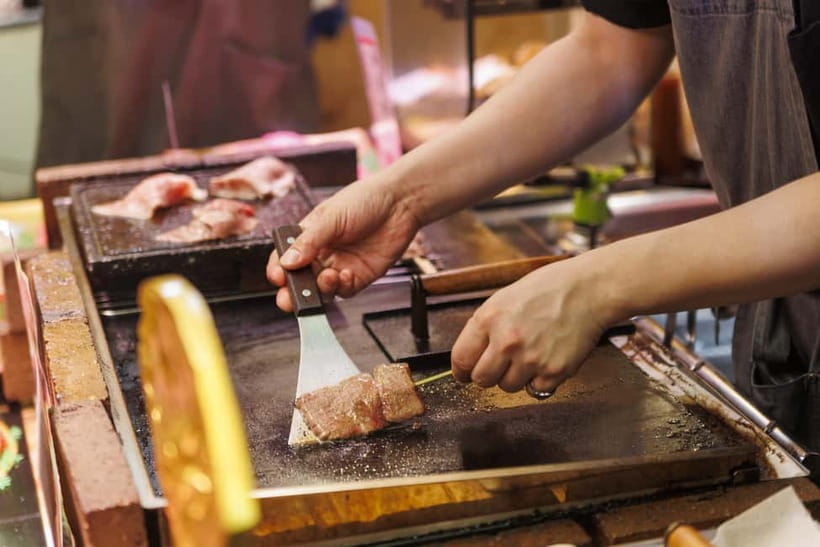
Wagyu steak on a skewer gives the tasting a more immediately familiar flavor. It is also a reminder that the tour is not limited to delicate or plant-based foods. The skewered format makes it easy to eat while standing or walking between stops.
Small tastings may include Kyoto seasonings, a cracker, and Japanese-flavored honey. These samples fill out the experience and give you more chances to compare sweet, savory, crisp, and delicate flavors. The selection is not meant to replace a restaurant meal. It is meant to help you try several things without buying a full portion of every unfamiliar dish.
A practical warning: you cannot request changes for dietary restrictions. The experience does not accommodate vegetarian, halal, kosher, gluten-free, or allergy-related needs. If you have a serious food allergy, this is not a safe tour to book.
Following the route beyond the market
The walk begins at one of several possible meeting points near Shijo Street. Check your chosen option carefully, since the start location can vary. One past participant found the meeting point confusing, although the guide waited and helped resolve the problem. I would allow extra time for finding the correct spot.
The main food portion at Nishiki Market takes about 90 minutes. Your guide leads you through selected shops rather than asking you to choose at random. That is useful when the market is crowded or when you do not know which stalls are focused on local food rather than general souvenirs.
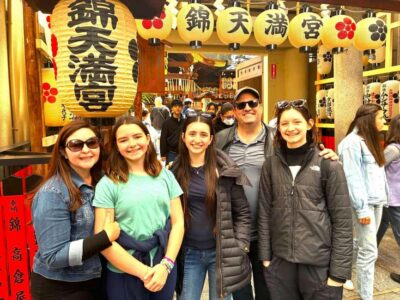
After the market, the route continues to Nishiki-Tenmangu Shrine for about 10 minutes. This compact shrine adds a religious and neighborhood setting to the food-focused walk. I appreciate this pause because Kyoto cuisine makes more sense when you see it alongside the city’s temples, shrines, customs, and daily routines.
The tour then reaches Shinkyogoku Shopping Arcade, where you spend about 45 minutes walking, sightseeing, and shopping. This gives you time to browse beyond food. You may find souvenirs, small gifts, and everyday Japanese goods, though the tour is not primarily a shopping excursion.
A further 10-minute stop is described as a less obvious local place. The available details do not specify exactly what you will see there, so treat it as a flexible part of the route rather than a guaranteed major attraction. Its value is likely in the guide’s explanation and in seeing something you might pass without noticing.
The final major section is Teramachi Street Shopping District, with about 30 minutes for a visit and guided walk. Together, Shinkyogoku and Teramachi make the outing feel like a central Kyoto orientation rather than a single-market tasting. Your guide can point out places to revisit, and you can decide where to return later at your own pace.
The tour ends at one of three listed drop-off points: the original Shijo area, Nishiki Orizuruya, or Kyoto Takashimaya S.C. Since the end point can differ, avoid scheduling a tight connection immediately afterward.
Food, history, and useful Kyoto advice
The best part of this experience is the connection between food and place. Guides have explained the history of market products, local customs, shrine traditions, and the development of Kyoto. This turns each tasting into a small story rather than a series of samples.
You can also use the guide as a local sounding board. Several guides have offered suggestions for the rest of the day, including nearby places to visit and other Kyoto activities. That kind of advice is especially useful early in your stay, when you are still learning how the city fits together.
The tour works well for first-time visitors, but it is not only for them. One participant who had already visited Kyoto still found new foods and learned new details. The experience is also friendly to solo visitors. A small group gives you company without the feel of a large organized procession.
Families can do well here, too. One guide kept a group with three adults and three children engaged, and another helped an 11-year-old try unfamiliar foods. Keep in mind that children who dislike standing, walking, or tasting new textures may not enjoy every stop.
You should wear comfortable shoes. Bring rain gear because the route is outdoors and market conditions do not remove the need to walk between areas. Pets, luggage, and large bags are not allowed, so this is not a good activity to schedule while moving between hotels.
The tour is not suitable for wheelchair users or people with mobility impairments. The market route, shopping arcades, and walking format require you to keep moving through busy areas.
More market tours in Japan:
- Tokyo Tsukiji Fish Market Food and Culture Walking Tour
★ 5.0 · 3,184 reviews - Tokyo: Tsukiji Fish Market Food and Walking tour
★ 5.0 · 1,724 reviews - Tokyo: Tsukiji Fish Market Guided Walking Tour
★ 4.9 · 1,397 reviews - Tokyo: Tsukiji Fish Market Food and Culture Walking Tour
★ 4.7 · 757 reviews
Is the $78 price fair?
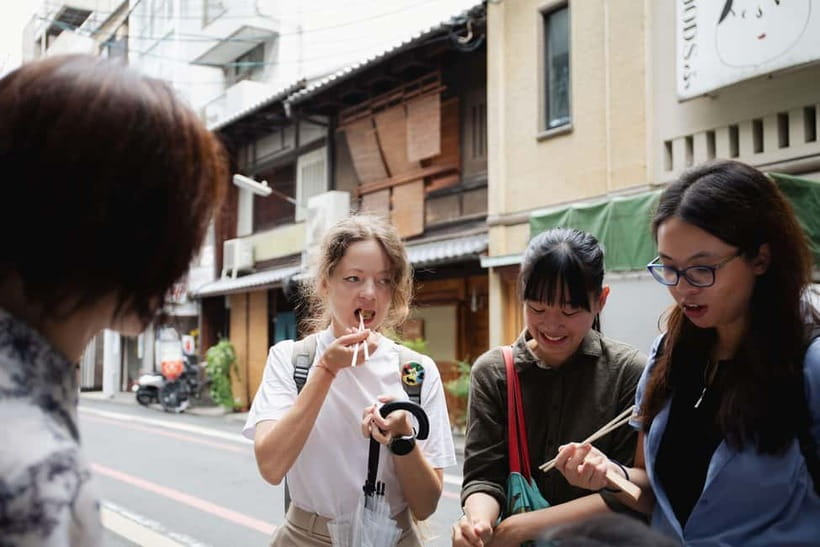
At $78 per person, I consider this a reasonable price if you value guidance and food discovery. You receive a small-group walk, an English-speaking local guide, five special foods, and additional tastings. You also get roughly three hours of orientation through a central part of Kyoto.
The value is strongest for someone who would otherwise spend time guessing what to buy. A solo visitor can easily spend money on several market foods without understanding what they are, while a guide helps you sample with more purpose. The experience also gives you confidence to return later and explore independently.
The value is weaker if you already know Nishiki Market well, speak Japanese comfortably, and enjoy choosing food on your own. One participant felt the route could be done independently. That is a fair point. Nishiki is open to self-guided exploration, and the tour price pays mainly for selection, explanation, and company rather than exclusive access.
The tour is also not a substitute for a formal Kyoto meal. If you want a quiet table, a long break, or a large serving, spend your $78 elsewhere. If you want several small tastes and a local introduction, the price makes more sense.
Free cancellation up to 24 hours before the activity and the reserve-now, pay-later option make the booking less rigid. Still, check the start time and meeting point for your selected option before committing your day.
Adding the 2 PM tea ceremony
You can select an option that adds a traditional tea ceremony after the food tour. The tea session begins at 2:00 PM, and you must make your own way to the venue near Nishiki Market.
The ceremony lasts 90 minutes. It begins with professional kimono dressing, followed by instruction from a tea master who explains the meaning of the movements and gestures. You also have time for commemorative photographs in a traditional setting.
This is a useful add-on if you want a more formal cultural activity after the relaxed market walk. It is less suitable if you want a slow lunch, a hotel break, or an open afternoon. Since you travel to the tea venue yourself and the ceremony begins at a fixed time, check the timing carefully against your selected food-tour start.
I would choose the tea option if you are interested in ceremony, clothing, and etiquette, not simply another food stop. The two activities complement each other: one shows Kyoto through everyday eating and shopping, while the other presents a carefully ordered cultural tradition.
Who should book this Nishiki Market walk?
I would recommend this tour to first-time Kyoto visitors who want an easy introduction to local food. It is also a strong choice for solo visitors, couples, families with adventurous children, and anyone who feels unsure about ordering at market stalls.
Book it early in your Kyoto stay if you want advice for later meals and sightseeing. The guide can help you recognize foods and areas you might otherwise overlook, then you can return to Nishiki with more confidence.
I would skip it if you need strict dietary control, cannot manage a walking tour, or prefer to explore independently. I would also skip it if your main goal is a full lunch or dinner.
For most curious eaters, the combination is persuasive: five Kyoto foods, a very small group, shrine and shopping stops, and a guide who can connect the plate to the city around it. The tour is not fancy, but it is practical, social, and focused on the parts of Nishiki Market that are easy to miss.
FAQ
How long does the Nishiki Market food tour last?
The activity is scheduled for about three hours, with the market tasting portion lasting around 1.5 hours. The route also includes shrines, shopping arcades, and additional walking.
How many people are in the group?
The group is limited to six participants, plus the English-speaking guide.
What foods are included?
The included specialties can include yuba, obanzai, hamo tempura, and wagyu steak skewers, along with another special food. Additional tastings may include Kyoto seasonings, crackers, and Japanese-flavored honey.
Is the tour suitable for dietary restrictions?
No. The tour cannot accommodate vegetarian, halal, kosher, gluten-free, or allergy-related requests.
Can I add a tea ceremony?
Yes. You can choose an option that includes a 90-minute tea ceremony beginning at 2:00 PM. You must travel independently to the nearby venue after the food tour, and the session includes kimono dressing, tea instruction, and time for photographs.
What should I bring, and are there mobility limits?
Bring comfortable shoes and rain gear. Pets, luggage, and large bags are not allowed. The tour is not suitable for wheelchair users or people with mobility impairments.
More Shopping Tours in Japan
- Tsukiji Fish Market: Street Food & Culture Walking Tour
★ 5.0 · 669 reviews - Tsukiji Fish Market Small-Group Food Walking Tour
★ 5.0 · 621 reviews - Kuromon Market Food Walking Tour in Osaka (6 stops, 6 tastes)
★ 5.0 · 550 reviews - Kyoto: Nishiki Market and Depachika Food Tour with a Local
★ 4.7 · 76 reviews
Just added around Japan
- Kyoto: Replica food making experience★ 4.8 · 70 reviews
- Kyoto: Nishiki Market Tour with a Local Foodie & Tastings★ 4.5 · 67 reviews
- Kyoto: Foodie Night Tour in Gion with 9 dishes + 6 Sake★ 4.4 · 26 reviews
- Kyoto: Nishiki Market and Depachika Food Tour with a Local★ 4.7 · 76 reviews
- Kyoto Evening Gion Food Tour★ 4.9 · 35 reviews
- Kyoto: Gion & Pontocho Food Tour with 13 Dishes★ 4.9 · 235 reviews
- Kyoto: Casual Pontocho Evening Food Tour★ 4.8 · 31 reviews
- Kanazawa: Private Food Tasting Walking Tour★ 4.7 · 25 reviews
Food Tours in Kyoto, compared.
Kyoto Night Foodie Tour in Gion (9+ dishes + 6 Sake tastings)
Read our review →
Nishiki Market Brunch Walking Tour (7 Tastings + Brunch)
Read our review →
Insider Sake Brewery Tour with Sake and Food Pairing
Read our review →
Kyoto Night All-Inclusive Eats and Streets, Gion and Beyond
Read our review →
Nishiki Market and Depachika Food Tour with a Local
Read our review →
Nishiki Market Tour with a Local Foodie & Tastings
Read our review →Browse the lists this tour appears in