
REVIEW · KYOTO
Kyoto: Replica food making experience
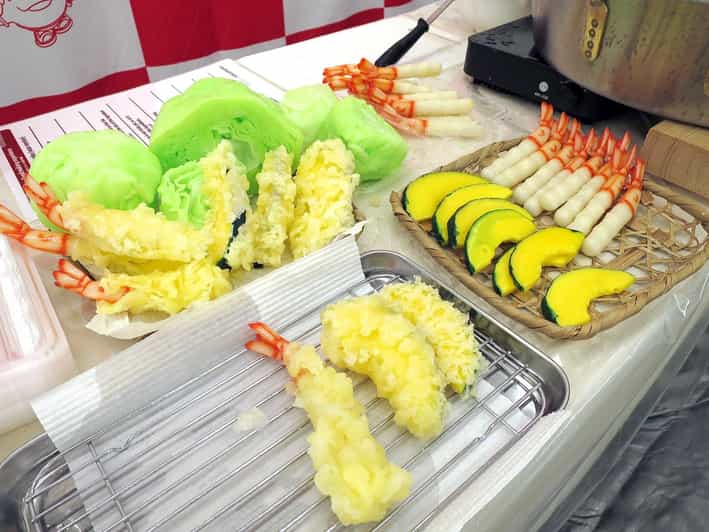
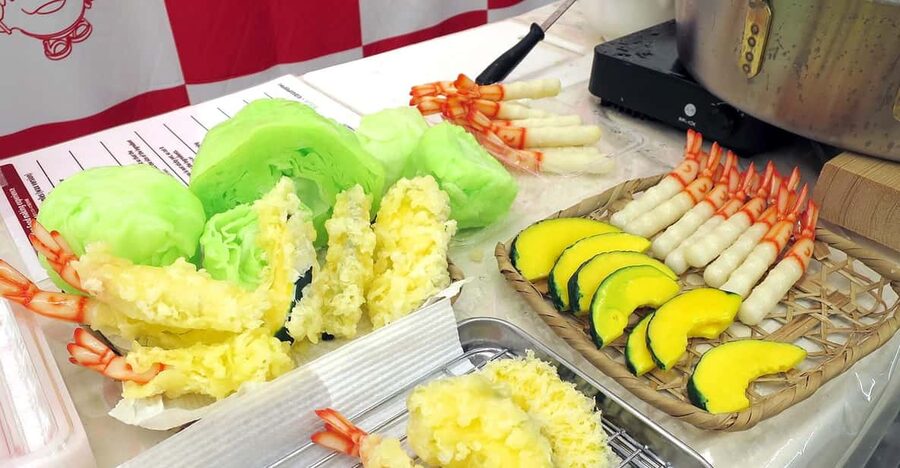
Japanese restaurants often display plastic dishes that look good enough to eat. In this Kyoto workshop, you get to make that illusion yourself, shaping melted wax into shrimp and pumpkin tempura. I like the hands-on work and the small-group setting, which gives you time to ask questions and try again. I also like that your finished piece comes packaged like a real food product. The one drawback is the hot wax, so younger children need help and careful supervision.
I love this as a break from temples and shopping streets. It explains a distinctly Japanese bit of everyday culture while giving you a souvenir with a story behind it. The process can be fiddly, and your tempura may not look factory-perfect, but that is part of the fun.
Key points at a glance
- Make shrimp and pumpkin tempura from wax: Pour wax into hot water, shape it quickly, and build a realistic batter coating.
- Add a lettuce replica if available: This gives you another chance to practice the technique and create a fuller display.
- Work in a group of no more than four: The compact class allows for close instruction and help when the wax behaves badly.
- Learn why Japanese restaurants display replica food: The finished models connect a fun craft to a useful part of Japanese dining culture.
- Take home a packaged souvenir: Your replica comes boxed like a supermarket item, though it is strictly for display.
- Plan around the Sanjo Meiten-gai area: The meeting point is diagonally across from Kani Douraku, marked by its large crab sign.
Why Kyoto’s replica food is worth your time
Replica food, known in Japan as 食品サンプル, or food samples, is more than a tourist novelty. Outside many restaurants, these lifelike models show you what a dish looks like before you sit down. They help bridge language gaps and make it easier to choose from an unfamiliar menu.
This workshop lets you see how that visual trick begins. Instead of simply admiring a plastic bowl in a restaurant window, you make your own version with wax, hot water, and quick hand movements. That small change in perspective makes the displays you see elsewhere in Japan more interesting.
At $22 per person, the activity is priced well for a one-hour Kyoto experience. You receive instruction, materials, and the finished piece, so you are paying for both the activity and a souvenir. It is not a bargain in the same way as a free temple visit, but it offers something those sights cannot: a practical craft you can try yourself and explain when you get home.
The activity also fills an useful gap in a Kyoto schedule. You can fit it between sightseeing stops, use it as a rainy-day plan, or choose it when your group needs an hour away from shrines and long walks.
More Food Tours in Kyoto
- Kyoto Night Foodie Tour in Gion (9+ dishes + 6 Sake tastings)
★ 5.0 · 1,762 reviews - Nishiki Market Brunch Walking Tour (7 Tastings + Brunch)
★ 5.0 · 1,355 reviews - Kyoto: Insider Sake Brewery Tour with Sake and Food Pairing
★ 5.0 · 704 reviews
Finding the workshop near the large crab sign
The meeting point is diagonally across from Kani Douraku, the restaurant recognized by its enormous crab sign. That landmark matters because Kyoto streets can be confusing, especially in the shopping arcades and central restaurant districts. Use the crab as your visual reference rather than relying only on a street address.
The workshop is in the Sanjo Meiten-gai shopping arcade area, not far from Nishiki Market. That makes it easy to pair with food browsing, small shops, and other central Kyoto sights. You should still arrive at your reserved time. The staff explain the process to the whole group at once, so arriving late can mean missing the key instructions.
The exact character of the class depends on the day’s group. The maximum is four participants, and some sessions may feel almost one-on-one. That is good news if you want help with shaping the wax or if you are unsure about the next step. It also means this is not a large, anonymous demonstration.
The first lesson: turning hot wax into food
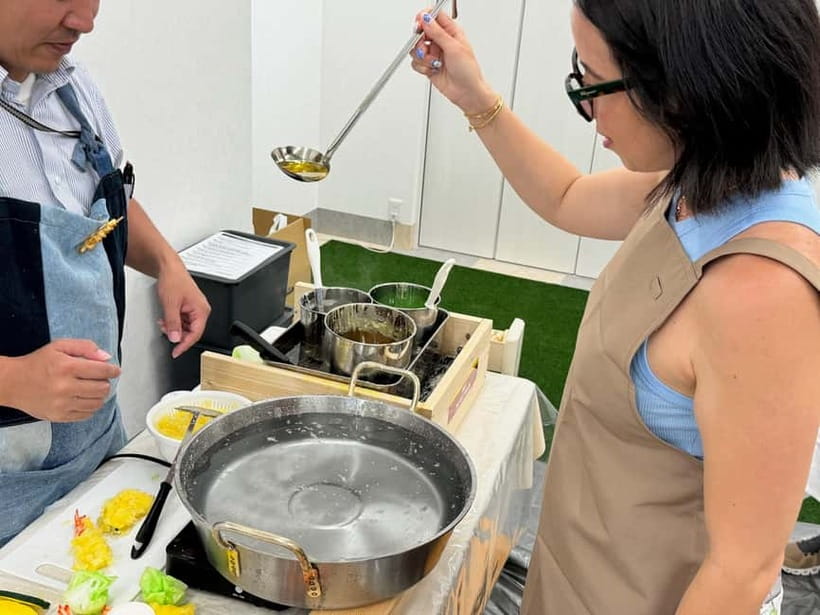
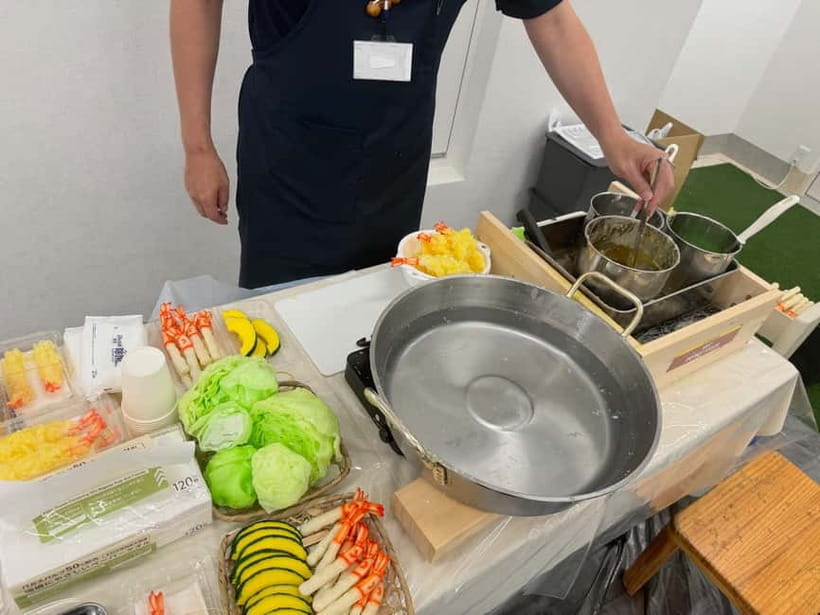
The class begins with an explanation of how replica food is made, followed by a demonstration. You work with melted wax and hot water, not edible batter or ordinary craft clay. The wax must be poured and shaped while it is still workable, then handled with enough speed to create the right surface.
You will make shrimp and pumpkin tempura. The central trick is to create a thin, irregular coating that looks like fried batter. The instructor shows you how the wax falls into the water and how different pouring heights affect the texture. A higher or lower pour can change the size and shape of the ripples, so even a small movement matters.
This is where the activity becomes more than a simple souvenir workshop. You are not just placing pieces into a mold. You are learning to control a material that changes quickly, then using that material to suggest crisp fried food.
The staff may let you practice before making the piece you take home. That practice time is useful. It removes some pressure and lets you understand how fast the wax sets. Your first attempt may be lumpy or too thin, but the instructor can point out how to adjust your next pour.
Making shrimp and pumpkin tempura
Once you understand the wax, you begin shaping the actual food. The shrimp and pumpkin have different forms, so each requires a slightly different approach. The shrimp needs to read as a curved, recognizable ingredient beneath its coating. The pumpkin has a broader shape and its own visual character.
The batter is the part that gives both pieces their convincing look. You work the wax around the food form to create a rough, uneven surface rather than a smooth shell. This is a hands-on process, and the result depends partly on your timing and partly on the instructor’s tips.
You should expect a little trial and error. The point is not to produce a perfect restaurant display in sixty minutes. The point is to understand how a few quick actions can create the impression of crispness, volume, and texture.
Several instructors are described as patient, friendly, and willing to repeat directions. English and Japanese are offered, and basic instructions can also be supported with translation tools when needed. Simple gestures and demonstrations carry much of the lesson, so a limited knowledge of Japanese should not prevent you from taking part.
The hot wax does require care. Children may need parental assistance, and the activity is not suitable for anyone under six. An apron or chef-style jacket may be available, but wearing clothes you do not mind getting wax on is sensible. A change of clothes has been suggested as a precaution.
A few more food tours around Japan worth comparing
- Tokyo: Shinjuku Food Tour (13 Dishes at 4 Local Eateries)
★ 5.0 · 6,603 reviews - Tokyo Tsukiji Fish Market Food and Culture Walking Tour
★ 5.0 · 3,184 reviews - Osaka: Shinsekai Food Tour with 13-15 Dishes at 5 Eateries
★ 4.8 · 2,204 reviews - Osaka Food Tour: 13 Dishes at 5 Local Eateries
★ 5.0 · 2,149 reviews
The optional lettuce replica
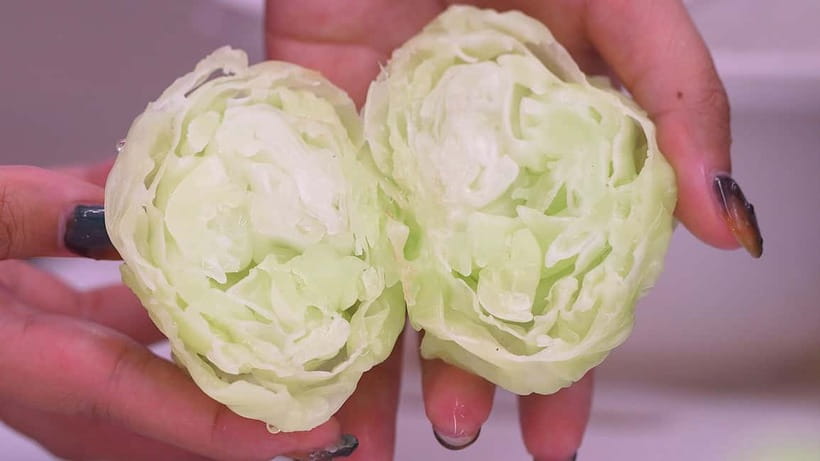
Lettuce is available as an additional option. It gives you a different kind of challenge from tempura because the goal is to form thin, folded leaves rather than a fried coating.
If you choose it, you get another look at how everyday movements can create a surprisingly realistic result. The lettuce can also add variety to your finished display, especially if you want something beyond the tempura bowl.
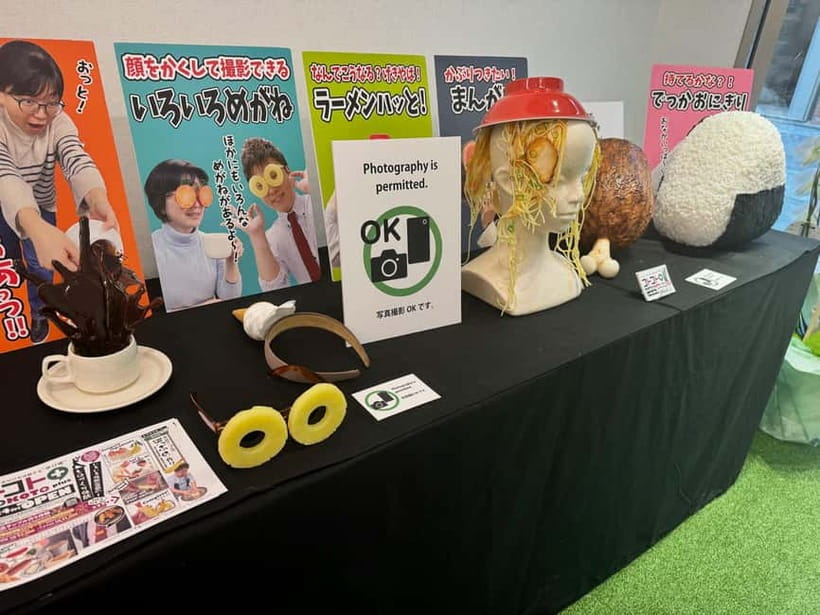
The available workshop choices can vary, so check what is offered when you book. Other replica food examples may be displayed at the studio, including larger food models that make good photo subjects. The main experience described here centers on shrimp and pumpkin tempura, with lettuce as an option.
Why the small group matters
A four-person limit is one of the strongest practical features. Wax work moves quickly, and it helps to have an instructor close enough to see what your hands are doing. You can ask for a repeat demonstration without holding up a room full of people.
The small format also suits families. Children around school age can take part, but adults should be ready to assist with the hot wax and the quick shaping process. Older children and teenagers can usually handle the creative side well, while younger ones may need more direct help.
Couples and solo participants should also find the setup comfortable. The workshop does not depend on having a large group to create energy. The instructors use humor, encouragement, and conversation to keep the class relaxed.
One thing to keep in mind is that the class may feel more like a guided craft lesson than a formal cultural lecture. You will learn about replica food culture through the demonstration and conversation, but most of the hour is spent making things with your hands.
Packaging your souvenir like real food
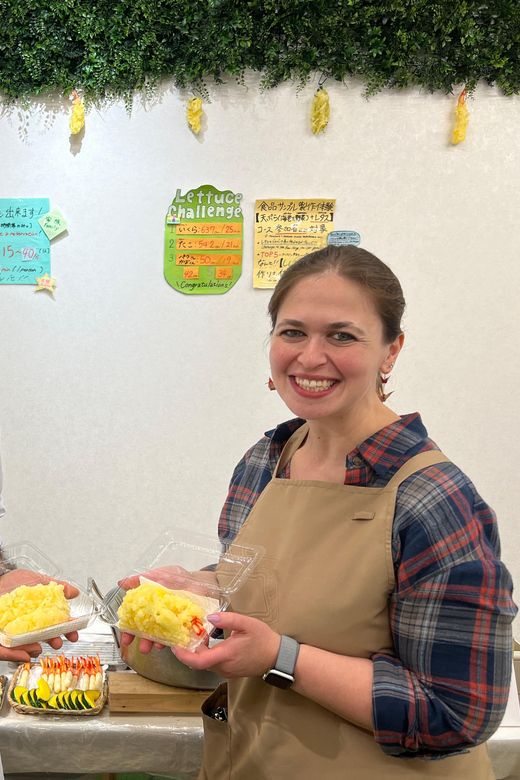
At the end, your finished replica is packaged in a way that resembles a supermarket product. That final touch makes the souvenir much more amusing and useful as a conversation piece. It also protects the piece during the trip home.
The package can make your creation look temptingly real, so label it clearly in your luggage or keep it separate from actual snacks. It is not edible and should never be served at the dinner table by mistake.
The handmade quality is part of its charm. You may not produce a flawless commercial sample, but you will have something connected to your own time in Kyoto. It is more personal than buying a ready-made keychain and small enough to take home without much trouble.
You should still pack it with care. The class provides the package, but the information provided does not promise a special shipping service or hard-sided travel container. Treat the finished piece as a delicate display item.
Timing, language, and practical planning
The experience lasts about one hour, though the hands-on portion can sometimes finish in roughly 45 minutes. That makes it easy to schedule before lunch, after a visit to Nishiki Market, or during an afternoon in central Kyoto.
Starting times vary, so check availability when you choose your date. Arrive promptly because the staff explain how to make the dish at the beginning, all at once. Missing those first instructions could make the later steps harder.
English and Japanese instruction is available. The teaching style relies on showing as well as telling, and translation apps may help if a detail is unclear. You do not need advanced Japanese to follow the basic process.
Free cancellation is available up to 24 hours before the activity for a full refund. You can also reserve and pay later, which is useful if your Kyoto plans are still shifting. These policies do not remove the need to choose your time carefully, since late arrival can affect the group lesson.
Who will enjoy this most
I would choose this for families with children aged six or older, couples wanting an unusual date activity, and anyone who likes making things rather than simply looking at them. It also works well for repeat visitors to Kyoto who have already covered the major temples and want a different side of the city.
It is especially good for people interested in food culture, design, craft, or photography. The large display models and the finished tempura make natural photo subjects, and the packaged souvenir gives you an easy story to tell later.
You may want to skip it if you dislike messy handwork, have no patience for trial and error, or want a long cultural lecture. The activity is short and focused. It does not replace a full cooking class, and you will not eat what you make.
For families, remember that the minimum age is six and parental help may be requested. The hot wax is the main reason. Adults should stay engaged rather than treating the hour as a drop-off activity.
Booking advice and final verdict
At $22, I consider this a fair buy if you value a hands-on activity and a take-home object. You get a compact lesson, all materials, instructor support, and your own replica food. The strongest value comes from the experience itself, not just the finished bowl.
Book it if you want a distinctly Japanese craft, a short break near Nishiki Market, or a family activity that does not require a full day. The small group and kind, patient teaching style make it approachable, even if you do not speak much Japanese.
Skip it if your priority is edible food, a major historic site, or a completely effortless activity. The wax is hot, the shaping takes concentration, and your first piece may not look perfect.
For most visitors, I would add it to a central Kyoto day. You will learn why restaurant displays look so convincing, make something with your own hands, and leave with a souvenir that is far more memorable than another generic purchase.
FAQ
How long does the replica food workshop last?
The scheduled duration is one hour, though some sessions may finish in about 45 minutes.
What food replicas will I make?
The main activity is making shrimp and pumpkin tempura from melted wax. Lettuce may be available as an additional option.
Is the replica food edible?
No. The finished pieces are for display only, even though they are designed to look realistic.
What is the minimum age?
Children under six are not permitted to take part. Parents may need to assist children because the workshop uses hot wax.
How many people are in each group?
The group is limited to four participants.
What languages are used for instruction?
Instruction is available in English and Japanese.
Where is the meeting point?
The meeting point is diagonally across from Kani Douraku, the restaurant with the large crab sign, in the Sanjo Meiten-gai shopping arcade area.
Just added around Japan
- Kyoto: Nishiki Market Tour with a Local Foodie & Tastings★ 4.5 · 67 reviews
- Kyoto: Foodie Night Tour in Gion with 9 dishes + 6 Sake★ 4.4 · 26 reviews
- Kyoto: Nishiki Market and Depachika Food Tour with a Local★ 4.7 · 76 reviews
- Kyoto Evening Gion Food Tour★ 4.9 · 35 reviews
- Kyoto: Local Food Tasting Tour at the Nishiki Market★ 4.7 · 135 reviews
- Kyoto: Gion & Pontocho Food Tour with 13 Dishes★ 4.9 · 235 reviews
- Kyoto: Casual Pontocho Evening Food Tour★ 4.8 · 31 reviews
- Kanazawa: Private Food Tasting Walking Tour★ 4.7 · 25 reviews
Food Tours in Kyoto, compared.
Kyoto Night Foodie Tour in Gion (9+ dishes + 6 Sake tastings)
Read our review →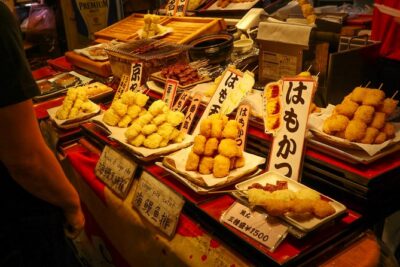
Nishiki Market Brunch Walking Tour (7 Tastings + Brunch)
Read our review →
Insider Sake Brewery Tour with Sake and Food Pairing
Read our review →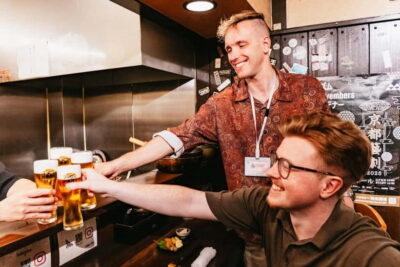
Kyoto Night All-Inclusive Eats and Streets, Gion and Beyond
Read our review →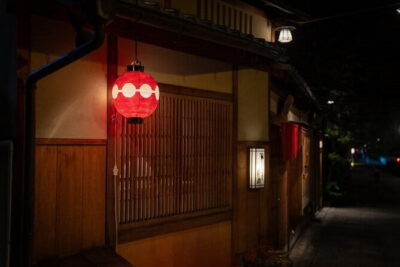
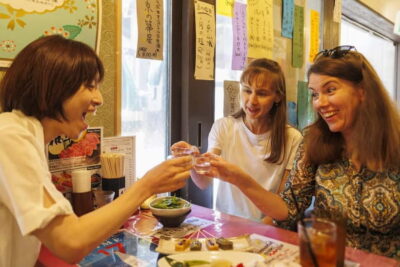
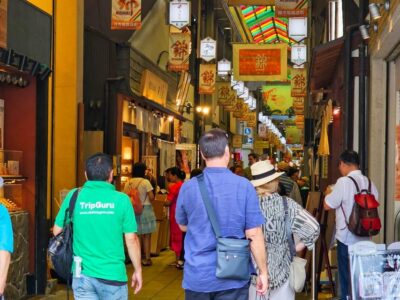
Nishiki Market and Depachika Food Tour with a Local
Read our review →
Nishiki Market Tour with a Local Foodie & Tastings
Read our review →Browse the lists this tour appears in