
REVIEW · OSAKA
Osaka: Shinsekai Food Tour with 13-15 Dishes at 5 Eateries
Osaka’s Shinsekai district is best understood one bite at a time. Over three hours, you move through arcades and side streets to five local eateries, eating 13 to 15 dishes that range from takoyaki and oden to beef and tofu stew, gyoza, and tonpeiyaki. The food is only half the point. The walk shows you a side of Osaka that is easy to miss if you stick to Dotonbori.
I like the small group, limited to nine people, because it makes cramped food stalls and tiny restaurants much easier to handle. I also like the generous spread: two drinks are included, and you should finish with a properly full stomach. The main drawback is firm: vegans and people with gluten intolerance cannot join, and even some pescatarians may find a few dishes unsuitable.
Key points to know
- Five different types of eatery: The route includes a food stall, gastrobar, classic restaurant, izakaya, and specialized gyoza restaurant.
- A full Osaka menu: Expect 13 to 15 dishes, including takoyaki, kushikatsu, udon, yakitori, oden, gyoza, karaage, and tonpeiyaki.
- Small English-speaking group: Groups are limited to nine, with guides such as Kevin, Tommy, Mio, Taka, Paul, and Kiko assigned on different dates.
- Shinsekai beyond the main signs: You walk through arcades and side alleys to places with Japanese-only menus.
- Good timing for first-time visitors: The tour gives you food, neighborhood orientation, and local recommendations in one evening.
- Come hungry: The portions add up quickly, and the last stop can be a challenge if you have eaten beforehand.
Why Shinsekai makes such a good food-tour setting
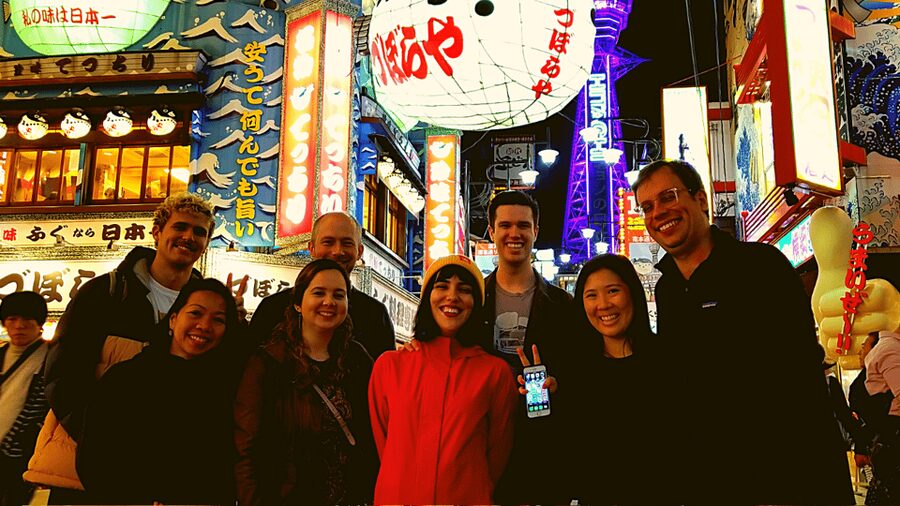
Shinsekai has a different feel from Osaka’s more polished shopping and dining districts. Its streets mix old-style eating places, arcades, narrow side lanes, and newer businesses. You are not simply ferried from one famous restaurant to another. You walk between stops, getting a feel for the area as you go.
That matters because Osaka food is tied closely to casual dining. Many local specialties were made for quick meals, shared plates, or standing counters. A guide helps you understand what you are seeing, especially when menus are written only in Japanese and the restaurant is too small for easy browsing.
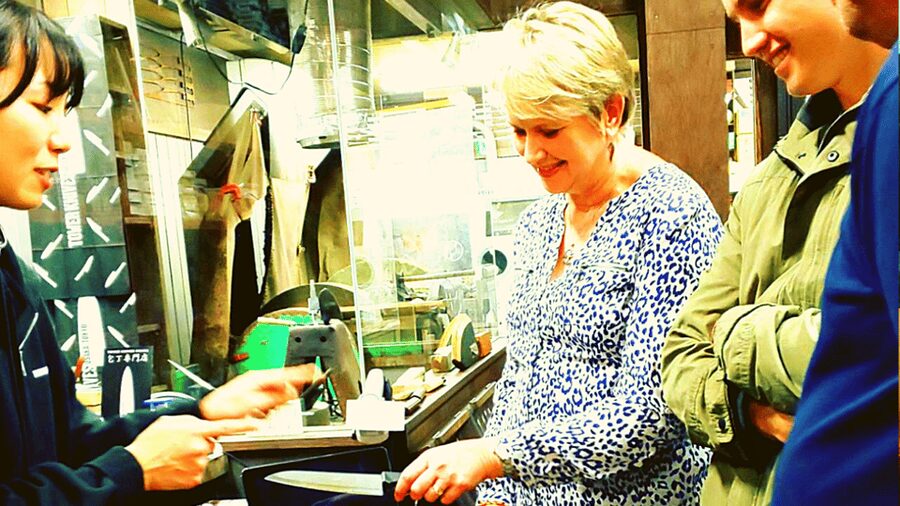
The tour begins at Dobutsuen-mae Station on the Midosuji Line. Meet at Exit 1, in front of the 15 wall lanterns of Daiichi Building. This is a precise meeting point, which is useful in a busy city, but give yourself enough time to find the station exit before the start.
The walk includes side streets and steps. One visitor noted that the movement helped balance out the food, while another described the pace as casual and unhurried. Still, this is a walking meal, not a seated dinner. Wear shoes you can comfortably use for three hours.
More Food Tours in Osaka
- Osaka Food Tour: 13 Dishes at 5 Local Eateries
★ 5.0 · 2,149 reviews - Hungry Osaka Street Food Tour:15 Tastings & 3 Drinks with a Local
★ 5.0 · 1,727 reviews - Osaka Local Foodie Walking Tour in Dotonbori and Shinsekai
★ 5.0 · 985 reviews
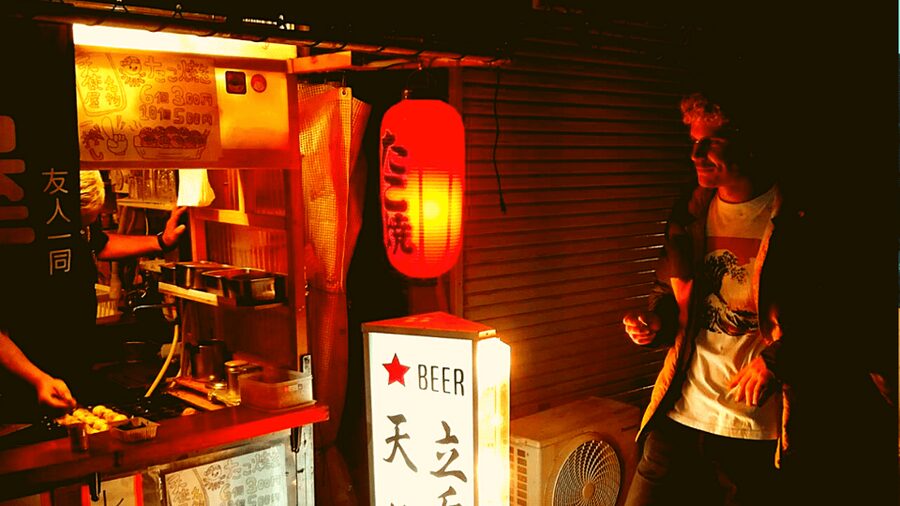
First bites: takoyaki and oden at a local stall
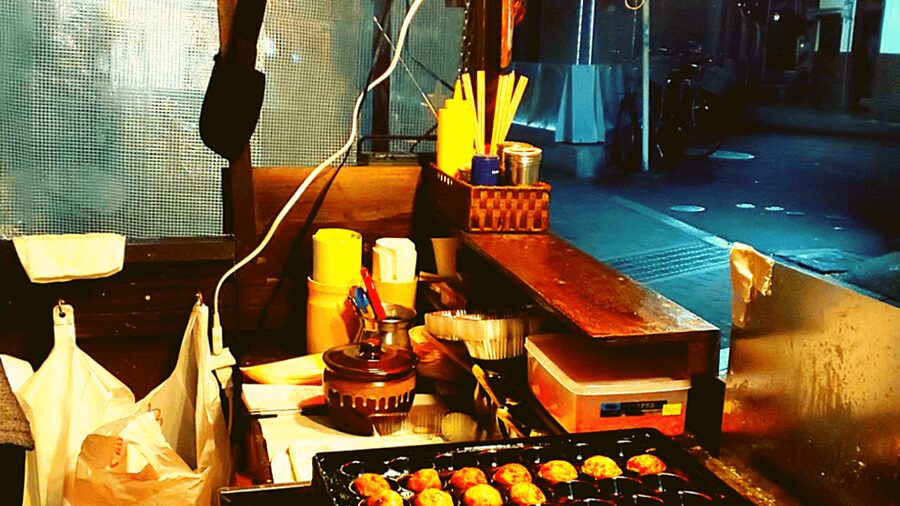
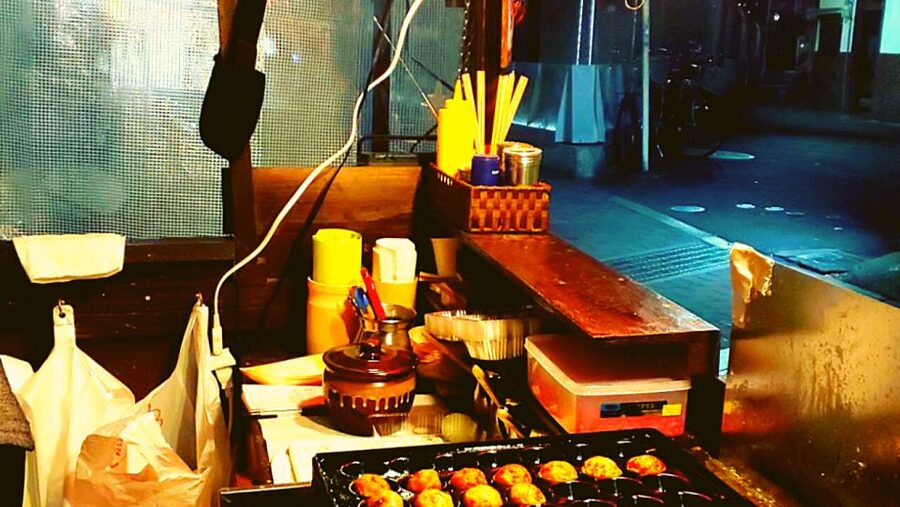
The opening stop is a takoyaki and oden stall. Takoyaki are Osaka’s famous battered octopus balls, cooked in round molds and served hot. They are a useful first taste of the city: inexpensive, social, filling, and best eaten fresh.
Oden gives you a different texture and mood. The ingredients simmer in broth, making it a comforting counterpoint to the crisp, hot takoyaki. The exact selection can change, but the pairing lets you compare two everyday Osaka styles in one stop.
This first visit also sets the tone for the evening. You may be eating at a compact stall rather than a broad dining room, and the guide helps organize the order and explain what is being served. That removes much of the uncertainty for anyone who has never ordered at a Japanese food counter.
Do not treat this as a small appetizer before dinner. The food keeps coming, and the early dishes make a real dent in your appetite.
Izakaya plates: kitsune udon, yakitori, wings, and kushikatsu
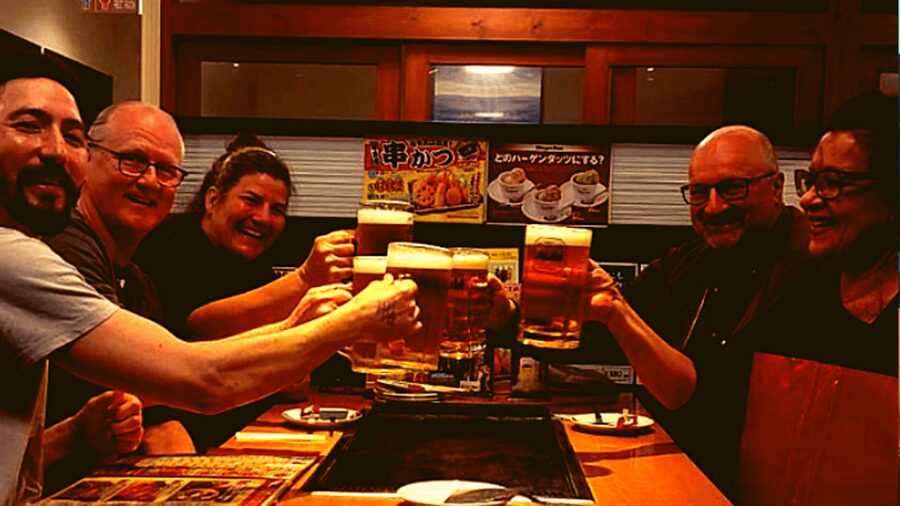
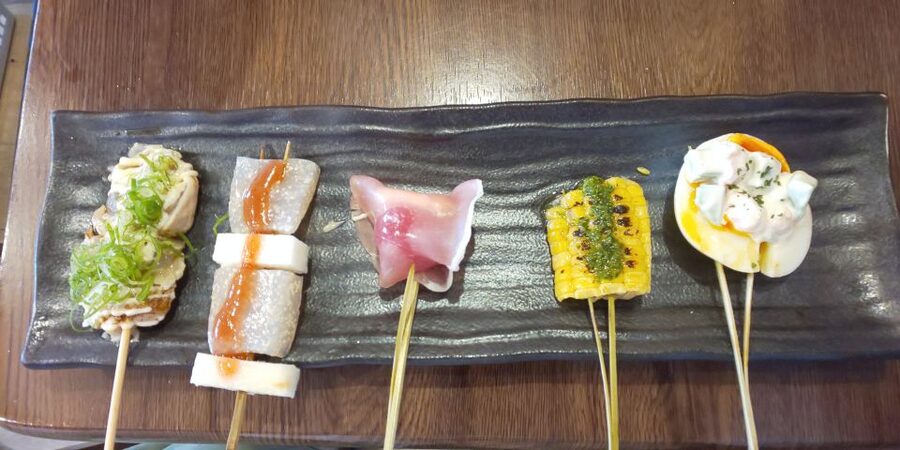
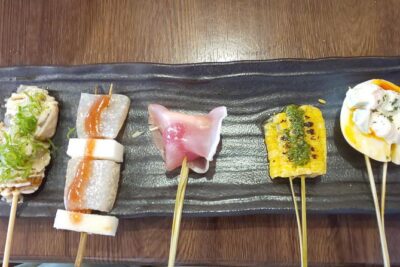
The next section moves to an izakaya, the Japanese pub style built around small plates and drinks. Here you can expect kitsune udon, yakitori, chicken wings, and nagaimo, along with kushikatsu.
Kitsune udon pairs thick wheat noodles with broth and sweet-seasoned fried tofu. It is simple, warm, and distinctly different from the fried dishes elsewhere on the route. Yakitori brings grilled chicken skewers, while chicken wings add another savory, finger-food option.
Kushikatsu is one of Shinsekai’s signature foods. Vegetables and meat are placed on skewers, coated lightly, and fried. It is the kind of food that is easy to order when you know the local style, but less obvious when you are facing an all-Japanese menu on your own.
This stop is especially helpful if you want range rather than one narrow theme. You get noodles, grilled meat, fried food, and a vegetable or root-vegetable dish in one sitting. The tradeoff is that the meal can feel rich early in the tour, so pace yourself and leave room.
A homestyle restaurant for beef, tofu, and mochi
The route then turns to a smaller, traditional Japanese restaurant. The food here shifts away from street snacks and toward homestyle dishes. Nikudoufu, a beef and tofu stew, is the key example. It is a gentle, savory dish that shows how satisfying Japanese cooking can be without relying on heavy seasoning.
You may also receive original yakitori, described as skewered beef assortments, followed by mochi. A drink, alcoholic or non-alcoholic, is included at this stop or within the overall meal plan. The exact order can vary.
I like this part of the route because it slows the rhythm. After fried snacks and noodles, a warm stew and simple skewers give you a different view of Osaka food. It also makes the experience feel more like visiting several neighborhood kitchens than checking off a list of famous street foods.
Families can take part, but picky eaters should know that this is not a menu built around familiar Western choices. One guide arranged fries for children in a particular group, but that should not be treated as a standard part of the tour. If you have strict food needs, ask before booking rather than hoping for substitutions.
A few more food tours around Japan worth comparing
- Tokyo: Shinjuku Food Tour (13 Dishes at 4 Local Eateries)
★ 5.0 · 6,603 reviews - Tokyo Tsukiji Fish Market Food and Culture Walking Tour
★ 5.0 · 3,184 reviews - Tokyo: Shinjuku Food Tour (15 Dishes and 4 Eateries)
★ 4.9 · 2,033 reviews - Best of Shinjuku: Izakaya Food Tour (4 Stops, 14+ Tastings)
★ 5.0 · 1,863 reviews
The gyoza stop brings a crisp change of pace
The specialized gyoza restaurant is one of the more focused stops. Gyoza are pan-fried dumplings with a crisp underside and a savory filling. They offer a welcome change after the broth-based udon and stew.
A dedicated dumpling shop also shows how much variety exists within everyday Japanese food. You are not simply sampling the same fried flavor again and again. The cooking method, shape, texture, and dipping style all shift.
One useful point from the food selection is that the tour is not aimed only at adventurous eaters. Several dishes are approachable, even if you have never tried Japanese food beyond sushi or ramen. At the same time, the route gives you enough unfamiliar items to make the evening feel like an introduction rather than a standard restaurant meal.
The small group matters here. A nine-person maximum is a good fit for compact establishments, where a large party could be awkward or split across several tables. It also gives you more time to ask what you are eating without holding up a crowd.
The final stop: tonpeiyaki, karaage, and a last drink
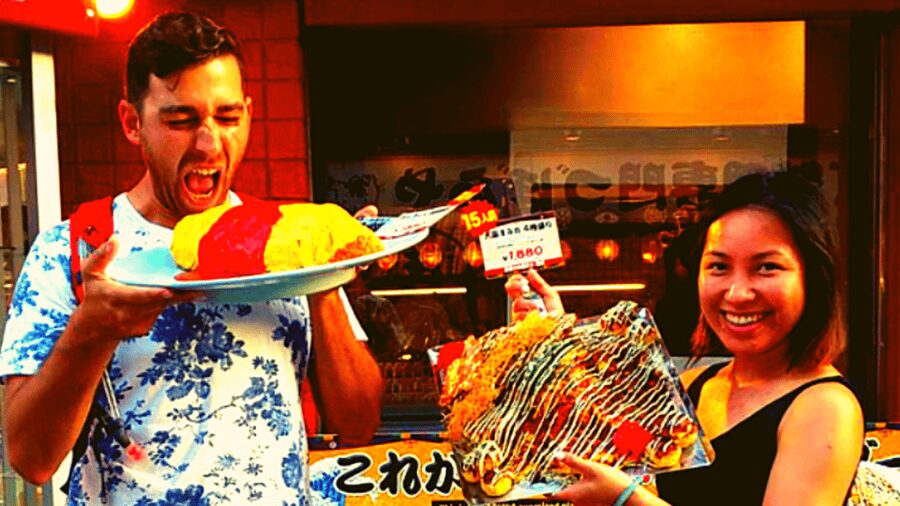
The final eatery brings together several Osaka favorites and a few shareable extras. Tonpeiyaki is a pork omelette, similar in spirit to an okonomiyaki-style snack but centered on egg and pork. You may also receive edamame, karaage, and a Japanese pancake or fruit dish.
Karaage is Japanese fried chicken seasoned before frying. It is familiar enough for cautious eaters, but still fits the local food theme. Edamame adds something lighter, while the sweet finish helps close a long sequence of savory plates.
Another drink is included here. You can choose an alcoholic or non-alcoholic option, giving you some flexibility even though the tour is built around izakaya-style dining.
By this point, fullness is the real issue. Many people finish the tour stuffed, and that is not an exaggeration given the number of dishes. The smart move is to eat lightly beforehand and avoid scheduling a large dinner afterward.
What the guides add between the dishes
The guide is the thread holding the meal together. Your English-speaking guide explains the food, gives local context, and leads the group through the district. Guides vary by departure, with names such as Kevin, Yuki, Paul, Darren, Bernie, Kiko, Mio, Tommy, Taka, Mario, Suga, and others appearing on different dates.
The strongest guide style for this tour is friendly and conversational. Kevin has been singled out for keeping the pace relaxed while staying on schedule. Tommy has been praised for connecting the food to Osaka culture and offering suggestions for the rest of a visit. Taka, an Osaka native, has been noted for sharing local tips and neighborhood knowledge.
You should not book this expecting a formal lecture. The value is in the small explanations between stops: why a dish belongs to Osaka, how an eatery fits the neighborhood, and what to order if you return alone. Some guides also use trivia or conversation to help a group of strangers settle in.
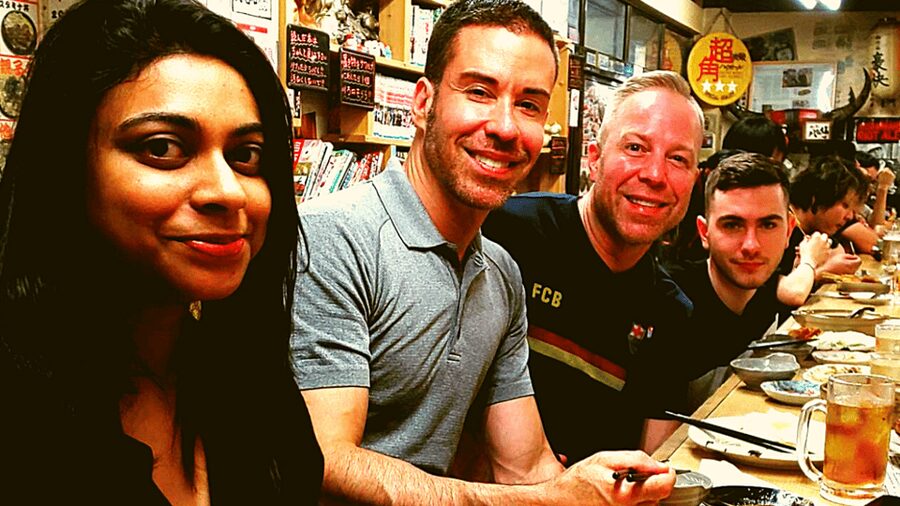
The group atmosphere can become part of the fun. Solo visitors are likely to find it easier to meet people here than at a regular restaurant, and some groups have continued on for karaoke afterward. That social side is a bonus, not a guarantee, but the nine-person limit gives it a fair chance.
Is $53 a fair price for the evening?
At $53 per person, this is not the cheapest way to eat in Osaka. You could buy individual snacks for less, especially if you already know where to go and can read the menus.
The value comes from what the price bundles together: five stops, 13 to 15 dishes, two drinks, an English-speaking guide, and access to small places that can be hard to navigate alone. You also avoid the guesswork of ordering unfamiliar food and gain a short introduction to Shinsekai.
For a first evening in Osaka, that combination is useful. You get a meal, neighborhood orientation, and ideas for later in the trip. It can also be good value for couples or solo visitors who might otherwise order cautiously and miss several local specialties.
The price is less attractive if you are a confident eater who already knows Shinsekai, speaks Japanese, and plans to visit the same types of establishments independently. It is also poor value for anyone unable to eat wheat or who avoids animal products, since the tour cannot accommodate gluten-free or vegan diets.
Practical matters that affect your choice
The experience lasts three hours and is offered at different start times, so check the available departure when booking. It includes food at one stall, one gastrobar, one classic eatery, one izakaya, and one specialized restaurant.
Hotel pickup and drop-off are not included. You make your own way to Dobutsuen-mae Station and leave the final stop independently. Since the activity moves through streets and alleys, arrive ready to walk rather than expecting a fixed dining room experience.
The tour normally visits the listed establishments, but a restaurant may occasionally be closed or fully booked. In that case, the guides use alternatives. That means the exact menu and restaurant sequence are not guaranteed, and seasonal availability can change some dishes.
Free cancellation is available up to 24 hours before the start for a full refund. You can also reserve and pay later, which is useful while your Osaka plans are still shifting.
Who should book this Shinsekai food tour?
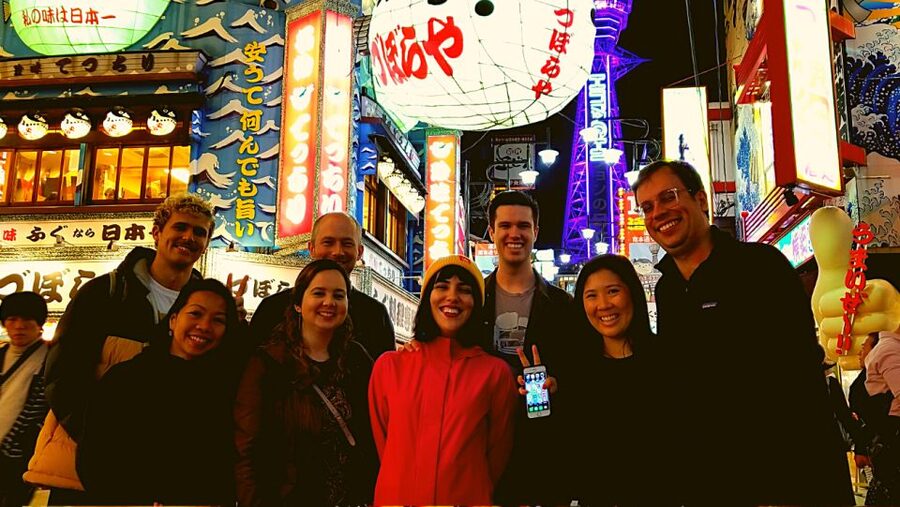
I would choose this for a first or second day in Osaka, especially if you want a broad taste of local food without spending time decoding menus or searching for open tables. It is also a strong choice for solo visitors, couples, and small groups who enjoy walking and sharing dishes.
It suits curious eaters who want more than sushi and ramen. You will try food from stalls, pubs, and small neighborhood restaurants, with enough familiar dishes to keep the meal approachable.
I would skip it if you need vegan, gluten-free, or highly controlled dietary options. Pescatarians should also check carefully before booking, since at least some dishes may not work for them. And if you dislike eating in compact local establishments or prefer a leisurely single-restaurant dinner, the five-stop format may feel rushed.
Should you book it?
Book this tour if you want a filling, social introduction to Osaka food in Shinsekai, with a guide handling the ordering and explaining the local setting. The combination of 13 to 15 dishes, two drinks, five eateries, and a small group makes the $53 price reasonable for many visitors.
My best advice is to schedule it early in your Osaka stay. You will learn dishes to look for, see parts of Shinsekai you might otherwise pass by, and collect food and restaurant ideas for the rest of your trip. Just arrive hungry, wear comfortable shoes, and be honest about dietary restrictions before paying.
FAQ
Where does the Osaka Shinsekai food tour meet?
The meeting point is Dobutsuen-mae Station on the Midosuji Line, Exit 1, in front of the 15 wall lanterns of Daiichi Building.
How long does the food tour last?
The tour lasts three hours.
How many dishes are included?
The experience includes 13 dishes in the standard description, with the overall food selection described as 13 to 15 dishes depending on availability, season, and restaurant operations.
What foods might be served?
Possible dishes include takoyaki, oden, kitsune udon, yakitori, chicken wings, nagaimo, kushikatsu, nikudoufu, beef skewers, mochi, gyoza, tonpeiyaki, edamame, karaage, and Japanese pancake or fruit.
Are drinks included?
Yes. Two drinks are included, and the choices can include alcoholic and non-alcoholic drinks.
Can vegans or people with gluten intolerance join?
No. The tour is not suitable for vegans or people with gluten intolerance because too few suitable dishes are available.
Just added around Japan
- Kyoto: Nishiki Market Tour with a Local Foodie & Tastings★ 4.5 · 67 reviews
- Kyoto: Replica food making experience★ 4.8 · 70 reviews
- Kyoto: Foodie Night Tour in Gion with 9 dishes + 6 Sake★ 4.4 · 26 reviews
- Kyoto: Nishiki Market and Depachika Food Tour with a Local★ 4.7 · 76 reviews
- Kyoto Evening Gion Food Tour★ 4.9 · 35 reviews
- Kyoto: Local Food Tasting Tour at the Nishiki Market★ 4.7 · 135 reviews
- Kyoto: Gion & Pontocho Food Tour with 13 Dishes★ 4.9 · 235 reviews
- Kyoto: Casual Pontocho Evening Food Tour★ 4.8 · 31 reviews
Food Tours in Osaka, compared.
Osaka Food Tour: 13 Dishes at 5 Local Eateries
Read our review →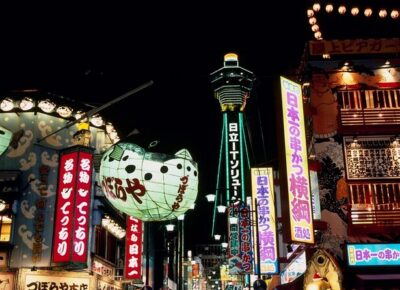
Hungry Osaka Street Food Tour:15 Tastings & 3 Drinks with a Local
Read our review →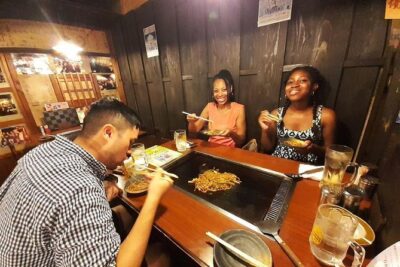
Osaka Local Foodie Walking Tour in Dotonbori and Shinsekai
Read our review →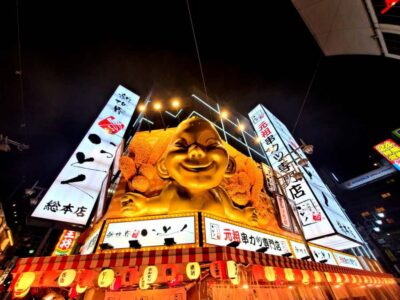
Hungry Osaka Street Food Tour: 15 Dishes & 3 Drinks
Read our review →
Kuromon Market Food Walking Tour in Osaka (6 stops, 6 tastes)
Read our review →
Guided Food Tour with 12 Dishes at 4 Local Eateries
Read our review →Browse the lists this tour appears in