
REVIEW · OSAKA
Osaka: Guided Food Tour with 12 Dishes at 4 Local Eateries
Osaka’s food culture makes more sense when you eat it one small plate at a time. This 150-minute walking tour takes you from the Don Quijote Dotonbori Midosuji Store to local restaurants, a bar, and a street-food stop, with about 12 dishes along the way. I like the range, from sashimi and grilled skewers to takoyaki, okonomiyaki, and sweets.
I also like the personal touch. Guides such as Mao, Spike, Ukyo, Nao, and Kenta explain what you are eating and often add useful ideas for the rest of your Osaka stay. The main consideration is that the restaurants and dishes change by day, so you should see this as a broad tasting tour rather than a fixed menu.
Key points
- Twelve dishes in 150 minutes: You sample a wide spread of Japanese food without spending several evenings finding each place yourself.
- Three types of stops: Expect local restaurants, a bar or sake-focused stop, and street food, depending on the day’s route.
- Dotonbori orientation: The tour begins and ends at Don Quijote Dotonbori Midosuji Store, taking you through one of Osaka’s busiest food districts.
- Personal guidance: Guides explain ingredients, customs, local history, and how to eat certain dishes.
- Good for first-time diners: The variety helps you try unfamiliar foods with someone there to answer questions.
- Bring cash: Two drinks and the included food are covered, but additional orders must be paid for in cash.
Starting beneath the Dotonbori lights
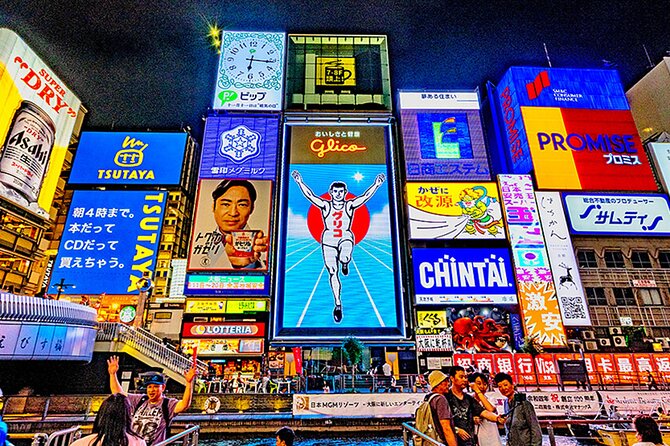
Meet in front of Don Quijote Dotonbori Midosuji Store, looking for the Local Guide Stars sign. This is a sensible meeting point in central Dotonbori, but give yourself time to find it. The area is crowded, loud, and full of bright signs, especially at night.
The tour returns to the same place, which keeps the evening simple. You do not need to arrange a taxi or navigate to a distant final restaurant. You can also use the walk between stops to see Dotonbori with a local guide rather than treating it as a corridor between meals.
The walking is part of the experience. Wear comfortable shoes, and bring a camera if you want photos of the food and the neon streets. The pace is generally relaxed, though the district itself can be hectic, and rain may affect the walk. One group waited under cover during heavy rain before continuing, so a little weather flexibility helps.
More Food Tours in Osaka
- Osaka: Shinsekai Food Tour with 13-15 Dishes at 5 Eateries
★ 4.8 · 2,204 reviews - Osaka Food Tour: 13 Dishes at 5 Local Eateries
★ 5.0 · 2,149 reviews - Hungry Osaka Street Food Tour:15 Tastings & 3 Drinks with a Local
★ 5.0 · 1,727 reviews
A progressive tasting rather than one big meal
The clever part of this tour is its structure. Instead of sitting in one restaurant and ordering a large meal, you move through several food settings. That gives you a better sense of how Osaka eats: quick street snacks, casual restaurant plates, izakaya-style food, drinks, and a final sweet or savory bite.
The food is not served as a formal course menu. It is a succession of shared tastes and small portions, with your guide helping order and explain them. This matters if you are new to Japanese food. You can ask what something is, how it is prepared, and the best way to eat it before taking a bite.
The exact menu changes. You might encounter fresh fish, sashimi, fried chicken, grilled skewers, takoyaki, Osaka-style okonomiyaki, regional snacks, and traditional sweets. Since the selection depends on the day, you should not book this expecting one particular dish. Book it for variety.
That changing menu is also a strength. If you stay in Osaka for several days, the tour can point you toward foods and restaurants to try later. Guides have also offered recommendations for other sights and dishes, making the experience useful beyond the 150 minutes.
The first local restaurant: a broad introduction to Osaka food
The opening restaurant is where the tour usually establishes its rhythm. You sit down, meet the other people in the group, and begin with several dishes rather than a single specialty. Depending on the day, this may include fish, regional food, grilled items, or other Japanese plates selected by the guide.
I like this opening because it reduces the pressure of ordering in an unfamiliar restaurant. You are not staring at a long Japanese menu and guessing. The guide handles the recommendations, then explains what arrives.
The best guides also connect the food to everyday customs. Mao has been praised for explaining both dishes and life in Japan, while other guides have added local history and advice for the rest of an Osaka visit. That makes the meal more than a checklist of samples.
The drawback is predictable: if you have strong dietary needs, you must discuss them before or at the start of the tour. One gluten-free participant received thoughtful adjustments, but the food changes from day to day. Do not assume every dish can be modified. Ask clearly, and give the operator advance notice if possible.
The bar stop: sashimi, skewers, and an Osaka evening
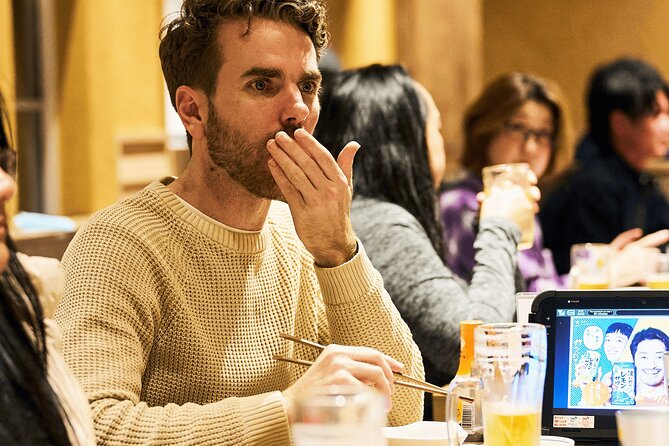
The second stop is commonly a local bar or izakaya-style setting. This is often the most atmospheric part of the route. You may try fresh sashimi, fried chicken, grilled skewers, or other small plates while having one of the included drinks.
An izakaya is valuable for a first visit because it shows you a casual side of Japanese dining. You are not simply eating a famous Osaka snack. You are seeing how several dishes can be shared around a table, with drinks and conversation filling out the meal.
Sake may be available as part of the tasting, along with beer, cocktails, wine, spirits, tea, coffee, or other drink choices depending on the stop. The official inclusion is two drinks, so treat extras as your own expense. Any additional food or drink must be paid for in cash.
This is often where the social side works best. People from different countries sit together, compare unfamiliar dishes, and ask the guide questions. Solo visitors can particularly benefit from this format. One solo participant found the local guide made the evening much better than simply eating alone, and that is a fair reason to choose a food tour instead of a self-guided restaurant crawl.
A few more food tours around Osaka worth comparing
- Osaka: Guided Food Tour with 12 Dishes at 4 Local Eateries
★ 5.0 · 533 reviews - Dubai: Old Town, Souks, Street Food, Guided Tour & Abra Ride
★ 4.9 · 7,170 reviews - Hanoi: Guided Food Tour with Train Street Visit
★ 4.9 · 6,239 reviews - Naples: Street Food Walking Tour with Local Guide
★ 4.9 · 4,976 reviews
Street food with a Michelin Guide connection
At some point, the route includes street food, with takoyaki a recurring example. Osaka is closely associated with this hot, round snack, and trying it from a local stall gives the dish more context than buying it as a quick photo opportunity.
The street-food element also breaks up the restaurant seating. You may be standing briefly, walking through the district, and eating something made for immediate enjoyment. Street stalls can be busy and the food is often hot, so listen carefully when the guide explains how to handle it.
The tour highlights street food featured in the Michelin Guide. That does not mean every stop is a fine-dining experience. The appeal is the opposite: a modest local snack can be treated with the same care as a restaurant dish when someone explains why it matters.
If you have a small appetite, pace yourself here. Twelve dishes plus drinks is a generous amount, and the food comes in a steady stream. The goal is tasting, not racing to finish every plate.
The final stop: okonomiyaki and something sweet
The last restaurant or food stop often brings you to Osaka-style okonomiyaki, a savory pancake-like dish cooked with a range of ingredients and toppings. It is a fitting finish because okonomiyaki is one of the city’s best-known foods, but it is more satisfying when you have already tried several lighter dishes.
One participant singled out the okonomiyaki as a highlight, while others enjoyed finishing the route with it after sashimi, fried chicken, and drinks. Your exact final dish can differ, but the structure usually gives you a substantial closing plate and possibly a traditional sweet.
This is also the point when you may realize how much food is included. Several people found the portions generous, and one description of the evening noted being completely full by the end. If you are planning a late dinner afterward, keep it small. You probably will not need one.
The final stop is described as a local restaurant or a lesser-known food stop, but the route should not be treated as a secret-address promise. The company uses different restaurants depending on the day. What you can count on is a series of local-style stops, not one fixed venue.
What the guides add to the meal
The guide is the main reason this experience can work better than simply searching Dotonbori on your own. Mao has been praised for warmth, stories, and careful attention to food preferences. Spike is known for an energetic style and humor. Ukyo, Nao, Kenta, Nako, Momo, Diego, Nammi, Ken, Mary, and others have also led groups.
You may not receive a particular guide, so do not book around one name. Instead, expect an English-speaking host who explains dishes, shares local history, and helps the group move through the evening.
A good guide also acts as a cultural translator. They can explain what a dish contains, how to eat it, and why it belongs on an Osaka food route. They may point out places along the way and suggest foods or sights for the following days.
The tour is also a useful social setting. Group sizes are described as small, though the number can vary. Sometimes you may be part of a friendly international group. At other times, the booking may be nearly private, as happened for one couple who spent the evening with just their guide. That gives you more time for questions, but it may offer less group interaction.
Is $73 a fair price?
At $73 per person, the price is reasonable if you value guidance and variety. You are receiving about 12 recommended dishes, two drinks, several food settings, an English-speaking guide, and a short walking tour through Dotonbori.
You could spend less by buying takoyaki and one meal on your own. But you would then need to choose the restaurants, interpret the menus, manage ordering, and decide which unfamiliar foods are worth trying. The tour’s value lies in removing that guesswork and giving you a broad first taste in one evening.
You should also remember that extra food and drinks are not included. Bring cash. The tour includes plenty, so extras are optional rather than necessary, but having money ready avoids an awkward moment at a small bar or stall.
The reserve-now, pay-later option and free cancellation up to 24 hours before departure add flexibility, especially if your Osaka schedule is still moving around. Check the available start times when booking because the experience lasts 150 minutes.
Who should book this Osaka food tour?
I would recommend it most strongly if you are new to Japanese cuisine, visiting Osaka for the first time, or traveling alone and hoping to meet people over food. It is also useful for couples who want local orientation before choosing their own restaurants for the rest of the trip.
You will get the most from it if you enjoy trying small portions and letting someone else choose the order. The changing menu suits curious eaters who want breadth rather than a fixed culinary lesson.
This may be less suitable if you want a quiet, slow dinner, a fixed list of restaurants, or complete control over every ingredient. It is a walking food crawl in a busy district, not a private fine-dining meal.
Participants under 20 can join, but they cannot drink alcohol. The tour is wheelchair accessible, though the crowded streets and changing venues are worth discussing with the operator before booking if you need detailed route information.
Practical tips for a better evening
Arrive early enough to locate the Don Quijote meeting point without rushing. Look for the Local Guide Stars sign in front of the store, and wear shoes that are comfortable for walking and standing.
Eat lightly beforehand. Twelve dishes is a lot, even when portions are designed for tasting. You want enough room for the final okonomiyaki or dessert.
Bring cash for extras, and do not count on using a card at every stop. Keep your camera ready, but give the food and guide your attention too. The useful part is not only what arrives on the plate, but learning how Osaka approaches casual dining.
If you have allergies or dietary restrictions, tell the tour provider in advance and remind your guide at the meeting point. Adjustments may be possible, but the changing restaurants mean they cannot be guaranteed for every dish.
Should you book it?
Book this tour if you want a friendly introduction to Osaka food without spending hours studying menus or chasing isolated recommendations. The mix of restaurants, bar food, street snacks, drinks, and local explanation gives you a lot for one evening.
I would choose it early in an Osaka stay. You can use the guide’s suggestions for the days that follow, and you will recognize more dishes when you order alone. Just remember that the menu and venues change, two drinks are included, and extra orders require cash.
FAQ
Where does the tour meet?
Meet in front of the Don Quijote Dotonbori Midosuji Store. Look for the Local Guide Stars sign.
Where does the tour finish?
The tour returns to the Don Quijote Dotonbori Midosuji Store.
How long does the experience last?
The tour lasts 150 minutes, or two and a half hours.
How many dishes are included?
The experience includes 12 recommended Japanese dishes.
Are drinks included?
Yes. Two drinks are included.
Do the restaurants and dishes stay the same every day?
No. The restaurants and dishes can change depending on the day.
What types of food might I try?
The tour may include fresh fish, sashimi, grilled skewers, fried chicken, takoyaki, okonomiyaki, traditional sweets, street food, and other regional dishes.
Is the tour offered in English?
Yes. The live tour guide service is in English.
Can people under 20 join?
Yes. Participants under 20 may join, but they are not permitted to consume alcohol.
Do I need to bring cash?
Bring cash if you want any extra food or drinks beyond what is included. Additional orders must be paid for in cash.
Just added around Osaka
- Hidden Osaka – Yukaku Red Light Tour & Culinary Adventure★ 4.8 · 96 reviews
- Eat Like a Local in Osaka – Private Custom Street Food Tour★ 4.3 · 33 reviews
- Osaka: Local Foodie Tour in Dotonbori and Shinsekai★ 4.7 · 95 reviews
- Osaka: Kuromon Market Food Walking Tour (6 stops, 6 tastes)★ 4.6 · 272 reviews
- Osaka: 2-Hour Local Street Food Tour – Dotonbori & Namba★ 4.6 · 95 reviews
- Osaka: Guided Food Tour with 12 Dishes at 4 Local Eateries★ 5.0 · 533 reviews
- Kuromon Market Food Walking Tour in Osaka (6 stops, 6 tastes)★ 5.0 · 550 reviews
- Hungry Osaka Street Food Tour: 15 Dishes & 3 Drinks★ 4.9 · 694 reviews
Food Tours in Osaka, compared.
Shinsekai Food Tour with 13-15 Dishes at 5 Eateries
Read our review →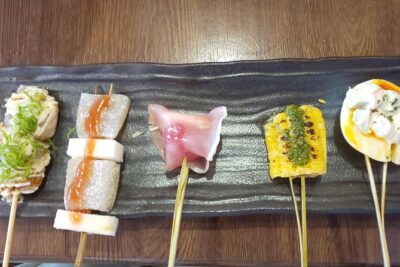
Osaka Food Tour: 13 Dishes at 5 Local Eateries
Read our review →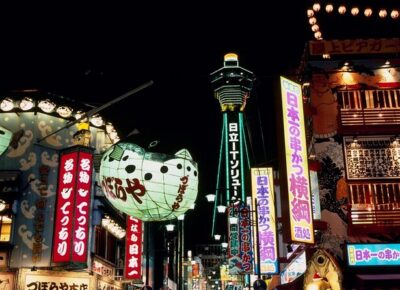
Hungry Osaka Street Food Tour:15 Tastings & 3 Drinks with a Local
Read our review →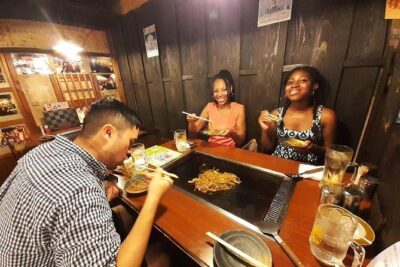
Osaka Local Foodie Walking Tour in Dotonbori and Shinsekai
Read our review →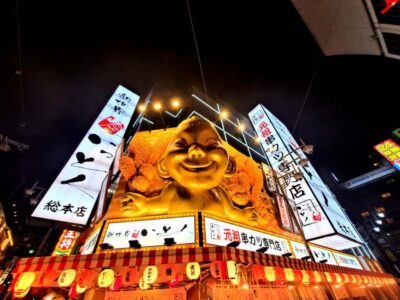
Hungry Osaka Street Food Tour: 15 Dishes & 3 Drinks
Read our review →
Kuromon Market Food Walking Tour in Osaka (6 stops, 6 tastes)
Read our review →
Guided Food Tour with 12 Dishes at 4 Local Eateries
Read our review →
Kuromon Market Food Walking Tour (6 stops, 6 tastes)
Read our review →Browse the lists this tour appears in