
REVIEW · OSAKA
Osaka Local Foodie Walking Tour in Dotonbori and Shinsekai
Osaka’s food culture is best understood one small plate at a time, and this tour links two of the city’s most famous eating districts. You’ll eat kushikatsu beneath Tsutenkaku, walk old alleys, visit Hozen-ji Temple, and finish at the Glico sign after okonomiyaki and takoyaki. The mix of food and neighborhood history is the main draw.
I like the small group limit of seven, which gives guides such as Aika, Yuma, Michiko, and Justin room to answer questions and help with photos. I also like the practical spread of dishes: six fried skewers, one okonomiyaki, one box of takoyaki, and three drinks. The catch is that this is not a serious food crawl with many tiny tastings. Some people find the food stops too limited or the price high for the amount served.
Key points to know before booking
- Six kushikatsu skewers give you a proper taste of Osaka’s famous deep-fried street food.
- Three included drinks can be alcoholic or non-alcoholic, which helps with the salty, fried dishes.
- A seven-person maximum keeps the walk more personal than a large city tour.
- Shinsekai and Dotonbori offer very different sides of Osaka, from old entertainment streets to neon-lit canal scenery.
- Vegetarian requests must be made by the day before, and gluten-free and vegan meals cannot be accommodated.
- The tour finishes at the Glico sign, not back at the starting point, so plan your evening from Dotonbori.
Two Osaka districts, one food-first walk
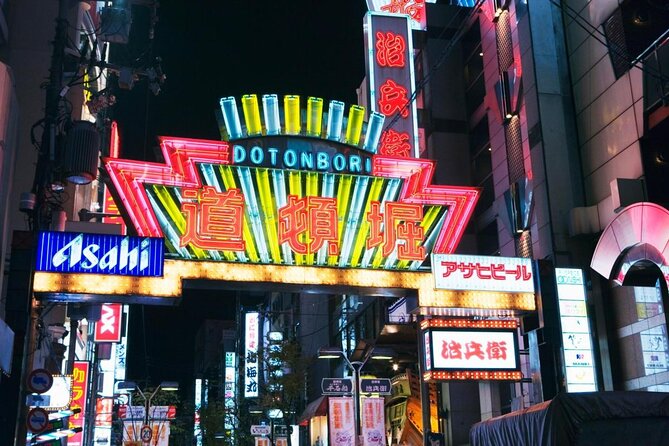
This is a three-hour introduction to Osaka through its most recognizable local dishes and street scenes. The route starts in Shinsekai, moves through the city toward Namba and Dotonbori, and ends at the famous Glico running man sign.
The walk is not only about eating. You’ll pass a Shinto shrine, Hozen-ji Temple, old shopping arcades, narrow lanes, souvenir shops, and the cooking-supply stores of Doguyasuji. For a first visit, that combination can save you the work of figuring out where to begin.
I would book it early in a stay if you want help getting your bearings. Guides have offered useful advice on later meals, snacks to take home, and subway routes. Justin even helped one group navigate the subway after the tour, though that kind of extra help should be viewed as a bonus rather than a guaranteed part of the schedule.
The tour has earned a 4.8 rating from 985 reviews, with 96 percent recommending it. That is a strong record, but the range of experiences matters. The best outings depend heavily on the guide’s ability to explain the food and keep the group moving at a comfortable pace.
More Food Tours in Osaka
- Osaka: Shinsekai Food Tour with 13-15 Dishes at 5 Eateries
★ 4.8 · 2,204 reviews - Osaka Food Tour: 13 Dishes at 5 Local Eateries
★ 5.0 · 2,149 reviews - Hungry Osaka Street Food Tour:15 Tastings & 3 Drinks with a Local
★ 5.0 · 1,727 reviews
Starting beneath Tsutenkaku in Shinsekai
The first stop is Tsutenkaku, the tall tower that gives Shinsekai its familiar skyline. You’ll walk through Jan-Jan Yokocho, an old-style alley associated with the area’s food stalls and casual eateries.
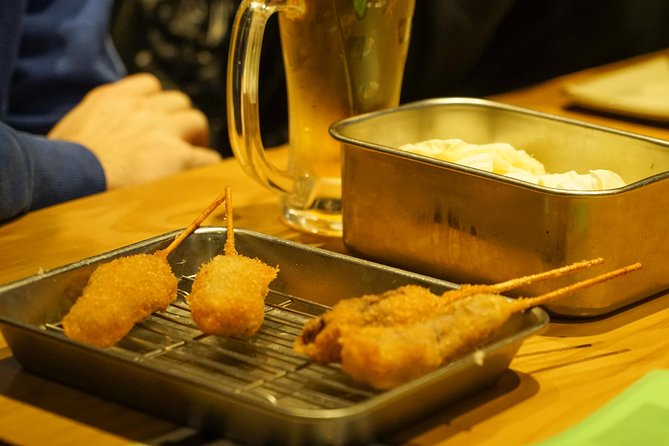
This is where you eat six pieces of kushikatsu, Osaka’s deep-fried skewers of meat and vegetables. The dish is simple but central to Shinsekai food culture. Expect crisp coating, hot fillings, and a style of eating that suits a lively street district.
You also receive drinks here, with alcohol and non-alcoholic choices available. Three drinks are included across the tour, not necessarily all at this first stop. If you do not drink alcohol, you can still take part without paying for a separate beverage.
Kushikatsu is filling, especially when combined with okonomiyaki later. If you are hoping for a tasting menu of many different foods, six skewers at one stop may feel less varied than expected. Some people also find that the tour leans heavily toward fried food.
The Shinsekai portion is one of the most rewarding parts when the guide adds context. Aika, Yuma, Kent, and others have been praised for explaining everyday Osaka customs, local food habits, and the story behind the neighborhoods. The walk works best when the guide talks while leading you through the streets, not only after someone asks a question.
Jan-Jan Yokocho and the old Osaka atmosphere
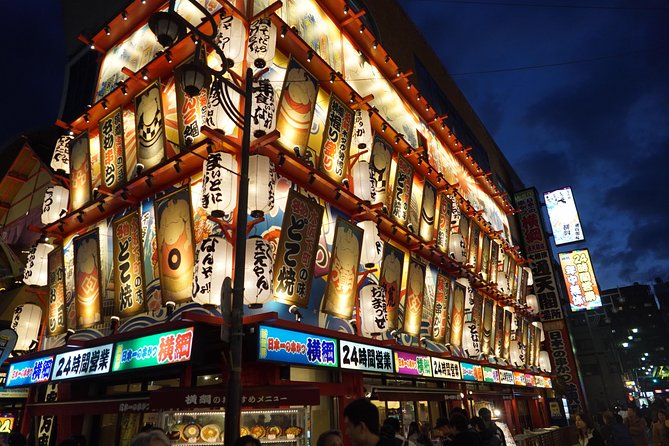
The alley around Jan-Jan Yokocho offers a look at a rougher, more traditional side of Osaka’s entertainment districts. It is not polished in the way central shopping streets can be. That is exactly why the stop helps balance the bright signs and chain stores found later in Dotonbori.
You may also see a Billiken statue, a familiar Shinsekai symbol. The itinerary describes the area as something like a living museum of Osaka from more than 80 years ago, with older streets and an atmosphere distinct from modern shopping zones.
The timing here is about 30 minutes for the Tsutenkaku and kushikatsu stop, followed by about 20 minutes exploring Shinsekai. That is enough for an introduction, but not enough for a slow museum-style visit or an extended stop at every lane.
Keep your shoes comfortable. The tour covers several districts on foot, and one person found the guide’s pace hard to follow. Another found the route slower than expected. These opposing comments tell you something useful: pacing can vary with the guide and group, so this is not a tightly measured walking workout.
Doguyasuji and Osaka’s cooking tools
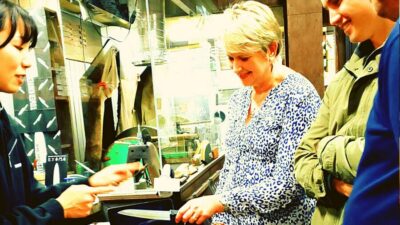
The route continues toward Sennichimae Doguyasuji Shopping Street, an arcade known for cooking equipment and restaurant supplies. A daytime version may include Dōgu-ya-suji and Hōchō-ya, a knife shop. At night, the guide may explain the area near Namba Grand Kagetsu and allow time for souvenir shopping nearby.
This is a good change of rhythm after the first food stop. You are looking at the tools behind Japanese cooking, not only eating the finished dishes. Knife shops, restaurant goods, and kitchen items can make better souvenirs than generic Osaka merchandise, though the tour does not include a purchase.
The route details vary by time of day. That matters if you are specifically interested in shopping or seeing a knife store. The tour is not a dedicated knife-buying excursion, so treat this as a short cultural and shopping segment.
More food walks around Japan:
- Tsukiji Fish Market Small-Group Food Walking Tour
★ 5.0 · 621 reviews - Kuromon Market Food Walking Tour in Osaka (6 stops, 6 tastes)
★ 5.0 · 550 reviews - Reykjavik Food Walk – Local Foodie Adventure in Iceland
★ 5.0 · 18,952 reviews - New Orleans Food Walking Tour of the French Quarter with Small-Group Option
★ 5.0 · 6,118 reviews
Hozen-ji Temple and the narrow Ukiyo Alley
Hozen-ji Temple provides a quiet pause in the middle of the city. You’ll walk through the temple area and nearby Ukiyo-koji, a narrow lane that feels far removed from the main Dotonbori crowds.
This is one of the tour’s useful contrasts. Osaka’s famous center can be loud and packed, yet a small temple and alley sit close to the restaurant signs and shopping streets. Guides have also stopped at shrines and temples along the route, adding bits of local history and daily custom.
The temple visit may be less satisfying after dark because details are harder to see. If your tour runs in the evening, expect atmosphere rather than a full sightseeing visit. The main value is the short break and the chance to see how old religious spaces fit into modern Osaka.
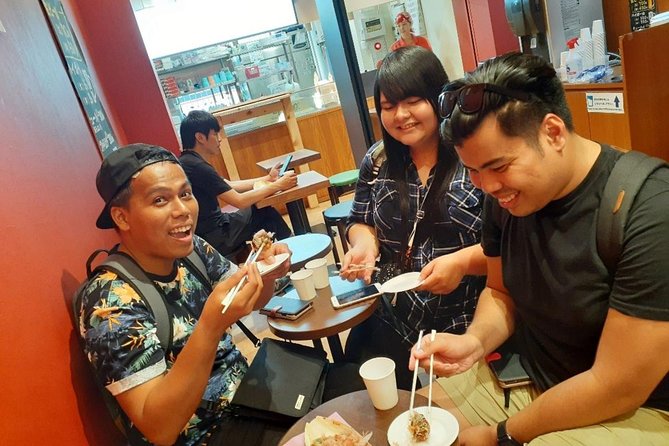
At this stage you may also snack on takoyaki, sweets, or other small items for about ¥500. The included food description lists one box of takoyaki, so confirm with your guide how it is served during your outing. A few people have found themselves quite full before reaching the takoyaki, especially after kushikatsu and okonomiyaki.
Dotonbori, the Glico sign, and Osaka’s postcard view
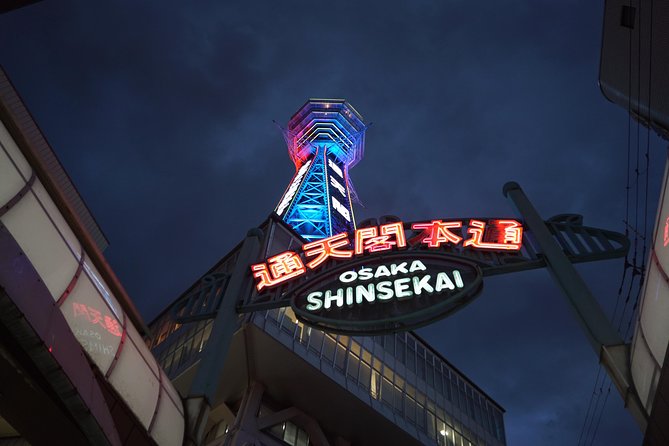
The tour reaches Dotonbori for the city’s most famous photo stop. At the Glico sign, you can take the classic running pose picture above the canal. The stop itself lasts about 10 minutes, and guides such as Aika and Justin have taken photos for their groups.
The sign is famous, but the surrounding streets are more than a photo backdrop. Dotonbori shows Osaka at its most commercial, with bright signs, restaurants, souvenir stores, and dense foot traffic. It is an easy place to continue your night after the tour, since the endpoint is right in the middle of the action.
You should not expect a quiet or secret side of Osaka here. Dotonbori is one of the city’s main visitor zones. The tour’s stronger local feel comes from Shinsekai, Hozen-ji, and the smaller lanes between the major streets.
The finishing location is convenient if you want another meal, a drink, or shopping afterward. It is less convenient if your hotel is back near Shinsekai, since you will need to arrange your own return trip.
Okonomiyaki and the hands-on part of dinner
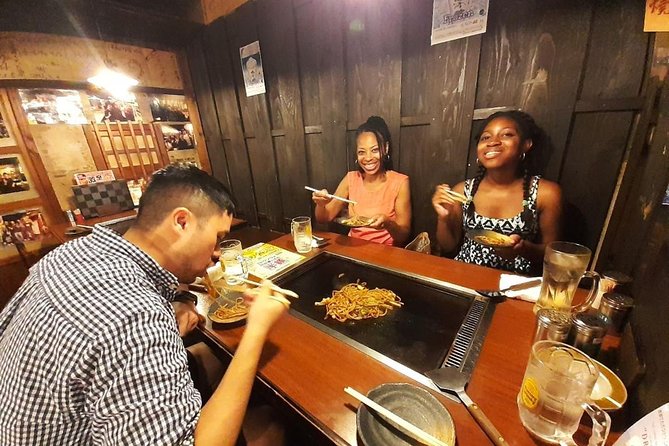
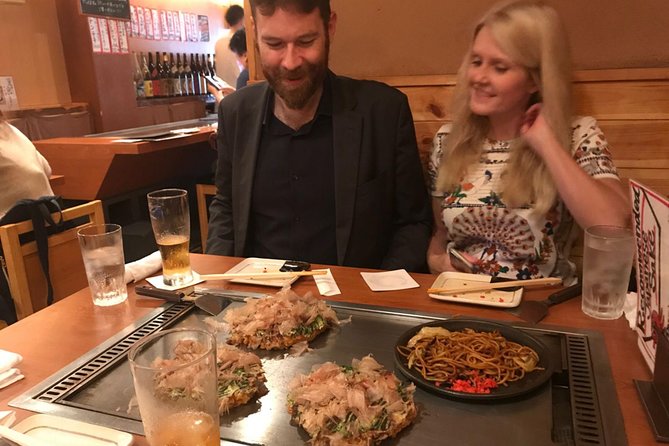
The final substantial food stop is Osaka-style okonomiyaki, a savory pancake made with batter and toppings. The name combines okonomi, meaning as you like, and yaki, meaning grilled. Depending on the venue and guide, you may get to grill your own pancake, which adds a fun practical element to the meal.
One included piece of okonomiyaki is part of the package. This is more like a proper shared meal than a one-bite sample, so it can make the tour feel generous if you arrive hungry. It can also make the later takoyaki difficult to enjoy if you prefer small portions spread across many stops.
Food quality and venue choice are the biggest variables. Many outings have featured delicious okonomiyaki, and Michiko was praised for choosing a particularly good restaurant. Other people felt the second restaurant was aimed more at tourists and wanted more small portions from more places.
That difference points to the right expectation. This tour is an introduction to classic Osaka dishes, not a specialist search for obscure restaurants. You receive the city’s best-known foods in a social setting, along with explanations and neighborhood walks.
What the included food is worth
The price is $111.42 per person. For that amount, you receive:
- Six pieces of kushikatsu
- One piece of okonomiyaki
- One box of takoyaki
- Three alcoholic or non-alcoholic drinks
- A three-hour guided walk for a maximum of seven people
The value depends on how much you want from the guide. If you only want to eat these dishes, you can likely spend less by ordering them yourself. The tour earns its price through the local guide, the route, translation help, food explanations, and the ease of moving between areas without planning every stop.
I would see it as a food-and-neighborhood tour rather than a high-end food tour. The included dishes are familiar Osaka staples, not rare ingredients or elaborate restaurant courses. If you judge value by the number of venues, this may disappoint. The route usually centers on two main food stops, with takoyaki and sweets worked into the walk.
Three drinks add useful value, especially with salty food, but they may be more than you want. One group barely used the second drink at the first venue. You cannot reduce the price if you do not drink them.
Guide quality shapes the whole experience
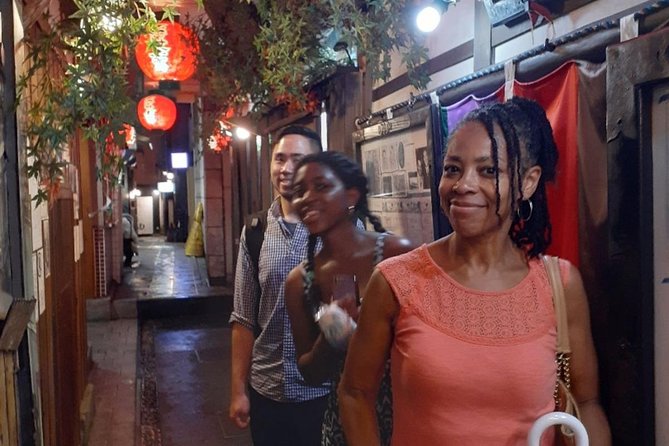
The small group format is a real advantage. With no more than seven people, a good guide can answer questions, watch the group at crowded crossings, explain menu items, and help with photos without turning the walk into a moving lecture.
Several guides have made a strong impression. Aika has been praised for local history, food advice, photos, and suggestions for the rest of the evening. Yuma has explained how dishes are made and helped groups understand the areas between restaurants. Michiko has connected food, business customs, and daily life in Osaka. Kent has offered cultural context in a relaxed style, while Justin has helped with busy streets and subway directions.
Still, do not assume every guide will give a nonstop history talk. One outing had a guide who mostly answered questions rather than offering regular explanations. Another felt the guide was friendly but still developing confidence. If you want a food expert who discusses ingredients, restaurant traditions, and cooking methods in depth, this may feel light.
The safest approach is to ask questions. Ask why kushikatsu is linked with Shinsekai, how okonomiyaki differs by region, or what local people buy in Doguyasuji. The tour improves when you treat the guide as a local contact rather than a scripted announcer.
Dietary limits, weather, and practical details
Gluten-free and vegan diets cannot be accommodated. A vegetarian course is possible only if selected when booking or requested by the day before. Even then, the kushikatsu restaurant uses pork broth in its dashi, so tell the operator in advance if you cannot have dashi.
Allergy requests must also be made at least one day ahead. The operator cannot guarantee an allergy-free meal or substitutions because the food is prepared in kitchens it does not control. This is not the right tour for a severe or highly restrictive diet.
Osaka weather can be demanding. Summer temperatures may reach 40°C, while winter lows can fall to -5°C. Wear shoes suited to several hours on city streets, bring water in hot weather, and dress for the forecast.
The starting point is FamilyMartJapan in Nishinari Ward. The ending point is the Glico sign in Dotonbori. Transportation fees of 190 yen are not included. Arrive early, since the group leaves on time and late arrivals cannot join, reschedule, or receive a refund.
Free cancellation is available up to 24 hours before the start time. Changes or cancellations inside that window are not accepted.
Who should book this Osaka food walk?
I would recommend it to first-time visitors who want an easy introduction to Shinsekai and Dotonbori, especially if you enjoy classic dishes more than experimental dining. It also suits repeat visitors who want a guide for the food streets and a few places they might otherwise walk past.
Families can benefit from the small group, and all ages are welcome. The tour has also worked well as a first-night activity because the guide can help you understand the city layout and suggest what to do afterward.
I would be cautious if you are a dedicated food hunter seeking many independent stalls, small portions, or unusual regional cooking. You may find the route too focused on three famous dishes, and the price may feel high for the food alone.
Should you book it?
Book this tour if you want a guided first taste of Osaka, a manageable walk through two major districts, and a small group where you can ask questions. The strongest value comes from the guide and the route, not from the quantity of food.
Skip it if your top goal is a long restaurant crawl with many stops. In that case, spend the $111.42 on your own food itinerary. For everyone else, this is a friendly, practical way to meet Osaka through kushikatsu, okonomiyaki, takoyaki, old lanes, temples, and neon streets.
FAQ
How long does the Osaka food tour last?
The tour lasts approximately three hours.
What food is included?
You receive six pieces of kushikatsu, one piece of okonomiyaki, one box of takoyaki, and three drinks.
Are alcoholic drinks included?
Yes. The three included drinks can be alcoholic or non-alcoholic.
How many people can join the tour?
The maximum group size is seven travelers.
Can the tour accommodate vegetarian diets?
A vegetarian course is available if you select it when booking or request it by the day before. The kushikatsu venue still uses pork broth in its dashi, so mention this restriction in advance.
Can people on gluten-free or vegan diets join?
Gluten-free and vegan diets cannot be accommodated on this tour.
Where does the tour start and end?
It starts at FamilyMartJapan in Nishinari Ward and ends at the Glico Sign in Dotonbori.
Can I cancel for a refund?
You can cancel up to 24 hours before the experience start time for a full refund. Cancellations or changes made less than 24 hours before the start are not accepted.
More Walking Tours in Japan
- Tokyo Tsukiji Fish Market Food and Culture Walking Tour
★ 5.0 · 3,184 reviews - Tokyo: Tsukiji Fish Market Food and Walking tour
★ 5.0 · 1,724 reviews - Tokyo: Tsukiji Fish Market Guided Walking Tour
★ 4.9 · 1,397 reviews - Nishiki Market Brunch Walking Tour (7 Tastings + Brunch)
★ 5.0 · 1,355 reviews
Just added around Japan
- Kyoto: Nishiki Market Tour with a Local Foodie & Tastings★ 4.5 · 67 reviews
- Kyoto: Replica food making experience★ 4.8 · 70 reviews
- Kyoto: Foodie Night Tour in Gion with 9 dishes + 6 Sake★ 4.4 · 26 reviews
- Kyoto: Nishiki Market and Depachika Food Tour with a Local★ 4.7 · 76 reviews
- Kyoto Evening Gion Food Tour★ 4.9 · 35 reviews
- Kyoto: Local Food Tasting Tour at the Nishiki Market★ 4.7 · 135 reviews
- Kyoto: Gion & Pontocho Food Tour with 13 Dishes★ 4.9 · 235 reviews
- Kyoto: Casual Pontocho Evening Food Tour★ 4.8 · 31 reviews
Food Tours in Osaka, compared.
Shinsekai Food Tour with 13-15 Dishes at 5 Eateries
Read our review →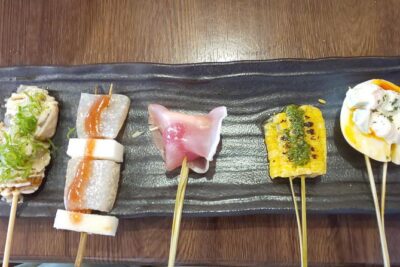
Osaka Food Tour: 13 Dishes at 5 Local Eateries
Read our review →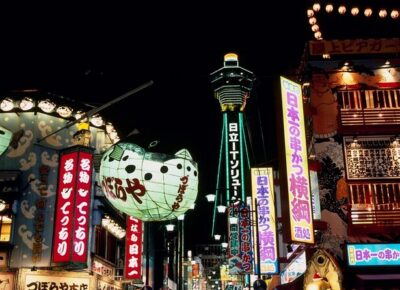
Hungry Osaka Street Food Tour:15 Tastings & 3 Drinks with a Local
Read our review →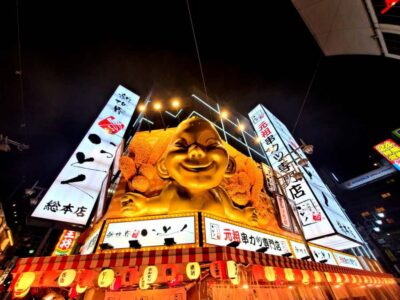
Hungry Osaka Street Food Tour: 15 Dishes & 3 Drinks
Read our review →
Kuromon Market Food Walking Tour in Osaka (6 stops, 6 tastes)
Read our review →
Guided Food Tour with 12 Dishes at 4 Local Eateries
Read our review →Browse the lists this tour appears in