
REVIEW · JAPAN
Asakusa Highlights: Street Food Crawl Tour (7+ Local Bites)
Asakusa’s best food is not all lined up on the main tourist street. This small-group walk takes you into older residential lanes and local shops for sushi, monjayaki, noodles, tempura, stuffed cakes, and other Japanese bites. I like the way the food gives you a reason to explore, rather than simply stopping for a meal.
I especially like the tiny group format, which makes it easier to ask questions and lets the guide adjust the pace. I also like the mix of savory dishes, sweets, drinks, and neighborhood history. The main consideration is that food choices can vary, and the experience may not match every advertised expectation, particularly if a busy restaurant changes the plan or you want a tour built around one specific dish.
Key points at a glance
- Four or five local food stops: You visit small shops and restaurants, including places with more than a century of history.
- A strong first-day activity: The walk helps you understand Japanese food customs and gives you practical ideas for the rest of your Tokyo stay.
- More than sushi: Expect possible tastes of monjayaki, tempura, soba, dango, taiyaki, sweet potato treats, bread, matcha, and ice cream.
- A genuinely small group: The tour is listed for a maximum of two people, although some departures have included larger small groups.
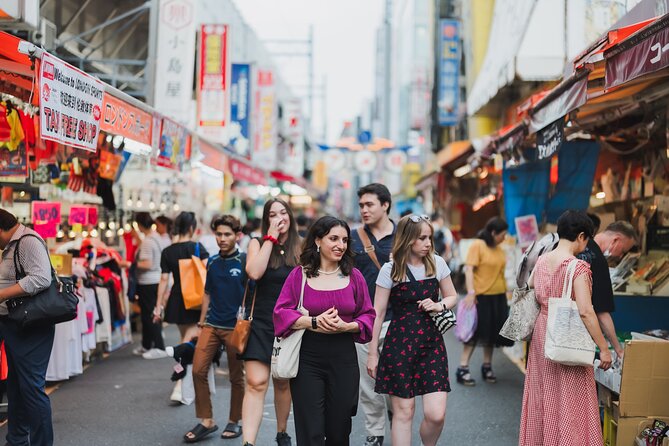
- Asakusa beyond the postcard view: You move from local streets and food shops to Marugoto Nippon, Nakamise area, and Senso-ji Temple.
- Come hungry: The portions can add up quickly, and several people found they could not manage every final sweet.
Why this Asakusa food walk works so well
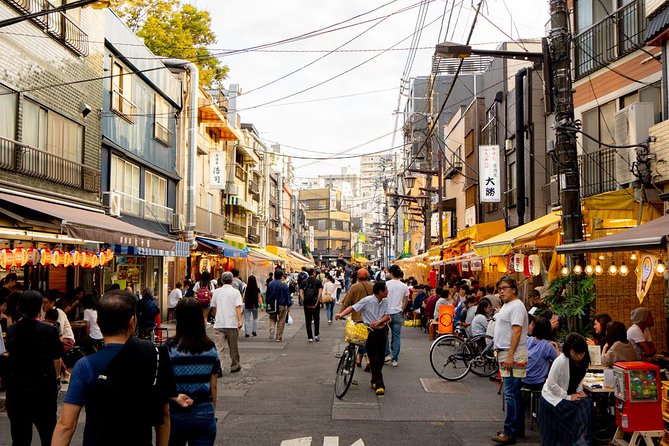
Asakusa is one of Tokyo’s easiest districts to visit, but it is also easy to see only the surface. You walk toward Senso-ji, pass through the busy shopping lanes, take a few photos, and leave. This tour gives the neighborhood more meaning by tying its food to its streets, shops, and long-running local customs.
The route lasts about two hours, though some outings have run closer to three. That matters if you are planning a tight Tokyo schedule. You get a compact introduction to Asakusa without giving up half a day, yet there is enough time to eat several kinds of food and hear how the area developed.
The tone depends partly on your guide. Shino, Max, Taiga, Ian, Tadashi, Rie, Rei, Andrea, Shinzo, and other local hosts have led departures. Shino is especially useful for families and first-time visitors because she has been praised for clear English and an easy way of bringing a group into the conversation. Taiga and Tadashi have been valued for food explanations, neighborhood background, and practical suggestions for eating elsewhere in Tokyo.
This is not a formal lecture with a fixed script. It is closer to a walk with a local friend who knows where to order, how to eat a dish, and why it belongs in Asakusa.
More food crawls in Japan:
- Same-Day Osaka Food Crawl with local food and Hidden gems
★ 5.0 · 114 reviews - Porto: Evening Local Food Crawl with Drink Pairings
★ 4.9 · 395 reviews - Mexican Street Food Crawl in Playa del Carmen
★ 5.0 · 102 reviews
Starting in old Asakusa at 11:30 a.m.
You meet at 1-chōme-20-13 Asakusa at 11:30 a.m. The meeting point is near public transportation, and the tour finishes near Senso-ji Temple at 2-chōme-3-1 Asakusa. Starting late in the morning makes this useful for a relaxed first day, but you should skip or keep breakfast light. The food can be substantial.
The first hour is spent around the older part of Asakusa, including residential streets and local businesses that are easy to miss on your own. This is where the tour earns its price. You are not simply being led to a famous restaurant. You are being shown how to look at the district: where ordinary shops operate, how old food businesses fit into the neighborhood, and which places are worth trying when you cannot read every menu.
The pace is generally gentle. Guides have adjusted the walk for heat, taken an air-conditioning break, and made changes for children or food needs when possible. Still, this is a walking and eating activity, so comfortable shoes and a little room in your appetite are sensible.
Four or five stops, with seven or more tastes
The exact menu is not fixed in the details provided, and that is important. The tour promises at least four vendors and more than seven local bites, but the foods can change with availability, crowd levels, and your guide’s choices. You should book it as a broad Asakusa food introduction, not as a guaranteed list of named dishes.
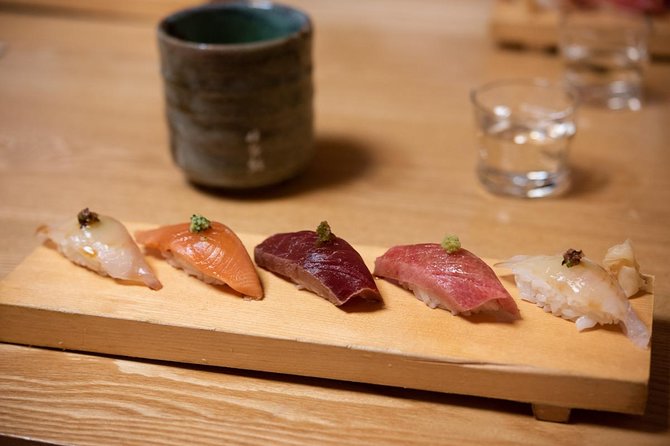
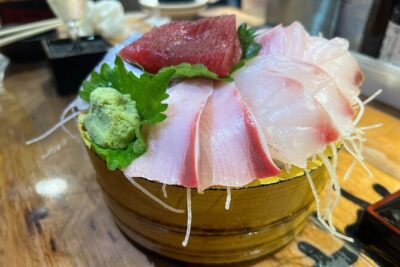
Sushi is often a highlight. Several routes have included a standing sushi bar, with cuts such as tuna head, tuna cheek, and meat from between the ribs. These are not the routine supermarket pieces many visitors already know. The standing format also gives you a quick look at a casual Japanese eating style.
That said, one unhappy experience resulted when the sushi stop was changed because the restaurant was too crowded. If sushi is your main reason for booking, ask about the current route before paying, but understand that a food walk may need to adjust during a busy service.
Other possible savory stops include monjayaki, a Tokyo specialty cooked on a hot griddle at the table. It has a softer texture than the crisp, pancake-like version many people expect from okonomiyaki. The cooking area can become smoky and warm, so I would be glad to see a guide keep this stop short, especially in summer.
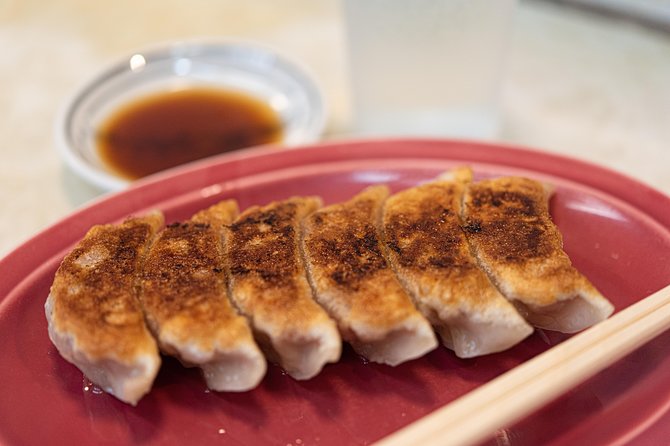
You might also try tempura, soba, dumplings, or another local lunch dish. One route included sushi, noodles, tempura, and two styles of okonomiyaki. The value here is variety. You get enough samples to compare textures and flavors, rather than spending your whole afternoon on one large plate.
The sweet side of Asakusa
The tour may finish with several sweets, and the balance can lean sweeter than some people expect. Possible treats include taiyaki, the fish-shaped cake filled with sweet paste or another filling, dango, Kagetsudo bread, sweet potato snacks, matcha ice cream, and other traditional sweets.
This part is useful if you want to understand the snack culture around Senso-ji. Sweets are not an afterthought in Asakusa. They are part of the district’s shopping streets and temple-going routine, and their shapes and fillings can tell you more about Japanese tastes than a standard restaurant meal.
Still, a few people felt that there were too many dessert stops and would have preferred another traditional drink or savory dish. I would treat this as a personal preference rather than a flaw. If you love matcha and Japanese sweets, the final stretch may be your favorite. If you prefer alcohol, noodles, or grilled foods, tell your guide early so the choices can fit your interests when possible.
The practical warning is simple: do not eat a full lunch before you arrive. One family could not fit the final ice cream, and another group found the amount of food greater than expected.
More street food nights in Japan:
- Hungry Osaka Street Food Tour:15 Tastings & 3 Drinks with a Local
★ 5.0 · 1,727 reviews - Hungry Osaka Street Food Tour: 15 Dishes & 3 Drinks
★ 4.9 · 694 reviews - Tsukiji Fish Market: Street Food & Culture Walking Tour
★ 5.0 · 669 reviews - Dubai: Old Town, Creek, Museums, Souks, & Street Food Tour
★ 4.8 · 10,816 reviews
Marugoto Nippon and Japan beyond Tokyo
The route includes about 20 minutes at Marugoto Nippon, a specialty department store carrying selected foods and goods from different parts of Japan. This is a useful change of pace after several restaurant stops.
For you, the value is not just shopping. Tokyo can make Japan feel like one huge city, but Marugoto Nippon gives you a quick look at regional differences. You might find foods and products from places you are not visiting on this trip. It also offers a practical place to identify snacks or gifts after your guide has explained ingredients and flavors.
The stop is short, so do not expect a full department-store visit. Think of it as a quick regional sampler and a chance to browse between food stops and the temple.
Finishing at Senso-ji Temple
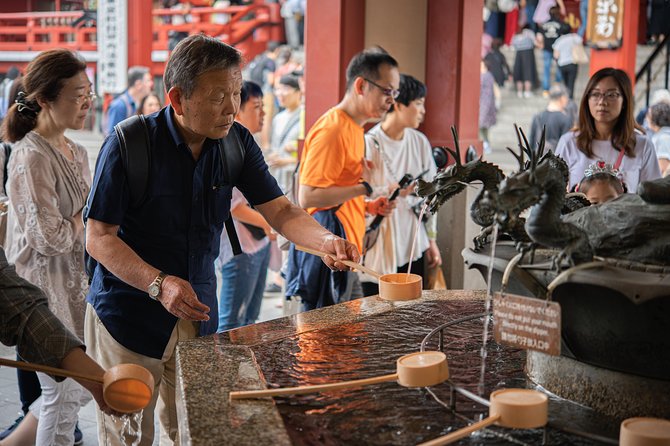
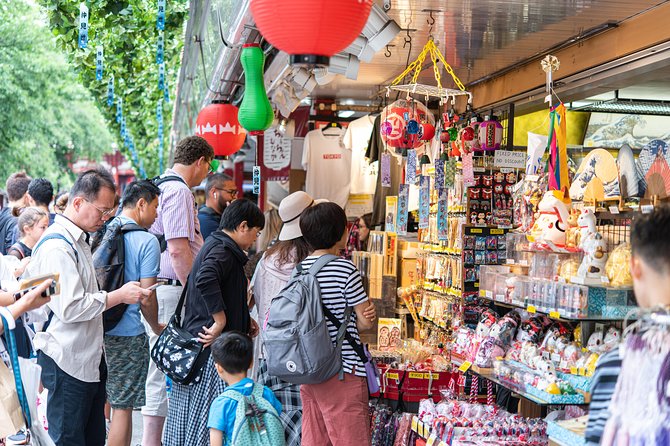
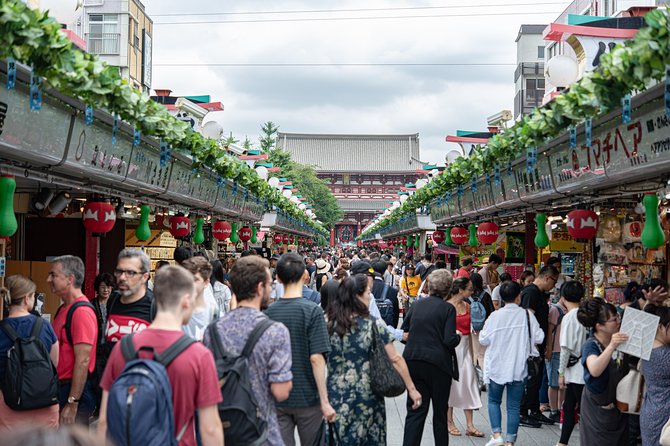
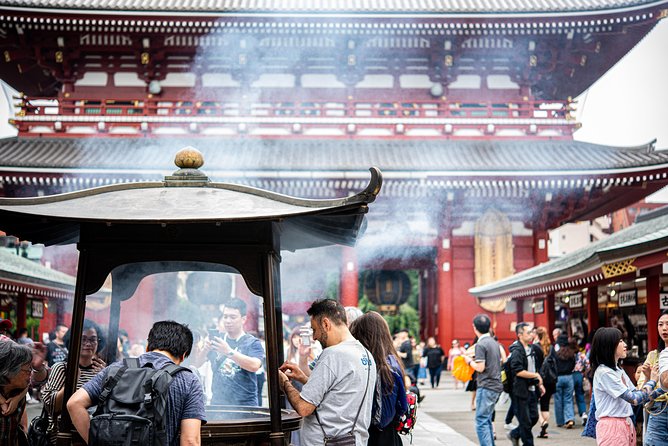
The final planned stop is Senso-ji, Tokyo’s oldest temple. You approach through the busy market street leading toward the temple and shrine area. This is the most crowded part of the walk, a sharp contrast to the quieter residential lanes earlier in the tour.
That contrast is one of the strongest parts of the route. You see two versions of Asakusa in one outing: the working neighborhood where people eat and shop, and the grand visitor zone built around one of Tokyo’s best-known religious sites.
The temple visit lasts about 20 minutes. That is enough for orientation, a look at the main grounds, and a short explanation of what you are seeing. It is not enough for a slow, detailed temple visit, so I would return later if Senso-ji is high on your list. The tour ends here, which makes it easy to continue exploring on your own.
What the small group changes
The experience is promoted for a maximum of two people, though some departures have had six people including the guide. Either way, it is smaller than a standard bus or large walking tour.
A small group helps in three ways. First, you can ask about foods that seem unfamiliar without holding up a crowd. Second, the guide can notice children’s preferences, allergies, or energy levels. Third, ordering is less awkward when a restaurant has limited seating or a narrow counter.
The guides have made a real difference to the experience. Max has been praised for combining food, history, and local tips, including helping people feel more comfortable ordering on their own later. Tadashi has been good at adjusting the pace and finding a cool break during hot weather. Rie and Rei have been valued for energy, humor, and enthusiasm for traditional food.
Guide quality can never be guaranteed by name, so you should not book solely to receive one particular person. Still, the range of guide feedback points to a strong focus on conversation and personal attention.
Dietary needs and what to tell the operator
You must message the provider about food restrictions at least one week before the tour. Last-minute requests may not be accepted, and vegan, vegetarian, and gluten-free choices are limited.
Some adjustments have been made successfully. Guides have changed food for children, adjusted orders for a soy allergy, and selected dishes around a participant’s preferences. But you should not assume that every restriction can be handled, especially on a short route involving several small vendors.
If you have a serious allergy, explain it clearly before booking and repeat it at the start of the walk. This is particularly important for sauces, fillings, batter, and shared cooking surfaces. The supplied details do not promise a fully allergy-safe tour, so people with complex dietary needs may need a more specialized experience.
Is $76.27 a fair price?
At $76.27 per person, this is not the cheapest way to buy snacks in Asakusa. You could spend less by choosing one noodle shop, a few street foods, and a temple visit on your own.
The price becomes easier to justify if you value guidance. You are paying for several tastings, alcoholic drinks, local ordering help, neighborhood context, and a route that avoids much of the guesswork. The sushi alone can be difficult to find and order confidently if you do not know the area or speak Japanese.
I also like the timing. Two hours gives you a useful amount of food and orientation without turning the day into a long culinary program. One group considered the tour a better value than a more expensive Tsukiji food walk, especially because the portions were generous and the guide added useful background.
The weak point is the variable menu. If you expect a precise seven-course meal with every advertised favorite, the price may feel less secure. If you see the tour as a guided sampler with flexible stops, the calculation is stronger.
Who should book this walk?
I would point this tour toward first-time visitors to Tokyo, families with older children, couples who want a social food activity, and people with only a few hours for Asakusa. It is also a smart choice for your first or second day, since the guide can help you understand unfamiliar foods and suggest ideas for later meals.
Children have enjoyed the mix of sushi, sweets, and history, and guides have made an effort to include younger participants. The food is varied enough to keep the outing interesting, though picky eaters may find some stops less appealing.
You should think twice if you need strict dietary control, dislike sweet foods, or want a fixed menu. You may also prefer another option if your entire goal is high-end sushi. This tour is about the food culture and streets of Asakusa, not a specialist sushi tasting.
The tour requires good weather. If conditions force a cancellation, you are offered another date or a full refund. You can cancel for a full refund up to 24 hours before the start time, but changes or cancellations inside that window are not accepted. Confirmation is normally sent at booking, though bookings made within one day of departure depend on availability.
Should you book Asakusa Highlights?
Yes, if you want a friendly, food-led introduction to one of Tokyo’s oldest districts and you are comfortable with a menu that can change. The best reasons to book are the small group, the unusual local bites, the standing sushi possibility, and the way the walk connects food with Asakusa’s streets and Senso-ji.
I would not book it for a guaranteed list of dishes or a carefully controlled dietary menu. For everyone else, come hungry, keep breakfast small, tell the provider about restrictions a week ahead, and allow extra time after the tour to explore Senso-ji on your own. With a 98 percent recommendation rate and a 4.9 rating from 206 ratings, it has a strong record, but the flexible nature of the food stops is still the detail to understand before you commit.
FAQ
How long does the Asakusa food tour last?
The scheduled duration is about two hours. Some outings have lasted closer to three hours, so avoid booking a tight connection immediately afterward.
What time and where does the tour start?
The tour starts at 11:30 a.m. at 1-chōme-20-13 Asakusa, Taito City, Tokyo 111-0032, Japan.
Where does the tour finish?
The walk ends near Senso-ji Temple at 2-chōme-3-1 Asakusa, Taito City, Tokyo 111-0032, Japan.
How many food stops are included?
The route visits at least four food vendors, with the wider plan describing four or five local shops and restaurants. The tour includes more than seven food bites, though the exact menu can change.
Are drinks included?
Food samplings and alcoholic beverages are included. The provided details do not specify the exact drinks served.
Can the tour accommodate dietary restrictions?
You must send food restrictions at least one week before the tour. Vegan, vegetarian, and gluten-free options are limited, and last-minute requests may not be accommodated.
What is the cancellation policy?
You can cancel at least 24 hours before the start time for a full refund. Cancellations or changes made less than 24 hours before the experience are not accepted. If bad weather or an insufficient number of participants cancels the tour, you can choose another date or receive a full refund.
Just added around Japan
- Kyoto: Nishiki Market Tour with a Local Foodie & Tastings★ 4.5 · 67 reviews
- Kyoto: Replica food making experience★ 4.8 · 70 reviews
- Kyoto: Foodie Night Tour in Gion with 9 dishes + 6 Sake★ 4.4 · 26 reviews
- Kyoto: Nishiki Market and Depachika Food Tour with a Local★ 4.7 · 76 reviews
- Kyoto Evening Gion Food Tour★ 4.9 · 35 reviews
- Kyoto: Local Food Tasting Tour at the Nishiki Market★ 4.7 · 135 reviews
- Kyoto: Gion & Pontocho Food Tour with 13 Dishes★ 4.9 · 235 reviews
- Kyoto: Casual Pontocho Evening Food Tour★ 4.8 · 31 reviews
Food Tours in Japan, compared.
Shinjuku Food Tour (13 Dishes at 4 Local Eateries)
Read our review →
Tokyo Tsukiji Fish Market Food and Culture Walking Tour
Read our review →
Shinsekai Food Tour with 13-15 Dishes at 5 Eateries
Read our review →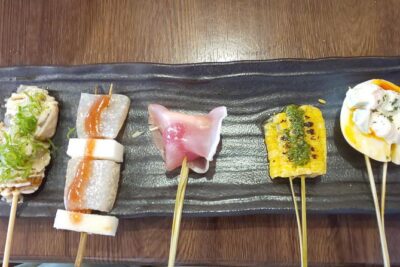
Osaka Food Tour: 13 Dishes at 5 Local Eateries
Read our review →
Shinjuku Food Tour (15 Dishes and 4 Eateries)
Read our review →
Best of Shinjuku: Izakaya Food Tour (4 Stops, 14+ Tastings)
Read our review →
Kyoto Night Foodie Tour in Gion (9+ dishes + 6 Sake tastings)
Read our review →
Hungry Osaka Street Food Tour:15 Tastings & 3 Drinks with a Local
Read our review →Browse the lists this tour appears in