
REVIEW · JAPAN
Fukuoka: Nakasu Food Stall Private Guided Tour with Tastings
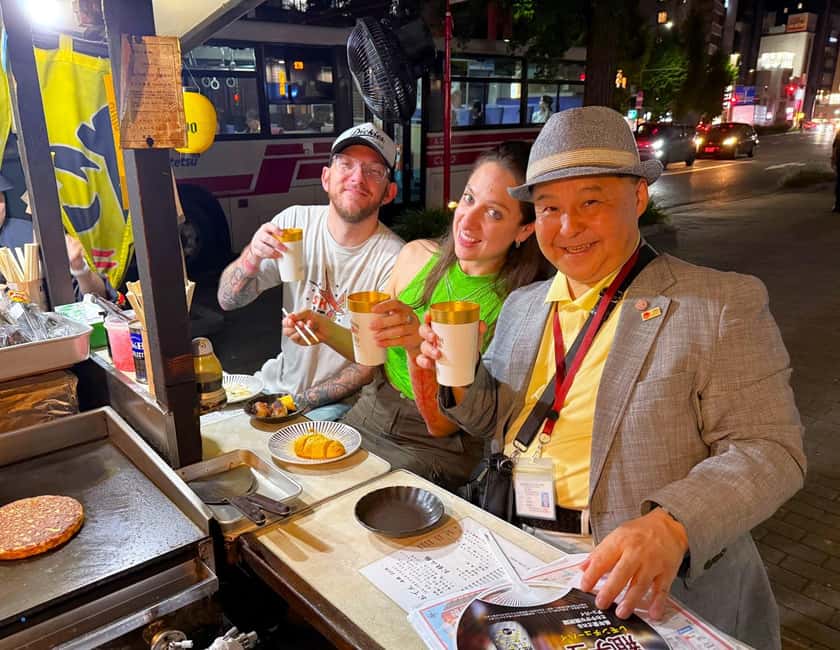
Fukuoka’s famous yatai food stalls are easy to admire from the street and harder to navigate once you sit down. This private evening tour takes you into that small, informal world with an English-speaking guide who explains what to order, handles the language gap, and introduces the people behind the stalls. I like the 1,000 yen food and drink allowance at each stall, and I like the personal touch offered by guides such as Morry, Manabu, Rie, and Shota. Morry even keeps waiting time lively with close-up magic.
The main caution is timing. The early start may come before some stalls are fully open, especially around 5:30 p.m. Bad weather can also change the plan, pushing you indoors or limiting the number of stalls. You should book this for the atmosphere, local contact, and guidance as much as for the food itself.
Key points to know before booking
- Two-hour private visit: You travel with your own private group and an English-speaking guide.
- Two yatai stops: The plan focuses on visiting two stalls, though weather and opening times can affect the route.
- 1,000 yen per stall: You receive a food and beverage subsidy at each stall.
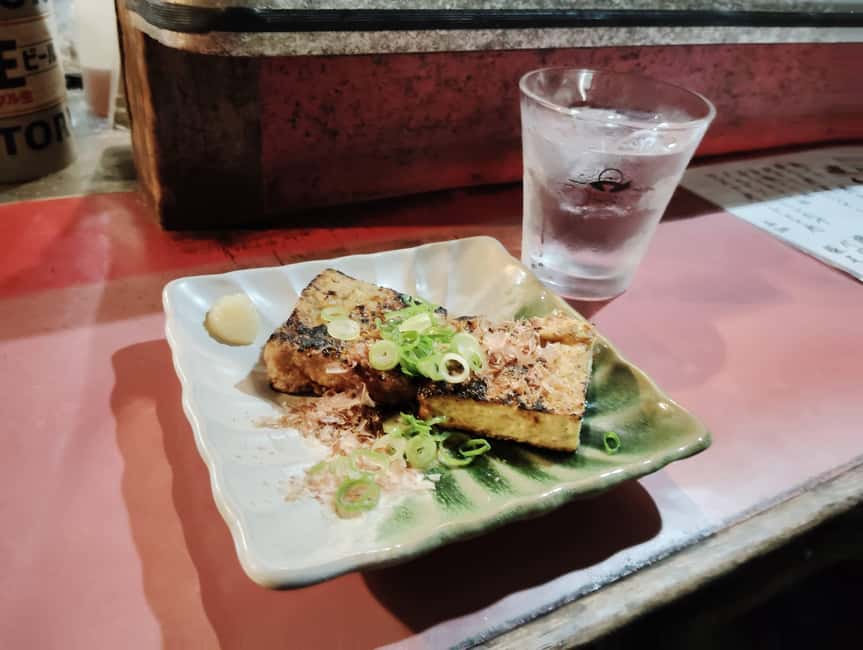
- Classic Fukuoka dishes: Expect options such as ramen, oden, yakitori, and stewed specialties.
- Meeting point is simple: Find your guide in front of FamilyMart Tenjin 1-chome, holding a yellow DeepExperience sign.
- Cash and comfortable shoes matter: Bring both, and remember that smoking is not allowed.
Why Nakasu yatai culture is worth your evening
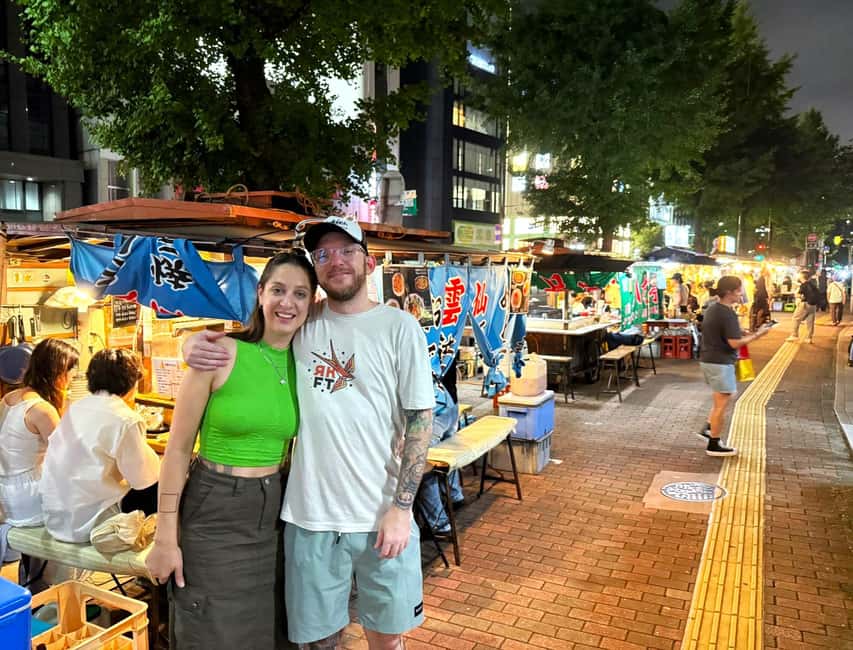
Fukuoka’s yatai are compact food counters set along the city streets, especially around the Nakasu and Tenjin areas. You sit close to the cook and other diners, order quickly, and eat in a setting that feels more like a neighborhood gathering place than a conventional restaurant.
That closeness is the appeal. A stall may seat only a small number of people, so there is little distance between you, the person preparing the food, and the diners beside you. It can also feel slightly daunting if you cannot read the menu or are unsure how the seating works.
A guide changes the experience. Instead of walking from stall to stall wondering which one will welcome you, you have someone who can explain the choices and help you interact with the staff. You still get the direct, informal feel of the yatai, but without spending your first night in Fukuoka guessing.
The tour also gives you a useful introduction to the relationship between Hakata and Fukuoka, the historic twin parts of the city. Your guide explains how the stalls fit into local food culture and points out details you would probably miss on a self-guided walk.
More private food tours in Japan:
- Kanazawa: Private Food Tasting Walking Tour
★ 4.7 · 25 reviews - Private Street Food Tour by Motorbike/Car with Local Students
★ 5.0 · 3,950 reviews - Private Street Food Evening Walking Tour in Ho Chi Minh City
★ 5.0 · 3,175 reviews
Meeting at FamilyMart Tenjin 1-chome
The tour begins in front of FamilyMart Tenjin 1-chome. Your guide carries a yellow sign marked DeepExperience, which makes the meeting point easier to spot in a busy city center.
From there, you walk toward Nakasu, the district between the older Hakata and Fukuoka areas. The route is short enough to fit comfortably within the two-hour schedule, but you should wear shoes suited to walking and standing. Bring a camera if you want street scenes and stall portraits, and carry cash for anything beyond the included allowance.
The private format is important here. You do not have to match the pace or food interests of a large group. Shota, for example, has adjusted visits around particular food interests and offered further restaurant suggestions based on places he has personally tried. That kind of flexibility is useful if you have strong likes, dislikes, or dietary concerns.
The experience is offered in English. Guides have included Morry, Manabu, Rie, Shota, Aya, and others. Their styles differ, but the useful common thread is local help with ordering and conversation.
First impressions along the Nakasu riverfront
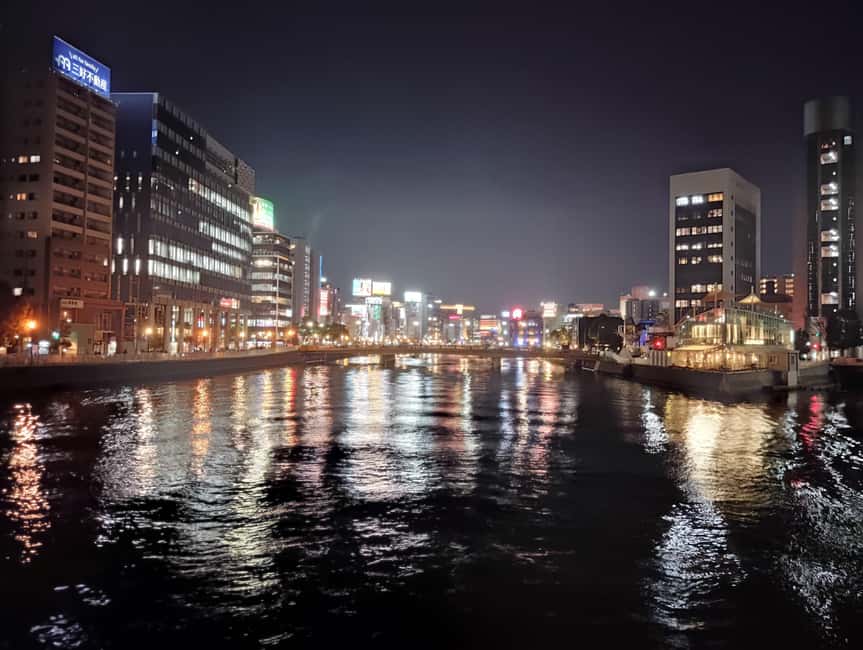
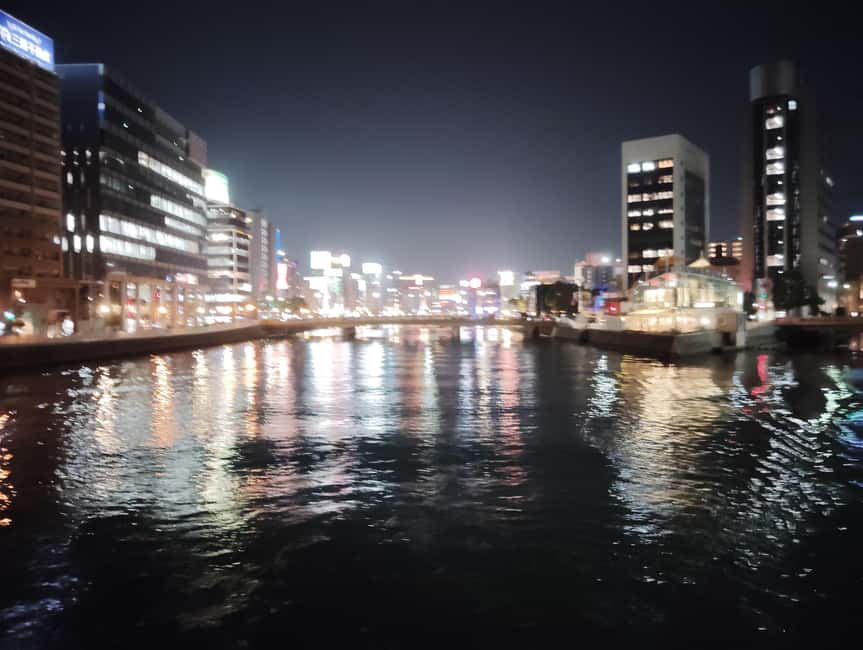
As you approach Nakasu, the scenery shifts from ordinary city streets to a more theatrical evening setting. The stalls line parts of the riverfront, with small counters, bright signs, cooking steam, and the sound of people eating close together.
Do not expect a single permanent food market. Yatai operators set up and take down their stalls, and opening times can vary. That is why the early departure deserves attention. One person found that stalls were still being prepared after the advertised early start, and the guide had to adjust the plan.
For that reason, I would choose a later starting time if several options are available. A later evening gives you a better chance of seeing more stalls in operation. The exact start times depend on availability, so check carefully before booking.
Your guide uses this walk to explain the area and the yatai tradition. Morry is especially playful, mixing local background with quizzes, fun facts, and magic tricks. That may sound like a small extra, but it matters when you are waiting for a seat or walking between stops.
The first stall: oden, yakitori, and stewed dishes
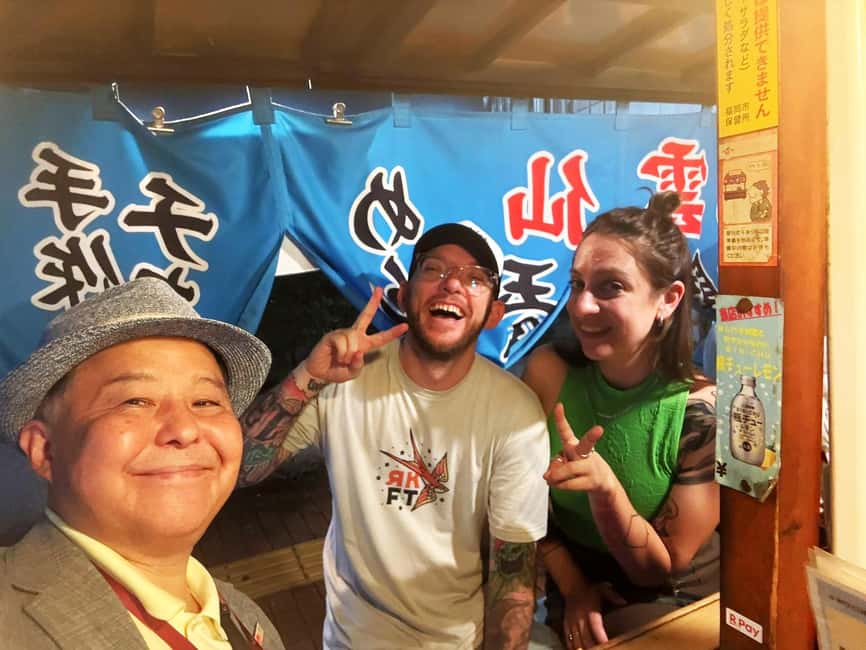
The first food stop introduces the kind of dishes that work well in a compact stall. Oden is a Japanese comfort food made from ingredients simmered in broth. You might also find yakitori, grilled chicken on skewers, and other stewed items.
The point is not to order one large meal and leave. The tour is built around tasting different dishes at more than one place. Your 1,000 yen food and beverage subsidy at each stall helps you sample without worrying about the cost of every small order.
Because the stalls are small, your guide can explain what is being served as it arrives. That is useful when menus are written in Japanese or when a dish is unfamiliar. You can ask about ingredients and preparation before ordering, rather than pointing at a picture and hoping for the best.
A guide can also help with social details. Yatai dining is casual, but the limited space means you need to be aware of the stall’s rhythm. Orders come out quickly, seats may be limited, and another diner may be waiting. The tour gives you a chance to learn that rhythm before trying a stall on your own.
Several guides have personal connections to the places they visit. Aya has worked at a yatai, and other guides know the stall owners and can explain why particular counters are local favorites. That personal link adds more value than simply being shown a list of dishes.
A few more food tours around Japan worth comparing
- Tokyo: Tsukiji Fish Market Guided Walking Tour
★ 4.9 · 1,397 reviews - Osaka: Guided Food Tour with 12 Dishes at 4 Local Eateries
★ 5.0 · 533 reviews - Hiroshima: Food and Culture Guided Walking Tour with Dinner
★ 4.9 · 212 reviews - Dubai: Old Town, Souks, Street Food, Guided Tour & Abra Ride
★ 4.9 · 7,170 reviews
The second stall and the ramen decision
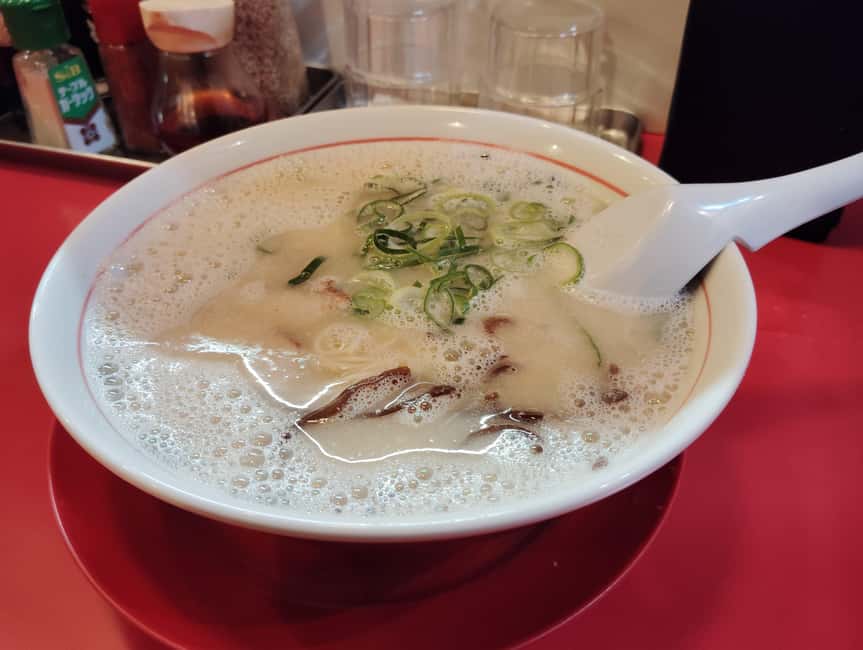
The second stop is where the tour’s food focus often becomes clearest. Fukuoka is closely associated with ramen, and the local bowl can be a highlight of the evening. One person on the tour found the ramen especially memorable, even noting that it was better than some of the other food sampled.
That is a useful expectation to set. The stalls are not all equal, and the attraction is not only the food. Some dishes may be very good, while others are mainly part of the experience of sitting at a small counter and trying something local.
You may need to wait for a seat, particularly at a popular stall. This is where Morry’s entertainment has practical value. His close-up magic and mentalist routines help pass the time, rather than leaving you standing quietly in a line.
The tour moves quickly, so you should not expect a long meal at each stop. Two hours allows a walk, two food stalls, explanations, and tastings, but not a leisurely multi-course dinner. If you want a full evening meal, plan to eat more afterward or tell your guide what matters most to you.
What the 1,000 yen allowance really means
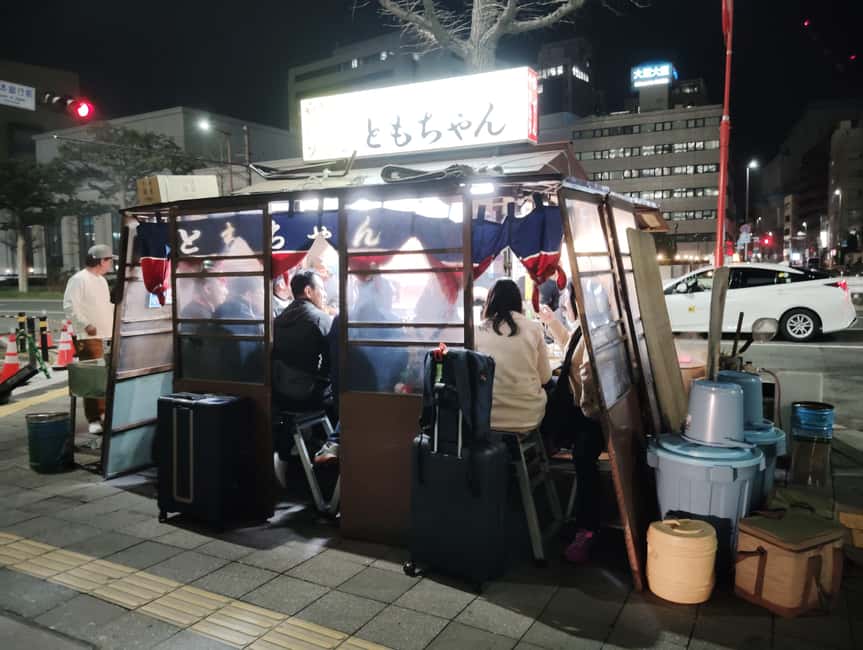
At $101 per person, this is not a bargain food crawl if you measure the price only by the amount of food. The allowance is 1,000 yen per stall, and the tour is built around two stalls, so the included food and beverage value is useful but limited.
The real value comes from combining the tastings with private guiding. You are paying for help choosing stalls, English conversation, local context, and a smoother first visit to a dining style that can feel unfamiliar. If you already speak Japanese, know Nakasu well, and feel comfortable ordering anywhere, you may find the price harder to justify.
For a first night in Fukuoka, the calculation looks better. You can avoid wasting an evening at the wrong place, sample several local dishes, and finish with enough confidence to return to a yatai on your own. One person specifically felt ready to visit a stall independently after the tour.
Remember that the allowance does not necessarily cover every order you may want. Bring cash for extra food, drinks, or a meal beyond the included amount. The tour information specifically asks you to bring cash, so do not rely only on a card.
Language help without losing the local feel
Language support is one of the strongest reasons to choose this experience. The goal is not to turn the stalls into a staged performance for outsiders. It is to help you take part in the same compact dining setting without worrying about every word.
Your guide can explain dishes, assist with ordering, and help you speak with the stall staff. That makes it easier to ask about food preferences and to respond when someone nearby starts a conversation.
The private group setup also makes questions easier. You can pause to ask about Fukuoka food, the neighborhood, or Japanese dining customs without holding up a large party. Several guides have been praised for being friendly and easy to talk with, which matters during an intimate meal.
Still, the atmosphere can change from one night to the next. On a wet evening, stalls may be less busy or some food options may be reduced. One rainy tour moved to an indoor stall, and the experience became cozier but less like the classic outdoor yatai scene.
Rain, queues, and other practical limits
Weather is the biggest variable. The stalls are outdoors, and poor conditions can reduce the number of operating counters or shift the visit indoors. A little rain may add atmosphere, but heavy rain can change the experience in a meaningful way.
Queues are another possibility. The most popular stall may require patience, and a two-hour tour cannot guarantee that you will sit immediately at every stop. The guide’s local contacts and route planning help, but they cannot make a small counter larger.
You should also keep your expectations about authenticity realistic. Yatai culture is local, but it is also a well-known part of Fukuoka’s visitor scene. You may sit beside other international visitors, especially at popular counters. The experience still gives you direct contact with local food and staff, but it is not a secret corner of the city untouched by tourism.
Smoking is not allowed on the activity. Wear comfortable shoes, bring your camera and cash, and avoid arriving hungry enough to expect a huge meal from two compact stalls.
Which guide style may suit you
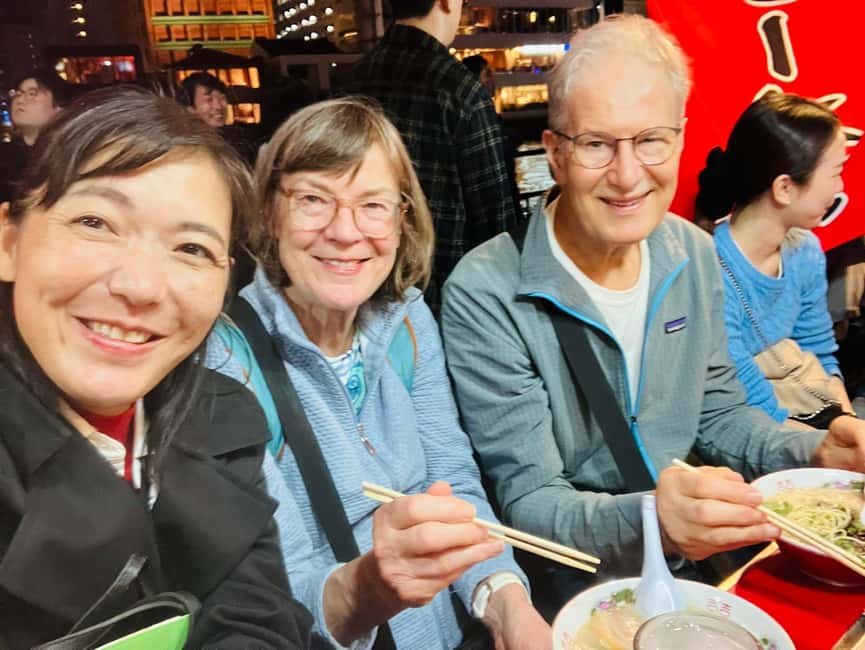
The guide can shape the evening as much as the food.
Morry is a lively choice if you enjoy conversation, quizzes, and magic while walking or waiting. He has led many of the tours described here and is known for explaining stall history and local food culture in an entertaining way.
Manabu has been praised for a thoughtful approach and for showing people around local yatai. Rie offers strong English and an easy social manner. Shota is a good fit if you want food suggestions beyond the stalls and prefer recommendations based on places he has tried himself.
Aya brings direct yatai experience from having worked at one. That can be useful if you want practical insight into how the stalls operate.
You may not be able to select a particular guide when booking, so treat these names as examples of the range of personalities rather than a guarantee. The tour is at its best when you tell the guide early about your food interests and any dietary needs.
Vegetarian flexibility is possible, but you should explain your needs clearly. One person with a non-strict vegetarian diet was able to taste several dishes after the guide adapted the meal choices. That does not mean every restriction can be handled, so ask before ordering.
Who should book this private food tour
I would recommend it most strongly to first-time visitors to Fukuoka, solo visitors, couples, and small private groups who want an easy introduction to yatai dining.
It is particularly useful if you are curious about local food but uneasy about reading menus, taking a seat at a tiny counter, or knowing which stall to choose. You also get a friendly local contact who can answer questions about other places to eat during the rest of your stay.
Food-focused visitors should book it with a clear plan. Tell the guide if ramen matters most, if you want grilled food, or if you are interested in dishes beyond the usual tourist choices. The private format allows the evening to feel more personal than a fixed group food walk.
I would be less likely to recommend it to someone seeking a large meal, a late-night bar crawl, or a completely self-directed experience. You may also prefer to go alone if you already know Fukuoka and feel confident ordering at yatai.
The tour has a 4.8 rating from 48 reviews, and the strongest pattern is easy to understand: people value the guides, the relaxed help with local interaction, and the feeling of being taken to less tourist-focused stalls. Food quality can vary, but the guidance tends to make the evening easier and more enjoyable.
Final verdict: book it for guidance and atmosphere
Book this tour if you want to try Nakasu yatai without having to figure out the customs, menu, and route alone. The two-hour schedule gives you a focused taste of Fukuoka, while the private guide adds conversation, local background, and help with ordering.
Choose a later start when possible, bring cash, and keep your expectations centered on tasting and atmosphere rather than a full dinner. If you do that, the 1,000 yen allowance at each stall and the personal attention make the $101 price easier to defend.
For a first visit, this is a practical way to get your bearings fast. Afterward, you may be ready to return to the stalls on your own, which is perhaps the best measure of a good introduction.
FAQ
Where does the tour begin?
Meet your guide in front of FamilyMart Tenjin 1-chome. The guide will hold a yellow sign marked DeepExperience.
How long does the activity last?
The tour lasts two hours, including the walk, guided sightseeing, and food tastings in Nakasu.
How many food stalls will I visit?
The activity information describes visits to two food stalls. Weather, queues, and opening times may affect the exact route.
What food can I try?
The tour may include local dishes such as oden, ramen, yakitori, and stewed specialties.
Is the tour conducted in English?
Yes. The activity includes a live English-speaking guide.
Is this a private tour?
Yes. It is arranged for a private group rather than a shared group.
What should I bring?
Bring comfortable shoes, a camera, and cash. Smoking is not allowed during the activity.
Just added around Japan
- Kyoto: Nishiki Market Tour with a Local Foodie & Tastings★ 4.5 · 67 reviews
- Kyoto: Replica food making experience★ 4.8 · 70 reviews
- Kyoto: Foodie Night Tour in Gion with 9 dishes + 6 Sake★ 4.4 · 26 reviews
- Kyoto: Nishiki Market and Depachika Food Tour with a Local★ 4.7 · 76 reviews
- Kyoto Evening Gion Food Tour★ 4.9 · 35 reviews
- Kyoto: Local Food Tasting Tour at the Nishiki Market★ 4.7 · 135 reviews
- Kyoto: Gion & Pontocho Food Tour with 13 Dishes★ 4.9 · 235 reviews
- Kyoto: Casual Pontocho Evening Food Tour★ 4.8 · 31 reviews
Food Tours in Japan, compared.
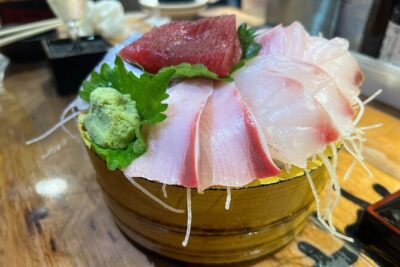
Shinjuku Food Tour (13 Dishes at 4 Local Eateries)
Read our review →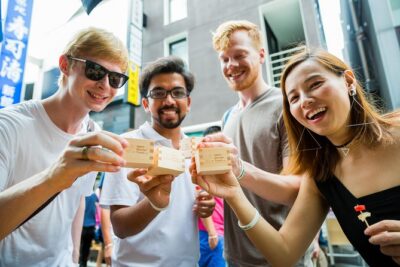
Tokyo Tsukiji Fish Market Food and Culture Walking Tour
Read our review →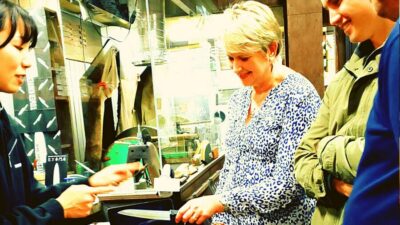
Shinsekai Food Tour with 13-15 Dishes at 5 Eateries
Read our review →
Osaka Food Tour: 13 Dishes at 5 Local Eateries
Read our review →
Shinjuku Food Tour (15 Dishes and 4 Eateries)
Read our review →
Best of Shinjuku: Izakaya Food Tour (4 Stops, 14+ Tastings)
Read our review →
Kyoto Night Foodie Tour in Gion (9+ dishes + 6 Sake tastings)
Read our review →
Hungry Osaka Street Food Tour:15 Tastings & 3 Drinks with a Local
Read our review →Browse the lists this tour appears in