
REVIEW · TOKYO
Tokyo After Dark: Savor & Sip Like a Local
Tokyo After Dark takes you beyond the usual sushi-and-ramen checklist. In 3.5 hours, you taste wagashi in Ginza, cook or sample monja-yaki in Tsukishima, and settle into a yakitori stop near Yurakucho with sake, beer, or a soft drink. I like the local focus, and I like that the route uses the metro rather than keeping you inside one tourist district.
I also like the small group, limited to eight, which gives your guide room to answer questions and adjust the conversation. Guides who have led this tour include Yuki, Hidenori, Yoshi, and Kirir. The main caution is practical: there is walking, subway travel, and station stairs, and vegetarian, vegan, and gluten-free options are not available.
Key points at a glance
- Ginza department-store sweets: Begin at Depachika, the food floor beneath or within a Japanese department store, and learn about wagashi.
- Tsukishima’s monja-yaki: Visit Monja Street, the district most closely linked with this Tokyo specialty.
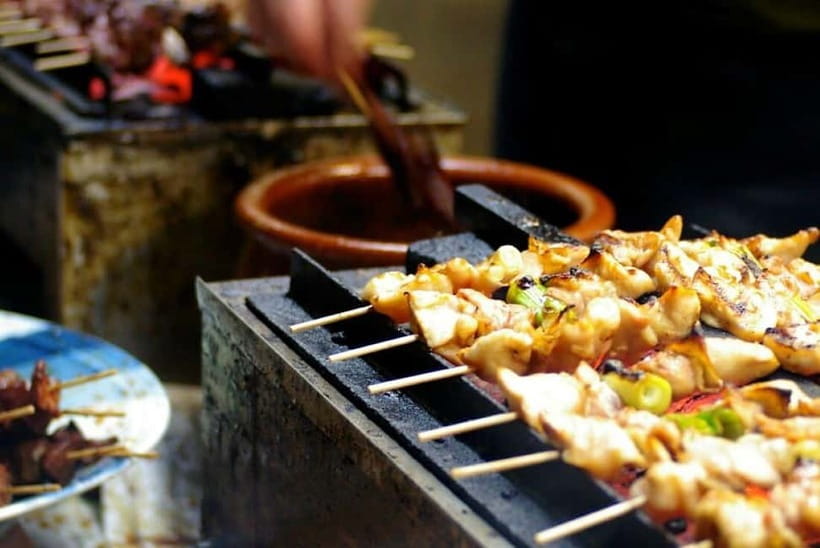
- Yakitori and a local drink: Finish the food circuit with skewered chicken and sake, beer, or a soft drink.
- A real neighborhood-to-neighborhood route: Two subway tickets take you between Ginza and Tsukishima, helping you see how Tokyo works.
- Small group, maximum eight: The format is well suited to questions and personal conversation with an English-speaking guide.
- A short evening introduction: At $119 per person, the tour works best as a first-night food orientation rather than a full dinner replacement.
Three Tokyo food traditions in one evening
This outing is built around contrast. You start with carefully presented sweets, move to a casual dish cooked on a hot plate, and finish with yakitori in an informal bar-style setting. That progression gives you a better sense of Tokyo food culture than three similar restaurant stops would.
The food is familiar enough for most cautious eaters, but still distinct from standard restaurant fare. One stop centers on red bean paste and mochi, another on a savory batter cooked on a grill, and the final stop on skewered chicken. You do not need to be a bold eater, though you should be comfortable trying foods and dining in places that may not handle special diets.
The tour is also about place. Ginza is a polished shopping district, Tsukishima has a strong local identity tied to monja-yaki, and Yurakucho brings you back toward a more casual dining scene near central Tokyo. The short subway rides are part of the point. You are not simply driven from one restaurant to another.
More Food Tours in Tokyo
- Tokyo: Shinjuku Food Tour (13 Dishes at 4 Local Eateries)
★ 5.0 · 6,603 reviews - Tokyo Tsukiji Fish Market Food and Culture Walking Tour
★ 5.0 · 3,184 reviews - Tokyo: Shinjuku Food Tour (15 Dishes and 4 Eateries)
★ 4.9 · 2,033 reviews
Starting at the Lion outside Mitsukoshi Ginza
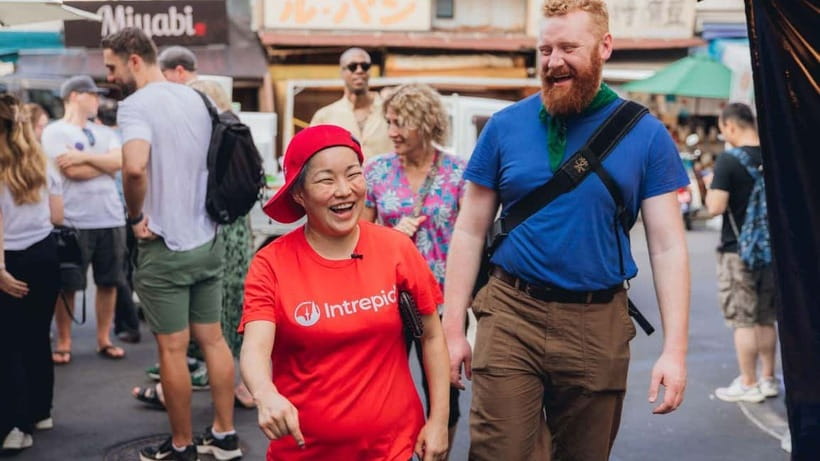
Meet your guide in front of the life-size sitting Lion statue outside Mitsukoshi Ginza, at 4-6-16 Ginza, Chuo-ku. The meeting point is easy to identify once you come up from the A7 exit of Ginza Station.
Ginza Station is served by the Tokyo Metro Ginza, Hibiya, and Marunouchi lines. That makes the starting point convenient if you are coming from another part of central Tokyo, but give yourself time to find the correct exit. Tokyo station corridors can be confusing, especially if you are arriving after a long day of sightseeing.
Your guide leads in English, and the group is capped at eight people. That limit matters here. Food tours involve small counters, grill tables, and quick explanations, so a compact group is easier to manage than a large crowd. It also gives you a fair chance to ask about ingredients, eating customs, and places to return to later.
Depachika and the quiet art of wagashi
The first food stop takes you into Ginza’s Depachika. The name refers to the food sections associated with Japanese department stores, where presentation matters as much as flavor. You will see traditional sweets and learn about wagashi, the broad family of Japanese confectionery.
Wagashi often uses ingredients such as red bean paste and mochi, the sticky rice preparation noted in the food description. The textures can be a bigger surprise than the sweetness. If you normally expect a crisp cookie or a creamy cake, wagashi may seem softer, denser, or less sugary.
This is a useful first stop because it introduces a side of Japanese food that many short Tokyo visits miss. It also gives your guide a chance to explain how sweets fit into Japanese food culture, rather than treating them as a quick sample with no context.
Do not expect a large dessert tasting. The tour includes a wagashi tasting, and additional food and drinks are available for purchase, but the included portions are designed to carry you through several stops. One account of the outing also noted an extra melon bread near the end, though you should not count on that as part of the standard inclusions.
Taking the metro to Tsukishima Monja Street
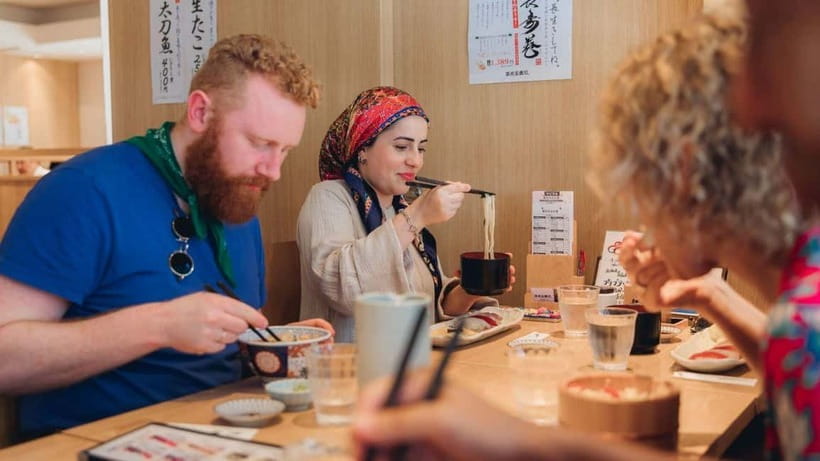
The move to Tsukishima is one of the tour’s strongest features. Two subway tickets are included, and riding the metro lets you see the practical side of Tokyo rather than viewing the city only through restaurant doors.
Tsukishima is associated with monja-yaki, a savory dish cooked on a tabletop grill. It is related in spirit to okonomiyaki, but the texture is much looser and more runny. At the restaurant, you may cook the food yourself on the grill or take part while the guide helps explain the process.
This is a social dish. You are not served a finished plate and sent on your way. The hot plate, shared preparation, and informal setting make it easier to talk with the people around you. It is also the stop most likely to teach you something about everyday Tokyo dining.
The food is not designed to be elegant. That is part of its appeal. If you prefer neatly plated dishes, monja-yaki may take some adjusting. If you enjoy food with a sense of place and a hands-on element, this should be one of the more memorable stops.
The route includes guided time on Tsukishima Monja Street, not just a restaurant visit. One useful benefit is that you are taken to a district you might not prioritize on a first visit to Tokyo. The drawback is the walking and the need to use subway stations, including stairs in some places.
More evening food tours in Tokyo:
- Saigon By Night and Street Food By Motorbike | Opt: Ao Dai Riders
★ 5.0 · 4,066 reviews - Bangkok by Night: Temples, Markets and Food Tuk-Tuk Tour
★ 5.0 · 3,752 reviews - Marrakech: Street Food Tour by Night
★ 4.8 · 2,838 reviews - Hanoi Motorbike Tours Led By Women: Hanoi By Night Foodie Motorbike Tours
★ 5.0 · 1,734 reviews
Yakitori near Yurakucho, with a drink
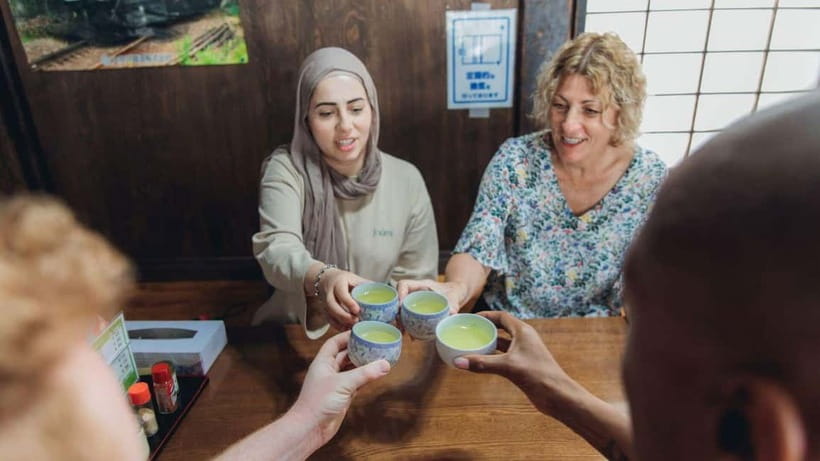
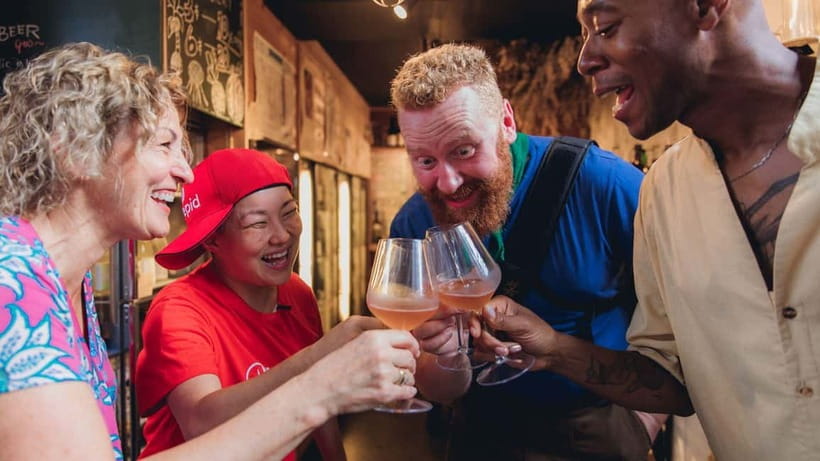
The final main food stop is Yakitori Alley in the Yurakucho area of Ginza. Here, you taste skewered chicken in a casual bar-style restaurant and receive one local drink. Depending on your age and preference, that can be sake, local beer, or a soft drink.
Yakitori is simple food, but the variety comes from the cuts, seasoning, and grilling. The tour description identifies skewered chicken, though it does not promise a specific list of cuts. Your guide can help explain what arrives and how it fits into Japanese dining habits.
This is a good place to finish because the mood shifts from instruction to conversation. You have already seen the sweets counter and tried monja-yaki, so the yakitori stop feels like a natural evening meal setting rather than another formal tasting.
Keep your expectations in check on quantity. The tour includes three food tastings and two drinks, but additional food and drinks cost extra. If you want a full dinner, plan to buy more at one of the stops or eat before or after the tour.
The drinking age in Japan is 20. Participants under 20 receive non-alcoholic drinks. The tour is for people aged 12 and older, so families with older children can join, but the food and setting are likely to suit adults and teenagers more than young children.
What the small group changes
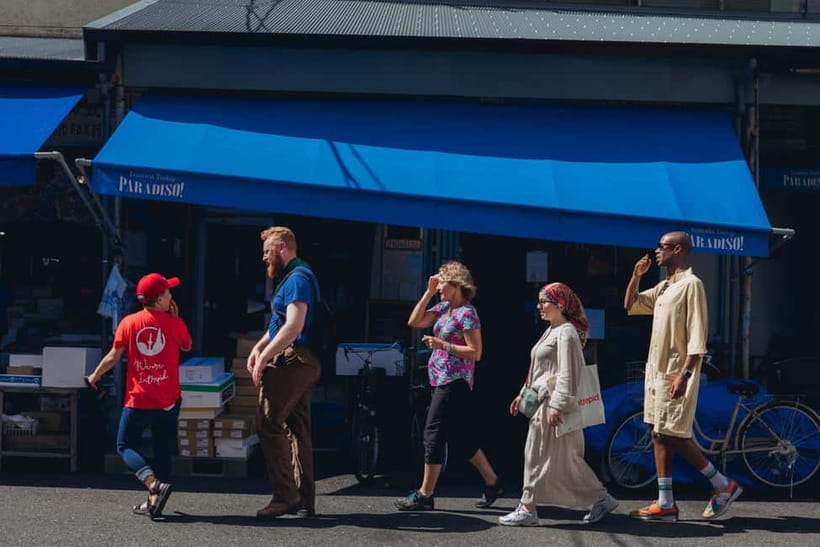
A maximum of eight people is a real advantage on a food tour. You can hear explanations at the counter, ask about unfamiliar ingredients, and stay connected with the guide while moving through the city.
The guide is central to the experience. Names associated with past departures include Yuki, also called Snoopy, Hidenori Tsunematsu, Yoshi, and Kirir. Your guide may be someone else, but the format calls for an English-speaking local who can offer eating tips and point out places worth returning to.
The strongest guide experiences described include practical help, good conversation, and introductions to places that are hard to find without local direction. That is the value you are paying for as much as the food itself. Tokyo has no shortage of restaurants, but deciding where to go, how to order, and what to try can be difficult during a short stay.
Guide quality can still vary from one departure to another. If you want a long explanation of cooking methods, make a point of asking. The food is not always self-explanatory, and one account of the experience found that more detail about preparation would have improved the outing.
How much food and value you get for $119
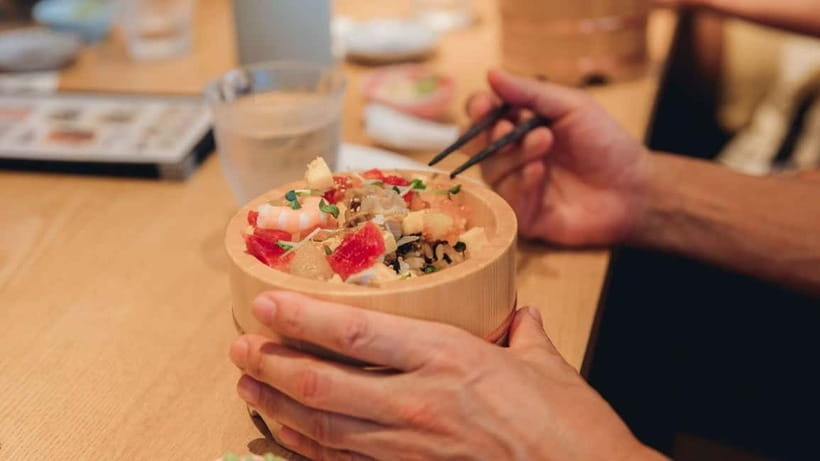
The price is $119 per person. Included are the English-speaking guide, three local food tastings, two local drinks, and two subway tickets. The food focus is wagashi, monja-yaki, and yakitori, though the exact serving details can depend on the restaurants and the group.
I see the price as reasonable if you value orientation and local guidance. You are paying for a compact route across several neighborhoods, transportation between them, a small group, and help understanding what you are eating. You are not simply paying for three inexpensive snacks.
The value is weaker if you measure the tour only by calories. Additional food and drinks are not included, so a hungry person may want to buy more. At $119, you should think of this as a guided evening introduction to Tokyo food culture, not an all-you-can-eat meal.
It also helps to book it early in your Tokyo stay. The guide’s recommendations can help shape later meals, and the metro route gives you a better sense of how Ginza, Tsukishima, and Yurakucho connect.
Walking, stairs, and dietary limits
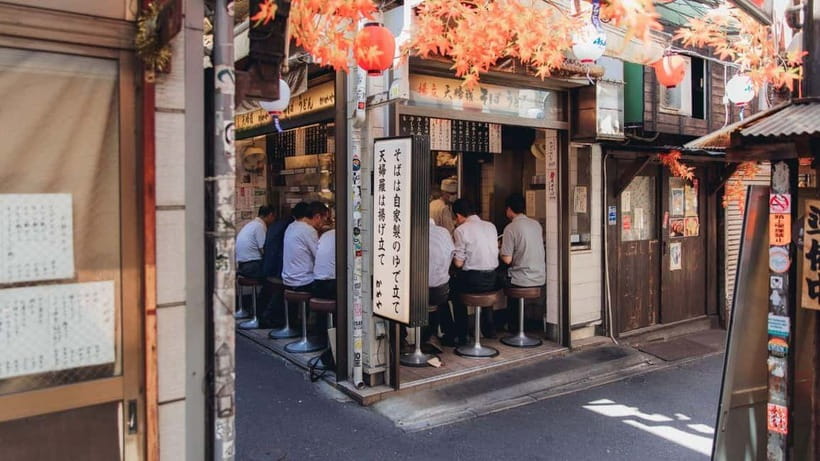
The tour lasts 3.5 hours and includes walking between food stops, subway travel, and station transfers. One participant had to leave early because the amount of walking and the station stairs were too much for an 83-year-old companion. That is a clear warning for anyone with limited mobility.
The meeting point itself is accessible by three subway lines, but that does not mean every part of the route is step-free. If stairs are difficult for you, ask the operator about the planned route before booking. The tour description does not promise accessibility accommodations.
Diet is another important limit. Vegetarian, vegan, and gluten-free options are not available. The establishments visited cannot meet all dietary needs, so do not book this outing hoping the guide can redesign the menu around your restrictions.
For other food concerns, use your judgment and ask the guide at the start. The supplied information specifically rules out the three diets above, but it does not list every ingredient in each tasting.
Who will enjoy this Tokyo evening
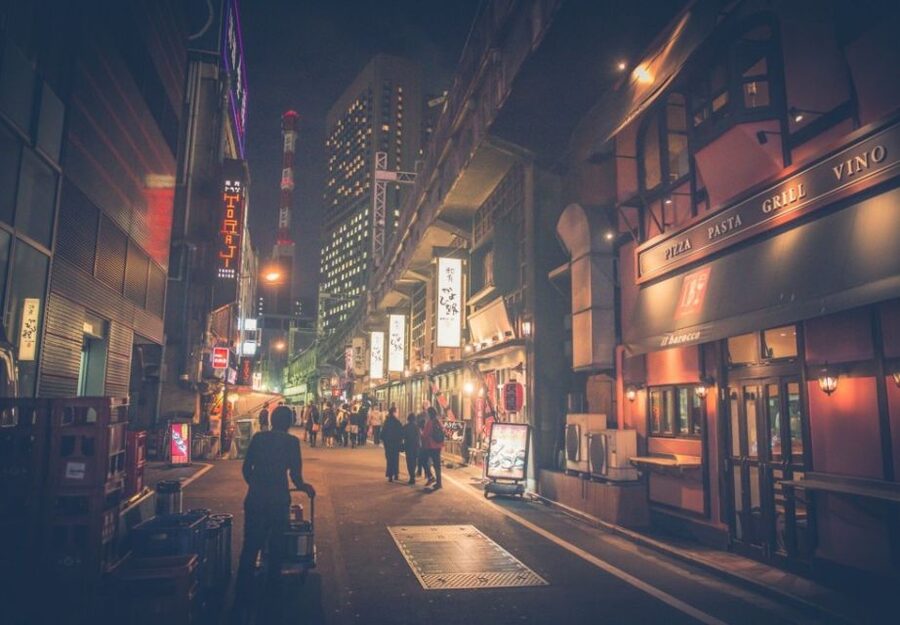
I would choose this tour if you want a guided introduction to Japanese food without committing to a long formal meal. It suits first-time visitors who want to learn where locals eat and how different dishes fit into daily life.
It is also a good match for solo visitors and couples who like meeting a few fellow food fans. The group size is small enough for conversation, and the stops offer more variety than a single restaurant reservation.
Families with children aged 12 and older can join, though anyone under 20 receives soft drinks rather than alcohol. People who need vegetarian, vegan, or gluten-free food should skip it.
You should also reconsider if you want a relaxed route with almost no walking. The tour moves between districts, and subway stations can involve stairs. For most reasonably mobile participants, that movement is part of the experience. For anyone with mobility concerns, it may be the deciding drawback.
Should you book Tokyo After Dark?
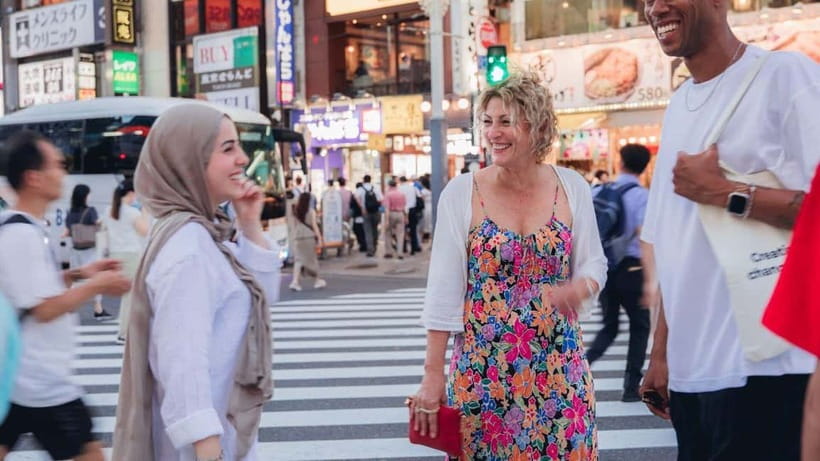
Book it if you want three distinct food traditions, a small group, and a local guide who can help you make sense of Tokyo’s eating habits. The Tsukishima stop and metro travel add more value than a standard restaurant crawl, while the Ginza starting point keeps the evening easy to reach.
Skip it if dietary restrictions rule out the menu, if you need a fully accessible route, or if you expect a full dinner for the $119 price. For everyone else, this is a useful first-night choice: short enough to fit into a busy itinerary, broad enough to introduce several parts of Tokyo, and practical enough to leave you with ideas for the rest of your stay.
FAQ
How long does the Tokyo food tour last?
The tour lasts 3.5 hours. Starting times vary, so check availability when booking.
Where does the tour start?
It starts in front of the life-size sitting Lion statue outside Mitsukoshi Ginza, at 4-6-16 Ginza, Chuo-ku, Tokyo.
How do I find the meeting point?
Use the A7 exit of Ginza Station. The statue is visible when you reach street level.
Which subway lines serve Ginza Station?
Ginza Station is served by the Tokyo Metro Ginza Line, Hibiya Line, and Marunouchi Line.
Where does the tour finish?
The activity ends back at the original meeting point in Ginza.
What food is included?
The tour includes tastings of wagashi, monja-yaki, and yakitori.
Are drinks included?
Two local drinks are included. You can choose sake, beer, or a soft drink, subject to the drinking-age rules in Japan.
Can children join the tour?
Participants must be at least 12 years old. Anyone under 20 receives non-alcoholic drinks because the legal drinking age in Japan is 20.
Are vegetarian, vegan, or gluten-free options available?
No. The tour does not offer vegetarian, vegan, or gluten-free options.
More Tours Led by Locals in Tokyo
- Eat and Drink Like a Local: Tokyo Ueno Food Tour-Taverns&Ramen
★ 5.0 · 957 reviews - Tokyo: Kichijoji Walking Tour with Local Guide
★ 4.6 · 164 reviews - Eat/Drink like a LOCAL-Taverns & Ramen
★ 4.9 · 23 reviews - Naples: Street Food Walking Tour with Local Guide
★ 4.9 · 4,976 reviews
Just added around Tokyo
- Tokyo: West-Side Cycling and Food Tour with Guide★ 5.0 · 37 reviews
- Tokyo: Wagyu and Sushi Gastronomic Journey★ 4.3 · 24 reviews
- Tokyo: Allstar Food Tour★ 4.7 · 29 reviews
- Tokyo: Togoshi Ginza Street Food Tour★ 5.0 · 34 reviews
- Tokyo: The Best of Izakaya in Shinjuku Food & Cultural Tour★ 4.9 · 221 reviews
- Tokyo Tsukiji Food & Culture Private Tour Licensed Guide★ 4.9 · 28 reviews
- Tokyo: Locals´ Secret Food Tour // Eat like a Japanese★ 5.0 · 35 reviews
- Tokyo: Shibuya Food Tour (13 dishes and 4 Eateries)★ 5.0 · 178 reviews
Food Tours in Tokyo, compared.
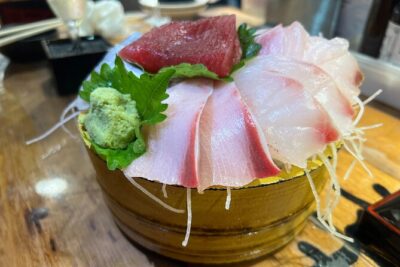
Shinjuku Food Tour (13 Dishes at 4 Local Eateries)
Read our review →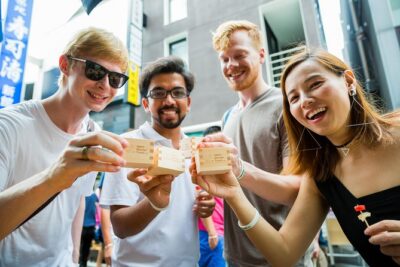
Tokyo Tsukiji Fish Market Food and Culture Walking Tour
Read our review →
Shinjuku Food Tour (15 Dishes and 4 Eateries)
Read our review →
Best of Shinjuku: Izakaya Food Tour (4 Stops, 14+ Tastings)
Read our review →
Tokyo Night Foodie Tour in Shinjuku – Seasonal Sushi, Wagyu Beef
Read our review →
Eat and Drink Like a Local: Tokyo Ueno Food Tour-Taverns&Ramen
Read our review →Browse the lists this tour appears in