
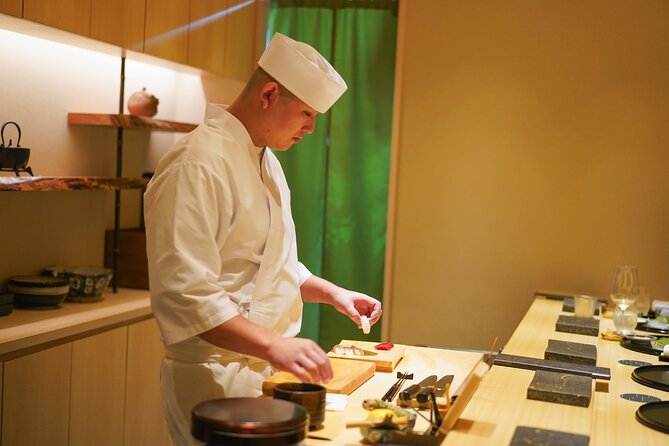
REVIEW · JAPAN
Chef’s Choice Sushi and Tempura Luxury Foodie Tour in Ginza
Ginza’s best food often comes across a counter, one careful piece at a time. This 2.5-hour evening tour pairs chef’s-choice sushi with tempura, drinks, and a short walk through Tokyo’s polished shopping district, so you get a fine-dining meal without having to decode every custom yourself.
I like the guaranteed counter seating, where you can watch the chefs work, and I like the small group cap of seven. A guide such as Suzy can explain sushi manners, translate the flow of the meal, and help you focus on the food. The main drawback is timing: the meeting hour changes, and the tour may feel too short if you want a long Ginza stroll or a leisurely night out.
Key points to know before booking
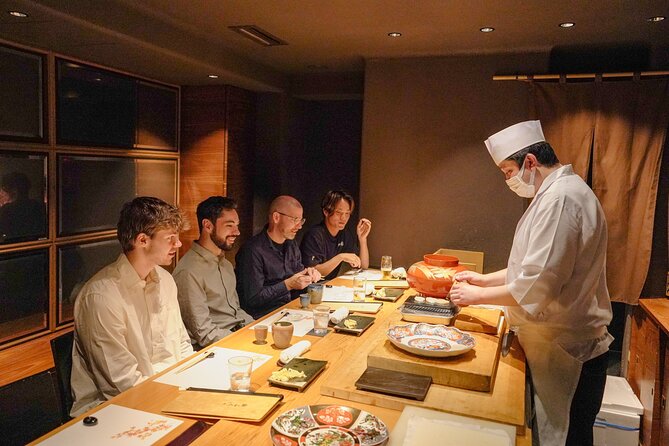
- Two Japanese classics in one evening: The included meal combines an omakase sushi course and a tempura course, enough for a full dinner.
- Four drinks are included: You receive two drinks at each restaurant, which adds useful value to the $130 price.
- Counter seats are guaranteed: You sit close to the chefs rather than at a distant table.
- Small group format: The tour accepts a maximum of seven people, keeping the guide’s help fairly personal.
- Ginza landmarks frame the meal: You meet at the Lion Statue by Ginza Mitsukoshi and finish back near the starting point after Ginza Six and Toyoiwa Inari Shrine.
- Dietary substitutions are available: The chef’s-choice menu can include substitutions for dietary needs, though you should clarify your requirements before dining.
Why this Ginza food tour works
Ginza is Tokyo’s luxury district, but it is not just a parade of expensive shops. Its restaurant counters are places where Japanese cooking becomes a quiet performance. Sushi chefs shape rice, place fish, and serve each piece at the right moment. Tempura chefs turn simple ingredients into light, crisp bites.
That setting can be intimidating if you do not speak Japanese or have never eaten at a serious sushi counter. This tour gives you a guide to explain the rhythm and etiquette, while the restaurants handle the cooking. You can ask questions, watch the chefs, and enjoy the evening without worrying about every small detail.
The food is served in an omakase style, meaning chef’s choice. You do not select every course from a menu. Instead, the chef prepares a set meal chosen for the restaurant and the occasion. That can be a pleasure if you want to try what the kitchen considers best, but it gives you less control than an ordinary menu order.
The restaurants are described as Michelin-starred or Tabelog-awarded, depending on the assigned venues. You should not expect a fixed restaurant list unless the operator confirms it for your date. The important promise is the style of the meal: award-recognized dining, counter seats, sushi, tempura, and four drinks.
More sushi and ramen crawls in Japan:
- Best of Shinjuku: Izakaya Food Tour (4 Stops, 14+ Tastings)
★ 5.0 · 1,863 reviews - Tokyo Night Foodie Tour in Shinjuku – Seasonal Sushi, Wagyu Beef
★ 5.0 · 1,161 reviews - Eat and Drink Like a Local: Tokyo Ueno Food Tour-Taverns&Ramen
★ 5.0 · 957 reviews
Meeting at Ginza Mitsukoshi’s Lion Statue
The tour begins at the Lion Statue outside Ginza Mitsukoshi at 4-chōme-6-16 Ginza. It is a practical meeting place near public transportation and one of Ginza’s best-known landmarks. Look for the statue rather than trying to find a restaurant entrance on your own.
The start time changes by day. On weekdays, the listed meeting time is 4:30 p.m. On weekends and public holidays, it is 3:30 p.m. Check the exact time attached to your booking, since arriving at the wrong hour would be an unfortunate way to miss dinner.
From the statue, your guide leads you to a more discreet sushi restaurant. The walk itself is brief, but it helps you shift from Ginza’s broad department-store streets to the smaller restaurant world behind them. You are not being asked to solve Tokyo’s famously confusing restaurant addresses alone.
The tour ends back at the meeting point. That makes the outing easier to fit into a larger evening, though you should allow a little extra time if you plan to catch a train, make a reservation, or continue shopping.
Counter seating and the sushi course
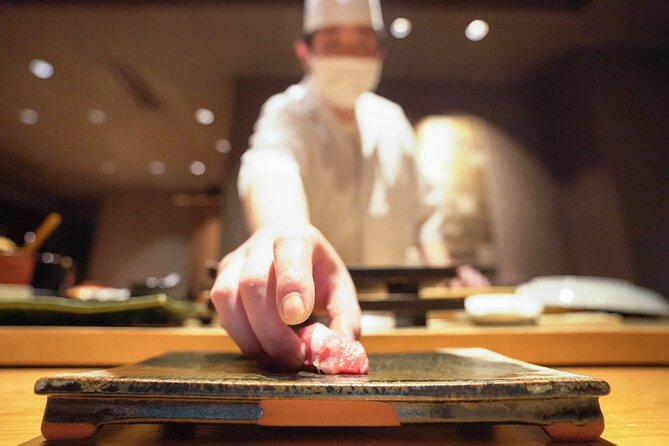
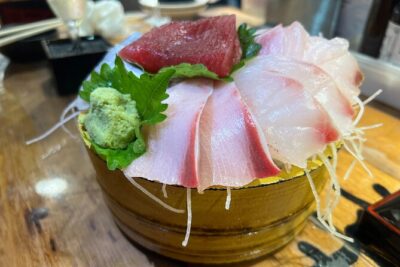
The heart of the experience is the sushi meal. Counter seating puts you close to the chef, where you can see the preparation and receive each piece directly. For many people, this is the most valuable part of the tour. It turns dinner from a plate of food into a look at Japanese technique and timing.
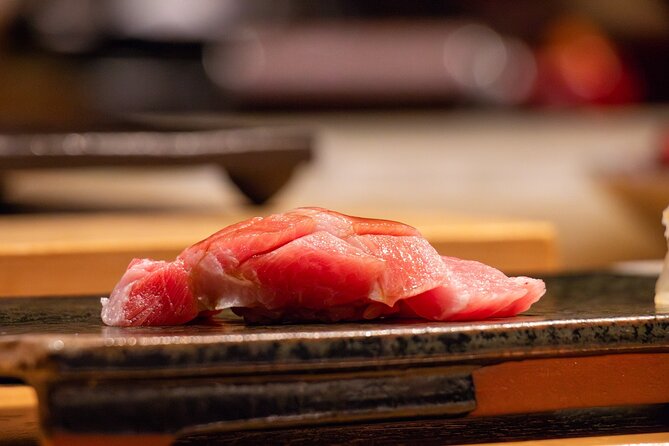
The menu is chef’s choice, so the exact sushi selection is not fixed in the tour details. Fish can vary by season, supply, and restaurant. That uncertainty is part of omakase dining, but it also means you should not book this expecting a particular fish or a specific number of pieces.
Your guide explains sushi etiquette and the customs that can make a formal counter meal feel unfamiliar. This might include how to receive the food, when to eat it, and how to follow the chef’s pace. The point is not to turn dinner into a class. It is to remove the small barriers that can distract you from the meal.
One supplied account describes the sushi as fresh and the chef as friendly, with Suzy serving as the guide. That gives you a useful picture of the tone to expect: polished food, but not necessarily a stiff or cold room. Still, individual guides and chefs can differ, so treat Suzy’s name as an example rather than a guarantee for every departure.
The course includes dietary substitutions. If you have an allergy, restriction, or strong dislike, make it clear before the meal begins. The available information confirms substitutions, but it does not promise that every dietary request can be met or that cross-contact can be avoided.
Two drinks are included at the sushi restaurant. The details do not specify the drink list, so you should not assume a particular sake, beer, wine, or soft drink. Think of the inclusion as a useful allowance that supports the meal rather than as a tasting menu with a published pairing.
Tempura prepared at the counter
The second main food stop adds contrast. Sushi is cool, clean, and precise. Tempura arrives hot, crisp, and delicate. Having both in one evening gives you a fuller look at Japanese restaurant cooking than a sushi-only tour would.
The tempura course is also included as part of a full dinner, along with two more drinks. One direct account praised the pieces for being lightly battered and fried with care. That is exactly the quality you hope for in tempura: a thin coating that does not bury the ingredient under oil and batter.
Again, the precise ingredients are not listed. The menu may depend on the chef and the day, and you should avoid booking with the expectation of a named shrimp, vegetable, or seasonal item. The pleasure here is the preparation and the chance to watch the cooking close up.
The two restaurant visits also help pace the evening. You are not sitting through one long formal meal with no change of scene. You get a sushi experience, then a tempura experience, with the guide connecting the food to Japanese dining habits.
The tradeoff is that two restaurants in roughly two hours leaves little room for lingering. If you like to spend a full evening at one counter, chatting slowly with the chef, this tour may feel brisk. If you want a broad first taste of Ginza dining, the format is efficient.
A few more food tours around Japan worth comparing
- Dubai: Luxury Dinner Buffet at Gastronomy Atlantis The Royal
★ 4.7 · 1,395 reviews - Halong Bay – Hera Luxury Day Cruise 7.5 Hours
★ 5.0 · 590 reviews - Eating London: Twilight Soho VIP Food & Drinks Tour
★ 5.0 · 590 reviews - Edinburgh Luxury Private Food & Drink Tour with Eat Walk Tours
★ 5.0 · 223 reviews
Ginza Six, Toyoiwa Inari Shrine, and the closing walk
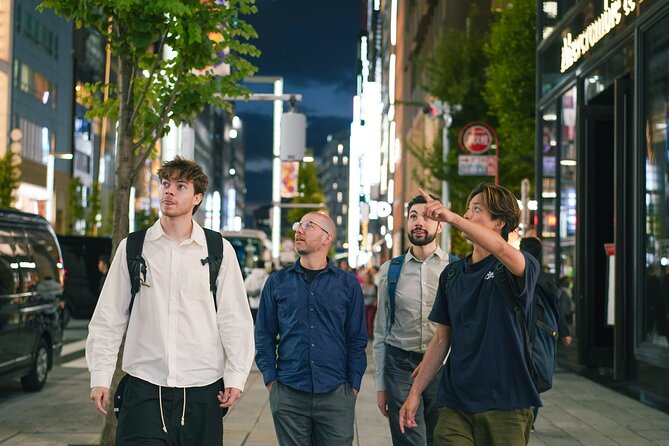
After dinner, your guide introduces more of Ginza. The route includes Ginza Six, a major luxury shopping complex, and Toyoiwa Inari Shrine. The walking portion is listed as about ten minutes at each stop, so this is an orientation walk, not a major sightseeing tour.
Ginza Six gives you a sense of the district’s modern side. High-end shops and polished architecture fit the area’s reputation, while the shrine offers a smaller and more traditional point of interest. That contrast is one reason the walk earns its place after the meal.
The guide may also point out scenic shrines, high-end shops, and places for dessert or cocktails. These suggestions can help you continue the night, but they are introductions rather than included stops with food and drinks. Your four included drinks are served during the restaurant visits.
Toyoiwa Inari Shrine is visited after dinner. Because the tour ends back at the meeting point, you are not left at a random restaurant across town. That is useful in Ginza, where a short distance on a map can still involve busy crossings, department stores, and confusing entrances.
Do not book this as a full Ginza sightseeing tour. The food is the main event. The landmarks add context and give you a pleasant way to walk off dinner, but they do not replace a dedicated neighborhood tour.
What the $130 price covers
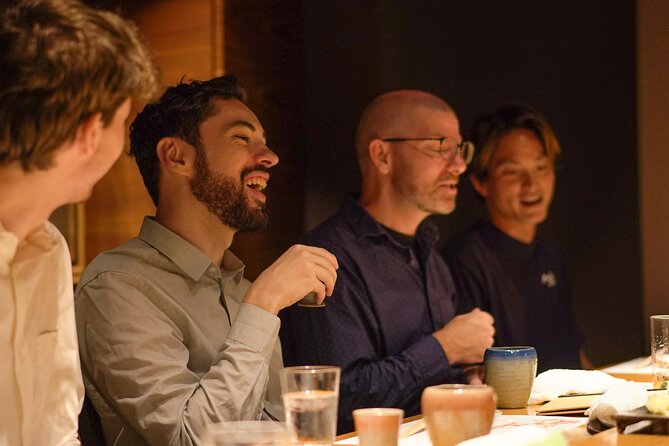
At $130, this tour needs to be judged as a meal-and-guide experience, not as a simple restaurant reservation. The price includes an omakase sushi course, a tempura course, four drinks, about 2.5 hours with an English-speaking guide, a Ginza walking route, and photos sent by email afterward.
Counter seating at award-recognized restaurants can be difficult to arrange on your own, especially if you do not speak Japanese or understand the reservation system. The guide adds practical value by handling the movement between venues and explaining etiquette. The small group limit also matters. With no more than seven people, the guide can give more attention than on a large bus-style food tour.
The price is strongest for couples, friends, and solo visitors who want one polished food night with little planning. It is less attractive if you already have a sushi reservation, do not drink, or prefer to choose every dish yourself. Since tips and gratuities are not included, keep that extra cost in mind.
The tour is also a useful choice for a first special meal in Tokyo. You get two major Japanese food styles, a taste of Ginza, and a guide who can make the customs easier to follow. It is not cheap, but the meal, drinks, and personal assistance make the price easier to justify than a short walking tour with a few samples.
Timing, group size, and practical limits
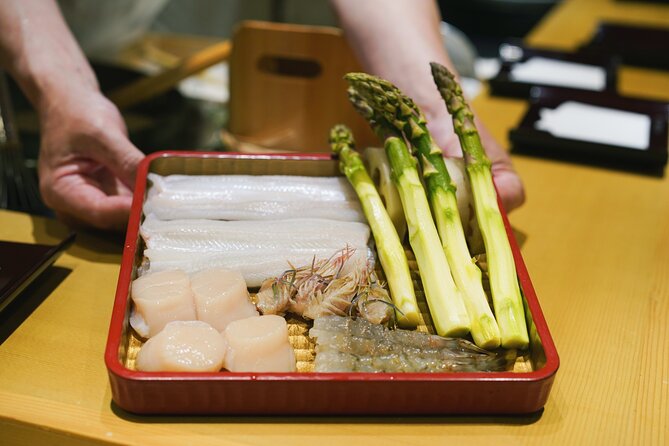
The experience lasts about 2 hours and 30 minutes. The food portion takes about two hours, while the meeting and closing walks account for the rest. The schedule is compact, so arrive ready to begin at the stated meeting time.
A mobile ticket is provided, and confirmation arrives when you book. The starting point is near public transportation, which makes Ginza a practical place to reach before dinner. The activity ends at the original meeting point.
Most people can participate, according to the supplied activity details. No special accessibility information is provided, so contact the operator if you have mobility needs that could affect restaurant access or the short walks.
Free cancellation is available if you cancel at least 24 hours before the local start time. Cancellations or changes inside that 24-hour window are not refunded or accepted. That rule is worth noting because the tour depends on reserved restaurant seats.
The group maximum is seven. That is small enough for a personal feel, but it does not guarantee a private tour. One direct booking account described a family having the tour to themselves, but your group may include other people.
Who should book this food experience
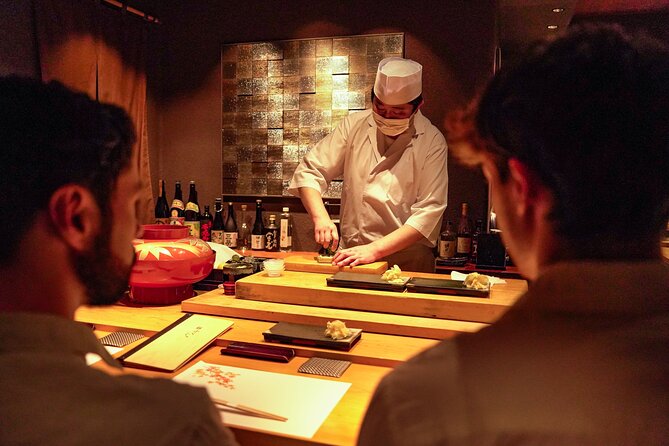
I would choose this tour if you want a high-end Tokyo meal but do not want to arrange two restaurant visits yourself. It suits a first trip, a special evening, or a solo visit where having a guide makes a formal meal feel more relaxed.
It is also a good match for people who enjoy watching food being made. The counter seats give you a close view of the chefs, and the guide helps explain what is happening. The combination of sushi and tempura gives you more range than a single restaurant meal.
Couples and families can benefit from the easy structure. One direct account describes a family enjoying both the fresh sushi and the lightly battered tempura, with Suzy helping make the evening comfortable. The format also works for friends who want food first and a little Ginza exploring afterward.
I would hesitate if you need a fully fixed menu, have complex dietary restrictions, or dislike chef’s-choice dining. I would also skip it if your main goal is a long cocktail night, since the included drinks are tied to the two restaurants and the schedule is fairly tight.
Should you book the Ginza sushi and tempura tour?
Book it if you want a polished, well-organized dinner that combines sushi, tempura, drinks, and a short Ginza walk. The counter seating, small group size, and English-speaking guide address the hardest parts of high-end Japanese dining for a first-time visitor.
Skip it if you want to choose each dish, stay at one restaurant for several hours, or spend most of the evening sightseeing. For everyone else, the $130 price is reasonable when you count the two full courses, four drinks, guide service, and photos. The best reason to book is simple: you get a well-paced introduction to two Japanese specialties in one of Tokyo’s most famous dining districts.
FAQ
Where does the tour begin?
It begins at the Mitsukoshi Lion Sculpture outside Ginza Mitsukoshi, at 4-chōme-6-16 Ginza, Chuo City, Tokyo 104-0061, Japan.
What time does the tour start?
The listed weekday meeting time is 4:30 p.m. On weekends and public holidays, it is 3:30 p.m. The exact time can change, so check your booking confirmation.
Where does the tour end?
The activity ends back at the meeting point near the Ginza Mitsukoshi Lion Statue.
How long does the experience last?
The tour lasts approximately 2 hours and 30 minutes.
What food is included?
The price includes an omakase sushi course and a tempura course. Together, they are intended to provide a full dinner.
How many drinks are included?
Four drinks are included in total, with two drinks served at each restaurant.
Is counter seating guaranteed?
Yes. The experience includes guaranteed counter seating at the participating sushi and tempura restaurants.
Can dietary needs be accommodated?
Substitutions are available for dietary needs. The supplied details do not specify every restriction that can be accommodated, so explain your needs clearly.
How large is the group?
The maximum group size is seven people.
Are tips included?
No. Tips and gratuities are not included in the tour price.
What is the cancellation policy?
You can cancel for a full refund up to 24 hours before the experience start time. Cancellations or changes made less than 24 hours before the start are not refunded or accepted.
Just added around Japan
- Best of Hiroshima Food Tour★ 5.0 · 32 reviews
- Hiroshima Izakaya Food and Drink Night Tour★ 5.0 · 297 reviews
- All-inclusive Hiroshima Nighttime Food and Cultural Immersion★ 4.5 · 60 reviews
- Tokyo Allstar Food Tour★ 4.5 · 206 reviews
- Adventurous Japanese Food Tour in Tokyo★ 4.5 · 53 reviews
- Tokyo: Best Ginza Food Tour at 3 Local Eateries★ 5.0 · 83 reviews
- Tokyo : Asakusa Food Tour – 12 Dishes & 3 Drinks★ 5.0 · 44 reviews
- Tokyo: Asakusa & Sensoji ー Oldest Temple Walking Tour (2hrs)★ 5.0 · 213 reviews
Food Tours in Japan, compared.
Shinjuku Food Tour (13 Dishes at 4 Local Eateries)
Read our review →
Tokyo Tsukiji Fish Market Food and Culture Walking Tour
Read our review →
Shinsekai Food Tour with 13-15 Dishes at 5 Eateries
Read our review →
Osaka Food Tour: 13 Dishes at 5 Local Eateries
Read our review →
Shinjuku Food Tour (15 Dishes and 4 Eateries)
Read our review →
Best of Shinjuku: Izakaya Food Tour (4 Stops, 14+ Tastings)
Read our review →
Kyoto Night Foodie Tour in Gion (9+ dishes + 6 Sake tastings)
Read our review →
Hungry Osaka Street Food Tour:15 Tastings & 3 Drinks with a Local
Read our review →Browse the lists this tour appears in