
REVIEW · JAPAN
Best of Hiroshima Food Tour
Hiroshima’s food story is best understood one small plate at a time, and this evening walk puts you in the middle of it. Starting near the Peace Memorial Park, you’ll move through downtown streets, shopping arcades, and local restaurants, with Hiroshima-style okonomiyaki as the main culinary target.
I like the four food stops, which give you more range than a single restaurant meal, and I like that the guide handles ordering and language questions. The two included drinks, one of them local sake, add useful local context. The main caution is the price: at $221 per person, this is a costly three-hour outing, especially since transportation and extra food or drinks are not included.
Key points at a glance
- Four food stops in three hours: You’ll sample several local specialties, including dessert, rather than sit down for one long meal.
- Hiroshima-style okonomiyaki: This famous dish is one of the tour’s central food experiences.
- Two drinks included: One drink is local sake, with the minimum drinking age set at 21.
- Peace Park to downtown: The route begins near Hiroshima’s major memorial sites and ends at Hatchobori Station.
- Small group format: The maximum is 10 people, allowing easier communication with the English-speaking guide.
- Useful for a short visit: You can ask for more restaurant suggestions before the tour ends.
Why this Hiroshima food walk is worth considering
This experience combines two parts of Hiroshima that are often treated separately: the solemn memorial district and the everyday food life of central town. You begin at Hiroshima Orizuru Tower, close to the Peace Memorial Park, then move toward shopping streets and restaurants. That change of mood is part of the point.
The tour runs for about three hours and 10 minutes, starting at 4:30 p.m. That timing works well for an early evening meal. You get a chance to see the city after the daytime sightseeing rush, then finish at Hatchobori Station, a useful central point for continuing your evening.
I especially like the practical role of the guide. You are not simply handed a list of restaurants. The guide orders for you, helps across language barriers, and keeps the meal moving. That matters in small Japanese restaurants where menus, ordering customs, and unfamiliar dishes can slow you down.
Still, you should book this for the food access and guidance, not for a full historical tour. The memorial stops are part of the route, but the listed time at the first two points is brief. This is a food walk that passes through important Hiroshima places, not a replacement for a proper visit to the Peace Memorial Museum.
A few more food tours around Japan worth comparing
- Tokyo: Shinjuku Food Tour (13 Dishes at 4 Local Eateries)
★ 5.0 · 6,603 reviews - Tokyo Tsukiji Fish Market Food and Culture Walking Tour
★ 5.0 · 3,184 reviews - Osaka: Shinsekai Food Tour with 13-15 Dishes at 5 Eateries
★ 4.8 · 2,204 reviews
Starting near Orizuru Tower and Peace Park
The meeting point is Hiroshima Orizuru Tower, at 1-2-1 Ōtemachi. The tour begins at 4:30 p.m., and the tower is a practical landmark near the Peace Memorial Park. Admission to the stops is not included because the route does not present them as ticketed visits.
From there, you head toward the Peace Memorial Park and nearby downtown streets. The park gives the evening a serious beginning. Hiroshima’s food culture is often discussed through okonomiyaki and local drinks, but you’ll understand the city better if you first recognize the setting in which modern Hiroshima was rebuilt.
The Atomic Bomb Dome is included among the route points. So are the Hiroshima Peace Memorial Museum and Fukuromachi Park. The schedule does not promise extended entry or guided time inside each site, so plan a separate visit to the museum if it matters to you.
This is one of the tour’s useful design choices, but also one of its limits. You get your bearings around the memorial district, then move into ordinary city life. You do not get a full museum lesson, detailed monument interpretation, or long pauses at every listed point.
Hiroshima’s shopping arcades and local streets
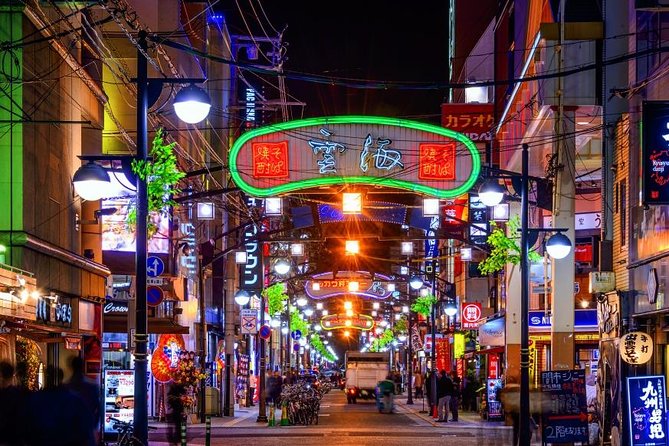
After the memorial area, the route takes you through Hiroshima Kinzagai Shop Street and other central streets. Shopping arcades are a good setting for a food walk because they bring restaurants, small shops, and daily city life close together under one route.
You may also pass Fukuromachi Park and other central landmarks before reaching the food stops. The itinerary includes Hiroshima Castle and the Hiroshima World Heritage Sea Route among its points of interest, but the available details do not say that you enter the castle or take a boat. Treat these as route references rather than guaranteed major activities.
That distinction is important. At just over three hours, the tour has enough time for food and walking, but not for a long list of full sightseeing visits. The strength is the connection between places, not the depth of time at each one.
The shopping time is another small benefit. You can browse as you walk, and you can ask the guide about other places to eat after the official stops. If you are in Hiroshima for only a short stay, that advice may be as useful as the meal itself.
The four food stops and what they add
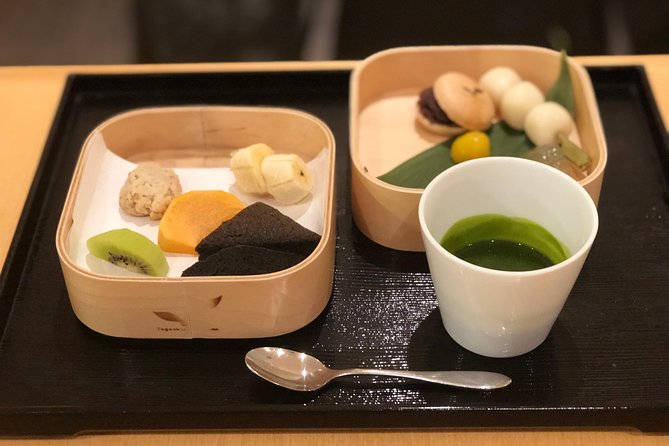
The main food portion includes four stops, with dessert included. Exact restaurants and dishes can change because of restaurant schedules, holidays, weather, and other conditions. That flexibility means the experience is not locked to one menu, but it also means you should not assume every stop will be identical on every date.
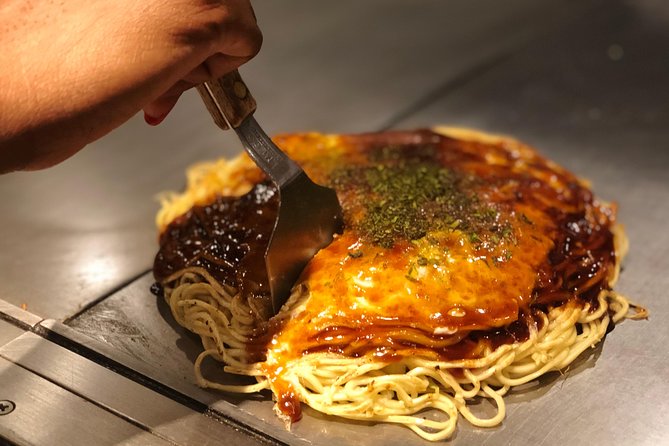
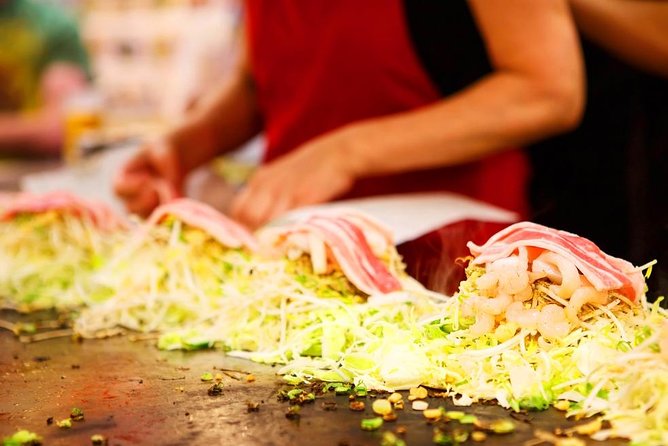
The tour specifically highlights Hiroshima-style okonomiyaki. Unlike the simpler image many people have of an okonomiyaki pancake, the Hiroshima version is known for its layered approach, with ingredients cooked in separate layers rather than mixed into one batter. The supplied information does not specify the exact toppings or restaurant, so the guide’s chosen stop may determine the details.
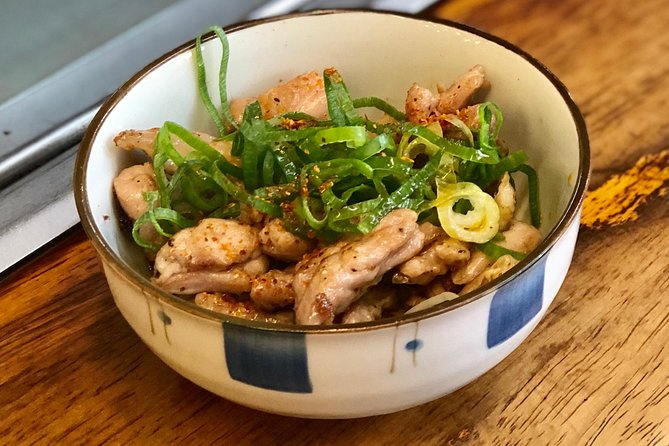
The other food stops are described as local restaurants and specialties, with dessert rounding out the meal. That gives you a broader taste of Hiroshima than ordering one dish on your own. You can compare textures, portions, and settings while someone else manages the choices.
I like this format for first-time visitors who do not yet know what to order. You can focus on tasting rather than translating menus or wondering if you chose the right restaurant. You should not expect a full dinner with unlimited servings, though. Additional food is not included, and additional drinks cost extra.
Same city, a completely different plate:
- Osaka Food Tour: 13 Dishes at 5 Local Eateries
★ 5.0 · 2,149 reviews - Tokyo: Shinjuku Food Tour (15 Dishes and 4 Eateries)
★ 4.9 · 2,033 reviews - Best of Shinjuku: Izakaya Food Tour (4 Stops, 14+ Tastings)
★ 5.0 · 1,863 reviews - Kyoto Night Foodie Tour in Gion (9+ dishes + 6 Sake tastings)
★ 5.0 · 1,762 reviews
Local sake and the evening drink allowance
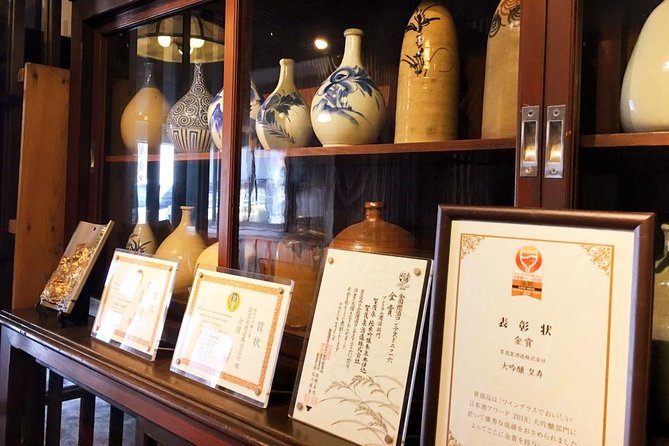
Two drinks are included, including local sake. This is a modest but useful feature because a drink can help explain a place in a way a restaurant list cannot. The guide can point out what you are drinking and suggest other local options for the rest of your stay.
The minimum drinking age is 21. Children can join the experience if accompanied by an adult, but the included drink arrangement is clearly aimed at adults. The activity is described as family-friendly, though families should consider the evening schedule, walking, and the fact that food choices may not suit every child.
Do not confuse two included drinks with an open bar. Extra drinks are not part of the price. If you do not drink alcohol, the tour data does not explain the substitution policy, so ask before booking rather than assume.
What the small group really means
The maximum group size is 10 people. That is small enough for the guide to keep the group together while walking and to help individual diners at the restaurants. It also makes it easier to ask for more dining advice, which is one of the better reasons to choose a guided food tour.
The experience is described as a small-group walk, but group size can vary. One reported booking found only two participants, while also reporting that the guide’s English was difficult to follow and that a second restaurant had not been booked. This is not evidence that every departure has the same problem, but it is a useful reminder to confirm the meeting details and restaurant plan if clear communication is especially important to you.
The guide is English-speaking, and the service is designed to reduce language barriers. Even so, guide quality can affect a food tour more than almost any other feature. If the guide is organized and communicative, the route feels easy. If not, much of the value of the $221 fee disappears.
Price and value at $221 per person
At $221 per person, this is a premium food walk. The price covers four food stops, dessert, two drinks, dining at local restaurants, an English-speaking guide, and shopping time. It does not cover hotel pickup, transportation costs, extra food, extra drinks, or gratuity.
The value depends on how much help you need. If you are comfortable choosing restaurants, ordering in Japanese, and finding Hiroshima-style okonomiyaki yourself, you can spend far less on an independent evening. Hiroshima is not a city where you must pay this much to eat well.
The price makes more sense for someone with limited time, a strong interest in local food, or a preference for a managed evening. You are paying for access, coordination, translation help, and the chance to try several places without planning the route yourself.
I would also compare the tour with your overall Hiroshima schedule. If you have only one evening, the food walk can combine dinner and a little downtown orientation. If you have several days, you may prefer to visit the memorial sites independently and use the money for multiple meals at your own pace.
The average advance booking period is about 85 days. That suggests you should not leave this until the last minute if your dates are fixed, though availability can change. Free cancellation is available up to 24 hours before the start time, which gives you some protection if plans change.
Walking, transport, and practical planning
The tour begins at Orizuru Tower and ends at Hatchobori Station, at 15 Hatchobori. Hotel pickup is not included, though it can be arranged for an additional charge. You are responsible for getting to the starting point and handling any transport costs during the experience.
The walk requires a moderate level of physical fitness. You should be ready for several hours of walking, standing, restaurant visits, and movement between central locations. Wear shoes that can handle city streets, and avoid scheduling another demanding activity immediately afterward.
The tour requires good weather. If poor weather cancels the experience, you can choose another date or receive a full refund. Restaurant schedules, public holidays, and other unexpected changes can also lead to substitutions, so keep some flexibility about the exact stops.
Dietary restrictions are a serious concern. The tour is not recommended for people with dietary restrictions, and the supplied information does not list vegetarian, vegan, allergy, or gluten-free arrangements. If your diet is medically important, contact the provider before paying rather than hoping the guide can adjust the menu.
Children must be accompanied by an adult. Children aged 10 and above require a copy of passport information, according to the booking details. The tour is family-friendly, but the adult drink component and evening walking schedule may make it a better fit for older children.
Who should book this experience
I would recommend this tour to you if you want a guided first taste of Hiroshima food and do not want to spend your limited evening studying menus or choosing restaurants. It also suits solo visitors and couples who like a small social group, as well as people who value a guide’s restaurant suggestions for later in the trip.
It is a particularly sensible choice if you are staying near the city center and want to finish at Hatchobori Station. The route connects the Peace Park area with downtown, so you get both a meaningful beginning and a practical ending.
I would hesitate if you have strict dietary needs, dislike walking, or are looking for a full Peace Memorial Museum tour. I would also hesitate if $221 feels high for dinner. The cost is not hidden, but it is substantial.
Should you book the Best of Hiroshima Food Tour?
Book it if you want a guided evening with four food stops, Hiroshima-style okonomiyaki, local sake, dessert, and help ordering in local restaurants. The Peace Park setting gives the route more context than a stand-alone dinner, and the small maximum group size is a real advantage.
Skip it if you prefer independent dining, need guaranteed dietary adjustments, or want detailed sightseeing at the museum, Atomic Bomb Dome, Hiroshima Castle, and other landmarks. Before booking, confirm the guide language, meeting instructions, and any food concerns. For the right visitor, this is a convenient way to turn one Hiroshima evening into both a meal and a city introduction.
FAQ
Where does the Hiroshima food tour start?
The tour starts at Hiroshima Orizuru Tower, 1-chōme-2-1 Ōtemachi, Naka Ward, Hiroshima, at 4:30 p.m.
Where does the tour end?
The experience ends at Hatchobori Station, 15 Hatchobori, Naka Ward, Hiroshima.
How long does the tour last?
The tour lasts approximately three hours and 10 minutes.
How many people can join the tour?
The maximum group size is 10 people.
What food and drinks are included?
Four food stops are included, along with dessert and two drinks. One of the drinks is local sake.
Is transportation or hotel pickup included?
Hotel pickup is not included, although it can be arranged for an additional charge. Transportation costs are also not included.
Is the tour suitable for children?
The experience is described as family-friendly, but children must be accompanied by an adult. A copy of passport information is required for children aged 10 and above.
Can I cancel for a refund?
You can cancel up to 24 hours before the start time for a full refund. Changes or cancellations made less than 24 hours in advance are not accepted for a refund.
Just added around Japan
- Hiroshima Izakaya Food and Drink Night Tour★ 5.0 · 297 reviews
- All-inclusive Hiroshima Nighttime Food and Cultural Immersion★ 4.5 · 60 reviews
- Tokyo Allstar Food Tour★ 4.5 · 206 reviews
- Adventurous Japanese Food Tour in Tokyo★ 4.5 · 53 reviews
- Tokyo: Best Ginza Food Tour at 3 Local Eateries★ 5.0 · 83 reviews
- Chef’s Choice Sushi and Tempura Luxury Foodie Tour in Ginza★ 5.0 · 35 reviews
- Tokyo : Asakusa Food Tour – 12 Dishes & 3 Drinks★ 5.0 · 44 reviews
- Tokyo: Asakusa & Sensoji ー Oldest Temple Walking Tour (2hrs)★ 5.0 · 213 reviews
Food Tours in Japan, compared.
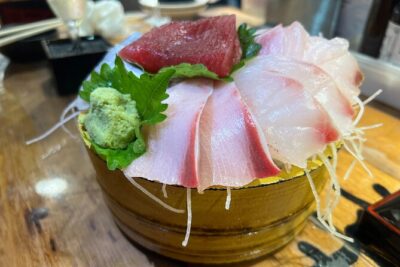
Shinjuku Food Tour (13 Dishes at 4 Local Eateries)
Read our review →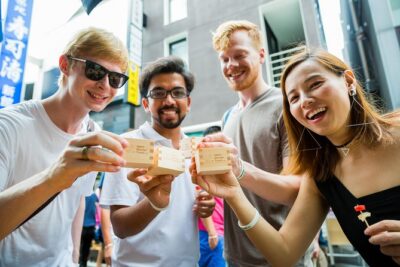
Tokyo Tsukiji Fish Market Food and Culture Walking Tour
Read our review →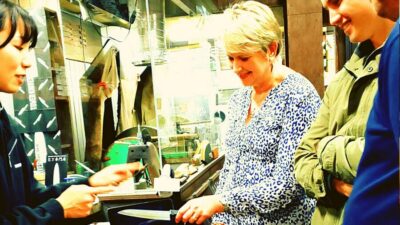
Shinsekai Food Tour with 13-15 Dishes at 5 Eateries
Read our review →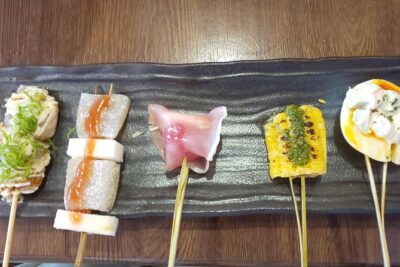
Osaka Food Tour: 13 Dishes at 5 Local Eateries
Read our review →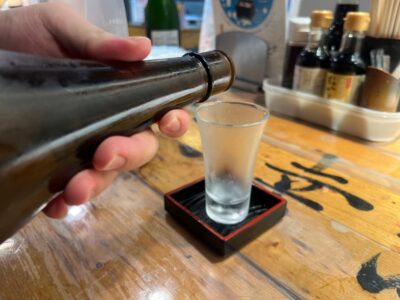
Shinjuku Food Tour (15 Dishes and 4 Eateries)
Read our review →
Best of Shinjuku: Izakaya Food Tour (4 Stops, 14+ Tastings)
Read our review →
Kyoto Night Foodie Tour in Gion (9+ dishes + 6 Sake tastings)
Read our review →
Hungry Osaka Street Food Tour:15 Tastings & 3 Drinks with a Local
Read our review →Browse the lists this tour appears in