
REVIEW · JAPAN
Adventurous Japanese Food Tour in Tokyo
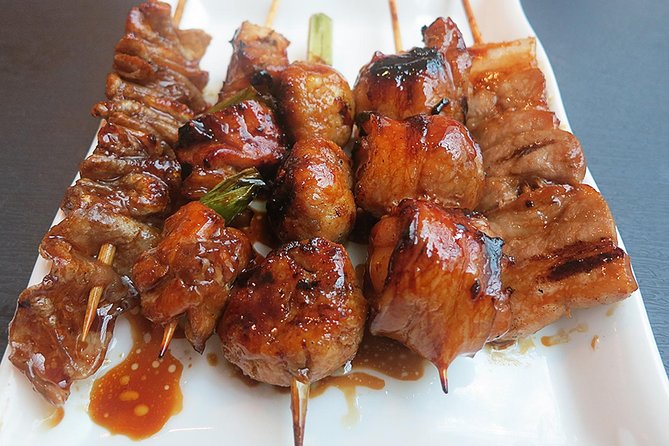
Tokyo’s most memorable meal may not be sushi or ramen. This adventurous food tour takes you through Ginza and Shimbashi for fugu, horse sashimi, whale meat, beef organs, and other dishes that rarely reach the standard visitor menu. You also get familiar Japanese foods such as sushi and yakitori, so the meal has some safe ground.
I like the chance to eat in local-style establishments rather than polished restaurants aimed at tourists. I also like the small private format, capped at 10 people, since guides such as Izumi, Asami, Shoji, and Kitamura can explain what is on your plate and help with unfamiliar menus.
The main drawback is that this is more of a guided dinner crawl than a long walking tour of Ginza. The food can feel rushed, and the exact restaurants may change when a place is full. At $303.18 per person, you are paying for access, guidance, and a carefully arranged tasting rather than a large meal.
Key points to know before booking
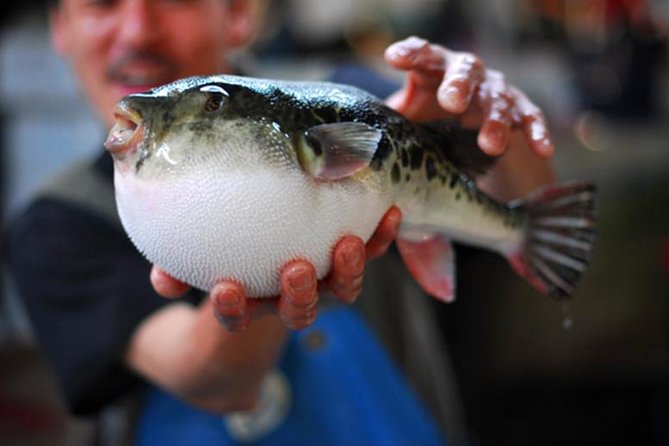
- Fugu is served in several forms, including sashimi, fried preparations, and a drink made with the fish’s tail.
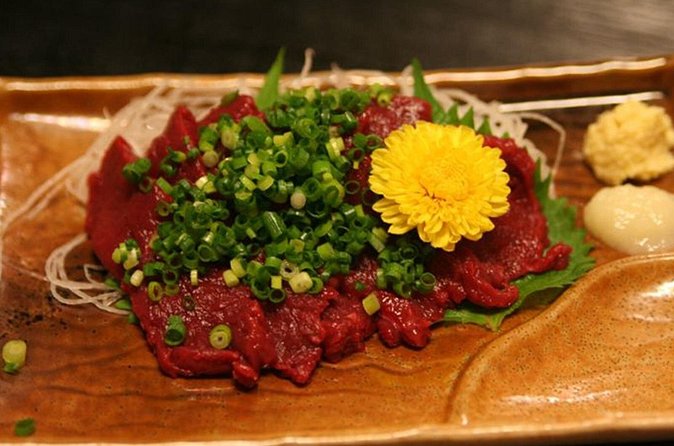
- Horse sashimi is a central tasting, with a clean, soft texture that some diners enjoy and others find difficult.
- The route may include whale meat, beef organs, angler fish, sushi, and yakitori, depending on the restaurants visited.
- Your private group can include up to 10 people, giving you more direct time with the English-speaking guide.
- The experience lasts about 2 hours and 30 minutes and begins and ends at Ginza Station.
- Drinks cost extra, and some Tokyo restaurants allow smoking, so a face mask may be useful.
A Tokyo food tour for curious eaters
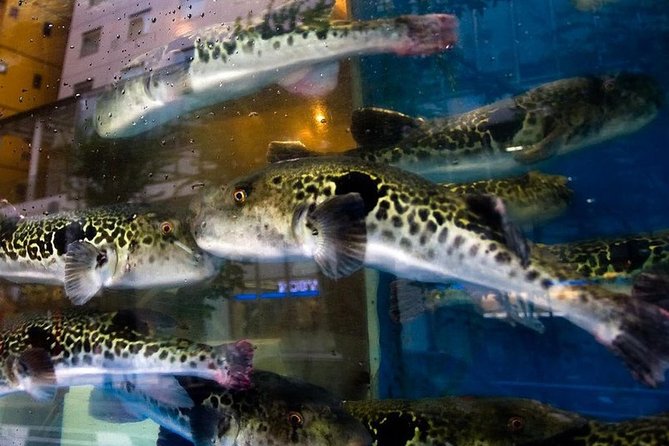
This experience is aimed at people who have already tried, or simply want to move beyond, the usual Japanese food list. Sushi, ramen, tempura, udon, curry rice, and yakitori are easy to find in Tokyo. Fugu and horse sashimi require more confidence, a good introduction, and usually some help reading the menu.
You meet at Ginza Station, at 4-chōme-1-2 Ginza, then head into the surrounding streets. The route may also take you through Shimbashi, an area filled with small restaurants and bars where office workers eat after work. The setting matters. You are not just tasting unusual food in an abstract cooking class. You are entering the sort of local dining places that can be hard to find without Japanese language skills or a friend who knows the area.
The tour is listed as a private activity, meaning only your group participates, with a maximum of 10 people. That format works well for an experience built around unfamiliar food. You can ask what a dish is, how it is prepared, and why people eat it without holding up a large tour group.
A few more food tours around Japan worth comparing
- Tokyo: Shinjuku Food Tour (13 Dishes at 4 Local Eateries)
★ 5.0 · 6,603 reviews - Tokyo Tsukiji Fish Market Food and Culture Walking Tour
★ 5.0 · 3,184 reviews - Osaka: Shinsekai Food Tour with 13-15 Dishes at 5 Eateries
★ 4.8 · 2,204 reviews
Starting with horse sashimi
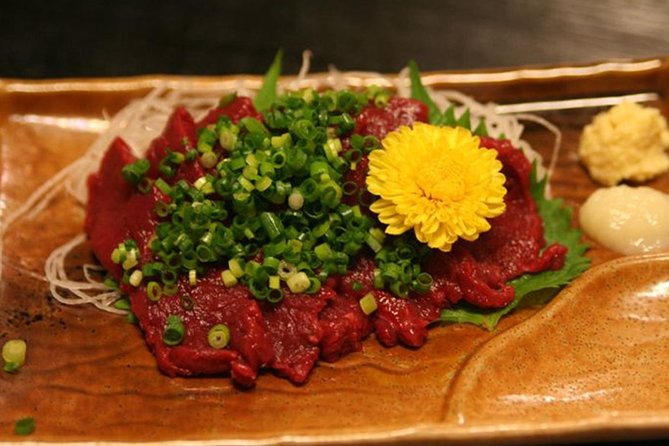
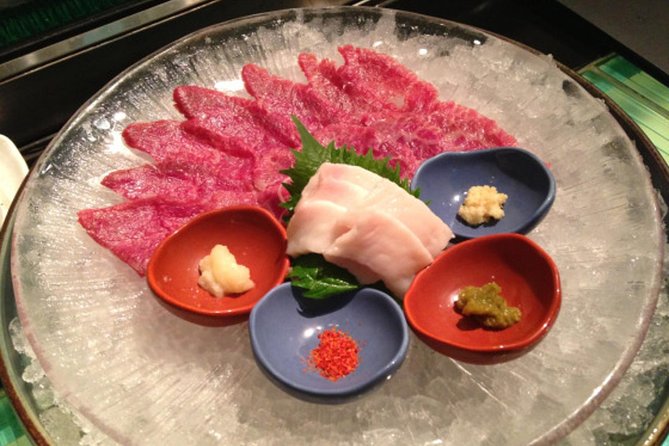
One common early stop is a restaurant serving raw horse meat, often called horse sashimi. The dish is usually presented in thin slices, and the guide explains what you are eating before you try it.
I appreciate this order of events. You get a clear introduction instead of having an unidentified slice placed in front of you. The horse meat is one of the dishes that divides opinion. Some people find it tender and surprisingly pleasant. Others dislike the taste or struggle with the idea of eating raw horse.
You do not need to pretend to enjoy it. The point is to try a food that is part of Japanese dining culture and decide for yourself. If you are uneasy about raw meat, tell the guide before the meal begins and ask what alternatives may be available. The supplied details do not promise substitutions, so you should not assume one will be offered.
Horse sashimi also gives the guide a chance to discuss food customs that you might never encounter during a standard sushi meal. One guide explained where horses are traditionally bred for food, adding useful context to what could otherwise feel like a simple dare.
Understanding fugu beyond the scare stories
Fugu, or blowfish, is the meal’s headline dish. You may taste it as sashimi, fried fish, or in another preparation. One particularly unusual serving includes the fish’s tail in a cup of sake.
Fugu has a reputation because some species contain poison if handled incorrectly. Properly licensed Japanese restaurants use trained preparation methods, and the food served on this experience is presented as safe. Your guide may explain how toxicity varies by species and season. One guide, a fish biologist, even used charts to explain the subject in detail.
That sort of explanation is valuable. Without it, fugu can become a simple stunt, something to photograph and brag about later. With context, you learn why the dish is treated with care and how it fits into Japanese food culture.
The taste itself is not necessarily dramatic. Fugu is often mild, with a firm texture, which means the appeal lies partly in the preparation and the story behind it. Some diners love it. Others find the flavor less exciting than the reputation suggests. Go for the experience, not the promise of the best meal of your life.
More than two exotic bites
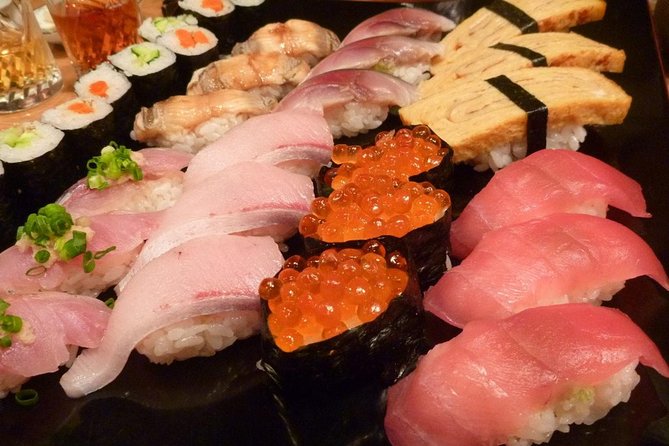
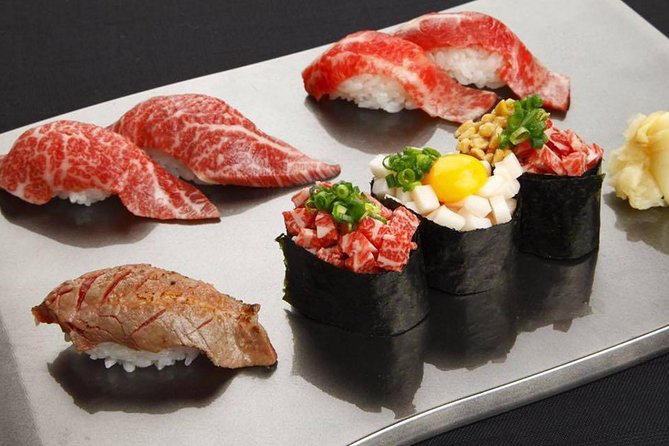
The route is not limited to horse and blowfish. Depending on restaurant availability, you may also taste whale meat, beef organs or intestines, deep-fried angler fish, chicken, sushi, and yakitori.
This variety makes the experience more useful than a single novelty stop. You can compare familiar foods with less common ones and see how Japanese restaurants handle different textures and ingredients. The menus may lean heavily toward seafood, but chicken and grilled foods give you a break from raw or unusual dishes.
The exact mix is not fixed. One route included three restaurants: a seafood-focused place, a fugu restaurant, and a restaurant centered on horse meat. Another guide changed the fugu stop when the first restaurant was full, then walked farther to find another place. That flexibility is a plus, but it also means your experience may not match another group’s meal exactly.
Whale meat deserves a special note. It is included among the possible food tastings, but the supplied details do not guarantee a particular cut or preparation. If this dish matters to you, ask the guide what is available on your date rather than assuming it will appear.
Same city, a completely different plate:
- Osaka Food Tour: 13 Dishes at 5 Local Eateries
★ 5.0 · 2,149 reviews - Tokyo: Shinjuku Food Tour (15 Dishes and 4 Eateries)
★ 4.9 · 2,033 reviews - Best of Shinjuku: Izakaya Food Tour (4 Stops, 14+ Tastings)
★ 5.0 · 1,863 reviews - Kyoto Night Foodie Tour in Gion (9+ dishes + 6 Sake tastings)
★ 5.0 · 1,762 reviews
The value of eating where tourists may not wander
Ginza is famous for luxury shopping, department stores, and expensive dining. It also has small bars and family-run restaurants tucked into its side streets. Shimbashi has a more workaday feel, with compact eateries serving local customers.
The guide is the bridge between those worlds and your table. Guides including Izumi, Asami, Shoji, Mack, Gary, and Kitamura have been praised for explaining dishes, helping with menus, discussing Japanese culture, and making the meal comfortable for people with limited Japanese.
You should still keep your expectations realistic. The experience is not designed as a formal lecture about Tokyo food. It is a moving dinner with conversation and short explanations along the way. One guide may focus on fish biology, another on neighborhood restaurants, and another on cultural customs.
That personal variation is part of the appeal. It can also affect the tone of your evening. If you care about food science, ask for Shoji or a guide with a similar background when booking, though specific guide assignments cannot be guaranteed from the information provided.
How much food do you get for $303.18?
The price is $303.18 per person, and that is a serious charge for a 2.5-hour food experience. Food tastings, taxes, handling charges, and an English-speaking private guide are included. Alcoholic and non-alcoholic drinks are not included, and gratuities are optional.
You are not paying only for the ingredients. You are paying for someone to select unusual restaurants, arrange the meal, explain dishes, help with communication, and adjust the route if a restaurant is full. That has real value in Tokyo, especially when the food is unfamiliar and the dining rooms may not be easy to locate.
Still, this is not the best choice if your goal is maximum quantity. The experience typically visits two or three places, and one direct account found the meal somewhat rushed. You may leave satisfied with the range of tastes but not stuffed.
I would compare the cost with a private guide service and several separate meals in Tokyo. If you want an ordinary dinner, you can spend much less. If you want access to hard-to-find food and a guide who handles the social and language side of the meal, the price becomes easier to justify.
Timing, meeting point, and the practical details
The tour lasts about 2 hours and 30 minutes. It begins at Ginza Station and ends back at the meeting point, so you do not need to arrange a separate ride between restaurants. Transportation to and from attractions is not included, but the activity itself takes place near public transportation.
Arrive early. The guide waits up to 30 minutes after the scheduled start, after which the activity is treated as cancelled. Ginza Station can be confusing, so confirm the exact meeting instructions and keep the guide’s contact details available. One direct account found the original meeting area too crowded and not specific enough for someone new to Tokyo.
The tour requires a moderate level of physical fitness. You will move through city streets and stand or walk between dining stops. This is not a seated tasting in one restaurant from start to finish.
The experience is for people 18 and older. The details also note that some establishments permit smoking. If smoke bothers you, bring a face mask and be prepared for the possibility of a smoky dining room. The operator does not control each restaurant’s smoking policy.
Dietary needs and comfort at the table
This is an adventurous menu, so dietary planning matters. The listed tastings include fish, chicken, horse meat, whale meat, and possibly organ meats. The supplied details do not promise vegetarian, vegan, halal, kosher, allergy-free, or other special menus.
You should contact the operator before booking if you have dietary restrictions. Do not assume that avoiding one dish will solve the problem, since the route may involve shared restaurant settings and several kinds of seafood or meat.
The same advice applies to raw food. Horse sashimi and some fugu preparations may be served raw or lightly prepared. If you are not comfortable with that, make your limits clear at the start. A good guide can explain the options, but the food choices depend on the restaurants visited that day.
What the guide adds to the meal
The strongest part of this experience is the guide’s role. A plate of fugu is interesting. A guide who explains the difference between species, preparation methods, and seasonal toxicity makes it far more memorable.
The guides also help with the ordinary challenges of Japanese dining. They can explain a menu, answer questions, point out ingredients, and keep conversation moving between stops. Several named guides, including Izumi and Asami, have been singled out for friendly English and patient help.
You may also get a small introduction to Ginza itself, including places to eat and shop. Do not expect a full neighborhood sightseeing tour. The food is the main event, and the walking serves the restaurant route.
Because the activity is private, the evening can feel more like dining with a local contact than joining a large scheduled group. That is especially useful if you want to ask direct questions about food customs or admit that a dish is not for you.
Cancellation and booking timing
The experience is non-refundable and cannot be changed for any reason once booked. The stated cancellation schedule also lists charges of 25 percent within 20 days, 50 percent within 14 days, and 100 percent within 7 days, while the final booking condition says the experience is non-refundable. Because those terms conflict, confirm the exact policy before paying.
Confirmation is normally issued at booking. If you book within two days of the date, confirmation can take up to 48 hours and depends on availability. The experience is commonly booked about 53 days ahead, so reserve early if your Tokyo schedule is tight.
Who should book this Tokyo food crawl?
I would choose this tour if you:
- Want Japanese food beyond sushi, ramen, and tempura
- Are curious about fugu, horse sashimi, or whale meat
- Prefer local restaurants to a polished tourist dining room
- Want an English-speaking guide to explain unfamiliar dishes
- Enjoy trying food even when you are unsure you will like it
- Are comfortable with raw meat, seafood, organ meats, and possible smoke
I would skip it if you want a relaxed, long dinner with generous portions, a fixed restaurant list, or a menu built around familiar dishes. It is also a poor fit for strict dietary restrictions unless the operator confirms suitable arrangements in advance.
Should you book it?
Book this experience if the unusual food is the reason you came to Tokyo. Fugu and horse sashimi are hard to arrange with confidence on your own, and a private guide can turn a nervous first taste into an informed cultural experience.
Do not book it simply because you want a general introduction to Japanese cuisine. You will get some sushi, yakitori, and other familiar foods, but the focus is clearly on ingredients that challenge your comfort zone. At $303.18, the value comes from access and guidance, not volume.
For an adventurous eater who wants a memorable night in Ginza or Shimbashi, I think it is a strong choice. Go in ready to try, ask questions, and accept that one or two dishes may not become new favorites.
FAQ
Where does the tour begin?
The meeting point is Ginza Station, at 4-chōme-1-2 Ginza, Chuo City, Tokyo 104-0061, Japan.
Where does the tour end?
The activity ends back at the meeting point.
How long does the food tour last?
The tour lasts approximately 2 hours and 30 minutes.
What food is included?
Food tastings may include blowfish or fugu, chicken, horse meat, whale meat, sushi, yakitori, seafood, beef organs, and deep-fried angler fish. The exact selection can vary by restaurant availability.
Are drinks included?
No. Alcoholic and non-alcoholic drinks are available for purchase but are not included in the price.
Is this a private tour?
Yes. Only your group participates, with the group capped at 10 people.
Is there an age requirement?
Yes. The tour is for people 18 and older, and all participants must be accompanied by an adult who is 18 or older.
What happens if I arrive late?
The guide waits up to 30 minutes after the scheduled start time. If you do not arrive within that period, the tour is considered cancelled.
Are dietary restrictions accommodated?
The provided information does not guarantee accommodations for dietary restrictions. Contact the operator before booking to discuss your needs, especially if you avoid raw meat, seafood, organ meats, or specific animal products.
Just added around Japan
- Best of Hiroshima Food Tour★ 5.0 · 32 reviews
- Hiroshima Izakaya Food and Drink Night Tour★ 5.0 · 297 reviews
- All-inclusive Hiroshima Nighttime Food and Cultural Immersion★ 4.5 · 60 reviews
- Tokyo Allstar Food Tour★ 4.5 · 206 reviews
- Tokyo: Best Ginza Food Tour at 3 Local Eateries★ 5.0 · 83 reviews
- Chef’s Choice Sushi and Tempura Luxury Foodie Tour in Ginza★ 5.0 · 35 reviews
- Tokyo : Asakusa Food Tour – 12 Dishes & 3 Drinks★ 5.0 · 44 reviews
- Tokyo: Asakusa & Sensoji ー Oldest Temple Walking Tour (2hrs)★ 5.0 · 213 reviews
Food Tours in Japan, compared.
Shinjuku Food Tour (13 Dishes at 4 Local Eateries)
Read our review →
Tokyo Tsukiji Fish Market Food and Culture Walking Tour
Read our review →
Shinsekai Food Tour with 13-15 Dishes at 5 Eateries
Read our review →
Osaka Food Tour: 13 Dishes at 5 Local Eateries
Read our review →
Shinjuku Food Tour (15 Dishes and 4 Eateries)
Read our review →
Best of Shinjuku: Izakaya Food Tour (4 Stops, 14+ Tastings)
Read our review →
Kyoto Night Foodie Tour in Gion (9+ dishes + 6 Sake tastings)
Read our review →
Hungry Osaka Street Food Tour:15 Tastings & 3 Drinks with a Local
Read our review →Browse the lists this tour appears in