
REVIEW · JAPAN
Tokyo : Asakusa Food Tour – 12 Dishes & 3 Drinks
Asakusa is at its best after dark, when the crowds thin around Senso-ji and the old downtown food culture takes center stage. This three-hour tasting walk brings you to an okonomiyaki restaurant, a sake bar, Hoppy Street, a taiyaki shop, and other local stops, with 12 dishes and three drinks included.
I like the mix of familiar and unfamiliar food, from savory pancakes and yakisoba to convenience-store ice cream. I also like the small-group limit of 15, and guides such as Ai and Nonoka have earned praise for their friendly English and local know-how. The main consideration is that the tour is English only, and extras must be paid for in cash.
Key points to know before booking
- Twelve dishes and three drinks: You get a broad taste of Japanese food rather than one long restaurant meal.
- Okonomiyaki cooked at the table: The meal begins with a classic Asakusa comfort food, plus yakisoba and other dishes.
- A real sake stop: Wasake offers several styles from around Japan, with an explanation of how sake is made and served.
- Nighttime Senso-ji: The tour includes a short look at Tokyo’s oldest temple after dark, when it is less crowded.
- Guides with strong personal feedback: Ai and Nonoka are singled out for warm, clear English and good local insight.
- Bring cash: The included food and drinks are covered, but anything extra must be paid in cash.
Why this Asakusa food tour works
This experience gives you a useful first taste of Asakusa without asking you to plan a string of restaurants on your own. You meet at the Kaminarimon Police Box at 6:30 pm, then spend about three hours moving between food stops, a sake bar, streets, and Senso-ji.
The appeal is range. You are not simply ordering one dish and calling it dinner. You get 12 different Japanese foods and three drinks, which makes the evening feel like a guided sampler of old Tokyo food culture. The stops include well-known dishes, such as okonomiyaki and taiyaki, along with less expected items such as conbini ice cream.
The setting matters, too. Asakusa is one of the best parts of Tokyo for a first evening walk. Its temples, narrow streets, snack shops, and old-style drinking spots give the neighborhood a different feel from the glass towers and department stores found elsewhere in the city.
The group size is capped at 15 people. That is large enough to meet other people, which is part of the tour’s social appeal, but still small enough for a guide to explain dishes and keep the group together. You return to the same meeting point at the end, so you do not need to arrange a late-night pickup across town.
A few more food tours around Japan worth comparing
- Tokyo: Shinjuku Food Tour (13 Dishes at 4 Local Eateries)
★ 5.0 · 6,603 reviews - Tokyo Tsukiji Fish Market Food and Culture Walking Tour
★ 5.0 · 3,184 reviews - Osaka: Shinsekai Food Tour with 13-15 Dishes at 5 Eateries
★ 4.8 · 2,204 reviews
Starting with okonomiyaki at Rokumonsen Honten
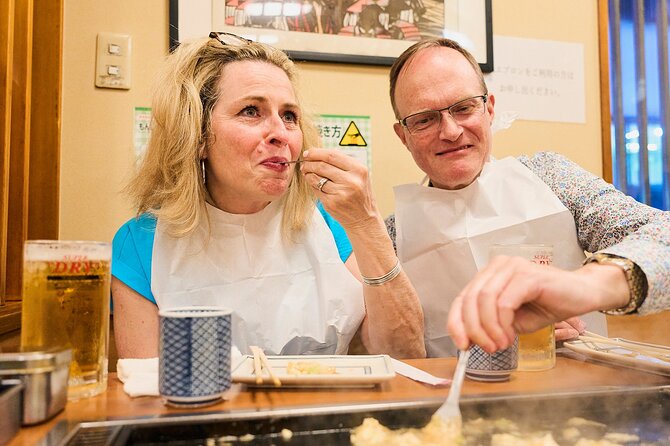
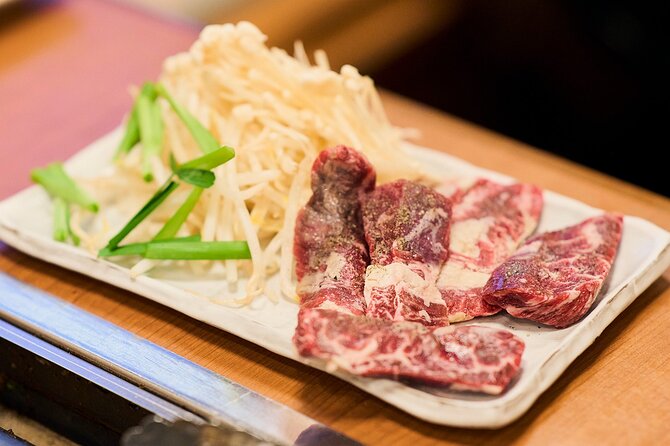
The first main stop is Rokumonsen Honten, where you try okonomiyaki. This savory Japanese pancake is strongly tied to casual dining and old downtown food culture. It is filling, flavorful, and easy to enjoy even if Japanese food is new to you.
The restaurant cooks the dish in front of you, which adds a bit of theater to the meal. You are not just handed a finished plate. You can watch the cooking process and get a sense of how this popular comfort food is prepared.
The stop lasts about 50 minutes, making it one of the longer portions of the evening. That gives you time to eat at a relaxed pace and try the other food served here, including yakisoba. The tour description also points to unusual combinations, such as okonomiyaki with Camembert, which one guest particularly enjoyed.
This is a good opening course because it gives you a substantial base before the drinks and sweets arrive. The possible downside is that okonomiyaki may feel less adventurous if you have already eaten it elsewhere in Japan. Even so, the local restaurant setting and cooking in front of you make it more useful than a quick snack stop.
If you have never used a hotplate-style Japanese restaurant, your guide can help you understand what is being served and how to approach it. Guides Ai and Nonoka have both been praised for their friendly manner and strong English, so you can expect explanations rather than being left to guess.
Sampling sake at Wasake
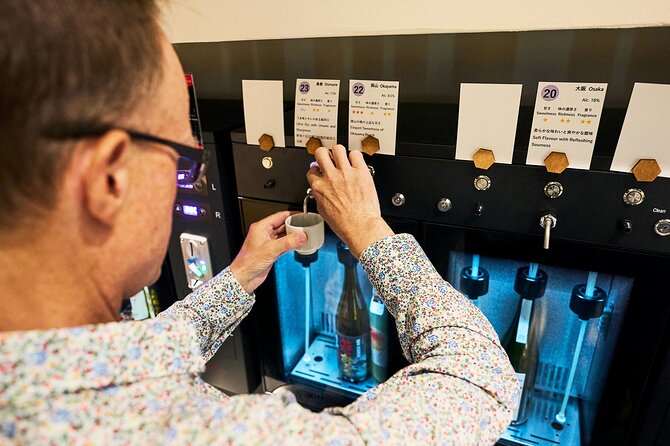
The next 50-minute stop is the Wasake sake experience. This is where the tour shifts from food basics to Japanese drink culture. You try several kinds of sake, including styles that may be crisp and dry, fragrant, or sweet.
For many people, sake is harder to order than beer or wine because the labels and categories can feel unfamiliar. The guide explains how sake is made, how to enjoy it, and how different styles pair with food. That turns the tasting into more than a series of small pours.
The tour includes three drinks overall, and the sake bar is the key place to understand those drinks in context. You may find that you prefer a style you would not have chosen from a menu. That is one reason a guided tasting is useful: you get a starting point for future meals in Japan.
This stop is also a good fit for people who want to meet others. You sit or stand around a shared food and drink experience, and the tour is designed to encourage conversation along the way. If you do not drink alcohol, the supplied information does not specify an alternative beverage policy, so it is sensible to ask the operator before booking.
Do not expect a full sake seminar. The tour has many stops to cover, and the sake portion is one part of a wider evening. Still, 50 minutes gives the guide room to explain the basics without rushing you through the tasting.
Walking Hoppy Street after dark
The route includes a stroll through Hoppy Street, one of Asakusa’s best-known evening areas. The street is associated with casual drinking and small eateries, making it a natural link between the main meal and the sake stop.
You should think of this as a neighborhood walk rather than a formal sightseeing visit. The value is in seeing how Asakusa changes at night and getting tips on where local-style eating and drinking fit into the area. Your guide can also help you place the restaurants within the wider layout of Asakusa.
The tour does not promise a separate dish at every point along the walk, so you should not assume that Hoppy Street means another full meal. Its role is to add atmosphere and local orientation between the scheduled food stops.
That balance is useful. You eat plenty, but you also move through the neighborhood rather than staying indoors for three straight hours. Wear comfortable shoes, since the evening combines restaurant time with walking.
Same city, a completely different plate:
- Osaka Food Tour: 13 Dishes at 5 Local Eateries
★ 5.0 · 2,149 reviews - Tokyo: Shinjuku Food Tour (15 Dishes and 4 Eateries)
★ 4.9 · 2,033 reviews - Best of Shinjuku: Izakaya Food Tour (4 Stops, 14+ Tastings)
★ 5.0 · 1,863 reviews - Kyoto Night Foodie Tour in Gion (9+ dishes + 6 Sake tastings)
★ 5.0 · 1,762 reviews
A sweet finish with taiyaki
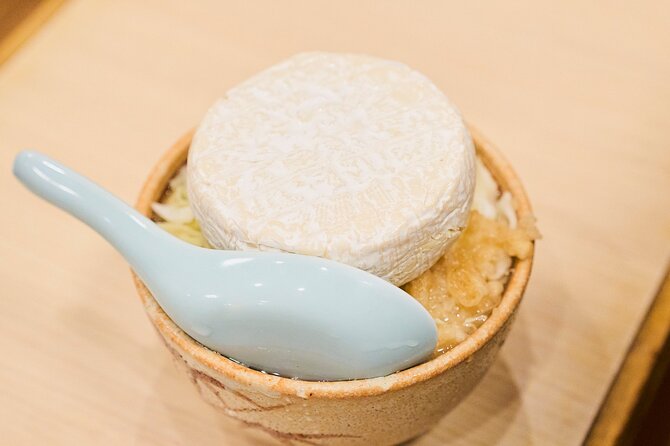
At Taiyaki Sawada Asakusa Shop, you get a warm fish-shaped pancake. Taiyaki is a classic Japanese snack, usually associated with a filled batter treat, and the tour lets you choose the filling you prefer.
This is a fun dessert stop because the shape is instantly recognizable and the pastry is served warm. It also gives you a change of texture and flavor after savory dishes, sake, and noodles.
The stop lasts about 15 minutes, so it is brief. That works well for a dessert pickup, but you should not expect a long sit-down course. The tour also includes conbini ice cream among its 12 dishes, giving you another look at the everyday sweets found in Japan.
The combination of taiyaki and convenience-store ice cream is one of the more interesting parts of the food list. It places a classic snack beside an ordinary modern treat. You get a broader sense of what people actually eat, not only the dishes that appear on polished restaurant menus.
Seeing Senso-ji when the lights come on
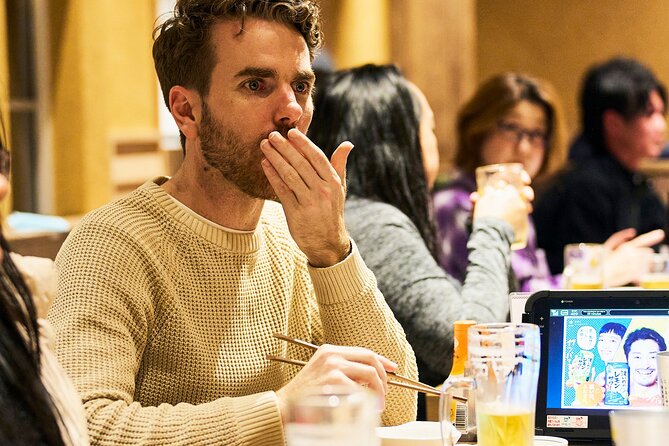
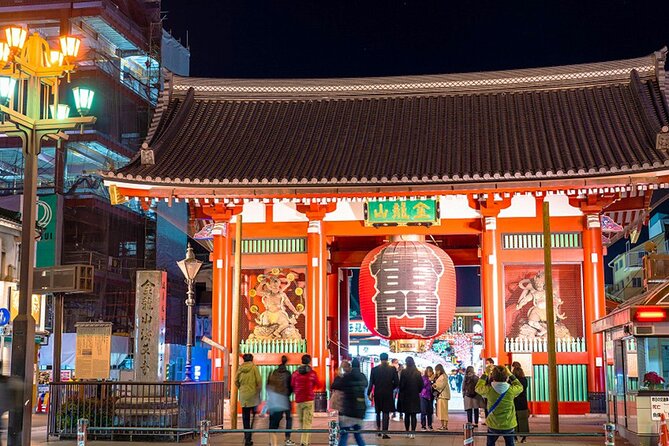
The final listed stop is Senso-ji Temple, where you have about 10 minutes to see Tokyo’s oldest temple illuminated at night. This is a short visit, not a full temple tour, but the timing gives it real value.
Senso-ji can be crowded during the day. After dark, the approach and temple buildings can feel calmer, and the lighting gives the site a different character. One of the best features of this stop is that you do not have to work out how to fit the temple into your food evening. The guide handles the route and gives you a quick sense of the area.
Ten minutes is enough for a look and a few photographs, but not enough for a detailed examination of the temple grounds. If Senso-ji is one of your main reasons for visiting Asakusa, plan to return independently with more time. As part of a food tour, though, this short stop is a pleasant close to the night.
What the 12 dishes mean for your dinner
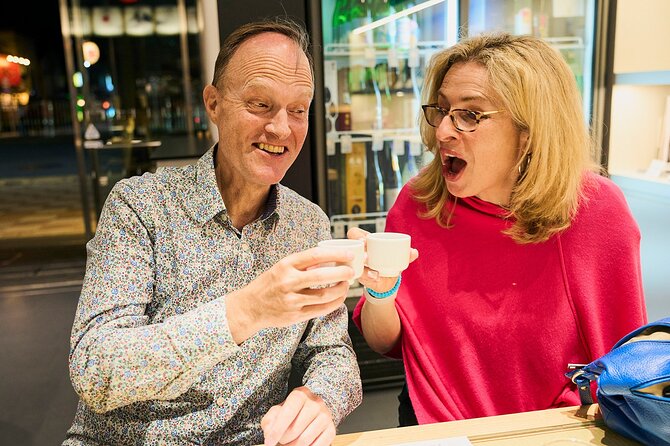
The phrase 12 dishes sounds generous, and it is, but you should understand the format. This is a tasting experience, not 12 full restaurant portions. The benefit is variety. You can try okonomiyaki, yakisoba, sweets, and other Japanese foods without committing to a large serving of anything unfamiliar.
The known examples include:
- Okonomiyaki
- Yakisoba
- Sake selections
- Conbini ice cream
- Taiyaki
Three drinks are included, with the sake bar providing the most structured tasting. The exact balance of food can depend on the restaurant arrangements, so do not book this expecting a fixed multi-course menu in the style of a formal dinner.
You should arrive ready to eat, but not plan a separate large dinner afterward. The tour description makes clear that plenty of food and drink is included. If you order anything beyond the included items, bring cash. That is a small but important point in Japan, where not every extra expense is handled in the same way.
The guide can shape the whole evening

A food tour rises or falls on the guide. Here, Ai is praised for her friendly English, hospitality, and local insight. Nonoka is also singled out for an engaging approach and for explaining both the food and the broader area.
Those details matter because this tour includes dishes that may be unfamiliar. A good guide can explain what you are eating, answer questions, keep the group moving, and help a mixed group feel comfortable at the table. The positive feedback about Ai and Nonoka suggests that the human side of the experience is one of its strongest points.
The tour is conducted in English only. There is no Japanese-language support listed, so you should be comfortable following spoken English for restaurant explanations and meeting instructions.
The group maximum is 15. That is not a private tour, but it is a manageable size for an evening that uses restaurant reservations and street walking. You also have a reasonable chance to meet people from other countries, which suits solo visitors and couples who enjoy a social meal.
Price, timing, and practical value
At $89.83 per person, this is not the cheapest way to grab dinner in Tokyo. It can still offer fair value if you use all the included food and drinks and want an organized introduction to Asakusa.
You are paying for more than ingredients. The price also covers the guide, restaurant planning, sake explanations, neighborhood orientation, and the convenience of moving between several stops without having to research menus or manage reservations yourself.
The three-hour schedule is well suited to an arrival evening in Tokyo. You start at 6:30 pm, eat through the evening, see Senso-ji at night, and finish back at the starting point. That timing leaves the rest of the day open for sightseeing, though the tour is not designed for someone who wants a late-night bar crawl afterward.
Bring cash for extras. The included dishes and drinks are part of the experience, but additional orders are not covered. The tour also asks you to notify the provider if wheelchair access is required, since restaurant reservations may need to be modified.
Free cancellation is available if you cancel at least 24 hours before the local start time. Cancellations within 24 hours are not refunded, and late changes are not accepted. That policy is worth noting because the tour depends on restaurant reservations.
Who should book this evening?
I would recommend this experience to first-time visitors who want an easy introduction to Japanese food. It also suits solo visitors who want company at dinner, couples who prefer tasting several things, and anyone who wants Asakusa sightseeing combined with a meal.
It is especially useful if you are unsure how to order okonomiyaki or sake. The guide gives you a practical starting point, and you can use that knowledge later in your trip.
You may want to skip it if you need a private tour, require service in a language other than English, or prefer to choose every restaurant and dish yourself. It is also not ideal if you want a long temple visit, since Senso-ji receives only about 10 minutes on the route.
Should you book the Asakusa food tour?
Book it if you want a social, well-organized evening that combines 12 food tastings with three drinks, a local restaurant, a sake bar, Hoppy Street, taiyaki, and nighttime Senso-ji. The strongest reasons are the variety, the manageable group size, and the consistently warm impressions of guides such as Ai and Nonoka.
Skip it if you are looking for a private culinary lesson or a detailed temple tour. For most first visits to Tokyo, though, the $89.83 price is reasonable when you value guidance, food variety, and a simple way to get oriented in Asakusa after dark.
FAQ
Where does the Asakusa food tour begin?
The tour begins at the Kaminarimon Police Box at 1-chōme-3-1 Asakusa, Taito City, Tokyo 111-0032, Japan.
What time does the tour start?
The start time is 6:30 pm.
How long does the experience last?
The tour lasts approximately three hours.
Where does the tour end?
The experience ends back at the meeting point near the Kaminaron Police Box.
How many dishes and drinks are included?
The experience includes 12 unique dishes and three drinks.
Is the tour conducted in English?
Yes. The tour is conducted in English only, and Japanese-language support is not available.
How large is the group?
The maximum group size is 15 people.
Do I need to bring cash?
Yes. The included food and drinks are covered, but any extras must be paid for in cash.
Can I cancel for a refund?
You can cancel at least 24 hours before the local start time for a full refund. Cancellations or changes made within 24 hours are not accepted and are not refunded.
Just added around Japan
- Best of Hiroshima Food Tour★ 5.0 · 32 reviews
- Hiroshima Izakaya Food and Drink Night Tour★ 5.0 · 297 reviews
- All-inclusive Hiroshima Nighttime Food and Cultural Immersion★ 4.5 · 60 reviews
- Tokyo Allstar Food Tour★ 4.5 · 206 reviews
- Adventurous Japanese Food Tour in Tokyo★ 4.5 · 53 reviews
- Tokyo: Best Ginza Food Tour at 3 Local Eateries★ 5.0 · 83 reviews
- Chef’s Choice Sushi and Tempura Luxury Foodie Tour in Ginza★ 5.0 · 35 reviews
- Tokyo: Asakusa & Sensoji ー Oldest Temple Walking Tour (2hrs)★ 5.0 · 213 reviews
Food Tours in Japan, compared.
Shinjuku Food Tour (13 Dishes at 4 Local Eateries)
Read our review →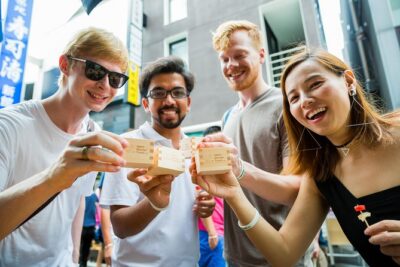
Tokyo Tsukiji Fish Market Food and Culture Walking Tour
Read our review →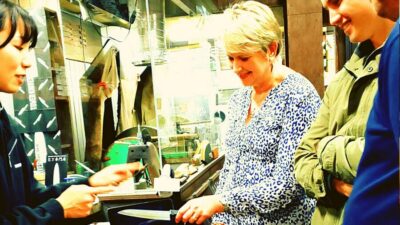
Shinsekai Food Tour with 13-15 Dishes at 5 Eateries
Read our review →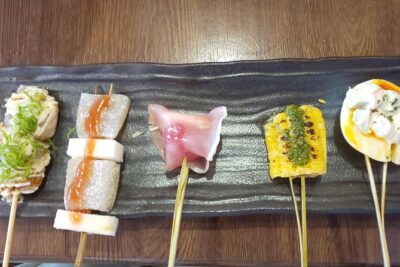
Osaka Food Tour: 13 Dishes at 5 Local Eateries
Read our review →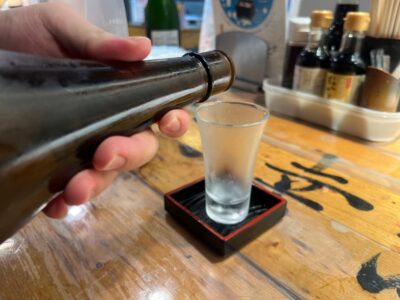
Shinjuku Food Tour (15 Dishes and 4 Eateries)
Read our review →
Best of Shinjuku: Izakaya Food Tour (4 Stops, 14+ Tastings)
Read our review →
Kyoto Night Foodie Tour in Gion (9+ dishes + 6 Sake tastings)
Read our review →
Hungry Osaka Street Food Tour:15 Tastings & 3 Drinks with a Local
Read our review →Browse the lists this tour appears in