
REVIEW · KYOTO
Nishiki Market Food Tour with Cooking Class
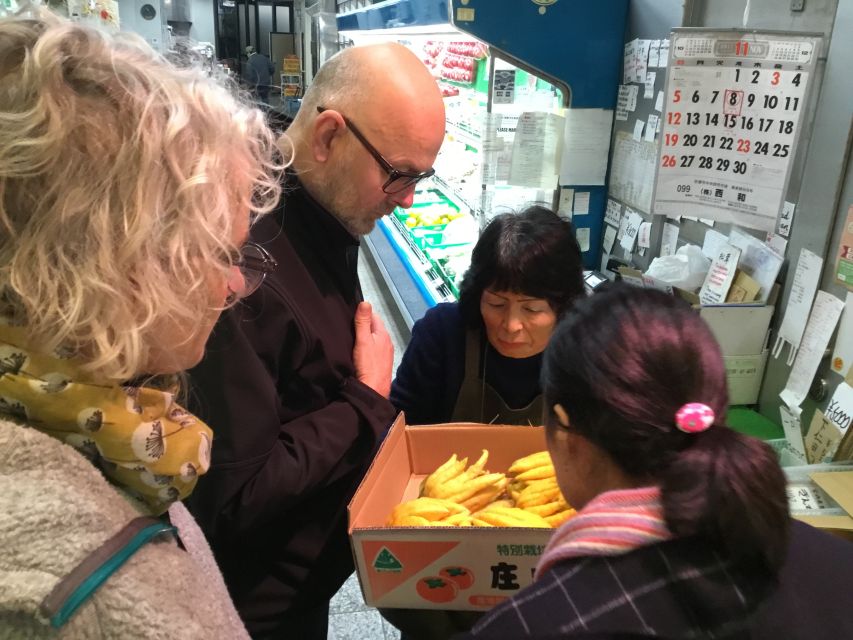
Nishiki Market is easy to race through in 15 minutes, but this private tour gives you a reason to slow down. With an English-speaking local guide, you learn what the stalls sell, how to behave in the market, and which foods are worth a closer look before cooking your own donburi bowl.
I like the personal pace and the chance to ask questions that would otherwise go unanswered. I also like that your meal begins with ingredients from the market, not a fixed classroom shopping list. The main consideration is time: about an hour in the market can feel short if you want to browse and shop on your own.
Key points at a glance
- Start at Nishiki Market’s western entrance: Meet your private guide, get a short briefing, then explore the market at a pace suited to your group.
- Choose your own donburi: Pick seafood kaisen-don, tempura ten-don, or chicken-and-egg oyako-don.
- Learn the market’s unwritten rules: Your guide explains customs such as not eating while walking through the market.
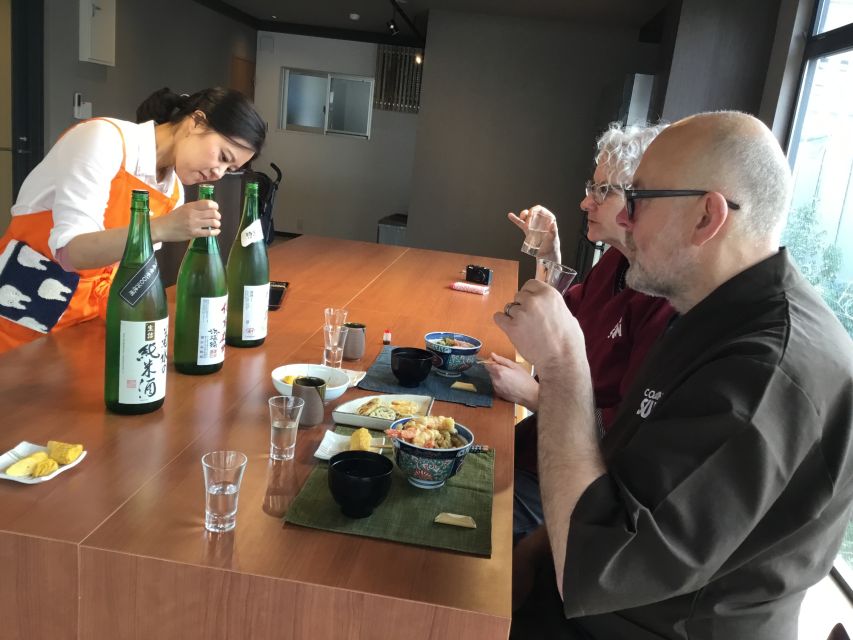
- Taste beyond the main dish: Sample Japanese pickles and other foods, with an optional tasting of three types of sake.
- Cook in a dedicated studio: After the market visit, a taxi takes you to the cooking space, where you prepare and eat your meal.
- Useful for families and serious home cooks: Guides such as Chie, Momo, and Mio have been praised for clear teaching, personal adjustments, and friendly help with children.
Why Nishiki Market is better with a guide
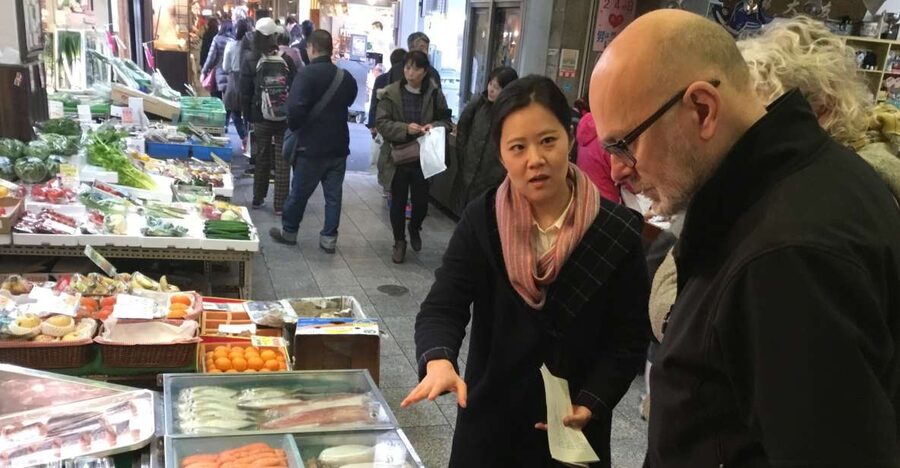
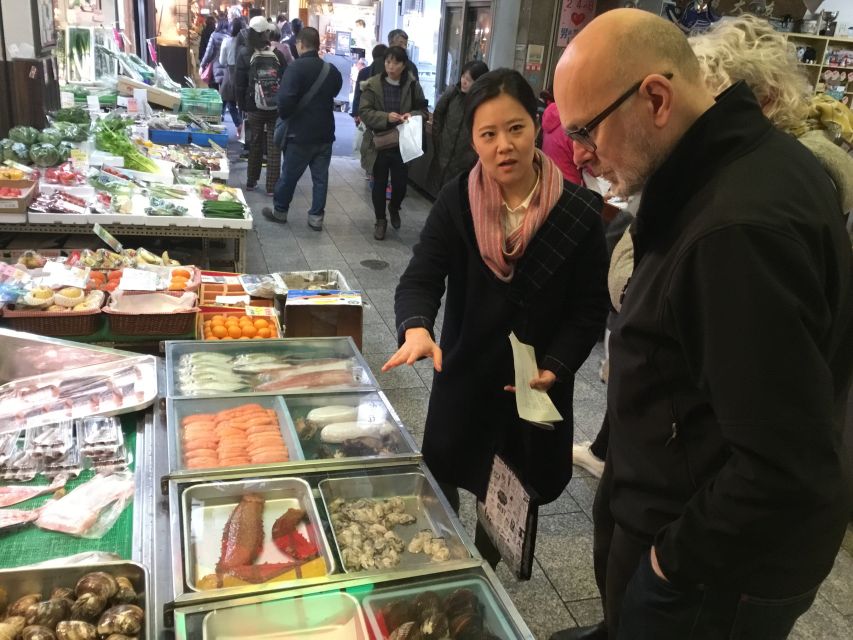
Nishiki Market is one of Kyoto’s best places to see food culture in action, but it can be hard to know what you are looking at. A stall may sell pickles, spices, seafood, meat, sweets, or prepared side dishes, and the difference between an ordinary purchase and a useful food discovery often comes down to context.
Your guide explains the market’s past and points out shops known for particular products. Some older stalls sit beside newer, more tourist-focused businesses, so guidance helps you tell the difference and spend your limited time wisely. You can ask about unfamiliar foods, and your guide can help translate questions for shop staff.
That translation help matters. Food labels and preparation methods are not always easy to understand, and a short explanation can tell you whether something is sweet, salty, spicy, raw, cooked, or intended as a side dish. Guides have also offered practical tips on sauces, brands, and how ingredients are used at home.
The market portion usually takes about an hour. That is enough time for an introduction, samples, and a useful walk through several sections, but it is not a long shopping session. If you want to buy gifts or return to a favorite stall, plan to do that after the tour.
More Food Tours in Kyoto
- Kyoto Night Foodie Tour in Gion (9+ dishes + 6 Sake tastings)
★ 5.0 · 1,762 reviews - Nishiki Market Brunch Walking Tour (7 Tastings + Brunch)
★ 5.0 · 1,355 reviews - Kyoto: Insider Sake Brewery Tour with Sake and Food Pairing
★ 5.0 · 704 reviews
Pickles, samples, and market manners
Food tastings are part of the walk, with Japanese pickles available to try for free and other sample foods included. These small tastes help you understand how Japanese meals are built. A donburi may be the main dish, but pickles and side items add sharp, salty, or refreshing flavors around it.
The tasting also gives you a chance to try foods before buying them. That is useful in a market where some items may look familiar but taste very different from their Western equivalents.
One practical lesson is market etiquette. You are told not to eat while walking. This is easy to miss if you are used to street-food markets, but it is an important local custom here. You will be better prepared to enjoy the market respectfully, and you will know when to stop and eat rather than carrying food through crowded lanes.
The optional sake tasting includes three different types. Since it is optional, you can choose based on your interests and comfort. The information provided does not specify a separate price for the sake, so check the current booking details if this tasting matters to you.
Choosing between seafood, tempura, and chicken-and-egg donburi
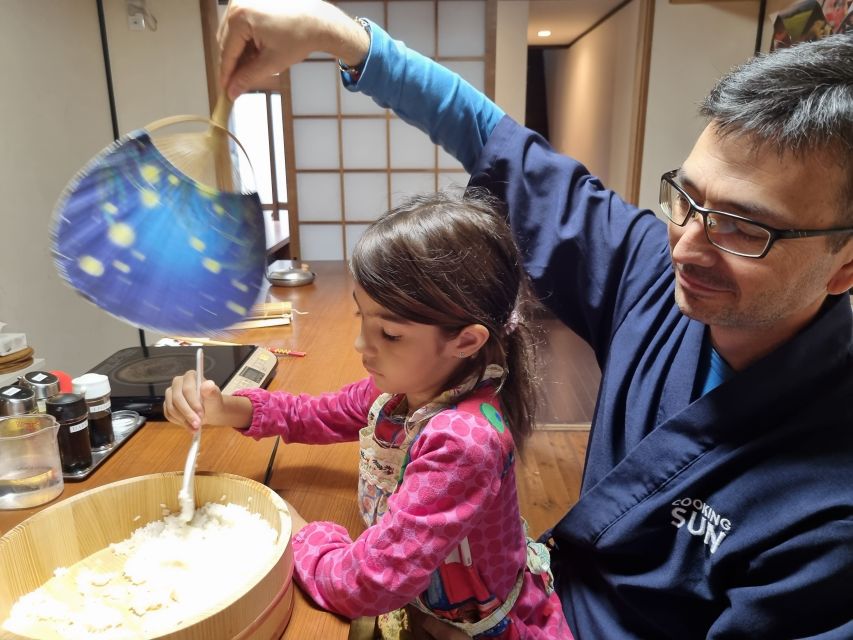
The central cooking choice is one of three rice-bowl dishes:
- Kaisen-don: A seafood bowl, generally suited to people who want a taste of fresh market ingredients without a long frying session.
- Ten-don: A tempura bowl, a good choice if you want to practice frying and build a meal around crisp pieces.
- Oyako-don: A chicken-and-egg bowl, a comforting option and one that several participants have found easy to recreate at home.
Each person can choose a different dish, which is helpful for couples, families, or friends who want to compare results. The class can also accommodate some substitutions. One participant requested tofu instead of chicken, and the guide adjusted the dish.
Still, you should treat substitutions as requests rather than guarantees. The class works from ingredients bought for the planned dishes, so mention dietary needs or preferences when booking and confirm what can be changed.
The ingredients are included in the tour price, as is a recipe. That makes the class more useful than a meal you simply watch someone prepare. You leave with instructions for repeating at least part of the experience at home.
From the market to the cooking studio
After the market walk, the included taxi carries you from Nishiki Market to the studio. This is a small but valuable detail. You do not need to work out the transfer yourself, and the cooking portion starts in a separate kitchen rather than at a market stall.
The total experience lasts 150 minutes. A typical schedule gives about one hour to the market and about one hour to cooking and eating, with the remaining time covering the meeting, transfer, and changeover.
The cooking space has been described as clean, well stocked, cozy, and designed for cooking classes. You can expect hands-on instruction rather than a demonstration watched from the side. The guide explains each step, helps you with presentation, and shows how sauces and seasonings work together.
This is also where the private format earns its keep. You can stop to ask why a step matters, request clarification, or work at a pace that suits your group. A large shared class can be efficient, but it rarely gives the same room for questions.
More market tours in Kyoto:
- Kyoto: Local Food Tasting Tour at the Nishiki Market
★ 4.7 · 135 reviews - Kyoto: Nishiki Market and Depachika Food Tour with a Local
★ 4.7 · 76 reviews - Kyoto: Nishiki Market Tour with a Local Foodie & Tastings
★ 4.5 · 67 reviews - Bangkok by Night: Temples, Markets and Food Tuk-Tuk Tour
★ 5.0 · 3,752 reviews
What the cooking lesson teaches
The class is not only about producing lunch. You also learn small techniques that affect the final result, such as how to use dashi, how to balance sauces, and how to make the finished bowl look attractive.
That last point is worth noting. Japanese home cooking is often as concerned with appearance as flavor, and the instructors explain how to arrange food neatly. For an experienced home cook, lessons about sauce types, brands, and presentation may be more useful than basic chopping instructions.
The teachers also seem comfortable adapting their style. Mio has been praised for strong English and a clear passion for cooking. Chie has been singled out for friendly instruction and personal adjustments, while Momo has been appreciated for useful market recommendations. The guide you receive may differ, so treat these names as examples of the teaching style associated with the experience, not a promise of a particular instructor.
Families can make good use of the format. Children can take part in preparing the dishes, and the group can split among the three bowl choices. The private setup also avoids the pressure of keeping up with strangers.
How much food is included
The tour includes the ingredients for your selected donburi, sample foods during the market walk, the recipe, and the taxi to the studio. You also eat the meal you prepare.
What it does not include is any extra food you decide to buy for yourself in the market. That distinction matters. Nishiki Market is full of tempting snacks and side dishes, but those personal purchases are separate from the tour fee.
You should also avoid assuming that every stall item you taste becomes part of your final meal. The guide selects ingredients for the cooking lesson, while the walk includes separate sampling and explanations.
If you are hungry, the meal comes later in the experience rather than immediately at the meeting point. The market hour includes tastings, but it is not designed as a full market lunch.
Is $109 a fair price?
At $109 per person, this is not the cheapest way to eat at Nishiki Market. If your goal is simply to buy a bowl of rice and seafood, you can spend much less.
The value comes from combining several services in one private experience: an English-language guide, translation help, market education, samples, ingredients, a cooking class, a recipe, and taxi transport to the studio. You are paying for access to explanation and personal attention, not just food.
For a private group, the price makes more sense. You can ask questions freely, choose different dishes, and request reasonable adjustments. It is also useful for people who want to bring Japanese cooking techniques home rather than only take photographs and move on.
The value is weaker if you already know Nishiki Market well, speak Japanese comfortably, or mainly want free time to shop. The roughly one-hour market visit leaves limited time for private browsing, and your own purchases cost extra.
The main strengths and the fair warning
The strongest part of this experience is the combination of place and practice. You first see ingredients in their market setting, then use related ingredients in the kitchen. That link gives the lesson more meaning than a cooking class held in isolation.
The private format is another major advantage. Guides can explain a shop’s specialty, answer questions about etiquette, and adjust the lesson to the group. That personal attention has been especially useful for families and people who cook often at home.
The main weakness is that the market section may not satisfy someone expecting a long, free-form food crawl. One participant wanted more explanation and more time to try things, while another found the tour useful even in a crowded market. Your expectations matter: think of it as a guided introduction followed by a class, not an all-day market expedition.
Ingredient quality can also vary. One participant was disappointed with fatty tuna, a reminder that fresh market food is not always perfect. The seafood choice may be excellent, but it is still worth keeping your expectations realistic.
Who should book this experience
I would recommend it most strongly to:
- First-time visitors to Nishiki Market who want help understanding what they see.
- Couples and families who prefer a private activity.
- Home cooks who want practical Japanese techniques and recipes.
- People who enjoy tasting small portions before deciding what to buy.
- Visitors who want a cultural activity that ends with a proper meal.
- Groups with different food interests, since each person can choose a different donburi.
I would be less likely to recommend it to someone who wants a long shopping window, a large number of tastings, or a cheap meal. It is also not the right choice if you need a fully specified dietary menu and cannot confirm substitutions in advance.
Booking is flexible, with cancellation allowed up to 24 hours before the start for a full refund. You can also reserve and pay later, which helps if your Kyoto schedule is still shifting.
Final verdict: a useful first look at Kyoto food
This is a strong choice if you want Nishiki Market explained rather than merely visited. The food walk gives you context, and the private cooking class turns that context into something you can taste and repeat.
Book it if you value clear English instruction, a small private setting, and a meal you help prepare. Skip it if you would rather spend the full afternoon grazing and shopping at your own pace. For most first-time visitors who want a practical introduction to Kyoto cuisine, the combination of market guidance and hands-on cooking makes the $109 fee reasonable.
FAQ
Where does the Nishiki Market food tour begin?
Meet your guide at the western entrance of Nishiki Market.
How long does the experience last?
The experience lasts 150 minutes.
Is the tour private?
Yes. It is offered for a private group.
What language is the tour conducted in?
The tour and cooking instruction are conducted in English.
Which donburi dishes can I choose?
You can choose kaisen-don with seafood, ten-don with tempura, or oyako-don with chicken and egg.
Are cooking ingredients included?
Yes. The ingredients for the donburi cooking class are included in the tour fee.
Is transportation to the cooking studio included?
Yes. Taxi transportation from the market to the studio is included.
Can I cancel for a full refund?
Yes. You can cancel up to 24 hours in advance for a full refund.
More Shopping Tours in Kyoto
- Chef Guided Food Tour of Pike Place Market
★ 5.0 · 3,733 reviews - Tokyo Tsukiji Fish Market Food and Culture Walking Tour
★ 5.0 · 3,184 reviews - London Bridge & Borough Market Food Tour with 7 Authentic Dishes
★ 5.0 · 1,972 reviews - Tokyo: Tsukiji Fish Market Food and Walking tour
★ 5.0 · 1,724 reviews
More Cooking Classes in Kyoto
- Small Group Cooking Class & Market Food Tour in Florence
★ 5.0 · 1,574 reviews - Athens: Food Market Visit and Cooking Class with Wine
★ 4.9 · 1,087 reviews - Undiscovered Charleston: Half Day Food, Wine & History Tour with Cooking Class
★ 5.0 · 948 reviews - Vietnamese Food Cooking Class in Hanoi with Market Experience
★ 5.0 · 778 reviews
Just added around Kyoto
- Kyoto: Nishiki Market Tour with a Local Foodie & Tastings★ 4.5 · 67 reviews
- Kyoto: Replica food making experience★ 4.8 · 70 reviews
- Kyoto: Foodie Night Tour in Gion with 9 dishes + 6 Sake★ 4.4 · 26 reviews
- Kyoto: Nishiki Market and Depachika Food Tour with a Local★ 4.7 · 76 reviews
- Kyoto Evening Gion Food Tour★ 4.9 · 35 reviews
- Kyoto: Local Food Tasting Tour at the Nishiki Market★ 4.7 · 135 reviews
- Kyoto: Gion & Pontocho Food Tour with 13 Dishes★ 4.9 · 235 reviews
- Kyoto: Casual Pontocho Evening Food Tour★ 4.8 · 31 reviews
Food Tours in Kyoto, compared.
Kyoto Night Foodie Tour in Gion (9+ dishes + 6 Sake tastings)
Read our review →
Nishiki Market Brunch Walking Tour (7 Tastings + Brunch)
Read our review →
Insider Sake Brewery Tour with Sake and Food Pairing
Read our review →
Kyoto Night All-Inclusive Eats and Streets, Gion and Beyond
Read our review →
Nishiki Market and Depachika Food Tour with a Local
Read our review →
Browse the lists this tour appears in