
REVIEW · MOROCCO
The Sunday Market in Had Draa & Local Food Tasting.
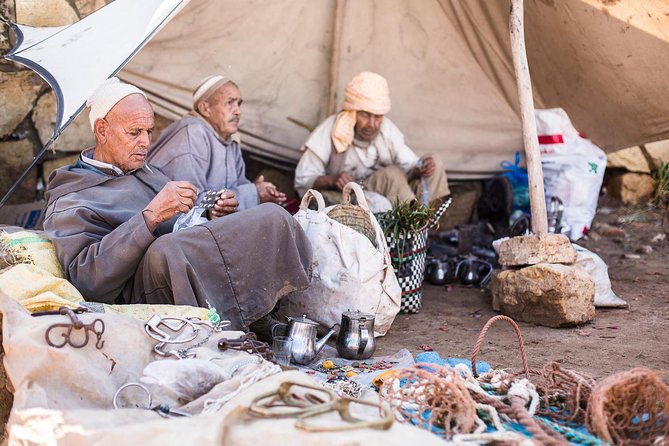
Had Draa is not a polished tourist stop. It is a working Sunday market where farmers arrive by donkey, sell animals and crops, buy household goods, and catch up with friends over tea. The livestock area can be confronting, but that is also what makes this outing such a direct look at rural Moroccan life.
I like two things especially: the guide-led walk makes a huge, confusing market easier to understand, and the tasting adds real flavor to the visit. You may sample produce, bread, olive and Argan oil, mint tea, and grilled dromedary. The main consideration is that animal treatment and market customs can feel very different from what you know at home.
Key points
- Had Draa is a working market: This is where rural residents shop, trade animals, sell farm goods, and meet friends.
- A guide matters here: Abdul, Abdoul, Naima, and Claudia have led groups through the market, explaining Moroccan and Berber customs along the way.
- Food is part of the lesson: Expect local tastings and a meal of grilled dromedary with bread, oils, and mint tea.
- The market is mostly local and male-attended: You will see cafés, tents, livestock, produce, spices, tools, and handmade goods rather than souvenir stalls.
- The outing is small and manageable: The maximum group size is 12, with about three hours at the market and roughly four hours for the full activity.
- Come prepared for a rough-edged morning: This is not the right choice if you want a tidy, carefully staged cultural show.
Why Had Draa feels different from Essaouira
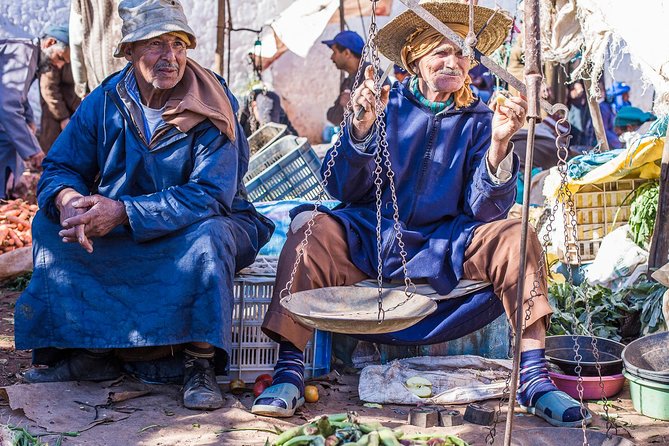
Essaouira’s medina is easy to approach as a visitor. Had Draa is another matter. About 30 km from Essaouira on the road toward Marrakech, it serves the surrounding countryside and follows the rhythm of weekly life rather than sightseeing.
Farmers bring vegetables, fruit, nuts, spices, animals, and crafts. Some make the journey by donkey. People also come to buy what they need for the week, visit cafés, and exchange news under tents or in the shade.
The market is mainly attended by men, though the wider gathering is social and communal. That detail matters. You are not simply looking at goods on tables. You are seeing a place where shopping, work, friendship, and news all meet.
The experience has an old-fashioned feel, but do not mistake that for a staged recreation. The market is still used for practical reasons. You may see carts, livestock, open grills, sacks of food, and people moving with a clear purpose. The setting can feel rough, noisy, and crowded in places.
That directness is the main attraction. If you want polished displays and a calm shopping walk, stay in Essaouira. If you want to understand how the countryside around the city functions, Had Draa offers far more.
More market tours in Morocco:
- Bangkok by Night: Temples, Markets and Food Tuk-Tuk Tour
★ 5.0 · 3,752 reviews - Chef Guided Food Tour of Pike Place Market
★ 5.0 · 3,733 reviews - Tokyo Tsukiji Fish Market Food and Culture Walking Tour
★ 5.0 · 3,184 reviews
The 9 a.m. start from Essaouira
The meeting point is Labo Abdelkrim Khatabi d’Analyses Médicales at 287 Rue Oued El Makhazine in Essaouira. The activity starts at 9 a.m. and returns to the same place.
The early start makes sense. Sunday is the market day, and the morning gives you time to see the market at work before the outing ends. Allow a little extra time to find the meeting point, since the tour information gives a specific address rather than a broad landmark.
Transport takes you out of Essaouira toward Had Draa. The drive is part of the change in setting. You leave the coastal city and head into the rural area that supplies much of the market.
The total activity lasts about four hours. Around three hours are assigned to the Sunday market itself, with the remaining time used for the journey and the food stop. That is enough time for a proper look without turning the morning into an all-day expedition.
The group is limited to 12 people. That is useful in a market with narrow passages, livestock, and plenty to notice. A guide can keep the group together and answer questions without the outing becoming a large procession.
Finding your way through the Sunday market
Had Draa can be hard to read on your own. There are many sections, people arrive for different reasons, and the market contains more than food. A guide gives the place a structure.
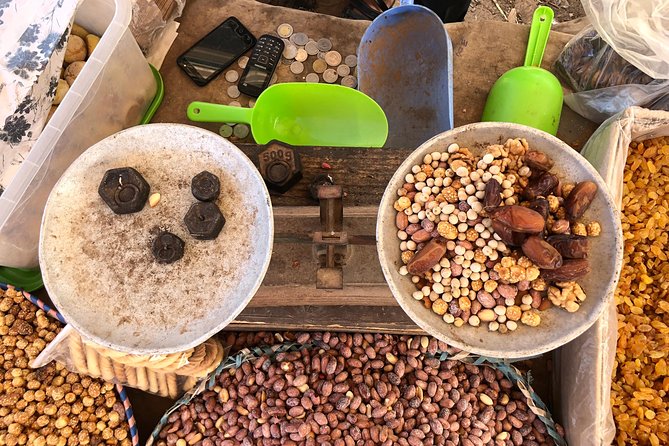
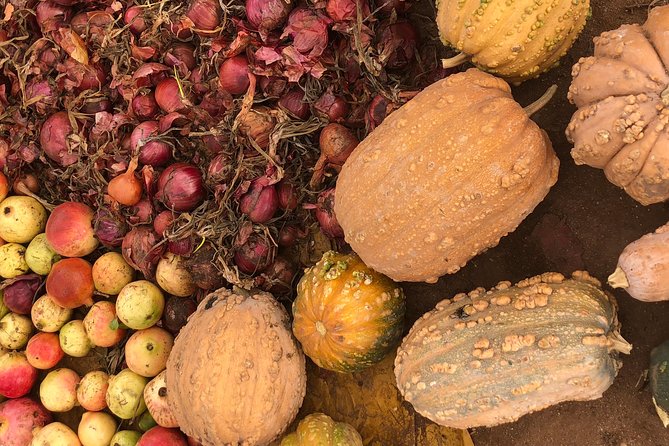
You might begin among vegetables, fruit, nuts, spices, and other produce. Smells do much of the explaining here. Fresh food, cooking ingredients, animals, charcoal, and open grills all contribute to the sensory mix.
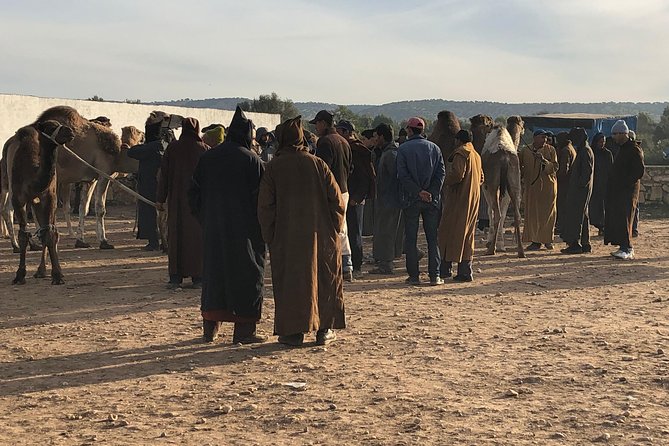
The market also sells or displays items needed for rural work and household life. The description includes animals and crafts, but the exact arrangement may change from one Sunday to the next. That unpredictability is part of the point. This is a real weekly market, not a fixed museum exhibit.
The livestock section requires a thoughtful approach. Animal treatment may look harsh or unfamiliar if you come from the United Kingdom or another country with different standards and expectations. You should not arrive expecting the customs of home.
That does not mean you must approve of everything you see. It means the guide can help you understand what is happening without turning the visit into a quick judgment. The best approach is observant and respectful.
Photography also calls for care. The guides stress not photographing people without permission and avoiding intrusive behavior. Bring your camera if you wish, but pay attention to faces, privacy, and the fact that this is a place where people are doing business.
What Abdul, Abdoul, Naima, and Claudia add
The guide is central to the quality of this outing. Names associated with the experience include Abdul, Abdoul, Naima, and Claudia. Your guide may differ, but the role remains the same: explain what you are seeing and help you move through the market with respect.
Abdul has been described as kind, friendly, caring, and full of stories about Moroccan and Berber life. Abdoul has also led the visit, offering background on local customs and answering questions with good humor.
Naima is noted for her engaging manner and close attention to the group. She has also guided repeat customers on another outing in the area. Claudia is particularly useful in a market that can feel like a maze, helping you find your way while explaining the setting.
The important point is not memorizing a guide’s name. It is understanding why a guide is valuable here. At Had Draa, a pile of spices, a group around a tent, or a livestock transaction may not explain itself. The guide connects those details to rural life in Morocco.
A good guide also helps set boundaries. You can ask questions, but you should not treat the market as a theater set. The most rewarding visit combines curiosity with restraint.
A few more food tours around Morocco worth comparing
- London Bridge & Borough Market Food Tour with 7 Authentic Dishes
★ 5.0 · 1,972 reviews - Tokyo: Tsukiji Fish Market Food and Walking tour
★ 5.0 · 1,724 reviews - Small Group Cooking Class & Market Food Tour in Florence
★ 5.0 · 1,574 reviews - Tokyo: Tsukiji Fish Market Guided Walking Tour
★ 4.9 · 1,397 reviews
A food tasting with a very local menu
The food portion gives the morning a clear focus. You sample local foodstuffs and then visit cafés with open grills near the market.
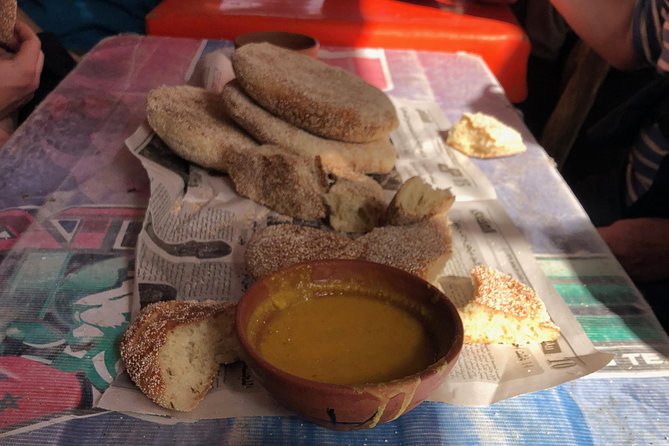
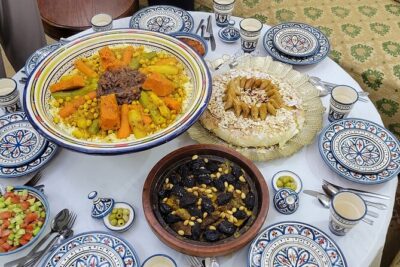
The signature dish is fresh grilled dromedary, served with warm bread, olive oil, Argan oil, and traditional mint tea. This is a memorable meal because it is tied to the market itself, not presented as a restaurant tasting designed only for outsiders.
Dromedary meat may be the reason some people book the experience. It may also be the reason others hesitate. You should know in advance that the meal is centered on a meat dish and that the market includes butcher and livestock areas.
Vegetarians are not ignored. The provider states that suitable care is taken, and a guide can help you avoid the butcher area if you do not wish to walk through it. Ask your guide at the start of the visit so expectations are clear.
The food stop also gives you a chance to sit, watch, and absorb the social side of the market. Mint tea is not just a drink here. It fits the market’s pattern of conversation, rest, and news.
One practical note: bring water, especially in hot weather. A past outing was praised for its organization but flagged the lack of cold water on hotter days. Do not count on the tour to solve that small comfort issue for you.
The parts you may find difficult
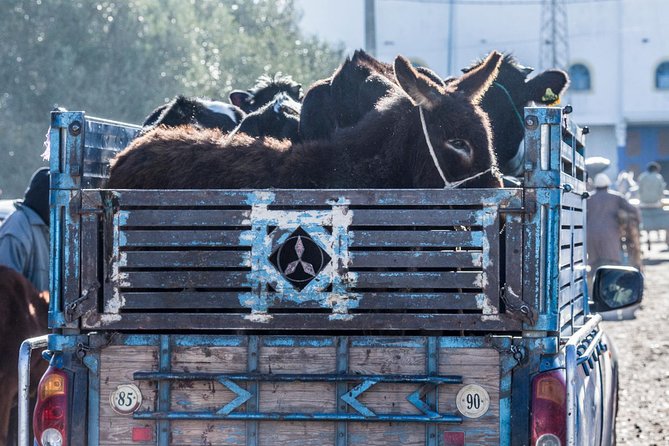
The phrase authentic can be overused, but it fits Had Draa better than it fits many organized excursions. That strength comes with rough edges.
The market may be crowded with people, carts, tents, livestock, and goods. Walking can require attention. You may need to pause, give way, or follow your guide closely.
The animal areas can be emotionally difficult. You may see animals and people living under hard conditions. The experience can prompt uncomfortable thoughts about poverty, working life, and the gap between rural Morocco and your own daily routine.
That is not a reason to avoid the visit, but it is a reason to choose it with open eyes. This outing asks you to observe rather than consume the setting as entertainment.
The market is also not a controlled food hall. Open grills and local preparation methods may look basic. If you need familiar facilities and predictable presentation, you may prefer a standard restaurant meal in Essaouira.
The guides can make the visit easier, but they cannot remove the market’s basic character. You are still entering a place built for local trade. That honesty is valuable, though it will not suit everyone.
What the $58.07 price means
At $58.07 per person, this is more than the cost of finding your own way to a market. You are paying for the transport from Essaouira, a guide-led visit, interpretation, food sampling, and a small group capped at 12 people.
The price is strongest for people who value context. Without a guide, you could walk among the stalls, but you would miss much of the meaning behind the animals, food, crafts, cafés, and social habits. You might also feel less certain about where to go and how to behave.
The meal adds practical value as well. Instead of simply looking at local food, you can taste several items and sit down for grilled dromedary, bread, oils, and tea.
Still, the outing is not a bargain activity if you only want a quick market stop. The visit lasts about four hours, and the market itself takes around three hours. If your main interest is shopping for souvenirs, the medina in Essaouira may be a better use of your time.
The booking pattern suggests that people often reserve about 15 days ahead. That is useful when planning a Sunday in Essaouira. A 4.9 rating from 33 ratings and a 97 percent recommendation rate also point to a consistently strong experience, especially for those seeking local context and personal guiding.
Who should book this Sunday morning
I would recommend Had Draa to you if you enjoy seeing how people actually shop, work, eat, and socialize. It suits curious visitors who want more than the familiar sights of Essaouira.
It is a good match for:
- People interested in Moroccan and Berber rural life
- Food-focused visitors willing to try dromedary
- Small groups who prefer personal explanations
- Visitors comfortable with livestock, open-air grills, and rough market conditions
- Anyone who wants a guide to explain customs and help with respectful behavior
I would think twice if you dislike animal markets, do not want to eat meat, or prefer quiet, carefully arranged visits. Vegetarians can be accommodated, but the market itself still includes butchers and livestock.
Families and older visitors should also consider their comfort with walking through a crowded working market. The information says most people can participate, but it does not promise a smooth, step-free, or especially calm route.
Timing, weather, and cancellation details
The activity begins at 9 a.m. and ends back at the Essaouira meeting point. Confirmation is provided when you book, and a mobile ticket is accepted.
Free cancellation is available up to 24 hours before the start time for a full refund. Changes or cancellations made less than 24 hours before the start are not accepted for a refund.
The outing depends on good weather. If poor weather forces a cancellation, you are offered another date or a full refund. The activity also requires a minimum number of participants. If that minimum is not reached, you receive the choice of another date or activity, or a full refund.
FAQ
Where does the tour start?
It starts at Labo Abdelkrim Khatabi d’Analyses Médicales, 287 Rue Oued El Makhazine, Essaouira 44000, Morocco.
What time does the activity begin?
The start time is 9 a.m.
How long does the experience last?
The full activity lasts approximately four hours. About three hours are spent at the Sunday market.
How far is Had Draa from Essaouira?
Had Draa is about 30 km from Essaouira on the road toward Marrakech.
Does the tour include food?
Yes. The experience includes food tastings and a meal featuring grilled dromedary with warm bread, olive and Argan oil, and traditional mint tea.
Can vegetarians take part?
Yes. The provider states that vegetarians are taken care of. You can also ask the guide about avoiding the butcher area.
How large is the group?
The maximum group size is 12 people.
Is the tour suitable for most people?
The activity information says most people can participate and that public transportation is nearby. The market includes livestock and rough conditions, so you should consider your comfort with those surroundings.
Can I cancel for a full refund?
Yes, if you cancel at least 24 hours before the experience starts. Poor weather or failure to meet the minimum number of participants may also lead to an alternative date or a full refund.
Should you book the Had Draa market visit?
Book it if you want a close look at rural Morocco and are willing to accept the market as it is. The strongest parts are the guide’s explanations, the small group, the chance to taste local food, and the way the visit connects shopping with everyday community life.
Do not book it simply because you want an easy food tour or a picturesque market stroll. Had Draa can be crowded, rough, and confronting, especially around livestock. But if you can meet that reality with patience and respect, this Sunday morning offers a side of Morocco that Essaouira’s tourist center cannot provide.
Just added around Morocco
- Fez Street Food Tour★ 4.5 · 33 reviews
- Essaouira Guided Tour: 3 on 1 – Nightlife tour, Live like a local & Street food★ 4.5 · 32 reviews
- Cook Moroccan Food & Try on Traditional Clothes like a local★ 5.0 · 213 reviews
- Casablanca Food Tour★ 5.0 · 60 reviews
- Casablanca Food Tour – Moroccan Street Food Tour★ 5.0 · 86 reviews
- Discovery of Moroccan Culinary Heritage, History and Secrets★ 4.5 · 48 reviews
- Authentic Food Tour in Agadir – Eat Like A Local★ 5.0 · 117 reviews
- Tangier: Food Walking Tour★ 4.9 · 43 reviews
Food Tours in Morocco, compared.
3-Day Tour to Merzouga Erg Chebbi with Food & Camel Trek
Read our review →
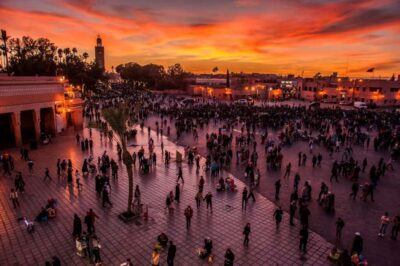
Authentic Moroccan Food Tour in Marrakech with Dinner
Read our review →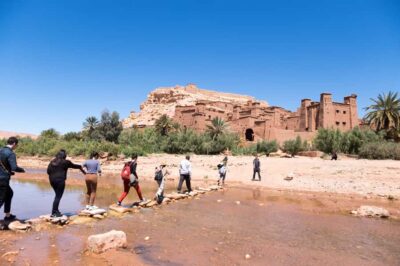
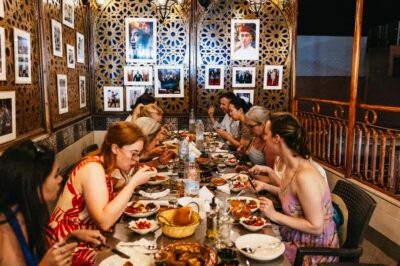
Cook Moroccan Food & Try on Traditional Clothes like a local
Read our review →Browse the lists this tour appears in