
REVIEW · MOROCCO
Cook Moroccan Food & Try on Traditional Clothes like a local
The best part of this Casablanca experience is that the kitchen table does the sightseeing. Wissal and her mother welcome you into their home, then guide you through family recipes for tagine, couscous, pastilla, salads, mint tea, and sweets. You are not just watching a demonstration. You help prepare the meal and hear how Moroccan food and customs are passed from one generation to the next.
I like the private, family-run setting and the choice of lunch or dinner. I also like that the clothing session is part of the visit rather than a separate photo stop. You can try a caftan or takchita, ask about when such clothing is worn, and take photos in a home decorated in a traditional Moroccan style.
The main consideration is that this is a real home experience, not a polished cooking school. That is its charm, but you should arrive respectful of personal space and ready for a social visit as well as a lesson. The meeting point is in Casablanca, and taxi arrangements may need to be discussed ahead of time.
What makes this Casablanca cooking class special
- Family recipes from Wissal’s mother and grandmother: Learn techniques tied to a real household, not just a restaurant menu.
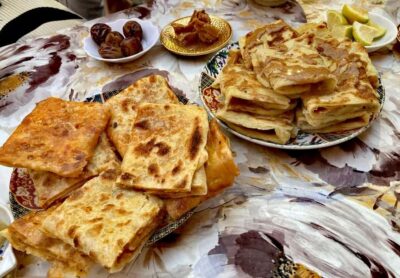
- Several dishes in one class: The meal can include tagines, salads, couscous, pastilla, drinks, tea, and cookies.
- Traditional clothes to try on: Wear a caftan or takchita and take photos as part of the cultural visit.
- Private and adaptable: Only your group takes part, with vegetarian and vegan options available on request.
- A relaxed four-hour format: Cooking, conversation, eating, and cultural questions all have room to unfold.
- Helpful taxi coordination: Wissal has arranged taxis for some people from hotels and the cruise terminal, though you should confirm the details before arrival.
A home kitchen is the real attraction
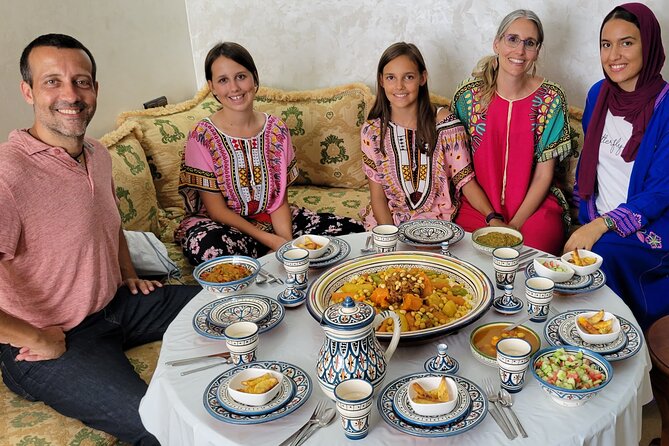
Casablanca has plenty of restaurants, but a restaurant gives you only the finished plate. Here, you see how a Moroccan family thinks about food from the first cup of tea to the final cookie.
Wissal and her mother host the class in their home. You begin with mint tea and homemade traditional cookies, then settle into the cooking. The setting gives the food a personal frame. You can ask about family habits, Moroccan customs, Muslim culture, local life, and the way recipes are taught at home.
I like this format for a first day in Morocco. It gives you an easy introduction to the country without making you rush between monuments. You sit, talk, taste, and learn how ordinary meals connect to family life.
The atmosphere also means you should adjust your expectations. This is not a large class with a printed lesson plan and a commercial demonstration kitchen. It is a private visit with a mother and daughter. Some families will find that intimate setting ideal. If you prefer a formal class with precise timings and professional workstations, you may find it less structured.
More tours led by locals in Morocco:
- Marrakech: Street Food Tour with a Local Guide
★ 4.9 · 3,119 reviews - Authentic Food Tour in Agadir – Eat Like A Local
★ 5.0 · 117 reviews - Moroccan Food Cooking Class with a Local Chef in Marrakech
★ 4.7 · 90 reviews
Mint tea, cookies, and a Moroccan welcome
The first course is not really a course at all. It is a welcome.
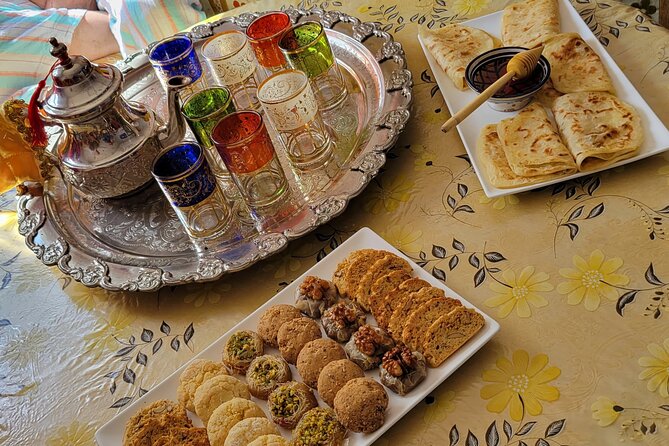
You are served Moroccan mint tea with homemade cookies, and the visit begins with conversation. Some people have also tried Moroccan or Arabic coffee and guessed the spices used in it. That small detail captures the tone of the experience: food is used to start a conversation, not simply to fill time.
Mint tea matters in Morocco because it is tied to hospitality. Learning to prepare it gives you a useful skill to take home, and drinking it at the end of a meal helps the class feel like a visit with family rather than a cooking appointment.
The food served before and around the main meal can be substantial. You may have cookies, pastries, local salads, virgin mojitos, and other drinks along with the dishes you prepare. The instruction to arrive with an empty stomach is sensible. This is a four-hour food experience, and the meal can include several parts.
Choosing the dishes and cooking family recipes
After the welcome, you select from classic Moroccan dishes. The exact menu can be adapted, and Wissal has contacted people before arrival to ask about food allergies, preferences, and the dishes they most wanted to learn.
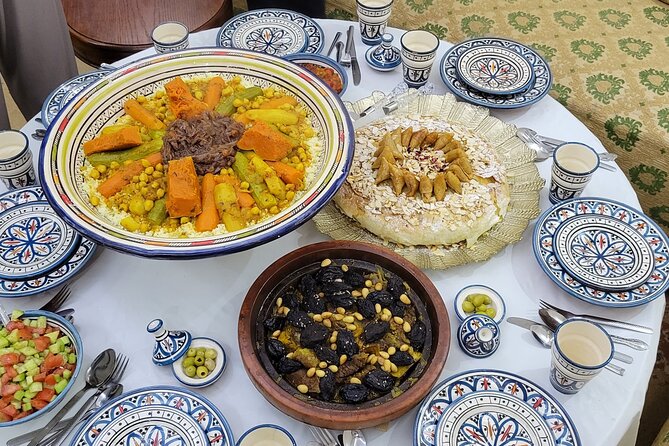
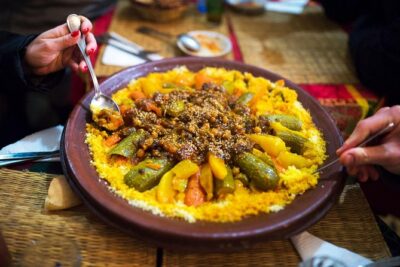
The cooking may include chicken tagine, vegetable tagine, couscous, pastilla, a cucumber and tomato salad, a cooked hot salad, and mint tea. You may not prepare every dish on every visit, so discuss your interests in advance. If tagine is your priority, say so. If you want a vegetarian or vegan menu, request it before the class.
Tagine is likely to be the star for many people. The cooking method is more than a presentation trick. The conical pot helps create a moist dish, while the slow cooking brings together spices, vegetables, meat, fruit, or other ingredients. You learn how the ingredients are combined and how the finished dish is served.
Several people have found the tagine especially memorable, including versions based on Wissal’s family recipe. That does not mean you should expect a secret formula delivered with exact restaurant precision. Moroccan home cooking changes from family to family. The value is learning the method, seasoning logic, and small habits that help you recreate the dish later.
Couscous and pastilla offer a different lesson. Couscous shows the importance of grains, vegetables, and shared serving dishes in Moroccan cooking. Pastilla brings sweet and savory flavors together in pastry. The meal gives you a wider picture of Moroccan food than a class focused on one dish.
Why the hands-on format matters
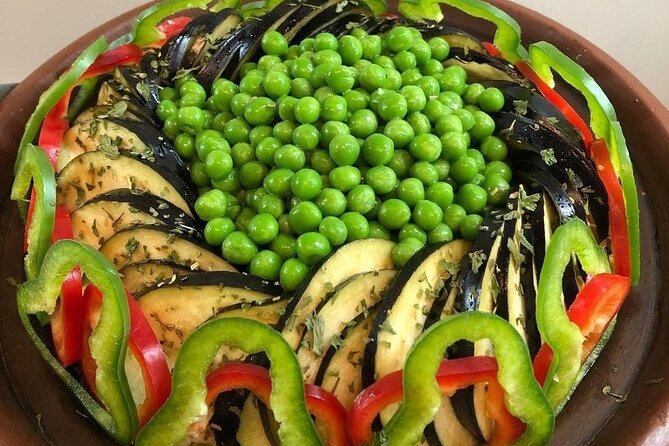
You take part in the preparation rather than sitting back with a camera. That can mean chopping, mixing, seasoning, assembling, or helping with tea. The precise tasks depend on the menu selected for your group.
I like this approach because it makes you pay attention to the small things. You see how spices are used, how salads are balanced, and how a dish changes as it cooks. You also have time to ask why a particular ingredient is used and how the recipe might work in your own kitchen.
The class is particularly useful for people who cook at home. You can ask about substitutions, preparation order, and ways to repeat the recipes after returning home. The family connection also helps explain why a recipe is prepared in a certain way, rather than treating it as a list of steps without context.
Families with children may appreciate the flexible pace. One family included a seven-year-old who moved in and out of the activity. Since this is a private class, your group can usually focus on the level of participation that suits you, though the experience still takes place in a private home and calls for good manners.
A few more food tours around Morocco worth comparing
- From Marrakech: Merzouga 3-Day Desert Safari with Food
★ 4.7 · 12,232 reviews - Marrakech: Street Food Tour by Night
★ 4.8 · 2,838 reviews - 3-Day Tour to Merzouga Erg Chebbi with Food & Camel Trek
★ 5.0 · 1,770 reviews - Authentic Moroccan Food Tour in Marrakech with Dinner
★ 5.0 · 1,423 reviews
Wearing a caftan or takchita
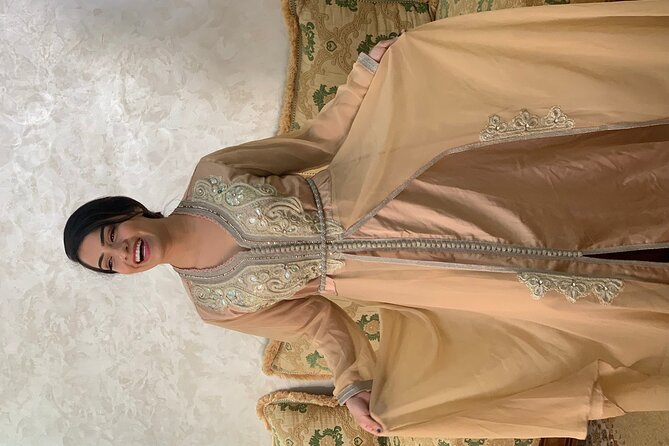
The clothing portion adds something that most cooking classes do not. Wissal provides traditional Moroccan clothes for you to try, including caftans and takchitas. You can take photos and ask when these clothes are typically worn.
A caftan is a long Moroccan garment with a strong place in formal dress. A takchita is often a more elaborate layered outfit. The clothing is not just a costume prop. It opens a conversation about celebrations, family events, and the way dress expresses Moroccan identity.
This section works best if you treat it as cultural sharing, not a quick dress-up station. You can ask questions, take your time with photos, and let Wissal explain the clothing. The home setting also makes the pictures more personal than a staged studio backdrop.
Some people have enjoyed Moroccan music and dancing during the visit as well. That is not described as a fixed part of every itinerary, so think of it as something that may arise naturally rather than something guaranteed.
Eating the meal you helped prepare
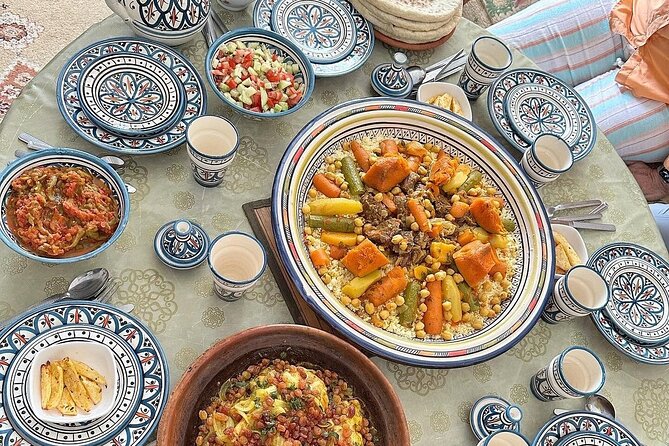
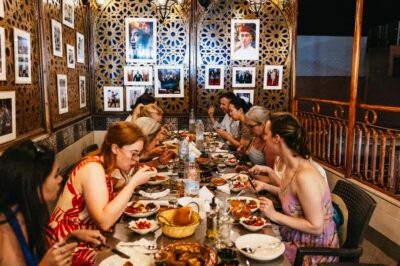
At the end, you sit down to eat the food prepared during the class. The meal may include the main tagine or other selected dishes, salads, drinks, mint tea, and sweets.
This is the point where the four-hour format earns its keep. You are not forced to eat quickly before the next scheduled stop. Cooking, talking, and eating can share the same rhythm as a Moroccan home meal.
The food is also a useful test of the lesson. If you liked the tagine, you can ask about the spice balance and cooking time while the flavors are still fresh. If one dish was not to your taste, you can discuss how the recipe might be changed at home.
The quantity may be generous. Arriving hungry is wise, but do not assume you need to finish everything placed on the table. Moroccan hospitality can be abundant, and the experience includes many small tastes before the main meal.
A private experience for couples, families, and solo visitors
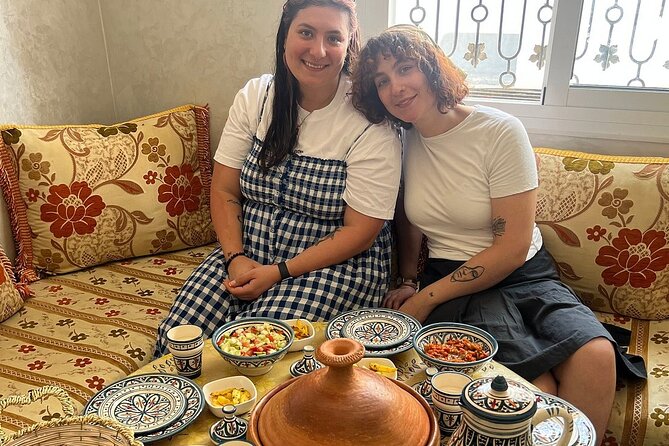
Only your group takes part, which changes the feel of the class. Couples can ask personal questions without speaking over a large group. Families can set a pace that works for children. Solo visitors receive more direct conversation and instruction.
The experience also suits people who want cultural contact without committing to a full-day excursion. Four hours is long enough to cook and eat properly, but short enough to fit into a Casablanca itinerary.
It may be especially useful at the start of a Morocco trip. You learn food vocabulary, get a sense of local hospitality, and gain a few dishes to look for in restaurants and markets later. It can also be a fitting final activity, since the gifts and recipes give you something tangible to carry home.
The private format has one tradeoff. You do not get the energy of a large group meeting new people. If sharing a class with other cooks is part of the fun for you, this visit may feel quiet. If you want personal attention and a closer look at family life, the small setting is a strong advantage.
Getting there from Casablanca hotels or the cruise terminal
The stated meeting point is at the angle of Boulevard Tah and Mohamed 6 in Casablanca, and the activity ends back at the meeting point. The home itself is the heart of the visit, so confirm the exact meeting instructions before setting out.
Wissal has arranged private taxis for some people from their hotels. Taxi help has also been organized for someone arriving from a cruise terminal, where reaching the public road can take a long walk. If you are arriving by cruise ship or are unsure about Casablanca taxis, ask Wissal in advance about a driver, the pickup point, and the expected fare.
Do not assume that taxi service is automatically included in the $61.20 price. The available information shows that taxi coordination has been offered in individual cases, but it does not list transportation as a standard feature. Get the details before booking your day around it.
The activity offers a choice of lunch or dinner. That makes it easier to fit into a morning arrival, an afternoon sightseeing plan, or a first evening in Casablanca. Allow enough time for the meal to finish without watching the clock.
Is $61.20 good value?
At $61.20 per person, this is not the cheapest way to eat in Casablanca. It is also more than the price of a simple restaurant meal. But the comparison is not quite fair, since the fee covers a private four-hour visit, instruction, several food tastings, the meal, drinks, traditional clothes, cultural conversation, and small local gifts.
The value is strongest if you would otherwise pay for a cooking class and a separate cultural activity. You receive both in one visit, with a private format and a menu that can be adjusted. Learning several dishes also gives the class more practical value than a short lesson focused on one recipe.
The price may feel less worthwhile if you mainly want a cheap meal or a quick photo in Moroccan clothing. In that case, a restaurant and a market visit would cost less. Book this when you want time with a local family and intend to participate.
A five-star rating from 213 reviews and a 100 percent recommendation mark indicate very strong satisfaction, but your enjoyment will still depend on what you want from a class. Come ready to talk, cook, eat, and respect the home setting. The experience is not designed as a fast checklist of Casablanca sights.
Dietary requests and practical details
Vegetarian and vegan cooking can be arranged on request. Send your needs before arrival rather than waiting until the first plate is served. You should also mention allergies and foods you do not eat.
Confirmation is provided when you book. Mobile tickets make the activity simple to carry on your phone. Service animals are allowed, and the home is near public transportation.
The cancellation policy allows a full refund if you cancel at least 24 hours before the start time. Cancellations or changes made less than 24 hours ahead are not accepted for a refund, with cut-off times based on Casablanca local time.
Because the activity takes place in a private home, courtesy matters. Dress comfortably, listen when household customs are explained, and ask before photographing family members or private areas. A thoughtful attitude will make the visit better for everyone.
Who should book this experience?
Book it if you want to learn several Moroccan dishes, not just watch one tagine being made. It is a good match for home cooks, food-focused couples, families, solo visitors, and anyone who prefers conversation to a crowded group tour.
It is also a smart choice for an early Casablanca evening. The meal gives you a gentle introduction to Morocco before you tackle more complex sightseeing. The clothing session and local gifts add memories beyond the food.
Think twice if your schedule allows no flexibility, if you dislike eating a large meal, or if you want a formal culinary school environment. The charm comes from the home, the family connection, and the unhurried social side of the visit.
Should you book Wissal’s Casablanca cooking class?
I would book this if your idea of a good tour includes sitting at a family table, learning recipes from a mother and daughter, and asking direct questions about Moroccan life. The strongest features are the private setting, the multi-dish menu, the clothing session, and Wissal’s care with transport and dietary requests.
Before booking, send your preferred dishes, dietary needs, and transport questions. If you do that and arrive with an empty stomach and an open mind, this offers far more than a meal. It gives you a practical taste of how food, family, dress, and hospitality fit together in Casablanca.
FAQ
How long does the Moroccan cooking experience last?
The activity lasts approximately four hours.
Where does the experience begin and end?
It begins at the angle of Boulevard Tah and Mohamed 6 in Casablanca, Morocco, and ends back at the meeting point.
Is this a private cooking class?
Yes. Only your group takes part in the activity.
Can I choose lunch or dinner?
Yes. The experience offers lunch and dinner options.
Are vegetarian and vegan options available?
Yes. Vegetarian and vegan options are available on request. You should also provide information about allergies or food preferences before arrival.
Can I cancel for a full refund?
Yes. You can receive a full refund if you cancel at least 24 hours before the experience start time. Changes or cancellations made less than 24 hours before the start time are not accepted for a refund.
Just added around Morocco
- Fez Street Food Tour★ 4.5 · 33 reviews
- The Sunday Market in Had Draa & Local Food Tasting.★ 5.0 · 33 reviews
- Essaouira Guided Tour: 3 on 1 – Nightlife tour, Live like a local & Street food★ 4.5 · 32 reviews
- Casablanca Food Tour★ 5.0 · 60 reviews
- Casablanca Food Tour – Moroccan Street Food Tour★ 5.0 · 86 reviews
- Discovery of Moroccan Culinary Heritage, History and Secrets★ 4.5 · 48 reviews
- Authentic Food Tour in Agadir – Eat Like A Local★ 5.0 · 117 reviews
- Tangier: Food Walking Tour★ 4.9 · 43 reviews
Food Tours in Morocco, compared.

3-Day Tour to Merzouga Erg Chebbi with Food & Camel Trek
Read our review →
Authentic Moroccan Food Tour in Marrakech with Dinner
Read our review →

Marrakech Night Street Food Tour / Taste The Real Marrakech
Read our review →Browse the lists this tour appears in