
REVIEW · SINGAPORE
Personalised 3in1 Food Tour: 3 Cultural Trails of Singapore
Singapore’s best food lesson is also a lesson in how the city works. This five-hour walking tour links Little India, Kampong Glam, and Chinatown, pairing temples, markets, museums, murals, and hawker stalls with 9 to 10 tastings. Guides such as Kelvin, Ronnie, Jeanette, and Monica are praised for explaining the stories behind each neighborhood rather than simply pointing out the next dish.
I especially like the three distinct cultural districts and the way food is tied to place. I also like the small-group limit of 10, which makes it easier to ask questions and adjust some stops to your interests. The main drawback is the pace: you cover a lot of ground, sometimes using the MRT or bus, and hawker centers cannot be reserved in advance. Come ready to walk, wait briefly for food, and eat well.
Key points at a glance
- Three cultural routes in five hours: Little India, Kampong Glam, and Chinatown give you a broad introduction to Singapore.
- Nine to 10 tastings included: Expect local hawker food, Michelin-recognized fare, drinks, and one alcoholic beverage.
- Strong guide element: Kelvin, Ronnie, Jeanette, Monica, Edwin, Julian, and others are praised for history, food knowledge, patience, and personal attention.
- Small groups matter: With a maximum of 10 people, the tour feels more flexible than a large coach excursion.
- Walking is central: Comfortable shoes, sun protection, and rain gear are sensible.
- Best early in your stay: The route helps you get your bearings and gives you ideas for later meals and visits.
Three Singapore neighborhoods, one very full afternoon
At $150 per person, this is not a cheap food crawl. But the price includes a licensed guide for five hours, 9 to 10 food and drink tastings, one bottle of water, and a small group capped at 10 people. It also buys you context, transport help, and the confidence to order at places where menus and food counters can feel confusing on a first visit.
I see the tour as three experiences combined. It is part food tour, part cultural walk, and part orientation to central Singapore. You are not simply taken from restaurant to restaurant. You move through working neighborhoods, religious sites, covered markets, old shophouses, and streets known for murals and small shops.
The route begins at Little India MRT station, Exit C, and finishes at Maxwell MRT station. That point-to-point design is useful. You do not need to return to where you started, and the last neighborhood is Chinatown, one of the easiest places to continue exploring on your own.
The schedule lists many stops at roughly 20 to 35 minutes each. Some are guided visits, some are photo stops, and some are walks or pass-bys. That wording matters. You should not assume that every museum or attraction includes a full indoor visit. Museum entrance tickets are not included, and the day is built around moving through the districts rather than spending hours inside one exhibit.
A few more food tours around Singapore worth comparing
- Small Group: Michelin and Local Hawker Food Tour with 9 tastings
★ 5.0 · 1,890 reviews - Small Group: Singapore Street Food & Night Tour with 9 tastings
★ 5.0 · 1,240 reviews - The Award-Winning PRIVATE Food Tour: 10 Tastings of 3 Cultures
★ 4.5 · 1,017 reviews
Little India: temples, markets, and a strong start
Meet your guide outside Little India MRT station. This is a practical starting point, with the neighborhood immediately around you and public transport nearby if the group needs to move on.
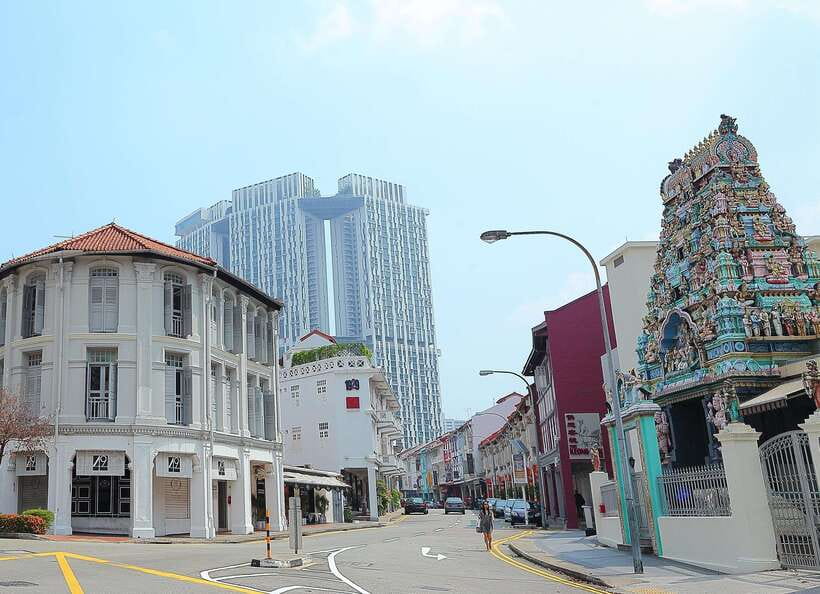
The first major stop is Sri Veeramakaliamman Temple, dedicated to the goddess Kali. Its colorful exterior and detailed sculptures make it one of the most eye-catching stops of the day. Your guide can explain the role of the temple and the traditions connected with it, but remember to dress and behave respectfully at religious sites. The tour information does not promise a ceremony or special access, so think of this as a guided cultural visit rather than a scheduled religious event.
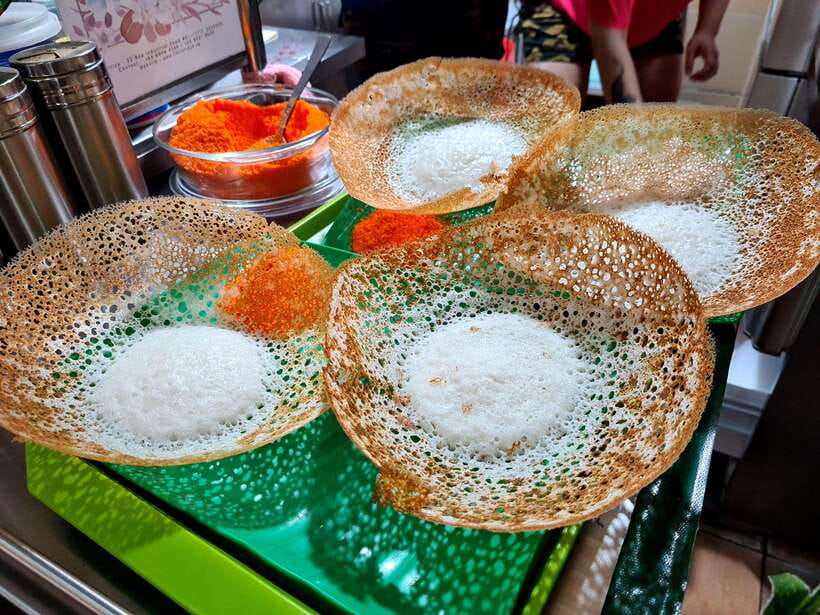
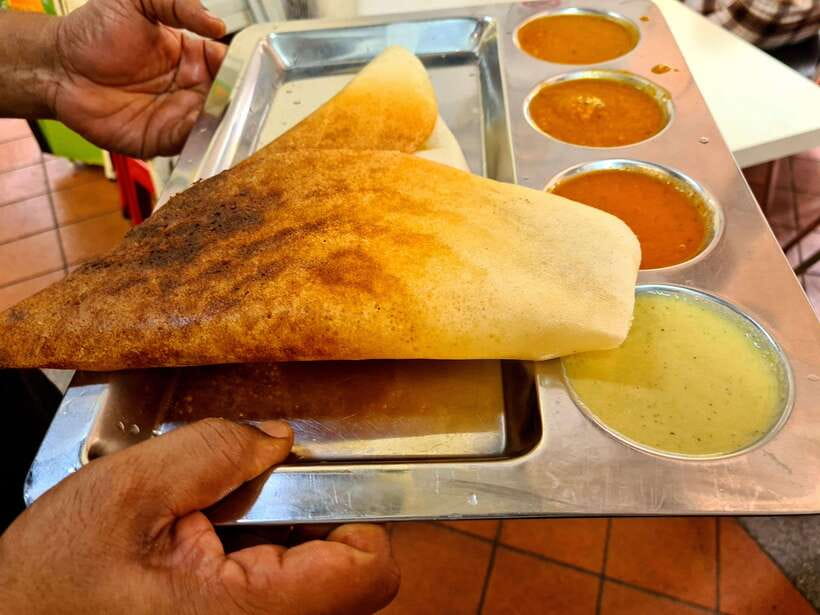
Next comes Tekka Centre, where a wet market and hawker stalls share the same complex. This is one of the best places to understand how food shopping and eating fit into daily life in Singapore. Instead of seeing Indian food as a restaurant-only experience, you see ingredients, stalls, market activity, and prepared dishes in the same setting.
Your guide chooses dishes from local vendors and explains what you are eating. The exact menu can vary, which is useful if a particular stall is busy or a food preference needs attention. The tour includes 9 to 10 tastings overall, not necessarily a fixed dish list, so ask your guide early about the plan for the day.
Little India Arcade adds another layer. The shops here sell traditional clothing and handicrafts, and the stop gives you time to notice the neighborhood beyond food. It is also a good place to browse if you want something more substantial than a standard souvenir.
The Indian Heritage Centre follows. Its exhibits focus on the Indian community in Singapore, with interactive displays and cultural material. Entrance tickets to museums are not included, so confirm with your guide what the group will see inside and what will be covered from outside or through explanation. The value here is the link between the neighborhood you are walking through and the people, customs, and migration stories that shaped it.
Allow time for photographs. Little India has colorful streets, murals, shopfronts, and strong food aromas. It is attractive, but the walking surface, heat, and traffic can make the pace tiring. This is where comfortable shoes start paying off.
Kampong Glam: mosque domes, murals, and old streets
From Little India, the route continues to Kampong Glam. The day may include public transport, and the included transport used during the tour is a practical bonus rather than a sightseeing feature in itself. One participant specifically appreciated the chance to use both the train and bus, including the break from walking in the heat.
Haji Lane is the photogenic part of this section. The narrow alley has murals, colorful shopfronts, and quirky boutiques. It is a good place for pictures, but it can be crowded and compact, so your guide’s commentary is more valuable than simply wandering with a camera.
Sultan Mosque gives the neighborhood its clear religious focus. The mosque is an important landmark, and the exterior makes a strong photo stop. Your guide explains the area and its Malay and Muslim connections, but you should follow any clothing and visiting rules in force on the day. The supplied details do not guarantee entry into every interior space.
The Malay Heritage Centre and Spice Garden provide a more direct connection to local history and regional flavors. The spice garden is especially helpful for understanding why trade, cooking, and migration are so closely connected in Singapore. The route also includes Kandahar Street, Muscat Street, and Bussola Street, where you can see how restored shophouses and newer businesses share the same district.
A stop at the Camera Museum adds variety. It is an unusual choice on a food-and-culture route, and it gives the middle of the tour a change of pace. The itinerary identifies the museum as a guided sightseeing stop, but entrance tickets are not included, so check whether your visit is external or whether you want to pay separately.
Food in Kampong Glam is presented as part of the district’s broader identity. You may taste flavors that differ from the Indian and Chinese dishes later in the day. The supplied information does not name each dish, and that is intentional: your guide selects from available local or Michelin-recognized food and may tailor choices to the group.
Chinatown: temples, food stalls, and a satisfying finish
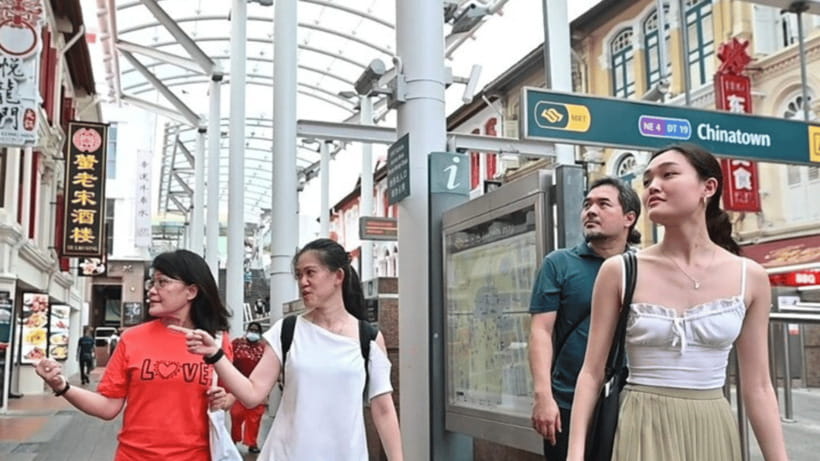
Chinatown is the final major district, and it brings together some of Singapore’s most recognizable sights. The Buddha Tooth Relic Temple and Museum is the main visual landmark. Its architecture is elaborate, and the temple gives the guide plenty to explain about Buddhism, religious practice, and the place of sacred objects in the city.
The Sri Mariamman Temple provides a useful contrast. It is Singapore’s oldest Hindu temple and sits within the Chinatown area, a reminder that these districts are not sealed cultural compartments. Singapore’s communities overlap, and the route makes that point in a practical way.
You may also pass through Chinatown Street Market and the Chinatown Heritage Centre. The heritage center focuses on the lives of early Chinese immigrants, while the street market offers traditional crafts, food, and souvenir browsing. Again, museum tickets are extra, so do not confuse a guided stop with an included admission.
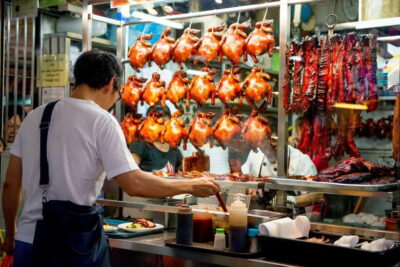
Maxwell Food Centre is the food anchor at the end of the route. It is a popular hawker center with many local choices, and it is where you are likely to finish several of the tastings. The food is not served in a private dining room. Your guide must find seats and order at the stalls, and tables cannot be booked ahead.
That means you may wait. It also means you are seeing Singapore’s food culture as it operates, with shared tables, crowded counters, and vendors working at speed. If you need a quiet meal with guaranteed seating, this format may frustrate you. If you want to learn how hawker centers function, the slight uncertainty is part of the lesson.
Ann Siang Hill and Club Street round out the Chinatown section. Restored shophouses now hold bars, boutiques, and cafes, giving you a look at the district after the food stops. The tour finishes at Maxwell MRT station, TE18, which is convenient for continuing your evening.
Same city, a completely different plate:
- Singapore: Chinese, Indian & Arabic Quarters, Culture & Food Tour
★ 5.0 · 789 reviews - Singapore: UNESCO Street Food & Cultural Experience
★ 5.0 · 524 reviews - Singapore: Guided Street Food Tour at Night
★ 4.5 · 393 reviews - Singapore: Foodie Experience Guided Tour with 5 Tastings
★ 4.7 · 291 reviews
What you actually eat during the five hours
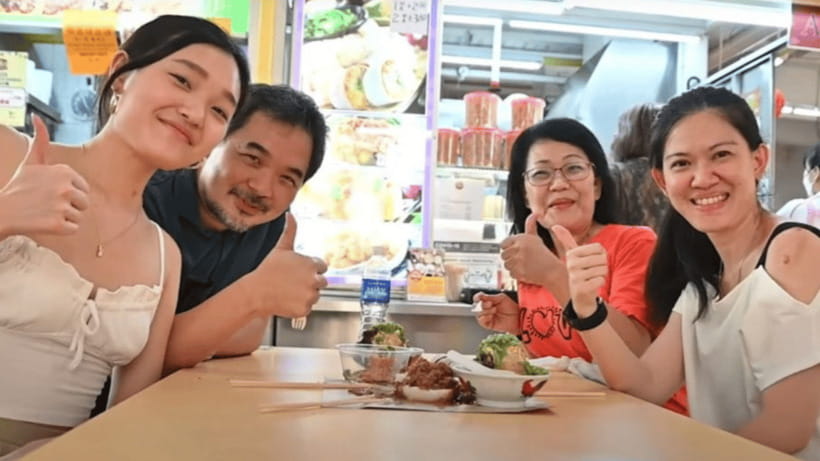
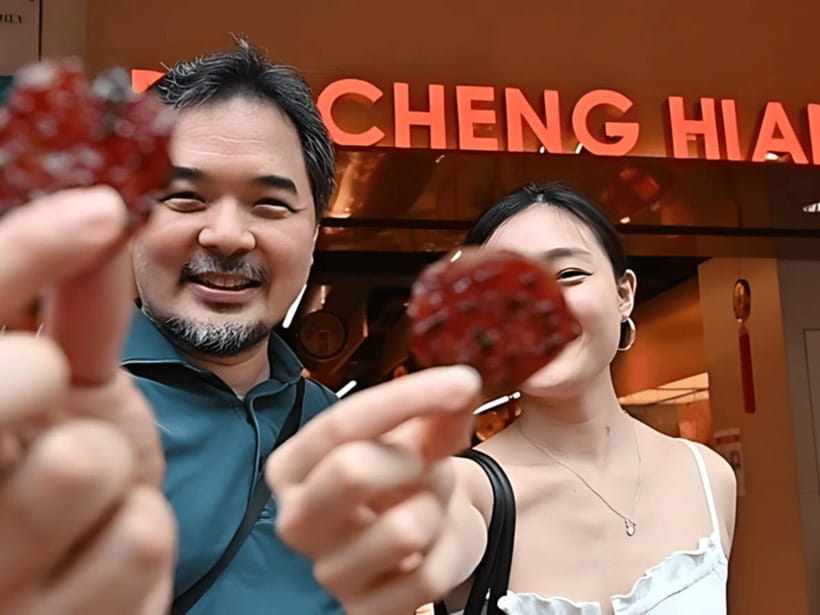
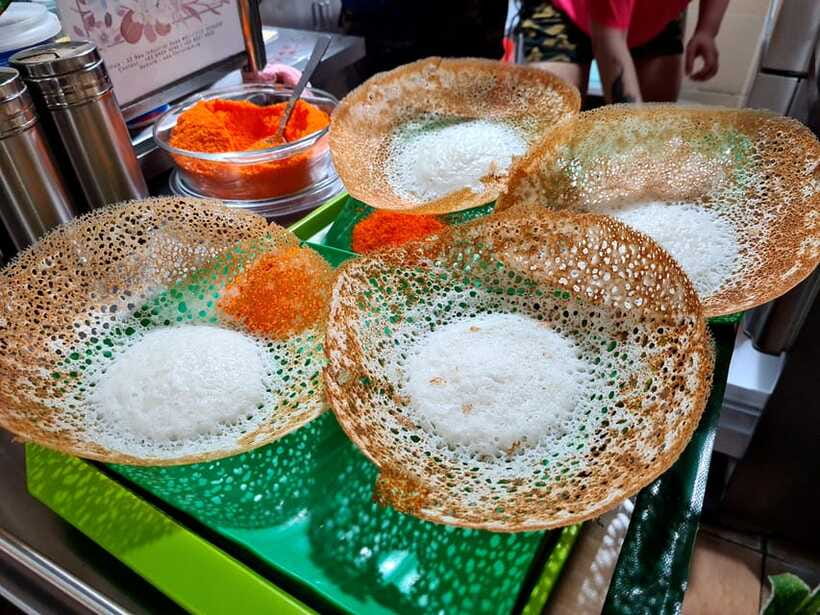
The tour promises 9 to 10 must-try food and drink items, with choices ranging from humble hawker food to Michelin-recognized stalls. One alcoholic drink is included. The exact dishes are not fixed in the information provided, but past menus have included foods such as kaya toast, chicken and rice, and chendol.
That range is the point. You get small tastes from more than one community instead of spending the whole tour at a single restaurant. Your guide can also steer you toward dishes you might not think to order, which is particularly useful if you are unfamiliar with Singaporean food names or hawker-center etiquette.
Do not eat a full breakfast before meeting the group. The food is substantial, and the tastings continue across the route. The tour is designed for sampling, but the combined amount can still leave you very full.
Dietary needs require planning. The operator says special diets may not be accommodated unless the tour is private, so contact them before booking. Hawker stalls also vary in how clearly ingredients are displayed. Do not wait until the first food stop to mention allergies or restrictions.
How the guides shape the day
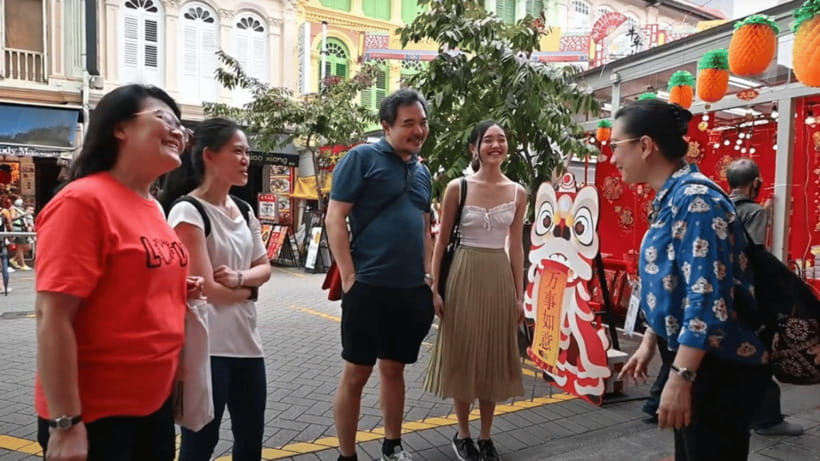
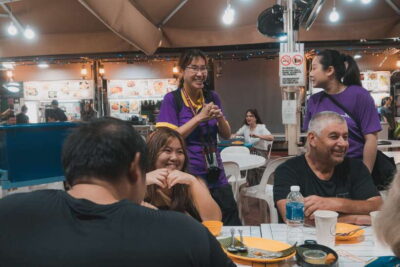
The guide is the biggest variable in an experience like this, and the named guides receive especially strong praise for their warmth, history explanations, and attention to personal interests. Kelvin is noted for answering questions and connecting food with Singapore’s past and present. Ronnie is praised for enthusiasm and a friendly manner.
Jeanette is described as kind, reliable, and easy to spend several hours with. Monica is singled out for explaining Singapore from historical, religious, and food angles. We Soon is noted for tailoring the route to interests, including model-car shops and clothing sections for different members of a couple.
Those details tell you what to expect from the small-group format. This is not a silent procession behind a flag. Tell the guide what you enjoy. If you care about clothing, photography, markets, temples, or particular food types, the day may be adjusted where time and group needs allow.
The tour is available in English, Chinese, and Japanese. The maximum group size is 10, though one booking may occasionally feel closer to a private experience if demand is light. That can make a major difference in how easily you can ask questions or secure seats at a food center.
Walking, weather, and practical limits
The route covers a lot of ground. One participant estimated roughly 6.5 miles across Little India, Kampong Glam, and Chinatown. Treat that as a useful warning rather than a guaranteed distance. You will walk between sights, stand at food counters, and spend time outdoors.
Singapore’s heat can make five hours feel longer than expected. Wear light, comfortable clothing and supportive shoes. Carry an umbrella or poncho because rain can arrive quickly, and do not count on every stretch being covered.
The activity is not wheelchair-accessible. Stalls, sidewalks, religious sites, and public transport connections can create practical barriers. It is also not ideal for anyone who needs frequent seated breaks or a tightly controlled meal schedule.
Children aged two and under can join free. The child-ticket policy limits purchases to one child ticket per adult, or two child tickets for two adults, with additional children charged at the adult price. The tour provider should be contacted directly if your family arrangement is unusual.
Cancellation is flexible up to 24 hours before the start for a full refund, and you can reserve now and pay later. Those terms help if your Singapore schedule is still changing, but they do not remove the need to provide accurate contact details when booking.
Is $150 a fair price?
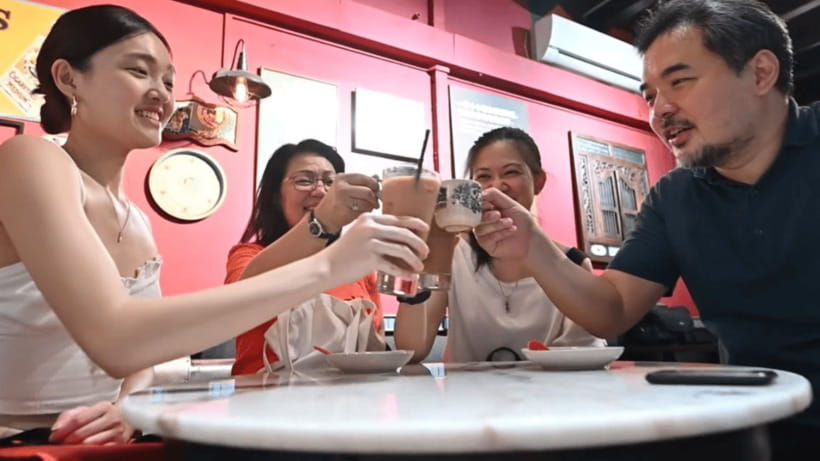
I would not choose this tour if my only goal were the cheapest possible hawker meal. You can eat much more cheaply on your own. The $150 cost makes more sense if you want a guide, structured tastings, cultural explanation, public transport help, and a full introduction to three districts in one outing.
The food alone is not the entire value. You are also paying to avoid guesswork at busy food centers, to understand what you are seeing at temples and markets, and to move efficiently between neighborhoods. For a first day in Singapore, that can be worth more than a discount meal.
The value is strongest for a short visit. If you have only 24 hours, the tour covers food, history, landmarks, and orientation in one block of time. It can also help you decide where to return later, since you finish with a better sense of which markets, streets, and stalls deserve more time.
Should you book the three-in-one food tour?
Book it if you want a full introduction to Singapore’s food and cultural districts, enjoy walking, and prefer a guide who can explain the meaning behind the places you visit. It suits first-time visitors, short-stay visitors, curious eaters, and anyone who feels uncertain about ordering at hawker centers.
Skip it if you want a slow museum day, guaranteed restaurant seating, extensive time inside each attraction, or a highly controlled menu. It also calls for caution if you have serious dietary restrictions, mobility limitations, or little tolerance for heat.
For the best experience, start hungry, wear good shoes, mention food restrictions before booking, and tell your guide what interests you. The tour’s strongest feature is not simply the number of dishes. It is the way Kelvin, Ronnie, Jeanette, Monica, or another guide can connect those dishes to temples, markets, migration, faith, and daily life across Singapore.
FAQ
Where does the tour begin?
It begins at Little India MRT station, Exit C, at street level.
Where does the tour finish?
The tour finishes at Maxwell MRT station, TE18, in the Chinatown area.
How long does the tour last?
The experience lasts five hours. Check available start times when booking.
How many food tastings are included?
You receive 9 to 10 must-try food and drink tastings, including one alcoholic drink. Choices may include local hawker food and Michelin-recognized fare.
Are museum entrance tickets included?
No. Entrance tickets to museums are not included in the price.
Can the tour accommodate dietary restrictions?
Special dietary needs may not be accommodated unless the tour is private. Contact the provider before booking to discuss your requirements.
Is the tour wheelchair-accessible?
No. The activity is not wheelchair-accessible. Comfortable footwear is recommended, and you should carry an umbrella or poncho in case of rain.
Just added around Singapore
- Street Food, Cultural & Historical Tour of 3 Ethnic Quarters★ 5.0 · 23 reviews
- Singapore: Local Street Food Tasting Tour★ 4.8 · 36 reviews
- Singapore: Private Food Tour – 10 Tastings with Locals★ 4.7 · 194 reviews
- Singapore: Local Hawker Food Tour with Tastings★ 4.7 · 181 reviews
- Singapore: Guided Street Food Tour at Night★ 4.5 · 393 reviews
- Singapore: Foodie Experience Guided Tour with 5 Tastings★ 4.7 · 291 reviews
- Singapore: Hawker Culture Food Tour and Sightseeing★ 4.8 · 23 reviews
- Singapore: Food and Bike Tour: Katong District★ 4.9 · 38 reviews
Food Tours in Singapore, compared.
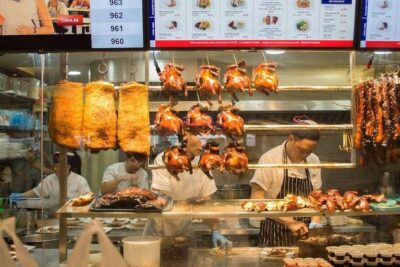
Small Group: Michelin and Local Hawker Food Tour with 9 tastings
Read our review →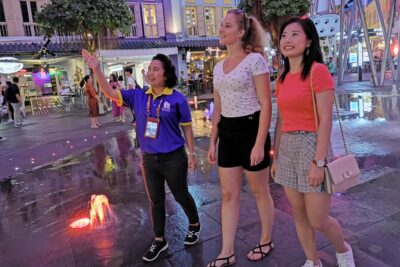
Small Group: Singapore Street Food & Night Tour with 9 tastings
Read our review →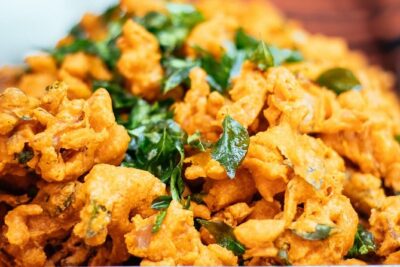
The Award-Winning PRIVATE Food Tour: 10 Tastings of 3 Cultures
Read our review →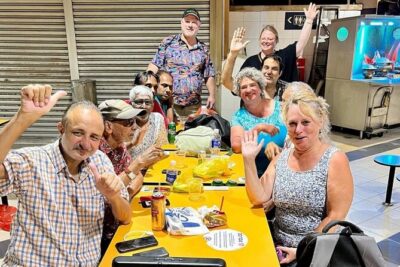
Chinese, Indian & Arabic Quarters, Culture & Food Tour
Read our review →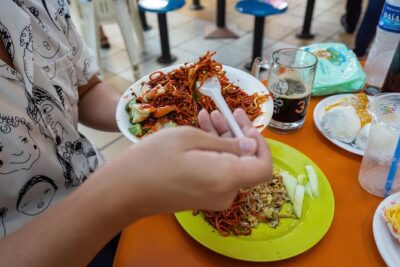
Browse the lists this tour appears in