
REVIEW · SINGAPORE
Street Food, Cultural & Historical Tour of 3 Ethnic Quarters
Singapore’s food culture is much easier to understand when you see where the ingredients are sold, meet the people running small businesses, and hear how immigrant communities shaped the city. This six-hour tour links Chinatown, Little India and Kampong Glam through hawker food, markets, temples, mosques, old photographs and local transport.
I especially like the chance to eat at UNESCO-inscribed hawker centres and family-run food stalls, rather than simply stopping for a few famous dishes. I also like the personal angle provided by Gerry, a Singapore-born Chinese Peranakan guide whose great grandparents arrived from Fujian in 1910. The main drawback is the pace: around 6,000 steps, several food stops and public transport make this a full, active day.
Key Points at a Glance
- Three historic quarters in one day: Visit Singapore’s Chinese, Indian and Malay settlements, each with its own food, shops, religious buildings and visual style.
- A guide with family roots in Singapore: Gerry connects the city’s past with his own family story and uses old photographs to explain how places have changed.
- Food is built into the history lesson: Hawker dishes, drinks, market ingredients, Indian and Malay food, and dessert show how communities eat and work.
- Public transport is part of the experience: You move between districts by Singapore’s clean, efficient network instead of remaining inside a sightseeing vehicle.
- Small group size: The tour is limited to eight people, which makes questions and food sharing easier.
- Come hungry, but not overloaded: The day includes plenty of food and drink, including beer, though one stop is mainly dessert rather than a full meal.
Why This Tour Works Better Than a Standard Food Crawl
Many food tours keep you near one hawker centre. This one uses food as a key to Singapore’s wider story. You begin in Chinatown, continue to Little India, and finish in Kampong Glam. Each district brings a different group of foods, buildings and local businesses into view.
That broader plan matters because Singapore’s ethnic quarters were established under British colonial planning in 1822. The tour explains how those areas developed, how immigrant communities faced hard conditions, and how later government policies changed daily life.
Gerry’s background adds a useful personal thread. He was born in Singapore six years after independence in 1965, and his great grandparents came from Fujian in 1910. That does not turn the tour into a family-history lecture. Instead, it gives him a natural way to discuss migration, food traditions and the city’s rapid changes.
You also get old images to compare with the streets around you. This is one of the most useful parts of the day. A modern Singapore street can look polished and orderly, while a photograph may show the cramped, difficult conditions that once defined the same district.
The group limit of eight is another strength. You can ask about ingredients, local customs, transport or buildings without trying to catch a guide’s attention in a crowd. The tradeoff is that a small-group food tour can feel quite full over six hours, especially in warm weather.
More street food nights in Singapore:
- Small Group: Singapore Street Food & Night Tour with 9 tastings
★ 5.0 · 1,240 reviews - Singapore: UNESCO Street Food & Cultural Experience
★ 5.0 · 524 reviews - Singapore: Guided Street Food Tour at Night
★ 4.5 · 393 reviews
Chinatown: Hawker Food and Difficult Beginnings
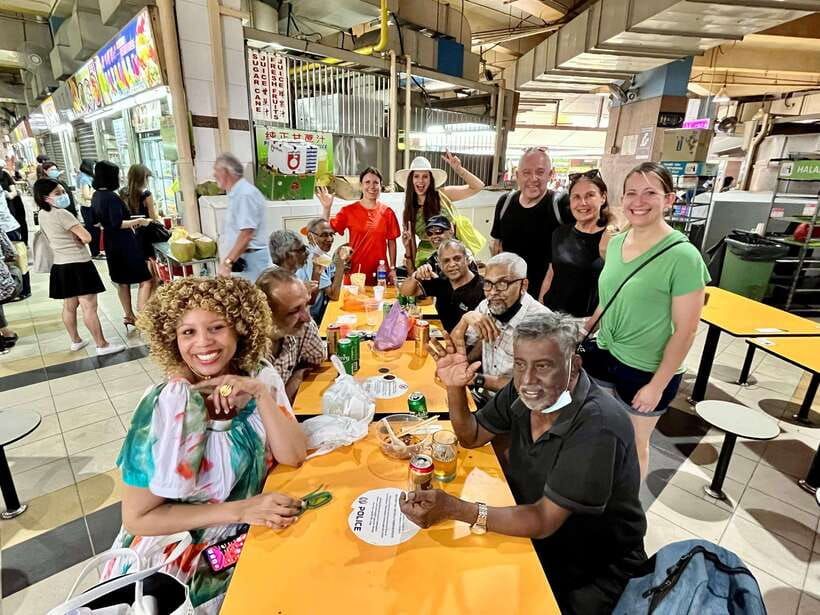
Chinatown is the first major stop, with about an hour for walking, food tasting and local stories. The focus is not just on decorative shophouses or souvenir stalls. You explore the Chinese quarter through a hawker centre, a Buddhist temple and street market stalls.
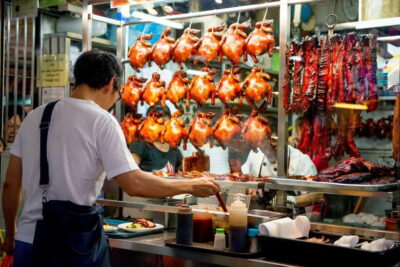
The hawker centre is where the food focus begins. You can expect local Chinese food and drinks, with some food connected to Michelin Guide listings. The price includes food and drink, so you do not need to keep calculating the cost of every tasting as the day goes on.
The hawker centre also shows how Singapore turned affordable cooked food into part of everyday public life. Instead of treating street food as a quick snack between sights, Gerry explains how hawkers, traders and small family businesses fit into the city’s social fabric.
The surrounding history is darker. Gerry discusses the Street of the Dead, red lanterns and private chambers, and former opium dens. These subjects help explain the difficult conditions faced by many early immigrants. The old images are especially useful here because they put human scale on stories that can otherwise sound abstract.
A Buddhist temple adds a religious and architectural layer to the stop. You are not simply moving from one plate to the next. Chinatown brings together faith, trade, housing, migration and food in a compact area.
The market stalls add another practical detail. You see the kinds of goods that make a neighborhood function, not just the sights selected for a postcard. If you like understanding how a district works day to day, this is a strong opening section.
Little India: Markets, Spices and a Proper Food Break
A short public transport ride, listed at about 10 minutes, takes you to Little India. The journey matters because you use the same transport network that residents rely on. Singapore’s trains and public transport are clean, efficient and well connected, and the tickets are included.
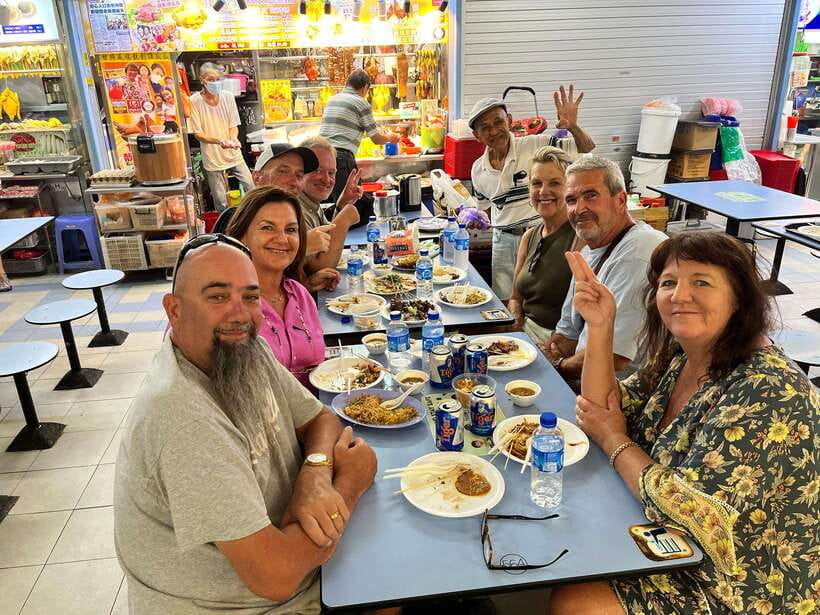
Little India gives the tour a different rhythm. The route includes a wet and dry produce market with seafood, meat, fruit, vegetables and spices. These stalls show the ingredients before they reach the plate. For anyone interested in food, that connection is worth more than a quick stop at a restaurant.
You also visit an Indian clothing market and other street stalls. Clothing, spices and produce help show the neighborhood as a working commercial district rather than a themed attraction. The range of shops gives you a better sense of how Indian community life is expressed through everyday business.
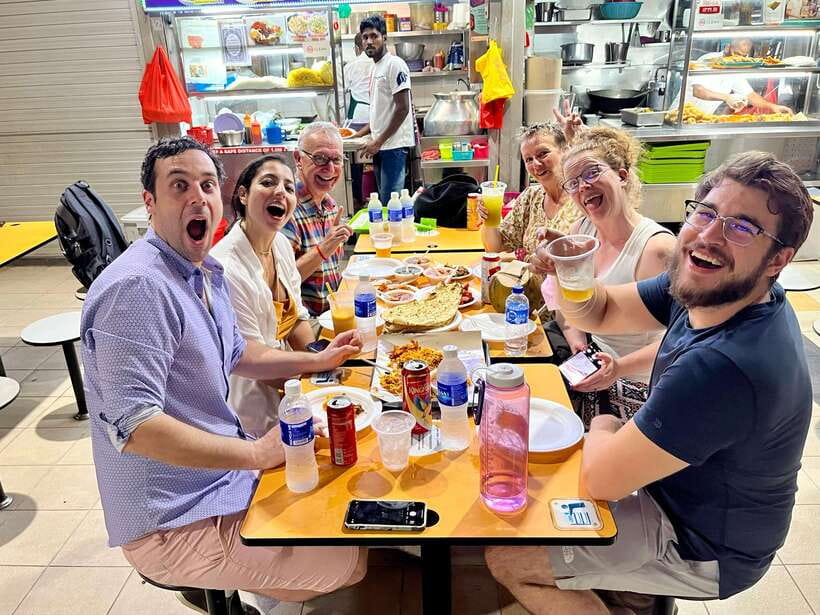
The food stop here includes a family eatery serving local Indian and Malay food and drink. The tour also lists beer, coffee, tea, local snacks and a meal in this part of the day. You should expect a broad selection rather than one large restaurant course.
The amount of food is a real feature. Several people who joined the tour found there was no need for breakfast beforehand, and one described the food as plentiful from start to finish. I would still avoid arriving completely empty if you are sensitive to rich food or large portions. The better plan is a light breakfast and comfortable clothing.
Gerry can explain the relationship between what you see in the market and what you eat at the family eatery. That makes the stop more useful than a food tasting without context. You learn to recognize the role of spice stalls, fresh produce and specialist vendors in the district.
Kampong Glam: Haji Lane, Arab Street and Dessert
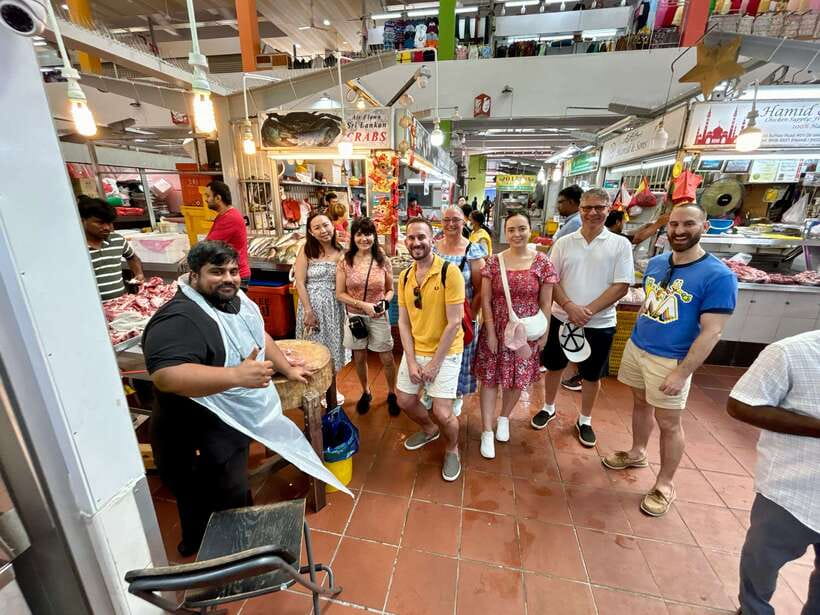
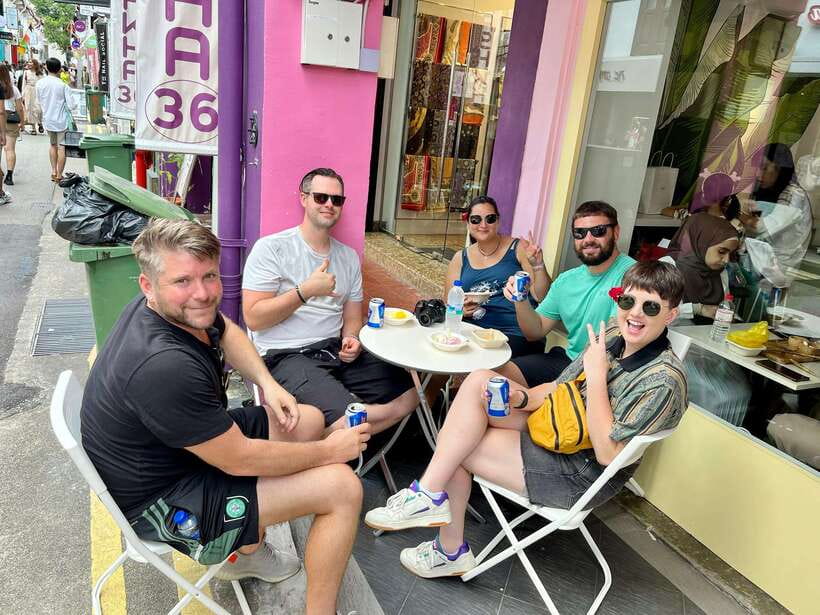
The second short public transport journey brings you to Kampong Glam, the Malay quarter. This final neighborhood has a more visual finish, with Haji Lane, colorful graffiti walls and textile shops along Arab Street.
Haji Lane is known for its lively street scene and strong colors. The graffiti walls make this section particularly good for photographs, but the tour does not stop at modern decoration. Gerry introduces the area’s older Malay and Arab connections and explains the place of Singapore’s first Sultan Mosque.
The textile shops of Arab Street add another layer. Fabrics and clothing help show the commercial identity of the district, while the mosque provides a clear link to the area’s Muslim history.
Dessert comes in an old shophouse accommodation once used by Muslim pilgrims during the 19th century. That setting gives the final food stop a strong sense of place. You are not just eating something sweet in a modern café. You are hearing how an older building served people moving through the region.
One point to keep in mind is that Kampong Glam is mainly the dessert portion of the tour. If you expect another full savory meal here, you may be disappointed. The sweet finish works well after a food-heavy day, but it is worth knowing that the final quarter is lighter on food than Little India.
More food and history walks in Singapore:
- Amsterdam Food and Cultural Tour with Tastings
★ 5.0 · 4,315 reviews - Barcelona: Tapas Walking Tour with Food, Wine, and History
★ 4.8 · 4,261 reviews - Sevilla Food Tour: Tapas, Wine, History & Traditions
★ 5.0 · 3,468 reviews - Madrid Tapas & Taverns Small Group Food & History Tour
★ 5.0 · 2,664 reviews
How the Food and History Fit Together
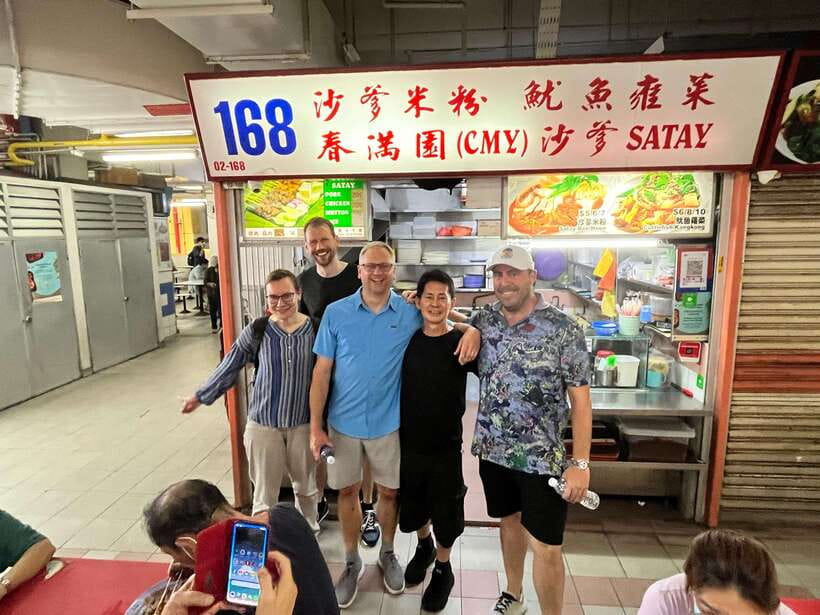
The best idea behind this experience is that the food is not treated as a separate activity. Markets show ingredients. Hawker centres show prepared food sold to the public. Family eateries show how recipes and businesses continue through local communities.
Some food and drink are listed in the Michelin Guide, which gives you a chance to try recognized local specialties without paying for a formal fine-dining meal. The tour also includes beer, coffee, tea, regional food, snacks and dessert. The exact dishes can vary, so you should think of the experience as a broad tasting day rather than a fixed menu.
The tour also supports small businesses. You eat at hawker centres, family eateries and local stalls operated by people who work directly in the neighborhoods. That is important in a city where rapid development can make older forms of trade harder to maintain.
The food is generous enough that you should plan the rest of your day carefully. Do not schedule another major meal immediately afterward. Comfortable shoes matter just as much as appetite, since you will walk about 6,000 steps across the three areas.
Gerry’s Storytelling and the Group Atmosphere
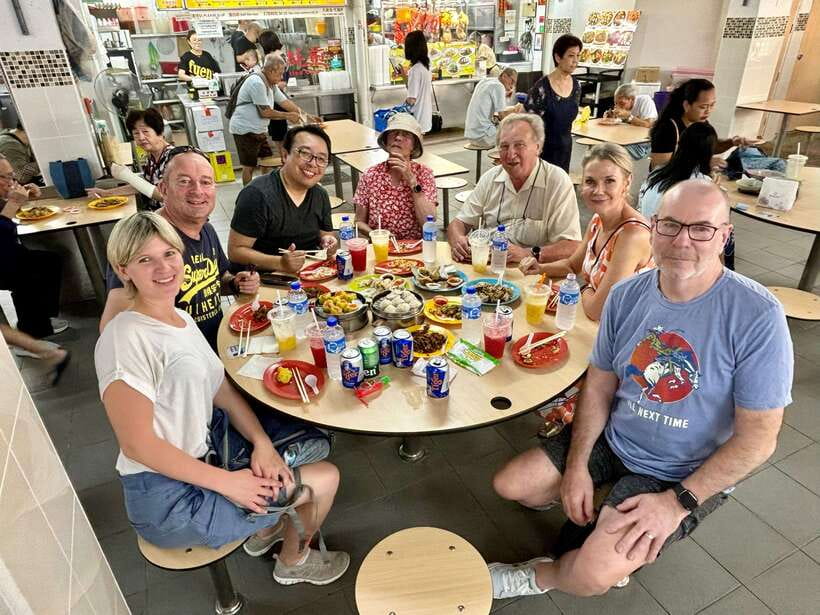
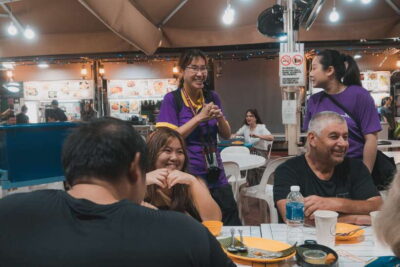
The guide can make or break a food-and-history tour, and Gerry is clearly the central personality here. His style combines historical explanation, humor, personal stories and old pictures. He also welcomes questions and can help connect the separate districts into one larger story.
The strongest praise for him centers on his warmth, humor and ability to keep the day moving. The experience is meant to feel informal, closer to exploring with a well-informed local than listening to a formal lecture. That approach should suit you if you enjoy asking questions and learning through conversation.
His effort with transport and pickup is also useful. Hotel pickup and drop-off are available in city areas, depending on location. You can also meet at the first stop, in Chinatown or Little India, or at the nearest MRT station. Since the exact arrangement depends on your booking, confirm the meeting point before the day begins.
With no more than eight people, the group should remain manageable at markets and food stalls. You will have a better chance to hear the guide, share dishes and ask about unfamiliar ingredients. A larger group might cover the same ground, but it would be harder to keep the experience personal.
Price, Timing and Practical Value
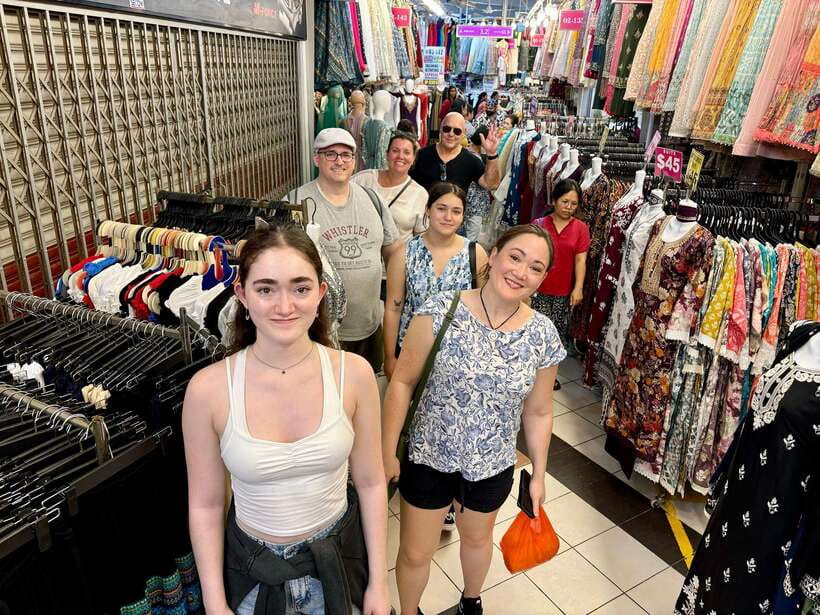
At $148 per person, this is not a cheap street-food snack tour. It is a full six-hour experience with food, drinks, public transport tickets, a small group and a guide across three major districts.
The value improves if you would otherwise book separate food and sightseeing activities. You receive tastings in several settings, transport between neighborhoods, cultural explanation and local orientation in one day. Food and beer are included, so the advertised price is closer to the final cost than a tour that charges for every tasting separately.
The tour runs for six hours, with roughly one hour in Chinatown, one hour in Little India, about an hour and a half in Kampong Glam, and travel time between areas. The stated itinerary does not account for every minute, so allow the day to remain open rather than trying to fit another timed attraction around it.
You should wear comfortable shoes and loose, comfortable clothes. Large bags, oversize luggage, strollers and mobility equipment are not allowed. The experience is not suitable for people with mobility impairments, back problems, vertigo, respiratory issues or a low level of fitness. It is also not designed for vegans or people with gluten intolerance, and babies under one year are not suitable.
Cancellation is flexible up to 24 hours before the experience for a full refund, and you can reserve now and pay later. Those terms are useful if your Singapore schedule is still shifting.
Who Should Book This Experience?
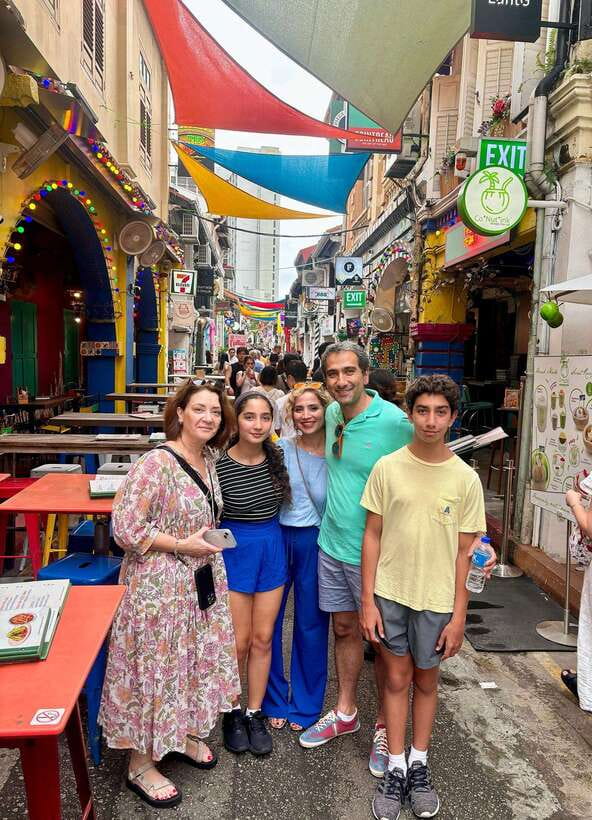
I would recommend it most strongly to a first-time visitor who wants food and history together. It is also a good fit if you are curious about how Chinese, Indian and Malay communities shaped Singapore and want to see more than the main landmarks.
Families with older children can enjoy it too. A 15-year-old joined one outing and had a very positive day, which makes sense: the mix of food, markets, transport and stories offers more variety than a long museum visit.
Food lovers should arrive ready to try several types of local food and drink. People who prefer strict dietary control should choose another activity, since vegan and gluten-free needs are specifically excluded.
You should also be comfortable walking and eating over a long stretch of the day. The tour is not a good choice if you need frequent rest, use a non-folding wheelchair or stroller, or want a slow sightseeing schedule with plenty of empty time.
Should You Book It?
Book this tour if you want Singapore explained through its neighborhoods, food stalls and working markets rather than through landmarks alone. Gerry’s family connection, old photographs and easy humor give the history a personal scale, while the small group keeps the day relaxed.
Skip it if you want a short tasting session, a fixed restaurant menu or a fully accessible route. Also think twice if dessert in Kampong Glam feels too light after a food-filled day.
For most visitors who can manage the walking and have broad dietary preferences, the $148 cost is reasonable because it covers a full day of food, transport, guiding and local context. Come hungry, wear good shoes, and leave the evening free for a lighter meal.
FAQ
How long does the tour last?
The experience lasts six hours.
Which neighborhoods does the tour visit?
It visits Chinatown, Little India and Kampong Glam, representing Chinese, Indian and Malay quarters.
Who leads the tour?
The guide is Gerry, a Singapore-born Chinese Peranakan native. His great grandparents arrived from Fujian, China, in 1910.
How large is the group?
The small group is limited to eight participants.
Is food included in the price?
Yes. Food and drink are included, including beer, local snacks, coffee, tea, dessert and food from hawker centres and family eateries.
Are public transport tickets included?
Yes. Public transportation tickets for travel between the three quarters are included.
Is hotel pickup available?
Hotel pickup and drop-off are included for some city-area locations. You can also meet at the first stop in Chinatown or Little India, or at the nearest MRT station.
What should I wear or bring?
Bring comfortable shoes and wear comfortable clothes. The tour involves about 6,000 steps.
Is the tour suitable for people with dietary restrictions?
The experience is not suitable for vegans or people with gluten intolerance.
Can I cancel the booking?
You can cancel up to 24 hours in advance for a full refund. The activity also offers reserve-now, pay-later booking.
Just added around Singapore
- Singapore: Local Street Food Tasting Tour★ 4.8 · 36 reviews
- Singapore: Private Food Tour – 10 Tastings with Locals★ 4.7 · 194 reviews
- Singapore: Local Hawker Food Tour with Tastings★ 4.7 · 181 reviews
- Singapore: Guided Street Food Tour at Night★ 4.5 · 393 reviews
- Singapore: Hawker Culture Food Tour and Sightseeing★ 4.8 · 23 reviews
- Singapore: Foodie Experience Guided Tour with 5 Tastings★ 4.7 · 291 reviews
- Singapore: Food and Bike Tour: Katong District★ 4.9 · 38 reviews
- Singapore: Little India Hawker Street Food Tour★ 4.8 · 27 reviews
Food Tours in Singapore, compared.
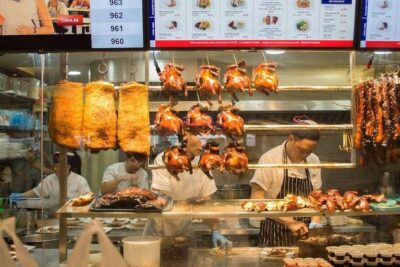
Small Group: Michelin and Local Hawker Food Tour with 9 tastings
Read our review →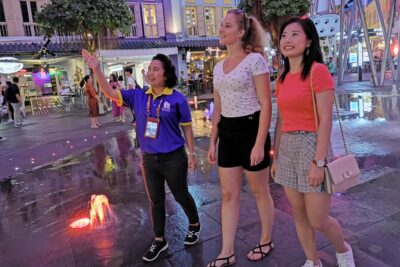
Small Group: Singapore Street Food & Night Tour with 9 tastings
Read our review →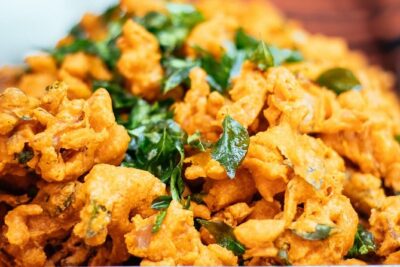
The Award-Winning PRIVATE Food Tour: 10 Tastings of 3 Cultures
Read our review →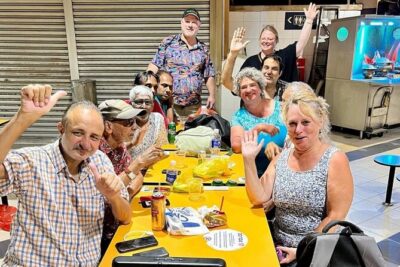
Chinese, Indian & Arabic Quarters, Culture & Food Tour
Read our review →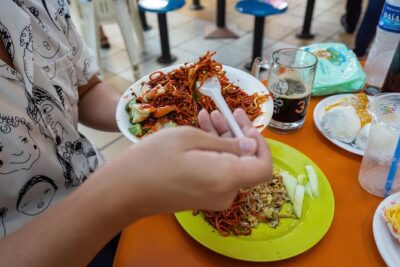
Browse the lists this tour appears in