
REVIEW · SINGAPORE
Singapore: Foodie Experience Guided Tour with 5 Tastings
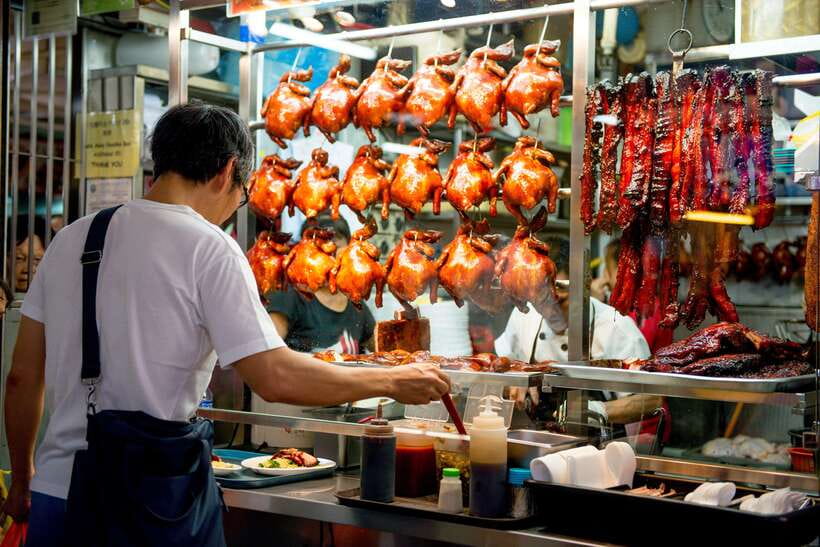
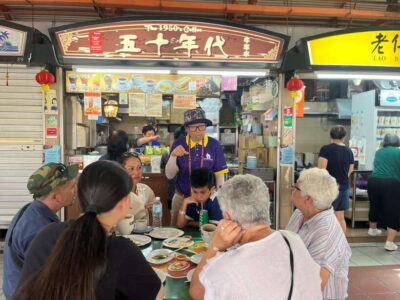
Singapore’s Chinatown food walk is less about sitting down for one big meal and more about learning how to eat your way through a hawker center. You begin with charcoal-grilled bakkwa, pass fruit and seafood stalls, then settle into Chinatown Complex for local favorites and Singapore’s famous Michelin-starred soya sauce chicken rice.
I like the wide range of tastes, from sweet and sour fruit to salty noodles, spicy sauces, coffee, and dessert. I also like the guides’ practical touch. Kim, Grace, Sam, Hui, and others are praised for explaining how to order, why dishes matter, and where locals eat. The main consideration is that five advertised tastings may become ten or more small bites, so this is not the night for a light dinner.
Key things to know
- Bakkwa starts the evening: Try Singapore’s sweet-savory charcoal-grilled meat at Bee Cheng Hiang on Pagoda Street.
- Chinatown Complex is the food center: Most of the substantial eating happens inside this large hawker market.
- The Michelin-starred dish is included: Soya sauce chicken rice is the featured main course, not chili crab.
- Expect more than five tastes: The exact selection can vary, and several guides have added extra snacks, drinks, or samples.
- The guides make the difference: Kim, Grace, Sam, Missy, Hui, and Joe are praised for food explanations and Chinatown stories.
- The timing suits an arrival evening: Meet at 5 pm and finish back at 69 Pagoda Street after about three hours.
A food walk that teaches you how Singapore eats
At $63 per person, this is not the cheapest way to buy dinner in Singapore. It can be good value if you want dinner, orientation, and local guidance in one outing. Five included dishes are promised, bottled water is supplied, and the tour often includes extra tastes depending on the group, guide, and what is available that evening.
I see the main value in the translation work. A hawker center can look easy from the outside, but menus, stall queues, unfamiliar names, and shared tables can slow down a first visit. A good guide helps you understand what you are eating and gives you enough confidence to return on your own.
That practical lesson comes through strongly in the experience. Guides show you how to order coffee like a local, explain how hawker stalls work, and point out places you might not choose without help. You leave with more than a full stomach. You have a better idea of what to order for the rest of your stay.
The three-hour schedule begins at 5 pm, a useful time for avoiding the heat of the afternoon. Singapore’s streets are covered in many places, and the tour runs in all weather. Still, you should expect outdoor walking in a warm, humid city. Bring comfortable shoes and keep some space in your appetite.
A few more food tours around Singapore worth comparing
- Singapore: Guided Street Food Tour at Night
★ 4.5 · 393 reviews - Dubai: Old Town, Souks, Street Food, Guided Tour & Abra Ride
★ 4.9 · 7,170 reviews - Hanoi: Guided Food Tour with Train Street Visit
★ 4.9 · 6,239 reviews
Meeting at 69 Pagoda Street
The meeting point is Bee Cheng Hiang at 69 Pagoda Street, Singapore 059228. Look for a guide wearing a Discova black T-shirt. The tour ends at the same address, which makes the outing simple to fit around other plans.
One useful caution: one person had trouble finding the meeting point and felt the directions could have been clearer. Give yourself extra time, especially if this is your first visit to Chinatown. The exact address matters, and you should not assume the guide will be waiting at a nearby station entrance.
Pagoda Street is a fitting place to begin. It puts you in the middle of Chinatown’s shops, food counters, and evening activity from the first minute. The opening stop is not a long lecture or a formal restaurant meal. It is a quick taste that gets you used to the tour’s rhythm.
Bakkwa and the first taste of Chinatown
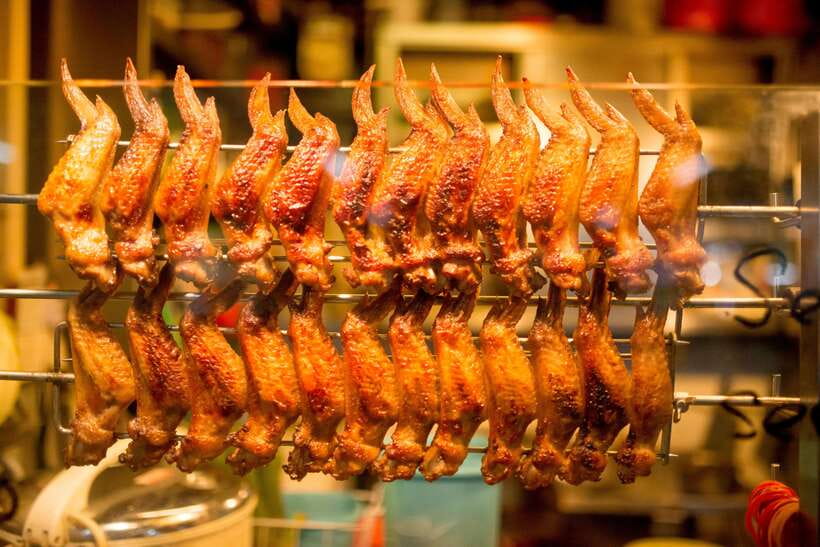
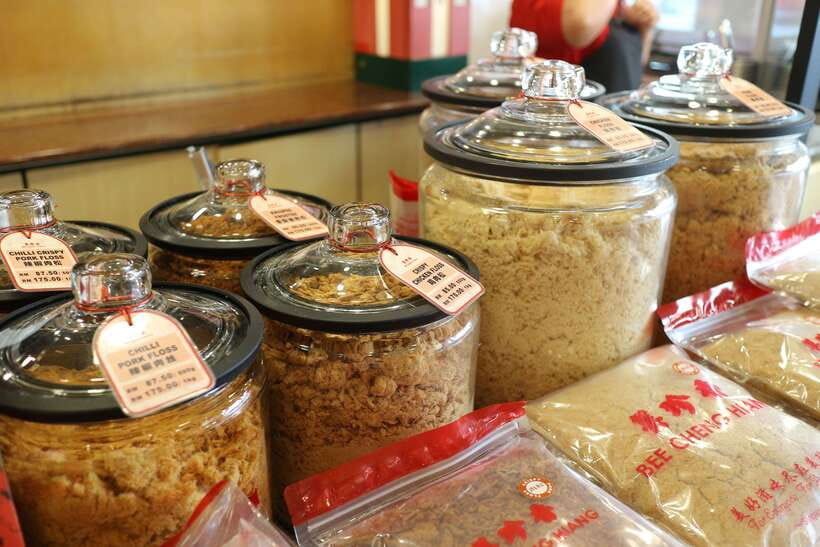
The first food is bakkwa, a tender, jerky-like meat slow-grilled over charcoal. It is sweet, savory, smoky, and more substantial than the word jerky might suggest. You taste it at the Bee Cheng Hiang shop, the same place used as the meeting point.
This is a smart opening dish because it gives you an immediate sense of Singapore’s fondness for strong flavors and carefully prepared meat. Your guide can explain the food as you eat, rather than leaving you to guess what is on the counter.
From there, the walk moves through Chinatown’s stalls and shops. You may see tropical fruit, fresh seafood, and everyday market goods. Durian is part of the food conversation, and some groups are encouraged to try it. If you have never tasted durian, this may be your chance to decide if its famous smell is matched by its custardy flavor.
The fruit stop also gives the tour some breathing room. You are not simply moving from one full plate to another. You are seeing the ordinary food trade that supports the neighborhood, with the guide helping you connect what is sold to local eating habits.
Chinatown Complex and the hawker center lesson
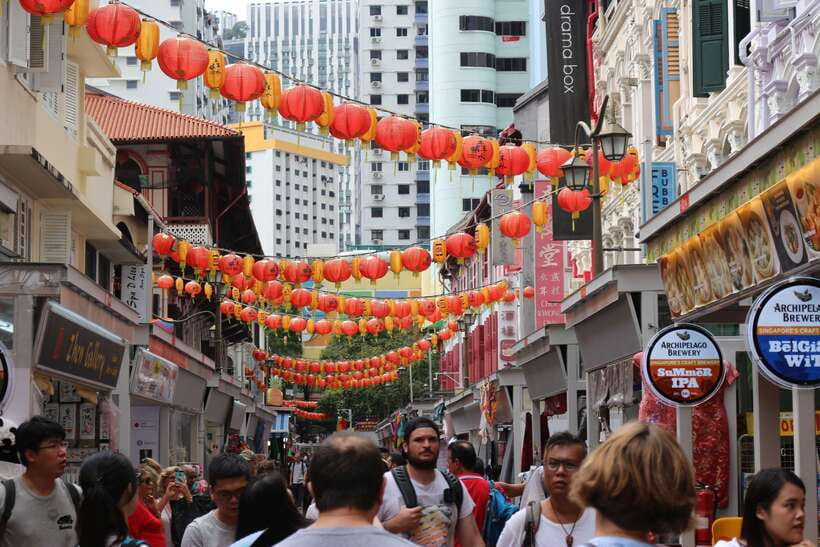
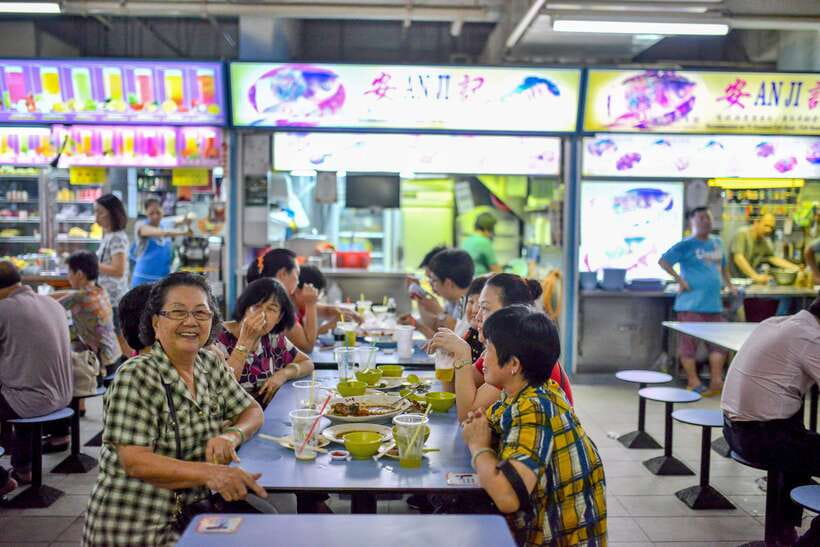
The main part of the experience takes place at Chinatown Complex. This is where you encounter the practical side of Singapore’s food culture: many stalls, many specialties, and plenty of decisions.
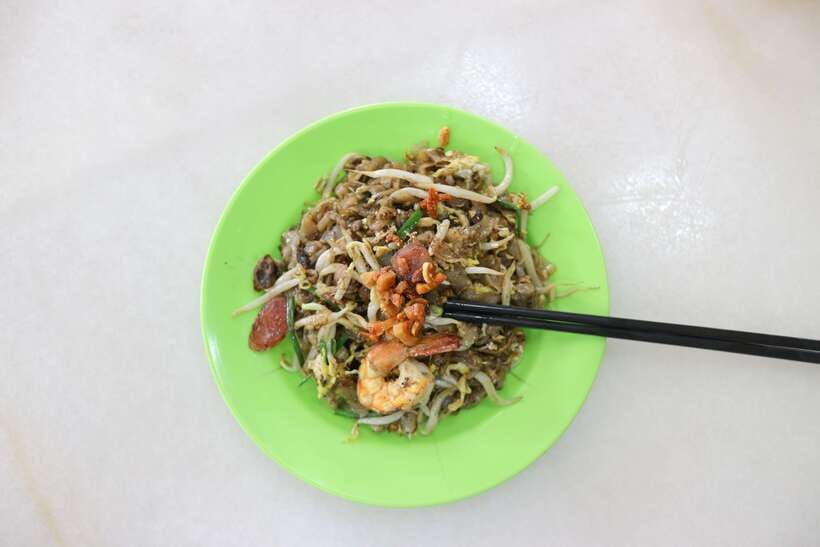
Your guide leads the group through the choices and selects the included food. The exact dishes can change, but the plan includes either savory carrot cake or char kway teow as an early hawker taste. Singaporean carrot cake is not a dessert. It is a soft, savory dish made with rice cake, often cooked with egg and other salty ingredients.
Char kway teow is a broad, comforting noodle dish with simple ingredients and a strong wok flavor. It can be rich, salty, and filling, so the portion size matters. If you are tasting many dishes, a shared serving is more useful than a large individual plate.
This is also the point where the guide’s role becomes especially helpful. You learn that hawker food is not one single cuisine. Chinese, Malay, Indian, and other traditions have shaped what you find in Singapore, and Chinatown offers several of those influences close together.
Some people describe the food as a little rushed because there is so much to try. That is a fair tradeoff. A three-hour tour covering multiple stops cannot give every dish the leisurely pace of a restaurant meal. The upside is variety. The downside is that you may want more time with a favorite dish.
Same city, a completely different plate:
- Small Group: Michelin and Local Hawker Food Tour with 9 tastings
★ 5.0 · 1,890 reviews - Small Group: Singapore Street Food & Night Tour with 9 tastings
★ 5.0 · 1,240 reviews - The Award-Winning PRIVATE Food Tour: 10 Tastings of 3 Cultures
★ 4.5 · 1,017 reviews - Singapore: Chinese, Indian & Arabic Quarters, Culture & Food Tour
★ 5.0 · 789 reviews
Singapore’s Michelin-starred chicken rice
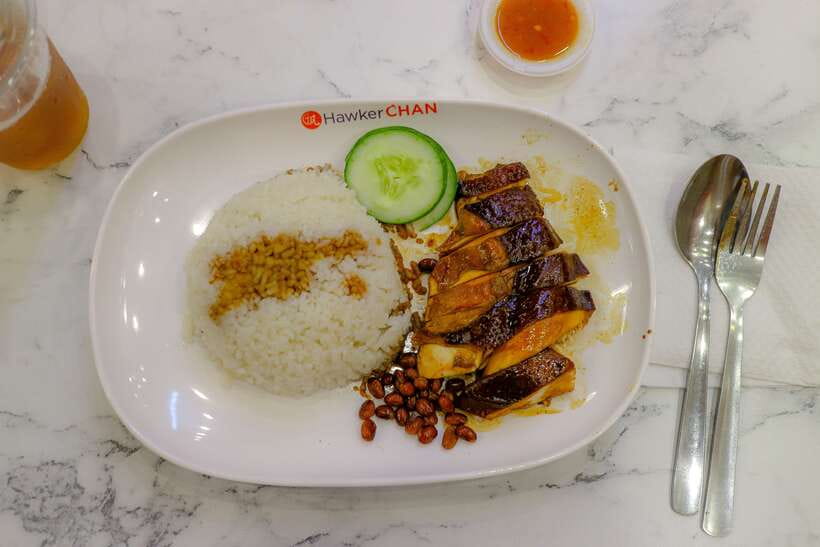
The featured main course is soya sauce chicken rice from Singapore’s first Michelin-starred hawker stall. You get tender marinated chicken with white rice and peanuts. It is a modest-looking plate, but that is part of the lesson. Singapore’s celebrated food is often served in a simple hawker setting rather than a polished dining room.
The dish is a useful introduction to the city’s idea of comfort food. The chicken is seasoned through the marinade, the rice gives it a plain base, and the peanuts add crunch. It is filling without being difficult to understand, which makes it a good centerpiece for a first food tour.
Do not confuse this with chili crab. Chili crab is not included, so you should plan and budget separately if that is high on your Singapore list. The tour focuses on hawker dishes that are easier to sample in a group.
The timing of this course matters. Several people found they had already eaten quite a bit before reaching the main dish. I would treat the early tastes as part of dinner, not as appetizers before a separate meal. Save room from the beginning.
Drinks, sweets, and the final stop
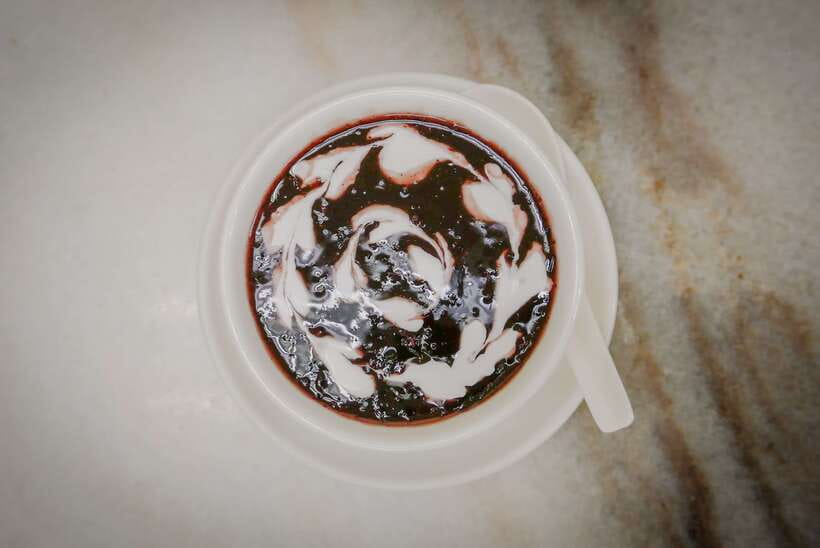
The final part of the tour is dessert at a popular sweet shop. The exact dessert is not specified, so you should expect a local specialty chosen by the guide rather than one guaranteed item.
That uncertainty is not necessarily a weakness. It allows the guide to respond to the group and what is available. It does mean you should not book this experience to try one particular dessert. Book it for a changing selection of Singaporean food.
Drinks may also appear along the way. One especially useful detail is learning how to order coffee in a local style. That small bit of guidance can make your later hawker visits easier, since Singapore’s coffee vocabulary is not always obvious to first-time visitors.
The sweet finish balances the salty and savory dishes. By this stage, you may be full. Several groups ended up trying far more than the five advertised dishes, including extra snacks, drinks, and samples. Take small portions when offered and do not feel obliged to finish every taste if you are already satisfied.
What the guides add
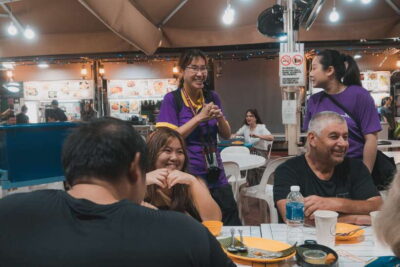
The strongest part of this tour is the human element. Kim is repeatedly praised for being warm, careful, and generous with explanations. Grace is noted for her food knowledge, local stories, humor, and attention to the group. Sam is praised for making people comfortable while sharing cultural details. Hui and Missy also receive strong praise for clear explanations and a genuine interest in Chinatown.
These are not just names to request with certainty, since guide assignments can change. They do show the type of hosting you can expect: food explanations mixed with neighborhood history, help with ordering, and encouragement to try something unfamiliar.
One guide came prepared with tissues and wet wipes, a small but useful touch when you are handling sauces, fruit, and finger food. Another guide took photos and made sure the group knew how to get home. Those details matter on a food walk, especially for families or anyone nervous about navigating a new city at night.
Small groups and private departures are available. Group size can shape the evening. In a tiny group, you may get more personal suggestions and extra tastes. A larger group can make sharing easier, but it may take longer to gather around a stall. One reported group had eleven people, while other outings became private experiences because no one else booked.
Who will enjoy this Chinatown evening?
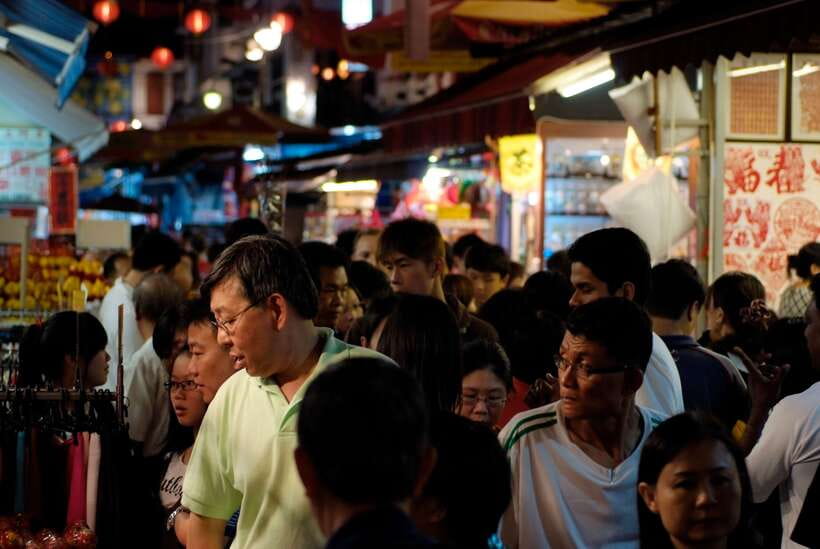
I would put this near the beginning of a Singapore trip. It gives you a working map of Chinatown and helps you make better choices later. If you are unsure about hawker food, this is a gentle way to try it with someone who can explain each dish.
It suits:
- First-time visitors who want an introduction to Singaporean food
- People who prefer tasting several dishes over ordering one large meal
- Families with older children who enjoy trying new foods
- Solo visitors who want company and help ordering
- Food lovers interested in the stories behind everyday dishes
- Anyone who wants an evening activity that combines food and walking
It may not suit someone who needs a fixed menu, a quiet seated dinner, or a specific dish such as chili crab. It is also not suitable for wheelchair users, according to the activity information. You should be comfortable walking through busy food areas and standing at some stops.
Picky eaters may still have a good time, but they should be open to unfamiliar flavors. Durian, strong sauces, seafood, and dishes with unusual textures may appear. The guide can explain what you are trying, but the tour is designed around discovery rather than a narrow safe-food menu.
Is $63 a fair price?
The price makes the most sense when you count the guide and the instruction, not just the food. You could spend less by visiting Chinatown Complex alone. You would not get the same help identifying dishes, learning ordering customs, or understanding why certain foods matter.
Five tastings are included, and the experience often expands beyond that number. Several outings included around ten or more items, while one group tried as many as sixteen dishes. You should not treat those extra tastes as guaranteed, but they improve the potential value.
The food is also spread across an evening rather than delivered all at once. That makes the $63 easier to justify for someone who wants a planned introduction. If you already know Singapore’s hawker centers and are comfortable choosing stalls, you may prefer to spend the money directly on more meals.
Free cancellation up to 24 hours before the tour and a reserve-now, pay-later option add flexibility. The tour is in English, and bottled water is included. Hotel pickup and drop-off are not included, so you must reach Pagoda Street yourself.
Practical tips for a better evening
Eat only a light snack beforehand, or arrive hungry. The tour can include substantially more than the basic five tastings.
Wear shoes suitable for three hours of walking. Singapore’s covered walkways help with sun and rain, but they do not turn the outing into an indoor restaurant visit.
Keep your schedule loose after the tour. Although the route is described as nicely paced, one person found the evening a little rushed because of the number of foods. You may want time to stop for photos or return to a stall you liked.
Ask questions. The guides are especially useful when you want to know how a dish is made, how to order coffee, or which foods to try later. This is not just a meal delivery service.
If you have dietary restrictions, ask before booking. The supplied details do not specify vegetarian, allergy, halal, or other special-diet arrangements, so you should not assume substitutions are available.
Should you book it?
I would book this tour if you are visiting Singapore for the first time and want a confident start with hawker food. The combination of bakkwa, Chinatown market stalls, savory noodles or carrot cake, Michelin-starred chicken rice, drinks, and dessert gives you a broad first look at the city’s eating culture.
I would skip it if you want chili crab, a fixed menu, a slow restaurant dinner, or complete control over every ingredient. For most curious eaters, though, the $63 price is reasonable because you are paying for both the food and the guide who makes the food easier to understand. Book it early in your stay, arrive at 69 Pagoda Street with room to eat, and let the evening teach you what to order next.
FAQ
Where does the tour begin?
The tour begins at Bee Cheng Hiang Shop, 69 Pagoda Street, Singapore 059228.
Where does the tour finish?
The tour returns to 69 Pagoda Street.
How long does the tour last?
The experience lasts about three hours and begins at 5 pm, subject to availability.
What food is included?
Five food tastings are included. The planned foods include bakkwa, a savory hawker dish such as carrot cake or char kway teow, soya sauce chicken rice, and dessert. Extra tastes may be offered.
Is chili crab included?
No. Chili crab is specifically excluded from the tour.
Is the Michelin-starred dish included?
Yes. The tour includes soya sauce chicken rice from Singapore’s first Michelin-starred hawker stall.
What language is the tour conducted in?
The live tour guide speaks English.
Is hotel pickup included?
No. Hotel pickup and drop-off are not included. You must meet the guide at 69 Pagoda Street.
Can I cancel the booking?
You can cancel up to 24 hours in advance for a full refund. A reserve-now, pay-later option is also available.
Just added around Singapore
- Street Food, Cultural & Historical Tour of 3 Ethnic Quarters★ 5.0 · 23 reviews
- Singapore: Local Street Food Tasting Tour★ 4.8 · 36 reviews
- Singapore: Private Food Tour – 10 Tastings with Locals★ 4.7 · 194 reviews
- Singapore: Local Hawker Food Tour with Tastings★ 4.7 · 181 reviews
- Singapore: Guided Street Food Tour at Night★ 4.5 · 393 reviews
- Singapore: Hawker Culture Food Tour and Sightseeing★ 4.8 · 23 reviews
- Singapore: Food and Bike Tour: Katong District★ 4.9 · 38 reviews
- Singapore: Little India Hawker Street Food Tour★ 4.8 · 27 reviews
Food Tours in Singapore, compared.
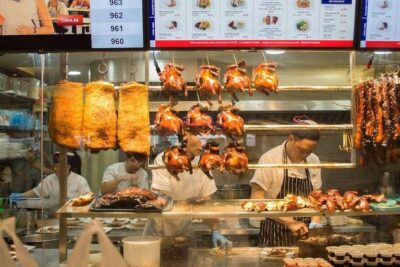
Small Group: Michelin and Local Hawker Food Tour with 9 tastings
Read our review →
Small Group: Singapore Street Food & Night Tour with 9 tastings
Read our review →
The Award-Winning PRIVATE Food Tour: 10 Tastings of 3 Cultures
Read our review →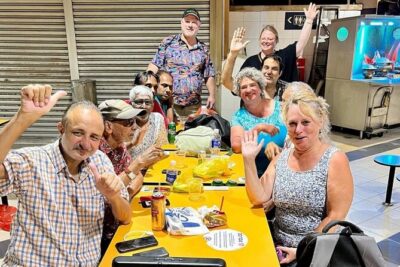
Chinese, Indian & Arabic Quarters, Culture & Food Tour
Read our review →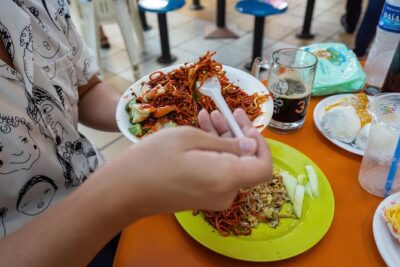
Browse the lists this tour appears in