
REVIEW · SINGAPORE
Singapore: UNESCO Street Food & Cultural Experience
Singapore’s food culture makes the city easiest to understand one plate at a time. This small-group tour of up to eight people links Chinatown, Kampong Gelam, and Little India with generous tastings, local stories, and visits to UNESCO-recognized hawker centers. Host Gerry adds personal context and shows you how to use Singapore’s public transport.
I like the way the tour treats food as a doorway into Chinese, Malay, Indian, and Indonesian influences rather than as a string of restaurant stops. I also like the practical touch of using the MRT and buses during the morning, so you learn how to get around instead of simply watching the city through a vehicle window.
The main drawback is dietary flexibility. The experience is not recommended for vegetarians, people with food allergies, or those with major dietary restrictions, and the walking and transit make it a poor fit for prams or mobility devices. Come hungry, too. The portions can be substantial.
Key points to know before booking
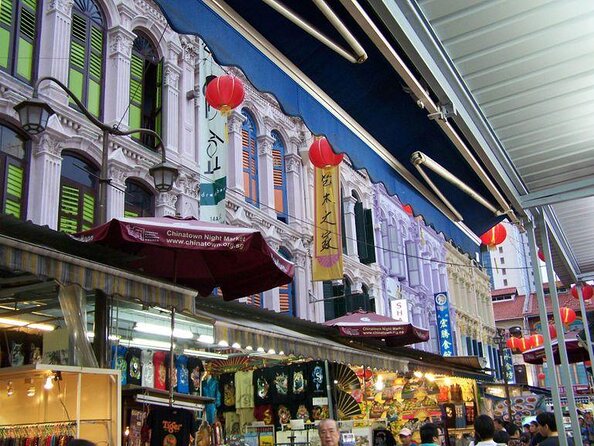
- Three neighborhoods in one morning: Explore Chinatown, Kampong Gelam, and Little India through food, architecture, stories, and daily life.
- A real hawker-center focus: Tastings take place at local stalls, including UNESCO-inscribed hawker centers in Chinatown and Little India.
- Gerry is the central personality: He combines Singapore history, personal stories, food knowledge, and warm attention to the group.
- Come very hungry: The food is described as generous, with enough variety that you may not finish every serving.
- Transit is part of the lesson: MRT and public bus rides, with guidance, help you understand Singapore beyond the sightseeing route.
- Best for flexible eaters: The tour is not recommended for vegetarians, people with food allergies, or visitors with serious dietary limits.
Why this food tour is useful on a first Singapore visit
Singapore can feel polished and easy to navigate, yet its cultural layers are not always obvious from the main sights. This tour gives you a working introduction to the city through three distinct neighborhoods and the food traditions connected to them.
The focus is not only on tasting. Gerry explains how Singapore developed as a meeting point for Chinese, Malay, Indian, and Indonesian influences, then connects those influences to the dishes in front of you. That makes the food easier to remember. You are not just eating a plate at a crowded food hall. You are learning why the city eats the way it does.
I would book this early in a Singapore stay. The tour gives you ideas for later meals, and you may want to return to some of the hawker centers on your own. It also helps you learn the MRT and bus system at the beginning of your trip, which can make the rest of your visit simpler.
The advertised price is $161.62 per person. That is not a bargain-priced hawker meal, but the price covers five and a half hours, a host, many food tastings, nonalcoholic drinks, beer, bottled water, public transport guidance, and possible hotel transfers. For a visitor with only a day or two in Singapore, the value comes from combining a food tour, neighborhood walk, cultural introduction, and transport lesson in one outing.
More street food nights in the world:
- Dubai: Old Town, Creek, Museums, Souks, & Street Food Tour
★ 4.8 · 10,816 reviews - Ho Chi Minh City Street Food Tour & Sightseeing By Motorbike
★ 5.0 · 9,413 reviews - Medellin: Comuna 13 Graffiti Tour, Cable Car & Street Food
★ 4.8 · 9,046 reviews
Starting in Chinatown with food at the center
The Chinatown portion lasts about 1 hour and 10 minutes. It is more than a quick photo stop. You walk through the neighborhood while Gerry explains how its past and present fit together, then eat at local stalls connected to Singapore’s hawker tradition.
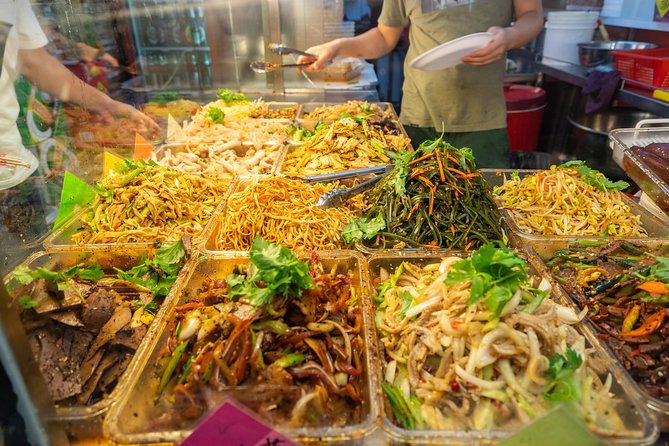
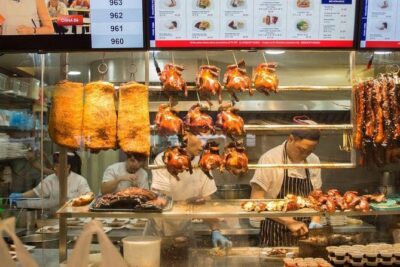
The Chinatown hawker center is a major food moment. The available information does not promise a fixed dish list, so you should expect the exact menu to depend on the day and the stalls open. The useful part is the range: the tastings draw from Chinese, Malay, and Indonesian cooking, giving you several ways to compare flavors and techniques.
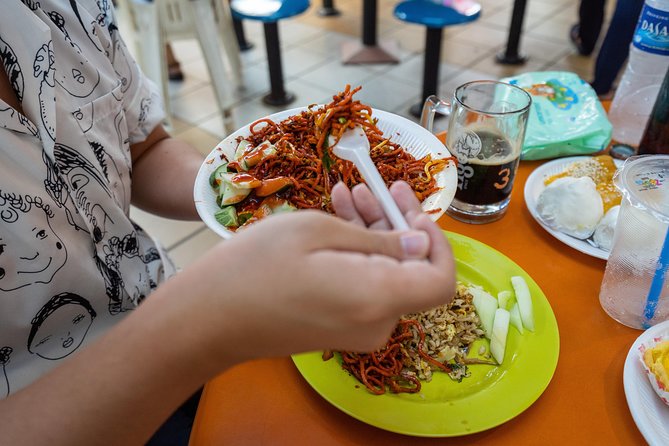
One practical strength is the amount of food. This is not a token sample followed by a restaurant bill. The portions can be large enough that you may struggle to finish everything. Plan to skip breakfast or eat very lightly before the 9 a.m. start.
Chinatown is also where the tour’s food-and-culture approach makes the most sense. The stalls are part of ordinary local life, not a dining room designed only for sightseeing. You can watch the food service, see how a hawker center works, and learn how to return later without a guide.
Crossing to Kampong Gelam by public transport
Kampong Gelam, also spelled Kampong Glam, forms the second neighborhood. The tour may use the MRT and public buses between areas, with Gerry explaining how Singapore’s system works as you go.
That transit time matters. Many guided city tours keep you inside a private vehicle, which is convenient but teaches you little about moving around independently. Here, you get a practical lesson in using the city’s trains and buses. Gerry’s guidance is especially useful if Singapore is an early stop on a longer trip and you want to feel comfortable exploring on your own.
Kampong Gelam adds a different cultural setting from Chinatown. The tour uses the walk to connect local customs, neighborhood change, and food traditions. You should expect a balance of walking, sitting, transit, and tasting rather than five straight hours on your feet.
The public transport element does create a small trade-off. You have less control over the pace than you would on a private tour, and the morning includes transfers as well as food stops. Still, the arrangement makes the experience feel more like a day in Singapore than a sealed sightseeing circuit.
Little India and the final tasting stops
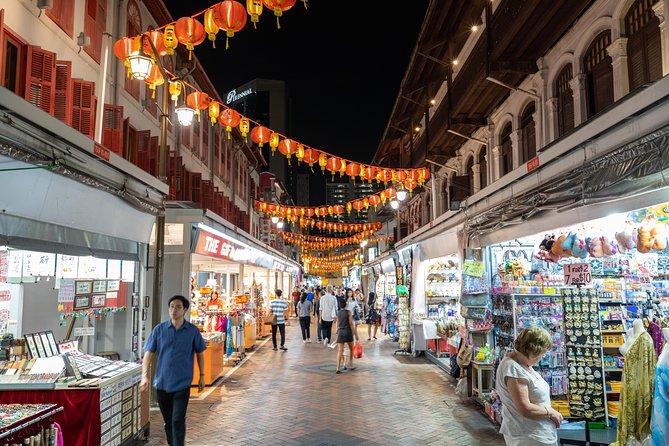
The Little India section also lasts about 1 hour and 10 minutes. Here the tour adds another set of streets, food customs, and local stories to the picture.
Food at the Little India hawker center is part of the UNESCO-related hawker experience described for the tour. Again, the precise dishes can vary, but the purpose is clear: you sample several local foods while learning how Singapore’s Indian community fits into the city’s wider culture.
The pacing is one of the tour’s better features. Gerry balances walking with time to sit and eat, which helps during a five-and-a-half-hour morning. You get time to talk, ask questions, and enjoy the food instead of rushing from one stop to the next.
Little India is the final neighborhood listed, but the tour is not simply a parade of ethnic labels. The best use of the time is to notice how each area contributes to Singapore’s shared identity while retaining its own food, customs, and visual character.
A few more food tours around the world worth comparing
- Reykjavik Food Walk – Local Foodie Adventure in Iceland
★ 5.0 · 18,952 reviews - Hanoi Jeep Tour: Food, Culture and Fun by Vietnam Army Jeep
★ 5.0 · 15,222 reviews - From Marrakech: Merzouga 3-Day Desert Safari with Food
★ 4.7 · 12,232 reviews - Madrid: Live Flamenco Show with Food and Drinks Options
★ 4.5 · 9,901 reviews
What Gerry adds to the experience
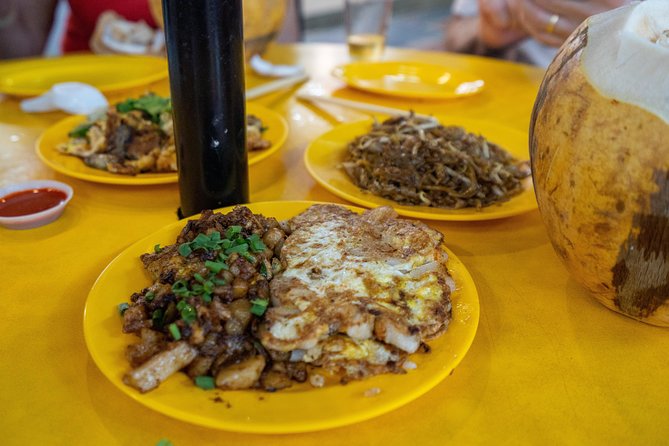
Gerry is repeatedly praised for being attentive, entertaining, and generous with his time. He is described as a Singapore native with a personal connection to the island’s past and present. His approach appears to combine photographs, stories, historical explanation, and informal conversation.
That matters because food tours can easily become a list of dishes with little context. Gerry’s role is to explain what you are eating, place it within Singapore’s cultural story, and help you connect the neighborhoods. He also has friendly relationships with local stall owners, which can make the stops feel more personal.
The tour works especially well for people who enjoy asking questions. Gerry’s attention to the group is a repeated strength, and the maximum group size of eight gives you a better chance to have an actual conversation than on a large bus tour.
The small-group limit has another benefit. If you are uncertain about a dish, transit step, or neighborhood, it is easier to ask for help. This is a social experience, but it does not have to feel anonymous.
The food, drinks, and how hungry you should be
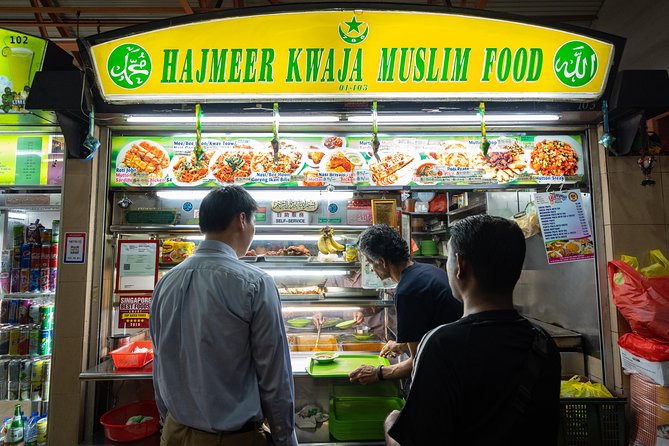
Food tasting is included, along with coffee or tea, soda, bottled water, and beer. The beer inclusion is modest, since the information specifies beer only for alcoholic drinks. Do not book this expecting a cocktail crawl or a formal restaurant meal.
Expect several dishes rather than one large sit-down lunch. The tastings are meant to show variety, and the portions may be more generous than you need. One useful touch described about the tour is that leftover food can be given to hawker-center cleaning workers rather than wasted.
The food is not presented as a menu for people with strict control over ingredients. The tour specifically warns that it is not recommended for vegetarians, people with food allergies, or people with dietary restrictions. One past booking involved food adjustments, but you should contact the provider before relying on that possibility. Ask clearly before booking, especially if cross-contact or hidden ingredients could create a health problem.
This is also not the right outing for a picky eater who wants a carefully controlled menu. It is better suited to someone who wants to try unfamiliar local dishes and is happy to let the host select much of the tasting.
Walking, group size, pickup, and timing
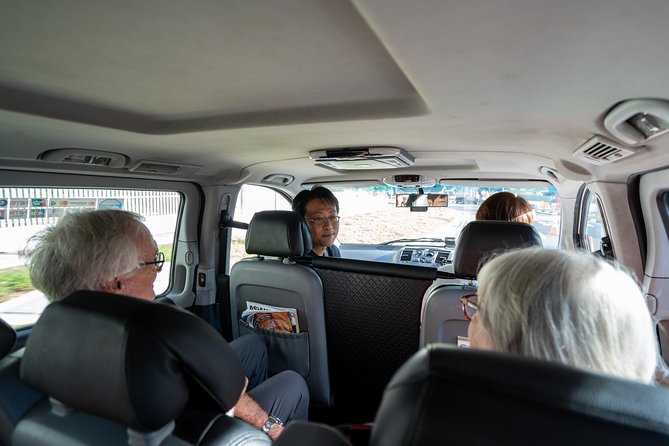
The tour begins at 9 a.m. and lasts about five hours and thirty minutes. Hotel pickup and drop-off may be available, depending on your location. Because pickup is subject to location, confirm the arrangement rather than assuming every hotel is included.
The activity ends back at the meeting point, although one past booking included a drop-off at Gardens by the Bay instead of the original hotel. Treat that as an example of possible flexibility, not as a guaranteed feature.
You need a moderate level of physical fitness. The day includes neighborhood walking, standing at food centers, and public transport. It is not recommended for people using personal mobility devices or for families with children in prams.
Children must be accompanied by an adult. The minimum booking is two people, and the maximum is eight. That makes it a good choice for couples, friends, and small families with older children, but not for a solo visitor booking alone or a large family group.
The tour’s small size also means you should not expect a private tour unless your own party fills the group. You may share the morning with other people, though the eight-person maximum keeps the setting fairly personal.
How the tour compares with doing hawker centers alone
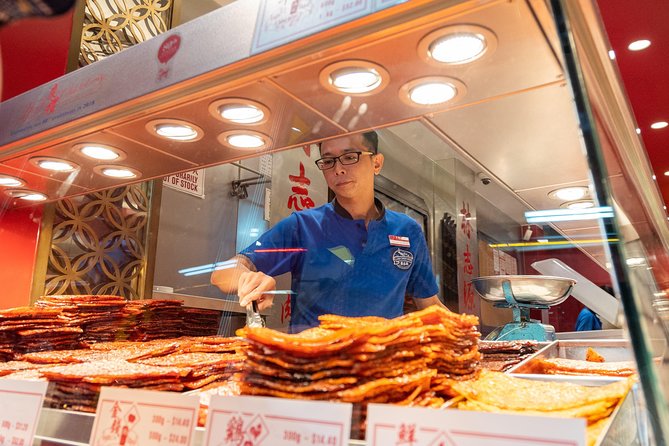
You can eat cheaply in Singapore without a guide. If your only aim is to find an inexpensive plate of food, this tour is not the most economical option.
The difference is structure and explanation. On your own, you may order one dish, miss the best stalls, or hesitate over an unfamiliar menu. Here, Gerry selects the tastings, explains the setting, introduces the neighborhood connections, and helps you use public transport.
The tour also saves planning time. For a short stopover, that can be worth a lot. Several people have used it during visits of roughly one and a half to two days, when an organized morning provides a quick way to see several sides of Singapore.
I would skip it if you prefer wandering alone, already know Singapore’s hawker centers, or have a strict food plan. I would choose it if you want a friendly introduction and would rather spend one morning learning the city than researching every food stop yourself.
Who will get the most from this experience
This tour suits first-time visitors, short-stay visitors, curious eaters, and anyone who likes local stories with their meals. It is also a good choice if you want a practical first lesson in Singapore’s MRT and bus network.
It is particularly useful for people who want more than the city’s polished modern image. The neighborhood walks show how Singapore’s cultural identities sit side by side, while the hawker centers put that idea on your plate.
You should think twice if you have allergies, major dietary restrictions, limited mobility, or a strong dislike of shared tastings. The tour’s food-first format gives the host less room to work around complicated needs.
Free cancellation is available if you cancel at least 24 hours before the start time. Changes or cancellations made later are not accepted for a refund, so check your plans before the deadline.
Should you book the Singapore UNESCO Street Food and Cultural Experience?
I would book this tour if you have limited time in Singapore and want one well-organized morning that combines food, neighborhoods, public transport, and cultural background. The strongest reasons are the generous tastings, the small group, and Gerry’s personal way of connecting food with Singapore’s past and present.
I would not book it simply because you want the cheapest hawker meal, nor if your diet or mobility makes the stated conditions difficult. For flexible eaters who want a useful orientation to the city, the $161.62 price can make sense, especially on a short visit. Book it near the start of your stay, arrive hungry, and leave room in your afternoon for a lighter meal.
FAQ
How long does the Singapore food and cultural tour last?
The experience lasts approximately five hours and thirty minutes.
What time does the tour start?
The stated start time is 9 a.m.
Which neighborhoods does the tour visit?
It visits Chinatown, Kampong Gelam, and Little India.
Is hotel pickup included?
Hotel pickup and drop-off may be available, depending on your location. Confirm whether your hotel qualifies before booking.
How many people can join the tour?
A booking requires at least two people, and the maximum group size is eight.
What food and drinks are included?
Food tastings, bottled water, coffee or tea, soda, and beer are included.
Does the tour use public transportation?
Yes. The experience may use Singapore’s MRT and public buses, with guidance on how to use them.
Is the tour suitable for vegetarians or people with food allergies?
It is not recommended for vegetarians, people with food allergies, or people with dietary restrictions. Ask the provider about your needs before booking.
What is the cancellation policy?
You can cancel at least 24 hours before the local start time for a full refund. Cancellations or changes made less than 24 hours before the start time are not accepted.
Just added around the world
- Milan: Street Food Walking Tour★ 4.7 · 180 reviews
- Milan’s Full-Meal Gourmet Food Tour – More Than Tastings★ 4.8 · 81 reviews
- Kolkata Midtown Madness- A Street Food & Nightlife Tour★ 4.9 · 49 reviews
- Milan: Delicious Food Tour and City Center Sightseeing★ 4.8 · 111 reviews
- Mexico City: Authentic Downtown Food Tour★ 4.9 · 260 reviews
- Miami: Intimate Sailing in Biscayne Bay w/ Food and Drinks★ 4.7 · 34 reviews
- Mexico City: Vegan and Vegetarian Street Food Adventure★ 4.8 · 65 reviews
- Mexico City: Mystic Markets La Merced & Sonora Culinary Tour★ 4.9 · 301 reviews
Food Tours in Singapore, compared.
Small Group: Michelin and Local Hawker Food Tour with 9 tastings
Read our review →
Small Group: Singapore Street Food & Night Tour with 9 tastings
Read our review →
The Award-Winning PRIVATE Food Tour: 10 Tastings of 3 Cultures
Read our review →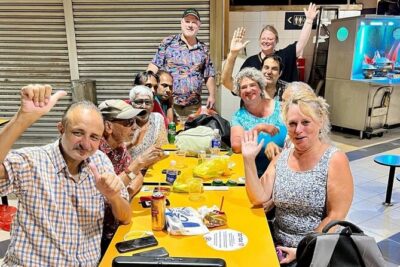
Chinese, Indian & Arabic Quarters, Culture & Food Tour
Read our review →Browse the lists this tour appears in