
REVIEW · SINGAPORE
Singapore: Local Street Food Tasting Tour
Singapore’s food story makes the most sense when you follow it through Kampong Glam, Little India, and Chinatown. This private three-hour tour links those three historic quarters with nine tastings, local stories, and one MRT ride, so you see how Singapore’s communities and cooking traditions fit together.
I like the mix of real hawker-center stops and guided neighborhood walks. I also like the private format: guides such as Antony, Joseph, Freeman, and Suurjiyt have adjusted the pace and focus to suit individual interests, jet lag, and limited time. The main drawback is that this is a warm, mostly outdoor walking tour. Hawker centers are free-seating and non-air-conditioned, and the tour covers about 1.8 kilometers.
Key points at a glance
- Nine local tastings: Expect seven or eight snacks plus one or two locally brewed drinks, depending on the selected option.
- Three historic quarters: Kampong Glam, Little India, and Chinatown each bring a different set of cultural stories and food traditions.
- A local MRT ride: The train transfer is part of the experience, not just a way to save walking time.
- Private English-speaking guide: The guide can explain unfamiliar foods, answer questions, and adjust the tour to your interests.
- Finish at Chinatown Complex: You end at one of Singapore’s well-known hawker centers, with the option to keep eating after the tour.
- Rain or shine: Wear breathable clothes and comfortable shoes, and carry an umbrella or rain poncho.
Why this food tour works so well in Singapore
Singapore can look polished and modern at first glance, but its everyday food culture is rooted in migration. Chinese, Malay, Indian, and other communities built neighborhoods, places of worship, shops, and eating traditions that still shape the city.
This tour gives those connections a clear structure. Instead of visiting one isolated food market, you move through three districts and taste food in the places where local residents eat. Your guide adds the missing context: why a quarter developed, how different communities influenced one another, and what makes each dish worth trying.
That matters if you have only a short stay. In three hours, you get an introduction to Singapore’s urban history, local transport, and food customs. You will not become an expert in the city’s cuisine, but you will leave with a much better sense of where to continue eating.
The private setup is another advantage. A guide can slow down when you want more history, explain a dish before you try it, or adapt the route to your interests. Several guides, including Kristopher and Grayson, have been praised for tailoring the time to what each person wanted to see. If you are dealing with jet lag, that flexibility can make the afternoon easier.
More street food nights in Singapore:
- Small Group: Singapore Street Food & Night Tour with 9 tastings
★ 5.0 · 1,240 reviews - Singapore: UNESCO Street Food & Cultural Experience
★ 5.0 · 524 reviews - Singapore: Guided Street Food Tour at Night
★ 4.5 · 393 reviews
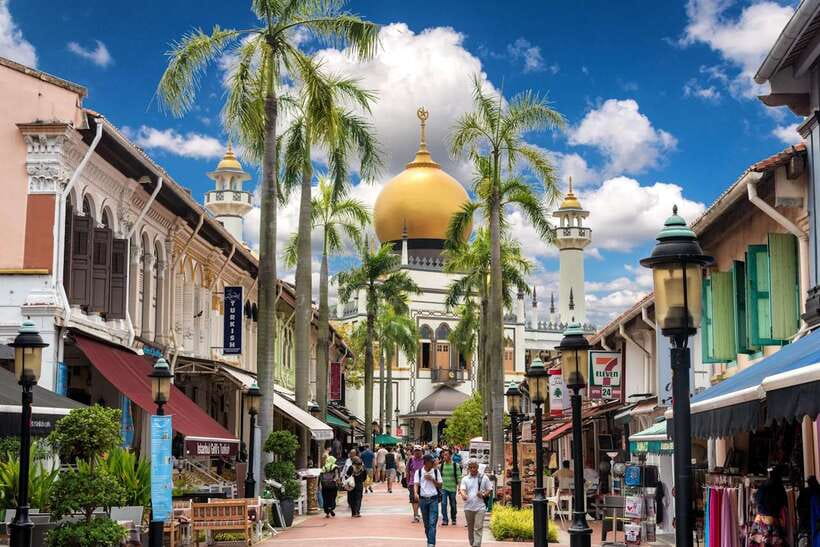
Kampong Glam: Singapore’s Malay and Arab quarter
The tour begins at the selected meeting point, or at your hotel lobby if you choose the pickup option. The stated meeting point is outside the door of % Arabica Cafe. From there, you start in Kampong Glam, one of Singapore’s most distinctive historic districts.
The first guided section lasts about 20 minutes. Your guide introduces the quarter and points out its cultural markers, architecture, and links to the communities that established themselves here. You then stop for the first food tasting, followed by another 10-minute walk and explanation.
The exact dishes are not specified in advance, so you should think of the menu as a set of local discoveries rather than a fixed restaurant meal. Your guide explains each tasting as it arrives, including its place in local food culture. That is useful when a dish, snack, or drink is unfamiliar and you are not sure how it is normally eaten.
Kampong Glam is a good opening stop because it gives you an immediate sense that Singapore’s food culture is not one single tradition. The neighborhood introduces Malay and other regional influences before you move on to Little India and Chinatown.
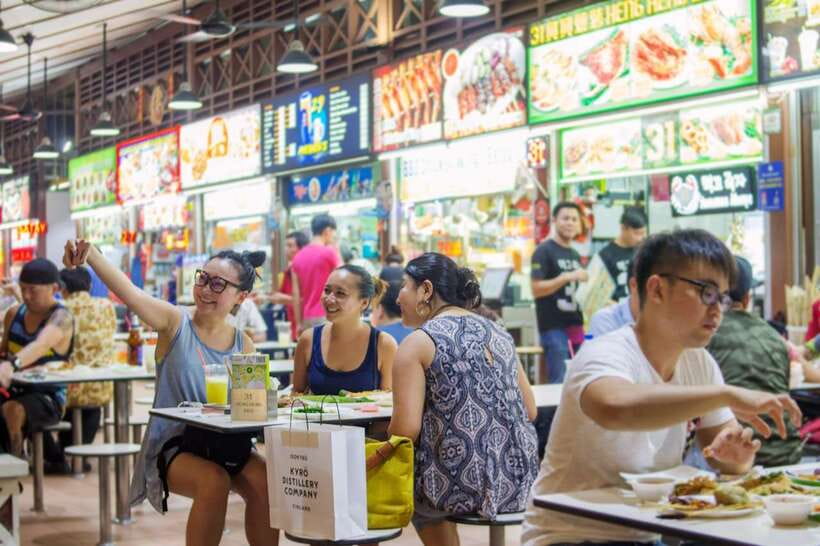
The food stops are intentionally modest. You are tasting rather than sitting down for a full lunch, and the tour uses local eateries or hawker centers instead of formal restaurants. That keeps the experience close to daily life, but it also means limited seating, open-air conditions, and less control over heat or rain.
Little India: food, movement, and cultural connections
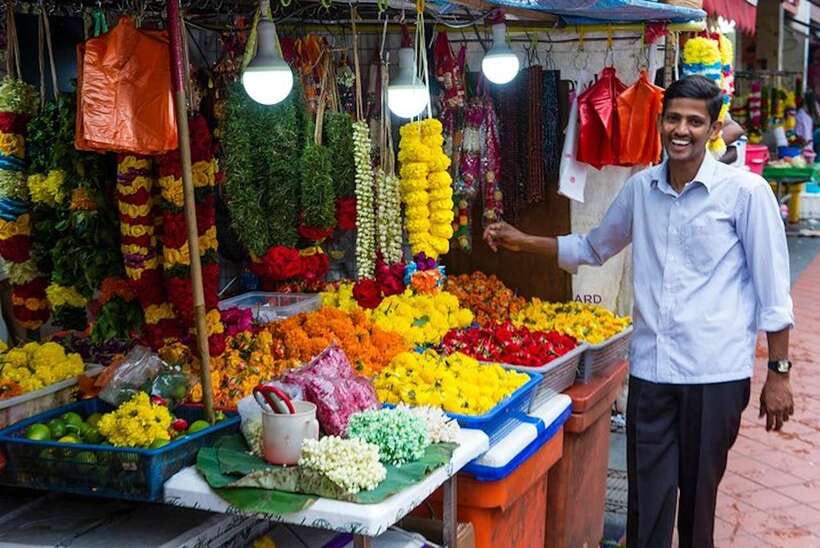
After Kampong Glam, the tour continues to Little India. The guided visit here lasts around 20 minutes, followed by roughly 30 minutes devoted to food.
Little India adds another layer to the story. You are not simply changing neighborhoods to try different flavors. You are seeing how early immigrant communities shaped Singapore and how their customs remain part of the city today.
This is where a good guide makes a major difference. Walking alone, you might notice colorful storefronts or busy streets but miss the reasons behind them. Guides such as Joseph have been praised for explaining both local history and the way Singapore’s communities interact. That broader view is one of the tour’s strongest features.
The tasting period is long enough to try several items without rushing each one. Your guide can introduce the food, explain what you are sampling, and help you compare the traditions you have already encountered in Kampong Glam with those in Little India.
You should arrive hungry but not starving. Nine tastings over three hours can add up, especially when drinks are included. The tour does not include extra food or drinks beyond the planned tastings, so you will pay separately if you want a full meal or additional items along the way.
The MRT ride: a small but useful part of the tour
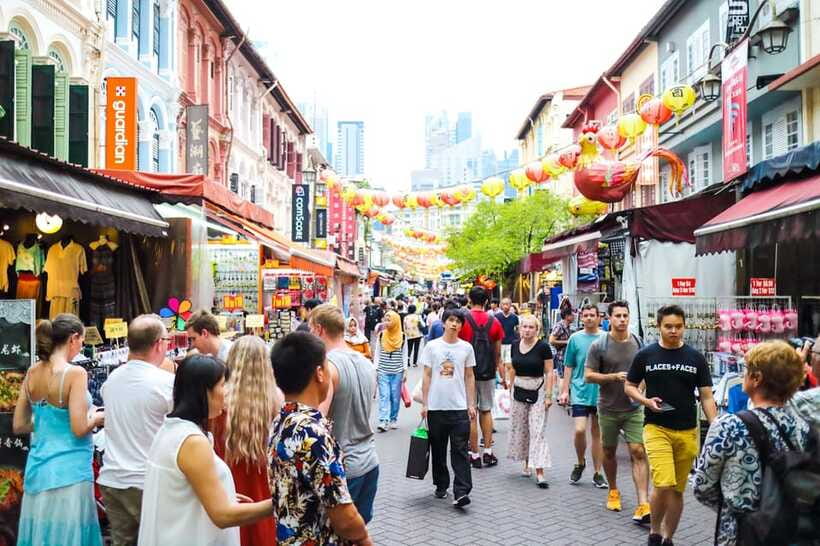
One of the most enjoyable details is the included MRT ride between neighborhoods. The train portion lasts about 15 minutes and gives you a quick look at how locals move around Singapore.
This is not a sightseeing train ride. It is public transport, and that is precisely why it adds value. You are not sealed inside a tour vehicle for the entire afternoon. You use the same system that residents use, with your guide helping the transition between districts.
For first-time visitors, the MRT ride also makes the city feel more manageable. Singapore’s neighborhoods can seem scattered on a map, but the train connects them efficiently. If you plan to explore on your own later, this short ride gives you a practical first taste of the system.
The station transfer may be less comfortable if you have difficulty walking or standing. The tour is not suitable for people with mobility impairments, and the operator describes it as mainly a walking experience. The stated total distance is about 1.8 kilometers, but stairs, station movement, and standing at food stops are also part of the afternoon.
A few more food tours around Singapore worth comparing
- Small Group: Michelin and Local Hawker Food Tour with 9 tastings
★ 5.0 · 1,890 reviews - The Award-Winning PRIVATE Food Tour: 10 Tastings of 3 Cultures
★ 4.5 · 1,017 reviews - Singapore: Chinese, Indian & Arabic Quarters, Culture & Food Tour
★ 5.0 · 789 reviews - Singapore: Foodie Experience Guided Tour with 5 Tastings
★ 4.7 · 291 reviews
Chinatown: the final food chapter
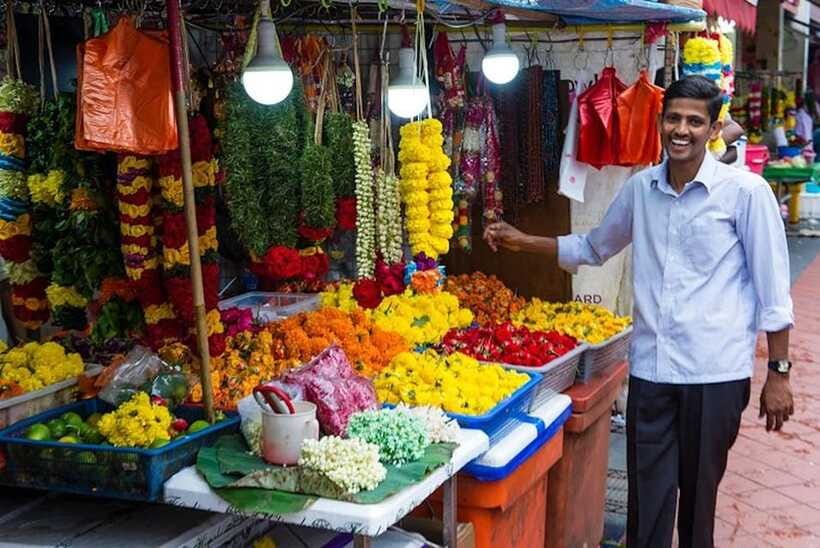
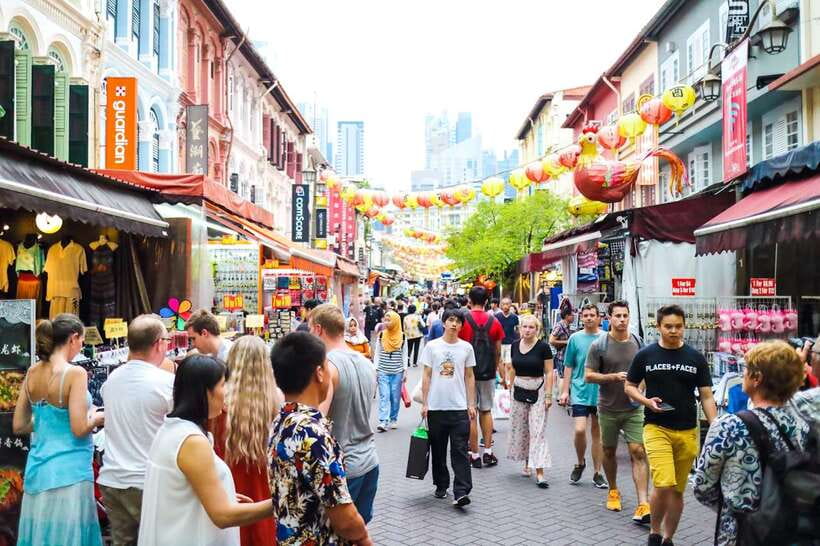
The last district is Chinatown, where you spend around 20 minutes on a guided walk and 30 minutes tasting food. The tour ends at Chinatown Complex Market and Food Centre.
Chinatown completes the three-quarter structure. By this stage, you have seen how different communities helped shape Singapore and how food remains one of the clearest ways to understand those connections.
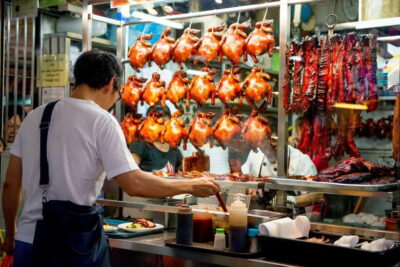
The final tasting stop is especially practical because you finish at a major hawker center rather than being dropped at a hotel or a generic street corner. You can stay afterward for more food, browse the stalls, or use the area as a base for further sightseeing.
Keep in mind that the tour’s tasting menu is not presented as a full meal. The nine samples may include seven or eight snacks and one or two local brewed drinks. If you have a large appetite, plan to buy extra food after the tour. If you prefer a light introduction and want to choose your own dinner later, the format works well.
Ending in Chinatown also gives you a chance to turn the tour into the first part of a longer evening. You are already in a food center, so you can continue at your own pace without another transfer.
What the nine tastings are really worth
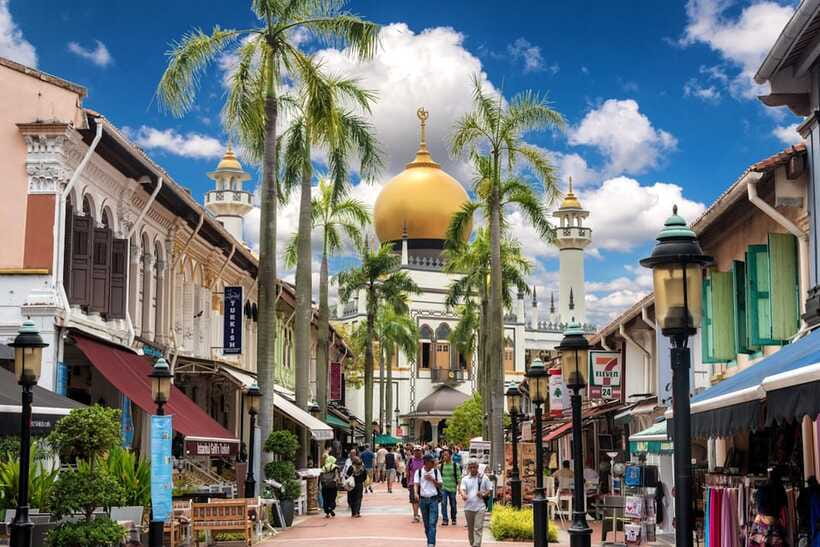
The food is the main reason to book, but the value comes from the explanation around it. A list of nine dishes would be easy to find online. Knowing where to try them, how locals eat them, and what cultural story they carry is harder to gain on your own during a short visit.
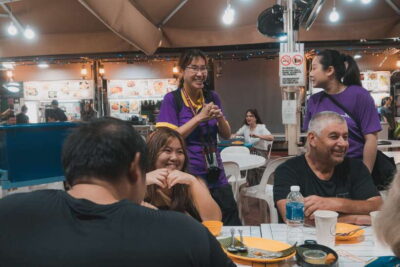
The tasting stops are in local eateries and hawker centers. These are not air-conditioned restaurants with reserved tables. Seating is free-form, and conditions can be warm or crowded. That is part of the point, but it is worth knowing before you book.
You should also expect a range of food rather than one polished tasting menu. Some items may be familiar, while others may be entirely new. The guide’s role is to help you approach the unfamiliar food with useful context rather than simply placing dishes in front of you.
Dietary details are not provided in the tour information, so you should ask about food needs before booking. The same applies to allergies and drink preferences. Do not assume that every tasting can be changed.
The guides make the private format count
The guide is central to this experience. The food alone would not justify the price as strongly as the combination of food, transportation, neighborhood walks, and personal interpretation.
Past guide names include Antony, Joseph, Suurjiyt, Khoo, Freeman, Kristopher, Grayson, and Angela. The strongest pattern is that guides do more than identify dishes. They explain the city’s past, connect the three quarters, and adjust the visit to the people in front of them.
That flexibility can be useful in several ways. You might want more emphasis on history, more time discussing food, or a slower pace after a long flight. One guide adjusted the time for a jet-lagged couple, while others shaped the route around personal interests.
Because this is a private group, you are not sharing each tasting with a large crowd. That makes it easier to ask basic questions without feeling rushed. It also means the experience depends heavily on the guide you receive, so it is sensible to tell the operator what you most want from the tour.
The tour is conducted in English. If you need another language, this experience may not be the right fit.
Is $150 per person good value?
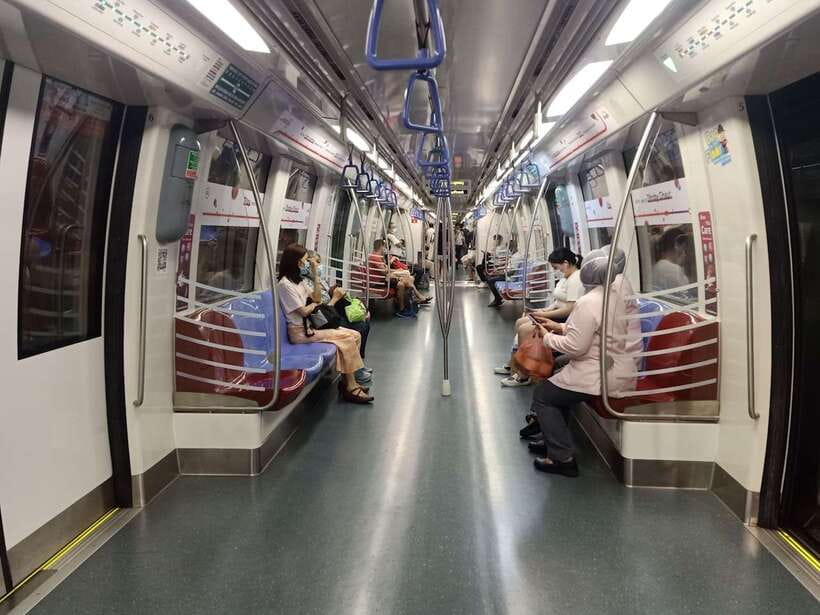
At $150 per person, this is not a cheap way to grab street food. You are paying for a private guide, three hours of organized sightseeing, nine tastings, and an MRT ride. Hotel pickup and drop-off cost extra through the upgrade option.
I see the value most clearly for first-time visitors with limited time. If you have only two or three days in Singapore, the tour brings together food and several major cultural districts without requiring you to plan the route yourself. It also helps you avoid wasting a meal on food you do not understand or choosing a convenient place that lacks local character.
The price is harder to justify if you already know Singapore well, are comfortable using hawker centers, or mainly want a large meal. You could spend less by visiting Chinatown, Little India, and Kampong Glam on your own and buying individual dishes as you go.
Still, independent exploration does not provide the same guided context or private attention. The best comparison is not with the cost of nine snacks alone. Compare it with the value of having someone organize the neighborhoods, explain the food, and help you see connections you might otherwise miss.
Timing, weather, and what to wear
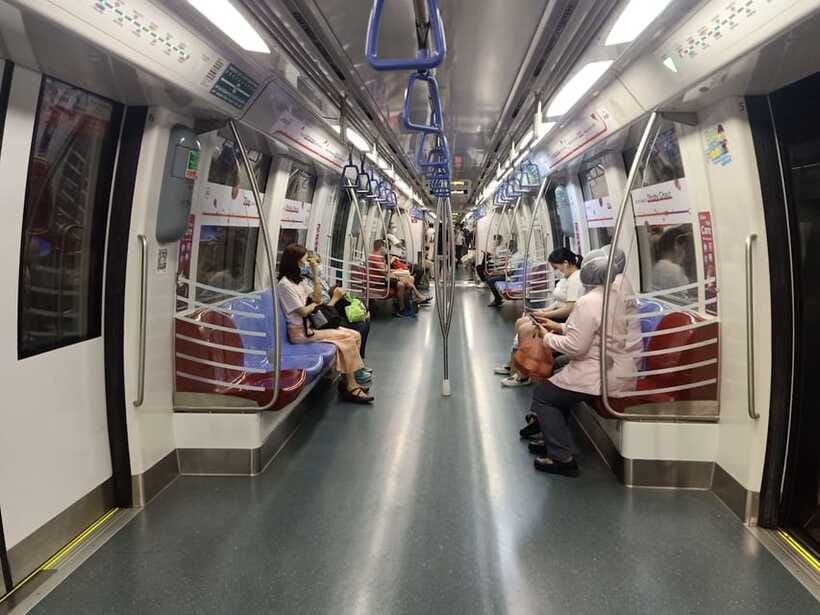
The tour lasts three hours, with starting times available according to the selected date. Hotel pickup is optional, and the meeting point for the standard option is outside % Arabica Cafe. The ending point is Chinatown Complex Market and Food Centre, not your hotel.
Wear comfortable walking shoes and breathable clothing. Singapore is warm and humid, and the food stops are non-air-conditioned. Bring an umbrella or rain poncho if the forecast looks uncertain, since the tour runs in rain or shine.
The walking distance is about 1.8 kilometers, which sounds easy on paper. In practice, you also have neighborhood stops, food queues, the MRT ride, and time spent standing or finding seats. People who need frequent rest or have mobility limits should choose a different format.
Children under two are not accepted. For older children, the private structure may be helpful, but the operator does not provide a specific child-focused version of the tour. Consider how well your group handles new foods, walking, heat, and free-seating hawker centers.
Who should book this Singapore food tour?
I would choose this tour if you are visiting Singapore for the first time and want a fast introduction to local food and culture. It is also a strong option if you have only a short stay and do not want to spend your first day working out transport and restaurant choices.
It suits couples, families with older children, and small private groups who value conversation. Food-focused visitors will appreciate the nine tastings, while history-minded visitors will benefit from the explanations in each quarter.
I would hesitate if you want a comfortable sit-down lunch, a precise published menu, or an air-conditioned tour. I would also skip it if walking and public transport are difficult for you. The setting is informal by design, and the weather is part of the bargain.
Book it early in your Singapore stay if possible. The tour can give you useful ideas for later meals and places to revisit. It also gives you a framework for understanding the city before you explore on your own.
FAQ
How long does the Singapore street food tour last?
The tour lasts three hours.
What neighborhoods does the tour visit?
It visits Kampong Glam, Little India, and Chinatown.
How many tastings are included?
Nine tastings are included. Depending on the selected option, these include one or two local brewed drinks and seven or eight snacks.
Is the tour private?
Yes. It is offered for a private group with a private local guide.
Is hotel pickup available?
Yes, hotel pickup and drop-off are available if you select that option. Otherwise, the meeting point is outside the door of % Arabica Cafe.
Where does the tour finish?
The tour finishes at Chinatown Complex Market and Food Centre.
Is an MRT ride included?
Yes. One MRT ride is included, taking about 15 minutes between ethnic quarters.
What language is the tour conducted in?
The live tour guide conducts the experience in English.
Are extra food and drinks included?
No. The planned nine tastings are included, but any additional food and drinks cost extra.
What should I bring?
Bring comfortable shoes and breathable clothing. Since the tour operates in rain or shine, you may also want an umbrella or rain poncho.
Is the tour suitable for people with mobility impairments?
No. The tour is mainly a walking experience, with about 1.8 kilometers of walking plus movement through an MRT station.
Can children under two join?
No. Children under two are not suitable for this activity.
Should you book it?
Book this tour if you want Singapore explained through its food, neighborhoods, and everyday transport rather than through a bus window. The strongest reasons are the private guide, the three-quarter route, and the chance to taste local food in ordinary hawker settings.
Skip it if you want a relaxed restaurant meal or prefer to explore markets independently. For first-time visitors, short stays, and anyone curious about how Singapore’s communities shaped its cooking, $150 buys more than snacks. It buys a useful introduction to the city, with enough food to keep the history grounded.
Just added around Singapore
- Street Food, Cultural & Historical Tour of 3 Ethnic Quarters★ 5.0 · 23 reviews
- Singapore: Private Food Tour – 10 Tastings with Locals★ 4.7 · 194 reviews
- Singapore: Local Hawker Food Tour with Tastings★ 4.7 · 181 reviews
- Singapore: Guided Street Food Tour at Night★ 4.5 · 393 reviews
- Singapore: Foodie Experience Guided Tour with 5 Tastings★ 4.7 · 291 reviews
- Singapore: Hawker Culture Food Tour and Sightseeing★ 4.8 · 23 reviews
- Singapore: Food and Bike Tour: Katong District★ 4.9 · 38 reviews
- Singapore: Little India Hawker Street Food Tour★ 4.8 · 27 reviews
Food Tours in Singapore, compared.
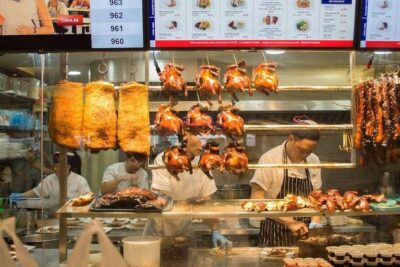
Small Group: Michelin and Local Hawker Food Tour with 9 tastings
Read our review →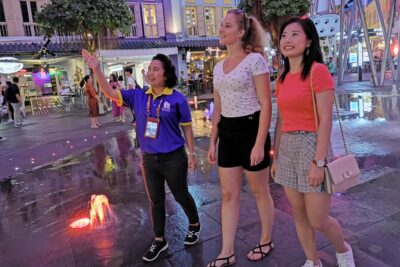
Small Group: Singapore Street Food & Night Tour with 9 tastings
Read our review →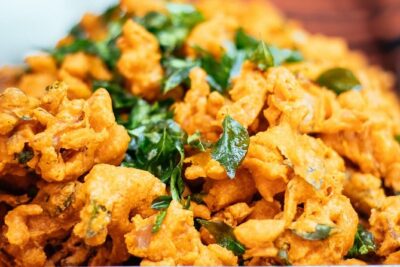
The Award-Winning PRIVATE Food Tour: 10 Tastings of 3 Cultures
Read our review →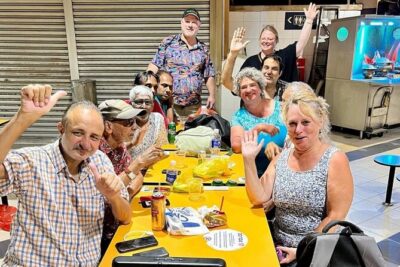
Chinese, Indian & Arabic Quarters, Culture & Food Tour
Read our review →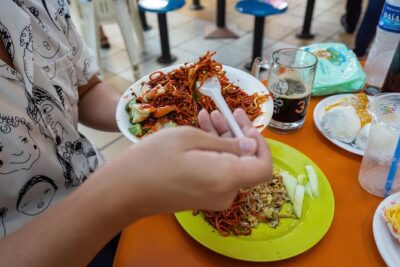
Browse the lists this tour appears in