
REVIEW · SINGAPORE
Singapore: Little India Hawker Street Food Tour
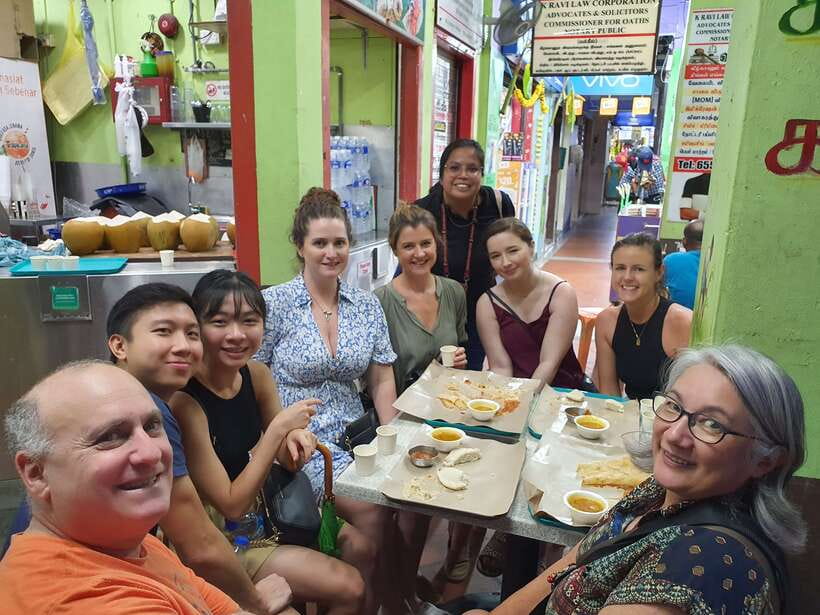
Singapore’s Little India is at its best when you stop treating it as a backdrop and start eating your way through it. This three-hour walk takes you from Little India MRT to hawker centres, food stalls, and side streets for eight Indian food and drink tastings, including rojak, thosai, and pani puri.
I like the mix of street food and local history, plus the chance to see how hawker food fits daily life. I also like that guides such as Kyanta Yap and Corliss have added plenty of context and answered questions along the way. The main thing to consider is food variety: one booking found the selection less varied than expected, so this tour suits you best if you already enjoy Indian cuisine.
Key points to know before booking
- Eight tastings in three hours: Come hungry, since the food is the main event rather than a small sampling between sightseeing stops.
- Little India beyond restaurants: The route uses hawker centres, food stalls, and lesser-known alleys instead of focusing only on famous restaurants.
- Signature dishes include Indian rojak and pani puri: You get a useful introduction to several Indian street-food styles.
- Guides add local context: Past guides have included Kyanta Yap and Corliss, with stops for history and street art.
- Sunday has a different feel: Indian and Bangladeshi workers often fill the streets on their day off, making the area especially crowded and lively.
- Good value for committed food explorers: At $86 per person, the price makes the most sense if you value guidance, food research, and cultural explanation as much as the dishes themselves.
Starting at Little India MRT Exit C
The meeting point at Little India MRT Exit C is practical. You begin in the middle of the district rather than spending the first part of the tour getting there.
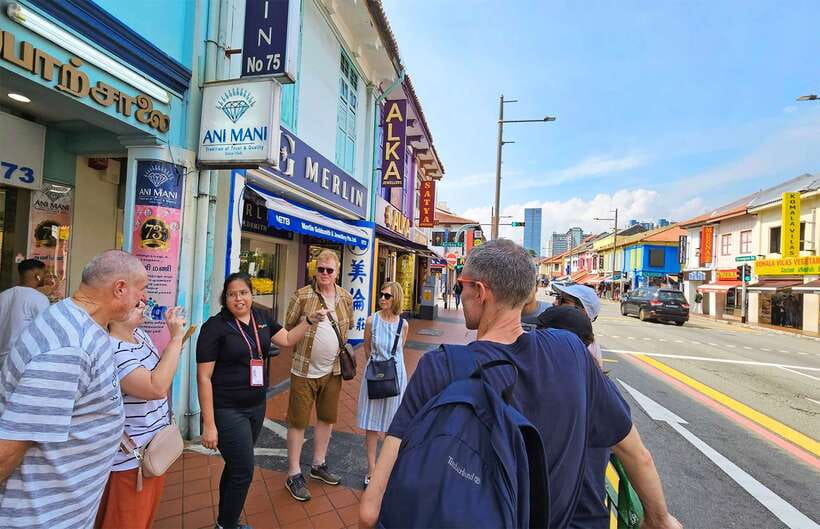
From this point, your guide leads you on foot through Little India. Expect a food-first outing, not a formal restaurant crawl. You may move through food halls, hawker centres, and narrow side streets, with short stops to eat and hear about the area.
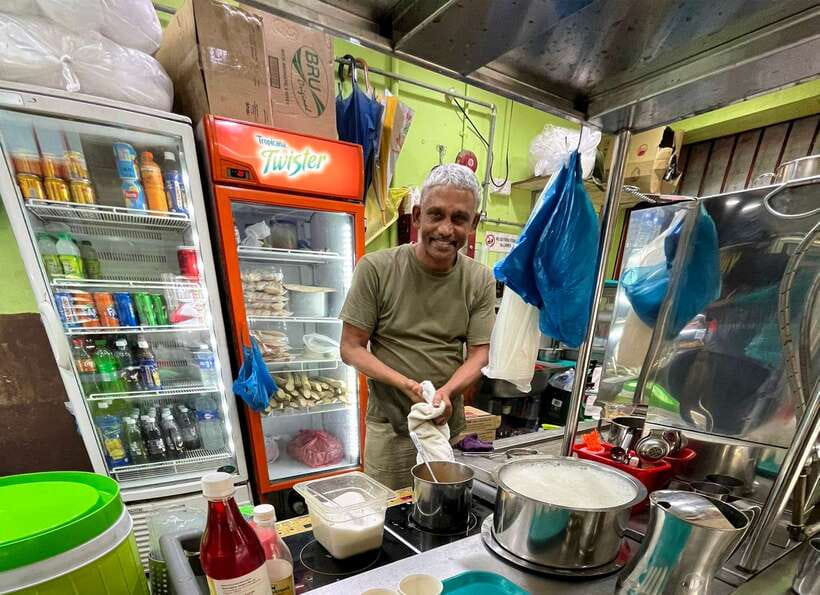
That setting matters. Singapore’s hawker culture is not just a cheap way to get lunch. It is part of the city’s daily rhythm, with cooks preparing familiar dishes for workers, families, and regular customers. A guide helps you understand what you are seeing, especially if you are not used to ordering at a busy food centre.
Wear comfortable shoes and arrive ready to eat. The tour lasts three hours, and eight tastings can add up quickly.
More street food nights in Singapore:
- Small Group: Singapore Street Food & Night Tour with 9 tastings
★ 5.0 · 1,240 reviews - Singapore: UNESCO Street Food & Cultural Experience
★ 5.0 · 524 reviews - Singapore: Guided Street Food Tour at Night
★ 4.5 · 393 reviews
Indian rojak brings a local twist
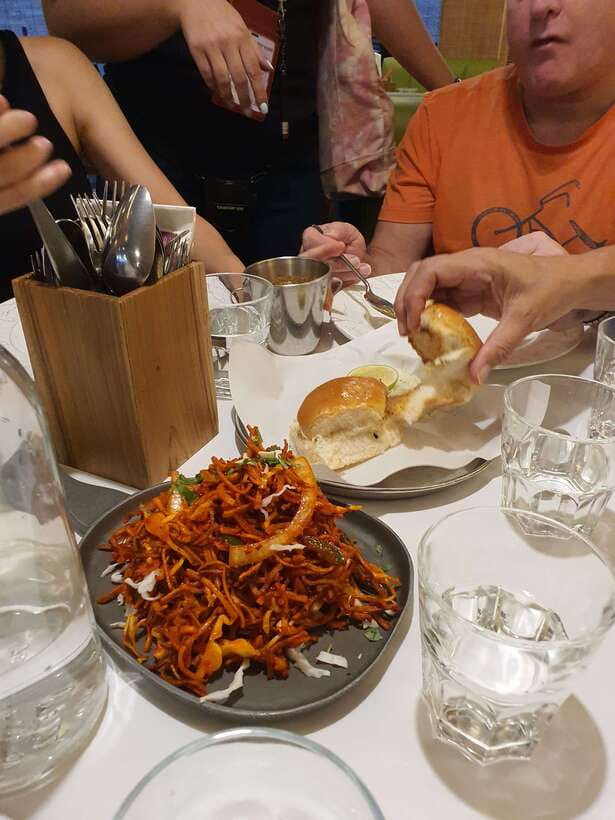
Indian rojak is one of the more unusual dishes on the route. Despite its name, it is not the same as the fruit-based rojak many visitors may know from other parts of Southeast Asia.
The dish is a mix of fried items, vegetables, and sauce, with contrasts in texture and flavour. It is a useful introduction to how Singapore’s food traditions cross cultural lines. You are not simply eating a dish from one place in India. You are seeing how Indian cooking has taken on a local identity in Singapore.
This is also the sort of food that benefits from a guide. A stall menu may not explain what each fried piece is or how the sauce is meant to work with it. Your guide can point out the components and give you a better sense of what is typical, what is local, and what is simply popular.
If you prefer neat, predictable food, rojak can feel messy and unfamiliar. That is part of its appeal, but it may not be the most comfortable first tasting for cautious eaters.
Thosai shows off South Indian cooking
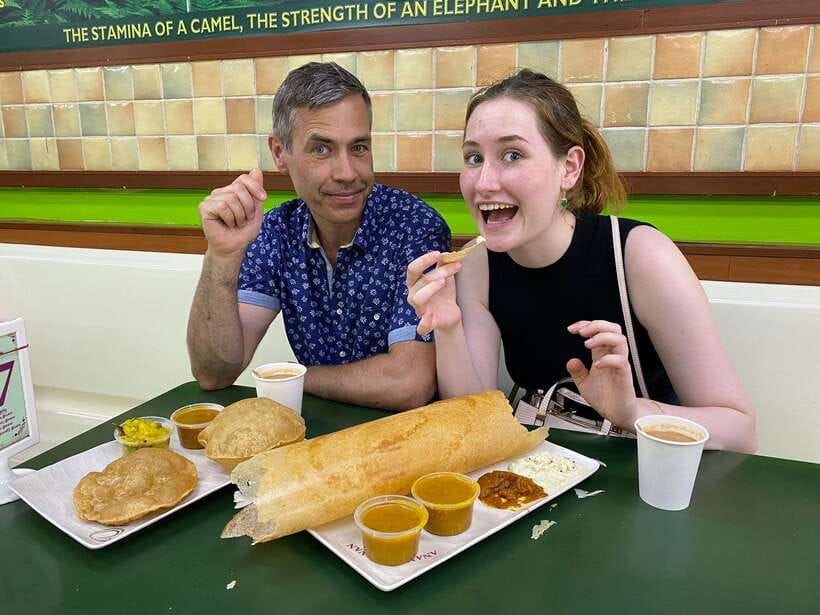
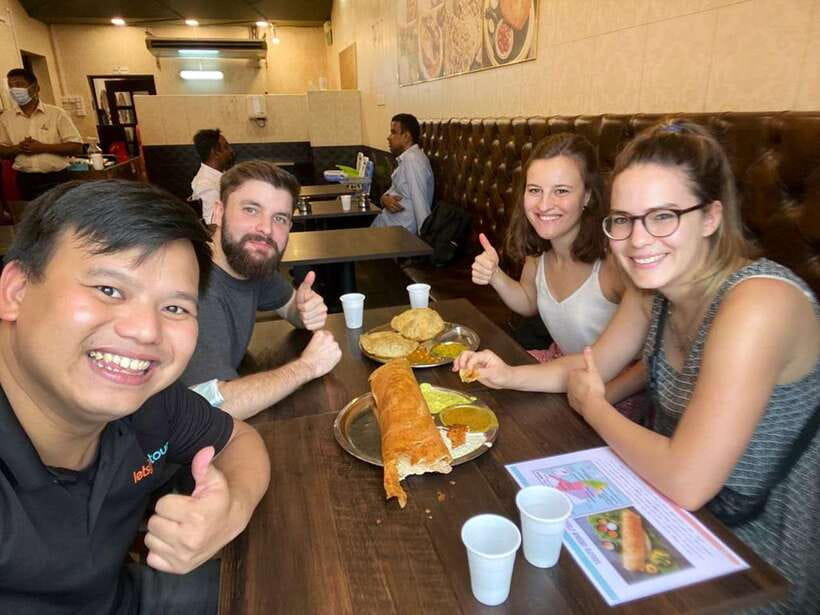
Thosai, also written dosa in many menus, is a South Indian staple made from a fermented batter. The result is usually thin and crisp at the edges, with a soft centre, and it is commonly served with accompanying sauces.
The tour presents thosai as a chance to see South Indian cooking in action. It is not only about taste. The dish gives you a look at the skill involved in spreading and cooking batter quickly for a steady stream of customers.
I like this stop because it adds contrast to the fried snacks. After a bold dish such as rojak, thosai gives the food portion a different texture and a more substantial base. It also helps you understand why hawker food works so well for everyday meals: it can be fast, filling, and made to order.
The exact form of the tasting is not specified, so do not book expecting a particular filling or size. The strength of the stop is the introduction to South Indian food, not a guarantee of one precise recipe.
Pani puri is the playful street-food stop
Pani puri is one of the best-known Indian street foods on the tour. It consists of crisp shells filled with ingredients and flavoured water, creating a quick mouthful with a sharp change in texture.
This is food with a bit of theatre. The shell is delicate, the filling is compact, and the liquid makes timing part of the experience. You normally eat it promptly rather than letting it sit.
For you, the value here is variety. Pani puri does not eat like thosai or rojak, so the tasting menu is not just eight versions of the same fried snack. It also gives your guide an easy way to explain Indian street-food habits and the difference between food made for a sit-down meal and food designed to be eaten in one or two bites.
If you dislike spicy or sour flavours, ask your guide what to expect before taking the first bite. The tour is conducted in English, making those questions easy to ask.
A few more food tours around Singapore worth comparing
- Small Group: Michelin and Local Hawker Food Tour with 9 tastings
★ 5.0 · 1,890 reviews - The Award-Winning PRIVATE Food Tour: 10 Tastings of 3 Cultures
★ 4.5 · 1,017 reviews - Singapore: Chinese, Indian & Arabic Quarters, Culture & Food Tour
★ 5.0 · 789 reviews - Singapore: Foodie Experience Guided Tour with 5 Tastings
★ 4.7 · 291 reviews
Hawker centres are part of the lesson
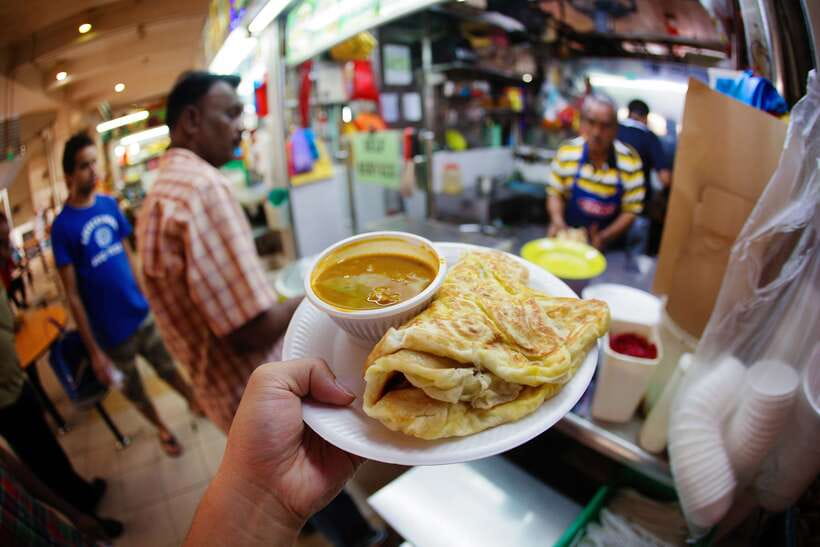
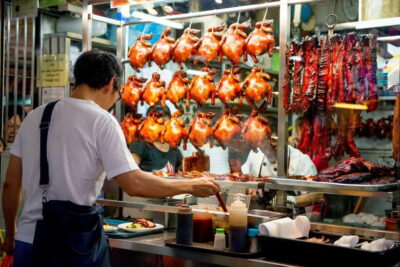
The food is only half the reason to take this walk. You also get to see how Singapore’s hawker stalls operate.
Rather than steering you only toward famous Michelin-listed food stalls, the tour aims to show the wider food scene. That is important because a famous stall can tell you that one dish is excellent, but a hawker centre tells you more about how the city eats.
You may see rows of small stalls, shared seating, quick service, and menus built around a narrow specialty. The guide can help you understand the choices without forcing you to study every sign yourself.
The route also includes lesser-known alleys. This does not mean every corner is a secret discovery, and you should not expect a private look at places closed to the public. It does mean the tour is not limited to the most obvious photo stops.
One useful detail from the food stops is that the experience has included Michelin-starred hawker venues on at least one outing. The tour is not built around those awards, though. Its point is to place famous stalls alongside everyday food and neighborhood life.
Street art and local history give the meal context
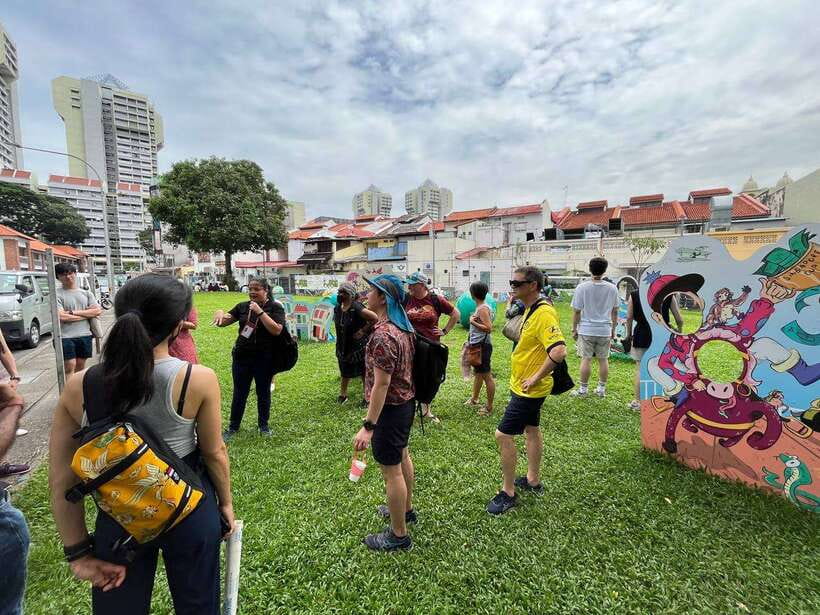
The route includes stops connected with street art and local history. These breaks are welcome because eight tastings in a row would be a lot, and because food makes more sense when you know something about the streets around it.
Little India is more than a collection of eateries. The district has long been shaped by Indian culture, commerce, worship, migration, and work. The supplied details do not provide a full historical itinerary, so I would not book this as a dedicated heritage tour. Still, the cultural explanation adds real value to the food walk.
Guides have been praised for combining information with entertainment. Kyanta Yap was singled out for an outstanding guiding job, while Corliss has been described as warm, responsive, and willing to answer questions. Yap was also praised for explaining Singapore’s local history and how everyday systems work.
Guide assignments can change, so you should not assume one particular person will lead your date. The important point is that the tour depends heavily on the guide. A good host turns a plate of food into a short lesson in ingredients, customs, and neighborhood life.
Sunday changes the mood of Little India
If you book on a Sunday, expect a busier street scene. Indian and Bangladeshi workers often use Sunday as their day off, and the area can fill with people spending their free time outdoors.
That can make the walk feel more crowded than it would on another day. It may also make the visit feel more connected to ordinary local life, rather than arranged for sightseeing.
One Sunday outing was described as a glimpse of India within Singapore, with packed streets, food, and public life all happening at once. That comparison should be taken as a sense of atmosphere, not a claim that Little India reproduces India. Singapore remains highly organized and distinct.
For me, Sunday is a good choice if you want to see the neighborhood at full volume and do not mind weaving through crowds. Pick another day if you prefer a calmer walk and more space around the stalls.
How much food do you really get?
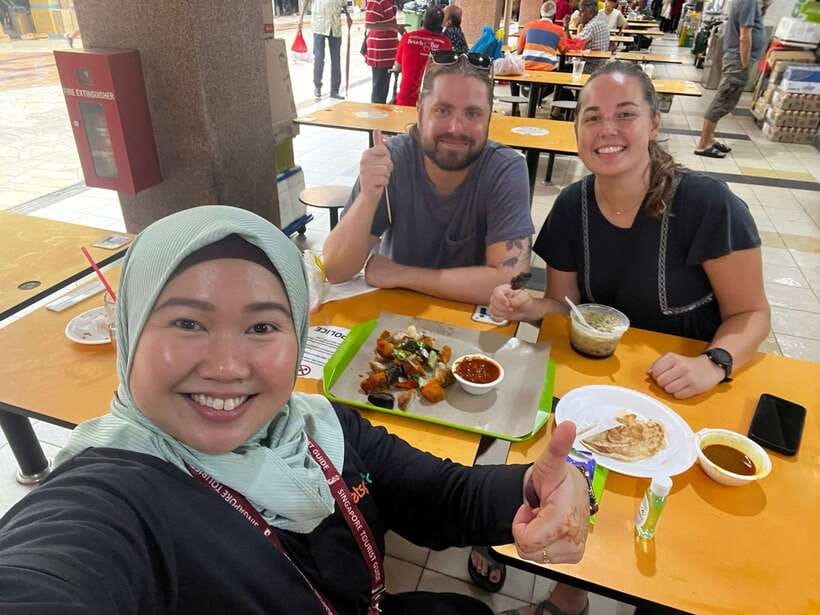
The advertised plan includes eight food or drink tastings. That is enough to make the $86 price meaningful, provided you arrive hungry and enjoy trying several small portions.
The food is not an optional extra attached to a sightseeing tour. It is the core of the experience. You are paying for the guide’s route planning, explanations, access to a set of tastings, and the chance to avoid guessing at unfamiliar menus.
The price is less attractive if you only want one large meal. You could eat more cheaply on your own at a hawker centre, especially if you already know what to order. But self-guided eating will not give you the same structure or background, and you may skip dishes that look confusing.
The food selection may also lean heavily toward Indian cuisine. One booking found less diversity than expected, so I would not choose this walk if your main goal is a broad survey of all Singaporean cooking. Choose it for a closer look at Little India’s Indian food culture.
Who will enjoy this three-hour food walk?
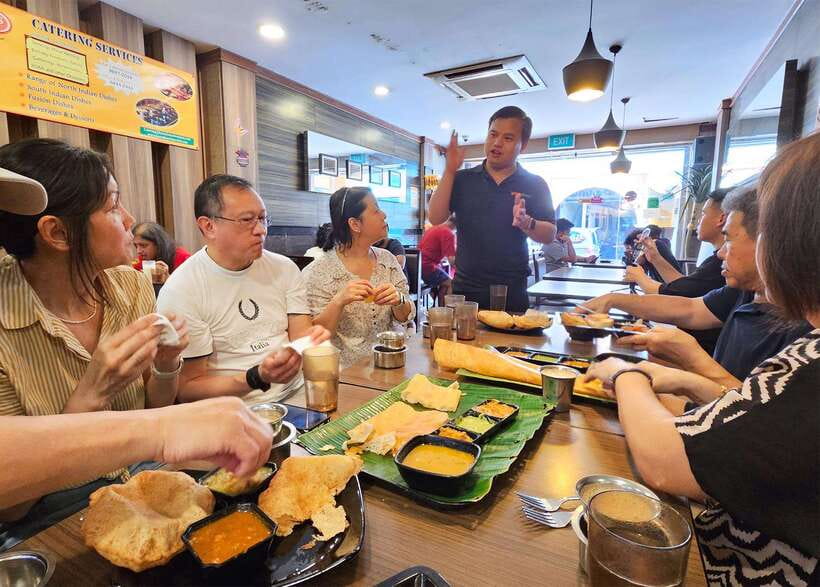
This tour suits you if you:
- Want a guided introduction to Indian street food in Singapore
- Enjoy small tastings more than one large restaurant meal
- Like learning the story behind a dish
- Want to explore Little India on foot
- Are comfortable trying unfamiliar textures and sauces
- Prefer an English-speaking guide who can answer questions as you go
It is also a strong choice for a first visit to Little India. The route gives you an anchor point, a manageable three-hour schedule, and enough food to help you decide what you might order later on your own.
Families and cautious eaters should think about the food style before booking. The available information does not specify child pricing, dietary substitutions, spice levels, or allergy handling. If any of those matter to you, ask before reserving.
Practical details that affect your day
The tour costs $86 per person and lasts three hours. The price includes a licensed English-speaking guide and eight food or drink tastings.
You meet at Little India MRT Exit C. The activity is conducted in English, and starting times vary, so check the available time when you book.
The minimum group size is two people. If that number is not reached, the tour may be rescheduled. On the other hand, small numbers can make the walk feel more personal. One outing became a private tour, and the guide was able to provide a relaxed mix of information and conversation.
You can cancel up to 24 hours ahead for a full refund, and the reserve-now, pay-later option keeps your plans flexible. Those terms help if your Singapore schedule is still shifting.
Should you book the Little India Hawker Street Food Tour?
Book it if you want Indian food, local explanation, and a walk through Little India in one outing. The strongest parts are the eight tastings, the hawker-centre setting, and the guides’ ability to connect food with street life and history.
At $86, it is not the cheapest way to eat in Singapore. It can still be good value if you would rather have a well-planned introduction than spend your first meal guessing at menus.
Skip it if you want a wide tour of every Singaporean cuisine, a quiet food experience, or a single substantial meal. For everyone else, especially first-time visitors who enjoy trying new dishes, this is a practical and flavorful way to get oriented in Little India.
FAQ
Where does the tour meet?
The meeting point is Little India MRT Exit C.
How long does the tour last?
The tour lasts three hours.
How many tastings are included?
Eight food and drink tastings are included.
Which foods might I try?
The listed examples include Indian rojak, thosai, and pani puri. The tour also features Singapore-style North Indian cuisine and other local dishes.
What language is the tour conducted in?
The live tour guide speaks English, and English is the listed tour language.
Who leads the tour?
The guide can vary by date. Guides who have led the experience include Kyanta Yap and Corliss.
What happens if there are not enough bookings?
The tour may be rescheduled if the minimum requirement of two people is not met.
Just added around Singapore
- Street Food, Cultural & Historical Tour of 3 Ethnic Quarters★ 5.0 · 23 reviews
- Singapore: Local Street Food Tasting Tour★ 4.8 · 36 reviews
- Singapore: Private Food Tour – 10 Tastings with Locals★ 4.7 · 194 reviews
- Singapore: Local Hawker Food Tour with Tastings★ 4.7 · 181 reviews
- Singapore: Guided Street Food Tour at Night★ 4.5 · 393 reviews
- Singapore: Foodie Experience Guided Tour with 5 Tastings★ 4.7 · 291 reviews
- Singapore: Hawker Culture Food Tour and Sightseeing★ 4.8 · 23 reviews
- Singapore: Food and Bike Tour: Katong District★ 4.9 · 38 reviews
Food Tours in Singapore, compared.
Small Group: Michelin and Local Hawker Food Tour with 9 tastings
Read our review →
Small Group: Singapore Street Food & Night Tour with 9 tastings
Read our review →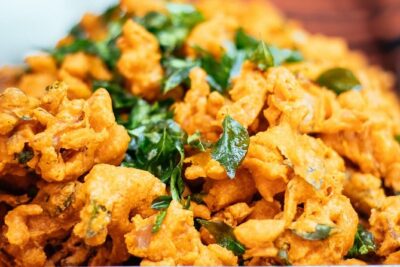
The Award-Winning PRIVATE Food Tour: 10 Tastings of 3 Cultures
Read our review →
Chinese, Indian & Arabic Quarters, Culture & Food Tour
Read our review →
Browse the lists this tour appears in