
REVIEW · PERU
Lima: Historic Center Street Food, Market, and Eateries Tour
Lima’s historic center is best understood with a snack in hand. This four-hour walk links grand colonial buildings with the everyday food of the city: anticuchos from a street vendor, churros, picarones, market fruit, and chilcanos in an old casona. You get more than a meal and more than a sightseeing loop. You see how Lima eats between errands, work, worship, and shopping.
I especially like the way the tour mixes small local eateries with food carts, then adds Lima’s Central Market and Chinatown. I also like the guides’ range. Marcos, Aura, Valeria, Sheyla, David, and Manuel have all been praised for explaining food, architecture, and Peruvian culture in a warm, easygoing way. The main caution is practical: this is not a vegetarian-friendly tour, and the dessert stops can be generous enough to leave you very full.
Key points at a glance
- Eight or more food and drink tastings: Expect anticuchos, tamales or sandwiches, churros, picarones, fruit, chilcanos, and other local specialties, with the exact selection subject to the day’s stops.
- Historic Lima between bites: The route passes Plaza San Martín, Plaza Mayor, La Merced, the Cathedral, Government Palace, and San Francisco Basilica.
- A real market visit: Mercado Central gives you a look at produce, spices, fruit, and foods bought for daily life, not just dishes prepared for tourists.
- Chinatown adds a second food tradition: You’ll see how Chinese cooking and Peruvian ingredients meet in Lima’s chifa culture.
- A filling four hours for $69: Food tastings, drinks, and a guide are included, so the price makes sense if you want both lunch or dinner and a city orientation.
- Diet rules matter: The shared tour cannot accommodate vegetarians, vegans, or pescatarians, and severe gluten or nut allergies are a serious concern.
Why this Lima food walk works so well
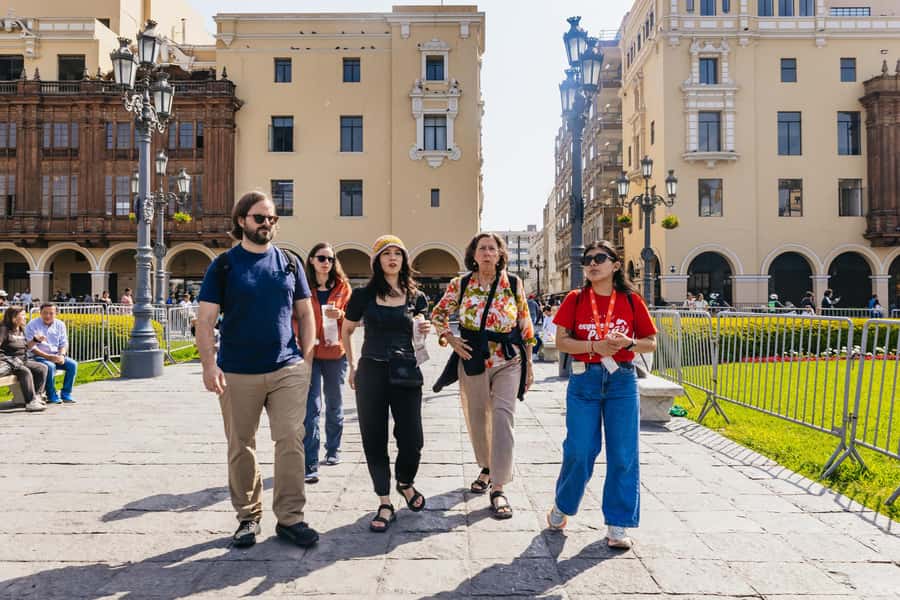
The clever part of this experience is its setting. You are not taken away from the historic center to a single restaurant. Instead, food becomes a reason to move through central Lima, pausing at places you might pass without understanding.
A guide such as Aura or Marcos can explain why a particular snack matters, how a dish fits into ordinary Peruvian life, and what you are seeing on the street around you. That makes the architecture easier to place. Lima’s grand plazas are not isolated monuments. They sit beside markets, old eateries, shops, religious buildings, and busy pedestrian streets.
The timing also helps. Four hours is long enough to make several stops without turning the tour into an exhausting all-day commitment. You walk, eat, sit, listen, and walk again. One person who took the tour after landing in Lima was concerned about too much walking, but found that the regular seated breaks made the pace manageable.
Still, plan for a serious amount of food. Some tastings are small, but the full churro, picarón, sandwich, and other portions can add up quickly. If you prefer savory food to sweets, tell your guide early and pace yourself.
More market tours in the world:
- Bangkok by Night: Temples, Markets and Food Tuk-Tuk Tour
★ 5.0 · 3,752 reviews - Chef Guided Food Tour of Pike Place Market
★ 5.0 · 3,733 reviews - Tokyo Tsukiji Fish Market Food and Culture Walking Tour
★ 5.0 · 3,184 reviews
Starting at Plaza San Martín and the Gran Hotel Bolívar
The meeting point is the main door of the Gran Hotel Bolívar at Jirón de la Unión 958, facing Plaza San Martín. This is a practical starting place because you begin among some of central Lima’s most important public spaces rather than spending the first part of the tour getting there from a hotel.
The first photo stop is Plaza San Martín. The itinerary allows only a short formal stop here, but the square helps establish the mood of the old center. From there, the route moves through streets where grand façades and daily commerce sit close together.
Your guide provides the context that a quick walk alone often misses. The emphasis is not only on dates and building names. You hear about Lima’s economy, food habits, local customs, and the way residents use the center today.
There is no hotel pickup or drop-off, so you must arrange your own way to the Gran Hotel Bolívar. Large bags and luggage are not allowed. That makes this easier to join with a small day bag than with suitcases, particularly if you are passing through Lima between flights.
Chilcanos, local eateries, and Lima’s quick food
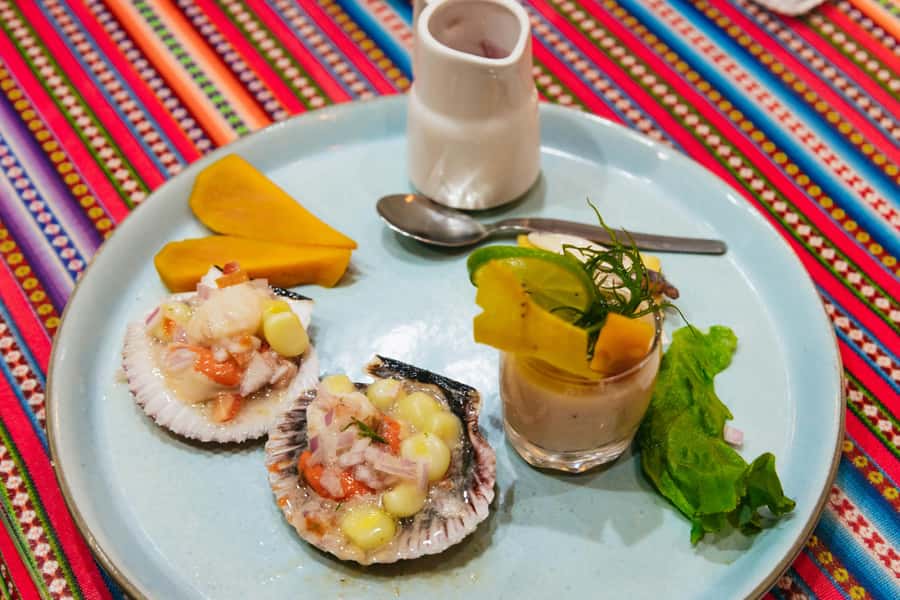
The first restaurant stop includes a spirit and regional food tasting. Chilcanos are the featured drink, and the setting is one of Lima’s old casonas. A chilcano is a Peruvian cocktail traditionally made with pisco, ginger ale, lime, and bitters, though the exact preparation can vary.
This stop gives the tour a useful change of pace. Street food is fast and informal, while an old casona connects the drink to Lima’s older built environment. You get a seat, a drink, and a chance to ask questions before the route picks up again.
Later, another local restaurant provides a regional food tasting. These stops are part of the tour’s value because you are not asked to rely on street food alone. The combination gives you different settings and textures, from a food cart to a more established neighborhood eatery.
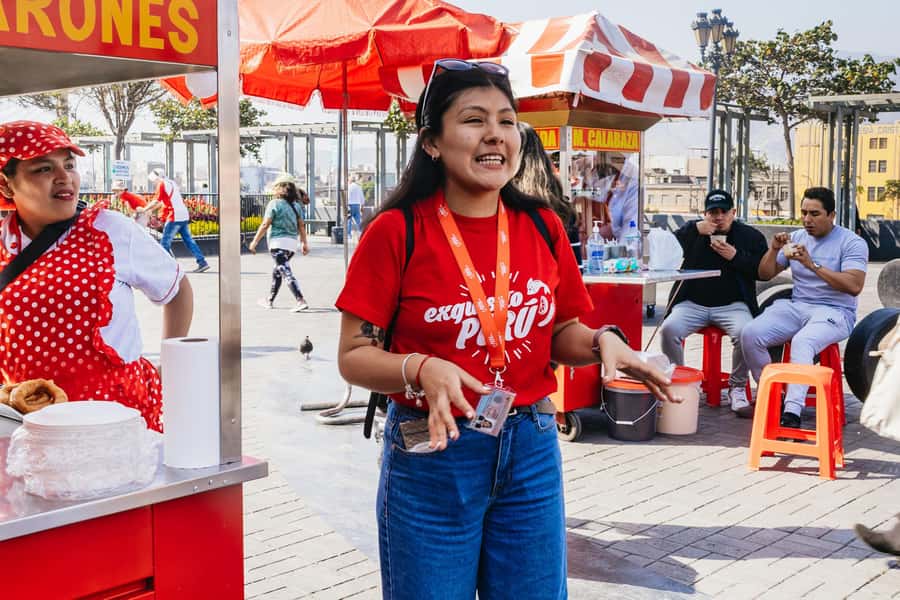
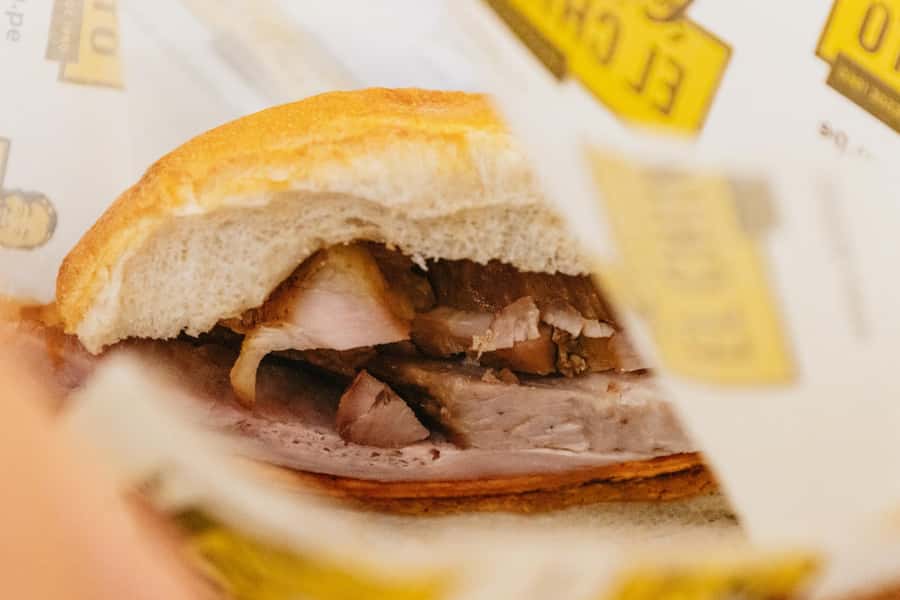
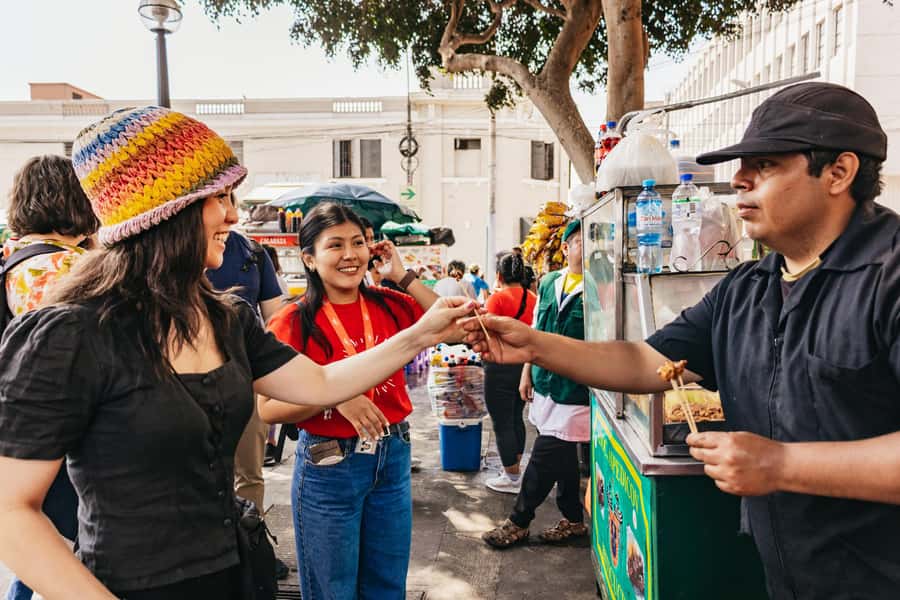
The tour focuses on comida al paso, or food eaten on the go. That might include anticuchos, a popular grilled skewer traditionally associated with beef heart, along with tamales, chicharrón sandwiches, and other quick local dishes. One particularly popular stop has been El Chinito, known for its sandwich de chicharrón, though individual stops and portions can vary.
Anticuchos often become a favorite because they are smoky, savory, and strongly seasoned. They also show why a guide helps. You get an explanation of what you are eating and how it fits into Peruvian food culture instead of simply receiving an unidentified skewer.
La Merced, Plaza Mayor, and the city’s grand façades
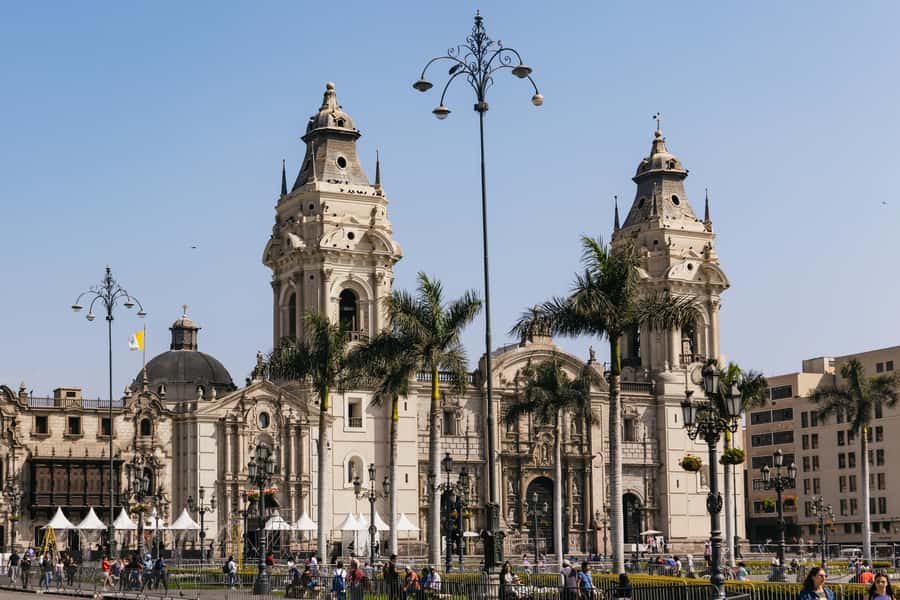
Between tastings, the walk passes Iglesia de La Merced and reaches Plaza Mayor, also called Plaza de Armas. The Cathedral of Lima and Government Palace are seen from outside, along with other major colonial buildings.
Do not expect long interior visits during this food tour. The architecture is used as a backdrop and a subject for short explanations, photographs, and walking commentary. That is a good arrangement if you want a first look at central Lima without giving up most of the afternoon to one church or museum.
The Plaza Mayor is the heart of the route’s historic side. It gives you the city’s formal face: government, religion, colonial planning, and public ceremony. The nearby food stops show a more ordinary side, where people buy snacks, shop for ingredients, and move through the center as part of their daily routine.
The route also passes the Basilica and Convent of San Francisco. Its colonial architecture and long religious history make it one of the most recognizable sights in the center. The tour includes a photo stop rather than a detailed interior visit, so you should plan a separate visit if the church and convent are a major priority.
That limitation is worth understanding before you book. This is a food walk with sightseeing, not a dedicated architecture tour. You will see several important buildings, but the time is shared between tasting, walking, and conversation.
More street food nights in the world:
- Dubai: Old Town, Creek, Museums, Souks, & Street Food Tour
★ 4.8 · 10,816 reviews - Ho Chi Minh City Street Food Tour & Sightseeing By Motorbike
★ 5.0 · 9,413 reviews - Medellin: Comuna 13 Graffiti Tour, Cable Car & Street Food
★ 4.8 · 9,046 reviews - Dubai: Old Town, Souks, Street Food, Guided Tour & Abra Ride
★ 4.9 · 7,170 reviews
Mercado Central: seeing what Lima buys and eats
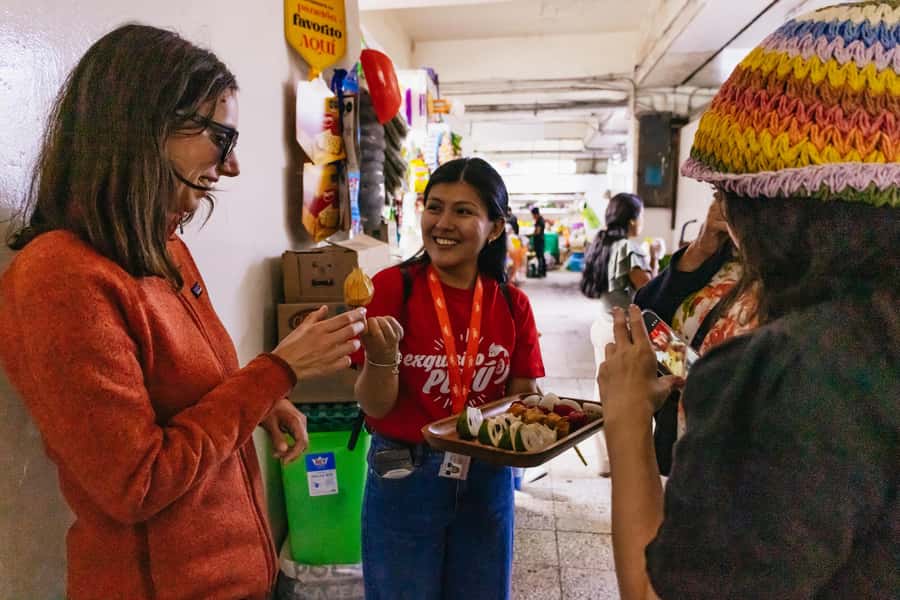
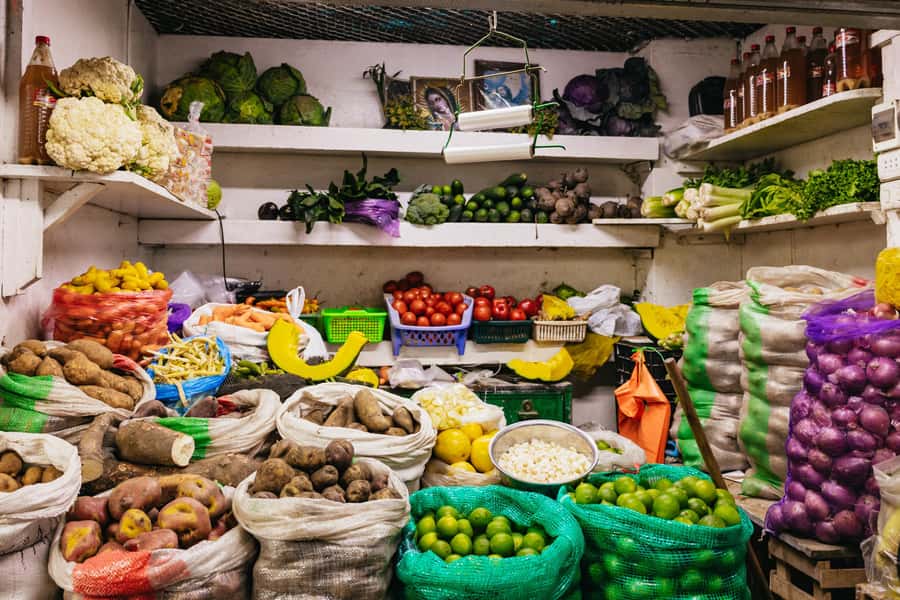
Mercado Central is one of the strongest parts of the experience. The market visit lasts about 25 minutes, giving you time to look at produce, spices, fruit, and local specialties while your guide explains what you are seeing.
Markets are useful because they put dishes in context. A restaurant menu tells you what is ready to eat. A market shows the raw ingredients, shopping habits, regional products, and practical side of the city’s food system.
You may taste fruit here, and the market can also be a good place to notice ingredients you would otherwise miss. Your guide can help you identify unfamiliar items and explain how they are used. This is especially useful if you plan to eat independently later in your trip.
The stop is not designed as a long shopping session. The group needs to stay together and continue to Chinatown, so you should not expect time for a major market haul. It is better viewed as a guided introduction to the center’s food trade.
Chinatown and the Peruvian-Chinese connection
The Chinatown portion adds a different flavor to the route. Lima’s Chinese-Peruvian food tradition is known as chifa, and it is one of the clearest examples of how migration and local ingredients shaped the city’s cooking.
Here, the tour combines walking, sightseeing, street food, and another tasting. The stop is fairly short, but it breaks up the route and broadens the food story. You are no longer sampling only dishes associated with Spanish, Indigenous, or African influences. You are also seeing how Chinese techniques and Peruvian products meet in everyday Lima cuisine.
This is one reason I would choose the tour early in a Lima stay. Once you understand that the city’s food culture includes markets, street snacks, old restaurants, drinks, and chifa, restaurant menus become easier to read. You also gain ideas for where to return on your own.
Desserts, churros, picarones, and the filling finale
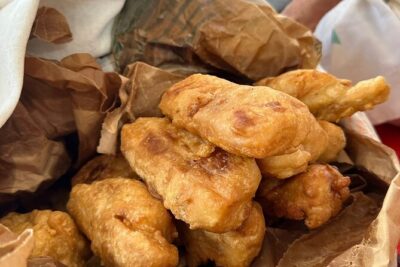
The sweet stops are a major part of the experience. Expect creole churros and picarones, a Peruvian doughnut made with squash and sweet potato, usually served with a syrup. There is also dessert and street food later in the route before the tour finishes at Alameda Chabuca Granda.
The churros have been singled out repeatedly as a highlight, and they are served generously enough to matter. Picarones also tend to be a full portion rather than a tiny sample. If you have a sweet tooth, this will feel like a proper reward at the end of a long walk.
If you prefer savory dishes, the balance may feel slightly off. One useful strategy is to eat lightly before the tour, share a dessert when possible, and save room for the final stop. The day’s order and portion sizes can change, so you should not assume every tasting will be a bite-sized sample.
By the end, you are likely to feel well fed. That is part of the value, but it also means this is not the best choice immediately after a large meal or if you want a light introduction to Peruvian food.
How the guides shape the experience
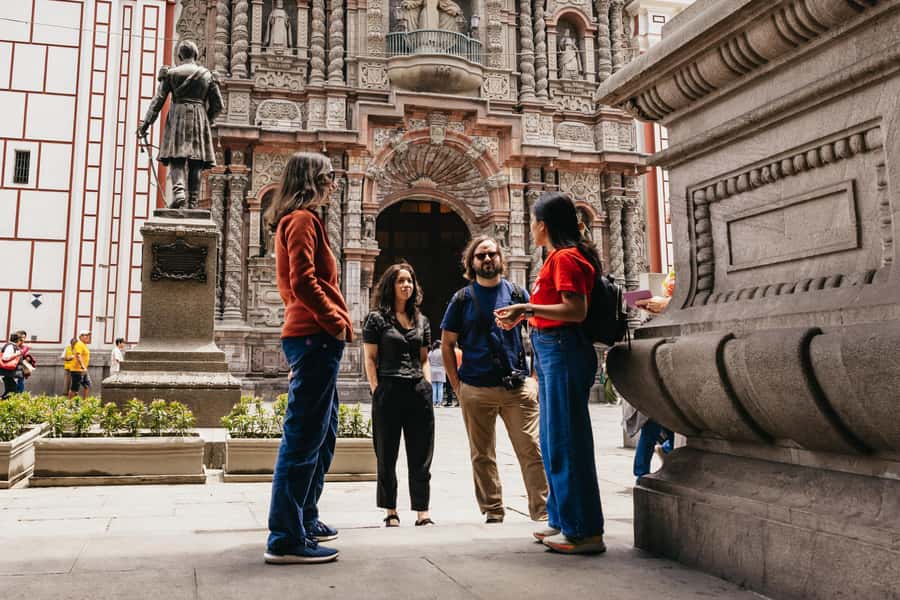
The guide makes a real difference because this route involves many short stops. Marcos is frequently praised for combining humor with clear explanations of food, architecture, and Peruvian history. Aura is described as attentive and flexible, with a talent for adjusting the emphasis toward a group’s interest in Lima’s past.
Valeria has also been praised for keeping the route organized and explaining the culture behind each tasting. David, Sheyla, Shainy, and Manuel have received similar praise for warmth, timing, and food knowledge.
The important point is not memorizing the names. It is that the tour is designed around a live guide rather than a fixed audio script. You can ask why a dish is eaten, how a building was used, or what to order later. The best guides keep the group moving while still allowing those questions.
The shared tour is conducted in English only. Guides will not provide the tour in English and Spanish at the same time for a mixed-language group. If you need another language, you must book a private tour instead.
Is $69 a fair price?
At $69 per person, this is not the cheapest way to eat in Lima. You could buy individual street foods for much less if you already know the center, speak enough Spanish to order confidently, and can judge which vendors to try.
The value comes from combining the food with a four-hour guided route. Your fee includes food tastings, drinks, and a local guide. You are also paying for the planning: someone has selected the stops, timed the walk, handled ordering, and connected the food with the city’s buildings and customs.
The price looks strongest if this is your first visit to Lima or your first day in the historic center. You get orientation, a substantial meal, and a list of foods to seek out later. It is less compelling if your main goal is a formal church tour, a market photography session, or a quiet restaurant meal.
Free cancellation up to 24 hours before the start and reserve-now, pay-later booking make it easier to fit into a changing schedule. Starting times vary, so check availability when you book.
Who should book this Lima experience?
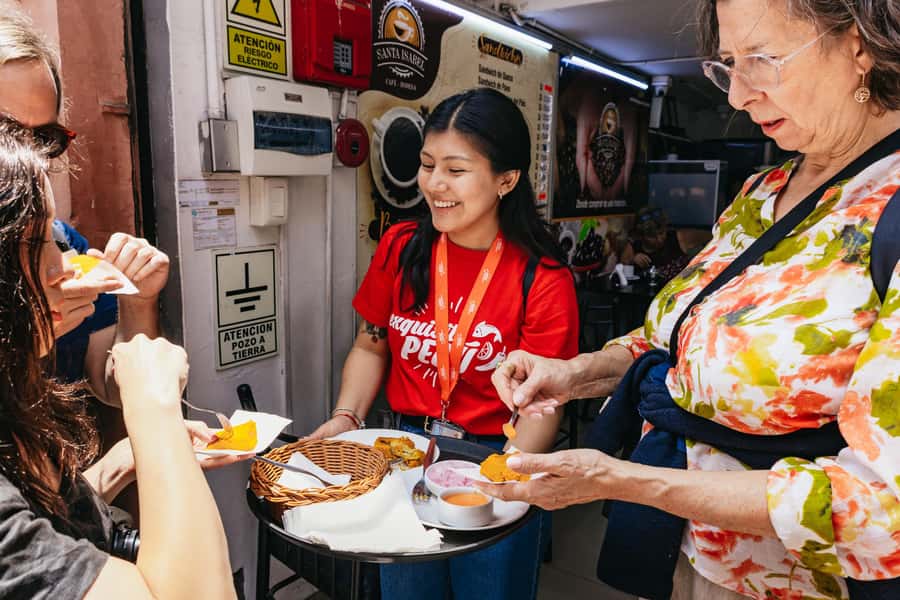
I would recommend it to an English-speaking visitor who wants a practical introduction to central Lima and is happy to walk between several food stops. It suits curious eaters, first-time visitors, and anyone who wants to try dishes they might not confidently order alone.
It also works well as an early-trip activity. The guide can point you toward foods and areas to revisit, while the historic center gives you a useful orientation to the capital.
I would not recommend it to vegetarians, vegans, or pescatarians because alternatives cannot be provided. You should also avoid it if you have a severe gluten or nut allergy, since some foods may contain traces. Dietary restrictions must be given at booking at least 24 hours before the tour, but the stated restrictions still apply.
Bring comfortable walking shoes, a small bag, and an appetite. Leave luggage behind, and do not plan another large meal afterward.
Should you book it?
Book this tour if you want a filling food introduction tied to Lima’s streets and landmarks, not a formal sightseeing tour with a few token samples. The mix of anticuchos, market fruit, chifa flavors, chilcanos, churros, and picarones gives you a broad first taste of the city.
Skip it if you need vegetarian or allergy-safe substitutions, dislike sweets, or want to spend the day inside Lima’s churches and museums. For everyone else, $69 is a reasonable price for four hours of food, guiding, and historic-center orientation, especially at the start of a Peru trip.
FAQ
Where does the tour start?
It starts at the main door of the Gran Hotel Bolívar, at Jirón de la Unión 958 in Cercado de Lima, facing Plaza San Martín.
Where does the tour finish?
The tour finishes at Alameda Chabuca Granda.
How long does the experience last?
The tour lasts four hours.
What language is the tour conducted in?
The shared tour is conducted in English only. For other languages, you need to book a private tour.
Are food and drinks included?
Yes. Food tastings, drinks, and a local guide are included in the tour price.
Can vegetarians, vegans, and pescatarians join?
No. The tour provider states that vegetarian, vegan, and pescatarian alternatives cannot be provided.
Can I bring luggage or a large bag?
No. Luggage and large bags are not allowed on the tour.
More Food and History Walks in the world
- Amsterdam Food and Cultural Tour with Tastings
★ 5.0 · 4,315 reviews - Barcelona: Tapas Walking Tour with Food, Wine, and History
★ 4.8 · 4,261 reviews - Sevilla Food Tour: Tapas, Wine, History & Traditions
★ 5.0 · 3,468 reviews - Madrid Tapas & Taverns Small Group Food & History Tour
★ 5.0 · 2,664 reviews
More Shopping Tours in the world
- London Bridge & Borough Market Food Tour with 7 Authentic Dishes
★ 5.0 · 1,972 reviews - Tokyo: Tsukiji Fish Market Food and Walking tour
★ 5.0 · 1,724 reviews - Small Group Cooking Class & Market Food Tour in Florence
★ 5.0 · 1,574 reviews - Nishiki Market Brunch Walking Tour (7 Tastings + Brunch)
★ 5.0 · 1,355 reviews
Just added around the world
- Milan: Street Food Walking Tour★ 4.7 · 180 reviews
- Milan’s Full-Meal Gourmet Food Tour – More Than Tastings★ 4.8 · 81 reviews
- Kolkata Midtown Madness- A Street Food & Nightlife Tour★ 4.9 · 49 reviews
- Milan: Delicious Food Tour and City Center Sightseeing★ 4.8 · 111 reviews
- Mexico City: Authentic Downtown Food Tour★ 4.9 · 260 reviews
- Miami: Intimate Sailing in Biscayne Bay w/ Food and Drinks★ 4.7 · 34 reviews
- Mexico City: Vegan and Vegetarian Street Food Adventure★ 4.8 · 65 reviews
- Mexico City: Mystic Markets La Merced & Sonora Culinary Tour★ 4.9 · 301 reviews
Food Tours in Peru, compared.
Food and Culture Full day Tour in the Sacred Valley
Read our review →
Experience Lima: Taste 12 Snacks and Visit Top Monuments
Read our review →
Lima Street Food: A gastronomic adventure through the city.
Read our review →
Flavors and Tradition Walking Tour with Food Tasting
Read our review →Browse the lists this tour appears in