
REVIEW · SEOUL
Seoul: The Biggest Sea-food Noryangjin Market Tour
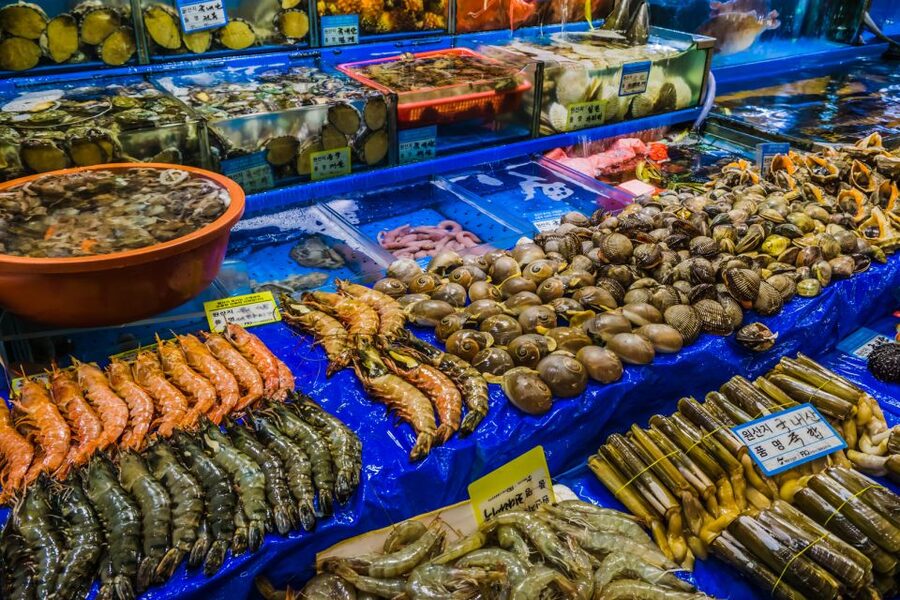
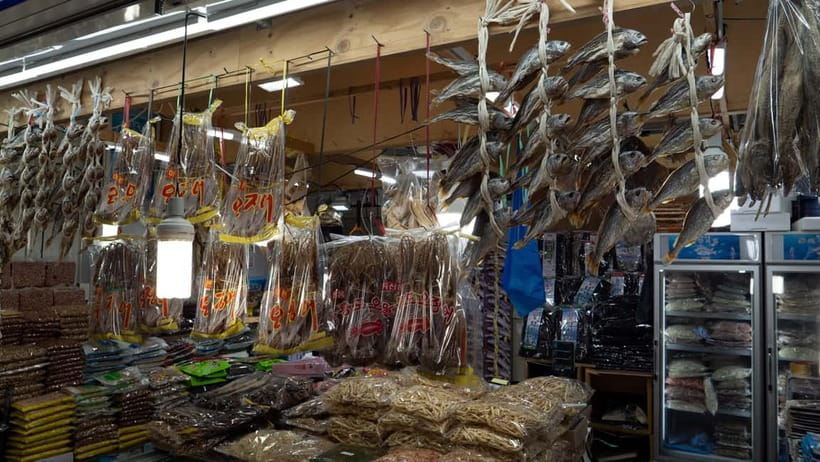
Noryangjin Fish Market is not just a place to buy dinner. It is a working food center that moves 250 to 300 tons of seafood each day, with stalls selling unfamiliar fish, shellfish, dried products, and live catches. This two-hour tour helps you make sense of it all, then puts you at a market restaurant for seasonal sashimi and spicy fish stew.
I like two things here. First, your guide explains Korean seafood customs instead of leaving you to guess what is in each tank. Second, you see the fish cleaned and prepared before eating it. That link between stall, knife, and table makes the meal feel like part of the market, not a separate restaurant stop.
The main consideration is the price: $110 per person is a serious outlay for a two-hour tour. You should also wear shoes you can walk carefully in, since one participant specifically warned about wet floors. This is best for curious eaters who want context and help ordering, not for anyone seeking a cheap market stroll.
Key points about the Noryangjin market tour
- 250 to 300 tons daily: Learn how one of Korea’s major seafood markets functions at a remarkable scale.
- Seasonal sashimi and fish stew: Lunch includes both raw fish and a hot, spicy preparation.
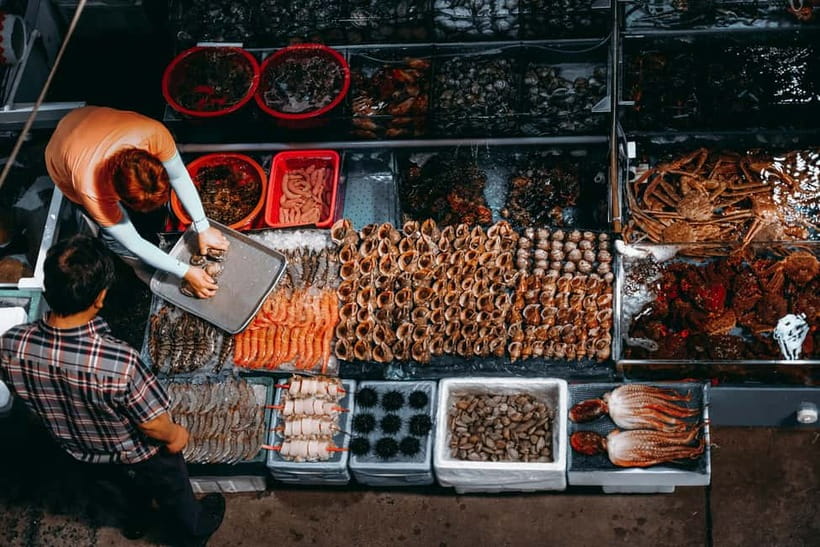
- Fish preparation in front of you: Watch a trusted vendor fillet and prepare the seafood for your meal.
- English-speaking local guides: Guides including Sophie, Joy, Sally, Sujin, Steve, and others have led the experience.
- Small groups of up to 10: The group size leaves room for questions and personal help.
- Possible live octopus tasting: This was included in one recent meal, but the exact seafood depends on the day and season.
Entering Noryangjin through Exit 7
You meet at Exit 7 of Noryangjin Station. The operator sends the exact meeting details and time by email or WhatsApp, so check your messages before leaving your hotel.
From the start, the guide’s role matters. Noryangjin can be a confusing place if you do not read Korean or know your fish. The tour is designed for international visitors, and the English commentary focuses on ingredients that may be unfamiliar outside Korea.
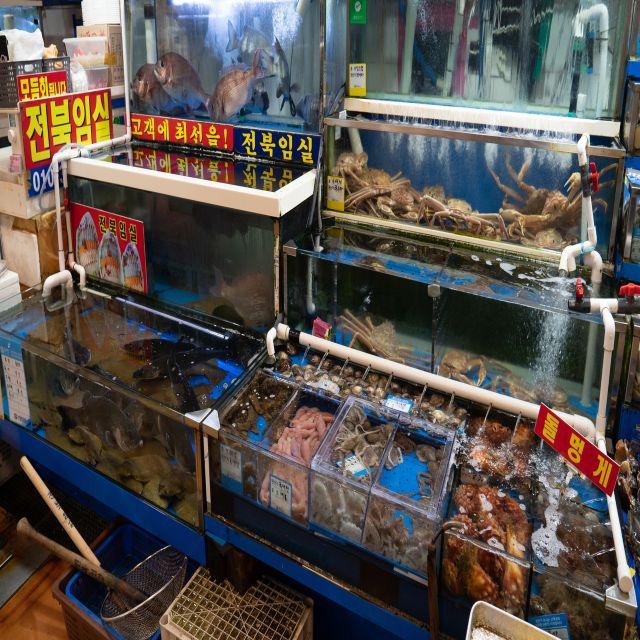
You will not simply walk past rows of tanks and stalls. Your guide explains the market’s layout, what Koreans commonly eat, and how seafood habits developed through Korean food culture and history. That extra layer gives the market meaning. Instead of seeing only a large collection of fish, you begin to understand which items are everyday foods, which are seasonal, and how they reach the plate.
The group is capped at 10 people. That is small enough for questions, though the exact feel will depend on attendance. If fewer than four people book, the tour can be canceled, with notice sent through WhatsApp. Keep that rule in mind if you are building a tight schedule around the experience.
More Food Tours in Seoul
- Seoul Street Food Market Tour
★ 5.0 · 1,226 reviews - Seoul: Night Market Food Tour with Local Guide
★ 4.9 · 943 reviews - Seoul: Palace, Temple and Market Guided Foodie Tour at Night
★ 4.9 · 750 reviews
Seeing Seoul’s seafood economy at work
Noryangjin is famous for its scale, and the daily volume gives you a useful sense of its importance. The figure of 250 to 300 tons of product moving through the market is not a decorative statistic. It explains why this place feels like part of Seoul’s daily food system rather than a set built for tourists.
Your guide points out the different types of seafood and explains how Koreans prepare them. Some ingredients may be familiar, while others can be difficult to identify without help. The tour focuses especially on seafood that is unique or less familiar to people from outside Korea.
This is where the tour earns its place over a self-guided visit. You could walk through Noryangjin alone, but you might not know what you are looking at or how to buy it. The guide gives you a way to ask questions without worrying about language problems or choosing a dish blindly.
The experience is also about eating habits. You learn why raw seafood, soups, and other preparations matter in Korean meals. The explanations connect the market to everyday life, rather than treating it as an isolated attraction.
From live tank to prepared seafood
One of the most useful parts of the visit is watching a vendor fillet and prepare fresh fish. This is not a cooking class, and you are not promised a chance to handle the knife yourself. Instead, you watch the process closely as seafood changes from a market purchase into something ready to eat.
That short demonstration adds practical value. You see how the freshness on display becomes the meal in front of you, and your guide can explain what is being prepared. For many people, this will be the first time they have watched fish handled in such a direct market setting.
The process may be exciting, but it can also be intense. Noryangjin is a real seafood market, not a polished dining room. You may see live and freshly killed fish, and one meal included octopus that was still moving. If that idea makes you uneasy, tell the guide about your limits before ordering. Also report allergies in advance.
A market visit can be visually and physically demanding. Floors may be wet, so waterproof shoes or careful walking are sensible. This is a small detail, but it can make a difference when you are trying to watch the preparation instead of watching your feet.
A lunch of sashimi, stew, and seasonal choices
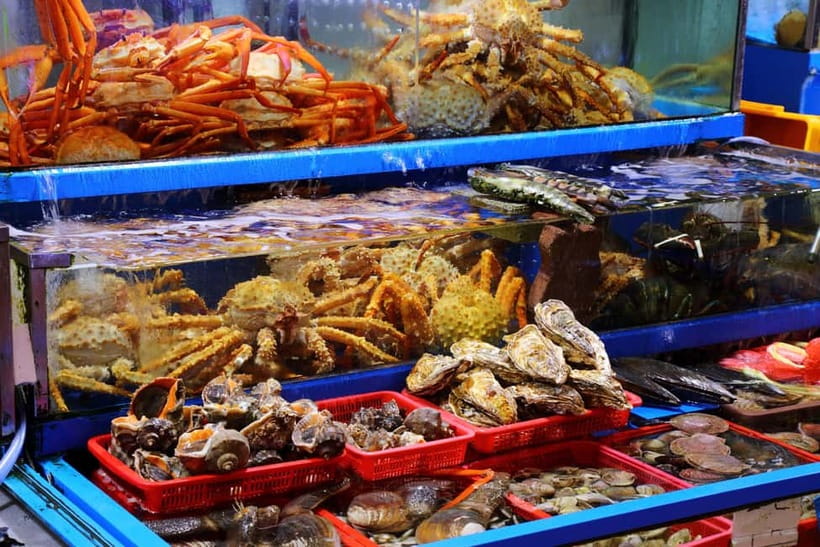
Lunch includes seasonal assorted sashimi and spicy fish stew. That pairing is one of the tour’s strengths because it gives you two very different ways to eat seafood in one sitting.
The sashimi shows off the freshness and texture of the fish. The stew provides a hot, strongly seasoned contrast. Since the selection is seasonal, you should not expect a fixed menu or a particular species every time. That uncertainty is part of the market experience, although it may disappoint you if you want to choose one exact dish in advance.
The meal is served after the market walk and preparation viewing. This order makes sense: first learn what you are seeing, then eat it. You can ask about Korean ways of enjoying sashimi and get help with unfamiliar accompaniments or sauces.
One participant described being shown how to eat sashimi in Korean style. Another guide even helped a participant find a sauce at a convenience store afterward. That kind of practical food advice can be especially useful if you want to continue exploring Korean cuisine after the tour.
Live octopus may appear, but it is not listed as a guaranteed part of lunch. Treat it as a possible extra, not a promise. The dependable elements are the seasonal sashimi and spicy fish stew.
More market tours in South Korea:
- Downtown Seoul Guided Food & Market Tour with 8+ Local Tastings
★ 5.0 · 580 reviews - Seoul: Guided Food & Market Tour with 8+ Tastings
★ 4.9 · 342 reviews - Busan: Food Market Tour, Smash Seafoods and Street Foods
★ 4.8 · 80 reviews - Busan Tailored Korean cooking class (Vegan OK)with market tour
★ 5.0 · 66 reviews
The guides make the difference
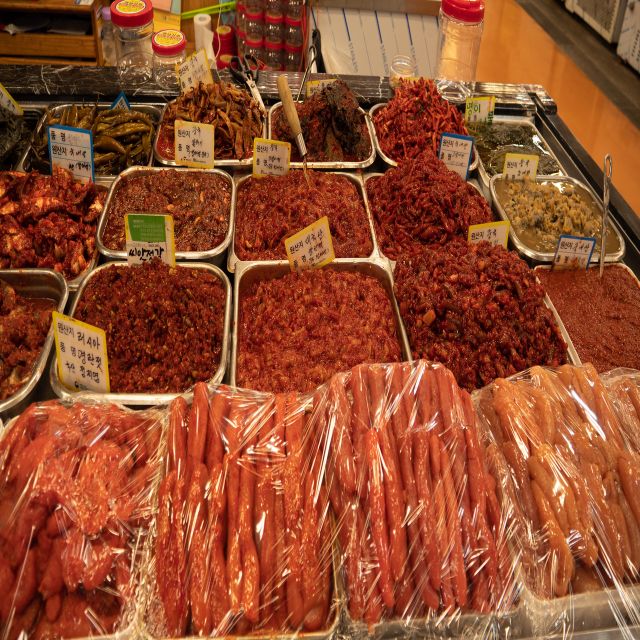
The tour is only two hours, so your guide shapes much of the experience. Several guides have led this activity, including Sophie, Joy, Sally, Sujin, and Steve. Their roles go beyond translating names of fish.
Sophie has been praised for making the market feel approachable and for choosing an excellent meal. Joy has been described as personable and entertaining, with useful explanations about Korean food and history. Sally has led short, informative walks and helped people feel comfortable entering a place they might not have visited alone.
Those details point to the tour’s most important benefit: personal interpretation. A market guide can explain why a particular seafood item matters, how it is commonly prepared, and what to expect at the table. That help is worth more to you if you have little experience with Korean food.
The guides also appear to adjust to the group. The experience is intended for non-Korean speakers, and the small format should make it easier to ask about ingredients, preparation, and eating customs. Still, guide assignments can change, so you should not book expecting one specific person unless the operator confirms it.
Is $110 good value for two hours?
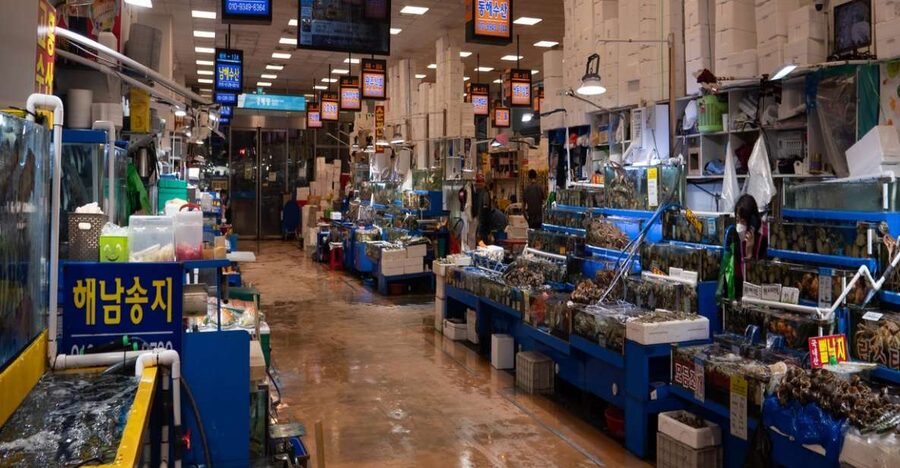
At $110 per person, this is not a bargain lunch. You are paying for a guide, interpretation, market access with support, and the included meal. The value depends on how much help you want.
If you already know Noryangjin, speak Korean, and feel comfortable choosing a vendor and arranging a meal, you can likely visit more cheaply on your own. The tour does not make sense as a simple way to buy seafood.
If this is your first visit, the price is easier to justify. You get a structured introduction to one of Seoul’s major food markets, explanations of unfamiliar seafood, a preparation demonstration, and lunch. You also avoid the uncertainty of pointing at a tank and hoping for the best.
The two-hour length keeps the commitment manageable. You can fit it into a morning or afternoon without giving up a full day. On the other hand, the time is short for a market this large. You will get a focused orientation, not an exhaustive survey of every section.
Think of the cost as paying for confidence and context. The meal alone does not make the price a clear bargain, but the guidance can be valuable if it lets you try foods and customs you would otherwise skip.
Who should book this market experience?
I would recommend it to first-time visitors to Seoul who want a food experience with a strong local setting. It suits people who like asking questions, trying unfamiliar seafood, and learning why a dish is eaten a certain way.
It is especially useful for:
- Solo visitors who want company at a market meal
- Couples or friends who do not speak Korean
- Curious eaters who want to try sashimi beyond a standard restaurant
- People interested in Korean food customs and market life
- Visitors who want a short activity near Seoul’s central sights
You may want to skip it if you dislike raw seafood, feel uncomfortable seeing fish prepared, or want a quiet restaurant lunch. The market is practical and active, and the possible live octopus tasting will not suit everyone.
Families should think about food preferences and comfort with market conditions. The activity is wheelchair accessible, but the wet market environment may still require care. Tell the operator about allergies in advance, since the meal centers on seafood.
Booking details worth knowing
The tour lasts two hours and is conducted in English. It is a small-group activity with a maximum of 10 participants, and the meeting point is Exit 7 of Noryangjin Station.
Weekend and holiday reservations cannot be confirmed, so do not assume those dates are available until the operator responds. The exact meeting time and related instructions arrive by email or WhatsApp.
You can cancel up to 24 hours before the tour for a full refund. A same-day cancellation or no-show receives no refund. The reserve-now, pay-later option lets you hold a place without paying immediately, which helps if your Seoul schedule is still shifting.
Should you book the Noryangjin tour?
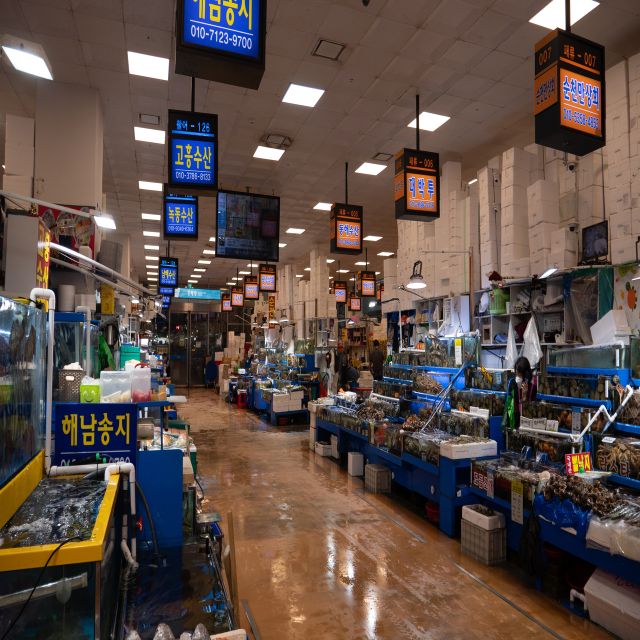
Book it if you want more than photographs of fish tanks. The best parts are the guide’s explanations, the view of fish being prepared, and the chance to eat seasonal sashimi and spicy stew in the market setting.
At $110, this is a specialty experience rather than a cheap meal. I would choose it for a first Noryangjin visit, especially if you do not speak Korean or want to try unfamiliar seafood with support. I would not choose it simply to browse the market or save money.
Bring waterproof shoes, disclose allergies early, and keep an open mind about the exact seafood served. If you do that, this short tour can turn a potentially confusing market visit into one of Seoul’s most memorable food experiences.
FAQ
Where does the Noryangjin Fish Market tour meet?
Meet your English-speaking guide at Exit 7 of Noryangjin Station. The operator sends meeting details and the time by email or WhatsApp.
How long does the tour last?
The tour lasts two hours.
What food is included?
Lunch includes seasonal assorted sashimi and spicy fish stew. The exact seafood depends on the season and market availability.
Is live octopus included?
Live octopus was included in one reported meal, but it is not listed as a guaranteed part of the tour. The dependable meal components are seasonal sashimi and spicy fish stew.
Is the tour conducted in English?
Yes. The tour includes a live English-speaking guide.
How many people can join the tour?
The tour is limited to 10 participants.
Is the tour wheelchair accessible?
Yes, the activity is listed as wheelchair accessible.
What happens if fewer than four people book?
If fewer than four participants book, the tour can be canceled. The cancellation notice is sent by WhatsApp.
Can I cancel for a refund?
You can cancel up to 24 hours in advance for a full refund. There is no refund for a same-day cancellation or no-show.
More Shopping Tours in South Korea
- Busan history and market food tour with local chef
★ 5.0 · 58 reviews - Busan Local Food Cooking Class with Market Tour
★ 5.0 · 53 reviews - Seoul: Namdaemun Market Food Tour
★ 4.9 · 34 reviews - Seoul: Gwangjang Market Netflix Food Tour
★ 4.7 · 31 reviews
Just added around South Korea
- Busan Tailored Korean cooking class (Vegan OK)with market tour★ 5.0 · 66 reviews
- Busan history and market food tour with local chef★ 5.0 · 58 reviews
- Busan Local Food Cooking Class with Market Tour★ 5.0 · 53 reviews
- Seoul: Namdaemun Market Food Tour★ 4.9 · 34 reviews
- Seoul: Vegan Temple Food Class, Jogyesa & Changdeokgung Tour★ 4.6 · 34 reviews
- Seoul: Guided Food & Market Tour with 8+ Tastings★ 4.9 · 342 reviews
- Seoul: Gwangjang Market Netflix Food Tour★ 4.7 · 31 reviews
- Busan: Gukje and Jagalchi Market Food Tour with Tastings★ 4.6 · 27 reviews
Food Tours in Seoul, compared.
Palace, Temple and Market Guided Foodie Tour at Night
Read our review →
Downtown Seoul Guided Food & Market Tour with 8+ Local Tastings
Read our review →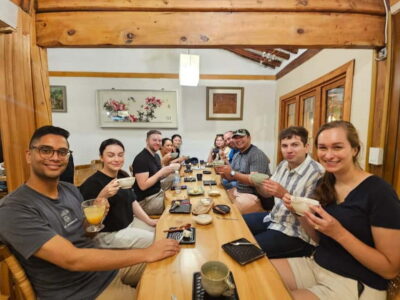
Vegan Temple Food Class, Jogyesa & Changdeokgung Tour
Read our review →
Browse the lists this tour appears in