
REVIEW · SOUTH KOREA
Downtown Seoul Guided Food & Market Tour with 8+ Local Tastings
Seoul’s food culture makes the most sense when you taste it in the places where people actually eat it. This three-hour market walk moves from savory market food to sweets, tea, and local specialties, with stops around palace neighborhoods and traditional streets rather than one sit-down meal.
I like the small group size, capped at 12 and often closer to 10, and I like the way the tour uses food to explain Korean custom and history. Guides such as Alex, Jae, JaeSun, Youla, and Ji Yoon have been praised for clear explanations and helpful Seoul tips. The main caution is value: at $98, this is costly for a food tour, especially if you want barbecue, noodles, or a large range of full meals.
Key points to know before booking
- Eight or more tasting moments: Expect mung bean pancake, dumplings, tteokbokki, fish soup, kimbap, sweet bread, honey snacks, rice cake, tea, and a secret dish.
- A market-first route: The tour begins at 214 Jong-ro and gets to food quickly, useful if you arrive hungry.
- Palace-district setting: You pass Gyeongbokgung Palace, Gwanghwamun Gate, Bukchon Hanok Village, and other historic sights as you eat.
- A quiet finish: The tour ends in an Insa-dong teahouse about 100 meters from Anguk Station on Seoul’s orange Line 3.
- Good guide access: Guides have been praised for food explanations, restaurant advice, and patient help with first-time visitors.
- Not ideal for every diet: Some dietary restrictions may not fit the planned menu, so ask before booking.
Starting with Seoul food at the market
The meeting point is 214 Jong-ro in Jongno District. This puts you in one of Seoul’s most useful areas for combining food, old royal sights, shopping, and traditional streets.
The tour is designed to begin with food rather than a long introduction. That matters if you have just arrived in Seoul and want to get your bearings through taste. One account describes the group going straight to a restaurant after meeting, so do not eat a heavy meal beforehand. You want room for several small portions.
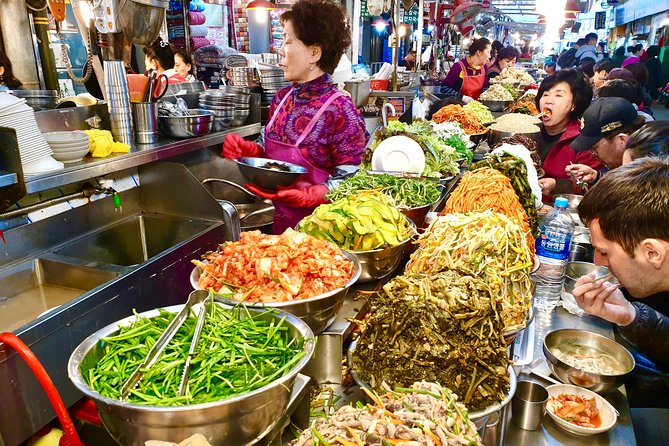
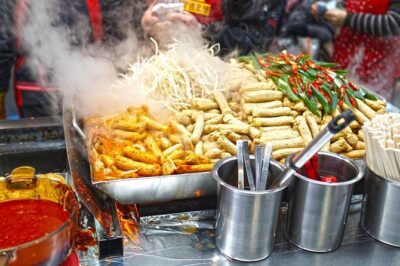
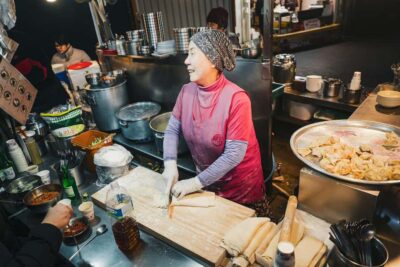
The route uses a traditional market as its first major setting. Market food is one of the strongest reasons to book a guided walk. Seoul markets can feel crowded and confusing, and many stalls offer dishes without much English explanation. A guide can point out what is being prepared, explain how it is eaten, and help you decide what deserves a return visit later.
The market itself is more than a string of snack counters. It is a place to see ingredients, cooking methods, local shopping, and quick meals happening side by side. You may also have time to look at souvenirs, though this is mainly a food experience rather than a shopping tour.
More Food Tours in Seoul
- Seoul Street Food Market Tour
★ 5.0 · 1,226 reviews - Seoul: Night Market Food Tour with Local Guide
★ 4.9 · 943 reviews - Seoul: Palace, Temple and Market Guided Foodie Tour at Night
★ 4.9 · 750 reviews
The first bites: mung bean pancake and market classics
One of the signature tastings is a nokdujeon, a fried mung bean pancake, served with sweet onions. This became a favorite for several people, and it is easy to see why. The pancake gives you a crisp, savory start, while the onions cut through the richness.
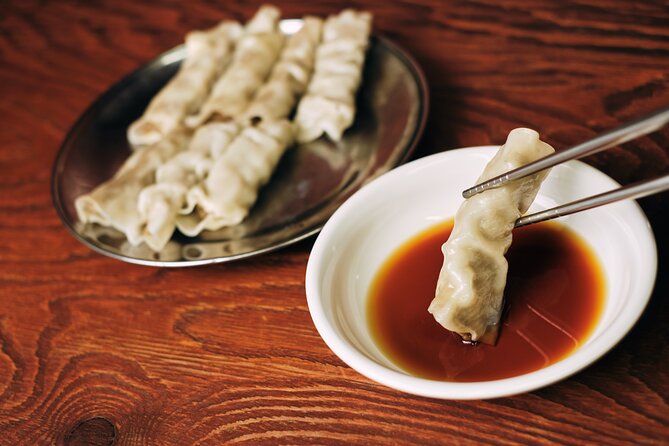
The tour also includes mandu, Korean dumplings, and tteokbokki, chewy rice cakes in a sauce described as slightly spicy. These dishes show two different sides of Korean eating. Mandu is familiar enough for a cautious first bite, while tteokbokki brings the soft texture and chili heat that many people associate with Korean street food.
The menu can vary. Some outings have included two kinds of mandu, fried chicken, beef tartare, baby octopus, kimchi, or other market specialties. The advertised core menu does not promise every one of those items, so treat them as possible additions rather than guaranteed stops.
A good guide will help you understand the names and textures instead of simply handing you food. Jae, JaeSun, Alex, and Youla have all been singled out for explaining why dishes are called what they are, how they are made, and how they connect to Korean life. That context is especially useful when you encounter a dish you might not order alone.
Fish soup, kimbap, and a useful lesson in small portions
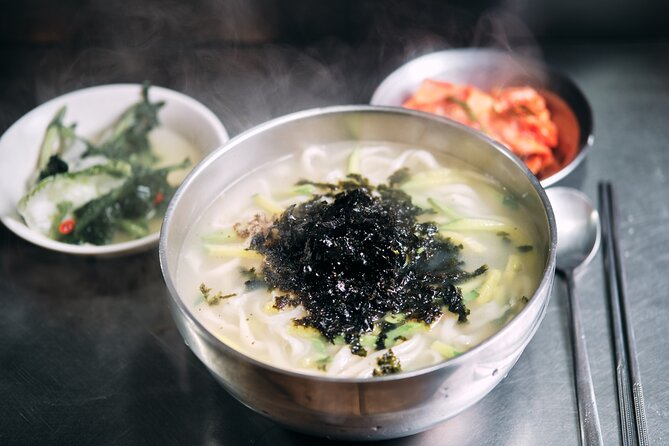
Another planned tasting is minced fish fillet with a little fish soup. It is a modest but worthwhile stop because it shows how Korean market food often combines a quick bite with a warm broth.
Freshly made kimbap follows, along with sweet and salty cream bread. Kimbap is often compared with sushi, but the comparison only gets you so far. The fillings, seasoning, and role in everyday Korean meals are different, and the guide can explain those distinctions as you eat.
The bread stop adds a modern and distinctly Korean bakery note. This is one place where the tour moves beyond the standard list of spicy dishes and dumplings. Several outings have placed a strong focus on sweets and baked treats, including a salt bread or cream-filled pastry that became a memorable part of the morning.
That balance will please you if you like trying many small tastes. It may frustrate you if you booked mainly for meat, noodles, barbecue, or banchan. One useful tip is to keep your portions controlled early on. The food comes in a steady stream, and the tour is easier to enjoy when you have not filled up at the first stall.
Gyeongbokgung, Gwanghwamun, and food with a royal backdrop
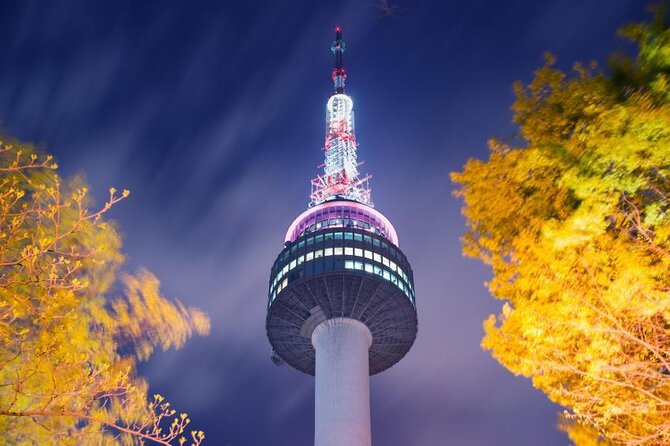
The route passes the main royal palace of the Joseon dynasty, Gyeongbokgung, built in 1395. You may also see Gwanghwamun Gate, the palace’s main gate, as the group moves through northern Seoul.
This sightseeing adds real value, but you should set your expectations correctly. The tour is not a palace admission tour, and the supplied schedule does not promise a full palace visit or an extended palace history lesson. Think of these landmarks as part of the walking route and a way to place Korean food within the city’s royal and modern past.
The palace area helps explain why Jongno is such a useful base for a food walk. Within a short distance, you can move from market counters to grand gates, old neighborhoods, shops, and tea houses. The guide’s historical comments turn the route into more than a series of snacks.
The walking pace is described as manageable, with enough movement to work off some of the food but not so much that it becomes a hiking tour. Still, wear comfortable shoes. Seoul sidewalks, market lanes, and sloping traditional neighborhoods are far easier in supportive footwear.
More market tours in the world:
- Bangkok by Night: Temples, Markets and Food Tuk-Tuk Tour
★ 5.0 · 3,752 reviews - Chef Guided Food Tour of Pike Place Market
★ 5.0 · 3,733 reviews - Tokyo Tsukiji Fish Market Food and Culture Walking Tour
★ 5.0 · 3,184 reviews - Bangkok: Markets, Temples and Food Night Tour by Tuk Tuk
★ 4.9 · 2,371 reviews
Bukchon Hanok Village and the old streets of Jongno
Bukchon Hanok Village sits on a hill between Gyeongbokgung Palace, Changdeok Palace, and Jongmyo Royal Shrine. Its traditional Korean houses and narrow lanes make it one of Seoul’s most recognizable old districts.
On this tour, Bukchon is part of the wider sightseeing context rather than a stand-alone guided visit. You pass through or near historic areas while moving between food stops, so your experience will depend on the exact route and the group’s pace.
This is one reason the tour works well early in a Seoul stay. You get a practical introduction to Jongno, learn where the palace district sits, and collect food ideas for later. Alex, Jae, and other guides have been praised for suggesting restaurants and places to return to. That advice can be more useful than a generic list, since it comes after you have already tasted several local dishes.
The route also helps you judge what kind of Korean food you want to pursue next. You may decide you want more market snacks, a barbecue meal, a noodle shop, or another visit to the tea district. The tour is strongest as an introduction and orientation, not as a complete survey of Korean cuisine.
Sweet snacks, rice cake, and the final tea house
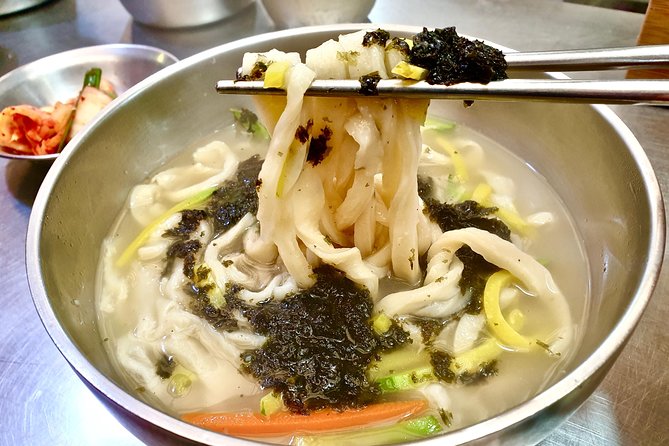
Later tastings include a Korean honey snack, grilled rice cake, and traditional tea. These give the tour a gentler finish after spicy sauces, fried foods, dumplings, and broth.
The sweet side is a real feature, not a minor extra. Some outings have included cream bread, donuts, salt bread, dessert, fresh watermelon drink, or rice drink. If you enjoy Korean bakery food and traditional sweets, this variety will be a welcome change from a route built entirely around savory dishes.
If you want maximum savory range, keep this in mind before paying $98. The menu is meant to present a balanced food story, and that balance includes sweets. It does not promise barbecue, noodles, or a broad selection of pickled side dishes.
The tour ends at a hidden teahouse in Insa-dong, about 100 meters from Anguk Station on Seoul Subway Line 3, the orange line. This is a smart ending point. Insa-dong is well suited to an after-lunch stroll, and the subway makes it simple to continue sightseeing.
What the $98 price really buys you
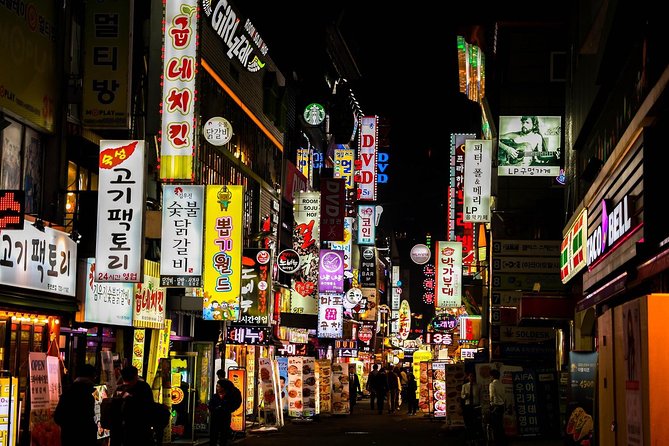
At $98 per person, this is not a cheap way to eat in Seoul. You can spend far less at a market if you know what to order and feel comfortable choosing stalls on your own.
The price makes more sense if you value access and explanation, not just food volume. You are paying for a small group, a planned sequence of tastings, a local guide, cultural background, and help navigating dishes that may be unfamiliar. Lunch is included, and the tour generally provides enough food to leave you satisfied.
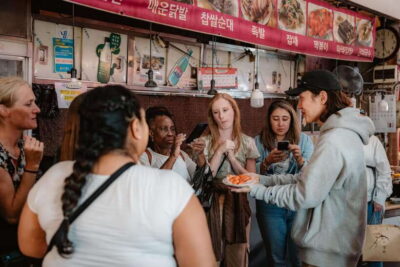
The small group matters. A maximum of 12 is far more manageable than a large bus-style food outing, especially in narrow market lanes. A group of around 10 lets you hear the guide and ask questions without turning every stop into a production.
Still, the cost is hard to defend for someone who has already taken many food tours or knows Seoul well. The menu may feel less varied than expected, particularly if you want several substantial dishes rather than smaller bites. A private option is available, but it will make the price question even more important.
The guides make or break the experience
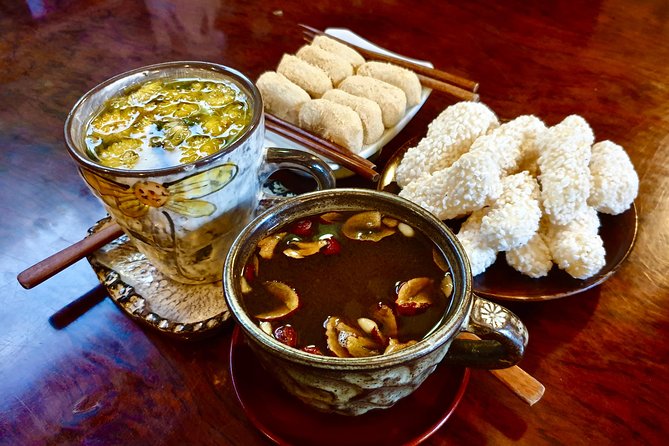
The strongest part of this tour is the guide’s role. Alex has been praised for patient explanations, clear English, and practical advice. Jae and JaeSun have been noted for linking dish names and cooking methods with Korean history. Youla has been praised for making the market route lively and organized.
Ji Yoon has also been described as especially attentive, helping with a taxi at the end and offering dinner recommendations. That level of personal help is not guaranteed with every departure, but it shows the kind of service the company aims to provide.
Guide quality can vary from one date to another, as it does with any small-group tour. The useful thing here is that the guides are not simply there to keep time. Their job is to explain what you are eating, answer questions, and help you make sense of Seoul beyond the planned stops.
Who should book this Seoul food tour?
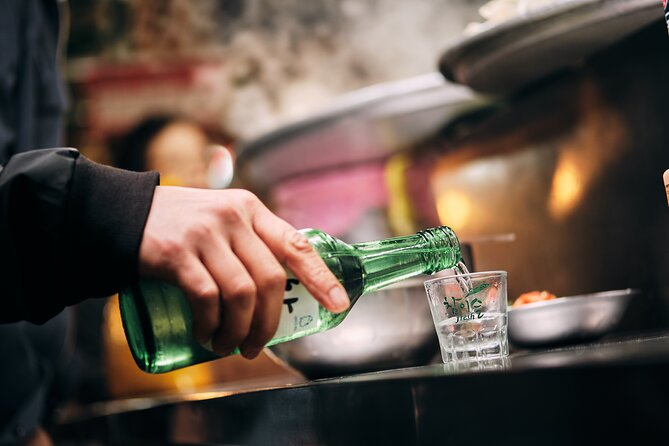
I would book it for a first visit to Seoul, especially on the first or second day. The route gives you a quick sense of Jongno, market food, palace neighborhoods, Bukchon, and Insa-dong. It also gives you a list of places and dishes to revisit.
It suits people who want to try unfamiliar food without ordering a full portion of everything. That is especially helpful with dishes such as beef tartare or baby octopus, which some people may hesitate to order alone.
It is also a good fit for couples, small groups, and solo visitors who prefer company while eating. Families may enjoy it if everyone can manage several stops and some walking, though the tour’s dietary limits should be checked first.
I would look elsewhere if your main goals are Korean barbecue, noodles, a long sit-down lunch, or a large collection of banchan. I would also hesitate if you are paying mainly for food quantity. The experience is about guided tasting and local orientation, not the cheapest possible meal.
The tour has a 4.9 rating from 580 reviews and a 98 percent recommendation rate, with guide friendliness, food explanations, and the range of market stops receiving the strongest praise. One lower rating raised fair concerns about cost, limited savory variety, and a menu that leaned too heavily toward sweets. That criticism is worth taking seriously because it matches the tour’s main tradeoff.
Book at least 24 hours ahead if you need the free cancellation option. Cancellation within 24 hours is not refundable, and changes inside that window are not accepted. The tour does not include hotel pickup or drop-off, but both the starting point and ending point are near public transportation.
Should you book it?
Book this tour if you want a friendly, guided introduction to Seoul food and the Jongno area, and if trying many small portions sounds better than choosing one restaurant meal. The market setting, palace-district walk, thoughtful guide commentary, and tea house ending give the morning a clear shape.
Skip it if $98 feels high for the menu, or if you want a more meat-heavy route with barbecue, noodles, and pickled side dishes. Before booking, contact the provider about dietary restrictions. The company warns that some needs cannot be accommodated because the tastings are planned as a set food experience.
FAQ
How long does the Seoul food tour last?
The tour lasts approximately three hours.
How much does the tour cost?
The listed price is $98 per person.
Where does the tour begin?
It begins at 214 Jong-ro, Jongno District, Seoul, South Korea.
Where does the tour end?
It ends at a teahouse in Insa-dong, about 100 meters from Anguk Station on Subway Line 3.
How many people can join?
The maximum group size is 12 people. The experience is promoted as a small-group tour, generally with around 10 people.
Is lunch included?
Yes. Lunch and the listed food and drink tastings are included.
What food is included?
The planned tastings include mung bean pancake with sweet onions, mandu, slightly spicy tteokbokki, minced fish fillets with fish soup, fresh kimbap, sweet and salty cream bread, a Korean honey snack, grilled rice cake with traditional tea, and a secret dish.
Are hotel pickup and drop-off included?
No. Hotel pickup and drop-off are not included.
Can dietary restrictions be accommodated?
Some dietary restrictions may not be possible because the menu is planned as a balanced food experience. Contact the provider before booking to ask about your needs.
Can I cancel for a full refund?
Yes, if you cancel at least 24 hours before the experience start time. Cancellations or changes made less than 24 hours before the start are not accepted for a refund.
More Shopping Tours in the world
- London Bridge & Borough Market Food Tour with 7 Authentic Dishes
★ 5.0 · 1,972 reviews - Tokyo: Tsukiji Fish Market Food and Walking tour
★ 5.0 · 1,724 reviews - Small Group Cooking Class & Market Food Tour in Florence
★ 5.0 · 1,574 reviews - Nishiki Market Brunch Walking Tour (7 Tastings + Brunch)
★ 5.0 · 1,355 reviews
Just added around the world
- Milan’s Full-Meal Gourmet Food Tour – More Than Tastings★ 4.8 · 81 reviews
- Milan: Street Food Walking Tour★ 4.7 · 180 reviews
- Kolkata Midtown Madness- A Street Food & Nightlife Tour★ 4.9 · 49 reviews
- Milan: Delicious Food Tour and City Center Sightseeing★ 4.8 · 111 reviews
- Mexico City: Authentic Downtown Food Tour★ 4.9 · 260 reviews
- Miami: Intimate Sailing in Biscayne Bay w/ Food and Drinks★ 4.7 · 34 reviews
- Mexico City: Vegan and Vegetarian Street Food Adventure★ 4.8 · 65 reviews
- Mexico City: Mystic Markets La Merced & Sonora Culinary Tour★ 4.9 · 301 reviews
Food Tours in South Korea, compared.
Palace, Temple and Market Guided Foodie Tour at Night
Read our review →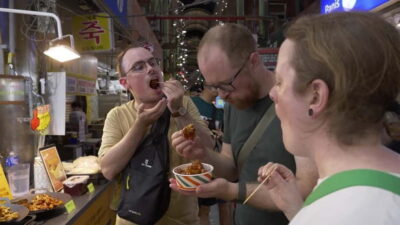
Busan: Food Market Tour, Smash Seafoods and Street Foods
Read our review →
Busan: Small-Group Traditional Korean Food Cooking Class
Read our review →
Busan: Gukje and Jagalchi Market Food Tour with Tastings
Read our review →Browse the lists this tour appears in