
REVIEW · SEOUL
Seoul: Gwangjang Market Netflix Food Tour
Gwangjang Market is the payoff here, but the walk earns it. You begin among the art shops and old streets of Insa-dong, pass through Ikseon-dong’s hanok lanes, then finish with Korean street food at one of Seoul’s best-known markets. It is a smart way to connect food with place instead of simply sitting down to eat.
I like the small-group feel and the way guides such as Peter, Sally, Alan, Charlie, and Sam bring history into the walk. I also like that the food tasting is included, with 3 to 5 local items depending on your option. The main drawback is simple: this is a tasting tour, not a full lunch or dinner, and the larger food portions come near the end.
Key points at a glance
- Gwangjang Market finish: End among food stalls, textiles, and handmade goods, with several Korean street-food tastings included.
- Three historic Seoul districts: Walk from Anguk Station through Insa-dong and Ikseon-dong before reaching the market.
- Guides who shape the experience: Peter, Sally, Alan, Charlie, and Sam are named guides associated with especially strong feedback for history, food advice, and friendly conversation.
- 3 to 5 food tastings: The exact number depends on the option you book, and the food is included in the tour price.
- A walking introduction to Seoul: You get culture, architecture, food customs, and local history in about three hours.
- Not a complete meal: Eat something beforehand, since the tour offers samples and the biggest portions arrive late.
From Anguk Station into old Seoul
Meet your guide in front of Exit 6 at Anguk Station on Subway Line 3. Arrive 10 to 15 minutes early. This is a useful starting point because you are already close to several central neighborhoods, and the tour can move straight into Seoul’s older streets rather than spending time on transport.
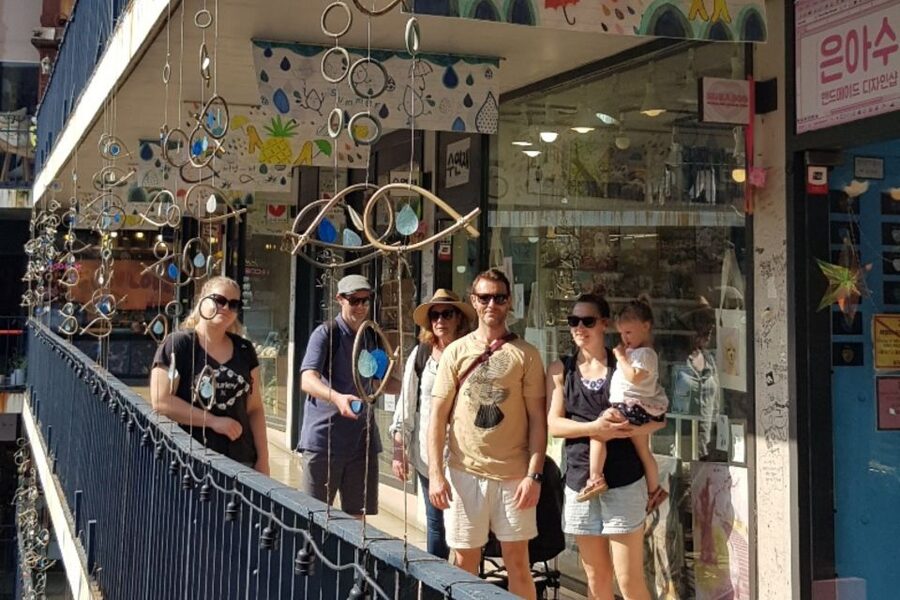
The route begins along Insa-dong Culture Avenue. Insa-dong is built around Korean art, antiques, craft shops, galleries, and traditional goods. You will see a district aimed at both local shoppers and visitors, with old cultural references mixed into a modern commercial street.
This part of the walk is more than a shopping stop. Your guide explains how Insa-dong developed from an older center for art and antiques into a popular Seoul neighborhood where traditional Korean culture remains visible. The value is in the context. Without a guide, you might see a gallery, an antique shop, or a decorated building and keep walking. With one, those details have a place in the story of the neighborhood.
The pace also gives you time to look around. If you are hoping for a long shopping session, this is not the right format, since the group has a destination and a three-hour limit. But if you want a clear introduction to the area, the guided walk gives you more than a quick photo stop.
More Food Tours in Seoul
- Seoul Street Food Market Tour
★ 5.0 · 1,226 reviews - Seoul: Night Market Food Tour with Local Guide
★ 4.9 · 943 reviews - Seoul: Palace, Temple and Market Guided Foodie Tour at Night
★ 4.9 · 750 reviews
Insa-dong’s art shops and old streets
Insa-dong works best early in a Seoul visit. It gives you a first look at traditional Korean art, local design, and the way older districts are used today. The guide can point out the cultural meaning behind the streets and buildings, while you get a sense of how Korean traditions fit into modern city life.
Several strong guide comments focus on this mix of information and ease. Peter is praised for taking time with Korean history and culture. Sally is described as warm and flexible, useful qualities if your group wants to pause for pictures or adjust the rhythm of the walk. Charlie is associated with keeping the tour informative without making it feel stiff.
I would not treat Insa-dong as an untouched historic quarter. It is a popular district with shops and cafes, and some parts feel designed for browsing. That is not a flaw, but it helps set expectations. The appeal is the meeting of old and new, not a frozen museum street.
The walking surface and pace should also matter to you. The route continues on foot through narrow lanes and market areas, so comfortable shoes are a sensible choice. The meeting point is easy to identify, but the group will be moving soon after everyone arrives.
Ikseon-dong and the hanok lanes
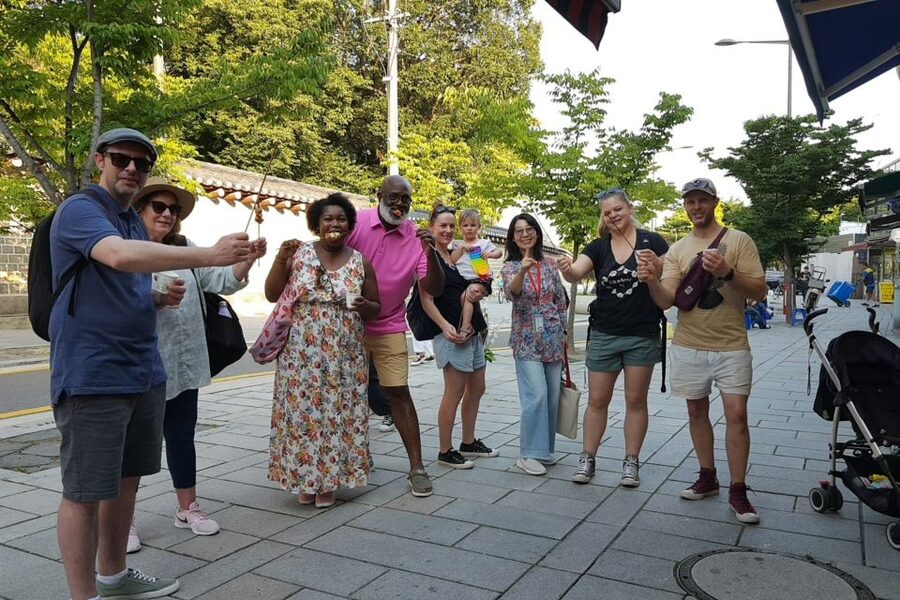
Next comes Ikseon-dong, a neighborhood known for its preserved hanok buildings and narrow alleys. Traditional Korean houses sit alongside modern cafes and small shops, creating one of Seoul’s clearest examples of old architecture used for present-day life.
This is one of the most photogenic parts of the route, but the guide adds something a camera cannot. You hear why the buildings matter and how the neighborhood has changed. The tour presents Ikseon-dong as a place where the older shape of Seoul remains visible while newer businesses occupy the spaces.
I like this stop because it breaks up the food focus. You do not simply jump from one snack to another. You walk through a district with a different mood, hear about Korean buildings and customs, and then continue toward the market with more understanding of the city around you.
The tradeoff is that the tour does not appear to include a long, independent exploration of every alley. You are part of a set walking route. If your main goal is shopping in Ikseon-dong or sitting at a cafe, plan separate time before or after the tour.
Gwangjang Market, where the tasting begins
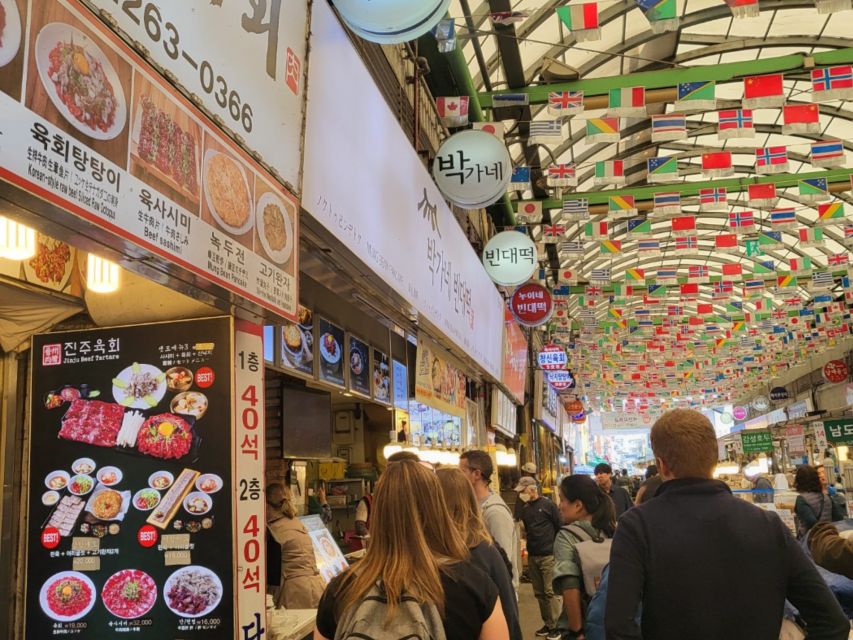
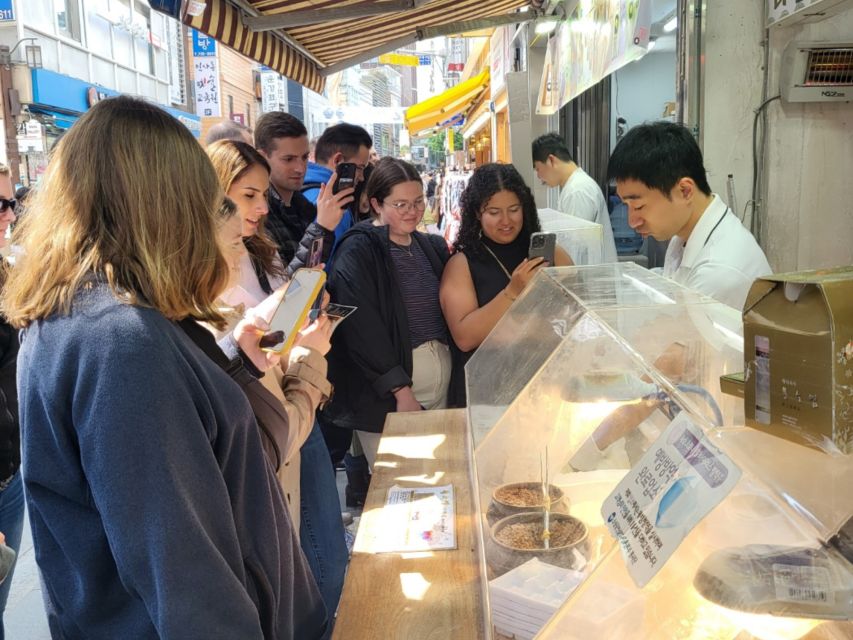
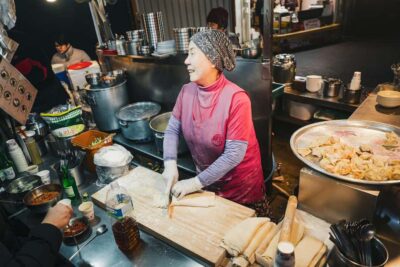
The tour finishes at Gwangjang Market, a major traditional marketplace dating to the early 1900s. It is a working place as well as a sightseeing stop, with food vendors, textiles, handmade goods, and narrow passages filled with activity.
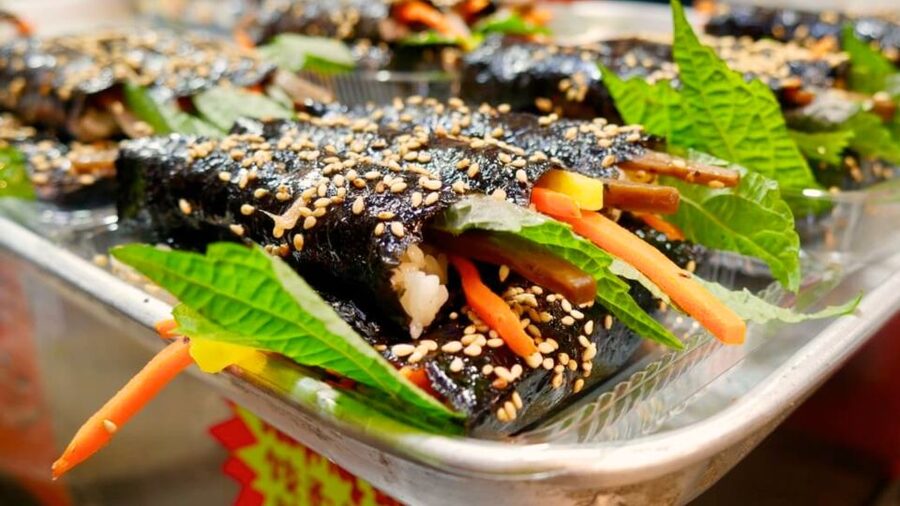
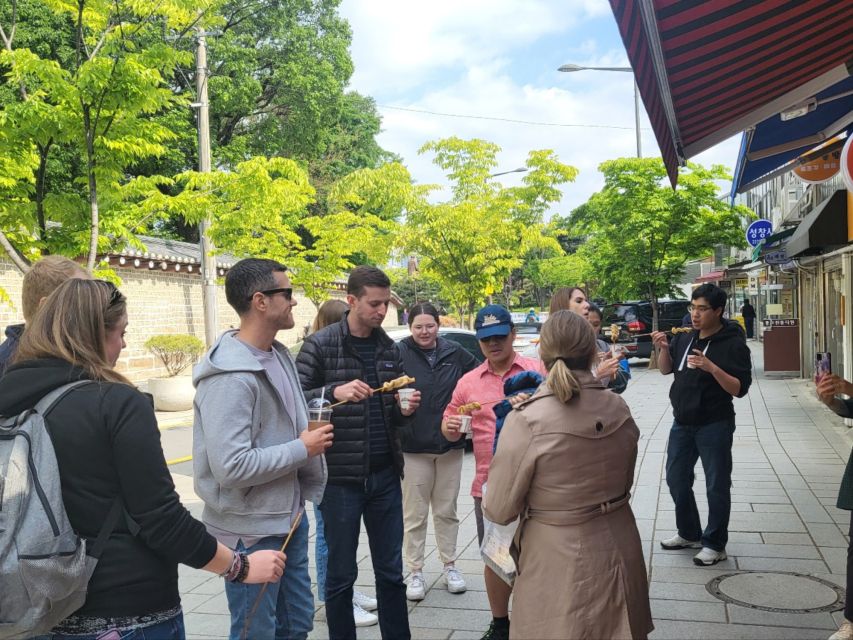
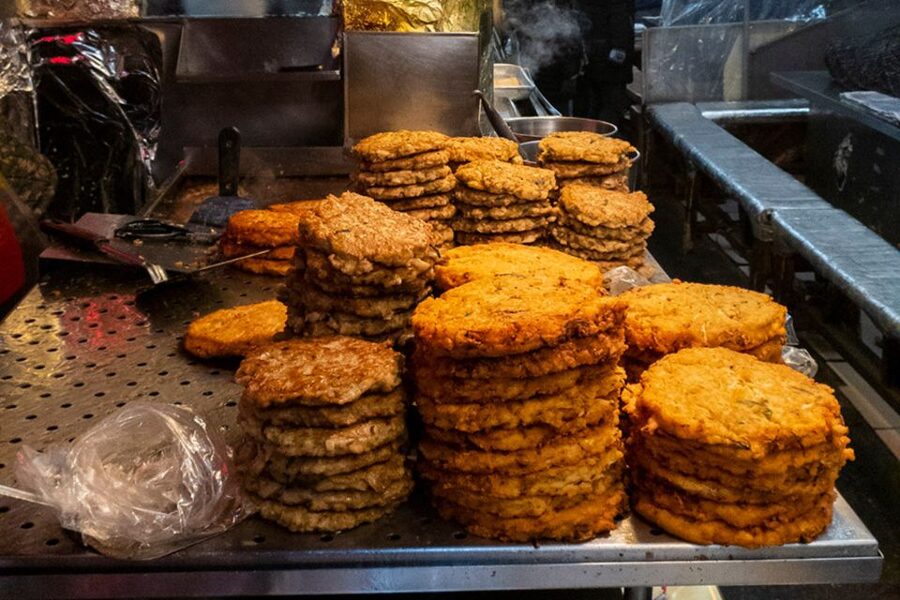
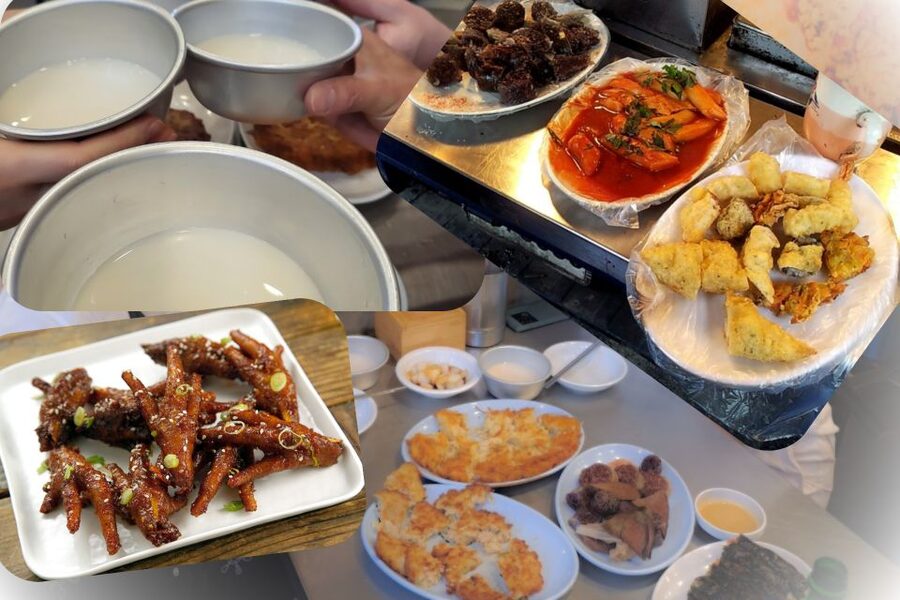
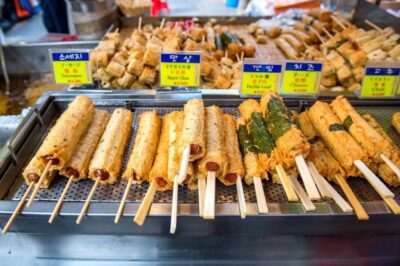
This is where the experience becomes most directly tied to Korean food culture. Instead of choosing one restaurant dish and leaving, you sample several local foods. The selection varies by option, but the tour includes 3 to 5 kinds of street food, with no extra food charge for those tastings.
The guide’s role matters here. A market can feel confusing if you do not know what to order, how much food is coming, or how a dish fits into Korean eating customs. Sam is specifically praised for making good food choices, while Alan is associated with explaining dishes, local customs, and the way people eat at the market.
Food is not only fuel on this walk. It gives you a way to understand everyday life. Your guide can explain the origin of traditional foods and help connect ingredients, preparation, and eating habits to Korean culture. That makes the market feel less like a collection of stalls and more like a place with a social purpose.
More market tours in South Korea:
- Downtown Seoul Guided Food & Market Tour with 8+ Local Tastings
★ 5.0 · 580 reviews - Seoul: Guided Food & Market Tour with 8+ Tastings
★ 4.9 · 342 reviews - Busan: Food Market Tour, Smash Seafoods and Street Foods
★ 4.8 · 80 reviews - Busan Tailored Korean cooking class (Vegan OK)with market tour
★ 5.0 · 66 reviews
What you actually eat
The exact dishes are not listed in the supplied details, so you should not book this expecting a fixed menu. The number of tastings depends on the option you select. One specific food highlight mentioned by a participant is octopus near the end of the tour, but that should not be treated as a guaranteed item for every departure.
The food portions are also unevenly spaced. Some samples come along the way, while the largest portions arrive toward the end. The tour clearly advises you not to skip a meal beforehand. Take that seriously. You may taste several foods, but the experience is designed as an introduction to market eating, not as a reliable replacement for lunch or dinner.
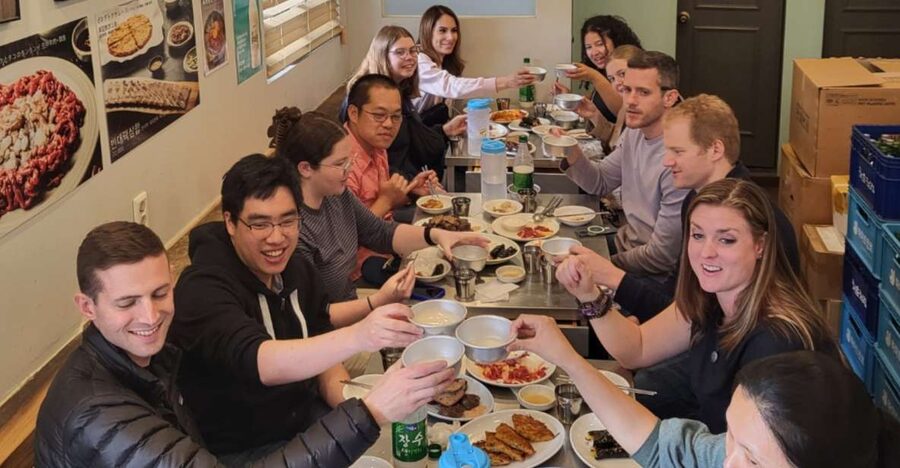
This setup suits curious eaters who want variety. You can try foods you might not have chosen alone, and the guide can help you understand what is in front of you. It is less suitable if you want one large, relaxed meal with plenty of time at the table.
The included tastings improve the value of the $64 price. You are paying for the guide, the route through three notable areas, the food, and the help of someone who can explain what you are seeing and eating. Still, personal purchases at the market are not included, so leave room in your budget if you want extra snacks, drinks, souvenirs, textiles, or handmade goods.
Guide quality makes the difference
This tour depends heavily on the person leading it. The best moments are likely to come from questions, food recommendations, and explanations that respond to your group rather than from the route alone.
The named guides associated with the experience include Peter, Sally, Alan, Charlie, and Sam. Peter receives especially strong praise for history, culture, and making the tour worthwhile even in poor weather. Alan is noted for clear communication and explanations of landmarks, food, and customs. Sally is described as friendly, warm, and flexible. Charlie is linked with an informative but fun approach, and Sam with smart food choices.
That range is useful to know. You are not booking a silent transfer between sights. Expect a live guide in English or Korean, with conversation and explanation built into the walk. Private and small-group options are available, so check the option carefully if group size matters to you.
A small group can make market eating easier. You can stay close to the guide, ask questions, and avoid feeling lost in the lanes. A private option may suit families or friends who want a more flexible pace, though the supplied price of $64 per person may not apply to every group format.
Is $64 good value?
For three hours, $64 per person is not the cheapest way to see these neighborhoods. You could walk through Insa-dong, Ikseon-dong, and Gwangjang Market on your own for little more than the cost of subway fare and food. Independent exploration gives you more time and control.
The tour earns its price through guidance and structure. You get a clear route, explanations of Korean culture and history, 3 to 5 included tastings, and help choosing food in a market that can be hard to read at first. For a first visit to Seoul, that can save time and reduce the worry of ordering blindly.
I see the strongest value for solo visitors, first-time visitors, families, and anyone who wants cultural background with their meal. If you already know Gwangjang Market well or prefer to linger over one dish, the price may feel high.
The 4.7 rating from 31 ratings supports the idea that the experience is generally dependable, but the lower score also points to a fair limitation: some people want more time in the market and more food. Go in expecting a guided sampler, not an exhaustive market tour.
Timing, weather, and practical planning
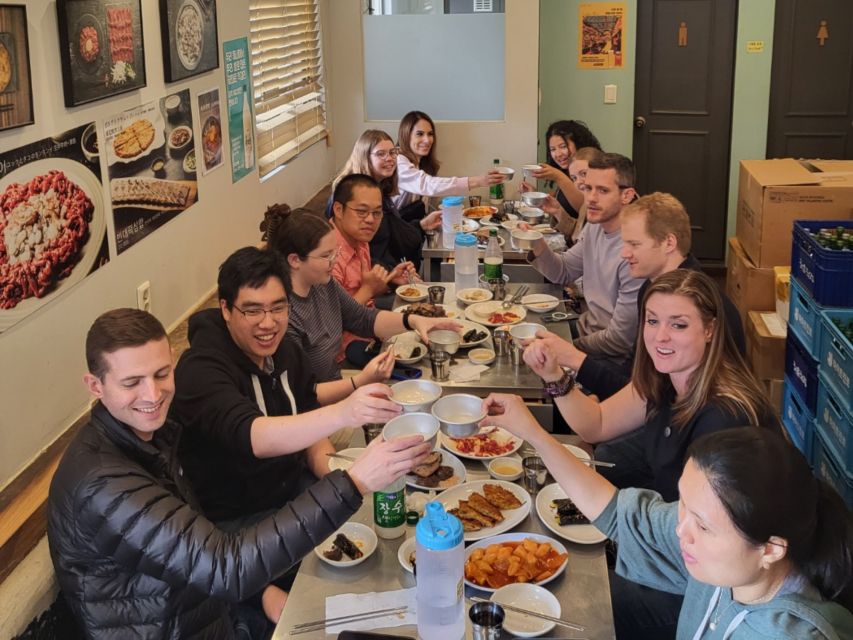
The experience lasts about three hours and begins at Anguk Station before ending at Gwangjang Market. Because it is a point-to-point walk, the ending location is useful. You can continue eating, shopping, or exploring the market afterward instead of returning to the starting station.
Wear shoes suited to walking. The route includes city streets, narrow alleys, and market passages. You should also check the starting time when booking, since available departure times can change.
Weather can affect the experience, especially because much of the route is outdoors. A guide such as Peter has been praised for keeping the walk enjoyable in poor conditions, but you should still dress for Seoul’s forecast. Bring an umbrella or rain layer when needed.
The tour requires a minimum number of participants. If that minimum is not reached, you will be offered another date or experience, or receive a full refund. You can cancel up to 24 hours ahead for a full refund, and the reserve-now, pay-later option keeps your plans more flexible.
Who should book this Seoul food tour?
Book it if you want a guided first taste of Seoul rather than a stand-alone meal. The combination of Insa-dong, Ikseon-dong, and Gwangjang Market gives you art, architecture, local customs, and food in one compact outing.
It is especially good for people who enjoy asking questions and trying several small portions. Families can benefit from the guide’s help with food choices, while solo visitors gain company and an easier way to enter a crowded market.
Think twice if you need a full meal, dislike walking, or want long stretches of free time for shopping and photography. You should also be comfortable with some uncertainty about the exact food selection, since the number and choice of tastings depend on the option and market conditions.
Should you book it?
I would book this tour early in a Seoul visit, especially if you want a friendly introduction to traditional neighborhoods and Korean street food without having to plan every stop yourself. The strongest reason to go is the combination of guide-led context and included tastings.
Choose it with the right expectations. Eat a light meal first, arrive at Anguk Station 10 to 15 minutes early, wear comfortable shoes, and save extra money for anything you want to buy at Gwangjang Market. If you do that, the $64 price buys a useful three-hour orientation to central Seoul, with enough food to make the city feel delicious but not enough to replace dinner.
FAQ
Where does the Seoul Gwangjang Market food tour begin?
It begins in front of Exit 6 at Anguk Station on Subway Line 3.
Where does the tour finish?
The tour finishes at Gwangjang Market.
How long does the experience last?
The walking tour lasts about three hours.
Which areas does the tour visit?
The route includes Insa-dong and Ikseon-dong before finishing at Gwangjang Market.
How many foods are included?
The tour includes 3 to 5 kinds of street food, depending on the option you choose.
Is this a full meal?
No. The tastings do not make up a full meal, and the largest portions come near the end. You should eat beforehand.
What languages are available?
The tour is available with a live guide in English or Korean.
Can I cancel for a refund?
Yes. You can cancel up to 24 hours in advance for a full refund.
More Shopping Tours in South Korea
- Busan history and market food tour with local chef
★ 5.0 · 58 reviews - Busan Local Food Cooking Class with Market Tour
★ 5.0 · 53 reviews - Seoul: Namdaemun Market Food Tour
★ 4.9 · 34 reviews - Seoul: The Biggest Sea-food Noryangjin Market Tour
★ 4.3 · 30 reviews
Just added around South Korea
- Busan Tailored Korean cooking class (Vegan OK)with market tour★ 5.0 · 66 reviews
- Busan history and market food tour with local chef★ 5.0 · 58 reviews
- Busan Local Food Cooking Class with Market Tour★ 5.0 · 53 reviews
- Seoul: Namdaemun Market Food Tour★ 4.9 · 34 reviews
- Seoul: Vegan Temple Food Class, Jogyesa & Changdeokgung Tour★ 4.6 · 34 reviews
- Seoul: The Biggest Sea-food Noryangjin Market Tour★ 4.3 · 30 reviews
- Seoul: Guided Food & Market Tour with 8+ Tastings★ 4.9 · 342 reviews
- Busan: Gukje and Jagalchi Market Food Tour with Tastings★ 4.6 · 27 reviews
Food Tours in Seoul, compared.
Palace, Temple and Market Guided Foodie Tour at Night
Read our review →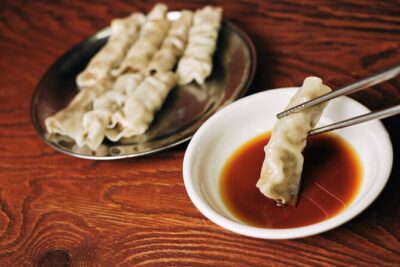
Downtown Seoul Guided Food & Market Tour with 8+ Local Tastings
Read our review →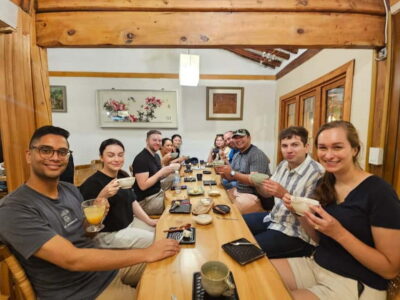
Vegan Temple Food Class, Jogyesa & Changdeokgung Tour
Read our review →
Browse the lists this tour appears in