
REVIEW · SEOUL
Seoul: Guided Food & Market Tour with 8+ Tastings
Seoul’s food culture makes the most sense one bite at a time, and this three-hour tour gives you a generous introduction. You move from Gwangjang Market to Ikseondong Hanok Village and Insadong, tasting mung bean pancake, dumplings, gimbap, tteokbokki, fish soup, sweets, tea, and a surprise dish along the way. I especially like the wide range of savory and sweet foods and the gentle finish in a traditional teahouse. The main drawback is that the tour is not suitable for wheelchair users, and the food-heavy route may be too much if you have a small appetite.
I also like the way the guide helps you approach foods and small eateries that can feel confusing on a first visit. Guides such as Jae, Alex, Taeseong, Youla, and Ji-yoon have been praised for explaining Korean food, customs, and local history in clear English. Bring comfortable shoes, arrive hungry, and tell the operator about dietary needs when booking.
Key points to know before booking
- Eight or more tastings: Expect a full spread of Korean market food, sweets, drinks, and one secret dish.
- Gwangjang Market first: The opening 80 minutes focus on stalls and small food stops in one of Seoul’s best-known markets.
- A scenic neighborhood walk: The route links the market with Ikseondong Hanok Village and Insadong.
- A calm finish: Herbal tea, traditional tea, rice cake, and grilled rice cake slow the pace at the end.
- A proper meal in disguise: The portions add up, so you may not need lunch or dinner afterward.
- Flexible dietary support: Vegetarian and other dietary requests can be accommodated when arranged in advance.
Why this Seoul food tour works so well
I like food tours that teach you how to eat in a city, not just where to take a photograph. This one begins in a market where the food is cooked and served quickly, then adds a neighborhood walk and a quieter tea stop. That mix gives you both the energy of Seoul’s street food scene and a little breathing room between courses.
The strongest part is the variety. You are not asked to eat several versions of one dish. Instead, you move through chewy rice cakes, crisp mung bean pancakes, dumplings, freshly rolled gimbap, fish, sweet snacks, bread, tea, and the tour’s secret dish. Some foods are familiar from Korean dramas or restaurant menus. Others are easier to try with a guide beside you, especially if you are unsure how to order or what a stall is serving.
The guides also add value beyond translation. Jae, Taeseong, Alex, Youla, Ji-yoon, Chris, and Jenny are among the guides who have led this experience. The best guides on this route explain how a dish fits into everyday Korean life, then adjust the pace and choices to suit the group. Several are praised for making solo visitors feel comfortable, while others have been especially helpful with families and food restrictions.
The price is $71 per person. That is not a cheap snack crawl, but it is reasonable if you treat the experience as a light meal, neighborhood walk, cultural orientation, and food lesson in one. You receive eight or more tastings, water and tea, an English-speaking guide, and enough food that some people use the tour in place of breakfast and lunch or lunch and dinner.
More Food Tours in Seoul
- Seoul Street Food Market Tour
★ 5.0 · 1,226 reviews - Seoul: Night Market Food Tour with Local Guide
★ 4.9 · 943 reviews - Seoul: Palace, Temple and Market Guided Foodie Tour at Night
★ 4.9 · 750 reviews
Starting at Jongno 5-ga and entering Gwangjang Market
Meet outside Exit 8 of Jongno 5-ga Station on Seoul’s dark blue Line 1. The meeting point is beside the police station, and your guide carries an orange umbrella. This is a useful detail because the area can feel busy and the station has several exits.
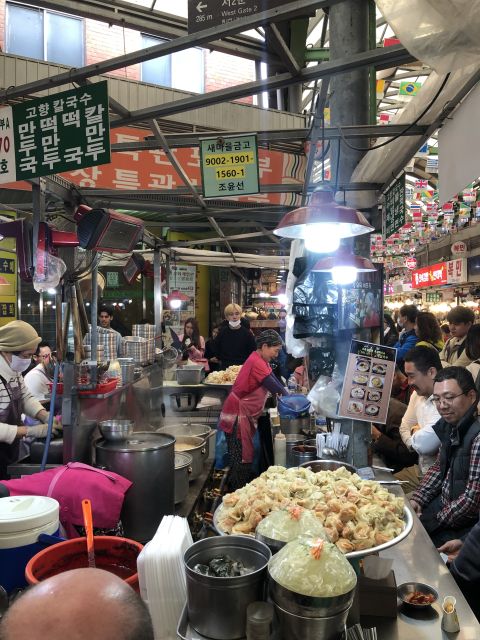
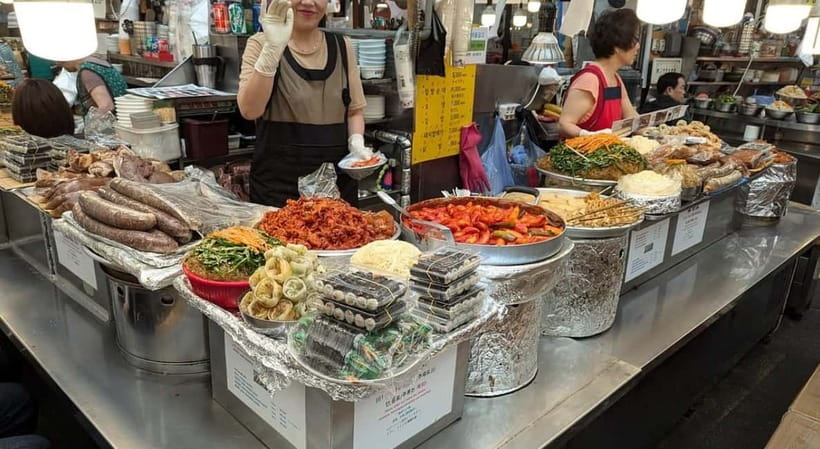
Gwangjang Market takes up the first 80 minutes, making it the heart of the tour. It is one of Seoul’s oldest and largest food markets, with rows of stalls and small eateries offering dishes that are hard to identify from a quick glance. A guide turns that first approach into a manageable tasting route.
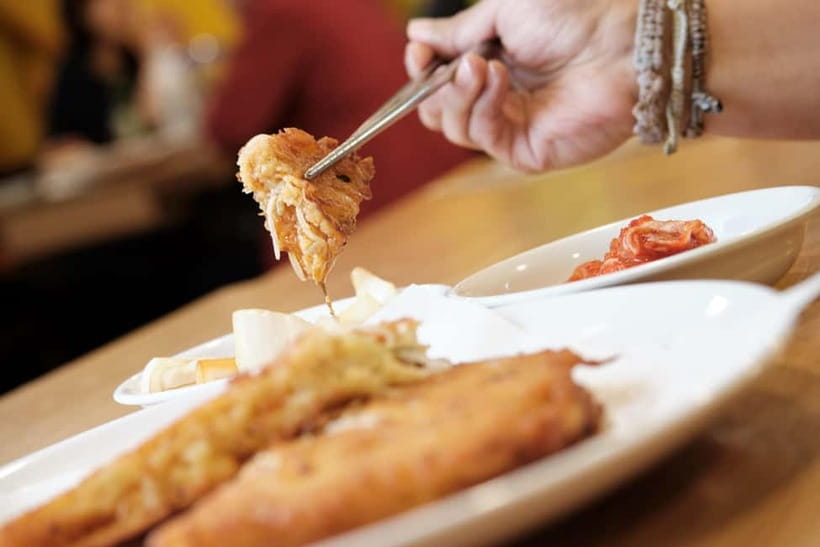
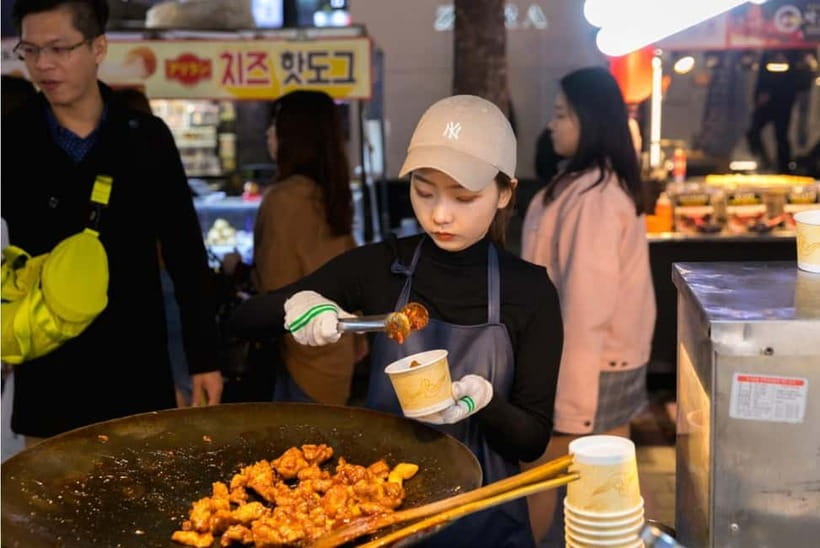
You start with a mung bean pancake, often called nokdujeon or bindae-tteok. It is crisp at the edges, soft inside, and paired with sweet onions. This is one of the more filling tastings, so enjoy it slowly. The pancake also gives you a good sense of how Korean market food balances oil, texture, salt, and fresh accompaniments.
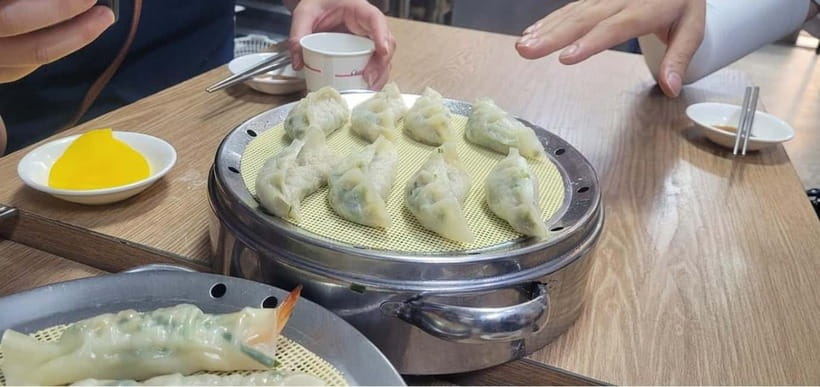
Next come mandu, or Korean dumplings, and freshly prepared gimbap. Gimbap may look a little like sushi, but it has its own character, with seasoned rice and fillings wrapped in seaweed. A guide can explain the difference and help you notice how simple ingredients become a convenient everyday meal.
Tteokbokki brings the heat. These chewy rice cakes are coated in a slightly spicy sauce, and the texture is as important as the flavor. If you are not used to Korean spice, ask your guide about the level before taking a large bite. The tour describes it as slightly spicy, but personal tolerance still matters.
The market tasting also includes minced fish fillets hot from the grill, paired with fish soup. This is a useful contrast to the sweeter red sauce of tteokbokki. The soup gives you a warm, savory pause, while the grilled fish brings a smoky edge.
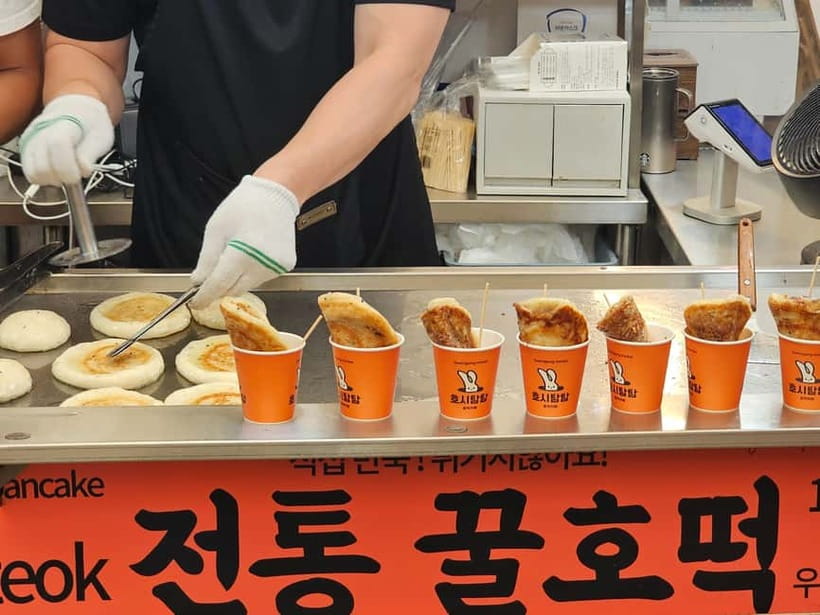
You may also try a traditional rice drink, a Korean honey snack, and other market favorites. The honey snack is the sort of sweet treat you may recognize from Korean television, but it is more fun when you can taste it in the setting where local snacks are bought and shared.
The market can feel crowded, noisy, and visually overwhelming. That is part of its character, but it is also the point where a guide earns the fee. You do not need to guess which stall to choose, how much to order, or how to manage several dishes at once. The route keeps the food coming without forcing you to make every decision alone.
The 20-minute walk between market stalls and hanok lanes
After the market, the route shifts to a 20-minute walk with photo stops and views along the way. This break matters. The food is plentiful, and a little walking keeps the experience from becoming a string of tastings with no sense of place.
The walk also changes the mood. You leave the market’s tight rows and move through Seoul’s older central neighborhoods. Your guide may use this time to explain local customs, Korean food traditions, or details about the surrounding area. The information can range from everyday dining habits to larger topics about Korean society and the relationship between South and North Korea.
Wear comfortable shoes. The tour takes place rain or shine, and the walking sections are part of the experience rather than optional transport between restaurants. Seoul’s central streets can be uneven or crowded, and this tour is not suitable for wheelchair users.
Ikseondong Hanok Village and its mix of old and new
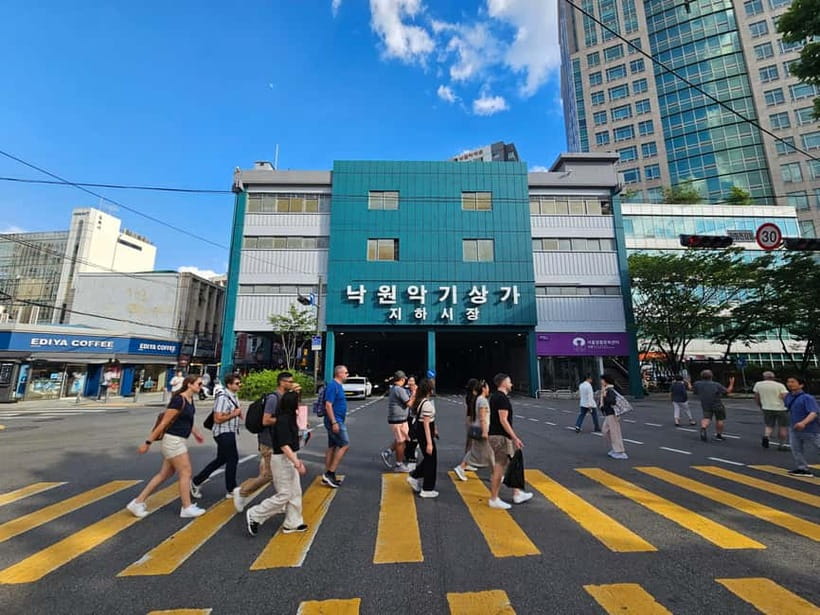
The next stop is Ikseondong Hanok Village, where the tour spends about 30 minutes. The area is known for traditional hanok buildings, narrow lanes, small shops, and newer food and drink businesses fitted into old structures. It is a good place to see how Seoul combines older architecture with current tastes.
Here you may try sweet and salty cream bread, sometimes described as a modern or viral-style local snack. This provides a clear change from the market food. The bread is soft and rich, and it gives you a sweet pause before the final tea stop.
The neighborhood is also one of the more photogenic parts of the route. The lanes are pleasant to walk, though the popularity of the area means it may not feel quiet. The experience is less about seeing a major monument and more about observing how old residential forms have been reused for present-day shops and cafés.
I like this middle section because it keeps the tour from becoming only a food checklist. You are still eating, but you are also moving through a distinct part of central Seoul. If you are visiting the city for the first time, this orientation can help you understand how close several different neighborhoods are to one another.
More market tours in South Korea:
- Downtown Seoul Guided Food & Market Tour with 8+ Local Tastings
★ 5.0 · 580 reviews - Busan: Food Market Tour, Smash Seafoods and Street Foods
★ 4.8 · 80 reviews - Busan Tailored Korean cooking class (Vegan OK)with market tour
★ 5.0 · 66 reviews - Busan history and market food tour with local chef
★ 5.0 · 58 reviews
Insadong, traditional tea, and the final secret dish
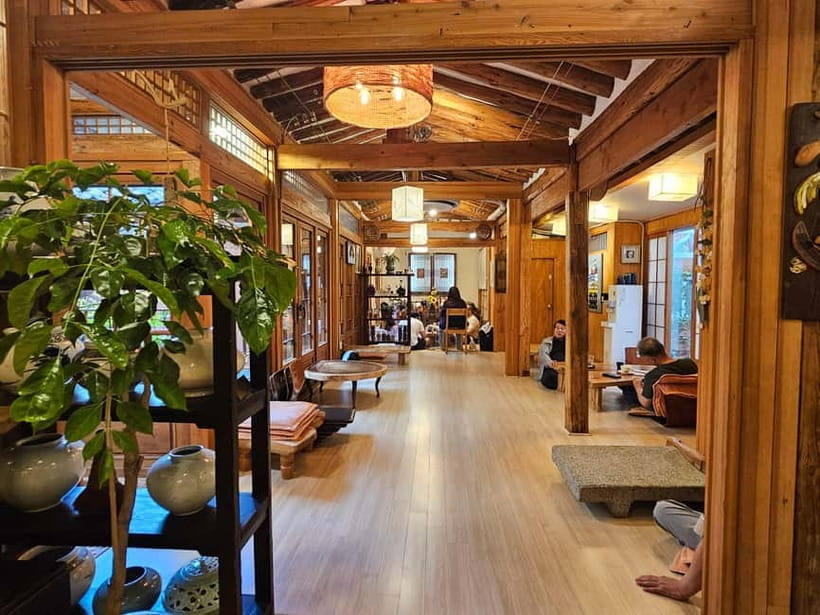
The tour ends in Insadong after roughly 40 minutes of walking, tasting, and regional food. Insadong is a fitting final area because it has long been associated with traditional Korean arts, tea, crafts, and older-style streets.
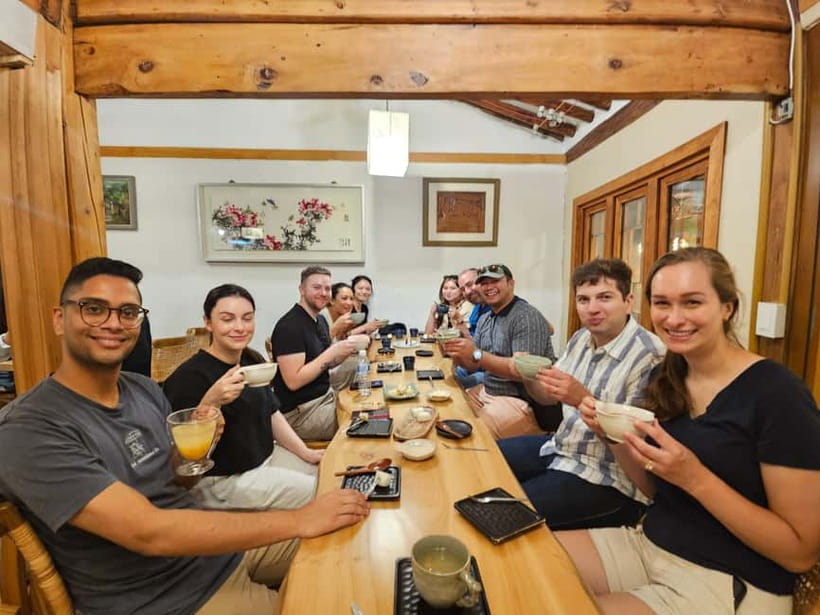
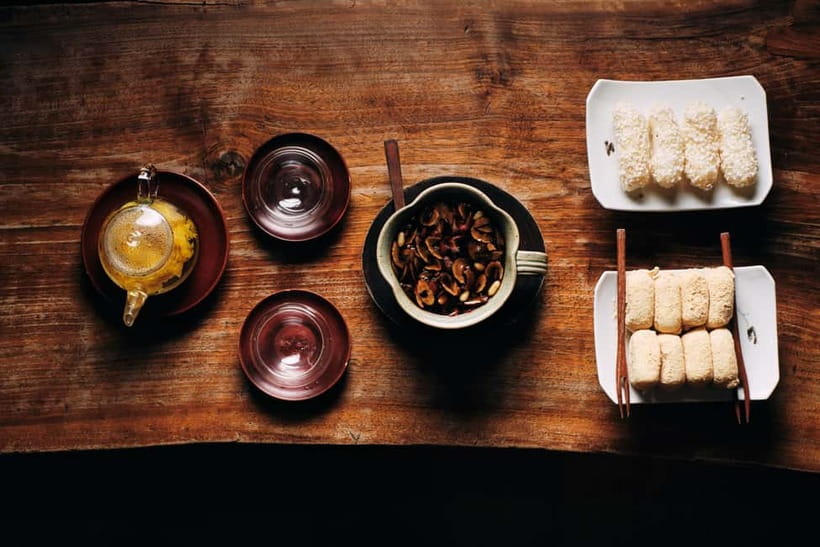
The final stop is a peaceful teahouse, where you enjoy freshly brewed herbal tea with a delicate rice cake. Depending on the selections available, the tea may be unfamiliar, and your guide can explain its flavor and place in Korean food culture. One guide introduced a visitor to omija-cha, a tea made from magnolia vine berries, which became a favorite recommendation.
You also receive grilled rice cake with a very traditional tea. This is another useful texture contrast. The rice cake is chewy and lightly charred, while the tea helps settle the stronger flavors from the market.
The secret dish is revealed during the tour rather than announced beforehand. That keeps a little surprise in the route, although the exact dish can vary. Do not book this expecting a fixed menu identical to the one described by another person. Market availability, dietary needs, guide choices, and the day’s stops can affect the final selection.
The teahouse is one of the best features for anyone who finds a full street-food session tiring. You can sit, talk, and ask questions rather than eat while standing beside a crowded stall. It also gives the tour a more thoughtful ending than simply stopping after the last savory dish.
How much food do you really get?
Plan on eating a lot. The official description includes eight or more tastings, but the individual stops can involve several bites or small portions. One route may include mung bean pancake, dumplings, gimbap, tteokbokki, fish fillets with soup, honey snack, cream bread, grilled rice cake, tea, and the secret dish.
Several people have found the tour filling enough to replace a meal, and one practical tip is not to eat lunch beforehand. I would not arrive after a large meal. You want enough appetite to try the range, especially because the most interesting foods are not all served at the start.
The pacing helps. The tour is spread across three hours, with walks between stops and time to discuss what you have eaten. Still, portions and exact dishes can change, so you should not treat the tasting list as a guarantee of a specific quantity.
Extra drinks are not included unless you choose an upgrade. Water and tea are included, and some food stops may include drinks that form part of the tasting. If you want additional alcohol or beverages, budget for that separately.
Dietary needs, spice, and comfort
Vegetarian and other dietary options are available if you tell the provider when booking. This does not mean every dish can be replaced. The standard selection includes fish and meat, so advance notice matters if you need a strict vegetarian route or have allergies.
A vegetarian visitor can still take part, with some of the meat and fish items left out. The mung bean pancake, gimbap, rice cakes, sweets, bread, and tea may offer useful alternatives, but you should confirm the details before paying.
Spice is another consideration. The tteokbokki is described as slightly spicy, but Korean sauces can taste hotter than expected if you are not accustomed to them. Your guide can help you pace yourself and explain what is in each dish.
Solo visitors are a good match for this experience. The guide handles the first approach to stalls and small restaurants, which removes the awkwardness of entering alone. Families can also enjoy it, though very young children may not appreciate every flavor or the three-hour walking schedule.
Guides make the difference
The route is strong, but the guide shapes how much you gain from it. Guides such as Jae, Alex, Taeseong, Youla, Chris, Ji-yoon, Jenny, and Chloe have led groups through the food stops and neighborhoods.
A good guide does three jobs: explains the dishes, keeps the group moving, and notices when someone needs a different option or a slower pace. Jae has been praised for clear English and for adapting to different tastes. Taeseong is often described as warm, funny, and well informed about Korean culture and history. Alex has been especially appreciated for practical explanations and personal recommendations.
The group size can vary. Some departures have been very small, even just one visitor and the guide, while another group included nine people. A small group allows more questions and easier changes, but you should not assume every departure will be private.
The English guiding is a major part of the value. You are not merely pointed toward food. You learn how to recognize dishes, how they fit into Korean meals, and how to approach similar places on your own later.
Is $71 good value for three hours?
For a quick meal, no. You could spend less at Gwangjang Market if you already know what to order and are comfortable choosing stalls yourself.
For a first introduction to Seoul food, the price makes more sense. You receive a substantial selection of food, a local guide, walking orientation through three central districts, cultural explanations, and a comfortable ending with tea. The included tastings can also replace a meal, which improves the value.
I would compare it with the cost of a guided market visit, not with the price of one bowl of noodles. If you want to understand what you are eating and leave with ideas for the rest of your trip, $71 is fair. If you prefer to browse alone, eat only one or two dishes, and avoid a fixed schedule, save the money and explore Gwangjang Market independently.
Free cancellation is available up to 24 hours in advance, and you can reserve now and pay later. Those terms are useful when your Seoul plans are still shifting, but the practical details remain simple: meet at the correct station exit, wear good shoes, and arrive ready to eat.
Who should book this Seoul food experience?
I would book this tour early in a Seoul visit. It gives you a working introduction to market food, helps you identify dishes later, and points you toward neighborhoods you might otherwise pass through without understanding.
It suits first-time visitors, solo visitors, couples, families with adventurous eaters, and anyone nervous about ordering at a Korean market. It is also a good choice if you want both savory and sweet food rather than a tour focused only on barbecue or one famous dish.
I would skip it if you have severe dietary restrictions that cannot be managed with substitutions, dislike walking in crowded areas, or prefer a quiet seated meal from start to finish. It is also not suitable for wheelchair users.
Final verdict: book it if you want a full first taste of Seoul
Book this food tour if you want a generous meal, a guided introduction to Korean street food, and an easy route through Gwangjang Market, Ikseondong, and Insadong. The best details are the ones you might not plan on your own: the minced fish with soup, the market honey snack, the secret dish, and the quiet teahouse ending.
Go hungry, wear comfortable shoes, and share your food needs before the tour. At $71, it is best value for someone who wants context and guidance along with the food, not simply the cheapest possible snack.
FAQ
How long is the Seoul food and market tour?
The tour lasts three hours.
Where does the tour meet?
Meet outside Exit 8 of Jongno 5-ga Station on Seoul’s dark blue Line 1. The meeting point is beside the police station, and the guide carries an orange umbrella.
Where does the tour finish?
The tour finishes in Insa-dong.
What foods are included?
Included tastings include mung bean pancake with sweet onions, Korean dumplings, freshly prepared gimbap, slightly spicy tteokbokki, minced fish fillets with fish soup, a Korean honey snack, sweet and salty cream bread, grilled rice cake with traditional tea, and a secret dish.
Are drinks included?
Water and tea are included. Extra drinks are not included unless you select the upgrade option.
Can vegetarian visitors take the tour?
Vegetarian and other dietary options are available. Tell the activity provider about your needs when booking so suitable arrangements can be made.
What should I bring, and does the tour run in bad weather?
Bring comfortable shoes. The tour runs rain or shine and is not suitable for wheelchair users.
More Shopping Tours in South Korea
- Busan Local Food Cooking Class with Market Tour
★ 5.0 · 53 reviews - Seoul: Namdaemun Market Food Tour
★ 4.9 · 34 reviews - Seoul: Gwangjang Market Netflix Food Tour
★ 4.7 · 31 reviews - Seoul: The Biggest Sea-food Noryangjin Market Tour
★ 4.3 · 30 reviews
Just added around South Korea
- Busan Tailored Korean cooking class (Vegan OK)with market tour★ 5.0 · 66 reviews
- Busan history and market food tour with local chef★ 5.0 · 58 reviews
- Busan Local Food Cooking Class with Market Tour★ 5.0 · 53 reviews
- Seoul: Namdaemun Market Food Tour★ 4.9 · 34 reviews
- Seoul: Vegan Temple Food Class, Jogyesa & Changdeokgung Tour★ 4.6 · 34 reviews
- Seoul: The Biggest Sea-food Noryangjin Market Tour★ 4.3 · 30 reviews
- Seoul: Gwangjang Market Netflix Food Tour★ 4.7 · 31 reviews
- Busan: Gukje and Jagalchi Market Food Tour with Tastings★ 4.6 · 27 reviews
Food Tours in Seoul, compared.
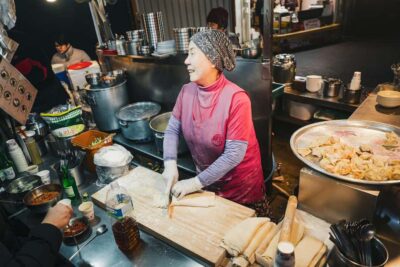
Palace, Temple and Market Guided Foodie Tour at Night
Read our review →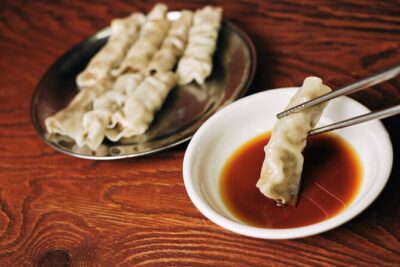
Downtown Seoul Guided Food & Market Tour with 8+ Local Tastings
Read our review →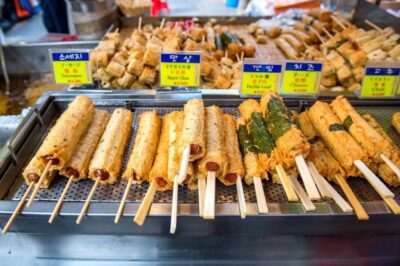
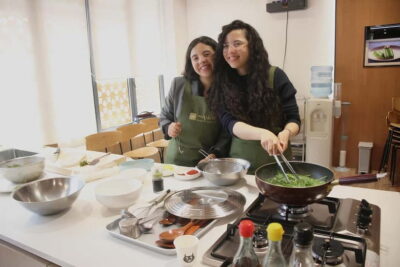
Vegan Temple Food Class, Jogyesa & Changdeokgung Tour
Read our review →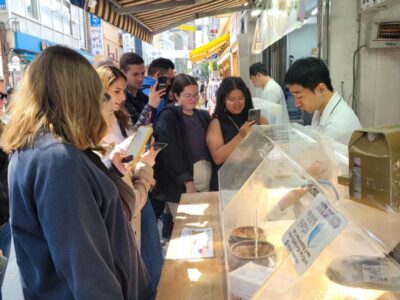
Browse the lists this tour appears in