
REVIEW · ITALY
Polignano a Mare: Apulian Cooking Class with Food and Drinks
Making orecchiette by hand is the heart of this experience. In a traditional house on Via San Vito, an instructor such as Annamaria or Daniele shows you how to cut, roll, and shape the small ear-shaped pasta tied to the Bari area. You then eat the pasta you made, usually with a traditional sauce and local drinks.
I like the practical skill you take home, and I like the relaxed table setting, where cooking leads naturally into a shared meal. The instructors explain not only what to do, but why the pasta behaves as it does. The main consideration is value: at $71 per person, this is more than a quick pasta lesson, though the food, instruction, aperitif, and drinks make it a fuller experience.
Key points to know before booking
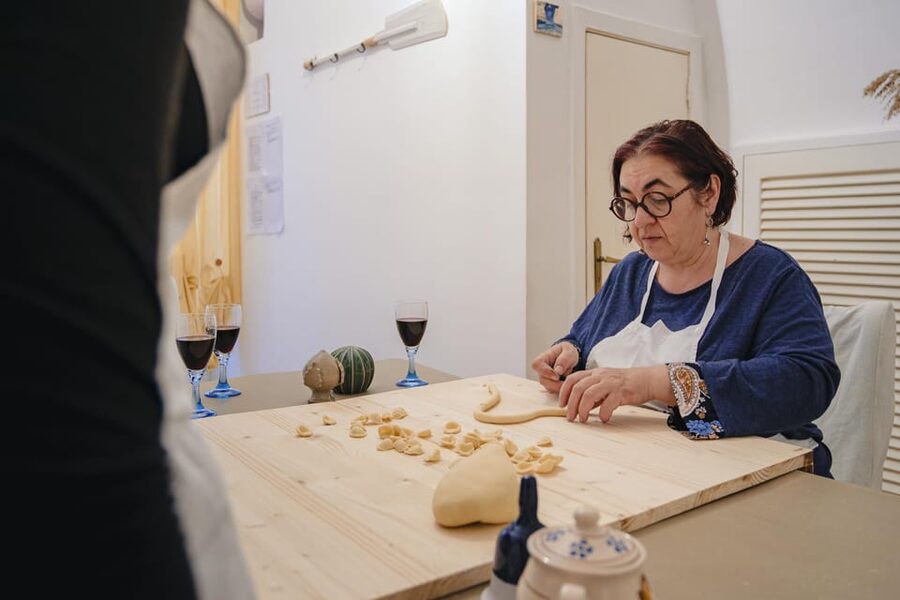
- Shape pasta by hand: Learn the technique for making Apulian orecchiette, with step-by-step help from the instructor.
- Eat your own work: Your handmade pasta is cooked and served as part of the meal.
- Meet local cooks: Sessions may be led by Annamaria or Daniele, both praised for clear English, humor, patience, and strong teaching.
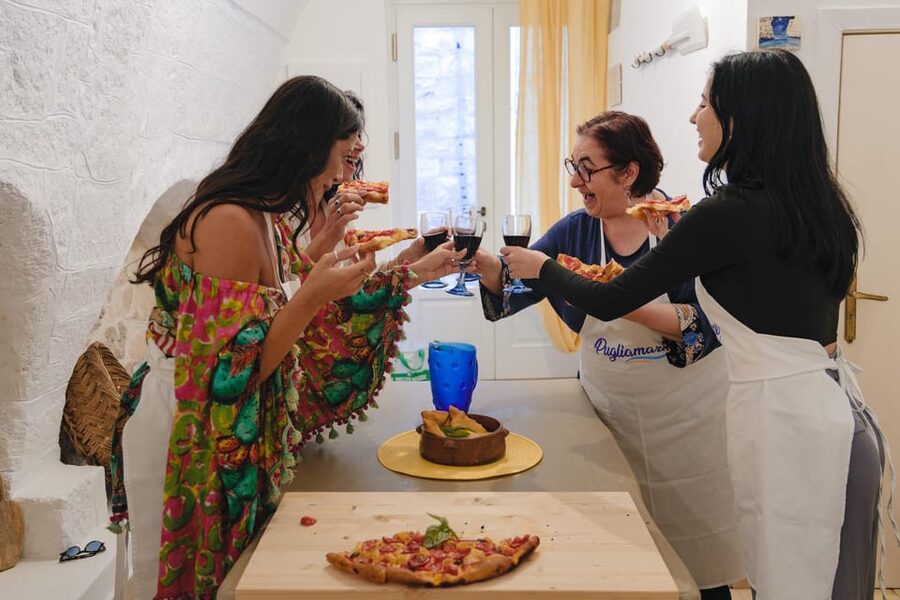
- Expect food and wine: The standard experience includes an aperitif, drinks, and a meal. Focaccia may also appear on the table.
- Choose the fuller dinner: The 7:30pm option adds traditional friselle, a regional dessert, and homemade limoncello.
- Allow extra arrival time: One participant arrived ten minutes early and missed the introduction, so fifteen minutes early is the safer plan.
Why orecchiette matters in Polignano a Mare
Orecchiette is not just another pasta shape to practice for an hour. It is one of the foods most closely tied to Puglia, especially the Bari area. Its name refers to the little ear-like shape, and making it well depends on a simple but precise hand movement.
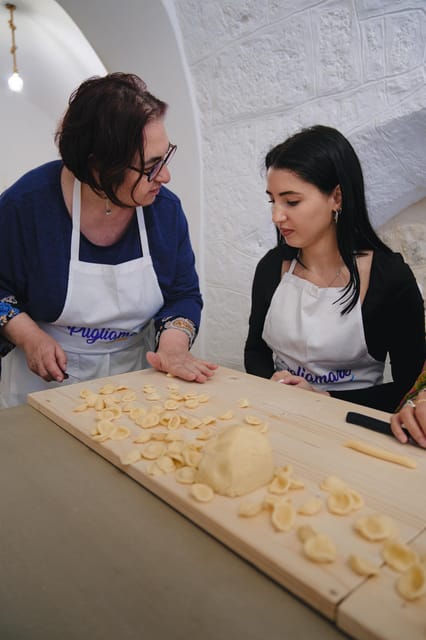
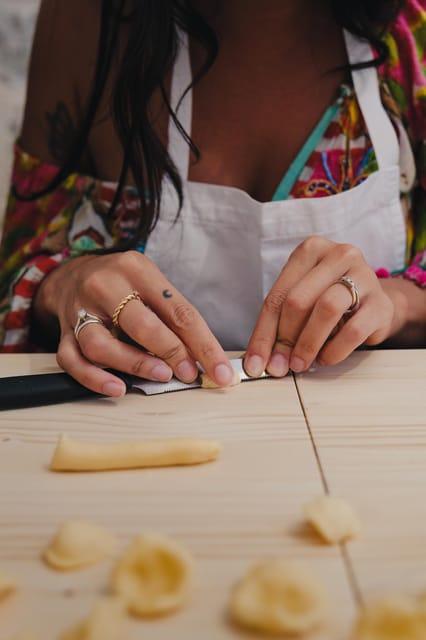
You start with the dough, cut it into pieces, and work each piece into a small round. The tricky part is dragging or folding the dough with a knife or fingertip so it forms a thin center and slightly raised edge. The process looks easy when an experienced cook does it. Your first few pieces may look uneven, which is part of the fun and part of the lesson.
The value here is that you are not only watching a demonstration. You get your hands on the dough and repeat the movement under guidance. Several participants found the shaping difficult at first but satisfying once the motion clicked. That makes this a better choice than a purely decorative cooking demonstration if you want a skill you can try at home.
More cooking classes in Italy:
- Small Group Cooking Class & Market Food Tour in Florence
★ 5.0 · 1,574 reviews - Milan: Italian Cooking Class with Food and Wine
★ 4.7 · 509 reviews - Florence: Cooking Class with Local Food Market Tour
★ 4.9 · 407 reviews
Meeting the instructor in a traditional house
The meeting point is Via S. Vito, 20, in Polignano a Mare. The setting is an historic building or traditional house, which gives the class a more personal feel than a large culinary school. You meet Annamaria or Daniele, depending on the session, and settle in for a class lasting about two to two and a half hours.
Daniele is described as funny, clear, and comfortable explaining the science behind pasta and cooking. Annamaria is praised for her warm manner, patience, and ability to work with families and children. Other instructors, including Alessandra and Maria, have also led sessions, so the exact host can vary.
That matters because the teacher is a large part of the experience. The strongest feature is not fancy equipment or a long list of dishes. It is the quality of the explanation and the ease of asking questions. The class is offered in English and Italian, and the instructors can explain the process in English while also chatting with Italian participants.
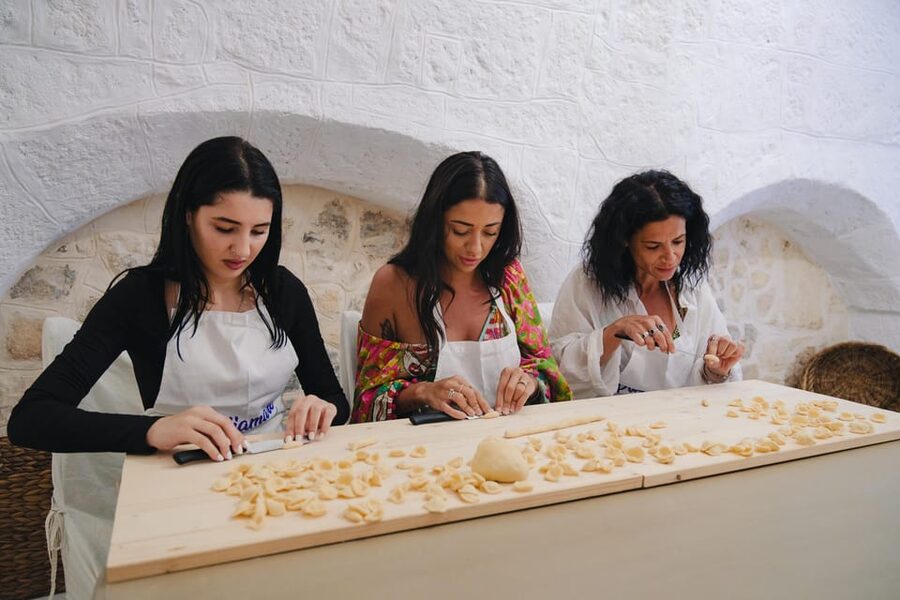
Groups can be small. One session had eight people, which is a comfortable size for watching the demonstration and getting help at the worktable. You should still arrive at least fifteen minutes early. The class begins with introductions and instructions, and arriving just before the start may mean missing useful context.
The pasta lesson, from dough to little ears
The main lesson focuses on making orecchiette from start to finish. You learn how to handle the dough, cut it into workable pieces, and form the characteristic shape. The instructor demonstrates the hand movement, then lets you practice while offering corrections.
This is where the class earns its keep. You are not expected to produce perfect pasta immediately, and the atmosphere is described as friendly rather than pressured. That makes it suitable for families, first-time cooks, and anyone who feels a little uncertain around fresh pasta.
The class does not appear to include making every ingredient from scratch. One participant wished there had been more time to prepare all the ingredients, so you should book this for the orecchiette lesson rather than a full restaurant-style cooking course. The two to two and a half hour schedule gives you time to learn, eat, and talk, but not to cover every Apulian dish in detail.
The instructor also connects the technique to local life and food traditions. You may hear stories about Apulian cooking, the area, and the reasons behind particular methods. This gives the pasta a sense of place instead of treating it as a generic Italian recipe.
From worktable to shared meal
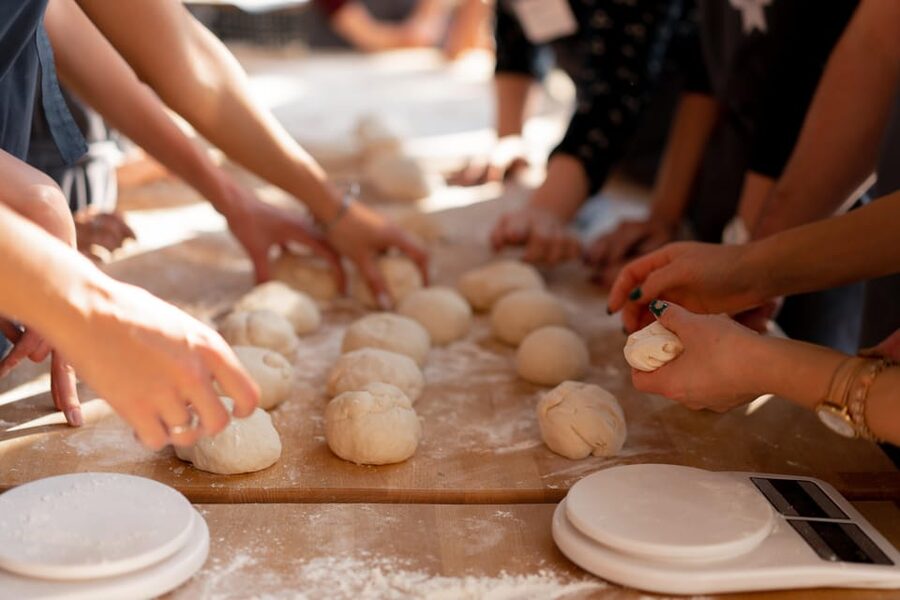
Once the orecchiette is ready, the instructor cooks it for you. You then sit down and eat the fruits of the class, usually with a traditional tomato sauce. The meal is the payoff, but it also helps you understand why the pasta shape works. A thin center and ridged edge hold sauce differently from dried supermarket pasta.
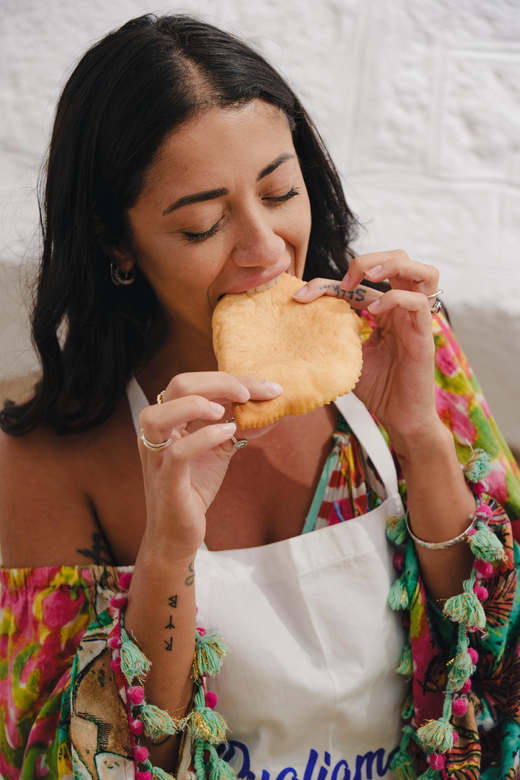
The food served alongside the pasta can include an aperitif and focaccia. Local wine, including chilled Primitivo in one session, is part of the experience, along with other drinks. The exact menu can vary, so do not treat every extra mentioned here as guaranteed for every date.
I like this shared meal because it turns the lesson into a social activity. You are not rushing out after the final pasta shape. You get time to eat, talk, and compare your results with the people at the table. That is especially useful if you are traveling alone or want an easy way to meet people without signing up for a formal group tour of the town.
The meal can also be generous enough to replace dinner or make a separate meal unnecessary, depending on what is served. If you plan to eat at a restaurant afterward, keep your appetite in reserve only if you are taking the shorter daytime option and are unsure how much food will be included.
A few more food tours around Italy worth comparing
- Napolitan Secrets: Pasta & Tiramisù Class for Food Lovers
★ 4.9 · 189 reviews - Sicilian Cooking Class in Taormina
★ 5.0 · 186 reviews - Cooking Class: Your Culinary Love Affair in Sorrento
★ 5.0 · 161 reviews - Cinque Terre: Pesto Making Class with Wine and Food Tasting
★ 4.7 · 109 reviews
The 7:30pm full dinner option
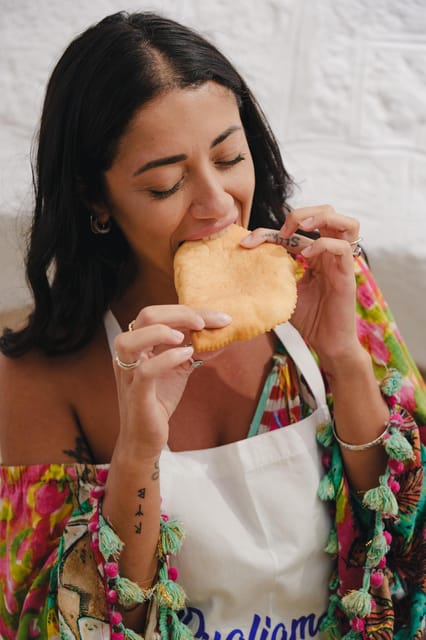
The basic class includes pasta, an aperitif, and drinks. The 7:30pm full dinner option adds more courses and makes the evening feel like a complete Apulian food event.
You also prepare traditional friselle, a crisp regional bread often softened and served with toppings. The option includes a regional dessert and homemade limoncello, giving the meal a clear progression from starter to sweet course to after-dinner drink.
This upgrade makes the most sense if you want food to be the main event of your evening. It is also a good fit if you prefer a longer social meal rather than a shorter afternoon activity. The basic session is likely enough for someone mainly interested in learning orecchiette. The full dinner is better for a special night in Polignano a Mare.
Keep in mind that the supplied duration remains about two to two and a half hours. The full dinner adds dishes, not an all-day culinary program. If you want to learn focaccia, sauces, desserts, and several pasta shapes in detail, this experience may feel focused rather than broad.
How the price compares with the experience
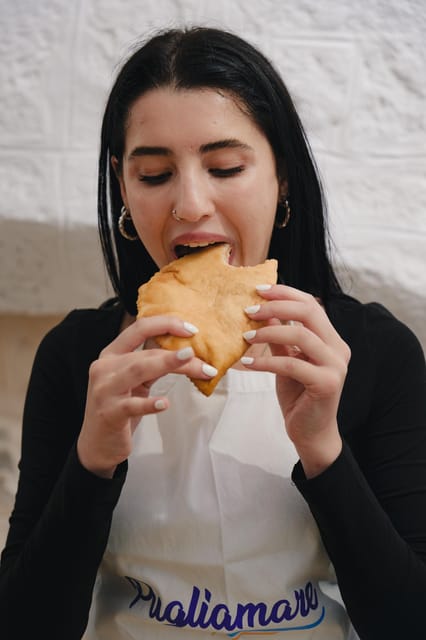
At $71 per person, the class sits above the price of a simple meal but includes more than food. You are paying for instruction, equipment, an aperitif, drinks, wine, and the chance to eat pasta you helped make. The historic setting and local teaching add to the experience, though they are harder to measure than a menu.
I consider the price fair for visitors who value participation. If you only want to eat orecchiette, a local restaurant will usually be a simpler choice. If you want to understand how the pasta is made and leave with a repeatable technique, the class offers better value.
The cost can feel higher for families, especially when children are attending. Still, the class works well with teenagers and younger children who can take part at the table. One family found that an eight-year-old was welcomed and included, while another family brought two teenagers and enjoyed the relaxed format.
Reserve now and pay later is available, and cancellation is free up to 24 hours before the activity for a full refund. Those terms help if your Apulia plans are still shifting. Hotel pickup and drop-off are not included, so you need to reach the meeting point on your own.
Who will enjoy this class most
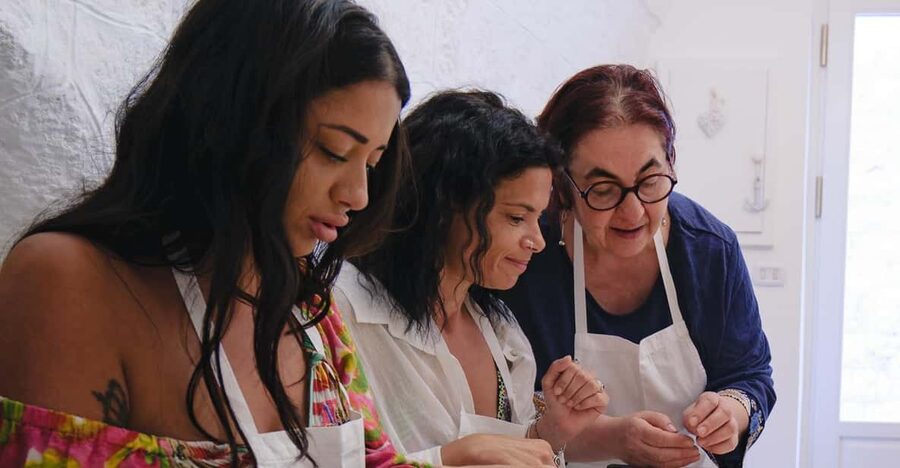
This is a strong pick for you if you like food with a clear local connection. It suits people who want to do something hands-on in Polignano a Mare rather than spend every hour sightseeing. You do not need advanced cooking skills, and the instructors provide guidance as you work.
Families should consider it carefully, but the signs are good. Children and teenagers can take part in shaping the pasta, and the class has a friendly, low-pressure tone. The main issue is attention span. The lesson is practical, but young children may not enjoy every explanation about technique and cooking.
Couples and solo visitors can also get a lot from it. The shared table creates an easy social setting, and the wine and meal give the activity a natural rhythm. If you are traveling from Bari, one participant made the trip by short train ride and used the class as part of a Polignano a Mare day visit.
Vegetarian and vegan participants can join. You should still communicate any food needs when booking, since the exact dishes and sauce should be confirmed for your session. The activity is wheelchair accessible, which is useful information when comparing food experiences in older buildings.
Small drawbacks to keep in mind
The biggest limitation is focus. You learn orecchiette well, but you may not prepare every part of the meal from scratch. Focaccia, for example, may be served as part of the meal rather than made during the class.
The shaping technique can also take practice. The instructor may make it look effortless, but you should expect a few misshapen pieces at first. That is not a flaw in the experience, though it is worth knowing if you want polished results immediately.
The class is delivered in English and Italian, and the instructors are praised for clear English. Still, the exact amount of explanation may depend on the group and the host. Arriving early helps you catch the introduction and settle in before the hands-on work begins.
Finally, the price may feel high if you compare it with an ordinary pasta lunch. Its value comes from the lesson, the host, the setting, the drinks, and the social meal. Book it for the experience, not simply because you need dinner.
Should you book the Polignano a Mare pasta class?
I would book this if you want a useful, local food experience with a strong teaching element. The most praised qualities are consistent: patient instruction, clear English, humor, good wine, and a meal made from your own pasta. Daniele and Annamaria, in particular, bring the kind of personality that can turn a simple recipe into a memorable afternoon or evening.
Choose the standard class if orecchiette is your main goal and you want to keep the activity near two hours. Choose the 7:30pm full dinner if you want friselle, dessert, and limoncello as part of a complete night out.
Skip it if you prefer a quiet restaurant meal or a broad cooking course covering many dishes. For everyone else, especially families, couples, food lovers, and visitors making a day trip from Bari, this is a practical way to connect with Puglia through the food people actually make and eat.
FAQ
Where does the cooking class meet?
Meet Annamaria at Via S. Vito, 20, 70044 Polignano a Mare BA. The class takes place in a traditional house or historic building.
How long does the activity last?
The cooking class lasts about two to two and a half hours.
What pasta will I learn to make?
You will learn to prepare and shape orecchiette, the small ear-shaped pasta strongly associated with Puglia and the Bari area.
Will I eat the pasta I make?
Yes. The orecchiette you prepare is cooked and served as part of the meal.
Is wine included?
Yes. The experience includes an aperitif and drinks, with wine served during the meal. The exact wine can vary by session.
What does the full dinner option include?
The 7:30pm full dinner option adds preparation of traditional friselle, a regional dessert, and homemade limoncello.
Is the class available in English?
Yes. The instructors speak English and Italian.
Is the activity suitable for vegetarians and vegans?
Yes. The experience is described as vegetarian and vegan friendly.
Is the cooking class wheelchair accessible?
Yes. The activity is listed as wheelchair accessible.
Do I need to arrange transportation?
Yes. Hotel pickup and drop-off are not included. You need to reach the meeting point in Polignano a Mare yourself.
Can I cancel the booking?
You can cancel up to 24 hours in advance for a full refund. Reserve now and pay later is also available.
Just added around Italy
- Genoa Walking Tour: Discover Hidden Treasures and Street Food★ 5.0 · 80 reviews
- Genoa Food, Wine Tasting & History Walking Tour★ 5.0 · 212 reviews
- Guided Food Tour with Wine Tastings in Genoa★ 4.5 · 34 reviews
- Genoa Culinary Masterclass-A Hands-On Experience by Do Eat Better★ 5.0 · 56 reviews
- Florence Sunset Food Tour with Wine & Dine at a Tuscan farmhouse★ 5.0 · 194 reviews
- Florence Central Market Food Tour with Eating Europe★ 5.0 · 224 reviews
- The Cooking Lab – Authentic Food Experience★ 5.0 · 113 reviews
- The Other Side of Florence Food Tour with Eating Europe★ 5.0 · 377 reviews
Food Tours in Italy, compared.
Rome Twilight Trastevere Food Tour by Eating Europe
Read our review →
Florence Sunset Food & Wine Tour by Eating Europe
Read our review →
Rome Food Tour: Unlimited Tastings with Fine Wine & Barolo
Read our review →
Rome Food Tour: Campo de’ Fiori, Ghetto, Trastevere Winner 2024
Read our review →
Eat Like a Local: Venice 3-Hour Small-Group Food Tasting Tour
Read our review →
Guided Food Walking Tour with Wine in Trastevere
Read our review →Browse the lists this tour appears in