
REVIEW · ROME
Rome: Street Food Tour with Local Guide
Rome’s best introduction may begin with a fried rice ball, not a monument. This 2.5-hour street food walk links Campo dei Fiori, the Jewish Quarter, and several atmospheric lanes with five tastings of Roman favorites. I like the way food gives the tour a clear purpose, while the stops at the Portico of Octavia, Turtle Fountain, and Pantheon add real context.
I also like the mix of small food shops and famous sights. Guides such as Mattia, Francesca, Marco, Ramona, and Barbara bring plenty of local stories, and the route works well for first-time visitors who want help choosing what to eat later. At $53, the tastings, drinks, guiding, and walking route make good value if you treat it as a generous snack tour rather than dinner.
The main catch is dietary flexibility. Vegetarian choices are available with advance notice, but this tour is not suitable for vegans or people with gluten intolerance. Food is eaten standing, and the Campo dei Fiori market appears only on morning departures.
Key points to know before booking
- Start beneath Giordano Bruno: Meet under the statue in the center of Campo dei Fiori, a square with a striking past and one of Rome’s best-known food markets.
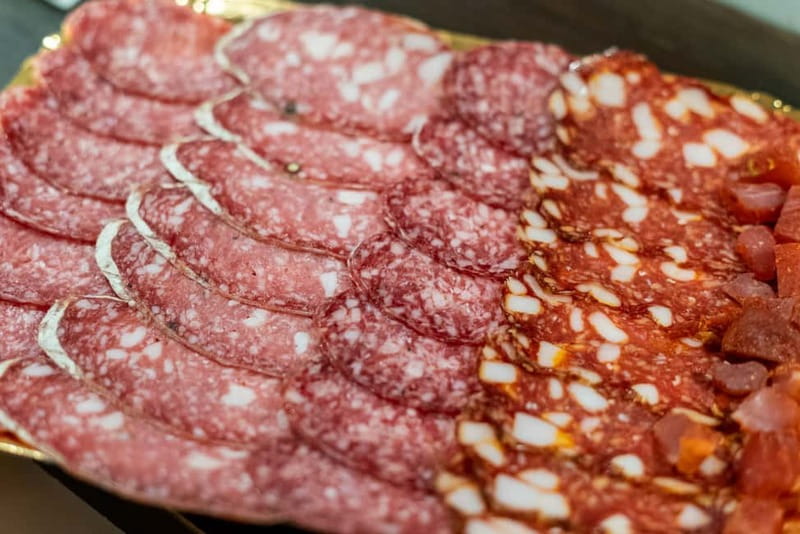
- Five tastings, two drinks: Expect Roman specialties such as supplì, pizza, cured meats, and gelato, with a sample of wine and a sample of beer.
- Two historic districts in one walk: The route connects Campo dei Fiori with the Jewish Quarter, then passes the Portico of Octavia and the Pantheon.
- Morning tours have one extra attraction: Only the morning departure includes the open-air market at Campo dei Fiori.
- Guides shape the experience: Mattia, Francesca, Marco, Ramona, and Barbara are among the guides praised for friendly storytelling and practical food advice.
- Plan another meal if needed: The portions can add up, but the experience is designed for tasting, not as a complete lunch or dinner.
Why this route works for a first taste of Rome
Rome can feel like a feast of grand ruins, fountains, churches, and busy streets. This tour gives you a simple way to read the city through food. You walk a short distance, taste something tied to local habits, then hear how that dish fits into Roman life.
The route begins at Campo dei Fiori, where the statue of Giordano Bruno marks the meeting point. Bruno was a philosopher executed in the square in 1600, and his statue gives the place a serious edge beneath the market-day energy. You do not need a long lecture here to understand that Rome often places daily life right beside difficult history.
From there, the walk is compact. The listed walking segments are mostly two to five minutes, so you are not spending the afternoon marching between distant neighborhoods. That matters in Rome, where uneven paving stones, traffic, and summer heat can make a food tour tiring if the route is too spread out.
I especially like this format for your first or second day in the city. You get an early look at places you may want to revisit, and guides often point out food shops, cafés, and restaurants that can help with later meals. Mattia, in particular, is praised for combining food facts with stories about Giordano Bruno, Largo di Torre Argentina, and the Jewish Ghetto.
More Food Tours in Rome
- Winner 2025 Rome Twilight Trastevere Food Tour by Eating Europe
★ 5.0 · 5,157 reviews - Rome Food Tour: Unlimited Tastings with Fine Wine & Barolo
★ 5.0 · 3,365 reviews - Rome Food Tour: Campo de’ Fiori, Ghetto, Trastevere Winner 2024
★ 5.0 · 3,205 reviews
Campo dei Fiori market and the first tastings
If you choose a morning start, the Campo dei Fiori market is part of the experience. The market is open only in the morning, so check the start time carefully if fresh stalls and produce are important to you.
The square is a useful first stop because it brings together food, commerce, and Roman street life. The market visit lasts about 20 minutes, long enough to look around while your guide explains what you are seeing. Do not expect a formal sit-down meal here. You will be tasting as you go, usually while standing.
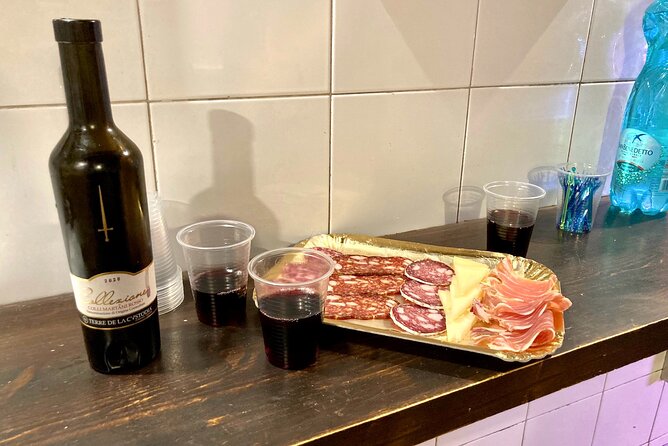
The next stop keeps you near the square and adds a wine sample. A little wine with food helps you notice how Roman eating often works in small portions, shared casually rather than served as a long restaurant course. You also receive a sample of beer during the wider tour, giving you a second local drinking experience without turning the walk into a pub crawl.
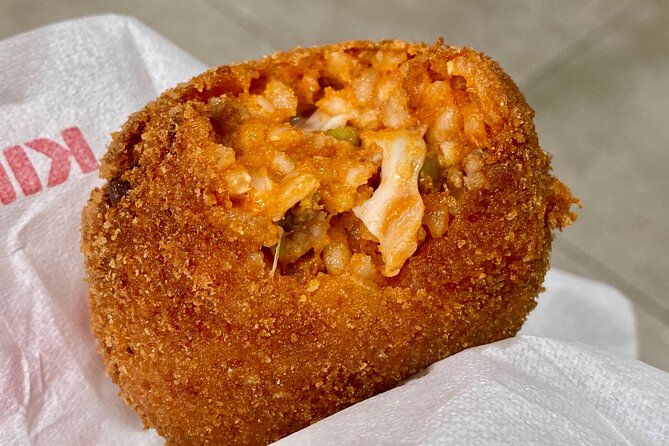
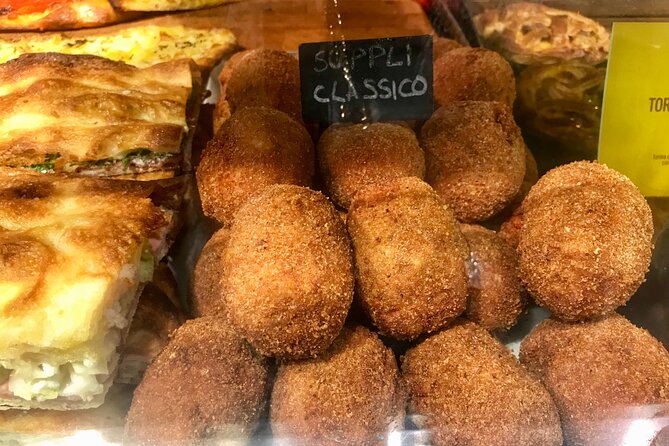
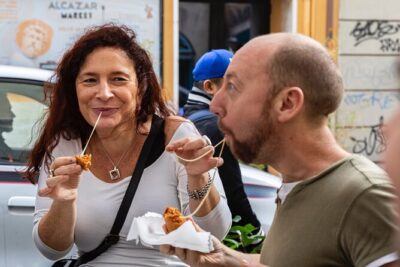
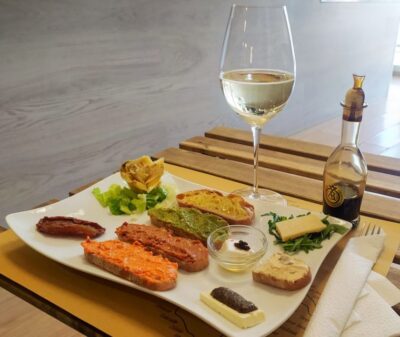
The food choices focus on recognizable Roman staples. Supplì is one of the most useful things to try with a guide. It is a deep-fried rice ball, usually crisp outside and soft inside, and it makes a fine introduction to Rome’s casual food culture. It is also the kind of snack you may want to seek out again later. One visitor returned for more after the tour, which tells you something practical about the dish’s appeal.
Via dei Chiavari and Roman street food
The walk continues to Via dei Chiavari, where a food tasting of regional specialties is scheduled for about 15 minutes. This part of the route gives the experience a more local, neighborhood feel than a parade of major monuments.
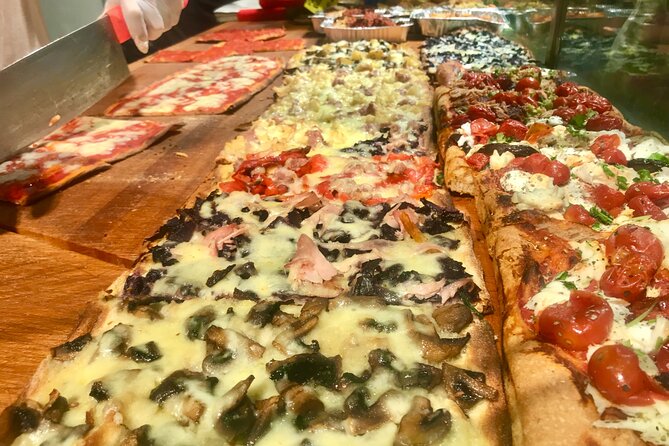
You may try pizza, cured meat, salami, or another Roman specialty here. The precise food can vary, so it is best to think in categories rather than expect a fixed plate. The point is comparison: you get to taste food from several stops and learn how ingredients, preparation, and serving style differ.
Pizza is especially useful in this setting because Roman pizza does not always mean the same thing as the thick, soft slices familiar elsewhere. The tour gives you a chance to ask about the local style while eating it fresh. Your guide can also explain how the food fits into everyday Roman habits, rather than treating it as a dish with no connection to the city around you.
Cured meats make the tasting more substantial, but remember that this is still a sequence of small portions. Some people find the food adds up to plenty, while others will want a proper meal afterward. I would book this as a late lunch starter, an early evening food walk, or a way to get your bearings before dinner.
Entering Rome’s Jewish Quarter
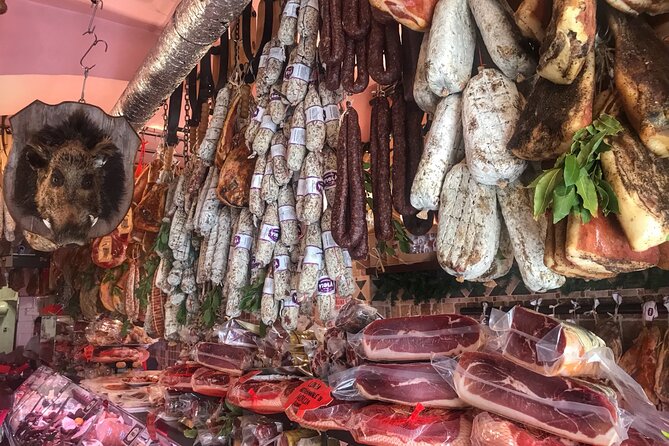
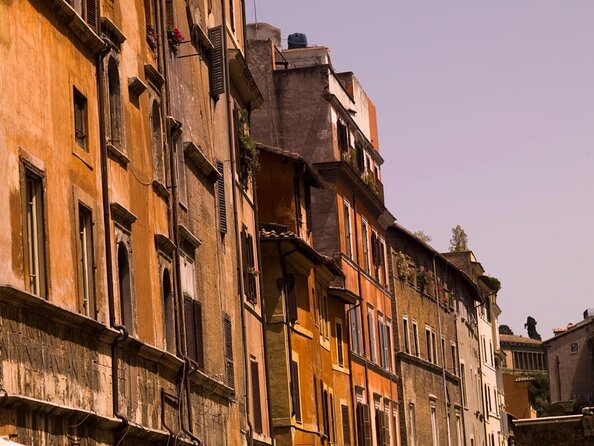
A short walk brings you into the Jewish Quarter, one of the strongest parts of the experience. The neighborhood adds a different layer to the tour, with centuries of Jewish life and Roman history packed into a small area.
This is not just a food stop with a little sightseeing attached. Your guide connects the dishes to the streets and buildings around you, making the neighborhood easier to understand. The route helps you notice how Rome’s quarters have distinct identities even when they sit close together.
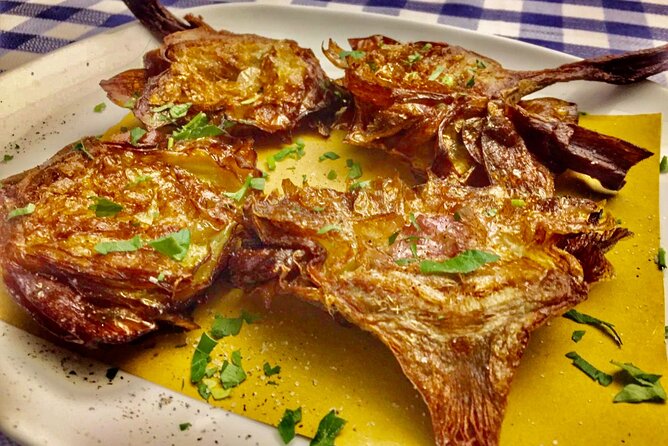
The Jewish Quarter stop lasts about 15 minutes and includes street food or a regional specialty. Artichoke appears in the food descriptions from the tour experience, and it is one of the flavors you might encounter. Roman-style artichoke is a useful thing to try here because it shows how a simple vegetable can become a signature local dish.
The quarter is also a good break from Rome’s biggest crowds. You still see plenty of city life, but the route is not built around standing in line at a major attraction. One reason this tour suits repeat visitors is that it reveals streets they might otherwise pass by while rushing between the Colosseum, Trevi Fountain, and Vatican City.
More tours led by locals in Rome:
- Rome Street Food Tour with Local Guide
★ 5.0 · 2,361 reviews - Naples: Street Food Walking Tour with Local Guide
★ 4.9 · 4,976 reviews - Eat Like a Local: Venice 3-Hour Small-Group Food Tasting Tour
★ 5.0 · 3,137 reviews - Marrakech: Street Food Tour with a Local Guide
★ 4.9 · 3,119 reviews
Portico of Octavia and the Turtle Fountain
At the Portico of Octavia, the food pauses for a short photo stop. The structure was originally built under Augustus, Rome’s first emperor, and its surviving remains help you see how ancient fragments sit within the modern neighborhood.
Three minutes is not enough for a full archaeological visit, and that is fine. This is a viewing stop, not an entrance tour. You get a quick explanation, a chance to take photographs, and a reminder that the Jewish Quarter is built around layers of Roman history.
The Turtle Fountain adds another attractive landmark. Bronze turtles decorate the fountain, associated with Bernini and Della Porta. It is a small, elegant stop that contrasts with the heavy stone remains of the Portico of Octavia.
These brief stops are one of the tour’s strengths and one of its limits. You see more of central Rome than you would on a food-only outing, but you do not spend long enough at any one monument for a full guided visit. If you want detailed archaeology, book a separate sightseeing tour. If you want food, neighborhood atmosphere, and useful orientation, the short stops work well.
Passing the Pantheon on the way to dessert
The route passes by the Pantheon, with about five minutes devoted to scenic views and orientation. You may not enter the building, so do not book this tour as your Pantheon visit.
Still, seeing the Pantheon in the middle of a food walk makes sense. The monument appears as part of the city rather than as an isolated box on a sightseeing checklist. Rome rewards this kind of movement. One minute you are discussing pizza, and a few streets later you are looking at one of the ancient world’s most famous buildings.
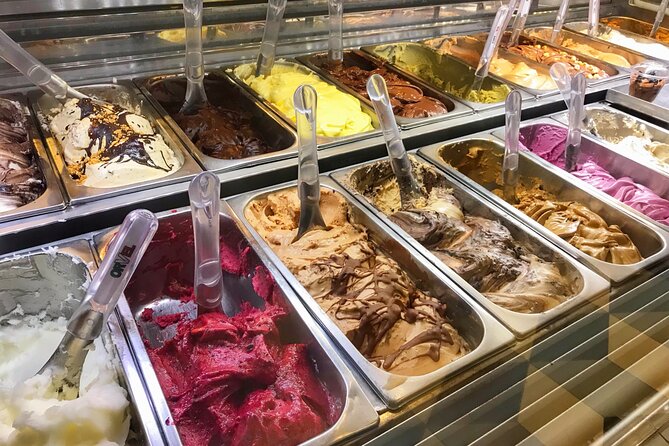
The route then moves toward Sant’Eustachio for dessert. The tasting lasts about 10 minutes and finishes with gelato, a smart choice after salty food, fried snacks, meat, and wine.
Gelato is more than a sweet ending here. It gives you one last chance to compare flavors and ask your guide where locals look for a good frozen treat. Flavor choice matters. One person found hazelnut disappointing but enjoyed an orange, lemon, and chili combination, so I would ask what your guide recommends before ordering.
The final scenic sections run about 10 minutes each. They give the group time to finish the food, talk, and take in central Rome without another major stop forced into the schedule.
What the guides add to the experience
The food matters, but the guide can determine how much you take away. The strongest descriptions of this tour center on guides who keep the pace moving, explain food without making it dull, and answer questions about Rome beyond the menu.
Mattia is repeatedly praised for humor, food knowledge, and stories about the city. Francesca is noted for warmth, care with group members, and clear explanations of both food and history. Marco receives praise for recommendations about where to eat, while Ramona is described as funny and helpful with information useful for the rest of a Rome visit.
Other named guides include Barbara, Tiziano, Chiara, Kristian, Andrea, Marti, and Denise. The exact guide depends on the departure, but the pattern is clear: this is meant to be a conversational walk, not an audio script delivered while you follow a flag.
Group size can vary. One particularly small group had around eight or nine people, which made it easier to ask questions and meet fellow diners. A smaller group is not guaranteed, but the tour’s short stops and food counters are easier to manage when the guide can keep everyone together.
Is $53 a fair price?
At $53 per person, you are paying for more than five samples. The price includes an English-speaking guide, a walking route through two central districts, a wine sample, a beer sample, and local explanations at each stop.
I consider that reasonable value if you want a guided introduction rather than simply buying snacks on your own. You also save time choosing what to try, and the history helps turn separate bites into a connected experience.
The value is weaker if you mainly want a full meal. Five tastings can be surprisingly filling, but portions are not designed to replace dinner. You may still want to book a restaurant afterward, especially if you have a large appetite.
The tour is also a good fit for families. One guide received praise for keeping children engaged, though the standing format and walking pace may suit older children better than very young ones. Vegetarians should provide advance notice so the food stops can be adjusted.
Timing, comfort, and practical details
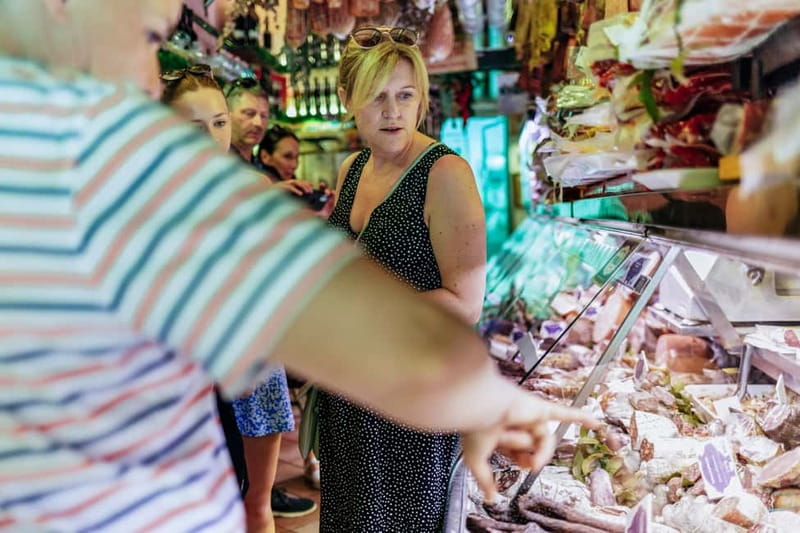
Wear comfortable shoes. The route is on foot through central Rome, and you will be standing during the tastings. The walking stretches are short, but the total experience lasts two and a half hours.
Morning departures offer the Campo dei Fiori market. Later tours may be better for an evening food outing, but they will not include the market in the same way. If market stalls are high on your list, choose the morning.
Weather does not necessarily ruin the experience. One tour continued through steady rain, with the guide keeping the group together and the tastings moving. Still, bring suitable clothing because much of the experience takes place outdoors.
Extra drinks are not included beyond the listed wine and beer samples. Vegetarian and other dietary options can be supported with advance notice, but vegans and people with gluten intolerance should choose another tour.
The meeting point is easy to identify: stand beneath the statue of Giordano Bruno in the middle of Campo dei Fiori. The activity is offered in English, and you can cancel up to 24 hours in advance for a full refund. A reserve-now, pay-later option is also available.
Who should book this Roman food walk?
I would choose this tour if you want a friendly introduction to Roman food and central Rome in one outing. It suits first-time visitors, couples, families with older children, and anyone who prefers tasting several small specialties instead of committing to one long restaurant meal.
It is especially useful early in your stay. You can ask about restaurants, cafés, gelato flavors, and dishes to try later, then return to the places you liked. Supplì and gelato may become repeat stops during the rest of your visit.
I would skip it if you need a seated meal, avoid gluten, eat vegan, or want a detailed tour inside the Pantheon or other monuments. It is also not the right choice if standing and walking for two and a half hours sounds uncomfortable.
For everyone else, the combination is hard to fault: a compact route, five tastings, two drink samples, and a useful look at Campo dei Fiori and the Jewish Quarter. The food gives you a reason to walk, and the walk gives the food a sense of place.
FAQ
How long does the Rome street food tour last?
The tour lasts 2.5 hours, including walking, food tastings, drink samples, and sightseeing stops.
Where does the tour meet?
Meet under the statue of Giordano Bruno in the middle of Campo dei Fiori square.
What food is included?
The tour includes five street food tastings. Foods listed for the experience include supplì, pizza, cured meats, regional specialties, and gelato.
Are drinks included?
Yes. The tour includes one sample of beer and one sample of wine. Extra drinks are not included.
Does the tour visit the Campo dei Fiori market?
The market is included only on the morning tour because it is open during the morning.
Does the tour enter the Pantheon?
No entrance is listed. The route passes by the Pantheon and includes scenic views on the way.
Is the tour suitable for vegetarians?
Vegetarian options are available with prior notice. Tell the activity provider about your dietary needs when booking.
Is the tour suitable for vegans or people with gluten intolerance?
No. The activity is specifically not suitable for vegans or people with gluten intolerance.
Can I cancel the booking?
You can cancel up to 24 hours in advance for a full refund. A reserve-now, pay-later option is also available.
Should you book it?
Book this tour if you want to taste Roman staples, see two characterful central districts, and get practical food advice from an English-speaking guide. The strongest reason to go is the combination of food and place: supplì in one neighborhood, artichoke or cured meat in another, then gelato near the Pantheon.
At $53, it is good value for a guided tasting walk, but not a replacement for dinner. Choose a morning departure for the market, give advance notice for vegetarian needs, and arrive ready to eat while standing. If that suits your style, this is a smart, flavorful way to get oriented in Rome.
More Street Food Tours in Rome
- Rome: Trastevere & Campo de Fiori Street Food Walking Tour
★ 4.9 · 2,768 reviews - Rome: Trastevere Street Food Walking Tour with Local Expert
★ 4.8 · 1,784 reviews - Rome E-Bike Tour: Ultimate Street Food and Market Feast
★ 4.9 · 50 reviews - Dubai: Old Town, Creek, Museums, Souks, & Street Food Tour
★ 4.8 · 10,816 reviews
Just added around Rome
- Rome: Trastevere and Campo de Fiori Food Tour★ 4.9 · 23 reviews
- Rome E-Bike Tour: Ultimate Street Food and Market Feast★ 4.9 · 50 reviews
- Rome: Award-Winning Roman Food Tours★ 4.9 · 189 reviews
- Alfredo alla Scrofa Restaurant in Rome: Eat Like a Star★ 4.5 · 357 reviews
- Rome Food Experience Max 6 People Group Tour | w/Private Option★ 5.0 · 516 reviews
- Appian Way & Aqueducts small group e-bike tour(catacombs & food)★ 5.0 · 531 reviews
- Rome All in One: Trastevere Food Tour, Dinner & Drinks★ 4.9 · 838 reviews
- Rome Private Food Tour with 6 or 10 Tastings★ 4.5 · 902 reviews
Food Tours in Rome, compared.
Rome Twilight Trastevere Food Tour by Eating Europe
Read our review →
Rome Food Tour: Unlimited Tastings with Fine Wine & Barolo
Read our review →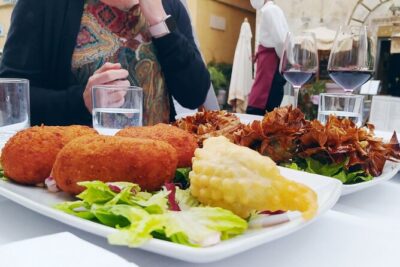
Rome Food Tour: Campo de’ Fiori, Ghetto, Trastevere Winner 2024
Read our review →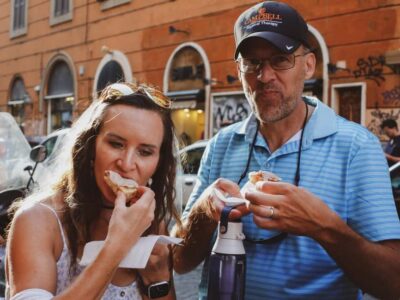
Guided Food Walking Tour with Wine in Trastevere
Read our review →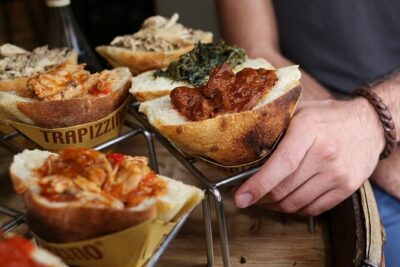
Trastevere Food tour with Free-Flowing Fine Wine
Read our review →
Trastevere & Campo de Fiori Street Food Walking Tour
Read our review →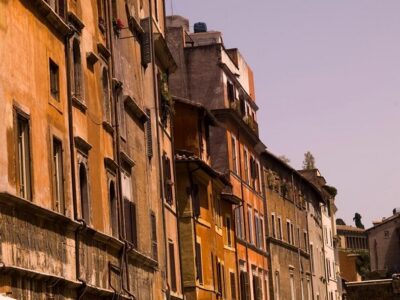
Browse the lists this tour appears in