
REVIEW · ITALY
Genoa Food, Wine Tasting & History Walking Tour
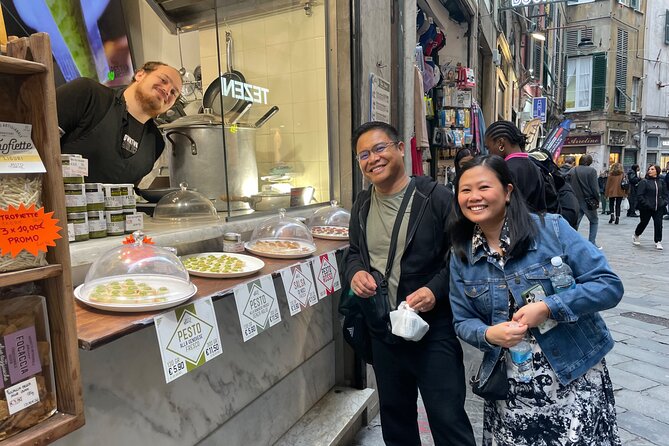
Genoa’s best introduction may be eaten on foot. This two-hour walk pairs five local specialties with churches, palaces, and narrow old-town lanes, so you get a quick lesson in both the city’s cooking and its past. Lorenzo is the guide most often named, and his personal ties to Genoa add warmth to the route.
I like the mix of street food and major sights, especially when you are new to Genoa and want your bearings fast. I also like the small-group limit of 15, the two Ligurian wines, and the effort made to handle vegetarian, vegan, family, pet, and dietary needs. The main caution is that this is an outdoor street-food walk, not a seated restaurant crawl, and Genoa’s hills can make the walking harder in hot weather.
Key points at a glance
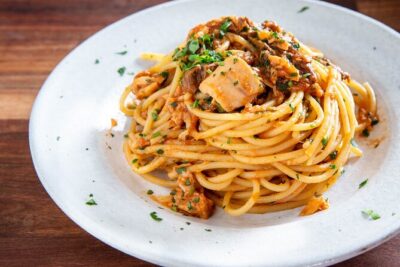
- Five classic Genoese tastes: Try focaccia, farinata, pesto, Panera, and fried fish, with the exact menu adjusted for dietary needs when possible.
- A history walk with real landmarks: The route begins at Christopher Columbus’s house and includes San Lorenzo Cathedral, Palazzo Ducale, and Palazzo San Giorgio.
- Lorenzo brings the city to life: He is often praised for local stories, friendly service, hidden corners, and knowing people along the route.
- Street food, not formal dining: Most tastings are eaten outdoors or while walking, with no promise of a table at every stop.
- Two local wines included: You taste one white and one red Ligurian wine, though this is a simple regional introduction rather than a wine seminar.
- Useful for a short stay: At about two hours, the tour fits neatly into a first morning, a port stop, or a final day in Genoa.
Genoa in two hours, one bite at a time
I like food walks that help you understand a city rather than simply fill you up. This one uses Genoa’s old center as its dining room, moving from one small food stop to another while the guide explains how the city grew into a major maritime power.
The tour costs $71.38 per person. That is not bargain-basement pricing, but the fee covers five local foods, two wines, a guide, and a compact walking tour through some of Genoa’s most important streets. If you visited each food stop on your own, you would still miss the connections between the dishes, the buildings, and the city’s character.
The strongest value comes from the combination. A standard sightseeing walk can leave you admiring grand façades without knowing what people eat nearby. A food tour can leave you full but unsure where you are. Here, the two parts support each other.
You should set your expectations correctly. This is not a sit-down tasting menu. The format is closer to a guided walk with stops for street food. You may stand, eat outdoors, and keep moving through lanes and piazzas. That approach feels close to everyday Genoese life, but it may disappoint you if you want a restaurant table, detailed culinary demonstrations, or long explanations from wine producers.
More food and wine tours in Italy:
- Winner 2025 Florence Sunset Food & Wine Tour by Eating Europe
★ 5.0 · 5,015 reviews - Rome Food Tour: Unlimited Tastings with Fine Wine & Barolo
★ 5.0 · 3,365 reviews - Rome: Guided Food Walking Tour with Wine in Trastevere
★ 4.9 · 3,105 reviews
Starting at Christopher Columbus’s house
The meeting point is Casa di Cristoforo Colombo, at Vico Dritto di Ponticello 37. Beginning here gives the tour a clear historical marker and places you near the old center.
The house itself is one of Genoa’s best-known landmarks, and it gives the guide an easy way to introduce the city’s place in European maritime history. From here, you begin walking through an area where the old city feels compact, layered, and occasionally confusing.
I recommend arriving ready to walk rather than treating this as a stationary tasting. Genoa is built on slopes, and the route includes some up-and-down movement. One person described the walking as more demanding than expected, especially in hot and humid conditions. Bring water, wear shoes with a good grip, and avoid arriving overly full if you want to try every sample.
The first section is useful for orientation. You are not simply being led between food counters. You are learning how the historic center fits together, with grand public buildings close to small shops and narrow passages.
Palazzo Ducale and the seat of old power
Palazzo Ducale was the center of political power in the old Republic of Genoa. The building gives the guide a natural place to explain the city’s government, wealth, and rivalry with other maritime powers.
You should not expect a full museum visit here. The tour is about seeing the building from the route and understanding its role, not spending hours inside its exhibitions. That limitation is also part of the appeal. In two hours, you get a useful snapshot rather than a long architectural lecture.
I especially like this stop because it keeps the food from floating free of place. Focaccia, pesto, farinata, and seafood make more sense when you see the city’s commercial and political center around them. Genoa’s cooking grew from coastal trade, local farming, practical ingredients, and a port culture that welcomed outside influences.
The guide’s delivery matters here. Lorenzo is frequently praised for explaining Genoese history in clear English and answering questions without making the walk feel stiff. He is also described as friendly and enthusiastic about his home city, which helps turn the buildings into stories rather than background scenery.
San Lorenzo Cathedral and Genoa’s grand churches
San Lorenzo Cathedral is Genoa’s most important church and one of the key stops on the route. Its striped stone exterior and prominent position make it hard to miss, but a guide helps you notice more than the façade.
The group may go inside churches during the walk, depending on access and timing. The experience includes time around beautiful religious buildings, and the guide can point out details you might pass without noticing alone. One of the pleasures of the tour is that the food stops do not replace sightseeing. You get both.
Do keep the schedule in mind. Two hours is short for a route that includes several landmark buildings, food tastings, wine, and questions. The experience works best as an overview. I would not book it expecting a detailed study of every church or palace.
This stop may also suit families. Children can break up the history with focaccia or gelato-style Panera, while adults get a stronger sense of Genoa’s religious and civic past. Young grandchildren have been included successfully, and one guide also adjusted the pace to help an older participant with accessibility needs.
More food and history walks in Italy:
- Palermo: Street Food and History Walking Tour
★ 4.9 · 1,486 reviews - Rome Food Tour in the Historic Centre with 8+ Food Tastings
★ 5.0 · 1,000 reviews - Bologna: Street Food Tour in the Historic Center
★ 4.8 · 125 reviews - Palermo: Historic Center Guided Bike Tour with Food Tasting
★ 4.7 · 85 reviews
Palazzo San Giorgio and Genoa’s maritime story
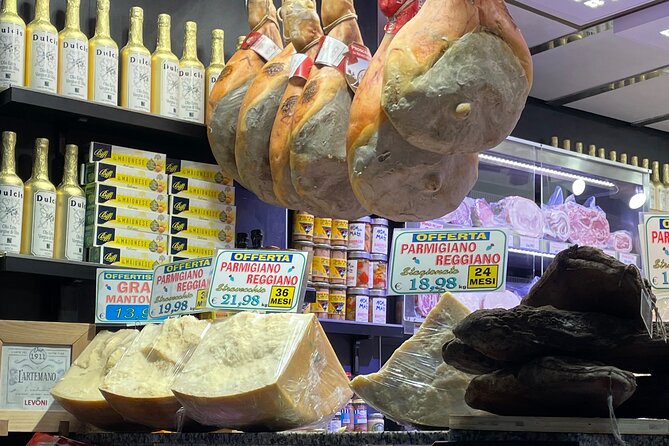
Palazzo San Giorgio adds another major piece to the city’s story. The building is known for its striking fresco and its connection to Genoa’s public and commercial life.
The route uses the palace as a bridge between architecture and the port city’s wider story. Genoa’s identity is not limited to churches and noble residences. Trade, shipping, finance, and political power shaped the old center, and Palazzo San Giorgio helps make that clear.
You will not get an academic lecture on every institution connected with the building. Instead, expect short explanations woven into the walk. That is the right scale for a food tour, as long as you understand that history is presented as lively context rather than a specialist class.
I like the way this stop gives the tour some structure. The route moves from Columbus’s house to government buildings, a major cathedral, and a maritime palace before continuing through the noble streets. You see how different parts of Genoa’s past sit close together.
Noble palaces and the city’s tucked-away corners
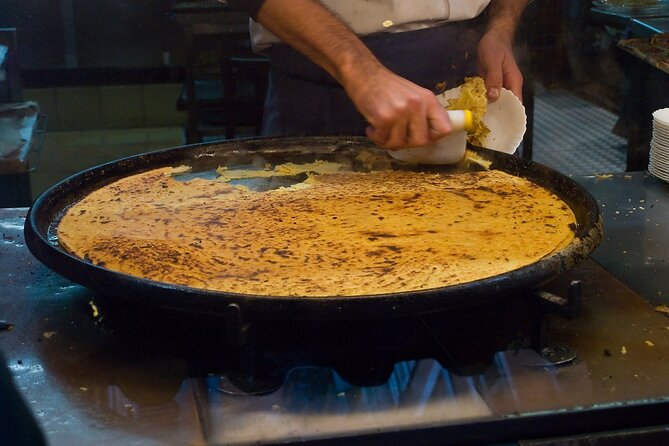
The walk continues through Genoa’s palace district, where the old nobility built impressive residences. These streets can be easy to miss if you are following a standard map from one major sight to another.
This is where Lorenzo’s local knowledge appears to matter most. He is often praised for showing private chapels, overlooked passages, unusual shops, and small places that look unremarkable from the street but carry plenty of character. One stop may feel more like entering a shop that could be a museum than visiting a standard attraction.
I would not promise a fixed list of secret locations, since the route can depend on access, timing, and the group. But the tour clearly aims to reveal the city’s less obvious details. You may see a church, palace, or shop that you would have walked past alone.
The final point is Via Garibaldi. This grand street is a fitting end because it brings the tour into Genoa’s famous palace quarter. The walk therefore finishes with architecture still in view, rather than ending at an isolated restaurant far from the historic center.
What you actually eat and drink
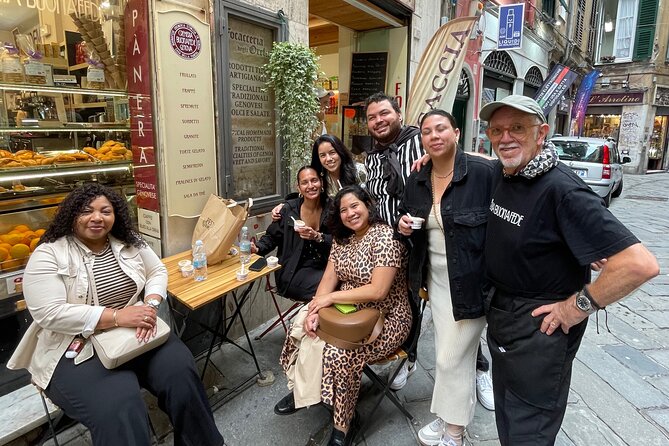
The listed menu includes five typical Genoese foods:
- Focaccia: Genoa’s famous soft, olive-oil-rich flatbread is one of the easiest foods to enjoy on the walk.
- Farinata: A savory chickpea preparation with a firm, tender texture. It is a useful introduction to a simple Ligurian staple.
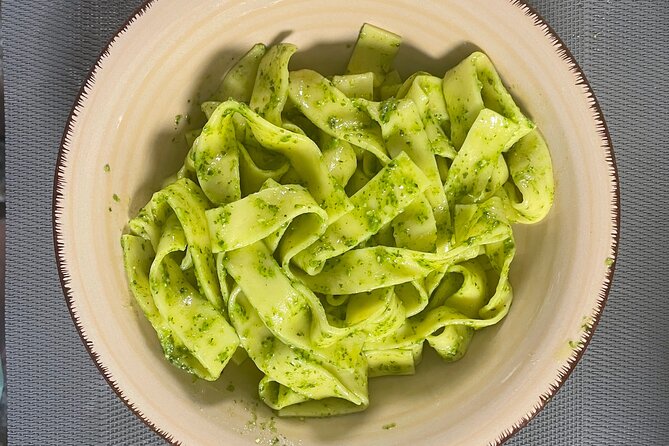
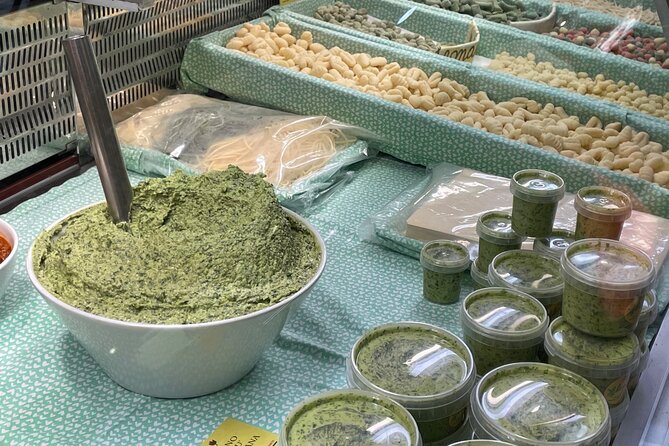
- Pesto: Genoa’s best-known sauce is served as part of the tasting, sometimes with cheese focaccia.
- Panera: A local coffee-flavored frozen dessert, a sweet finish that gives the menu a distinctly Genoese touch.
- Pesce fritto: Fried fish adds a seafood element and reflects the city’s coastal setting.
The exact sequence may vary, and substitutions can be discussed after booking. Vegetarian and vegan options are available, and the provider contacts you about dietary requirements. That is important because the fried fish is not suitable for everyone, and one person found it uncomfortable later despite enjoying it at the time.
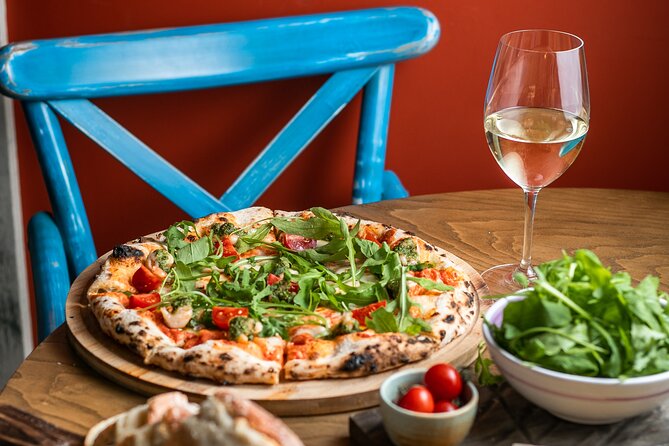
If you avoid seafood, tell the guide before the walk. One participant expected pizza based on promotional imagery and was disappointed to receive fish instead. The practical lesson is simple: ask what the current menu includes, especially if you have strong preferences.
You should also expect a generous amount of food for a short experience. One person left quite full after the tastings. Still, portions are samples rather than a full restaurant meal, and one critical assessment found the amount too limited for the price. I would treat this as lunch-sized grazing, not a replacement for a major evening dinner.
The Ligurian wine tasting
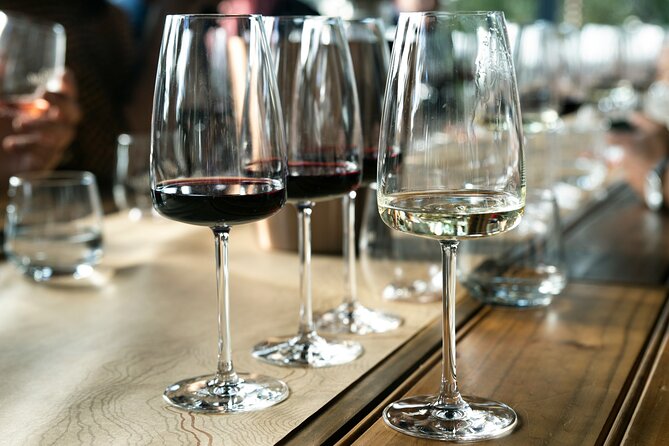
Two Ligurian wines are included, generally one white and one red. This gives you a quick taste of the region beyond pesto and focaccia.
The wine portion is informal. You are introduced to local labels and small producers, but this is not designed as a formal sommelier session. You should not expect detailed lessons about grape varieties, production methods, or vintages.
That distinction matters when you compare this tour with a dedicated winery experience. If you want a serious wine education, choose something built around vineyards and extended tastings. If you want two glasses alongside a walking tour of Genoa, this format makes sense.
The final tasting stop may be a small wine and produce shop. You can look at local products while tasting, but the pace may remain focused on the tour rather than on browsing. I would see the wines as a pleasant regional addition, not the main reason to book.
Pace, group size, and the feel of the walk
The maximum group size is 15, though some departures are smaller. A small group makes a real difference in Genoa’s narrow streets. You can hear the guide more easily, ask questions, and move through tight spaces without turning the group into a parade.
Lorenzo is the guide most often identified by name. He is described as personable, funny, patient, and deeply attached to Genoa. He also seems comfortable adapting the experience, including a requested detour toward the port and extra care for an older participant.
The pace is usually active but not a race. One positive account praised the stops for rest and the water provided. Another raised a useful warning: a request for a leisurely food walk did not prevent a fairly long old-town walk before the tasting, leaving less time for food.
That means you should be clear at the start. Tell the guide if you have already taken a sightseeing tour, have mobility concerns, or want to spend more time eating. The tour is designed to combine walking and tasting, not to keep you seated.
The route requires decent mobility because Genoa has slopes and uneven old streets. Most people can participate, and service animals are allowed. The experience is also family-friendly and pet-friendly, but summer heat can make the food harder to enjoy.
Is $71.38 a fair price?
I find the price reasonable if you value a guide and want both food and orientation in one compact outing. You receive five named local foods, two wines, historical commentary, and access to a route that may be difficult to assemble on your own.
The value drops if your main goal is a large meal. Portions are tasting portions, and the food may be eaten standing up. A person who wants multiple seated courses could spend less by visiting bakeries and cafés independently.
The strongest case for booking is your first day in Genoa. You get a map in your head, a list of foods to seek out later, and an introduction to the old center. It also works well on a short visit, including a final day before a flight, because the tour ends centrally on Via Garibaldi.
I would book well ahead if your schedule is fixed. The experience is often reserved about 33 days before the date, which suggests that popular departure times can fill. Free cancellation is available until 24 hours before the start time, and poor weather may lead to a new date or a full refund.
Who should book this Genoa food walk?
I would choose this tour if you:
- Want an efficient first look at Genoa’s old center
- Prefer local snacks to a formal restaurant meal
- Enjoy history in short, practical explanations
- Like small groups and the chance to ask questions
- Need vegetarian, vegan, or family-friendly arrangements
- Have only a few hours in the city
- Want a guide who can point out places you might miss alone
I would hesitate if you want a formal wine class, a seated tasting menu, large portions, or a fixed pizza-focused itinerary. I would also think twice on a very hot day if walking uphill is difficult.
Should you book it?
Book it if you want Genoa explained through food, streets, and stories rather than through a bus window. The mix of focaccia, farinata, pesto, Panera, fried fish, and two Ligurian wines gives you a useful taste of the region, while the route covers Columbus’s house, San Lorenzo Cathedral, Palazzo Ducale, Palazzo San Giorgio, and Via Garibaldi.
Go in knowing that this is a street-food walk. Wear sensible shoes, arrive hungry but not starving, mention dietary needs in advance, and ask for a slower pace if you need one. For a first introduction to Genoa in roughly two hours, the combination is hard to beat. For serious wine study or a full meal, choose a more specialized experience.
FAQ
How long does the Genoa food and history tour last?
The experience lasts approximately two hours.
Where does the tour start?
It starts at Casa di Cristoforo Colombo, Vico Dritto di Ponticello 37, 16121 Genova GE, Italy.
Where does the tour end?
The walk ends on Via Garibaldi in Genoa.
What food is included?
The listed tasting includes focaccia, farinata, pesto, Panera, and fried fish.
Are drinks included?
Yes. Two Ligurian wines are included.
Is the tour suitable for vegetarians and vegans?
Yes. Vegetarian and vegan options are available, and the provider contacts you after booking about dietary requirements.
What languages are available?
The experience is offered in English, and in-person guides can also speak Spanish and Italian.
More Walking Tours in Italy
- Naples: Street Food Walking Tour with Local Guide
★ 4.9 · 4,976 reviews - Rome: Trastevere & Campo de Fiori Street Food Walking Tour
★ 4.9 · 2,768 reviews - Palermo Original Street Food Walking Tour by Streaty
★ 5.0 · 2,105 reviews - Rome: Trastevere Street Food Walking Tour with Local Expert
★ 4.8 · 1,784 reviews
Just added around Italy
- Genoa Walking Tour: Discover Hidden Treasures and Street Food★ 5.0 · 80 reviews
- Guided Food Tour with Wine Tastings in Genoa★ 4.5 · 34 reviews
- Genoa Culinary Masterclass-A Hands-On Experience by Do Eat Better★ 5.0 · 56 reviews
- Florence Sunset Food Tour with Wine & Dine at a Tuscan farmhouse★ 5.0 · 194 reviews
- Florence Central Market Food Tour with Eating Europe★ 5.0 · 224 reviews
- The Cooking Lab – Authentic Food Experience★ 5.0 · 113 reviews
- The Other Side of Florence Food Tour with Eating Europe★ 5.0 · 377 reviews
- Tuscany Bike Tour with Wine, Oil and Food in the Florentine Hills★ 5.0 · 209 reviews
Food Tours in Italy, compared.
Rome Twilight Trastevere Food Tour by Eating Europe
Read our review →
Florence Sunset Food & Wine Tour by Eating Europe
Read our review →
Rome Food Tour: Unlimited Tastings with Fine Wine & Barolo
Read our review →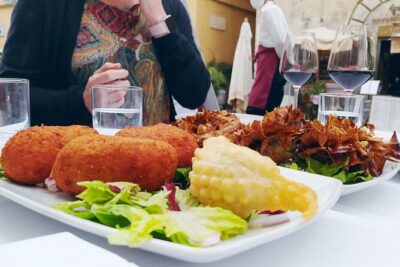
Rome Food Tour: Campo de’ Fiori, Ghetto, Trastevere Winner 2024
Read our review →
Eat Like a Local: Venice 3-Hour Small-Group Food Tasting Tour
Read our review →
Guided Food Walking Tour with Wine in Trastevere
Read our review →Browse the lists this tour appears in