
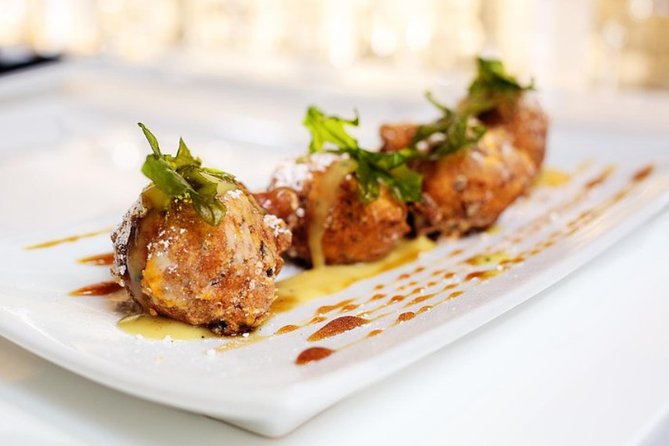
REVIEW · NEW ORLEANS
New Orleans Food and History Walking Tour
New Orleans cuisine makes more sense when you taste it one dish at a time. This three-hour walk links Creole, Cajun, Italian, and local seafood traditions through gumbo, fried catfish po’boys, muffulettas, boudin, pralines, and more. I like the way food and history stay together, rather than treating the meal as a string of unrelated samples. I also like that the group is capped at 16, which gives guides such as Beth, Meg, John, and Dylan room to answer questions and keep the pace personal.
The main thing to consider is the menu. Dietary flexibility is limited: a vegetarian option is available, but there is no vegan, dairy-free, or gluten-free version. The tour also includes a fair amount of food, and one stop is a hot sauce and seasoning shop rather than another restaurant. If you want a broad survey of every famous New Orleans dish, this tour cannot fit them all into three hours.
Key points to know before you book
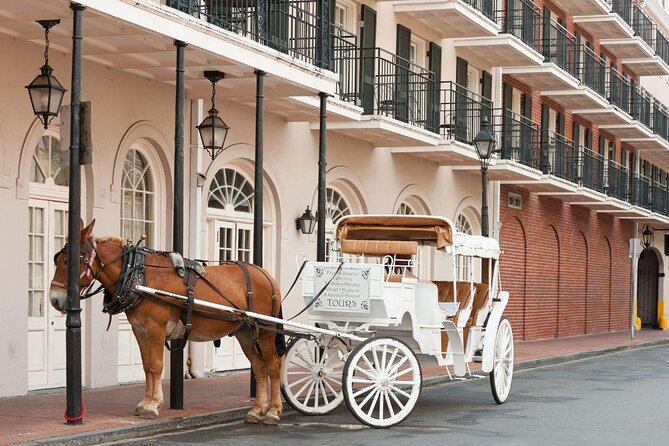
- Five food stops in about three hours: Expect a progressive lunch rather than one large sit-down meal.
- Classic New Orleans dishes: Gumbo, catfish po’boys, muffulettas, boudin balls, red beans and rice, pralines, and bread pudding may appear, with stops subject to availability.
- Food with cultural context: Your guide explains how French, African, Spanish, Italian, Caribbean, and other influences shaped local cooking and food names.
- Small-group format: The maximum group size is 16, a useful limit for street-side explanations and questions.
- Morning or afternoon departures: You can fit the tour around other French Quarter plans.
- Come hungry and wear walking shoes: Portions are generous, and the walking is easy for most people but not suited to those with mobility or walking problems.
Starting with gumbo in the French Quarter
Meet at 3rd Block Depot on Chartres Street, in the French Quarter. This is a handy starting point for a food walk because you begin among the old streets of the Vieux Carré instead of spending time in a vehicle getting to the action.
The first food stop is listed as 3rd Block Depot, where you receive a rustic Cajun gumbo made with chicken and andouille sausage. The dark roux, chicken stock, and warm potato salad give you a useful introduction to the local idea of gumbo: thick, savory, heavily seasoned, and built from several cooking traditions at once.
I like beginning with gumbo because it gives your guide something substantial to explain. You may hear about the difference between Cajun and Creole cooking, the role of roux, and the way Louisiana cooks use local meat, seafood, rice, and spices. You can buy a drink at the bar here, but beverages other than water are not included, so budget a little extra if you want beer, wine, or a soft drink.
One practical note: timing at the first stop can vary. Some groups find they spend a little longer there than expected. That is not necessarily a problem if you enjoy conversation, but it can make the later pace feel quicker.
More Food Tours in New Orleans
- New Orleans Food Walking Tour of the French Quarter with Small-Group Option
★ 5.0 · 6,118 reviews - New Orleans French Quarter Food Tour: Cajun, Creole and Culture
★ 5.0 · 1,246 reviews - French Quarter walking Food Tour Famous Flavors of New Orleans
★ 5.0 · 1,115 reviews
Hot sauce, seasonings, and a useful pause
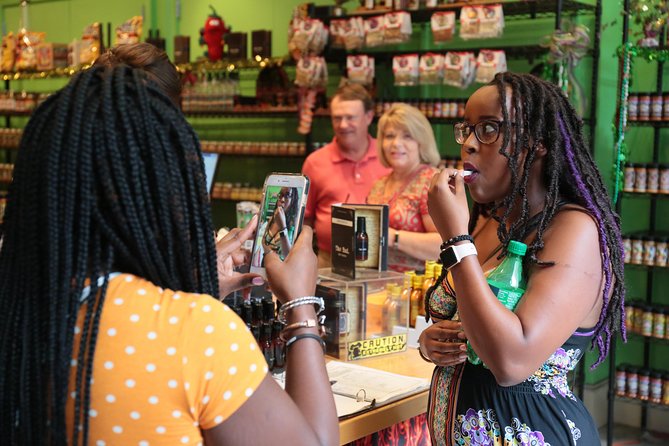
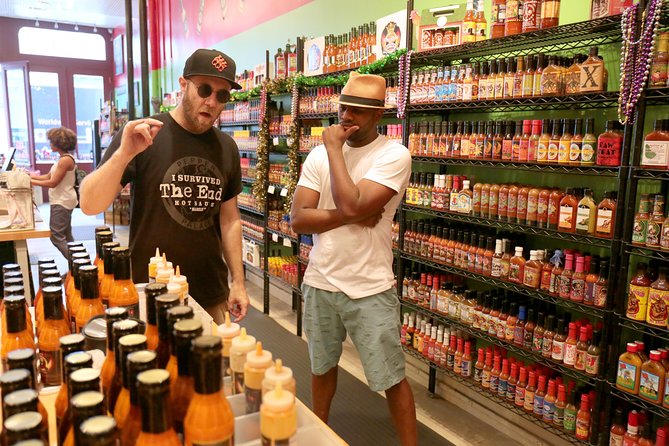
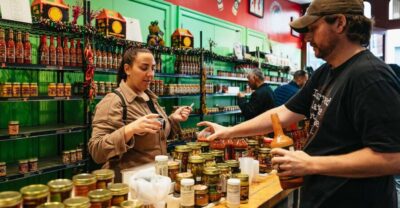
From the first restaurant, the walk includes a stop at a hot sauce shop. You can sample a wide range of hot sauces, dry rubs, barbecue sauces, marinades, Buffalo-style sauces, and other seasonings.
This is a fun break from the heavier dishes. It also gives you a clear look at how heat is used in Louisiana cooking. You do not need to treat every sample as a test of courage. Taste carefully, ask questions, and remember that the point is to learn how different peppers and spice blends change a dish.
Still, this stop is the tour’s most debatable use of time. If you want a constant parade of New Orleans plates, you might prefer another restaurant stop. One menu cannot cover gumbo, jambalaya, étouffée, crawfish, po’boys, muffulettas, boudin, red beans and rice, and every local sweet in one afternoon, so the hot sauce shop offers variety in a different form.
It can also be a good place to buy edible souvenirs. Several guides give suggestions about local products and nearby places to eat, so keep a note on your phone if you want to return later.
Pralines and the sweet side of Creole cooking
At Leah’s Pralines, you sample a traditional Creole praline or a newer version such as bacon pecan brittle. Classic pralines use local brown sugar, dairy, and pecans, producing a soft, sugary confection with a nutty finish.
This stop matters because pralines are not simply a final dessert after dinner in New Orleans. They are part of the city’s food-shop culture and make an easy gift to take home. The bacon pecan brittle also shows how old local sweets can be adapted for modern tastes.
If you have a sweet tooth, this is one of the more memorable stops. If you do not, the portion is still small enough to keep the meal moving. Pay attention to the ingredient explanation if you have an allergy. The company asks you to report food allergies during checkout, but aversions are not treated the same way, and the tour cannot provide dairy-free or vegan food.
The catfish po’boy and Louisiana waterways
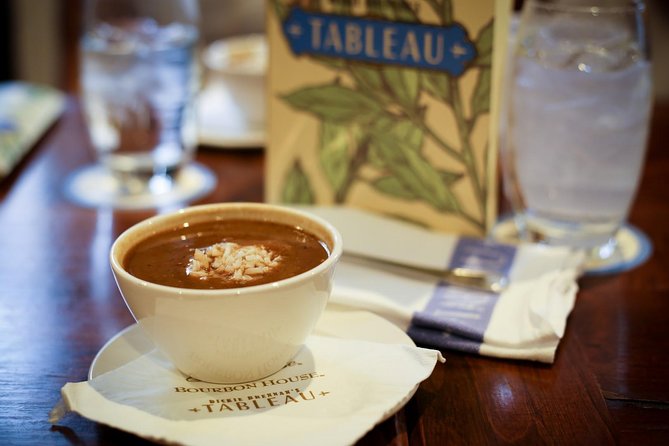
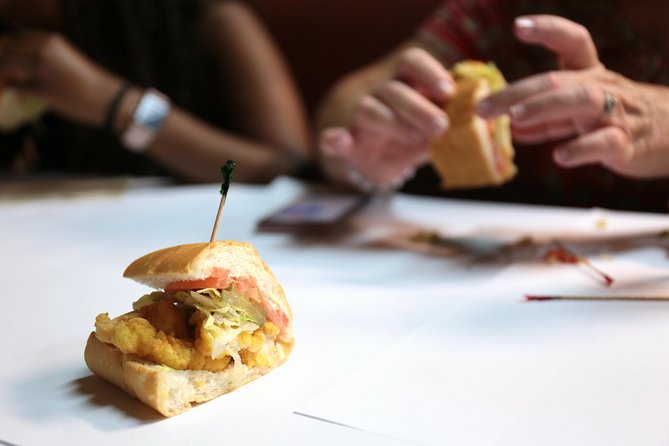
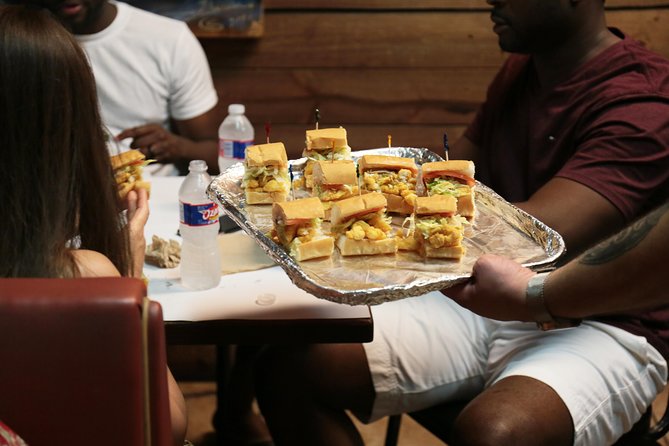
The tour continues to NOLA Poboys for a fried catfish po’boy. The sandwich uses local French bread and is dressed with lettuce, tomato, mayonnaise, and pickles. Hot sauce is optional.
The po’boy is a good moment to connect food with place. Your guide explains Louisiana seafood harvesting and the state’s waterways, then puts that information between two pieces of bread. The sandwich is filling, so you should not think of it as a token tasting. The portions across the tour are generous enough that you should arrive ready for a full lunch.
You will also hear how the po’boy differs from other sandwiches in New Orleans and why the bread matters. The locally made French loaf gives the sandwich its structure, while the fried catfish adds crispness and a mild seafood flavor.
This is one reason I recommend taking the tour early in your visit. You can use the guide’s restaurant suggestions later, then return to places you liked. If you already have a detailed food plan, the tour still gives you a way to compare several local styles in one afternoon.
More food and history walks in the USA:
- Historic Ybor City Food Walking Tour
★ 5.0 · 2,210 reviews - Boston Food & History: Pizza, North End & Freedom Trail
★ 5.0 · 1,772 reviews - Southern Flavors Food, Pub Crawl, and History Walking Tour
★ 4.5 · 1,623 reviews - Boston’s North End Food Tour: Italian Flavors & Heritage Walk
★ 5.0 · 1,322 reviews
Muffuletta, boudin, and the many roots of New Orleans food
The listed menu includes a muffuletta sandwich, a boudin ball, and red beans and rice with andouille sausage. Exact stops and dishes can change with availability, so do not treat every item as guaranteed on your date.
A muffuletta is an Italian-style sandwich served on Sicilian bread. It is layered with smoked ham, mortadella, Genoa salami, provolone, mozzarella, and a local olive salad. The olive mixture is the key feature. It cuts through the rich meats and cheeses and gives the sandwich its distinct New Orleans character.
Boudin takes the group in another direction. The fried boudin ball combines smoked pork, rice, and spices, usually with Creole remoulade for dipping. It gives you a taste of Cajun cooking in a compact form and shows how sausage, rice, and seasoning work together in Louisiana kitchens.
Red beans and rice with andouille is another hearty dish. The red beans cook slowly with smoked ham and sausage, then arrive over rice with green onions. This is comfort food, not delicate tasting food. Expect smoky, earthy flavors and enough substance to make you slow down.
The best guides use these dishes to explain the people who settled New Orleans and the food traditions they carried with them. You may also learn where names such as étouffée and jambalaya come from, along with how geography shaped what cooks could grow, catch, preserve, and serve.
Bread pudding and the finish
The dessert portion may include seasonal bread pudding, baked or fried, and one version mentioned for this experience is bananas Foster bread pudding. This is a fitting finish because New Orleans desserts often combine familiar ingredients with a little theater and a lot of sweetness.
Bread pudding is also a useful reminder that local cooking has long valued thrift. Day-old bread becomes a dessert rather than waste. Depending on the preparation, it may be soft and custardy or crisp around the edges.
By the final stop at New Orleans Creole Cookery on Toulouse Street, you should have eaten enough for a proper lunch. The end point is still in the French Quarter, so you can continue sightseeing on foot or stop for a drink afterward. If you plan another large meal that evening, keep it light.
How much walking and how fast is the pace?
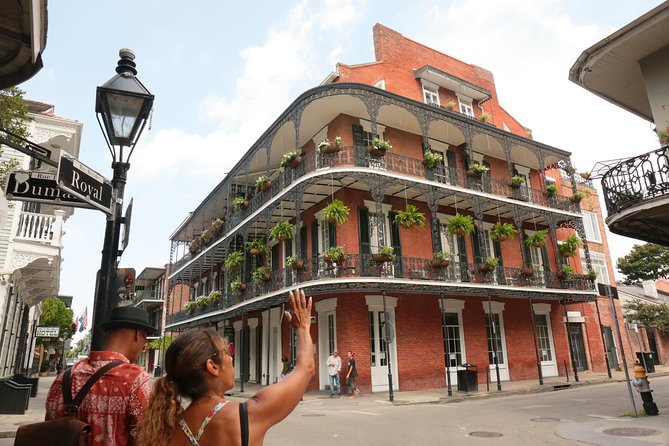
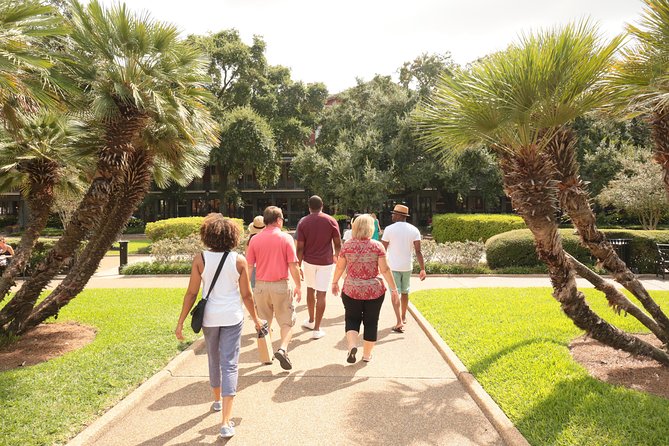
The route covers short distances through the French Quarter, with most of the walking between food stops. Several descriptions of the experience characterize the walking as easy, but you should still wear comfortable shoes and be ready to move at a steady pace.
The tour is not designed for someone who needs frequent sitting breaks or has serious mobility limits. Streets, restaurant entrances, and standing time can make the outing tiring even when the distances are not long. It operates in all weather conditions, so bring rain protection or dress for heat when needed.
Morning and afternoon departures make planning simple. A morning start works well if you want the rest of the day for museums, shopping, or another neighborhood. The afternoon version works nicely as lunch and leaves the evening open, though you should not schedule it so tightly that a small delay creates a problem.
The guides make the history work
The food is the reason to book, but the guide shapes the experience. Guides named in the feedback include Beth, Meg, John, Sarah, Ben, and Dylan, with Dylan sometimes introduced as Dr. Gumbo. Assignments can change, so book for the format and subject rather than expecting one specific person.
The strongest guide style here is conversational. You can ask about recipes, food names, local customs, and where to eat next. Several guides are praised for humor and for keeping solo participants comfortable, which matters in a small group where you may be walking and eating with people you have just met.
The history is practical rather than a long architecture lecture. You learn how people from different places influenced New Orleans cooking, why ingredients matter, and how geography shaped dishes. If you mainly want to inspect buildings, this is not the best French Quarter walking tour. The focus stays on food, with city history used to make each dish easier to understand.
What does the $85 price include?
At $85 per person, the tour is not cheap, but it includes a substantial lunch set menu at several establishments, server gratuities at those establishments, and about three hours of guiding. Water is included, while other drinks cost extra. A tip for your guide is optional.
The value depends on how you use it. Five food stops, generous portions, and a guide who explains the dishes can cost more than ordering random small plates on your own. You also avoid the guesswork of deciding which places are worth your time, though the venues may change.
If your goal is the greatest possible number of tiny samples, the price may feel less attractive. This is not a market crawl with a bite at every stall. Some portions are full enough to function as lunch, and the group spends time learning rather than rushing from one counter to the next.
Who will enjoy this tour most?
I would choose this experience for a first visit to New Orleans, especially if you want an introduction before choosing restaurants for the rest of your stay. It also suits solo diners, couples, families with older children, and anyone who likes food explained in plain language.
It is a good fit for adventurous eaters who are open to sausage, seafood, strong seasoning, rich sandwiches, and sweet desserts. The vegetarian option helps, but you should request it at checkout and understand that vegan, dairy-free, and gluten-free diets cannot be accommodated.
You should think twice if you dislike walking, need a highly controlled meal plan, or want a tour built around architecture. The food stops are based on availability, and the final selection may differ from the sample menu.
The group limit of 16 is a useful middle ground. You get more interaction than on a large coach outing, but the tour may still feel social rather than private. If you want a private food lesson or a completely custom menu, this is not that kind of experience.
Booking details worth knowing
The tour starts at 3rd Block Depot, 310 Chartres Street, and ends at New Orleans Creole Cookery, 508 Toulouse Street. Both addresses are in the French Quarter and close to public transportation.
You receive confirmation when booking, and the ticket is mobile. Service animals are allowed, and most people can participate. If you have a food allergy, provide that information during checkout. The company cannot promise changes for simple dislikes.
Free cancellation is available up to 24 hours before the start time. Late cancellations and changes are not accepted for a refund. If poor weather or an insufficient number of bookings cancels the tour, you can choose another date or receive a full refund.
Should you book the New Orleans Food and History Walking Tour?
Book it if you want a guided first taste of New Orleans, a filling lunch, and useful context for the city’s signature foods. The best reasons are the range of dishes, the small group, and guides such as Beth, Meg, John, and Dylan who bring recipes, food origins, and local stories into the walk.
Skip it if you need vegan, gluten-free, or dairy-free food, or if you want every famous dish in one sitting. You may also prefer another format if the hot sauce stop sounds less appealing than another restaurant.
For most first-time visitors who eat meat, seafood, dairy, and sweets, this is a practical way to get oriented. I would schedule it near the start of your stay, bring an appetite, wear good shoes, and leave room in your plans for the possibility of returning to a favorite stop.
FAQ
How long does the New Orleans Food and History Walking Tour last?
The tour lasts approximately three hours.
Where does the tour begin?
It begins at 3rd Block Depot, 310 Chartres Street, New Orleans, Louisiana 70130.
Where does the tour end?
It ends at New Orleans Creole Cookery, 508 Toulouse Street, New Orleans, Louisiana 70130.
What food is included?
The menu may include gumbo, hot sauce and seasoning samples, pralines, fried catfish po’boys, muffulettas, boudin balls, red beans and rice with andouille sausage, and bread pudding. Stops and dishes can change based on availability.
Is a vegetarian option available?
Yes. A vegetarian option is available, but you must request it at checkout.
Can the tour accommodate vegan, dairy-free, or gluten-free diets?
No. The tour does not offer vegan, dairy-free, or gluten-free options.
Are drinks included in the price?
Water is included. Other beverages are not included and must be purchased separately.
What happens if I need to cancel?
You can cancel for a full refund up to 24 hours before the experience begins. Cancellations or changes made less than 24 hours before the start time are not refunded or accepted.
More Walking Tours in the USA
- Little Havana Food and Walking Tour in Miami
★ 5.0 · 8,882 reviews - Savannah First Squares Culinary & Cultural Walking Food Tour
★ 5.0 · 3,229 reviews - Chicago Favorites Ultimate Food and Walking Tour
★ 5.0 · 1,962 reviews - Southernmost Food & Cultural Walking Tour by Key West Food Tours
★ 5.0 · 1,730 reviews
Just added around the USA
- Miami: Intimate Sailing in Biscayne Bay w/ Food and Drinks★ 4.7 · 34 reviews
- Miami: Little Havana Cuban Food and Culture Walking Tour★ 4.8 · 223 reviews
- Los Angeles: Downtown Food Tour★ 4.6 · 43 reviews
- Las Vegas: Foodie Walking Tour on The Strip with Tastings★ 5.0 · 24 reviews
- Key West: Schooner Sunset Sail with Food & Drinks★ 4.9 · 318 reviews
- Key West: Cuban and Caribbean Food and Cultural Walking Tour★ 4.9 · 128 reviews
- Key West Signature Sunset Cruise with Open Bar, Food & Music★ 4.5 · 418 reviews
- Kauai: Local Tastes Small Group Food Tour★ 4.4 · 125 reviews
Food Tours in New Orleans, compared.
New Orleans Food Walking Tour of the French Quarter with Small-Group Option
Read our review →
New Orleans French Quarter Food Tour: Cajun, Creole and Culture
Read our review →
French Quarter walking Food Tour Famous Flavors of New Orleans
Read our review →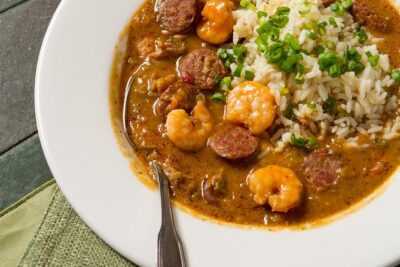
French Quarter walking Food Tour: Signature Tastes of New Orleans
Read our review →
French Quarter Small-Group Cocktail and Foodie Crawl
Read our review →Browse the lists this tour appears in