
REVIEW · NEW ORLEANS
New Orleans Cocktail and Food History Tour
New Orleans puts its history on the plate, and this four-hour walk lets you taste that story one stop at a time. You’ll move from seafood gumbo and an alligator sausage Hurricane to muffuletta, jambalaya, pralines, fried plantains, and rum drinks while your guide connects each bite to the city’s French, Spanish, Caribbean, African, Cajun, and Italian influences.
I especially like the wide food range and the fact that you sit down for part of the tour instead of eating every sample on the sidewalk. I also like the guides’ personal touch. Meg, Ben, Gary, and Dylan are repeatedly praised for making the history lively and offering useful suggestions for the rest of your stay.
The main thing to consider is the price. At $160 per person, this is not a cheap way to grab lunch, and some portions are tastings rather than full servings. You’ll also walk several blocks between stops, so comfortable shoes and a tolerance for heat, uneven pavement, and four alcoholic drinks matter.
Key points to know before booking
- Six food-and-drink stops: Red Fish Grill, Pepper Palace, Napoleon House, Leah’s Pralines, and Cane & Table form the core of the route, with Jackson Square and Royal Street along the way.
- Four full-size cocktails: The drinks are a major part of the experience, including a Hurricane, Pimm’s Cup, and classic daiquiri. The exact venues may change.
- Strong history component: Guides explain colonial Louisiana, Cajun influence, immigrant communities, cocktail origins, and the city’s food traditions.
- A real walking tour: The route covers the French Quarter and takes about four hours. It is not recommended if walking is difficult.
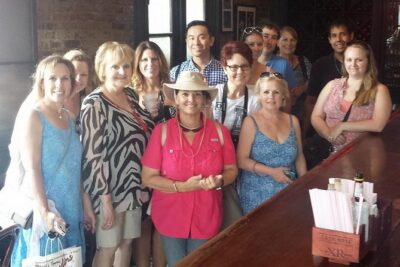
- Small-group feel: The maximum group size is 16, though some departures may be smaller.
- Important dietary limit: Vegetarian meals are available by request, but there is no gluten-free, dairy-free, or vegan version.
Why this tour works as a first taste of New Orleans
New Orleans food can be hard to sort out on a short visit. You may hear about gumbo, muffuletta, jambalaya, pralines, hot sauce, rum drinks, and Creole cooking, but fitting all of them into a sensible first day takes time and a bit of local help.
This tour solves that problem with a set route through the French Quarter. You are not simply handed a list of restaurants. You get a guided introduction to the ingredients, people, and migration patterns that shaped what New Orleans eats and drinks today.
The route is also useful for orientation. You start near Bourbon Street, continue through the Quarter, pass Jackson Square and Royal Street, and finish near Decatur Street. By the end, you have a better sense of where the main sights and eating streets fit together.
The guide is a big part of the value. Meg is often singled out for her humor, warmth, and ability to make history feel connected to the meal in front of you. Ben gets similar praise for explaining food and cocktail origins while keeping the group moving. Gary is noted for packing a large amount of city history into the afternoon. The experience will vary by guide, but the format gives a strong host plenty of room to shine.
More Food Tours in New Orleans
- New Orleans Food Walking Tour of the French Quarter with Small-Group Option
★ 5.0 · 6,118 reviews - New Orleans Food and History Walking Tour
★ 5.0 · 1,544 reviews - New Orleans French Quarter Food Tour: Cajun, Creole and Culture
★ 5.0 · 1,246 reviews
Red Fish Grill starts the afternoon with gumbo and a Hurricane
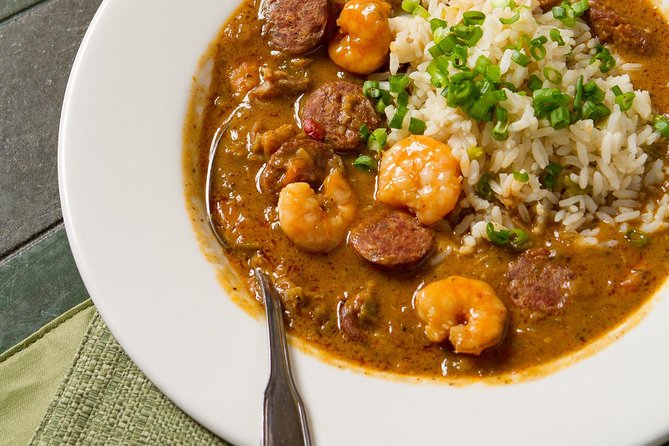
The tour begins at Red Fish Grill, at 115 Bourbon Street, usually at 2 p.m. Your first food is seafood gumbo with alligator sausage, made with a dark roux, shrimp, crab, sausage, and rice. It is a sensible opening dish because gumbo gives you a quick lesson in Louisiana cooking: layered seasoning, a slow-cooked base, seafood, meat, and rice all in one bowl.
The first cocktail is a craft Hurricane. This is more than a sweet welcome drink. The Hurricane is closely tied to New Orleans bar culture, and starting with one sets the tone for an afternoon that treats drinks as part of the city’s food story.
This first stop also covers the pre-colonial and colonial periods of Louisiana history. Plan on about 35 minutes here. That historical framing matters because the meal is not presented as a random local specialty. Your guide begins explaining how the city’s earliest cultural influences shaped its kitchen.
The practical catch is that the tour starts with alcohol before you have walked very far. Pace yourself. The afternoon includes up to four full-size drinks, and New Orleans cocktails can be stronger than their easygoing names suggest.
Pepper Palace turns hot sauce into a lesson in Cajun flavor
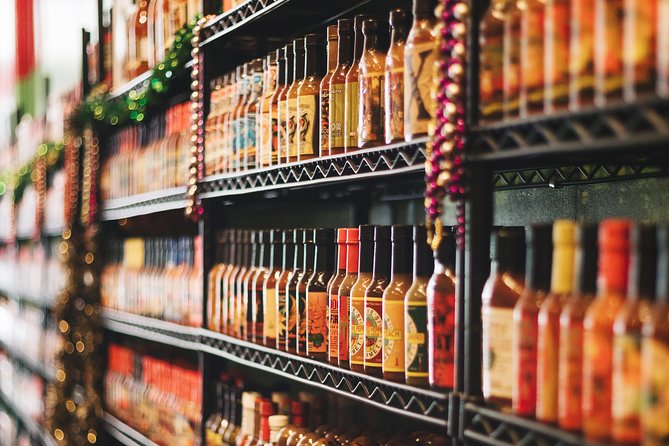
After walking about four blocks, you reach Pepper Palace. This is a different kind of food stop. Instead of one prepared dish, you sample a broad range of hot sauces, barbecue sauces, Buffalo wing sauces, salsas, dry rubs, marinades, and seasonings.
The unlimited sampling makes this stop playful and hands-on. You can compare heat levels and flavor styles rather than simply being told that Louisiana food is spicy. You also receive a free bottle of Louisiana-style hot sauce, a useful souvenir that takes up little room in your luggage.
The guide uses this part of the walk to discuss Cajun influence. That gives the tour a needed change of pace after the formal opening at Red Fish Grill. It also helps you see that New Orleans cooking is not one single tradition. Cajun flavors are part of the larger Louisiana picture, but they are not identical to every dish associated with the city.
Pepper Palace may be less satisfying if you want a substantial plate at every stop. This is a tasting and retail-style visit, not lunch. Still, it is a good pause between restaurant stops, especially if you like strong flavors and want something practical to take home.
Napoleon House brings together muffuletta, jambalaya, and Pimm’s Cup
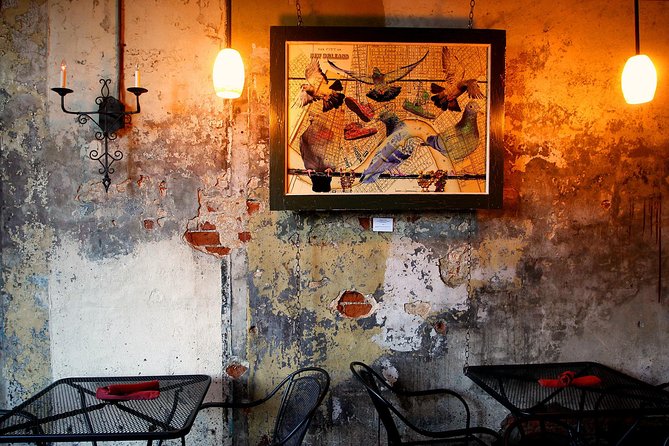
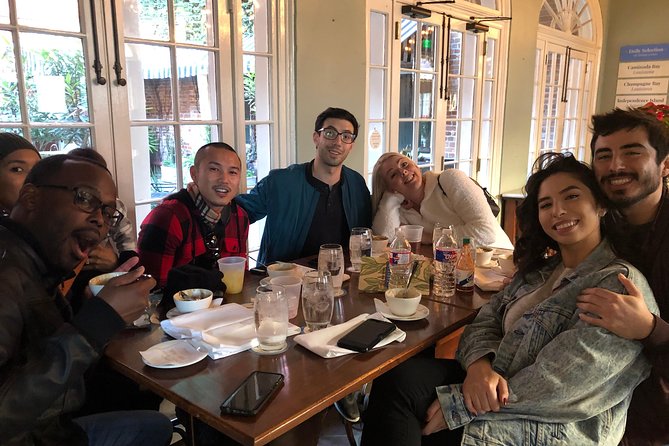
The next major food stop is Napoleon House, one of the route’s seated experiences. Here you receive a muffuletta, a chicken and andouille sausage jambalaya, and a Pimm’s Cup.
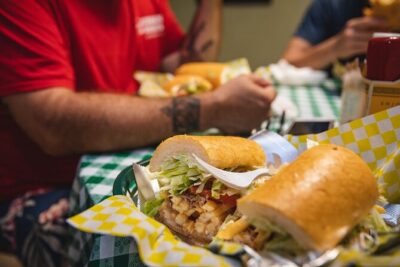
The muffuletta is an Italian-style sandwich built on fresh-baked bread with pastrami, salami, smoked ham, provolone, mozzarella, and an in-house olive salad. It is one of the clearest examples of how immigrant communities changed New Orleans food. The sandwich is hearty, salty, and substantial, so this is one of the tastings most likely to feel like a meal.
The jambalaya offers a different profile. Slow-cooked rice, chicken, smoked sausage, herbs, and spices make it savory and comforting. Your guide explains the food while discussing 19th-century immigration patterns and their effect on Louisiana cuisine.
The Pimm’s Cup gives you a lighter counterpoint to the food. Napoleon House is famous for the drink, and having it in this setting makes the stop feel tied to place rather than simply selected for convenience.
This is also where the $160 price starts to make more sense for some people. You are paying not only for samples, but for access to established venues, a seated meal segment, cocktails, and a guide who ties everything together. Still, expectations matter. You are tasting several dishes, not ordering full entrées from a restaurant menu.
More food and history walks in the USA:
- Historic Ybor City Food Walking Tour
★ 5.0 · 2,210 reviews - Boston Food & History: Pizza, North End & Freedom Trail
★ 5.0 · 1,772 reviews - Southern Flavors Food, Pub Crawl, and History Walking Tour
★ 4.5 · 1,623 reviews - Boston’s North End Food Tour: Italian Flavors & Heritage Walk
★ 5.0 · 1,322 reviews
Leah’s Pralines adds sugar, pecans, and a family story
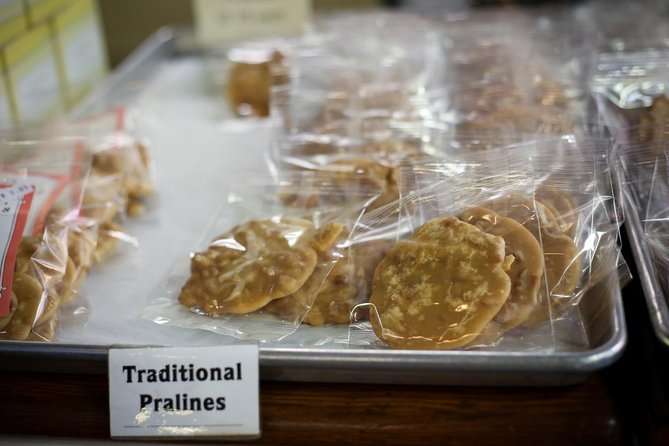
The route then passes Bourbon Street and continues several blocks to Leah’s Pralines. This third-generation family-owned candy shop supplies the sweet stop: a traditional Louisiana praline and bacon pecan brittle.
The praline is made with local pecans, brown sugar, and dairy. It is a compact taste of the city’s Southern candy tradition, and the bacon pecan brittle gives you a saltier, crunchier contrast.
This stop is short but useful. A food tour should not treat New Orleans as gumbo and cocktails alone. Pralines are part of the city’s edible identity, and they make an easy gift to carry home.
If you are already feeling full, the small size works in your favor. If you are expecting another full dish, it may feel modest. The stop is best understood as a dessert sample and a quick look at a long-running local candy business.
Cane & Table finishes with plantains and a classic daiquiri
The final restaurant stop is Cane & Table on Decatur Street, a James Beard Award-nominated restaurant with a focus on rustic colonial cooking and rum drinks. You finish with fried plantains served with lime crème fraîche, salsa macha, and cilantro, along with a classic daiquiri made from Caribbean white rum, fresh lime, and sugar.
The plantains bring a different texture and flavor from the earlier dishes. Mildly sweet maduros are fried until soft and caramelized, while the lime crema and salsa macha add tang and heat. It is a small dish, but it shows how Caribbean ingredients and techniques fit into the wider New Orleans food story.
The daiquiri is a clean finish after the sweeter Hurricane and the herbal Pimm’s Cup. It also gives the guide a chance to talk about rum, colonial-era cooking, and the city’s links to the Caribbean.
The tour ends inside Cane & Table, at 1113 Decatur Street. That is convenient if you want to continue eating or exploring the French Quarter afterward, but the experience does not include a ride back to your hotel. You are responsible for getting from the finish to your next stop.
Jackson Square and Royal Street make the walking matter
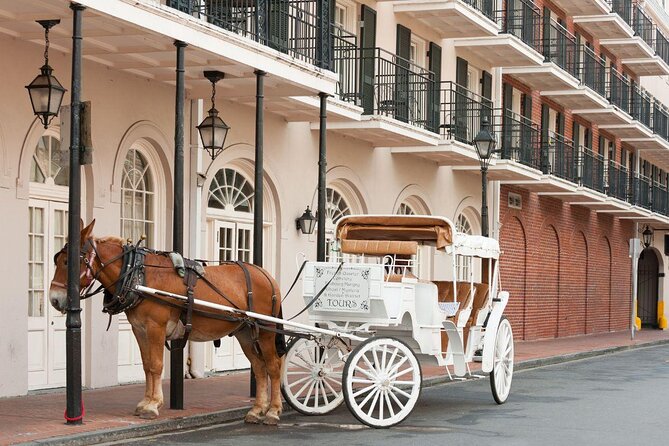
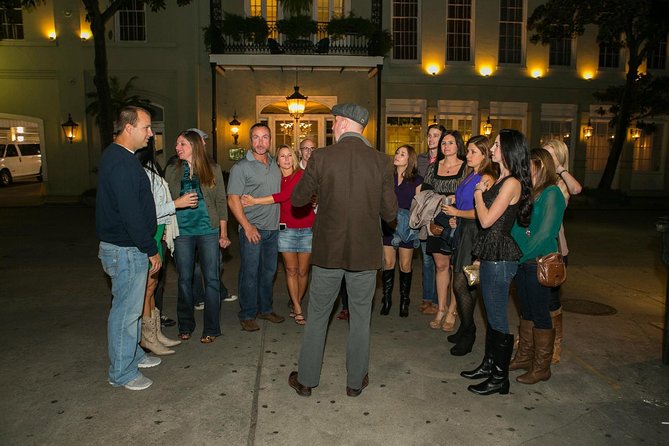
Between tastings, you pass Jackson Square and walk along Royal Street. These stretches are not separate meal stops, but they give the afternoon visual context.
Jackson Square is one of the French Quarter’s key landmarks, while Royal Street is lined with shops and old buildings. The walking links the food to the city itself, which is important here. A seated restaurant crawl would deliver similar dishes, but it would miss the connection between neighborhoods, architecture, bars, shops, and everyday street life.
Expect several blocks between venues. One recent experience was described as a long walk, and that is fair warning for anyone with mobility concerns. The tour lasts about four hours, and New Orleans weather can make the distance feel longer. Wear comfortable shoes, carry water, and remember that the afternoon begins at 2 p.m., when the city may still be warm.
The maximum group size is 16. That is small enough for questions and conversation, though the actual feel depends on the day’s attendance. The tour is offered in English and uses a mobile ticket.
What you actually eat and drink
The food list is broad, but it helps to separate the advertised range from the likely serving size. You can expect up to six dishes or food tastings, including:
- Seafood gumbo with alligator sausage
- Hot sauce, barbecue sauce, salsa, and seasoning samples
- Muffuletta
- Chicken and andouille sausage jambalaya
- Traditional praline and bacon pecan brittle
- Fried plantains with lime crème fraîche and salsa macha
The tour also includes four full-size drinks. The named examples are the Hurricane, Pimm’s Cup, and classic daiquiri. Since venues can change based on availability, the exact fourth drink and lineup may vary.
Some food portions are large enough to leave you full. Other people may find the total amount lighter than expected for the price. I would not schedule a big lunch immediately beforehand, but I also would not assume this replaces dinner for every appetite.
Vegetarians can request an alternative at checkout. The tour does not offer gluten-free, dairy-free, or vegan arrangements. You must report actual food allergies during checkout, not simply preferences or dislikes. If you need strict dietary control, this is probably not the right food tour.
Is $160 a fair price?
The $160 cost is high compared with a basic walking tour or a casual restaurant lunch. The value depends on how much you want the guide, the cocktail service, and the organized access to several locations.
I see three parts to the price:
First, you receive a full afternoon of food and four alcoholic drinks. Second, you are paying for a guide who explains the origins of dishes, cocktails, and local culture. Third, the route saves you the work of finding several restaurants and deciding what to order during a short visit.
The price feels better if you are a first-time visitor, enjoy cocktails, and want a structured introduction. It feels less convincing if you already know New Orleans food, prefer full meals, or do not drink alcohol.
The strongest value may be the advice you receive along the way. Guides such as Ben and Meg have offered suggestions for later meals, jazz, and things to do after the tour. That can help you use the rest of your trip better, especially if you schedule this near the start of your stay.
Who should book it?
I would choose this tour for a first visit, a food-focused weekend, or a special afternoon with friends. It suits people who want to sample several classic dishes without spending days researching restaurants.
It also works well for history fans. One particularly useful feature is the way the guide connects food to colonial Louisiana, Cajun traditions, 19th-century immigration, Caribbean rum, and Italian influence. You get more than a string of tastings.
The tour is less suitable if you have trouble walking, avoid alcohol, need a vegan or gluten-free menu, or want a quiet, slow meal. It is also not designed for children because the minimum age is 21.
Book early if your dates are fixed. The experience is often reserved more than a month ahead, and the small-group limit can reduce last-minute availability. Free cancellation is available until 24 hours before the start time. Poor weather or an insufficient number of bookings can also lead to a new date or full refund.
My final take
I would book the New Orleans Cocktail and Food History Tour if I wanted a fast, well-organized introduction to the city’s food culture. The mix of gumbo, muffuletta, jambalaya, pralines, plantains, hot sauce, and cocktails gives you a useful first map of New Orleans flavors.
The deciding question is not simply whether the food is good. It is whether you want four hours of guided context and several drinks along with the food. If yes, the tour offers a lively start to a New Orleans visit, especially with a strong guide such as Meg, Ben, or Gary. If you want maximum food quantity for your money, choose a regular restaurant crawl instead.
FAQ
How long does the New Orleans Cocktail and Food History Tour last?
The tour lasts approximately four hours.
Where does the tour begin?
It begins inside Red Fish Grill at 115 Bourbon Street in New Orleans.
What time does the tour start?
The scheduled start time is 2 p.m.
Where does the tour end?
The tour ends inside Cane & Table at 1113 Decatur Street.
How many drinks are included?
The tour includes four full-size drinks. Named examples include a Hurricane, Pimm’s Cup, and classic daiquiri. Venues and drink selections can change based on availability.
Is a vegetarian option available?
Yes. A vegetarian option is available if you request it at checkout.
Does the tour offer vegan, dairy-free, or gluten-free food?
No. The tour does not offer vegan, dairy-free, or gluten-free options.
What is the minimum age?
The minimum age is 21.
Can I cancel for a refund?
Yes. You can cancel at least 24 hours before the start time for a full refund. Cancellations or changes made less than 24 hours before the tour are not accepted for a refund.
Just added around the USA
- Miami: Intimate Sailing in Biscayne Bay w/ Food and Drinks★ 4.7 · 34 reviews
- Miami: Little Havana Cuban Food and Culture Walking Tour★ 4.8 · 223 reviews
- Los Angeles: Downtown Food Tour★ 4.6 · 43 reviews
- Las Vegas: Foodie Walking Tour on The Strip with Tastings★ 5.0 · 24 reviews
- Key West: Schooner Sunset Sail with Food & Drinks★ 4.9 · 318 reviews
- Key West: Cuban and Caribbean Food and Cultural Walking Tour★ 4.9 · 128 reviews
- Key West Signature Sunset Cruise with Open Bar, Food & Music★ 4.5 · 418 reviews
- Kauai: Local Tastes Small Group Food Tour★ 4.4 · 125 reviews
Food Tours in New Orleans, compared.
New Orleans Food Walking Tour of the French Quarter with Small-Group Option
Read our review →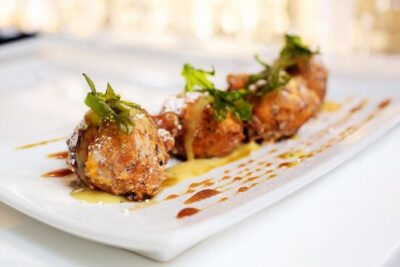
New Orleans French Quarter Food Tour: Cajun, Creole and Culture
Read our review →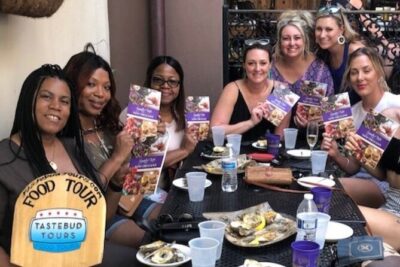
French Quarter walking Food Tour Famous Flavors of New Orleans
Read our review →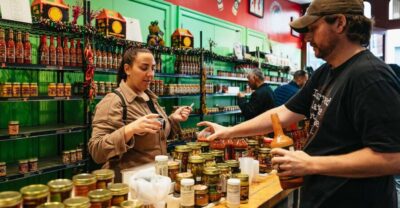
French Quarter walking Food Tour: Signature Tastes of New Orleans
Read our review →
French Quarter Small-Group Cocktail and Foodie Crawl
Read our review →Browse the lists this tour appears in