
REVIEW · THAILAND
Chiang Mai: Local Food and Markets Guided Walking Tour
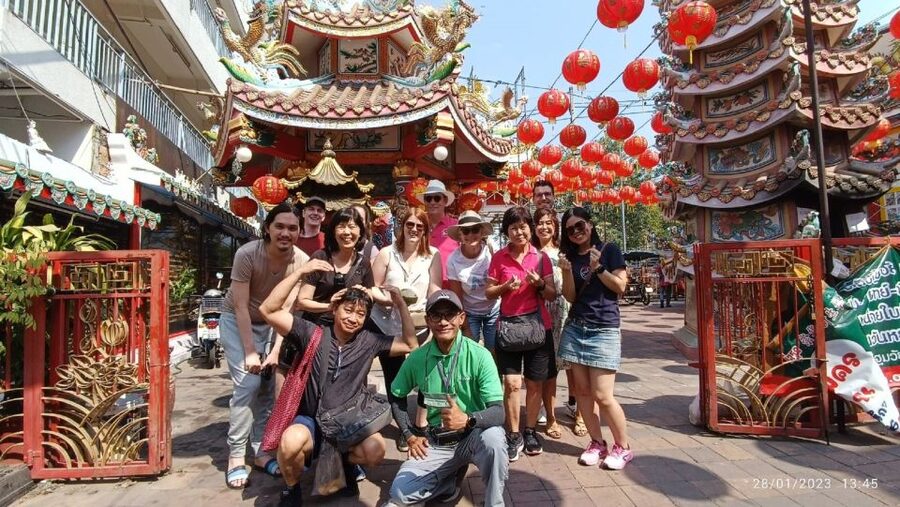
Chiang Mai’s food story comes alive in small bites: peanut-filled steamed rice dumplings, dinosaur-shaped fried dough, mango sticky rice, and Hakka noodles with stuffed tofu and fish sausage. This 150-minute walking tour links those foods with the flower and produce markets near the Ping River.
I like the way the route uses places locals actually shop and eat, rather than keeping you inside a polished tourist venue. I also like the flexible start times and the guides, including Koi, Patty, Banana, Nancy, Nom, and others, who explain food customs while helping you order.
The main catch is that food is not included in the $48 price, so bring cash for each stop. The afternoon departure can also miss some named restaurants, since several close early. If you want the full food lineup, choose a morning time.
Key points to know before you book
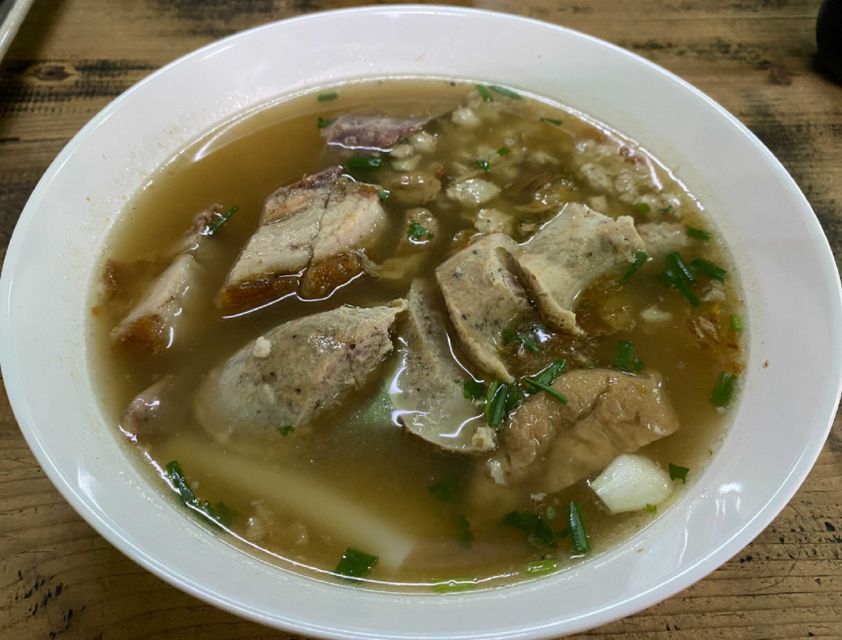
- Four distinctly different food stops: Try khao kriab pak moh, pa thong go, mango sticky rice, and Hakka-style noodles.
- A real market walk: Ton Lamyai Flower Market and Warorot Market supply much of the scenery, shopping, and local context.
- Morning is the smart choice: Some restaurants close by early afternoon, so the 2:30 pm departure may use alternative stalls.
- Come hungry: The tastings add up quickly, especially the noodle dish at Thana Ocha.
- Bring cash and good shoes: You pay for food separately and may walk about 2.5 miles over the course of the tour.
- Low-impact travel: The experience includes carbon emissions offset credits and is presented as GSTC-certified.
Why this Chiang Mai food walk works
This is a short food tour with a useful local rhythm. You meet at Chansom Memorial Bridge, known locally as Khua Khaek, opposite Ton Lamyai Flower Market. From there, your guide leads you along Praisanee Road and through the market area rather than collecting you from your hotel.
That meeting point matters. You are already near two of Chiang Mai’s most practical market districts, so the tour spends its time on food and local streets instead of sitting in a vehicle. There is no hotel pickup or drop-off, which keeps the price and route focused, but you need to allow time to reach the bridge.
I see this as a good first or second-day activity. It helps you get your bearings, learn what local dishes look like, and gather ideas for meals later in your stay. Several guides also share restaurant and night market suggestions, which makes the tour useful beyond the final noodle stop.
The pace is not a slow, sit-down food seminar. You walk between stops, stand in market lanes, and eat in short stages. One past participant estimated the route at roughly 2.5 miles, while another described it as a fast walk before lunch. Wear shoes that can handle warm pavement and uneven market surfaces.
More market tours in Thailand:
- Bangkok by Night: Temples, Markets and Food Tuk-Tuk Tour
★ 5.0 · 3,752 reviews - Bangkok: Markets, Temples and Food Night Tour by Tuk Tuk
★ 4.9 · 2,371 reviews - Chiang Mai: Evening Local Street Food Market Tour
★ 4.8 · 604 reviews
First taste: khao kriab pak moh at Lung Khajohn Wat Ket
The first food stop is Lung Khajohn Wat Ket, known for khao kriab pak moh. These are sweet steamed rice skin dumplings, often filled with peanuts. The thin, soft wrapper gives them a different feel from the fried snacks that follow.
This is a useful opening dish because it introduces you to a style of Thai snack that can be easy to miss when you order only familiar noodles or curries. Your guide can explain how it is prepared and how locals eat it. The stop is small and focused, so do not expect a full restaurant meal here.
The food is paid separately. Carry small amounts of Thai baht, since taking out a wallet at every stall can be inconvenient. One sensible approach is to ask your guide early how much cash you should keep ready for the planned tastings.
Ton Lamyai Flower Market adds color without taking over
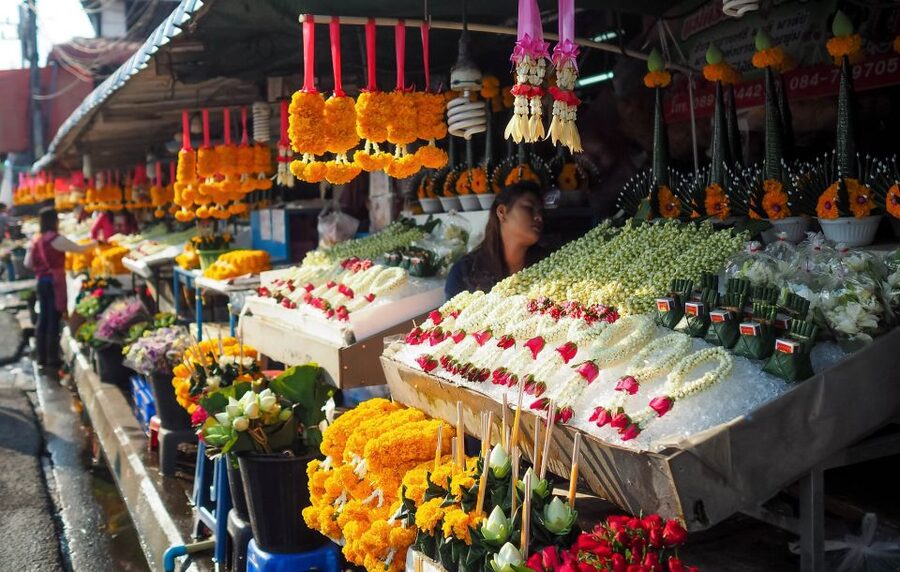
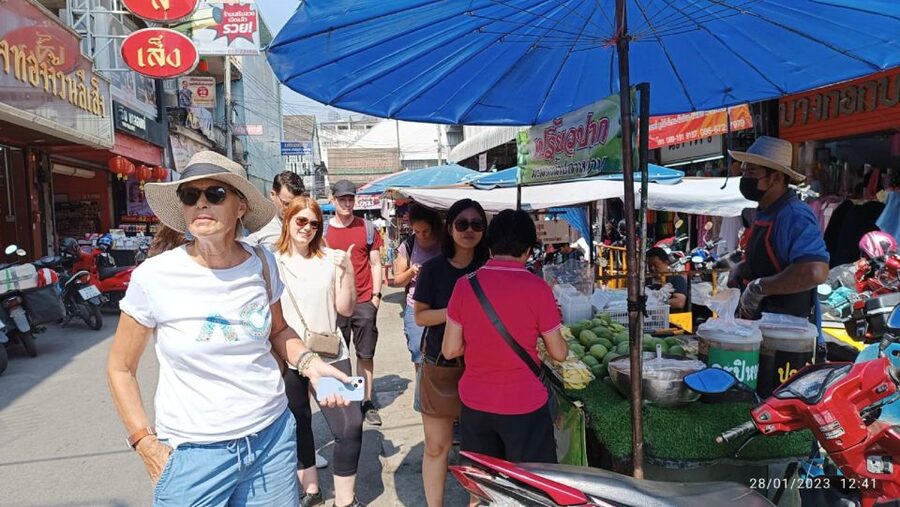
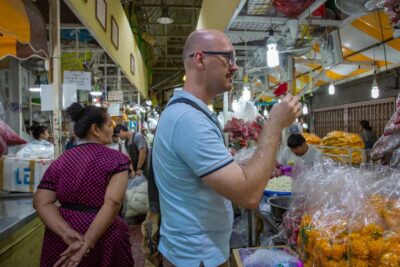
After the dumplings, the route passes through Ton Lamyai Flower Market. The market is opposite the meeting point, but it becomes more meaningful once you have started walking and eating. Fresh flowers and herbs give you a break from the food stalls, while the guide can point out how the market fits into daily life in Chiang Mai.
This is a good photo stop, especially if you enjoy close-up shots of flowers, bundles, and market displays. Bring a camera, but do not let photography make you fall behind. The route has several food stops packed into a short period.
The flower market also gives the tour a more rounded feel. You are not simply moving from one restaurant to the next. You are seeing the food economy around it, including produce, herbs, flowers, clothing, and other goods sold in the wider market district.
Go Neng and the famous dinosaur-shaped dough
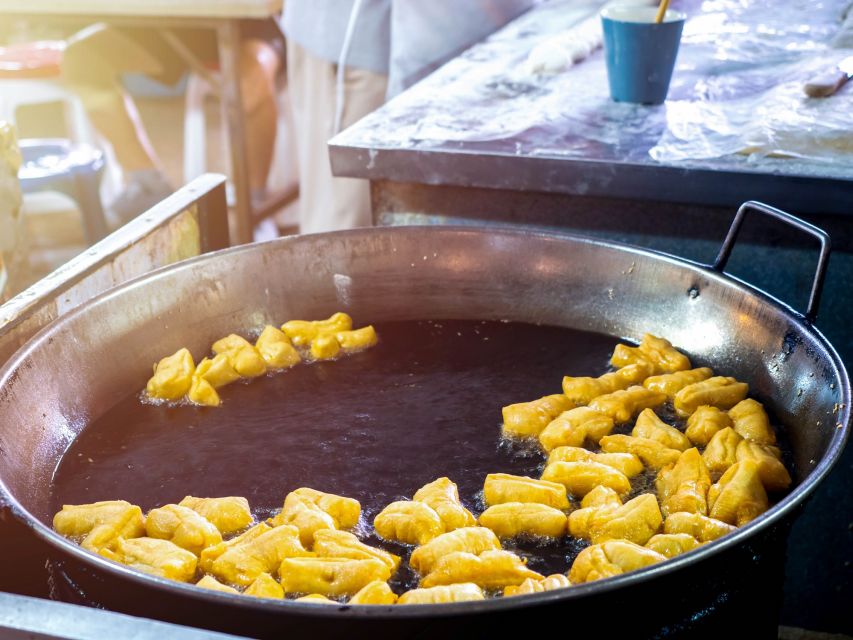
Next comes Go Neng, a popular stop for pa thong go, or deep-fried dough sticks. The unusual shapes are often compared to dinosaurs, which gives this snack a playful edge. They are crisp, fried, and straightforward, but the shape is part of the fun.
This is one of the most memorable stops for families and curious eaters. Children may enjoy choosing a strange-looking piece, while adults get a classic local snack with a story attached. The stop also shows why food tours work well here: a guide can take you directly to a stall you might otherwise walk past.
Do not expect every stop to suit every palate. Fried dough is heavier than the steamed dumplings, and the tour continues with more food. Pace yourself rather than eating a large breakfast beforehand. The tour is designed around tasting, but the portions can leave you full by the final dish.
A few more food tours around Thailand worth comparing
- Bangkok Authentic Tasting Thai-Chinatown Walking Food Tour
★ 4.9 · 852 reviews - Local Life, Culture & Food Walking Tour at Chinatown
★ 4.7 · 119 reviews - Bangkok: Street Art and Street Food Walking Tour
★ 4.1 · 58 reviews - Reykjavik Food Walk – Local Foodie Adventure in Iceland
★ 5.0 · 18,952 reviews
Warorot Market is the tour’s main food lesson
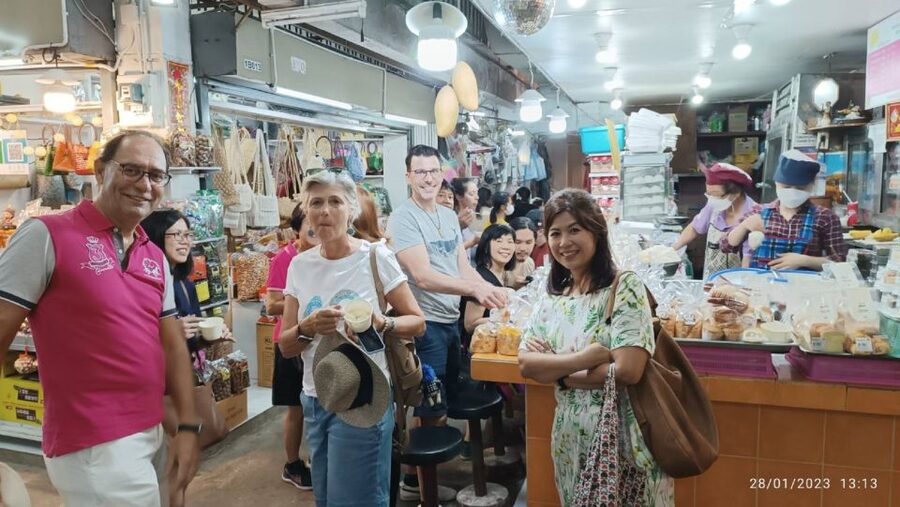
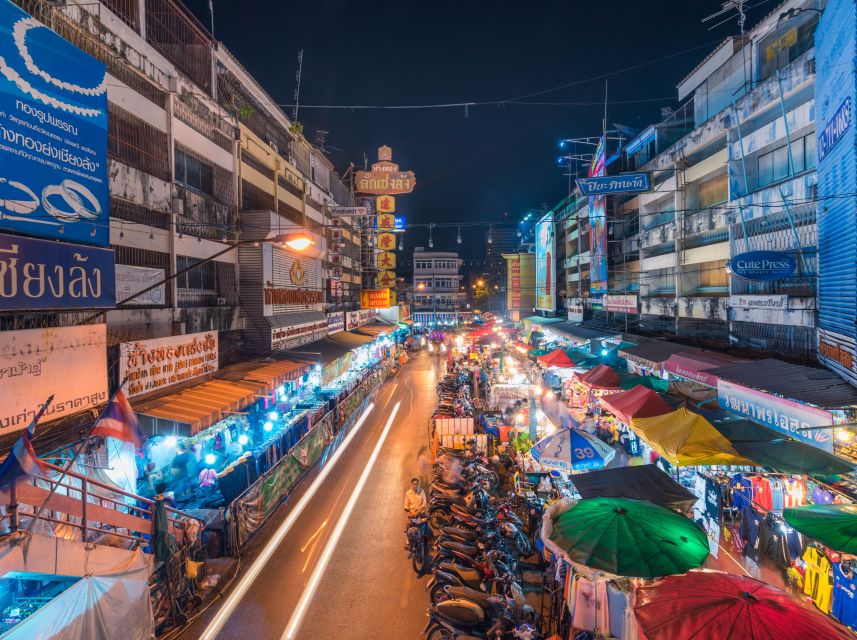
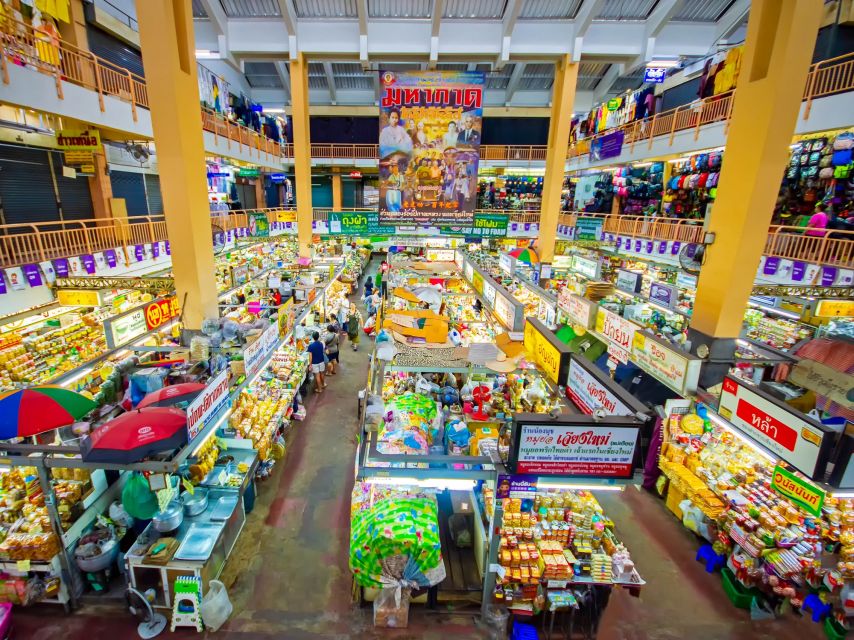
Warorot Market is the largest part of the route. It sells snacks, produce, clothing, and more, so the experience shifts from a few named food shops to a broader look at how Chiang Mai shops and eats.
Here, your guide is especially useful. The market can feel confusing if you do not know what the ingredients are or how the snacks are served. Guides such as Koi, Patty, Banana, and Nom have been praised for explaining local foods clearly, helping with orders, and pointing out details you might miss on your own.
You may see ingredients and prepared foods that are unfamiliar. The tour gives you a chance to ask what something is before buying it. That simple help is valuable in a market where labels may not be in English and where a dish’s appearance does not always tell you how it tastes.
The route then seeks out a stall serving mango sticky rice. This is the sweet course, with ripe mango beside sticky rice and coconut-based flavors. It gives the walk a clear progression: steamed snack, fried snack, market grazing, dessert, then a savory noodle finish.
One point to understand is that market conditions can alter the plan. Stalls may be busy, unavailable, or closed, and weather can change the route. Guides have been able to switch to other food stalls when a scheduled place was shut, but the exact order and selection are not guaranteed.
Hakka noodles at Thana Ocha finish the meal
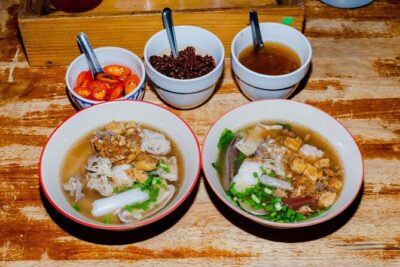
The final planned stop is Thana Ocha, known for Hakka-style noodles with Hakka stuffed tofu, fish sausage, and wontons. This is the most substantial dish of the tour and the point where the separate snacks become a proper meal.
The Chinese influence is one of the more interesting parts of Chiang Mai’s food culture. Hakka-style noodles also give the tour variety. You are not eating four versions of the same Thai street snack. The route moves through sweet, fried, fruit-based, and savory foods, with Chinese-style flavors in the final bowl.
Several people who have taken this route singled out the first dumplings and the last noodle soup as their favorite stops. That makes sense. The dumplings are unusual enough to be memorable, while the noodle dish offers a satisfying finish after a morning of sampling.
If you are very hungry, you may wish the tour included more food. If you eat a full breakfast first, you may wish the opposite. The best plan is to arrive ready for a series of small portions and treat the noodle dish as an early lunch.
What the guides add to the experience
The guide can make or break a market walk, and this tour depends heavily on that personal element. The named guides in the available feedback include Koi, Patty, Banana, Nancy, Nom, Pimpi, Pim, Sunny, Maggie, Nick, and others. The strongest pattern is clear: visitors value guides who explain ingredients, answer questions, help order, and adjust when a stall is closed.
Guides have also helped with practical details. Koi has been praised for arranging food and finding seating, while Nom was noted for being attentive and even helping carry shopping bags. One guide pre-ordered at the first stop when it was especially busy. Those small actions can save time and reduce the stress of ordering in an unfamiliar market.
English and Thai are available. English ability can vary by guide, but the supplied experiences repeatedly describe clear communication. The route also includes more than food. You might hear about local customs, nearby buildings, temples, or why certain foods became part of Chiang Mai’s everyday life.
That said, the amount of explanation can vary. One person found the tour too quick and wanted more food history, while another enjoyed the short city orientation built around the market walk. If you want a long lecture about regional cuisine, choose a longer specialist food tour. If you want a friendly introduction with several tastes, this format fits better.
Price, food costs, and the real value
The listed price is $48 per person. That covers the guide, walking tour, and carbon emissions offset credits, but not the food. This distinction is important because the final cost depends on what you choose at each stop.
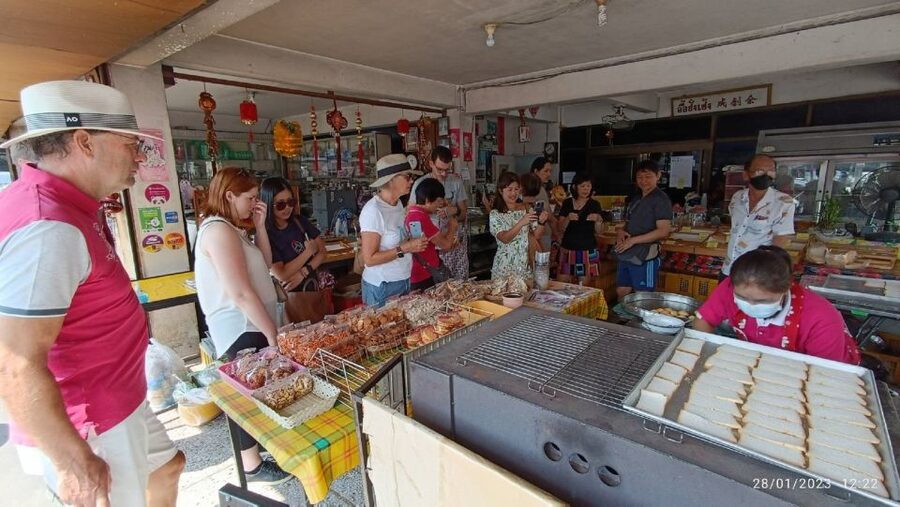
The food itself is described as reasonably priced, but paying separately means you need cash and must make several small purchases. One parent found this inconvenient, especially while managing a child. You can reduce the hassle by carrying small bills and asking the guide which items are planned.
At $48, the value is not simply the amount of food in your hand. You are paying for access to local stalls, help with ordering, explanations of unfamiliar foods, and a route that connects markets you could visit independently. If you are confident navigating Chiang Mai and happy to point at food on your own, you may find the price high.
I think the tour is better value for a first visit, for solo diners who want guidance, or for anyone nervous about trying unfamiliar market food. It is less compelling for a repeat visitor who already knows Warorot Market and the surrounding stalls.
Choosing the right start time
Multiple start times make this easy to fit around a Chiang Mai itinerary. The practical choice, however, is the morning slot. Many of the restaurants named in the route close by early afternoon, and the 2:30 pm departure may use alternative stalls.
A morning start also means you can see the markets as they open and avoid the worst heat of the day. One person took the tour as the markets were opening and appreciated the quieter setting. The exact crowd level will change, but early timing generally gives you more room to walk and look.
The afternoon tour is not automatically a bad choice. Your guide can still arrange authentic street food, and the market route remains worthwhile. Just book it knowing that the listed stops may change and that the walk can feel rushed if businesses are preparing to close.
Leave extra time to reach Chansom Memorial Bridge. Morning traffic can be slow and unpredictable, and the guide can wait only 10 minutes after the scheduled meeting time. The meeting email arrives the evening before with the confirmed meeting point and pickup time, though this is a walking tour rather than a hotel pickup service.
Who should book this food walk?
I would recommend it to you if you:
- Want a short introduction to Chiang Mai food and market life
- Prefer local stalls to a formal cooking class
- Are willing to try unfamiliar snacks
- Want a guide to order and explain dishes
- Need a flexible activity that fits into a morning
- Enjoy walking and can manage a route of about 2.5 miles
- Are visiting Chiang Mai for the first time
It is not suitable for vegans, since no vegan option is available. The activity is also not recommended for pregnant women or people with mobility, heart, or respiratory problems. Those restrictions matter because the tour involves walking, heat, market crowds, and several food stops.
Families can enjoy it, though the pace and unfamiliar foods may not suit every child. One guide was especially flexible with a picky five-year-old, but that kind of adjustment depends on the guide and the day. Tell your guide about food concerns at the start.
The tour is presented as a responsible, low-impact option, with carbon emissions offset credits included and GSTC certification noted. That does not change the walking route itself, but it may matter to you if you prefer activities that address their transport and operational footprint.
My verdict: book it for access, not a feast
Book this tour if you want a friendly local guide to lead you into Chiang Mai’s food districts and explain what you are eating. The mix of steamed dumplings, fried dough, mango sticky rice, and Hakka noodles gives you a broad taste of the city in a compact period.
Choose a morning departure, bring cash, wear proper shoes, and arrive hungry. Skip it if you want all food included, need a vegan menu, or prefer a slow and detailed food history tour. For most first-time visitors, it is a useful way to get your bearings fast and discover dishes you might not order alone.
FAQ
How long is the Chiang Mai food tour?
The tour lasts 150 minutes, or two and a half hours.
Where does the tour meet?
Meet at Chansom Memorial Bridge, also called Khua Khaek, opposite Ton Lamyai Flower Market.
Where does the walking tour finish?
The tour finishes at Ton Lam Yai Market.
Is hotel pickup included?
No. Hotel pickup and drop-off are not included.
Is food included in the tour price?
No. Food and tasting expenses are paid separately at the market stalls and restaurants.
What foods can I try?
Possible tastings include Hakka-style noodles, mango sticky rice, pa thong go deep-fried dough sticks, and khao kriab pak moh steamed rice skin dumplings.
What languages are available?
The tour is offered with a live guide in English or Thai.
Is there a vegan option?
No vegan option is available.
Is the morning or afternoon departure better?
Morning departures are recommended if you want to follow the named route, since several restaurants close by early afternoon. The 2:30 pm option may use alternative food stalls.
What should I bring?
Bring comfortable shoes, cash, sunglasses, a hat, a camera, sunscreen, and insect repellent. Arrive at the meeting point 10 minutes early.
Just added around Thailand
- Local Life, Culture & Food Walking Tour at Chinatown★ 4.7 · 119 reviews
- Krabi: Morning or Afternoon Culinary Adventure at Smart Cook★ 4.8 · 35 reviews
- Krabi: Elephant Feeding Program with Food Preparation★ 4.8 · 43 reviews
- Hua Hin: Local Food Nighttime Guided Tour★ 4.9 · 59 reviews
- From Ao Nang: Similan Islands Boat Trip with Transfer & Food★ 4.5 · 35 reviews
- From Bangkok: Maeklong Railway and Floating Market Food Tour★ 4.9 · 224 reviews
- Chiang Mai: Food Tour by Songtheaw Truck with 15+ Tastings★ 4.9 · 157 reviews
- Chiang Mai: Temples and Street Food Night Tour by Tuk Tuk★ 4.3 · 81 reviews
Food Tours in Thailand, compared.
Bangkok by Night: Temples, Markets and Food Tuk-Tuk Tour
Read our review →

Markets, Temples and Food Night Tour by Tuk Tuk
Read our review →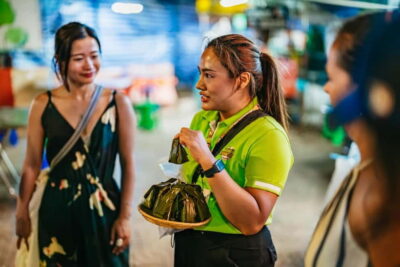
Southern Flavors Phuket Food Tour with 15+ Tastings
Read our review →Bangkok Backstreets Food Tour with 15+ Tastings
Read our review →
Browse the lists this tour appears in