
REVIEW · BANGKOK
Bangkok: Backstreets Food Tour with 15+ Tastings
Bangkok’s Chinatown is easiest to understand one bite at a time, and this four-hour walk takes you far beyond the obvious street stalls. You’ll follow narrow lanes around Yaowarat, stopping at 15 or more tastings, including two or three Michelin-listed food spots, while guides such as JT, Annie, Ploy, and Paninee explain what is on your plate.
I like the small eight-person limit, which makes it easier to ask questions and keep together in crowded lanes. I also like the two-person guide team: one guide explains the food and local culture while the assistant often goes ahead to secure seats and prepare the next stop.
The main caution is the sheer amount of food. You can be full well before the final tasting, and the tour is not suitable for strict vegetarians, vegans, or people with serious food allergies. Mild gluten intolerance may be manageable, but celiac disease is not advised.
Key points at a glance
- 15-plus tastings in one walking loop: Expect a full meal’s worth of food, not a few token samples.
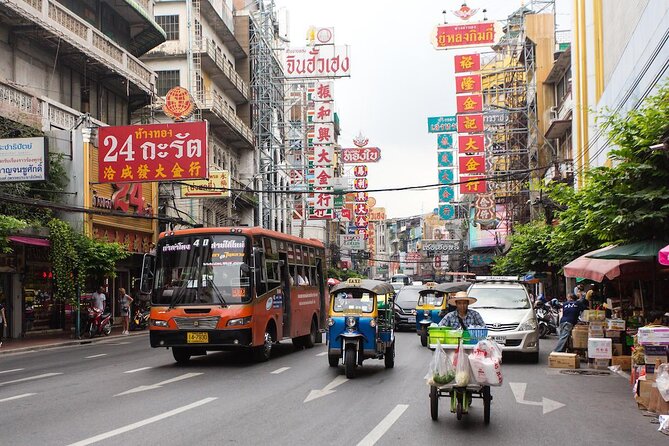
- Yaowarat backstreets: The route uses alleys too narrow for tuk-tuks, taking you away from the loudest main-road traffic.
- Two-person guide team: One person leads the conversation while the assistant helps with seating, timing, and food.
- Chinese-Thai food connections: Noodles, stir fries, dumplings, satay, and seafood dishes show how Chinese cooking shaped Bangkok’s food culture.
- Eight-person maximum: This is a personal small-group outing rather than a large procession.
- Good first-day strategy: The guide points out dishes, markets, and food areas you can return to later in your Bangkok stay.
Why this Chinatown food walk works so well
At $62 per person, this is not Bangkok’s cheapest way to eat. But price alone misses the point. You are paying for 3.5 to 4 hours of food, guiding, route planning, translation, cultural context, and access to busy places that can be hard to manage on your own.
The food is the main attraction, but the route is what gives the experience shape. Yaowarat can feel like a wall of neon signs, traffic, smoke, cooking smells, and unfamiliar menus. A good guide turns that sensory overload into a sequence you can follow.
You begin outside Shanghai Mansion Bangkok in Chinatown. A staff member in a black A Chef’s Tour polo shirt gathers the group, then takes you to a nearby café or bar on a side street. That short opening stop gives you a chance to use the restroom and meet the other people before the eating starts.
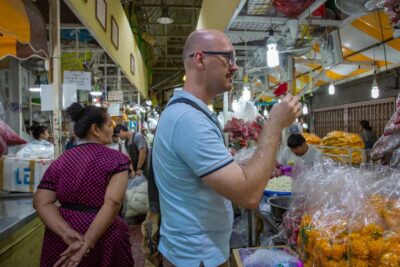
From there, the group heads into Yaowarat’s lanes. The advertised route includes eight or nine food stops, but the experience is better understood as a moving feast rather than a meal at one restaurant. You may stand at a counter, sit briefly at a small table, or eat in a food stall area before moving on.
More Food Tours in Bangkok
- Bangkok by Night: Temples, Markets and Food Tuk-Tuk Tour
★ 5.0 · 3,752 reviews - Bangkok Midnight Food Tuk Tuk Tour
★ 5.0 · 2,542 reviews - Bangkok: Markets, Temples and Food Night Tour by Tuk Tuk
★ 4.9 · 2,371 reviews
Entering Yaowarat through its narrow lanes
The first useful lesson is that Bangkok’s Chinatown is not only Yaowarat Road. The famous avenue supplies the lights and energy, but many of the most interesting food stops are found on side streets and back lanes.
That matters because the best stalls are not always the ones with the biggest signs. Some places are easy to miss if you do not know what to look for, and some are too small for a large tour group. The assistant’s job becomes especially useful here. While the guide talks, the second staff member may go ahead to hold places or arrange the next round of dishes.
The walking is not a sightseeing march with long historical lectures at every corner. Instead, the guide links food to the neighborhood as you go. You might hear how Chinese migration shaped Thai cooking, why certain noodles or dumplings appear in Bangkok, and how local eating habits developed around markets and street vendors.
Guides have different personalities. JT is described as lively and engaging, while Annie, Ploy, Paninee, Som, and others have been praised for explaining ingredients, Thai phrases, and local customs. The exact guide depends on your departure, but the format gives you a useful mix of food instruction and neighborhood orientation.
The tastings: dumplings, grilled meat, noodles, and more
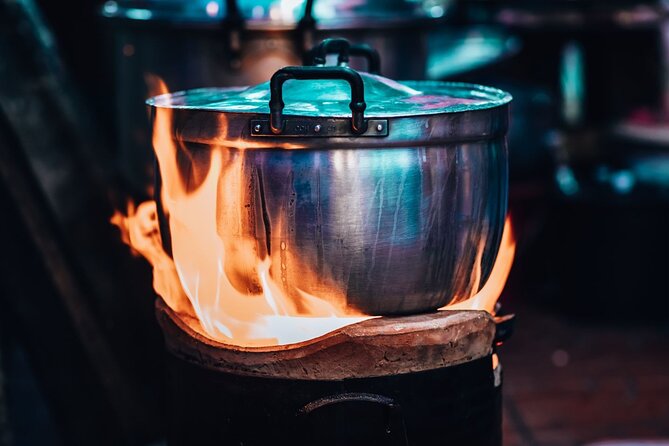
The tour does not publish every stop in advance, which protects the surprise and allows the route to work around opening hours. Still, the food examples give you a clear idea of the range.
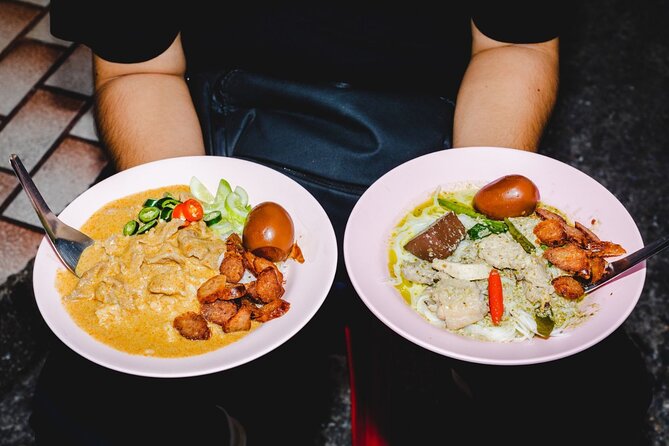
Crispy chive dumplings arrive with nam jim jaew, a Thai dipping sauce with a sharp, savory edge. This is a good example of what the tour does well: you are not only handed a snack, but shown how the sauce changes it. One useful tip from the guiding style is to taste the food first, then add extra sauces or spices. That lets you notice the original seasoning before adjusting it.
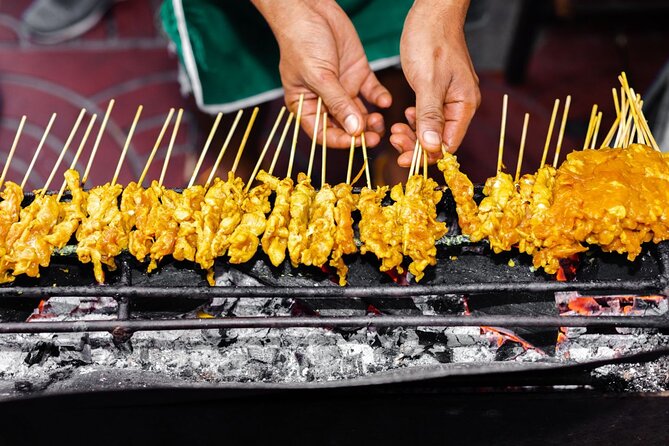
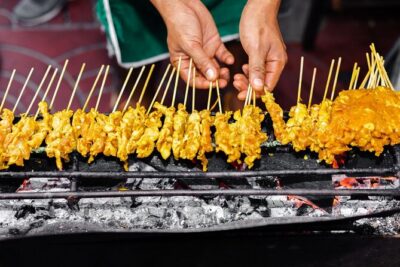
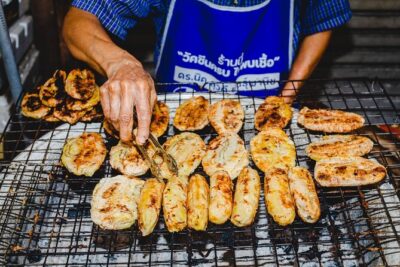
Satay brings charcoal-grilled meat and a richer, smoky flavor. Slow-braised pork offers a softer, more comforting taste, and you may use chopsticks over a bowl or plate while the guide explains the preparation. Shrimp dumplings bring a delicate, steamy contrast to the grilled and braised dishes.
Poh taek seafood soup adds fragrance and heat. It is the kind of dish that shows why you should pace yourself. Early tastings can seem modest, but fifteen-plus portions add up quickly, especially when some stops serve more than a single bite.
The final selections can include an unexpected dessert. Soy sauce ice cream has become a memorable part of the route for many people, partly because the flavor sounds strange until you try it. It is a smart ending because it gives you something to discuss after a long run of savory food.
Two or three stops may be listed by Michelin, but the Michelin connection should not be the main reason you book. The stronger benefit is that the guide gets you to respected local vendors without forcing you to research names, translate menus, or guess what to order.
Chinese influence in Thai food
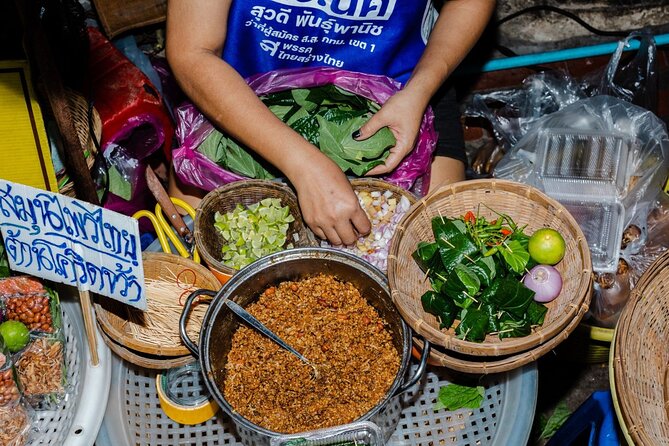
The cultural thread here is the connection between Chinese and Thai cooking. Chinatown is a natural setting for this story, but the food makes it more than a lecture.
Noodles, dumplings, stir fries, braised dishes, and seafood preparations show how cooking methods and ingredients moved across communities. Thai food is not a sealed category. It has been shaped by migration, trade, family cooking, and neighborhood markets.
I like that this connection is taught through specific dishes. You do not need a long timeline to understand the point. A bowl of noodles or a dumpling can tell you more than a broad statement about cultural influence when the guide explains the ingredients, cooking method, and local setting.
The tour can also give you practical confidence for the rest of your trip. Several people used the walk as an introduction to Thai food and then felt better equipped to order on their own. You learn which flavors you like, how certain sauces work, and what types of stalls are worth looking for later.
A few more food tours around Bangkok worth comparing
- Bangkok: Midnight Food Tour by Tuk-Tuk
★ 4.9 · 2,054 reviews - Bangkok Backstreets Food Tour with 15+ Tastings
★ 5.0 · 1,926 reviews - Bangkok: Michelin Guide Street Food Tour by Tuk Tuk
★ 4.4 · 1,274 reviews - Old Siam Bangkok Food Tour with 15+ Tastings
★ 5.0 · 867 reviews
Why the two-guide system matters
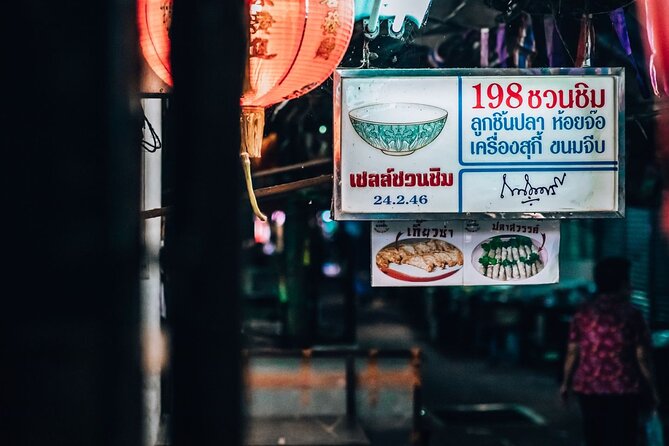
Small-group tours are often advertised as intimate, but the real test is how the group handles busy food stops. A maximum of eight people helps, yet two staff members make an even bigger difference.
The lead guide can talk while the assistant handles the practical work. The assistant may run ahead, find seats, check that dishes are ready, or keep the route moving. This is especially useful at crowded Michelin-listed venues where a group of eight could otherwise create a delay.
It also reduces the awkwardness of a moving food tour. You are not left wondering where to stand, how much to order, or how to squeeze into a tiny stall. The staff does that work for you.
There are small tradeoffs. One person found the host talked so much that the tour ran long in places. Another had difficulty hearing a soft-spoken guide on busy streets. These are not dealbreakers, but they show why guide style matters. If you are sensitive to long explanations or noise, stay near the guide and ask for a repeat when traffic rises.
How much food will you actually eat?
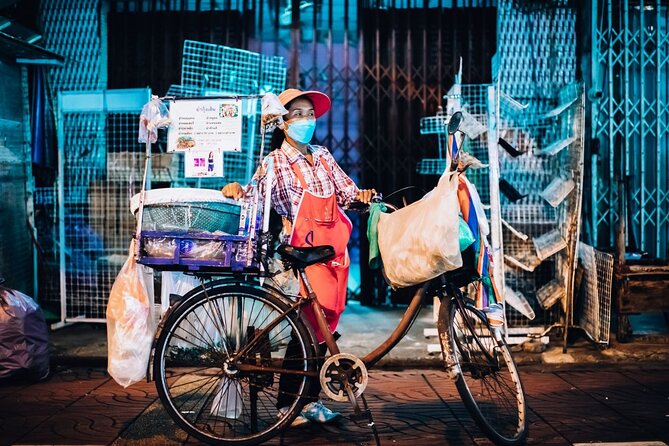
Plan to arrive hungry. The tour includes at least fifteen tastings and may leave you full before the final stop. Some dishes are substantial rather than bite-sized, so you should not eat a large meal beforehand.
Pacing is important. You do not need to rush each tasting, but avoid filling up on the first two stops. Share portions when the guide offers that option, and save room for the dessert stop. Food waste is a reasonable concern, especially if portions are larger than expected, so take only what you can comfortably finish.
The large quantity is part of the value. A standard restaurant meal might cost less than the tour, but it would not give you the same variety. Here you can sample dishes you might never order individually, then return to the places you liked most.
That said, this is not a tasting tour for someone who wants tiny, carefully measured portions. It is closer to a progressive street-food meal. You will probably finish satisfied, and possibly very full.
Dietary restrictions and practical limits
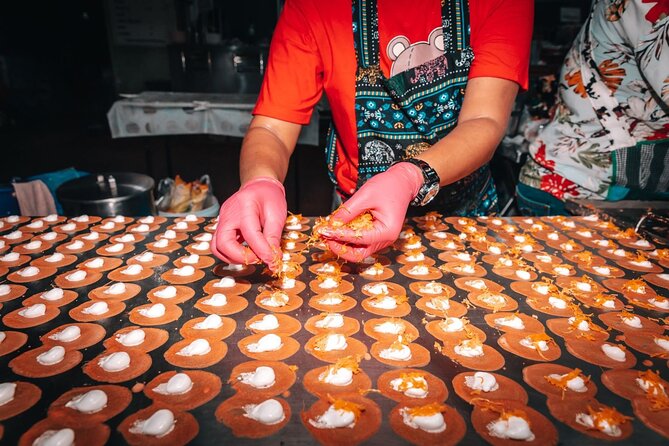
Pescatarians can join, but expect to miss two or three tastings because some vendors do not offer alternatives. You will still have plenty to eat, but the tour is built around meat and seafood.
Strict vegetarians and vegans should choose another activity. Many Thai dishes use meat, seafood, fish sauce, shrimp paste, or other animal-based ingredients that cannot always be removed.
Severe allergies are also a serious concern because of traces and cross-contamination at street stalls. Mild gluten intolerance may be accommodated, but the tour is not recommended for people with celiac disease because soy sauce and other unavoidable traces may be present.
Tell the provider about dietary needs when booking. Other restrictions may affect a few dishes, though the staff will make an effort to keep you fed. If food safety is your top concern, a street-food tour with many shared cooking spaces may not be the right fit.
Morning or evening in Chinatown
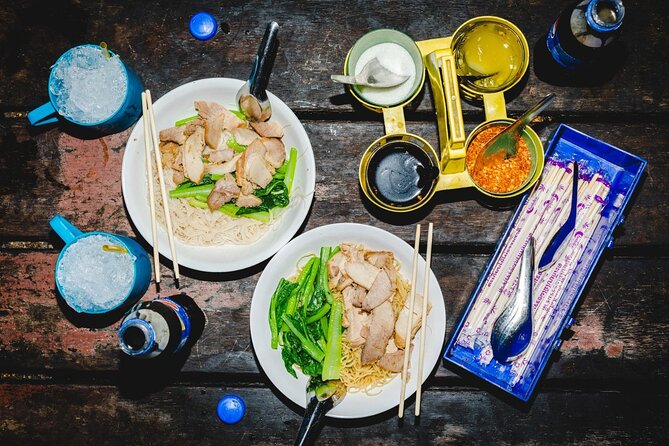
Evening departures offer Yaowarat’s neon glow and the atmosphere that makes Chinatown famous after dark. The tour finishes back at Shanghai Mansion Bangkok, along Yaowarat Road, so you can continue exploring after the final tasting if you still have room.
Morning departures use most of the same route and food ideas, but a few stops change because vendors keep different hours. The daytime option can make sense if you want to see the market side of Chinatown or prefer to avoid a late night.
Your choice should depend on the rest of your plans. An evening tour pairs naturally with Chinatown’s lights, while a morning tour leaves you free for dinner elsewhere. In either case, the walk covers about four hours, so wear comfortable shoes and bring an umbrella or weather-ready clothing.
Bangkok heat and sudden rain can affect any walking route. The tour does not require strenuous hiking, but you will spend much of the time on foot, often stopping in crowded areas rather than air-conditioned rooms.
Is $62 a fair price?
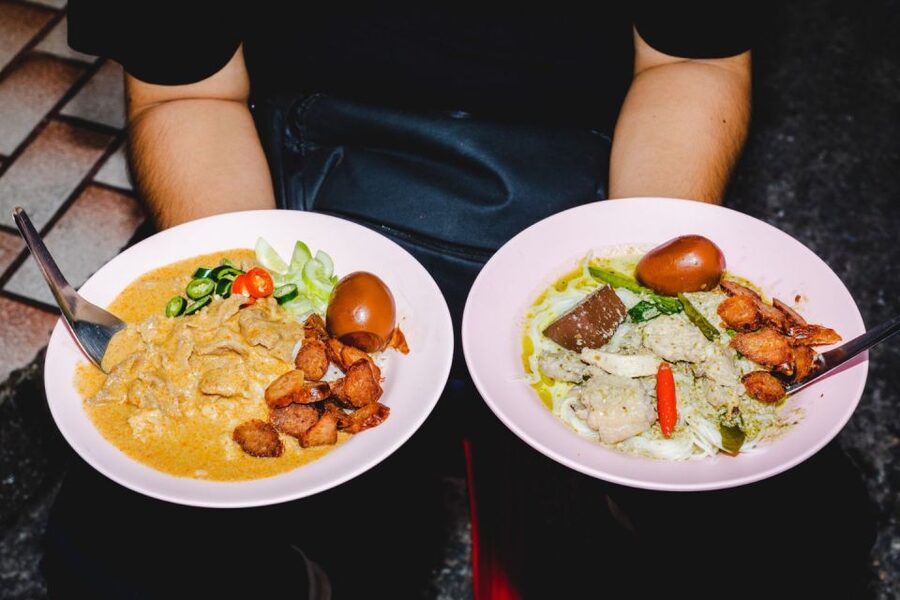
For a simple food crawl, $62 may look high. For fifteen-plus tastings, eight or nine stops, two staff members, bottled water, and an English-speaking guide, the price is easier to justify.
The strongest value comes from the variety. You can try dumplings, grilled meat, braised pork, noodles, soup, seafood, and dessert without committing to full plates at each location. The guide also removes much of the guesswork, which is valuable when menus are unfamiliar or stalls are packed.
The route can also save time. Finding eight or nine good stops by yourself would require research, walking, ordering, and waiting. You might spend less money, but you would not necessarily find the same places or understand what you were eating.
I would book it early in a Bangkok stay. That way, you can use the guide’s suggestions for the rest of your trip. You may also learn which markets open during the day and which dishes deserve a second attempt.
The price is less appealing if you are a light eater, avoid meat and seafood, or already know Chinatown well. In those cases, you may not get the full benefit of the route.
Who should book this experience?
This tour suits first-time visitors who want a confident introduction to Thai food without spending hours studying menus. It is also good for curious eaters who want a broad sample rather than one long restaurant meal.
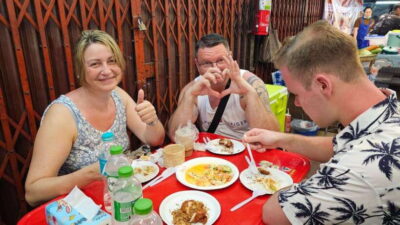
Couples, solo visitors, and small groups can all fit comfortably, and the eight-person cap encourages conversation. The guides help create a social setting, but the group is still small enough for real questions.
I would especially recommend it for anyone staying near Chinatown or anyone planning to visit Yaowarat only once. The backstreets can be confusing, and the food windows are easy to miss on an independent walk.
I would skip it if you dislike eating in quick succession, need strict allergy control, or want a slow, formal dinner. The pace is generally well organized, but it is still a four-hour route with many stops and plenty of sensory input.
Final call: book early for food confidence
I would book this tour for my first full day in Bangkok if I wanted a broad, practical introduction to the city’s food culture. The combination of 15-plus tastings, hidden side streets, and a two-person team gives you more than a list of dishes. It teaches you how to look at Bangkok’s food scene.
Come hungry, wear sensible shoes, and tell the provider about dietary needs before booking. If you can handle meat, seafood, crowded lanes, and a generous amount of food, $62 is a fair price for the variety and guidance.
If you want to recreate the route later, keep notes on the stalls and dishes as you go. The lanes can blur together, and it is easy to forget the name of a favorite stop by the end. That small effort turns a one-night food experience into a useful map for the rest of your stay.
FAQ
Where does the Bangkok food tour start?
The meeting point is outside Shanghai Mansion Bangkok in Chinatown. Look for a staff member wearing a black A Chef’s Tour polo shirt.
Where does the tour finish?
The tour returns to Shanghai Mansion Bangkok, near Yaowarat Road and its evening neon signs.
How long does the experience last?
The walking food tour lasts about 3.5 to 4 hours. Starting times vary, so check availability when booking.
How many people can join?
The group is limited to eight participants.
How many food tastings are included?
You receive 15 or more tastings at approximately eight or nine stops. The route includes two or three Michelin-listed street-food venues.
Are vegetarian or vegan diets supported?
The tour is not suitable for strict vegetarians or vegans because many dishes contain meat or seafood-based ingredients.
Can people with gluten intolerance or food allergies join?
Mild gluten intolerance may be manageable, but the tour is not advised for people with celiac disease. It is also unsuitable for severe food allergies because of possible traces and cross-contamination. Tell the provider about dietary needs when booking.
Just added around Bangkok
- Local Life, Culture & Food Walking Tour at Chinatown★ 4.7 · 119 reviews
- From Bangkok: Maeklong Railway and Floating Market Food Tour★ 4.9 · 224 reviews
- Bangkok: Street Art and Street Food Walking Tour★ 4.1 · 58 reviews
- Bangkok: Talad Noi Hidden Gems & Street Food Adventure★ 4.6 · 29 reviews
- Bangkok Tuk-Tuk by Night with Chinatown Street Food Meal★ 4.6 · 263 reviews
- Bangkok: Mojjo Rooftop Lounge & Bar Food & Beverage Package★ 5.0 · 47 reviews
- Bangkok Night Tour: Food, Temple & Tuk-Tuk★ 4.7 · 94 reviews
- Bangkok: Street Food Tasting Tour at Night★ 4.4 · 48 reviews
Food Tours in Bangkok, compared.
Bangkok by Night: Temples, Markets and Food Tuk-Tuk Tour
Read our review →
Markets, Temples and Food Night Tour by Tuk Tuk
Read our review →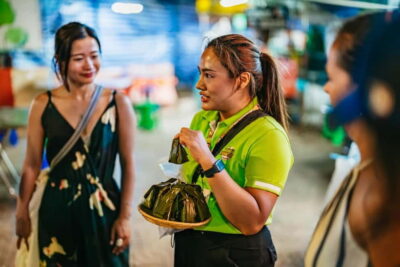
Bangkok Backstreets Food Tour with 15+ Tastings
Read our review →
Bangkok Authentic Tasting Thai-Chinatown Walking Food Tour
Read our review →Browse the lists this tour appears in