
REVIEW · THAILAND
Chiang Mai: Food Tour by Songtheaw Truck with 15+ Tastings
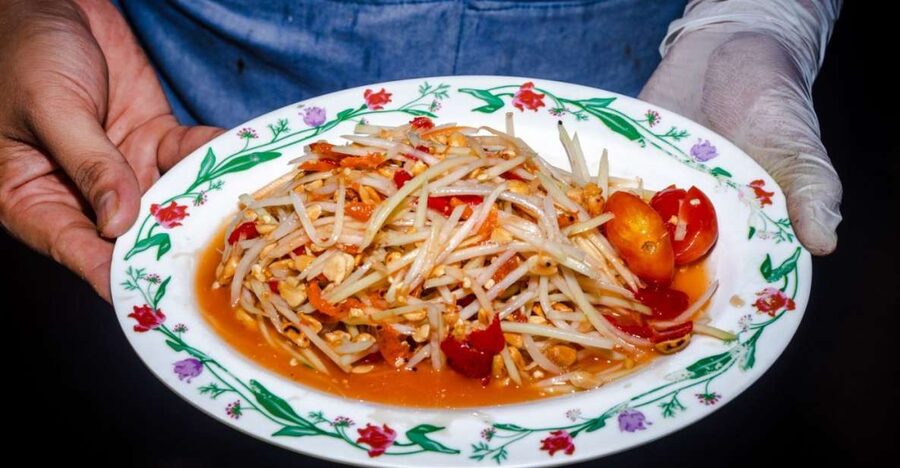
Northern Thailand is best understood one bite at a time, and this tour gives you plenty of bites to work with. Over four hours, you ride between local food stops in a red songthaew truck, trying more than 15 dishes, snacks, sweets, and market treats that are easy to miss on your own.
I like two things right away: the small group, limited to eight people, keeps the outing personal, and the guides bring real context to each plate. Guides including Moui, Aim, Noi, and Muang have explained ingredients, regional influences, cooking methods, and food customs with plenty of enthusiasm. The main drawback is simple: this is not a light tasting walk. Portions are generous, so arrive genuinely hungry and pace yourself.
Key points at a glance
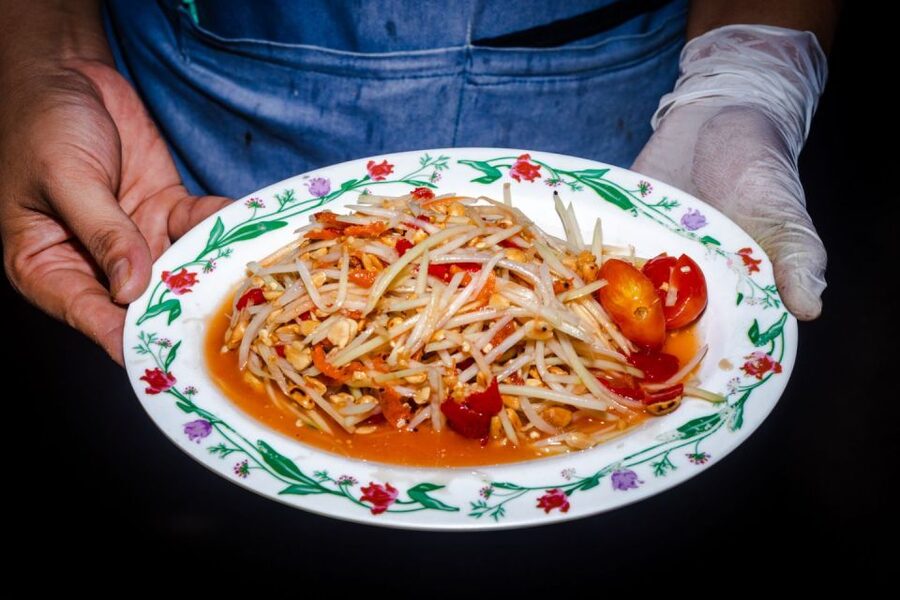
- More than 15 tastings: Expect a serious amount of food, from crispy pork belly and sai oua sausage to larb, sweets, snacks, and market produce.
- Five food stops plus a market: The route mixes restaurants, street food counters, and a local market rather than relying only on famous tourist addresses.
- Northern Thai focus: You learn how Shan influences, fermented ingredients, local herbs, and regional traditions shape Chiang Mai cooking.
- Private red truck transport: The songthaew cuts down on long walks and links food stops spread around the city.
- Small English-speaking group: With no more than eight participants, it is easier to ask questions and share dishes.
- Come prepared: Comfortable shoes, weather-ready clothing, and an umbrella matter because the tour runs in rain or shine.
Wat Lok Molee is the starting point
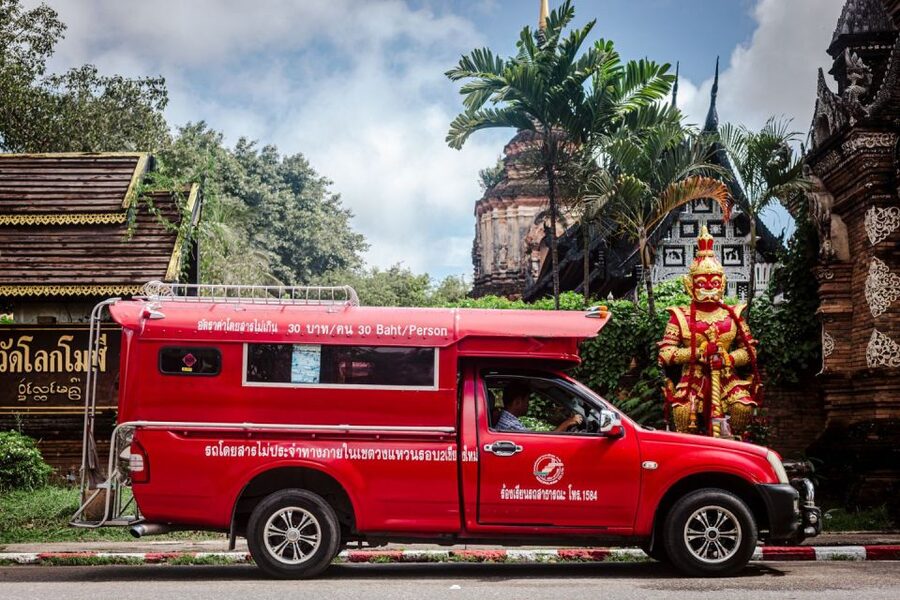
The tour begins in the grounds of Wat Lok Molee, not far from central Chiang Mai. You meet under the large decorated tree beside the four-headed statue, after turning left once inside the temple grounds.
This is a practical meeting point, but do not treat it casually. The temple grounds can be easy to enter and easy to wander around, so allow extra time. If you are using a taxi, the address to give the driver is Wat Lok Molee Road, written in Thai as วัดโลกโมฬี ถนน มณีนพรัตน์.
From there, the group boards a private red songthaew, locally called a rod deang. This is more than a cute way to get around. The food stops are spread across Chiang Mai, and the truck lets you cover ground without spending the whole tour walking in the heat.
You will still walk through the market and between some food counters, so comfortable shoes are sensible. One useful point for anyone with limited mobility is that the vehicle and frequent seating can make this easier than a long walking food tour. It is not presented as an accessible tour, though, so ask the operator directly if you have specific mobility needs.
A few more food tours around Thailand worth comparing
- Bangkok by Night: Temples, Markets and Food Tuk-Tuk Tour
★ 5.0 · 3,752 reviews - Bangkok: Backstreets Food Tour with 15+ Tastings
★ 4.9 · 2,880 reviews - Bangkok Midnight Food Tuk Tuk Tour
★ 5.0 · 2,542 reviews
The first dishes show what Northern Thai food is about
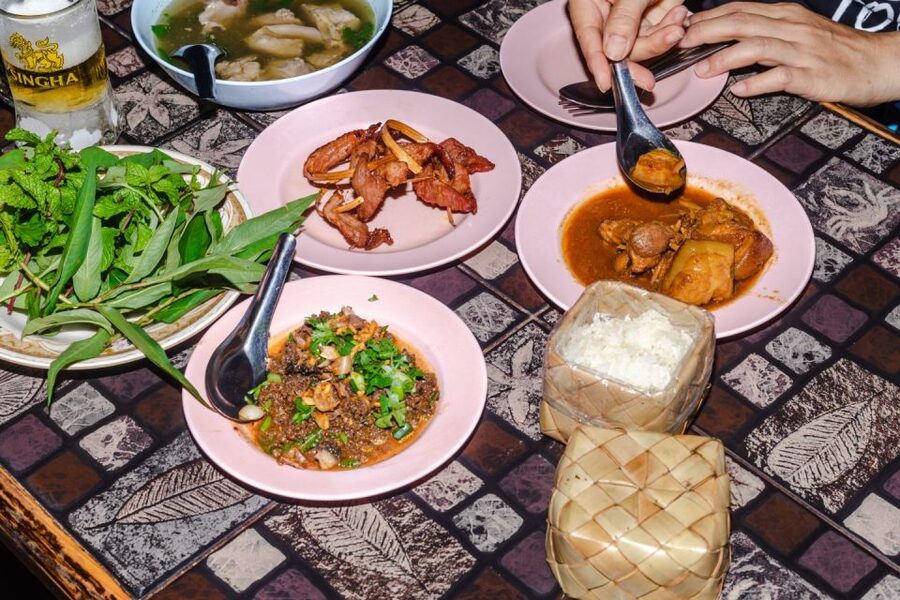
The opening stops introduce the bold, earthy side of Lanna cooking. Northern Thai food is not simply a hotter version of Bangkok food. It draws on local herbs, fermented products, pork, sticky rice traditions, and influences from nearby regions.
One dish you may encounter is sai oua, the lemongrass-filled Northern Thai sausage. It is a good early lesson in the region’s flavor style, where herbs and spices are folded into the food rather than added only as a sauce.
Crispy pork belly is another major stop. It may be cooked in a clay pot or served alongside other local dishes. The point is not just to eat a familiar favorite. Your guide explains how it fits into the broader Northern Thai table and why certain cooking methods matter.
The portions are substantial. Several stops serve food family-style, allowing you to taste many things without ordering a full plate for yourself. Still, fifteen or more tastings add up quickly. I would avoid a full breakfast or lunch beforehand, but do not arrive dehydrated or uncomfortably hungry. Pace yourself from the first stop.
Family-run restaurants replace the usual tourist circuit
The strongest part of the route is its choice of places. Instead of spending four hours at Chiang Mai’s best-known tourist addresses, you visit local restaurants and street food spots that can be difficult to identify from outside.
That matters because ordering in an unfamiliar place can be a guessing game. Here, the guide selects the food, explains what is arriving, and often helps you understand how to eat it. Some groups have met restaurant owners and cooks along the way, adding a human touch to what could otherwise be a simple series of tastings.
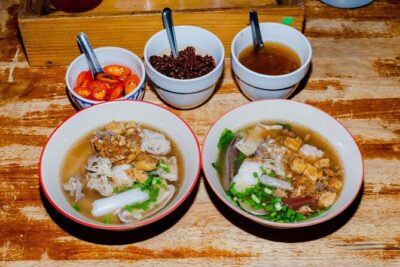
You might try Northern specialties such as larb, curry soups, crispy pork, grilled chicken, vegetable dishes, and foods made with fermented ingredients. Depending on the day’s selection, more adventurous tastings can include coagulated chicken blood, fermented pork, silkworm larvae, crickets, or water buffalo.
Those dishes are not compulsory in the sense that you must force down something you cannot eat. But the tour is designed for broad curiosity, not cautious sampling. If you are uncomfortable with unusual meats, insects, fermented foods, or strong flavors, this may not be your ideal food outing.
The guide explains more than what is on your plate
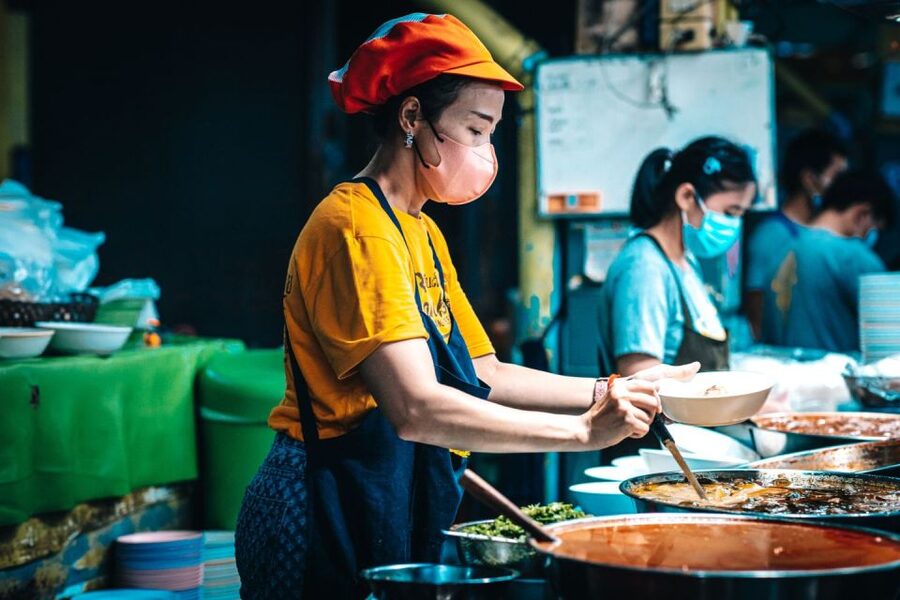
Food tours often work best when the guide can connect a dish to a place and a people. That is where this experience earns much of its $62 price.
Moui has been especially useful for explaining spice blends, dried fermented soybean paste, cooking methods, and the people behind the restaurants. Guides such as Aim and Noi have also brought in wider stories about Thai culture, local life, and the forces that shaped Northern cooking.
You may smell ingredients before eating them. A guide might pass around spice blends or fermented soybean paste, then explain how they change the taste of a dish. This makes the tour more than a parade of plates. You begin to recognize why Northern Thai food tastes different and gain confidence ordering it later.
The English-language guiding is an important part of the value. Without it, several of the dishes would still be delicious, but their place in Chiang Mai culture would be harder to grasp. The best guides also help you notice the contrast between a dish’s ingredients, its preparation, and the way it is served.
Same city, a completely different plate:
- Bangkok: Markets, Temples and Food Night Tour by Tuk Tuk
★ 4.9 · 2,371 reviews - Bangkok: Midnight Food Tour by Tuk-Tuk
★ 4.9 · 2,054 reviews - Southern Flavors Phuket Food Tour with 15+ Tastings
★ 5.0 · 1,933 reviews - Bangkok Backstreets Food Tour with 15+ Tastings
★ 5.0 · 1,926 reviews
Shan influences and unfamiliar flavors
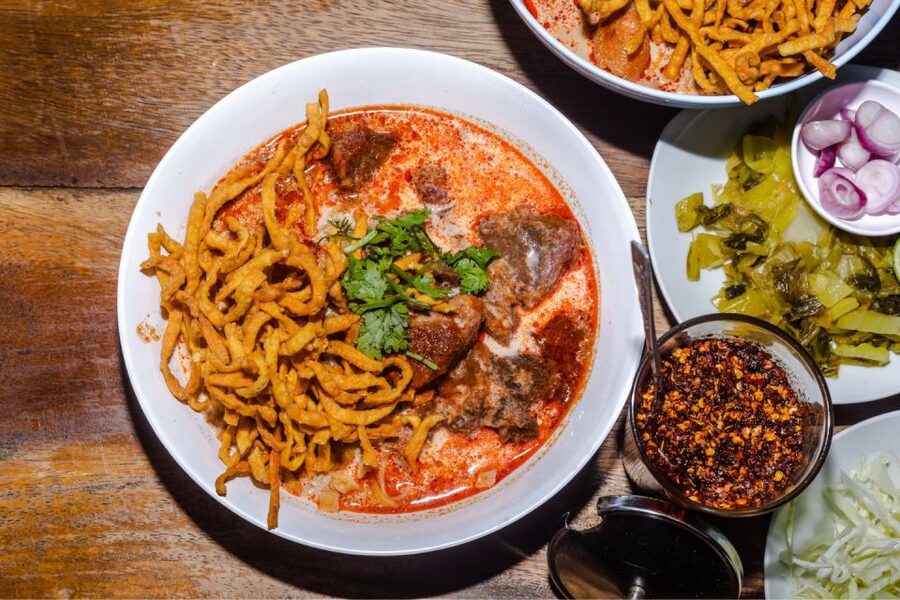
Northern Thailand has long been connected to neighboring regions, and the tour gives those links a place at the table. Shan specialties appear among the tastings, along with dishes that reflect the movement of ingredients and cooking ideas across the north.
Larb is another useful example. Northern-style larb can differ from versions you may have tried elsewhere in Thailand, with its own seasoning and regional character. Your guide can point out those differences rather than leaving you to assume all larb is the same.
Fermented foods are also part of the lesson. Fermented pork and soybean products may seem strong at first, but they show how Northern cooks build flavor with preservation, time, herbs, and spice. You do not need to become an expert by the end, but you should leave with a clearer sense of the logic behind the food.
A market visit adds snacks, sweets, and everyday food culture
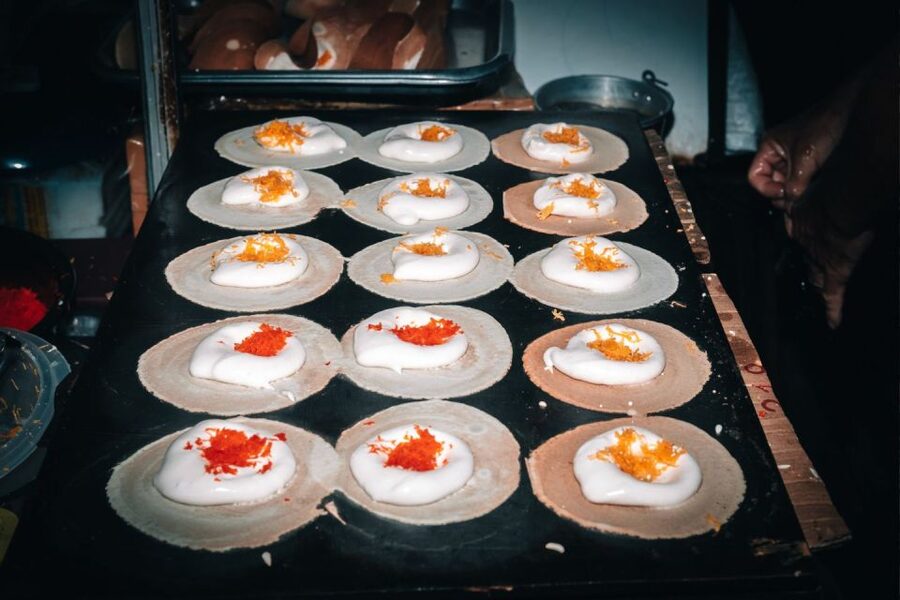
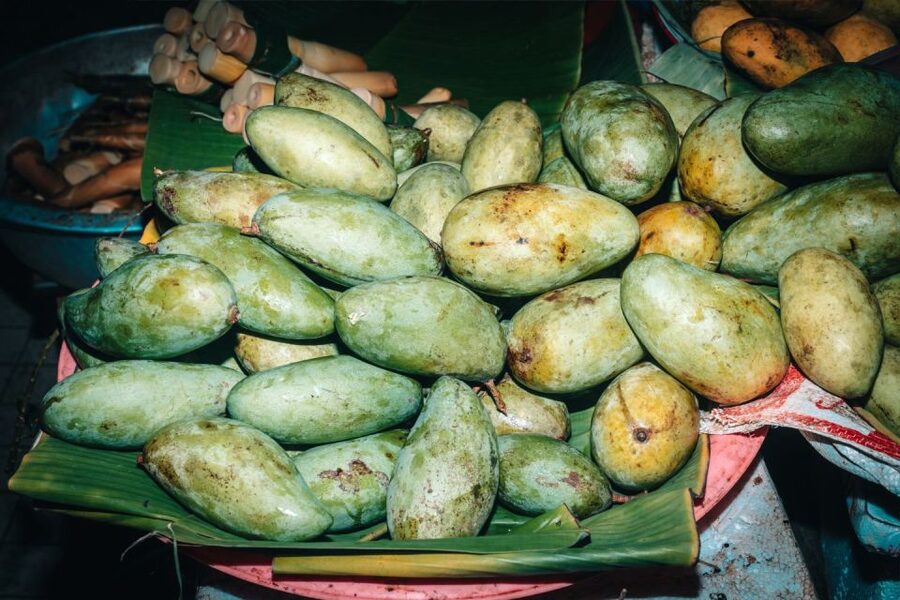
The final part of the outing includes a local market, where the focus shifts from prepared restaurant dishes to the ingredients and snacks people buy in daily life.
Your guide takes you around the stalls and explains local eating habits. The group may sample fruit, desserts, packaged snacks, and market foods in a shared picnic-style finish. This is a useful change of pace after the restaurant stops, and it gives you a chance to ask about ingredients you have seen but might not know how to use.
Some people will find this market less impressive than Chiang Mai’s larger or more polished markets. That is a fair consideration. One past itinerary found the final market rather ordinary, especially compared with other markets in the city. Still, the market works well as a food lesson because the guide provides context and selects things for the group to try.
It can also be the best place to buy tea, spices, or snacks for later. Keep in mind that purchases are not included in the tour price.
The songthaew makes the four-hour route practical
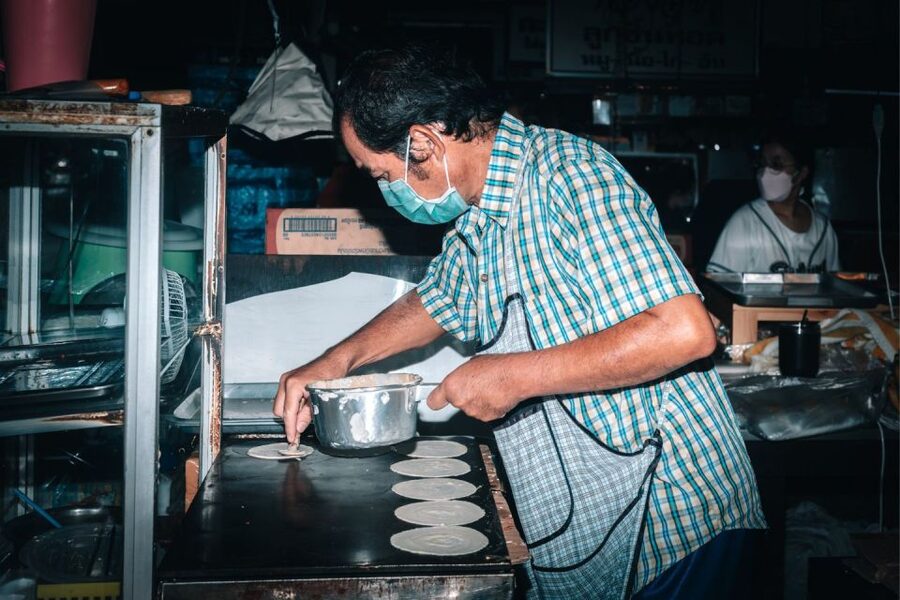
A red truck is not just transport here. It shapes the experience.
You ride between several areas instead of staying in one compact food quarter. That makes it possible to combine restaurants, street counters, and the market in one morning or afternoon. You also avoid long stretches of walking in Chiang Mai’s heat, though you should still expect short walks and time on your feet.
The vehicle received a 95 percent perfect score for transport, and the small-group format should make boarding and moving between stops fairly straightforward. You may share the truck with up to seven other participants, depending on bookings.
Rain does not automatically cancel the outing. The tour operates in wet weather, so carry an umbrella and wear clothing suited to the forecast. Chiang Mai’s weather can make an open-sided vehicle feel very different from one part of the day to another.
Is $62 good value for Chiang Mai?
At $62 per person, this is not the cheapest way to eat in Chiang Mai. You can buy individual street dishes for very little money. The price makes sense only if you value the route, the guide, transport, and the sheer range of food.
You receive more than 15 tastings, bottled water, soft drinks, transportation, and an English-speaking guide. Several food stops and a market are packed into four hours. If you tried to reproduce that route alone, you would need to find the places, decide what to order, manage transport, and understand what you were eating.
The tour also saves you from ordering a full portion of every dish. That is valuable in a city where the menu may not be in English and a single wrong order can use up your appetite or budget.
The value is weaker for someone who already knows Chiang Mai’s local food scene, dislikes group activities, or prefers to choose every dish independently. For a first visit, especially one focused on food, the cost is reasonable because you are paying for access and explanation as much as for the meals.
Who should book this food tour?
I would choose this for a first or second visit to Chiang Mai, especially if you want to understand Northern Thai food rather than simply eat familiar pad Thai and curry.
It suits you if you:
- Enjoy trying several small portions in one outing
- Want local restaurants and food stalls rather than famous tourist stops
- Like learning the story behind ingredients and dishes
- Appreciate a small group and shared food
- Prefer some vehicle transport instead of a long walking tour
- Are curious about fermented foods, offal, insects, and regional specialties
It is not suitable for vegans, vegetarians, pescatarians, people with severe allergies, people with nut allergies, or anyone who cannot consume soy sauce. The tour is also not suitable for people over 95 years old according to the stated restrictions.
Dietary flexibility is a serious issue here. This is not a tour where you can assume the guide will replace every dish with a vegetarian alternative. If you have a food allergy or medical restriction, contact the operator before booking rather than relying on a note at the meeting point.
Practical advice before you go
Skip a heavy meal. The repeated warning to come hungry is justified, with large portions at several stops and a market finish that adds even more food.
Wear shoes you can walk in and bring an umbrella. The songthaew handles much of the route, but the market portion and transitions between stops require walking.
Take the tour early in your Chiang Mai stay if you can. You will learn what Northern Thai ingredients taste like, find dishes to seek out later, and gain confidence ordering at local restaurants.
Booking is flexible, with free cancellation up to 24 hours before the start time and a reserve-now, pay-later option. Check the available start times when choosing your date, since the activity lasts four hours.
Should you book it?
Book it if you want a guided introduction to Chiang Mai food with plenty of eating and very little guesswork. The strongest reasons are the small group, the red truck route, the unusual local dishes, and guides such as Moui, Aim, and Noi who connect food with Northern Thai culture.
Think twice if you need strict dietary control, prefer a quiet meal, or dislike being full for the rest of the day. For everyone else, $62 buys an efficient and generous way to get beyond the city’s familiar dishes and start eating Chiang Mai with more confidence.
FAQ
Where does the Chiang Mai food tour meet?
The meeting point is in the grounds of Wat Lok Molee. Enter the temple grounds, turn left, and look for the guide under the large decorated tree beside the four-headed statue.
How long does the food tour last?
The tour lasts four hours. Starting times vary, so check availability for your chosen date.
How many people are in the group?
The group is limited to eight participants.
What is included in the price?
The tour includes more than 15 food tastings, bottled water, soft drinks, an English-speaking guide, and transportation by songthaew truck.
Is the tour suitable for vegetarians or people with allergies?
No. The tour is not suitable for vegetarians, vegans, pescatarians, people with food allergies, people with nut allergies, or anyone who cannot consume soy sauce.
What should I bring?
Bring comfortable shoes, an umbrella, and clothing suited to the weather. The tour operates in rain or shine, and you should arrive hungry.
Just added around Thailand
- Local Life, Culture & Food Walking Tour at Chinatown★ 4.7 · 119 reviews
- Krabi: Morning or Afternoon Culinary Adventure at Smart Cook★ 4.8 · 35 reviews
- Krabi: Elephant Feeding Program with Food Preparation★ 4.8 · 43 reviews
- Hua Hin: Local Food Nighttime Guided Tour★ 4.9 · 59 reviews
- From Ao Nang: Similan Islands Boat Trip with Transfer & Food★ 4.5 · 35 reviews
- From Bangkok: Maeklong Railway and Floating Market Food Tour★ 4.9 · 224 reviews
- Chiang Mai: Temples and Street Food Night Tour by Tuk Tuk★ 4.3 · 81 reviews
- Chiang Mai: Evening Sightseeing and Local Food Guided Tour★ 4.9 · 46 reviews
Food Tours in Thailand, compared.
Bangkok by Night: Temples, Markets and Food Tuk-Tuk Tour
Read our review →

Markets, Temples and Food Night Tour by Tuk Tuk
Read our review →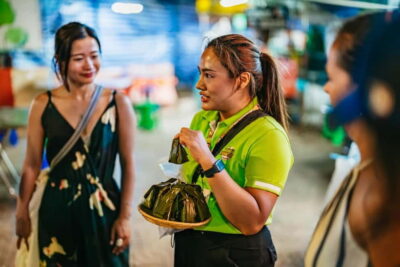
Southern Flavors Phuket Food Tour with 15+ Tastings
Read our review →Bangkok Backstreets Food Tour with 15+ Tastings
Read our review →
Browse the lists this tour appears in