
REVIEW · MARKET FOOD TOURS
Taste Bucharest: A Food Lover’s Tour of Markets & Neighbourhoods
Bucharest’s best food stories are not confined to polished restaurants. This five-hour walking and market tour takes you from the National Theatre through old neighborhoods and onto a tram bound for Obor Market, where Romanian food is sold, cooked, and eaten in everyday surroundings. I like the local feel and the way food is tied to architecture, politics, and daily life.
I also like that all listed tastings and drinks are included, from telemea and burduf cheese to mici, beer, tuica, and a sweet doughnut. The small group, capped at 12 people, gives guides such as Angelica, Bogdan, Julian, and Mihaela room to answer questions and adjust the pace. The main drawback is worth knowing: this is more a market-and-snacking tour than a parade of hot Romanian meals, so you should not book it expecting soup or cabbage rolls.
Key things to know before you book
- Obor Market is the food centerpiece: Expect local produce, cheeses, cured meats, pickles, spreads, and the famous grilled mici.
- The tour covers about 6 kilometers on foot: Comfortable shoes matter, and the tram ride gives your feet a short break.
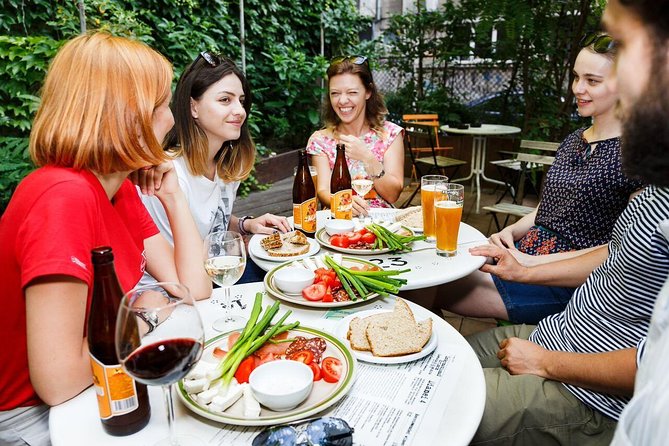
- Food is substantial but not restaurant-style: The spread leans toward cold cuts, cheeses, dips, vegetables, sausages, and snacks.
- Romanian drinks are part of the experience: You can usually sample tuica and up to three beers, with soft drinks, coffee, or tea available as alternatives.
- The route connects several sides of Bucharest: You see pre-Communist architecture, Orthodox heritage, Communist-era streets, and a working market district.
- The $102.79 price buys more than food: It covers the guide, tastings, drinks, neighborhood walks, and public transport, but tips and extra purchases are separate.
Why this Bucharest food tour feels different
Many city food tours stay close to the historic center, moving from one restaurant to another. This one uses food as a reason to cross town. You begin in central Bucharest, walk through streets with layers of political and architectural history, then ride public transport toward Obor, one of the city’s best-known markets.
That movement matters. You get a glimpse of Bucharest beyond the postcard center, including ordinary streets, local shops, apartment blocks, churches, and market life. I like tours that help you understand how a city eats, not only what appears on a tasting plate.
The route is also social. With no more than 12 people, you are not lost in a large crowd. Several guides, including Angelica, Bogdan, Julian, Mihaela, Andrea, Alex, Elena, and Daniel, have been praised for combining food with stories about Romanian culture and Bucharest’s past. Guide assignments can change, but the format gives your guide plenty of time to explain each dish and keep the group together.
The tradeoff is time. About 6 kilometers of walking, several history stops, food tastings, and public transport make this an active half-day. If you want a quick eating session with minimal walking, this is not the right choice.
More market tours in the world:
- Bangkok by Night: Temples, Markets and Food Tuk-Tuk Tour
★ 5.0 · 3,752 reviews - Chef Guided Food Tour of Pike Place Market
★ 5.0 · 3,733 reviews - Tokyo Tsukiji Fish Market Food and Culture Walking Tour
★ 5.0 · 3,184 reviews
Starting at the National Theatre
The meeting point is the Ion Luca Caragiale National Theatre on Bulevardul Nicolae Bălcescu. The tour opens with Bucharest’s modern political story, including the theatre’s role during the Romanian Revolution and the street fighting that shaped the city.
This is a useful beginning because it gives the food stops a larger setting. You are not simply eating Romanian specialties without context. You are learning how the capital changed from royal-era architecture to Communist rule and then through the upheaval of 1989.
The first stop lasts about 15 minutes and has no admission charge. You remain outside, so you do not need to allow time for an indoor theatre visit. Meet near the listed address, and arrive ready to start walking rather than expecting a seated introduction.
Strada Batiștei and the old American embassy
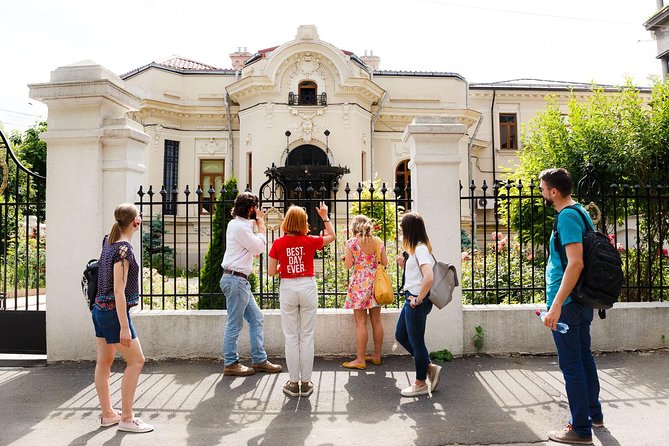
From the theatre, the route heads toward Strada Batiștei. This street brings in Bucharest’s 19th-century architecture and the former American embassy, adding a political and urban layer before the food begins in earnest.
The walk takes about 20 minutes. Your guide may point out Neo-Romanian details and explain how the area developed. This part will appeal to you if you enjoy noticing façades, old institutions, and the way a city’s past survives in its streets. If you booked the tour only for eating, the opening history section may feel long, especially since the main market is still ahead.
That said, the gradual start has value. Romanian food makes more sense when you know something about the neighborhoods where it is bought and shared. The route does not treat Bucharest as a museum. It links buildings to present-day life.
Batiștei Church and Bucharest’s Orthodox character
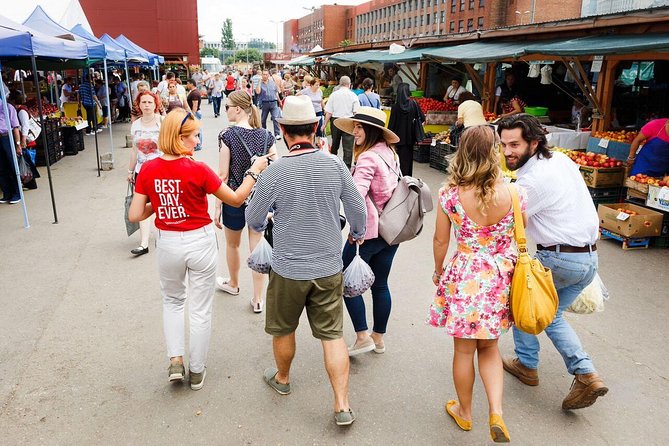
A short stop near Batiștei Church adds a religious and architectural note. The church represents Romanian Orthodox heritage, and your guide explains its place in the surrounding neighborhood.
This stop lasts about 15 minutes. It is another exterior visit, so the tour keeps moving rather than pausing for a formal sightseeing entrance. You will want to pay attention to the guide’s explanation of the building, since the church itself may be easy to pass without context.
The sequence also helps break up the walk. You are seeing a variety of places before the market portion, rather than spending all five hours at food counters.
A few more food tours around the world worth comparing
- Reykjavik Food Walk – Local Foodie Adventure in Iceland
★ 5.0 · 18,952 reviews - Hanoi Jeep Tour: Food, Culture and Fun by Vietnam Army Jeep
★ 5.0 · 15,222 reviews - From Marrakech: Merzouga 3-Day Desert Safari with Food
★ 4.7 · 12,232 reviews - Dubai: Old Town, Creek, Museums, Souks, & Street Food Tour
★ 4.8 · 10,816 reviews
The Armenian Quarter and Bucharest’s oldest documented house
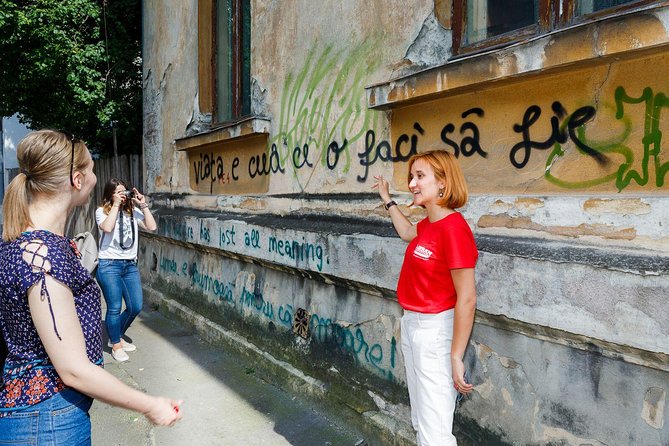
The tour then spends about an hour in the Armenian Quarter. This is one of the more distinctive sections because it shows Bucharest as a city shaped by several communities, not just one architectural style or tradition.
Expect a mix of buildings and stories, including a visit to Bucharest’s oldest documented house. The area provides a strong contrast with the broad central boulevards. You see a more intimate neighborhood scale and learn how Armenian residents contributed to the city’s commercial and cultural life.
I especially like this stop for first-time visitors who might otherwise stay around the center. It gives you a reason to look at side streets and older houses, many of which are easy to miss when you are simply walking from one attraction to the next.
The hour here is also where the balance of the tour becomes clear. This is not a food crawl with a little commentary added. It is a culture tour with a serious food component. Guides such as Julian and Andrea have been praised for explaining architecture and Romanian history in clear, friendly English, but the amount of talking can feel heavy if you prefer to get to the tastings quickly.
Riding the tram toward Communist-era Bucharest
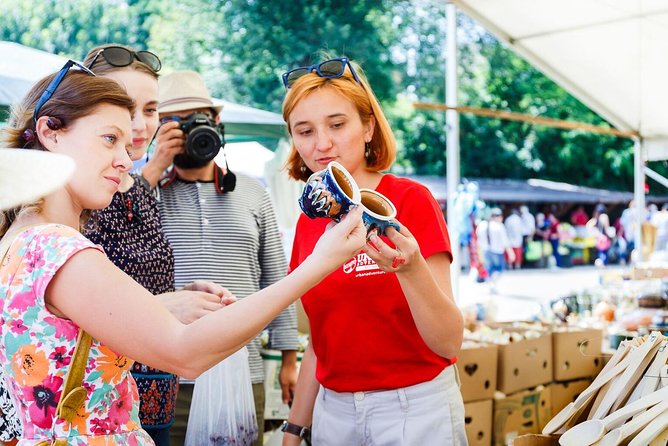
Next comes a short tram ride along Calea Moșilor. The route shifts from older Bucharest toward the Communist-era city and continues toward Obor Market.
Using public transport is one of the tour’s strongest ideas. You get to see Bucharest as residents do, rather than moving between sights only in a private vehicle. The tram also creates a clean break between the architectural introduction and the market experience.
The listed tram portion takes about 20 minutes. Keep your belongings secure and stay close to the guide when boarding and leaving. Public transport can be less predictable than a private transfer, but that is part of the point here. You are seeing the city in motion.
Calea Moșilor is not just a way to reach lunch. It shows how Bucharest’s streets change from older low-rise areas to Communist planning and later commercial development. By the time you reach Obor, you have a better sense of the city’s scale.
Obor Market: the tour’s main course
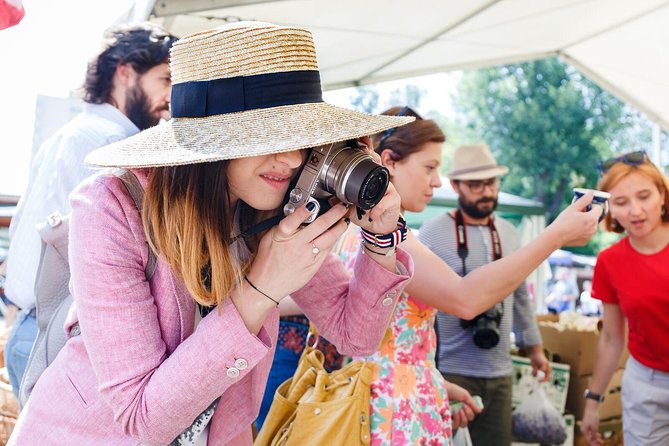
You spend about one hour and 40 minutes at Piata Obor Bucuresti, the longest stop of the day. This is where the tour’s promise of markets, neighborhoods, and Romanian food comes together.
Obor is full of produce, deli goods, household items, local snacks, and food stalls. Your guide helps you make sense of the sections and points out ingredients you might not recognize. Seasonal availability affects what appears, so the exact tasting menu can change.
A typical peasant platter may include:
- Aubergine dip
- Zacusca
- Whipped beans
- Fish roe
- Telemea and burduf cheeses
- Cow, sheep, and goat cheeses
- Sausages and smoked bacon
- Pork cracklings
- Red onions, tomatoes, and toast
This is generous food, but it is largely a platter-style tasting. You should expect salty, smoky, creamy, sharp, and fresh flavors arranged for sharing. It is a good introduction to Romanian pantry food, especially if you want to understand how cheese, preserved vegetables, cured meat, and spreads fit into everyday meals.
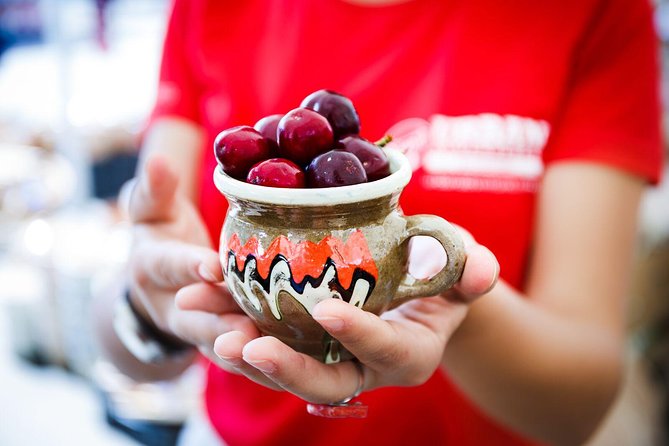
Seasonal produce may include wild strawberries, wild garlic, spicy pickles, watermelon, or grapes. These items give the tour a changing character. A summer visit will not necessarily taste like an autumn visit, and the guide may choose what looks freshest that day.
Mici, Romanian drinks, and the final doughnut
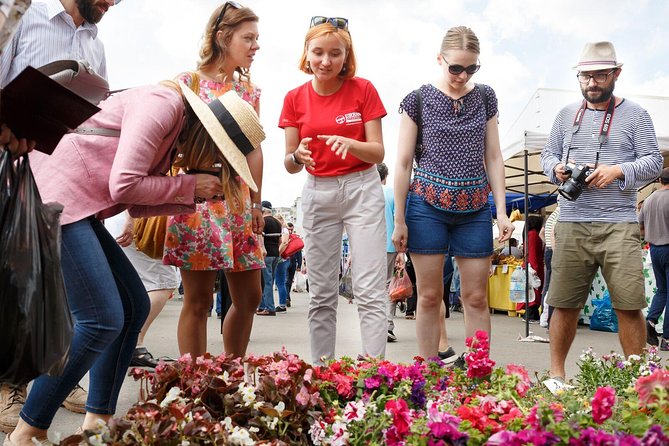
The hot item to watch for is mici, Romania’s famous skinless grilled sausage. It is usually served with mustard and is one of the most satisfying parts of the tour. The sausages are simple, savory, and designed for casual eating rather than ceremony.
The final sweet is a Wallachian doughnut. Several descriptions of the experience single it out as a memorable ending, and it gives the meal a welcome change of texture after the meats, cheeses, and spreads.
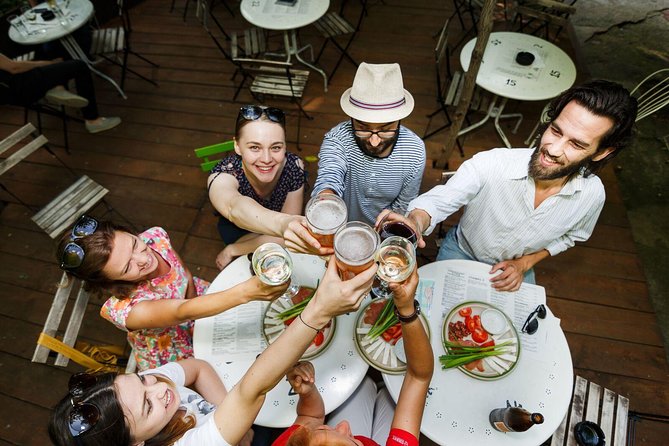
Drinks add another cultural layer. You can usually expect a shot of tuica, Romanian fruit brandy, plus up to three beers. Non-alcoholic options include soft drinks, coffee, or tea. The tour information also refers to Romanian craft beer, though exact brands and quantities depend on availability.
Go slowly with the tuica. It is a small serving, but the flavor and strength can be surprising if you are not used to fruit brandy. If you do not drink alcohol, tell the guide and use the listed alternatives.
What the food menu does not promise
This is the point where you should set expectations carefully. The tour provides plenty of food, but it does not promise classic hot dishes such as cabbage rolls or soup. The planned offerings center on market food, cold cuts, spreads, cheese, seasonal produce, mici, and a doughnut.
That focus is not a weakness for everyone. It lets you taste items that are easy to sample while walking or sharing at a market. It also reflects the way a food market works, with stalls and small eateries rather than a fixed restaurant menu.
Still, if your main goal is a full serving of sarmale, ciorba, or another cooked specialty, you may find the menu narrow. I would treat this as an introduction to Romanian ingredients and casual food culture, not a complete survey of the country’s cuisine.
Food allergies and dietary needs require advance notice of at least 24 hours. Vegetarian, vegan, and gluten-free options may be limited, and the menu can change with the day’s supply. Ask before booking if your diet is strict, especially because several core tastings involve cheese and meat.
Is $102.79 good value?
At $102.79 per person, this is not a bargain snack walk. It is a five-hour guided experience with several parts: neighborhood interpretation, architecture, history, public transport, market guidance, food, and drinks.
I think the value is strongest if you are new to Bucharest and want one organized outing that helps you get oriented. The guide does the work of connecting central Bucharest with Obor, translating the market’s choices, and arranging tastings that would take effort to find alone.
The price includes the food samples, local drinks, coffee or tea, and the public transport element. You pay extra for anything you buy at the market, additional food or drinks, and the guide’s gratuity. If you plan to shop, carry some room in your budget for produce or small local purchases.
The small group also matters. A maximum of 12 people is large enough for a social atmosphere but small enough for questions. Some departures may be private or nearly private, and one guide has even extended the experience when only one person attended. Do not count on extra time, but the format allows for personal attention.
Practical details for a smooth day
The tour begins at the National Theatre and ends at Piata Sf. Gheorghe, near Saint George Square and Unirea Square. That ending is useful for continuing into central Bucharest, though you should not assume you return to the exact starting point.
Wear comfortable walking shoes. Six kilometers is manageable for most people, but the route includes city streets, market walking, standing, and public transport. Most people can take part, and the tour is near public transportation.
The experience is offered in English and uses a mobile ticket. Confirmation is provided at booking. It is often reserved around 41 days ahead, so book early if your dates are fixed, particularly if you want a small group.
Free cancellation is available until 24 hours before the start time. Changes or cancellations inside that window are not accepted for a refund.
Who should book this experience?
I would choose this tour if you want to see Bucharest beyond the main center, enjoy trying unfamiliar foods, and like having a local guide explain what you are eating. It suits first-time visitors, curious eaters, and anyone who wants a useful orientation during the first days of a city stay.
It also works well if you enjoy mixing sightseeing with food. The Armenian Quarter, Batiștei Church, tram ride, and Obor Market create a fuller picture than a restaurant-only tour.
I would think twice if you dislike walking, have strict dietary limits, or want a dedicated restaurant tour built around hot dishes. The history sections are a real part of the experience, not filler between tastings.
For most people who want a practical and authentic introduction to Bucharest, I would book it. Just arrive hungry but not expecting a formal Romanian lunch. Come ready for cheese, cured meat, dips, produce, grilled mici, local drinks, and a city lesson served along the way.
FAQ
How long does the Taste Bucharest tour last?
The experience lasts approximately five hours.
How much walking is involved?
The tour covers about 6 kilometers on foot. You should wear comfortable walking shoes.
Does the tour use public transportation?
Yes. The route includes Bucharest public transportation, including a short tram ride along Calea Moșilor toward Obor Market.
Where does the tour begin?
It begins at the Ion Luca Caragiale National Theatre, at Bulevardul Nicolae Bălcescu 2, București 010051, Romania.
Where does the tour end?
The tour ends at Piata Sf. Gheorghe, near Saint George Square and Unirea Square in Bucharest.
What food is included?
Typical tastings include Romanian cheeses, cured meats, sausages, smoked bacon, cracklings, aubergine dip, zacusca, whipped beans, fish roe, seasonal produce, mici with mustard, and a Wallachian doughnut. Exact items can change with the season and daily availability.
What drinks are included?
You can usually expect a shot of tuica and up to three beers. Soft drinks, coffee, or tea are available as non-alcoholic alternatives.
Can dietary restrictions be accommodated?
You should notify the provider at least 24 hours in advance about allergies, vegetarian or vegan diets, gluten intolerance, or other dietary needs. Options may be limited depending on availability.
What is the cancellation policy?
You can cancel up to 24 hours before the experience for a full refund. Cancellations or changes made less than 24 hours before the start time are not accepted for a refund.
Just added around the world
- Milan: Street Food Walking Tour★ 4.7 · 180 reviews
- Milan’s Full-Meal Gourmet Food Tour – More Than Tastings★ 4.8 · 81 reviews
- Kolkata Midtown Madness- A Street Food & Nightlife Tour★ 4.9 · 49 reviews
- Milan: Delicious Food Tour and City Center Sightseeing★ 4.8 · 111 reviews
- Mexico City: Authentic Downtown Food Tour★ 4.9 · 260 reviews
- Miami: Intimate Sailing in Biscayne Bay w/ Food and Drinks★ 4.7 · 34 reviews
- Mexico City: Vegan and Vegetarian Street Food Adventure★ 4.8 · 65 reviews
- Mexico City: Mystic Markets La Merced & Sonora Culinary Tour★ 4.9 · 301 reviews
Market Food Tours, compared.
Bangkok by Night: Temples, Markets and Food Tuk-Tuk Tour
Read our review →
Tokyo Tsukiji Fish Market Food and Culture Walking Tour
Read our review →
Markets, Temples and Food Night Tour by Tuk Tuk
Read our review →
London Bridge & Borough Market Food Tour with 7 Authentic Dishes
Read our review →

Small Group Cooking Class & Market Food Tour in Florence
Read our review →
Browse the lists this tour appears in