
REVIEW · ROME
Rome: Food Tour with Market Visit
Rome’s best feature on this tour is its sheer range. In four hours, you move from coffee and a local food shop to Mercato Trionfale, Rome’s largest food market, then on to Bonci Pizzarium and a Roman restaurant near the Vatican. More than 25 tastings cover truffles, aged balsamic vinegar, pizza, pasta, wine, cured meats, cheese, and gelato.
I like the generous portions and the way the tour connects food with the people selling it. I also like that your guide can help you understand what makes real gelato, quality balsamic vinegar, and proper Roman pasta different from cheaper imitations.
The main drawback is simple: you may eat too much. This is not a light nibble-and-stroll outing. You should arrive very hungry, and you may want to schedule a quiet evening afterward. The market stop can also feel short if you want time to shop.
Key points to know
- More than 25 tastings: Expect coffee, pizza, pasta, wine, cheeses, cured meats, desserts, produce, and specialty foods.
- Mercato Trionfale: Visit Rome’s largest food market and taste fresh produce, buffalo mozzarella, eggplant parmesan, and more.
- Bonci Pizzarium: Try pizza from a shop associated with Gabriel Bonci and a daily selection that can reach 80 varieties.
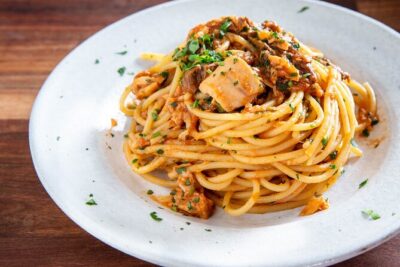
- Roman pasta with wine: At Il Segreto, choose carbonara, amatriciana, or cacio e pepe.
- Small-group feel: Past groups have often been small enough for guides such as Celeste, Stefania, Irene, Giordano, and Vincenzo to give personal attention.
- Come hungry: The food can amount to breakfast, lunch, and dessert in one four-hour stretch.
Why this Rome food tour works
Rome has no shortage of places to eat, but the hard part is knowing which places deserve your time. A food tour solves that problem by giving you a ready-made route and a guide who can explain what is on your plate.
This experience is especially useful early in your visit. You get a quick education in Roman food, plus practical advice about spotting good products and finding honest places to eat later. Several guides, including Celeste, Lucrezia, Ottavia, Paolo, and Stefania, have been praised for mixing food facts with humor and useful restaurant advice.
The route is not built around grand Roman monuments. That is a strength if you have already seen the Colosseum and Trevi Fountain, or if you want to spend a morning in a less polished, more local part of the city. The meeting point is near the Vatican, but the tour focuses on eating rather than sightseeing.
You should expect some standing, short walks between stops, and time in working food businesses. The activity is listed as wheelchair accessible, and one guide was specifically praised for helping a participant using a walker. Still, the fish section of the market may have water on the floor and a strong smell, so tell the operator about mobility concerns when booking.
More Food Tours in Rome
- Winner 2025 Rome Twilight Trastevere Food Tour by Eating Europe
★ 5.0 · 5,157 reviews - Rome: Street Food Tour with Local Guide
★ 4.8 · 4,077 reviews - Rome Food Tour: Unlimited Tastings with Fine Wine & Barolo
★ 5.0 · 3,365 reviews
Coffee and a first taste at La Nicchia Cafe
Meet your guide outside La Nicchia Cafe on Via Cipro 4 L. The coordinates are 41.90841293334961, 12.447413444519043, which is useful if you are using a taxi app or checking the location before leaving your hotel.
The first stop lasts about 30 minutes and begins with Italian coffee. This gives your guide a chance to explain the plan and introduce the basic rhythm of Roman eating. Coffee here is not a long American-style breakfast. It is a quick, focused start before the serious food begins.
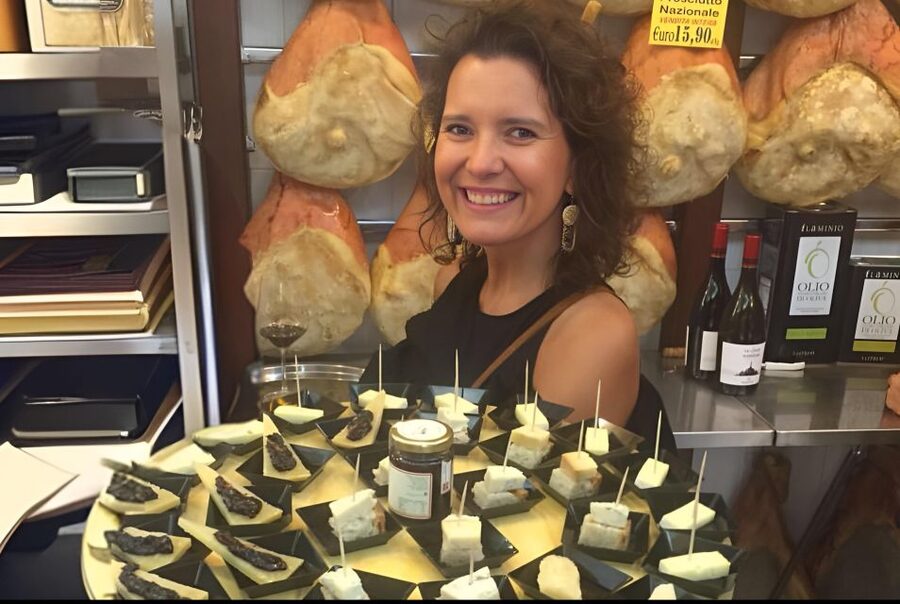
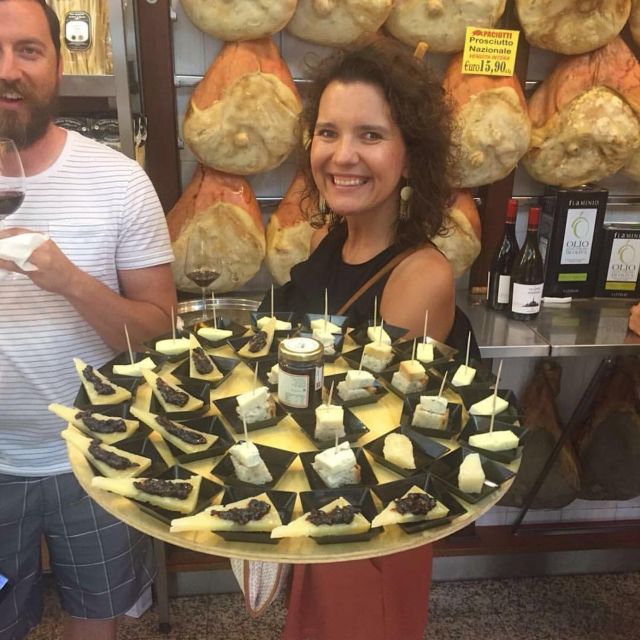
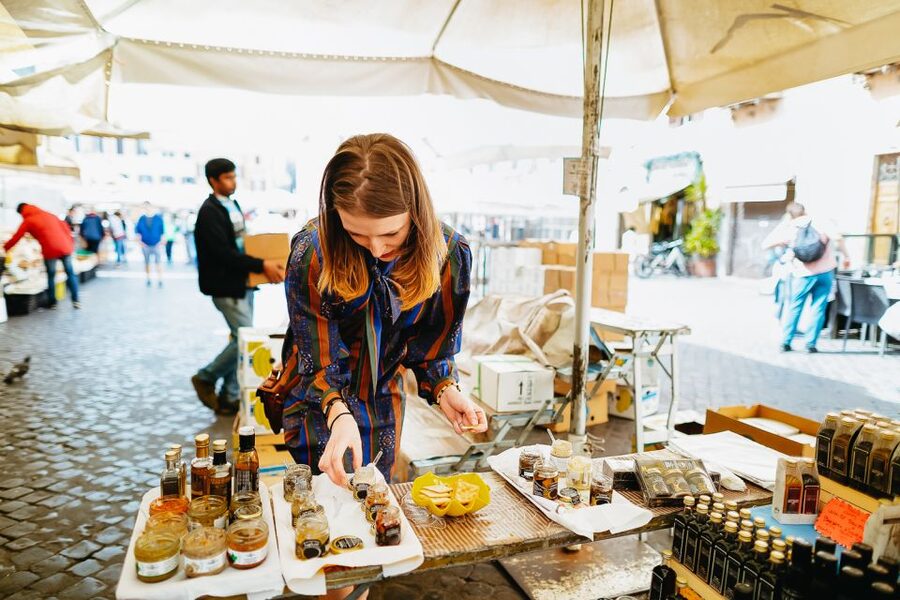
You may also taste items at La Nicchia later in the route, during a 45-minute stop that includes wine and regional products. The shop is used for specialty tastings such as truffles, old balsamic vinegar, cheeses, cured meats, and other Italian delicacies.
The point is not simply to sample expensive ingredients. A good guide will show you how to think about them. You can learn why a 30-year-old balsamic vinegar tastes thicker and more complex than ordinary supermarket vinegar, or how truffles are used as a finishing ingredient rather than treated as an entire meal.
Bonci Pizzarium and Rome’s famous pizza
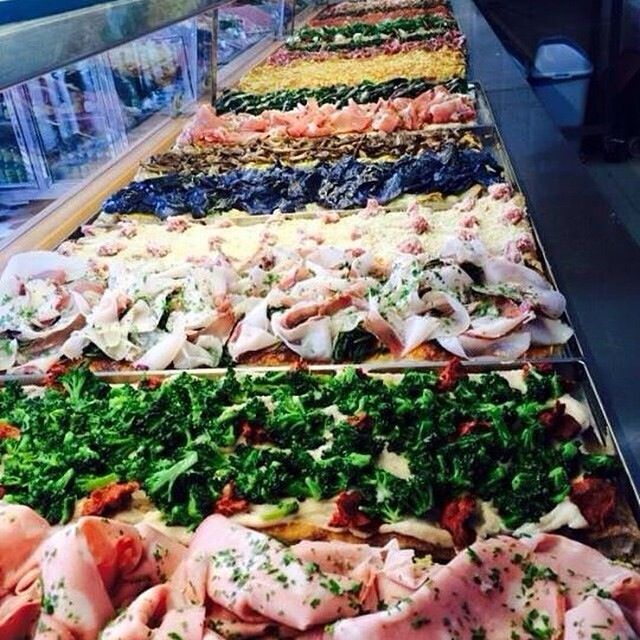
The stop at Bonci Pizzarium lasts about 45 minutes and centers on Roman pizza by the slice. The shop is linked to Gabriel Bonci, often called the Michelangelo of pizza, and the daily selection can include as many as 80 varieties.
That number is not a promise that every flavor will be available on your visit. It does tell you what makes the stop interesting: the choice changes, and you do not have to settle for one standard slice. The tour description presents Bonci’s pizza as the finest in Rome, a claim also associated with Anthony Bourdain.
Roman pizza al taglio is sold by weight, with rectangular pieces cut from large trays. The crust is generally lighter and airier than the thick, round pizza many people picture when they hear the word pizza. Your guide can help you pay attention to the base, toppings, texture, and balance rather than simply eating the slice and moving on.
This is one of the tour’s strongest food stops because it gives you a clear local reference point. Afterward, you will have a better idea of what to look for when you see pizza by the slice elsewhere in Rome.
The only challenge is appetite. The tour includes much more food after this stop, so enjoy the pizza but resist the urge to treat it as a full lunch.
Specialty foods, wine, and Italian shopping advice
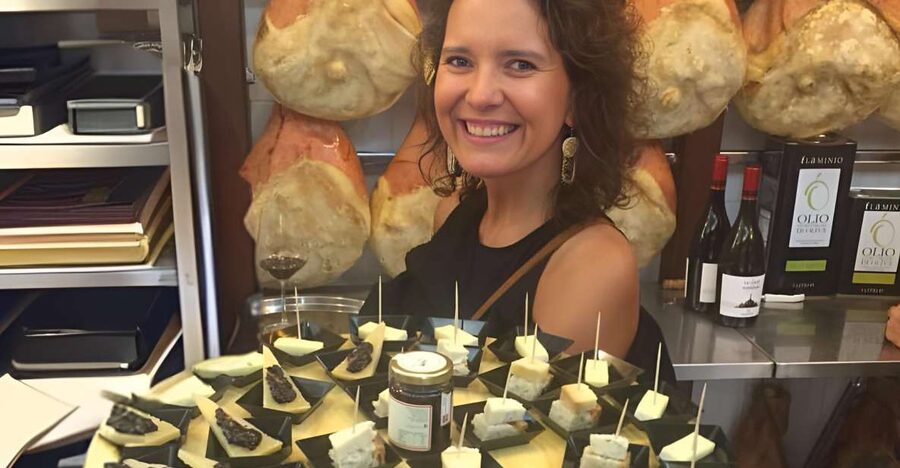
Returning to La Nicchia Cafe creates a useful contrast with the market. Here, the focus is on carefully selected products and regional flavors rather than the wider range of a public market.
Expect tastings of items such as truffles, cheeses, cured meats, pesto, balsamic vinegar, and other Italian specialties. Some food may be paired with wine. The exact selection can change, but the theme stays the same: you are learning what quality tastes like and which products are worth buying.
This part is practical for anyone who wants to take food home. Your guide can explain which labels and ingredients matter, and which products are mainly tourist packaging. You will not leave as a professional food buyer, but you should be better equipped to choose a good bottle of vinegar, a regional cheese, or a packaged specialty in Rome.
Wine is served at several stages of the tour, and the amount can be generous. Pace yourself. Four hours of tasting is more enjoyable if you drink water between pours and remember that the pasta stop still lies ahead.
More market tours in Rome:
- Rome E-Bike Tour: Ultimate Street Food and Market Feast
★ 4.9 · 50 reviews - Rome: Testaccio Food & Market Tour with Pasta & Wine
★ 5.0 · 38 reviews - Rome: Taste of Testaccio Food & Market Tour
★ 4.9 · 38 reviews - Rome: Vatican Street Food and Wine Tour with Farmers Market
★ 5.0 · 37 reviews
Mercato Trionfale, Rome’s largest food market
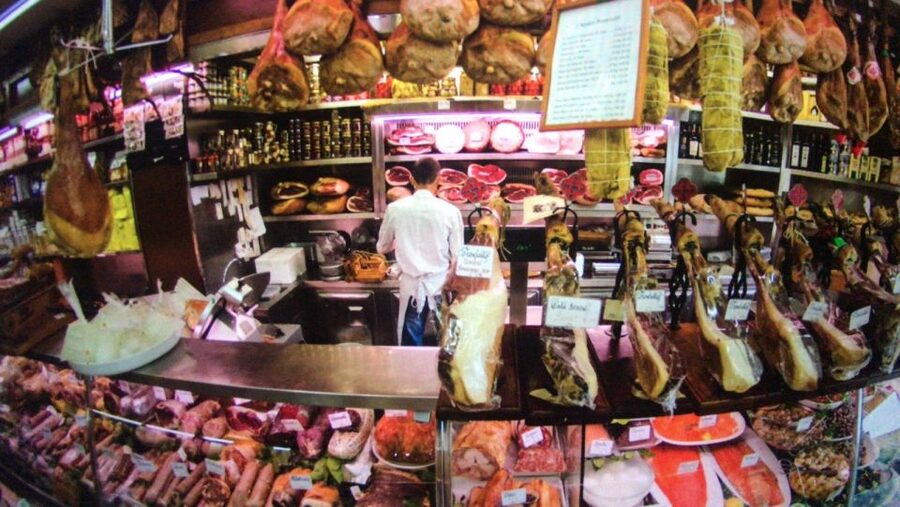
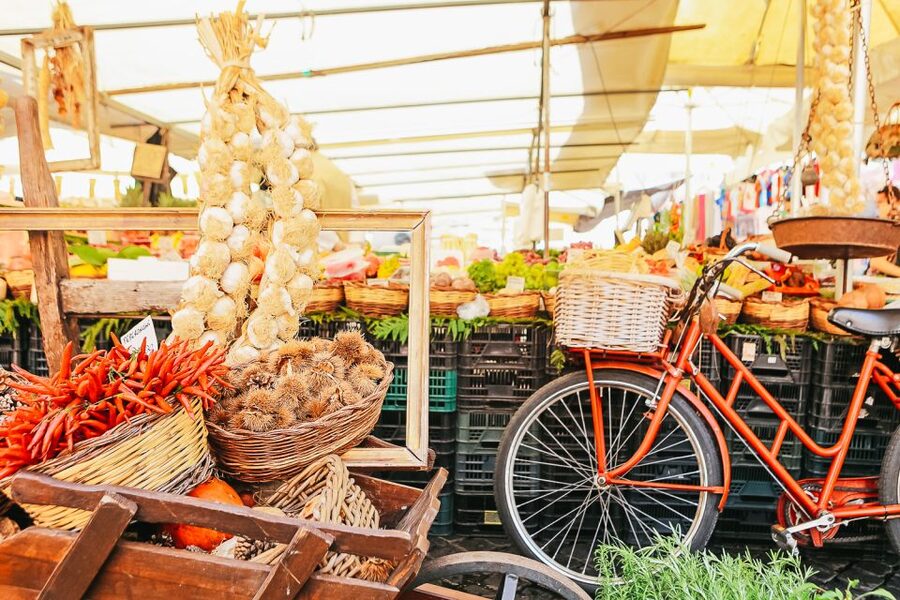
Mercato Trionfale is the most valuable stop for seeing everyday food culture rather than restaurant food. The market is known as Rome’s largest, with stalls selling fresh produce and other ingredients used in Italian cooking.
You may taste buffalo mozzarella, eggplant parmesan, cold cuts, seasonal produce, and other market goods. The food is only half the experience. Your guide introduces you to the people behind the stalls and explains how locals shop for ingredients.
I like this stop because it gives context to the dishes you eat later. After seeing fresh produce, cheese, and cured meats in their market setting, Roman pasta and pizza feel less isolated. You can start to see how simple ingredients become the foods served in restaurants and homes.
Allow yourself enough attention for the surroundings, even though the schedule is tight. One person specifically wished for more market time and wanted to buy additional food. That is a fair criticism. A 45-minute market visit is enough for a guided introduction and tastings, but not enough for a relaxed shop through every stall.
The fish section can also be messy. There may be water on the floor, and the smell is stronger than in the dry-goods areas. It is part of a real working market, not a spotless food hall, so wear comfortable shoes and expect ordinary market conditions.
Roman pasta and wine at Il Segreto
The tour ends at Il Segreto, an Italian restaurant near the Vatican. This is the longest food stop, lasting about an hour, and it functions as lunch.
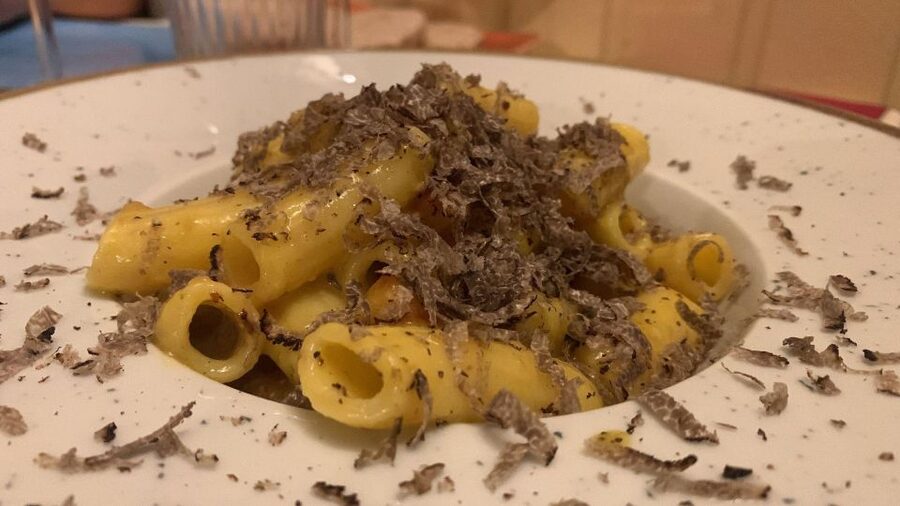
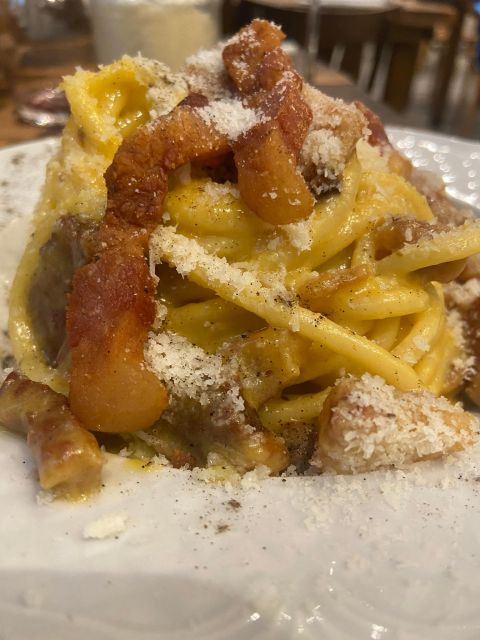
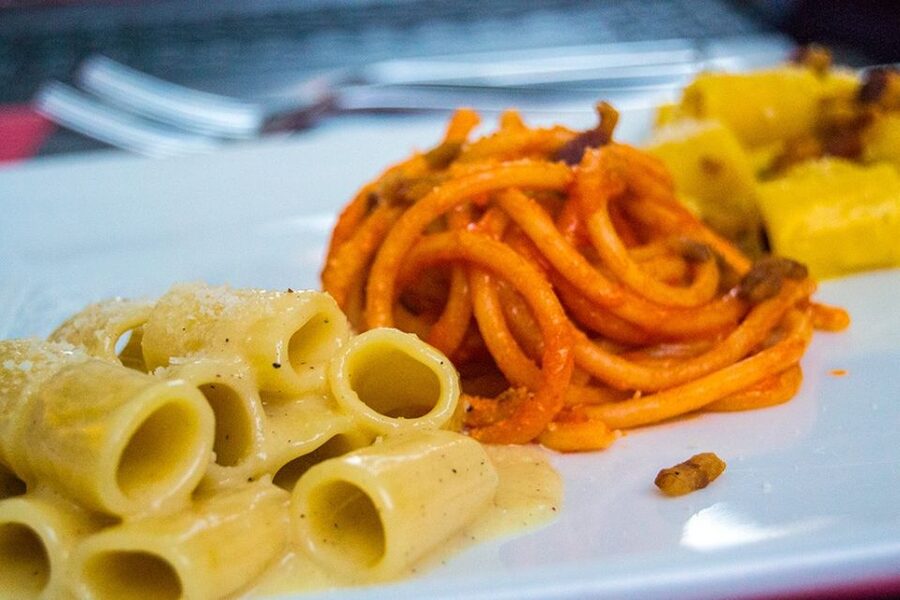
You choose one Roman pasta from carbonara, amatriciana, or cacio e pepe. These three dishes make a useful introduction to the city’s pasta traditions:
- Carbonara combines pasta with egg, cheese, and cured pork.
- Amatriciana uses tomato and cured pork for a sharper, more savory sauce.
- Cacio e pepe is built around cheese and black pepper, with no tomato.
The recipes are simple on paper, which is why technique matters. The sauce must cling to the pasta, the seasoning must be balanced, and the dish should not feel heavy with unnecessary ingredients. With wine alongside the meal, this stop gives you the fullest taste of classic Roman cooking on the route.
Portions can be much larger than the word tasting suggests. Past groups have described receiving full servings of pizza and pasta along with many smaller samples. If you eat everything at every stop, you may be uncomfortably full by the time you reach Il Segreto.
That is not a reason to skip the tour, but it is a reason to plan sensibly. Share portions when possible, tell your guide if you are full, and do not assume you must finish every bite.
Natural gelato and the final lesson
The tour closes with natural gelato. This is more than a sweet finish. Your guide explains how to tell traditional gelato from lower-quality versions.
Look for clear flavor, a smooth texture, and colors that do not look unnaturally bright. A mound of gelato piled high in a shop window is not automatically a sign of quality. The guide’s advice is useful because Rome has excellent gelaterias alongside places that rely more on display than ingredients.
Some groups have also tasted cannoli, tiramisu, and other sweets during the wider food route. The exact lineup can change, but you should expect dessert to be part of the experience, not an afterthought.
Finishing with gelato is a smart choice. It leaves you with a clear final memory and a practical skill you can use during the rest of your time in Rome.
Guides, groups, and the human side of the tour
The guide can make or break any food walk, and this experience depends heavily on that person’s energy. The guides named most often across different departures include Celeste, Stefania, Irene, Giordano, Vincenzo, Lucrezia, Ottavia, Paolo, Alice, Giada, Martina, and Francesca.
Their strengths tend to be the same: friendly conversation, food knowledge, humor, and the ability to keep a mixed group together. Celeste, in particular, has been described as energetic and well connected with the food sellers. Stefania has been praised for making people feel included, while Irene has been noted for being warm and patient.
Those details matter because tastings work better when the guide explains what you are eating instead of simply handing it over. A good guide also helps a group of strangers relax, which is useful when you are sharing tables, standing at counters, or sampling unfamiliar foods.
Private groups are available if you want a more personal pace. A standard group may be the better value for solo visitors or couples who enjoy meeting other people. Group sizes have been small enough on some departures to keep conversation easy, but the exact size can vary.
Value, timing, and who should book
The current price is not provided here, so I would compare the booking cost with what is included rather than judging it by the headline number. More than 25 tastings, multiple restaurant stops, wine, a market visit, and a full pasta meal can add up quickly if bought separately.
The strongest value comes from the variety. You are not paying for one meal alone. You are paying for access to several established food businesses, a guide who organizes the route, explanations that help you shop and eat better, and enough food to cover much of a day’s eating.
Book this if you want a broad introduction to Roman food and prefer someone else to choose the stops. It suits couples, families, solo visitors, and small groups who want local food without spending hours researching restaurants.
It is less suitable if you want a slow market shopping trip, a culinary class, or a short tasting with tiny portions. It is also not ideal for a fussy eater who dislikes cheese, cured meats, pasta, wine, or rich food.
The tour is offered in English and lasts four hours. Starting times vary, so check availability for your date. Cancellation is free up to 24 hours before the activity, and you can reserve now and pay later. Specify dietary needs when booking, since gluten-free, vegan, lactose-free, and allergy-friendly options are available.
Should you book this Rome food tour?
I would book it early in a Rome visit, especially if you want food advice you can use for the rest of your stay. The combination of Mercato Trionfale, Bonci pizza, Roman pasta, specialty products, wine, and gelato gives you a much wider picture than a meal at one restaurant.
Go with an empty stomach and comfortable shoes. If you want a relaxed market visit or dislike large portions, choose a different experience. If you want to eat widely, learn quickly, and leave Rome with a better sense of what belongs on your plate, this is a strong choice.
FAQ
How long does the Rome food tour last?
The tour lasts four hours.
Where does the tour meet?
Meet outside La Nicchia Cafe at Via Cipro 4 L. The listed coordinates are 41.90841293334961, 12.447413444519043.
Where does the tour finish?
The tour finishes at Il Segreto, an Italian restaurant near the Vatican.
What language is the tour offered in?
The live tour guide speaks English.
How much food is included?
The experience includes more than 25 tastings, including coffee, pizza, pasta, wine, market foods, Italian specialties, and gelato. The portions can be substantial, so arrive without eating breakfast.
Can dietary requirements be accommodated?
Yes. Gluten-free, vegan, lactose-free, and allergy-friendly menu options are available. Provide your requirements when booking.
Is the tour wheelchair accessible?
Yes, the activity is listed as wheelchair accessible. Private groups are also available.
More Shopping Tours in Rome
- Chef Guided Food Tour of Pike Place Market
★ 5.0 · 3,733 reviews - Tokyo Tsukiji Fish Market Food and Culture Walking Tour
★ 5.0 · 3,184 reviews - London Bridge & Borough Market Food Tour with 7 Authentic Dishes
★ 5.0 · 1,972 reviews - Tokyo: Tsukiji Fish Market Food and Walking tour
★ 5.0 · 1,724 reviews
Just added around Rome
- Rome: 3-Hour Guided Food Tour with Tastings★ 4.9 · 41 reviews
- Rome: Vegan Street Food Tour with Local Guide★ 5.0 · 37 reviews
- Rome: Trastevere Wine Tasting with Food Pairing and Gelato★ 4.9 · 168 reviews
- Rome: Vatican Street Food and Wine Tour with Farmers Market★ 5.0 · 37 reviews
- Rome: Trionfale and Prati Food and Wine Tasting Tour★ 4.8 · 115 reviews
- Rome: Trastevere & Tiber Island Street Food Tour at Sunset★ 4.9 · 71 reviews
- Rome Trastevere Walking Food Tour★ 4.8 · 97 reviews
- Rome: Trastevere Food Walking Tour with Beer and Wine★ 4.9 · 71 reviews
Food Tours in Rome, compared.
Rome Twilight Trastevere Food Tour by Eating Europe
Read our review →
Rome Food Tour: Unlimited Tastings with Fine Wine & Barolo
Read our review →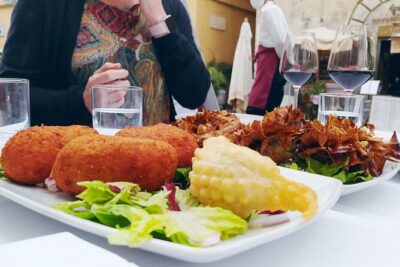
Rome Food Tour: Campo de’ Fiori, Ghetto, Trastevere Winner 2024
Read our review →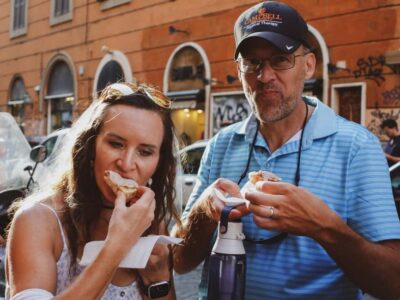
Guided Food Walking Tour with Wine in Trastevere
Read our review →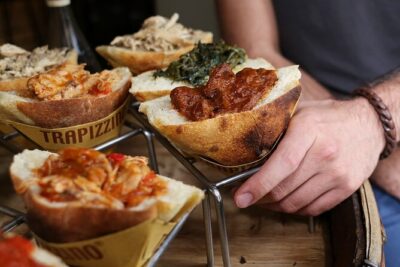
Trastevere Food tour with Free-Flowing Fine Wine
Read our review →
Trastevere & Campo de Fiori Street Food Walking Tour
Read our review →Browse the lists this tour appears in