
REVIEW · MOROCCO
Rabat: Walking Food Tour
Rabat’s best food story is told on foot, one small bite at a time. This three-hour walk leads from Gare Rabat Ville through the Medina, with stops for sardines, stuffed dates, chebakia, pastries, drinks, and a full Moroccan meal before finishing at Kasbah des Oudayas. You get food, local life, and a useful first look at the city in one outing.
I like the way the tour combines street food with a proper sit-down meal, rather than treating Moroccan cuisine as a string of samples. I also like the guide-led access to foods you might not order on your own, plus the chance to ask about cooking, religion, customs, architecture, and daily life as you walk.
The main caution is simple: this is a lot of food. At $72 per person, it is not a cheap snack crawl, and several people found the portions generous enough to leave them very full. Come hungry, but not so hungry that you rush through the first tastings.
Key points to know before you book
- Six tasting stops and a full meal: This is closer to lunch with a food walk attached than a light sampling tour.
- A practical route through central Rabat: Meet at Gare Rabat Ville and finish at Kasbah des Oudayas, with no transport included.
- Classic Moroccan flavors: Expect items such as sardines, dates, chebakia, pastries, mint tea, tagine, couscous, and salads.
- A guide adds the context: Mohammed, Imane, and Sarra have led guests through food customs, Medina life, architecture, and local history.
- Dietary needs can be discussed: Vegetarian, gluten-free, and lactose-free requests are accepted when communicated in advance.
- Best for curious eaters: You should enjoy trying unfamiliar foods and be ready for a full stomach by the end.
From Gare Rabat Ville into the Medina
The meeting point is easy to find: the main entrance of Gare Rabat Ville on Avenue Mohammed V. That makes the tour handy if you have just arrived by train, and it gives you a clear place to begin rather than asking you to hunt through the Medina for a doorway.
From there, the route heads toward Rabat’s old quarter. The Medina is not just a backdrop for the food. Its narrow lanes, traditional buildings, small shops, market stalls, artisans, and everyday foot traffic are part of the experience.
I like this beginning because it helps you get your bearings. A food tour can be a useful introduction to a city, especially in a place where the best food is often sold in modest shops or prepared in ways that are not obvious to a first-time visitor.
Your English-speaking guide explains what you are seeing as you go. Mohammed has led many of the tours, while Imane and Sarra have also guided groups. The most useful part of this arrangement is the conversation. Ask why a dish is eaten, how it is prepared, what makes one pastry different from another, or where a particular food fits into Moroccan family life.
The route is a walking tour, so wear shoes suited to narrow streets and several hours on your feet. The tour does not include transportation, but the stated start and finish make the plan fairly straightforward. You can arrive at the railway station and continue sightseeing around the Kasbah afterward.
More food walks around Morocco:
- Marrakech: Authentic Moroccan Food Walking Tour & Dinner
★ 4.8 · 261 reviews - Tangier: Food Walking Tour
★ 4.9 · 43 reviews - Reykjavik Food Walk – Local Foodie Adventure in Iceland
★ 5.0 · 18,952 reviews
Six stops, from sardines to Moroccan sweets
The tasting stops are built around local products rather than a single restaurant menu. Rabat’s street food includes handmade foods prepared for daily life, not just dishes designed for visitors.
Sardines are one of the more distinctive promised tastes. They give you a direct connection to Morocco’s coastal food traditions and offer a savory change from the sweet pastries and dates that appear later.
Stuffed dates bring a different texture and flavor. Dates are common across Moroccan food culture, and a filled version shows how a simple ingredient can become a small sweet or snack with more character.
Chebakia, a syrupy Moroccan pastry often shaped into a flower-like twist, is another likely highlight. It is sweet, sticky, and easy to underestimate. Save room for it. Pastry stops can quickly add up when they follow dates, juices, and savory bites.
The tour may also include fresh drinks, local pastries, and less familiar foods such as cow’s head. The exact selection can vary, but that range is the point. You are not only being handed the safest, most familiar dishes. You have a chance to test your appetite and find out what you actually like.
A guide matters at these stops. Without help, you might not know what to order, how much to take, or what a food means in the local setting. With the guide, a small stall becomes part of a larger lesson about the Medina and Moroccan food habits.
One practical issue is portion control. The tasting stops are described as generous, and the meal comes later. If you are traveling with children or have a small appetite, tell the guide early. Dietary requests can be accommodated, including vegetarian, gluten-free, and lactose-free preferences, but you should state them before the tour begins.
The community oven and everyday Medina life
One of the more interesting cultural details connected with this tour is the community oven. This is the kind of place that helps you see how food fits into neighborhood life rather than viewing Moroccan cooking only through restaurant dishes.
As you walk, you may also pass fresh produce sellers, artisans, and other small businesses serving local residents. That ordinary activity is valuable. You are seeing the Medina as a working district, not a preserved display for sightseeing.
The guide also talks about Rabat’s architecture, religion, customs, and history. The food gives the conversation a natural direction, but you can ask broader questions. Several guides have been praised for explaining the city clearly and for offering useful suggestions for nearby places and other Moroccan cities.
I would use this tour early in a Rabat stay. You learn where people shop, how the old quarter is organized, and which foods deserve another look later. It can save you from spending the rest of your visit in restaurants chosen only because their menus are written for tourists.
The full Moroccan meal is more than a final tasting
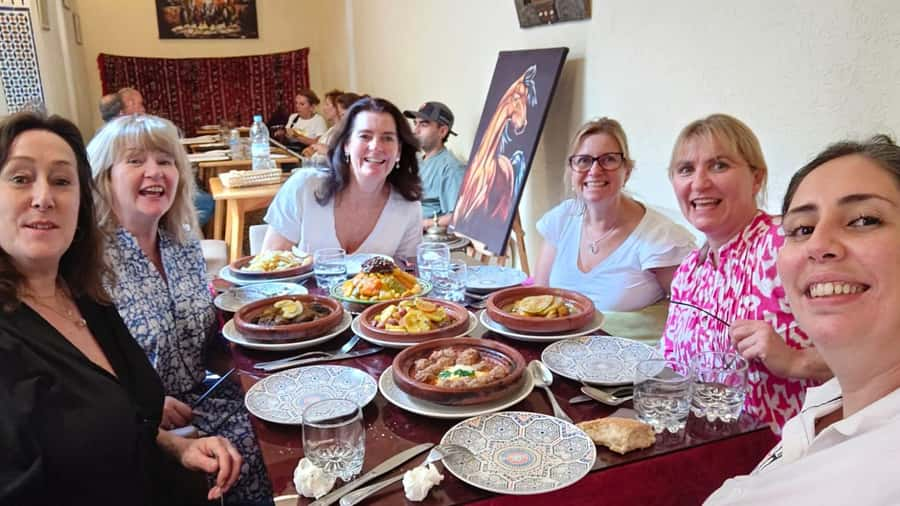
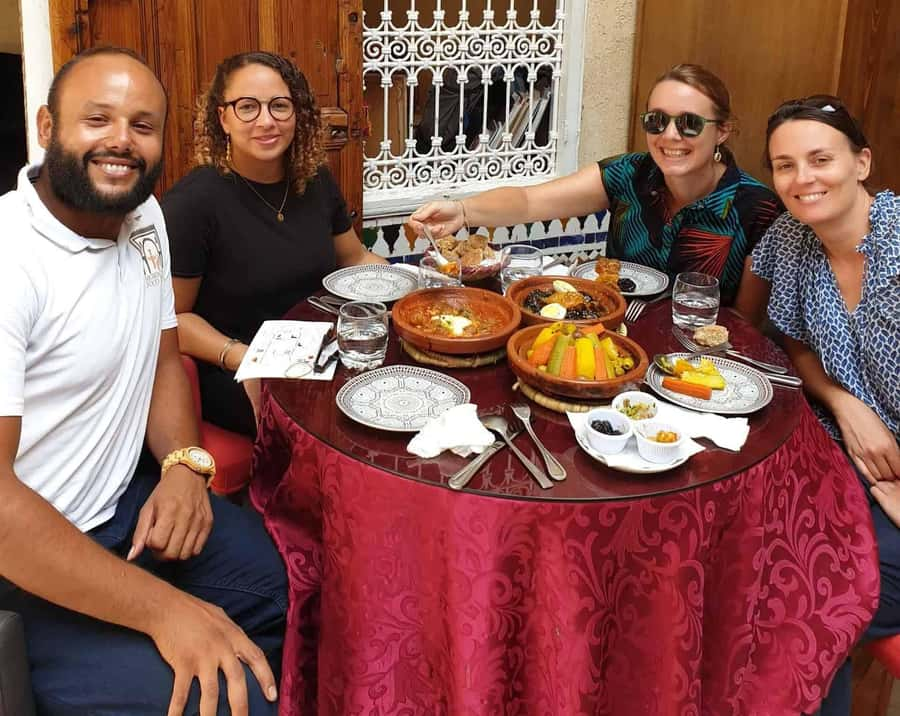
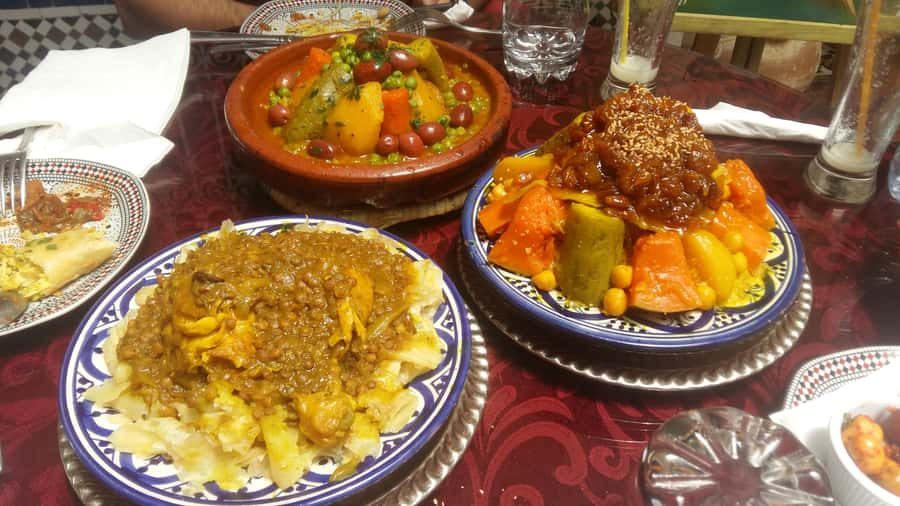
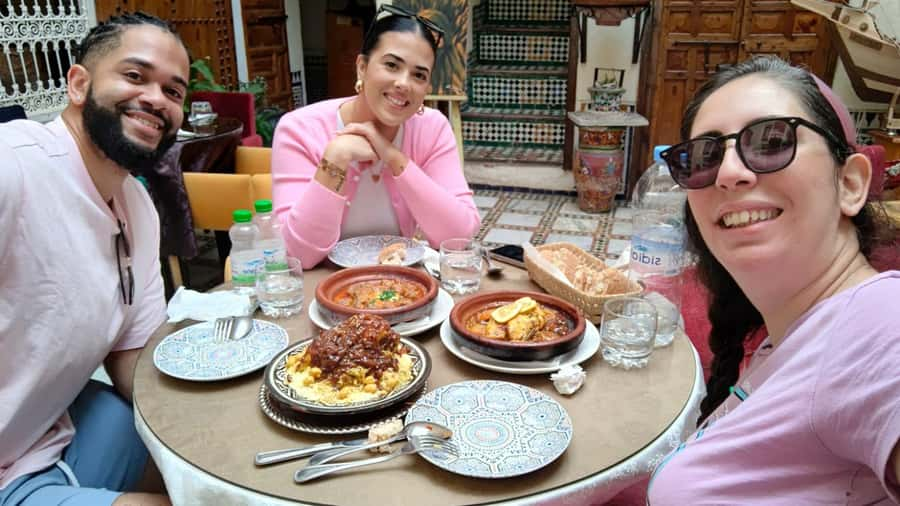
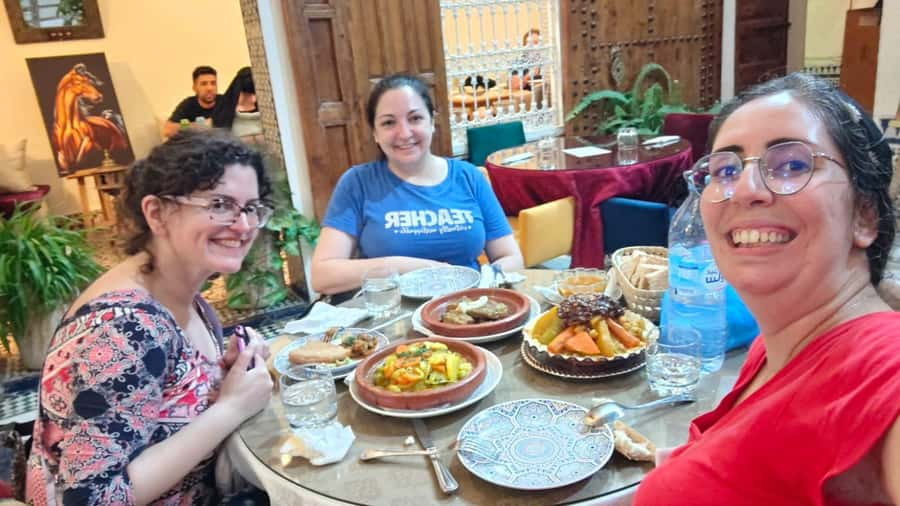
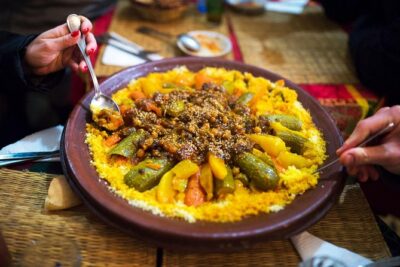
The tour includes a full meal, not merely six small bites. Past menus have included traditional salads and spreads, two tagine dishes, couscous, and Moroccan bread or other accompaniments. The exact dishes can change, but you should expect the meal to be substantial.
This is where the $72 price begins to make more sense. You are paying for a three-hour guided experience, six tasting stops, a proper meal, and the guide’s help in interpreting the food. If you would otherwise book lunch and separately pay for a guide or food activity, the price is easier to justify.
Still, value depends on your appetite and travel style. If you prefer a quick snack, want to choose every dish yourself, or are happy eating cheaply from one stall, this may feel expensive. If you want several foods, explanations, and a meal without having to plan the route, it is a more useful spend.
The restaurant meal has been a strong part of the experience for many people. Dar Medina has been used as a lunch stop, and the meal can be one of the most memorable parts of the afternoon. You may finish with tagine and couscous after spending much of the morning or midday on small bites.
The pacing matters. One family with children aged six and thirteen found the food well spaced and the conversation easy to follow. That suggests the tour can work for families, provided everyone is comfortable walking and trying unfamiliar foods.
A few more food tours around Morocco worth comparing
- Little Havana Food and Walking Tour in Miami
★ 5.0 · 8,882 reviews - New Orleans Food Walking Tour of the French Quarter with Small-Group Option
★ 5.0 · 6,118 reviews - Naples: Street Food Walking Tour with Local Guide
★ 4.9 · 4,976 reviews - Greek Food Walking Tour in Athens
★ 5.0 · 4,740 reviews
Mint tea, pastries, and the walk to Kasbah des Oudayas
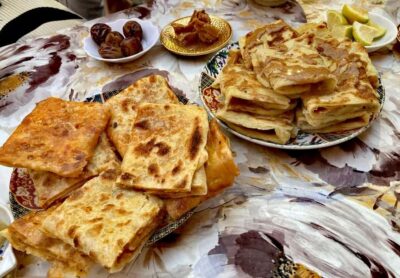
Moroccan mint tea and pastries are natural closing notes. A final tea gives you time to slow down after the market stops and meal, while Moroccan pastries bring the focus back to sweetness.
Some versions of the route have ended at a riverside cafe, where tea or coffee was served with almond cookies. That setting adds a pleasant pause before the tour ends. It also gives you a chance to ask final questions while the guide points out what to see next.
The official finish is Kasbah des Oudayas. This is a smart ending because you can continue exploring one of Rabat’s most atmospheric areas after the food tour. The route also offers photo opportunities along the way, but remember that the focus is food and local life, not a full sightseeing tour of every major monument.
Do not book this as your only Rabat sightseeing activity. It gives you a strong introduction to the Medina and ends in a major area, but three hours is not enough for a complete city tour. Think of it as a food-centered orientation walk.
The guides make the difference
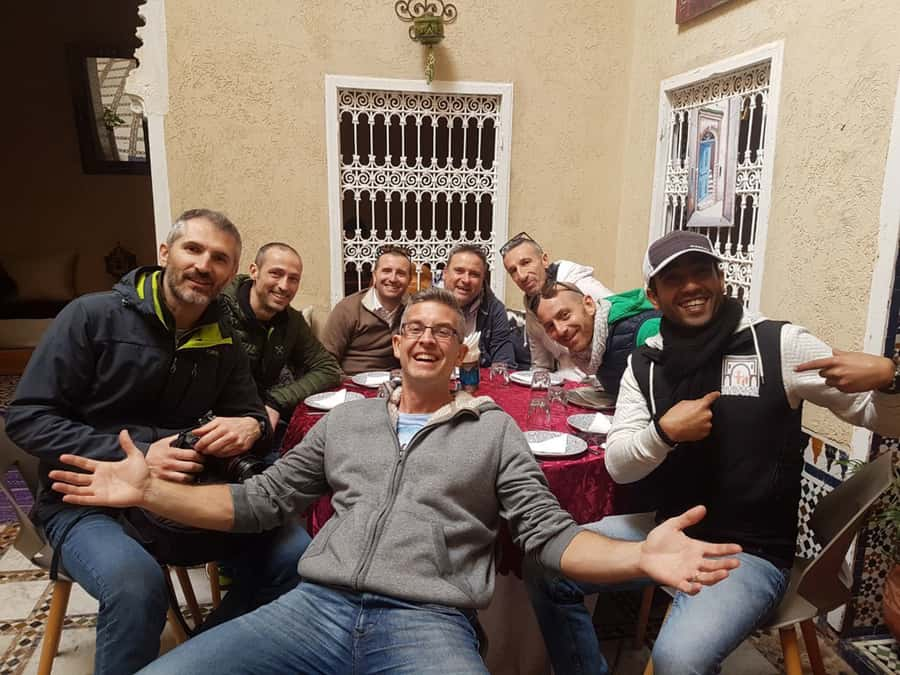
The guide is the part of this experience you cannot replace with a map. Mohammed has been described as warm, funny, and clear in his explanations. Imane has led groups with enthusiasm, and Sarra has explained both Moroccan food and the cultural ideas behind it.
Names can change depending on the date, and the tour is conducted in English. Group size can also vary. One booking had a private-feeling experience because only one person attended, while other outings included families and small groups.
The strongest guides do more than identify food. They explain why a dish matters, help you understand the Medina, and answer questions about daily life. That is especially useful when a stall offers something unfamiliar or when a food has a texture you may not expect.
I would take an active role here. Ask questions. Say what you enjoy and what you would rather avoid. If you simply follow along in silence, you will still get fed, but you may miss much of what makes the walk worthwhile.
What the $72 price includes
At $72 per person, the tour sits above the price of a basic lunch in Rabat. The cost includes six tasting stops, a full meal, and the English-speaking guide. Transportation is not included.
The value is strongest if you want a broad introduction to Moroccan food in a single morning or afternoon. You can sample many products, eat a substantial meal, learn about the city, and finish near the Kasbah without having to research individual stalls.
The price is less attractive if you are mainly interested in a single specialty, have a very small appetite, or avoid most of the foods served. The amount of food is a recurring consideration. One person found the quantity excessive and felt smaller portions could reduce waste and overeating.
For a food-focused visitor, I think the cost is defensible. You are buying access, guidance, and structure as much as food. Just treat it as a major meal with several courses before and after, not as a casual nibble between sightseeing stops.
Free cancellation up to 24 hours ahead and the option to reserve now and pay later add useful flexibility. Starting times vary, so check availability when booking.
Who should take this Rabat food tour?
This tour suits you if you want to:
- Try Moroccan foods you would not confidently order alone
- Learn about Rabat while walking through the Medina
- Combine street food with tagine, couscous, tea, and pastries
- Ask detailed questions about cooking, culture, and local customs
- Find a good first-day introduction to central Rabat
- Eat a large meal without planning several separate stops
It is also a good choice for vegetarians and people with gluten-free or lactose-free needs, provided you communicate those needs. The tour has accommodated vegetarian options, and the provider asks you to share restrictions ahead of time.
Families can enjoy it too, especially if children are open to new flavors. The walking, unfamiliar textures, and long meal may not suit every young child, so consider your group’s appetite and patience.
You may want to skip it if you dislike eating on foot, do not want a large meal, or prefer complete control over restaurant choice. At three hours, it also takes a solid block of your day.
Should you book the Rabat Walking Food Tour?
Book it if you want a guided introduction to Rabat that uses food as the doorway. The combination of six tastings, Medina streets, community life, local history, and a full Moroccan meal gives you much more than a restaurant visit.
Plan to meet at Gare Rabat Ville with an empty stomach, comfortable shoes, and a willingness to try something outside your usual order. Tell the guide about dietary restrictions at the start, and pace yourself because the meal comes after the tastings.
I would especially recommend it for a first visit to Rabat, for food-focused couples and families, and for anyone who wants help finding the city’s everyday flavors. The $72 price is fair when you make full use of the guide and the meal, but it is a poor fit if you want only a light snack. Finish at Kasbah des Oudayas, then keep exploring with a better sense of what Rabat eats and why.
FAQ
How long is the Rabat Walking Food Tour?
The tour lasts three hours. It includes walking through Rabat’s Medina, six tasting stops, a full meal, and guided explanations.
Where does the tour begin?
Meet at Gare Rabat Ville on Avenue Mohammed V, in front of the main entrance to the station.
Where does the tour finish?
The tour finishes at Kasbah des Oudayas.
What food is included?
The tour offers six tasting stops and a full meal. Foods can include sardines, stuffed dates, chebakia, Moroccan pastries, local drinks, tagine, couscous, salads, mint tea, and almond cookies.
Is the tour suitable for dietary restrictions?
Yes. Vegetarian, gluten-free, and lactose-free requests can be accommodated. Tell the provider about your preferences in advance.
Is transportation included?
No. Transportation is not included, so you are responsible for reaching Gare Rabat Ville and making your own arrangements after the tour ends.
Just added around Morocco
- Fez Street Food Tour★ 4.5 · 33 reviews
- The Sunday Market in Had Draa & Local Food Tasting.★ 5.0 · 33 reviews
- Essaouira Guided Tour: 3 on 1 – Nightlife tour, Live like a local & Street food★ 4.5 · 32 reviews
- Cook Moroccan Food & Try on Traditional Clothes like a local★ 5.0 · 213 reviews
- Casablanca Food Tour★ 5.0 · 60 reviews
- Casablanca Food Tour – Moroccan Street Food Tour★ 5.0 · 86 reviews
- Discovery of Moroccan Culinary Heritage, History and Secrets★ 4.5 · 48 reviews
- Authentic Food Tour in Agadir – Eat Like A Local★ 5.0 · 117 reviews
Food Tours in Morocco, compared.

3-Day Tour to Merzouga Erg Chebbi with Food & Camel Trek
Read our review →
Authentic Moroccan Food Tour in Marrakech with Dinner
Read our review →

Cook Moroccan Food & Try on Traditional Clothes like a local
Read our review →Browse the lists this tour appears in