
REVIEW · OSAKA
Osaka: 2-Hour Local Street Food Tour – Dotonbori & Namba
Dotonbori is Osaka at full volume: glowing signs, narrow lanes, sizzling snacks, and the famous Glico Man leaping over the canal. This two-hour walk gives you a friendly local to help you choose food, find quieter corners, and understand what you are eating. Guides including Kaito, Hina, Hiro, and Fuka have earned especially warm praise for their English, patience, and personal recommendations.
I like two things right away. You get the essential Dotonbori photo without spending the whole evening in the main crowd, then move into places such as Ukiyo-Koji and Hozenji Temple, where the mood changes in just a few steps. I also like the flexible food approach: you may taste takoyaki and taiyaki, or guide the evening toward okonomiyaki, kushikatsu, udon, sushi, beef, and other local favorites.
The main catch is that the $51 price covers the guide, not the food and drinks. Your final bill depends on what you order, and the official dietary note says vegan and gluten-free requests cannot be accommodated, even though some guides have helped vegetarian and gluten-free diners. Confirm your needs before booking.
Key points to know before you book
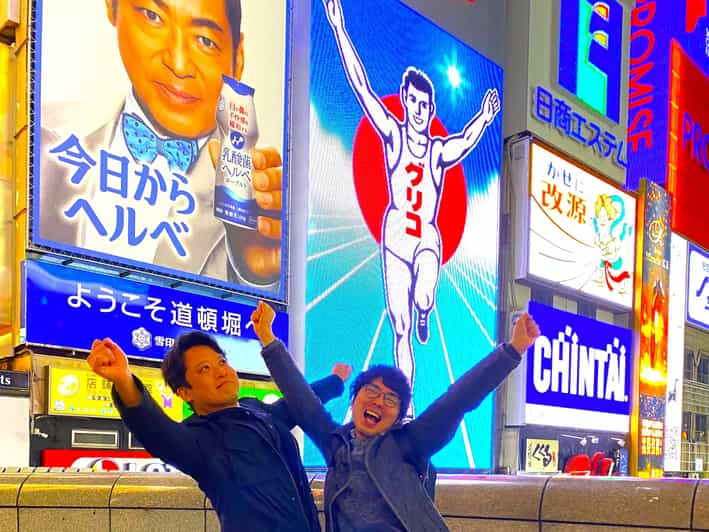
- Glico Man starts the evening: Meet outside Starbucks TSUTAYA EBISUBASHI, then begin with a 20-minute photo stop and orientation.
- Food is flexible, not a fixed tasting menu: Choices may include takoyaki, takosen, taiyaki, apple candy, pork buns, okonomiyaki, kushikatsu, and doteyaki.
- Hozenji Temple adds a quiet pause: The small temple offers a welcome change from Dotonbori’s signs and crowds.
- Local guidance is the real value: Guides help you order, explain food customs, teach useful Japanese phrases, and point out places you might skip alone.
- Food costs extra: The $51 fee pays for the English or Japanese speaking guide, while every dish and drink is separate.
- Two hours goes quickly: This is a compact introduction to Dotonbori and Namba, not a long dinner crawl.
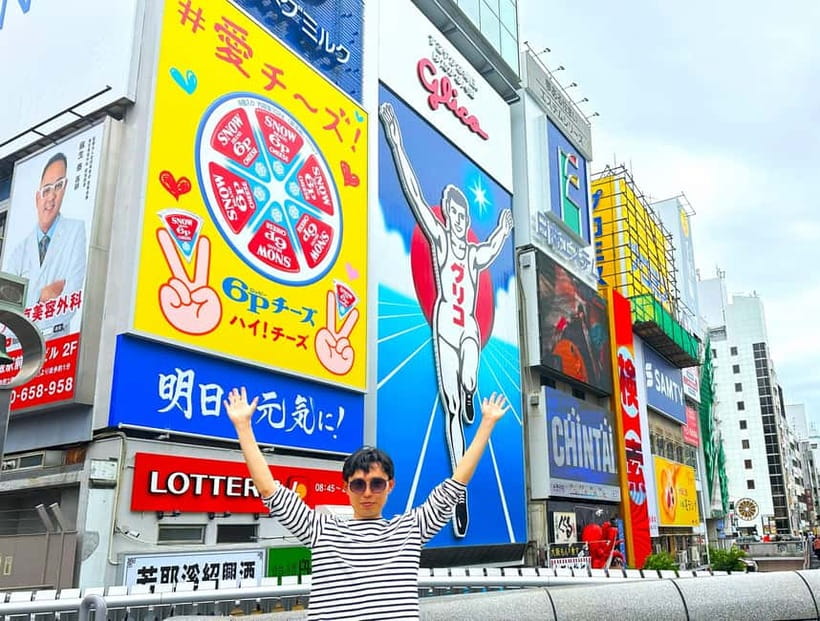
Starting at Glico Man in Dotonbori
Your meeting point is in front of the Starbucks Coffee TSUTAYA EBISUBASHI store, outside the building. Look for a guide holding a yellow DeepExperience sign. This matters in Dotonbori, where signs, arcades, railings, and streams of people can make a simple meeting point harder to spot than expected.
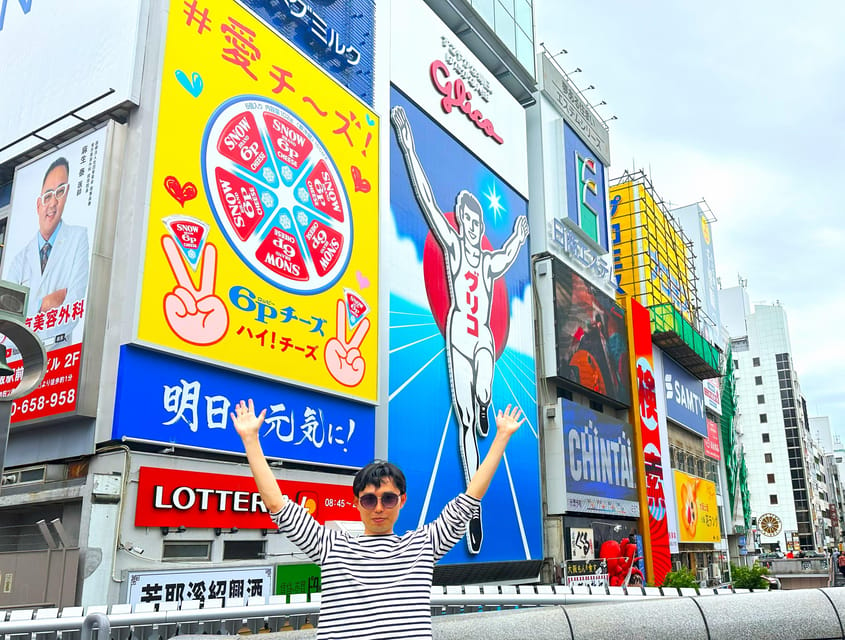
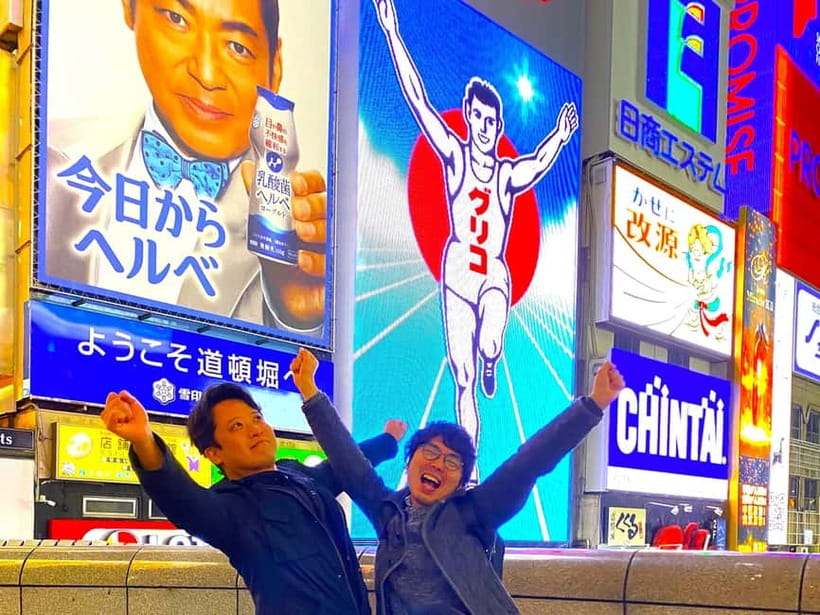
The first stop is the Glico Man sign, Osaka’s best-known photo backdrop. You get about 20 minutes for a picture and a guided introduction to the area. It is a sensible opening because you can take the standard Osaka photo early, then stop worrying about missing it later.
You should arrive with your phone ready and your group gathered. One useful detail from the experience is that guides do more than point at the sign. Aki, for example, has been praised for knowing good photo angles and for steering people away from the worst lines and congestion. That kind of help is small, but it makes a crowded landmark less tiring.
Dotonbori itself is not subtle. Giant crab signs, illuminated storefronts, canal views, and food displays compete for your attention. The tour works best if you accept the noise and movement as part of the scene, while letting your guide lead you toward more manageable side streets when the main strip becomes too packed.
More Food Tours in Osaka
- Osaka: Shinsekai Food Tour with 13-15 Dishes at 5 Eateries
★ 4.8 · 2,204 reviews - Osaka Food Tour: 13 Dishes at 5 Local Eateries
★ 5.0 · 2,149 reviews - Hungry Osaka Street Food Tour:15 Tastings & 3 Drinks with a Local
★ 5.0 · 1,727 reviews
Tasting Osaka classics along the main streets
The food portion is the heart of the experience. The advertised choices include takoyaki, takosen, taiyaki, apple candy, and pork buns, with possible savory stops for okonomiyaki, kushikatsu, and doteyaki. Other meals described by guides and participants have included dumplings, tempura, sushi, ramen, udon, onigiri, Japanese barbecue, and beef.
That range tells you something important: this is not a rigid set menu with every guest receiving exactly the same plate. Your guide asks what you want to try and adjusts the route when possible. Kaito has been particularly good at shaping an evening around personal tastes, while Hina and Hiro have been praised for asking about food preferences and pacing the stops well.
Takoyaki is the obvious Osaka starting point. These hot octopus-filled batter balls are soft inside and usually served too hot to eat quickly. Your guide can help you handle them, explain the toppings, and show you how locals approach the dish. Takosen pairs takoyaki with shrimp crackers, giving you a different texture and a crisp wrapper around the soft filling.
Taiyaki is the sweet counterpoint. These fish-shaped cakes may contain custard or another filling, and they are easy to eat while walking. Apple candy and pork buns add more variety, though you should remember that several small snacks can fill you faster than expected.
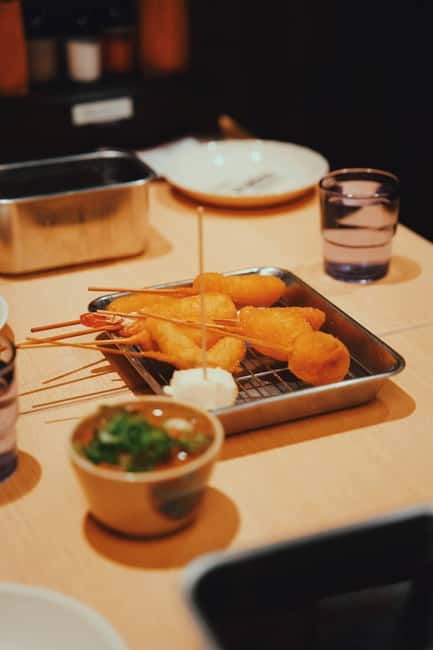
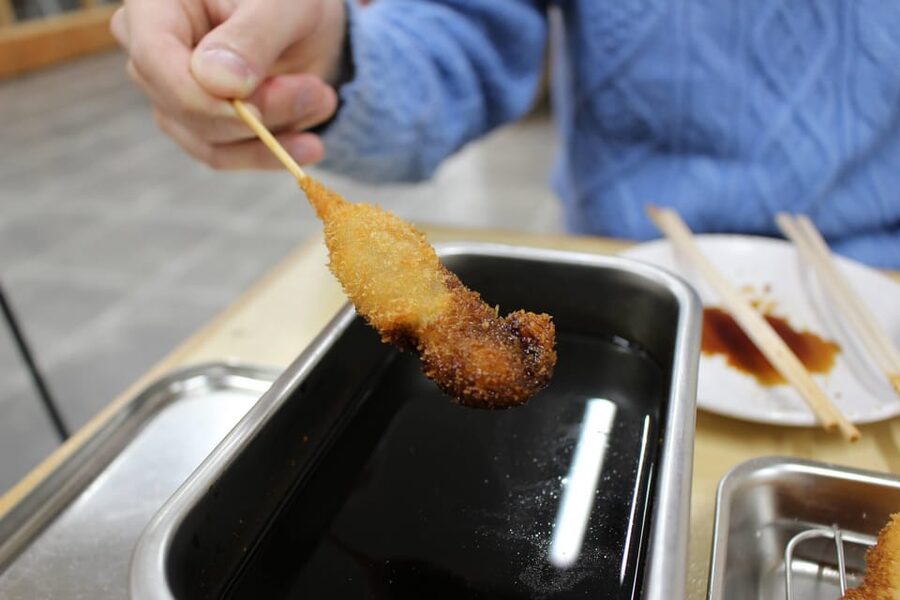
If you want a more substantial meal, ask about okonomiyaki, kushikatsu, or doteyaki. Okonomiyaki is a savory griddled dish with a filling batter and toppings. Kushikatsu brings skewered and fried ingredients. Doteyaki is a slow-cooked beef tendon dish with a strong local identity. The food is not just fuel here. It gives your guide a way to explain Osaka preferences, ordering habits, and the city’s casual dining culture.
You will pay for the food separately, so ask about likely costs as you go. One useful point from the available feedback is that at least one restaurant meal was considered both tasty and well priced. Still, the final amount depends on your appetite, the number of stops, and whether you choose drinks or larger dishes.
Ukiyo-Koji and the short walk between bites
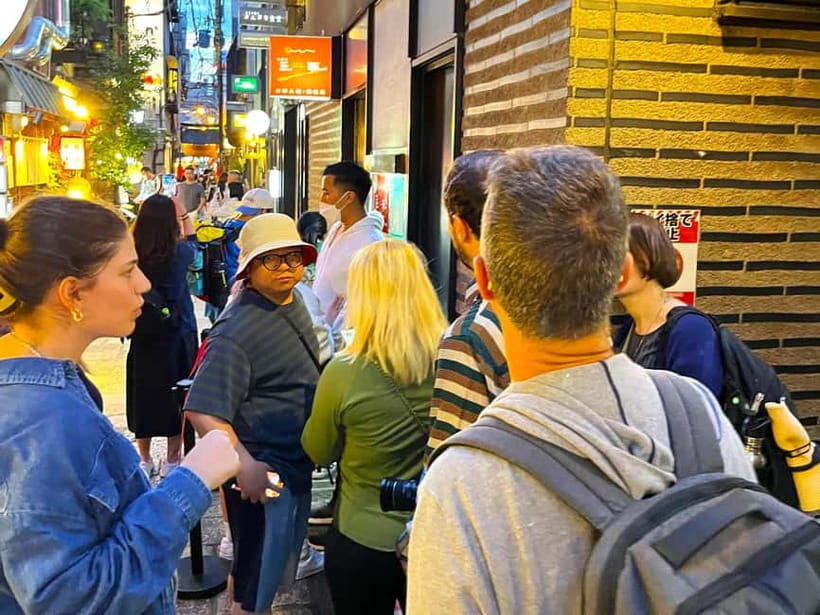
The route includes Ukiyo-Koji, a narrow passage with an old-fashioned feel tucked among Dotonbori’s commercial streets. It is the kind of detail you can miss if you only follow the brightest signs and large restaurant fronts.
This short section helps break up the eating. You move through a smaller space, take pictures, and get a sense of how Osaka’s entertainment district is layered. One minute you are near huge signs and canal crowds. A few turns later, the scale is much more intimate.
The walking is manageable. The itinerary gives roughly 30-minute blocks for food in Dotonbori and Namba, with short guided stops between them. Jill found the tour involved less walking than expected, which left more time for eating. That makes the experience a good fit if you want to explore on foot but do not want a long city hike.
The tradeoff is speed. Two hours sounds generous until you include photos, moving through crowds, ordering, eating, and stopping to talk. If you want long cultural explanations at every corner or a full sit-down dinner, this tour may feel rushed. If you want a lively introduction with several tastes, the pace should suit you.
Hozenji Temple, a calm corner in Namba
Hozenji Temple is the route’s best change of mood. It sits close to the commercial action, yet the atmosphere becomes quiet and reflective. The visit lasts about 15 minutes, enough for your guide to explain the site and give you a moment away from neon signs and food queues.
This stop gives the tour more shape than a simple snack crawl. You see how a small religious site can remain part of daily city life even when surrounded by shops, restaurants, and entertainment. The contrast is the point. Dotonbori shows Osaka’s appetite and energy; Hozenji offers a brief pause.
You should not expect a long temple visit or a major historical tour. The stop is short, and the experience centers on the nearby food districts. Still, it is valuable because your guide can connect the temple to the streets around it rather than treating it as an isolated photo stop.
Naoko was praised for including the temple and a couple of less obvious streets, which is exactly where this tour earns its keep. You can find Dotonbori’s sign on your own. It is harder to notice the quieter lanes and understand why they matter without someone leading you.
More street food nights in Osaka:
- Hungry Osaka Street Food Tour: 15 Dishes & 3 Drinks
★ 4.9 · 694 reviews - Eat Like a Local in Osaka – Private Custom Street Food Tour
★ 4.3 · 33 reviews - Dubai: Old Town, Creek, Museums, Souks, & Street Food Tour
★ 4.8 · 10,816 reviews - Ho Chi Minh City Street Food Tour & Sightseeing By Motorbike
★ 5.0 · 9,413 reviews
Namba food stops and the value of a local guide
The Namba section adds another half hour of tasting and exploring. Here, the guide may take you to a restaurant or small food stop that is not obvious from the main road. Several guides have helped with ordering, explained unfamiliar dishes, and introduced useful Japanese phrases.
Kaito has been especially well liked for making local eateries feel approachable and for teaching phrases that people could use later in Japan. He also helped a late-arriving group find the meeting point by phone, a practical kindness in a confusing part of the city. Other guides, including Hina, Fuka, Maru, and Hiro, have received praise for warmth, clear English, and thoughtful pacing.
The strongest feature is not simply knowing where to eat. It is having someone bridge the gap between looking at a menu and understanding what to choose. A guide may ask what you have already eaten, what you want to avoid, and how adventurous you feel. That can prevent you from ordering three similar fried dishes or missing a food you would have enjoyed.
The experience can also work well for repeat visitors. If you have already seen the main Dotonbori signs, tell your guide. Benoit has adjusted routes around what people had already visited, and other guides have added recommendations for anime shops, later meals, and places to return to independently.
What the $51 price really buys
At $51 per person, the value depends on how much help you want. You are not paying for a large meal package. Food and drinks are excluded, so the tour fee mainly buys two hours of a local guide, language support, route planning, cultural explanation, and help entering small or unfamiliar eateries.
For a first visit to Osaka, that can be worthwhile. You do not need to decode every menu, guess which line is worth joining, or limit yourself to the giant restaurants with English signs. A good guide also gives you ideas for the rest of your stay, which can add value beyond the two-hour route.
For repeat visitors who already feel comfortable ordering and navigating Namba, the price is harder to justify unless you want personal food advice or access to less obvious places. The private or small-group format helps here because a personal route is more useful than a standard march through the same three famous snacks.
Keep your food budget separate. The route may involve several small bites, a restaurant dish, or both. Ask your guide what you are ordering and how much it costs before adding more, especially if your group has different appetites.
Dietary needs, group size, and accessibility
The official information says vegan and gluten-free requests cannot be accommodated. That should guide your booking decision. At the same time, Hina helped one group locate gluten-free food, and several guides found vegetarian choices for Alex, Hina, and others. These examples show flexibility, not a guarantee.
If you have a serious allergy, vegan diet, or strict gluten-free requirement, contact the operator before you reserve and receive clear confirmation. Do not rely on a last-minute request at the meeting point. The regular food route appears better suited to people who can eat a broad range of Japanese dishes.
The tour is wheelchair accessible, according to the activity information. Dotonbori can still be crowded, and narrow food lanes may feel busy, so discuss your needs in advance if you require a particular pace or route. Private and small-group options are available, which may make the evening easier to manage.
Families can enjoy the colorful food and simple photo stops, but the late-evening restaurant atmosphere may not suit every child. One family had a particularly good time with teenagers and Kaito. I would choose this for older children who enjoy trying food and walking through crowded city streets.
Who will enjoy this Osaka food walk most
I would recommend it to a first-time visitor who wants an easy start in Dotonbori and Namba. You get the major photo, several familiar Osaka foods, a temple, side streets, and practical advice in one compact session.
It also suits people who feel nervous about ordering in Japan. Guides can explain what you are seeing, introduce simple phrases, and make small local restaurants feel less intimidating. The language support is one of the clearest reasons to book.
Repeat visitors may enjoy it if they want a more personal food route. Tell the guide what you have already tried and what you want next. The experience is strongest when you use the guide’s flexibility rather than treating it as a checklist.
I would be cautious if you need a fixed all-inclusive price, a long formal history lesson, or guaranteed vegan and gluten-free food. I would also avoid booking it as your only Osaka meal plan. Two hours gives you an introduction, not a complete survey of the city’s food.
Should you book the Dotonbori and Namba tour?
Book it if you want a friendly local guide to turn Osaka’s famous food streets into a manageable evening. The best parts are the personal choices, the move from Glico Man to Ukiyo-Koji and Hozenji Temple, and the chance to hear practical tips from guides such as Kaito, Hina, Hiro, and Fuka.
Skip it if you prefer choosing every restaurant yourself or want food included in the advertised price. Before booking, set aside extra money for dishes, state dietary needs clearly, and ask for a private or small group if you value a slower pace.
For most first-timers, $51 is a fair price for orientation and local help, provided you understand that the food bill comes afterward. This is a lively, useful introduction to Osaka, with enough flexibility to feel personal rather than mechanical.
FAQ
Where does the Osaka food tour meet?
Meet your guide outside the Starbucks Coffee TSUTAYA EBISUBASHI store. The guide will hold a yellow sign with the DeepExperience logo.
How long does the tour last?
The experience lasts two hours and returns to the Starbucks Coffee TSUTAYA EBISUBASHI meeting point.
What foods might I taste?
Possible foods include takoyaki, takosen, taiyaki, apple candy, pork buns, okonomiyaki, kushikatsu, and doteyaki. Other food stops may include dishes such as sushi, udon, ramen, dumplings, tempura, onigiri, and beef.
Are food and drinks included in the $51 price?
No. Food and drinks are not included, so you pay those expenses separately during the tour.
Is the tour available in English?
Yes. Live guiding is available in English and Japanese.
Can I request vegetarian, vegan, or gluten-free food?
The official information says vegan and gluten-free requests cannot be accommodated. Some guides have helped with vegetarian and gluten-free options, so contact the operator before booking if you have dietary restrictions.
Is the tour wheelchair accessible?
Yes, the activity is listed as wheelchair accessible.
Can I book a private or small-group tour?
Yes. Private and small-group options are available.
More 2-Hour Experiences in Osaka
- Hartbeespoort: 2-Hour Dam Cruise with South African Food
★ 4.4 · 621 reviews - 2 Hour Historic Market Food Tour and Hands-On Biscuit Class
★ 5.0 · 251 reviews - 2-Hour Food, History and Street Art Tour of Ponce City Market
★ 5.0 · 159 reviews - Saigon: City Unseen Highlights 2h Tour | Opt: Ao Dai Riders
★ 5.0 · 69 reviews
Just added around Osaka
- Hidden Osaka – Yukaku Red Light Tour & Culinary Adventure★ 4.8 · 96 reviews
- Eat Like a Local in Osaka – Private Custom Street Food Tour★ 4.3 · 33 reviews
- Osaka: Local Foodie Tour in Dotonbori and Shinsekai★ 4.7 · 95 reviews
- Osaka: Kuromon Market Food Walking Tour (6 stops, 6 tastes)★ 4.6 · 272 reviews
- Osaka: Guided Food Tour with 12 Dishes at 4 Local Eateries★ 4.9 · 90 reviews
- Osaka: Guided Food Tour with 12 Dishes at 4 Local Eateries★ 5.0 · 533 reviews
- Kuromon Market Food Walking Tour in Osaka (6 stops, 6 tastes)★ 5.0 · 550 reviews
- Hungry Osaka Street Food Tour: 15 Dishes & 3 Drinks★ 4.9 · 694 reviews
Food Tours in Osaka, compared.
Shinsekai Food Tour with 13-15 Dishes at 5 Eateries
Read our review →
Osaka Food Tour: 13 Dishes at 5 Local Eateries
Read our review →
Hungry Osaka Street Food Tour:15 Tastings & 3 Drinks with a Local
Read our review →
Osaka Local Foodie Walking Tour in Dotonbori and Shinsekai
Read our review →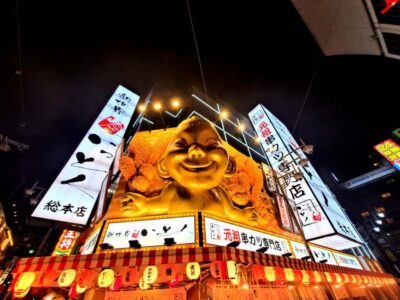
Hungry Osaka Street Food Tour: 15 Dishes & 3 Drinks
Read our review →
Kuromon Market Food Walking Tour in Osaka (6 stops, 6 tastes)
Read our review →
Guided Food Tour with 12 Dishes at 4 Local Eateries
Read our review →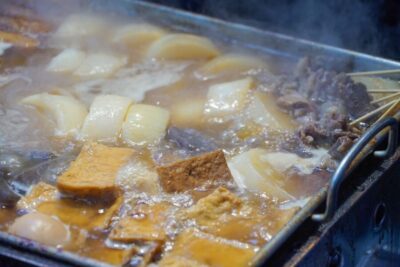
Kuromon Market Food Walking Tour (6 stops, 6 tastes)
Read our review →Browse the lists this tour appears in