
REVIEW · CHINA
3-Hour Private Night Tour: Beijing Foodie Experience
Beijing’s best food often arrives in small portions from plain-looking shops. This three-hour evening tour leads you through Dongsi Hutong for lamb kabobs, pan-fried pancakes, sesame cakes, noodles, rice cakes, and local drinks. It is a useful way to eat dishes you might not find or order alone.
I like the private format, which lets your guide adjust the pace, explain unfamiliar food, and handle vegetarian requests. I also like the walking between stops, since guides such as Lucy and Kevin have used the hutongs to explain daily life rather than rushing from restaurant to restaurant.
The main consideration is appetite. Portions can add up quickly, and several stops may serve more food than a cautious eater expects. Taxi costs may also be extra, and the route can change if a shop closes early.
Key things to know before you book
- The food keeps coming: Expect several restaurant and street-food stops, with enough tasting to replace dinner for many people.
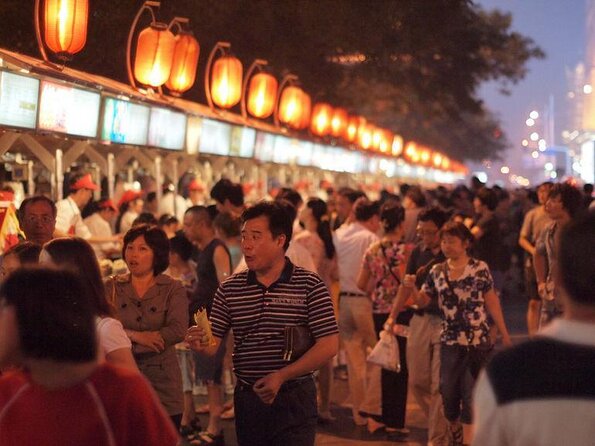
- Dongsi Hutong gives the tour its sense of place: You walk through old alleyways while learning about Beijing life and local eating habits.
- The menu is broad: Lamb skewers, jianbing, baozi, tanghulu, Beijing yogurt, cold noodles, flower cakes, and rice noodles may all appear.
- Your guide shapes the evening: Guides including Lucy, Kevin, Miko, Bella, Jimmy, and Roy have been praised for stories, humor, patience, and food advice.
- Adventurous choices are optional: Bamboo worm costs extra, and unfamiliar dishes can usually be discussed before ordering.
- Budget for transport: Hotel pickup inside the city is included, but taxi or public transport costs may be about $5 per person each way unless private transport is selected.
A Beijing food tour built around Dongsi Hutong
This is not a single restaurant meal. It is a moving dinner, with your guide connecting a string of stops in and around Dongsi Hutong, LongFuSi Jie, and Zhangzizhong Street.
You meet in your Beijing city-center hotel lobby. From there, you travel by taxi or public transport at your own expense, or use the private vehicle option if selected. The food route itself takes about three hours, and the evening finishes in the area rather than necessarily returning you to your hotel.
That setup matters. Beijing can feel hard to read at first, especially when menus are unfamiliar and small food shops have few signs in English. A private guide gives you someone to ask before ordering, and the route lets you see how the neighborhood works between meals.
The tour has a strong first-night use. You get an introduction to several Beijing snacks and regional dishes without committing to one large meal. You also learn which foods are local to Beijing and which come from other parts of China.
A few more food tours around Beijing worth comparing
- Winner 2025 Florence Sunset Food & Wine Tour by Eating Europe
★ 5.0 · 5,015 reviews - Saigon By Night and Street Food By Motorbike | Opt: Ao Dai Riders
★ 5.0 · 4,066 reviews - Bangkok by Night: Temples, Markets and Food Tuk-Tuk Tour
★ 5.0 · 3,752 reviews
First stop: Xinjiang lamb kabobs and strong spirits
At Xinjiang Taste Restaurant, the meal begins with grilled food. You can sample three to five kinds of kabobs, with lamb as the main attraction and side dishes such as eggplant, beans, garlic, leeks, and nang bread.
The kabobs give you an immediate sense of the route’s range. This is not only a Beijing specialty stop, since Xinjiang cuisine brings its own flavors and grilling traditions to the capital. The smoky skewers are also a friendly opening for cautious eaters because grilled meat and vegetables are easy to recognize.
Erguotou, a traditional Chinese white liquor, may accompany the food. It is strong, so take a small taste rather than treating it like a casual soft drink. If you do not drink alcohol, tell your guide early so the stop can be handled comfortably.
The restaurant setting also lets your guide explain ingredients and local eating customs. I would pay attention here, since these short explanations help turn a list of tastings into a better picture of Beijing’s food culture.
LongFuSi Jie: the first taste of jianbing
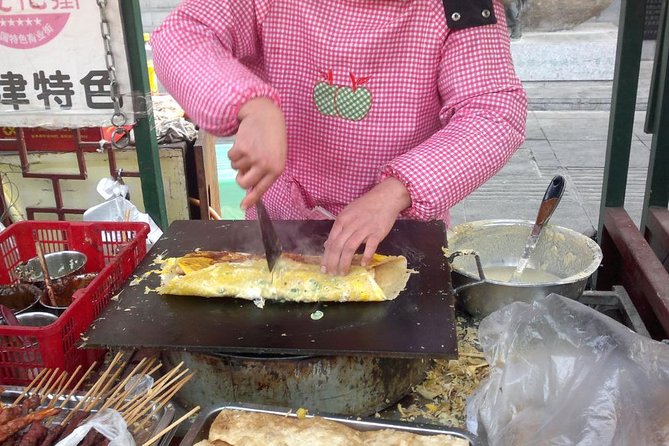
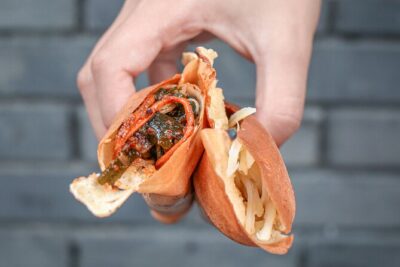
The next major taste is tanjianbing, often written as jianbing. It is a savory fried pancake popular with local diners, usually made fresh on a hot griddle.
This is one of the most useful foods to try with a guide. You can watch how it is prepared, ask about the fillings, and learn how locals eat it. The pancake is more substantial than a tiny snack, so pace yourself before the later stops.
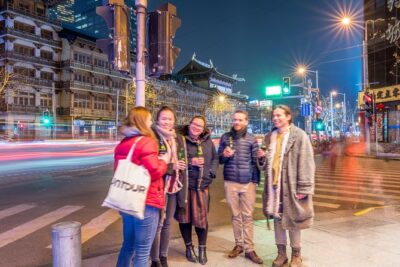
The route through LongFuSi Jie adds some street atmosphere and neighborhood context. Your guide may take you through hutong lanes between food stops, pointing out details about life in the old alleyways. That walking is one of the tour’s strongest features because the evening becomes more than a sequence of indoor tastings.
Still, expect an urban walk rather than a sightseeing walk with major monuments. The attraction is the everyday setting, small shops, lanes, and the way food fits into local routines.
Zhangzizhong Street and the snack parade
The largest part of the evening takes place around Zhangzizhong Street. Here, the food list grows quickly.
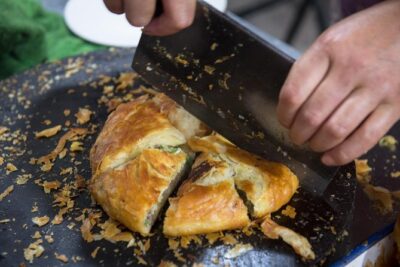
You may try sweet dough, sesame cakes, mahua, zongzi, baozi, Beijing yogurt, and tanghulu. Tanghulu is a local snack made with crabapple coated in a hard sweet layer. The combination of chewy, crisp, sweet, savory, and fermented flavors makes this section more interesting than a simple dumpling crawl.
The Beijing snack set adds still more variety. It can include glutinous rice rolls with sweet bean flour, yellow pea cake, steamed rice cakes with sweet filling, and seasoned millet porridge.
Some of these foods may be unfamiliar in texture. That is part of the point, but it also explains why a guide helps. You can ask what is inside before taking a full portion, and your guide can suggest how to eat each item.
You should arrive hungry. Several people have found the servings larger than expected, especially when the group reaches the later restaurants. If you want to sample everything, share small portions and do not finish every item at the first two stops.
Same city, a completely different plate:
- Beijing Hutong Walking Food and Beer Tour at Hidden Restaurants
★ 5.0 · 1,132 reviews - Beijing: Hidden Gems Guided Food Tour with Beer and Tastings
★ 4.9 · 306 reviews - Beijing Private Hutong Food Walking Tour
★ 5.0 · 299 reviews - Beijing: Hutong Culinary Walking Tour with 15+ Tastings
★ 5.0 · 162 reviews
Sichuan skewers and easy drink choices
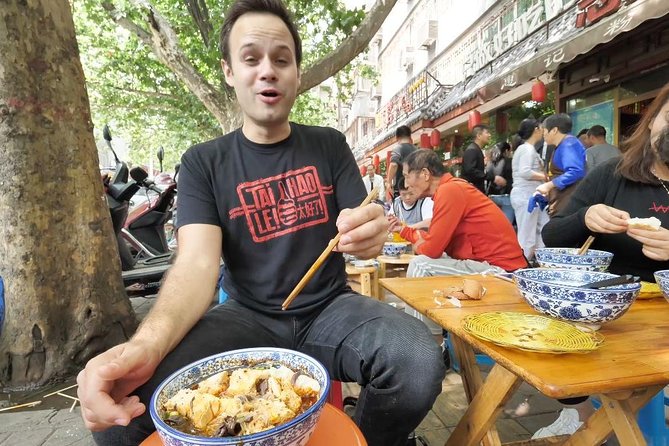
Another stand offers roughly five to twelve Sichuan kabobs. The quantity depends on the group and the route that night, but this is another chance to compare grilled foods rather than tasting only one signature dish.
Drinks may include peanut beverage or orange soda. The peanut drink is worth trying if you like nutty flavors, while orange soda offers a familiar break from the stronger and more unusual tastes.
Spice and personal preference matter here. The tour description allows your guide to ask about food preferences, and that is especially useful for a group with mixed tastes. One person can be more adventurous while another sticks to bread, vegetables, noodles, or familiar grilled items.
This is also where the private format earns its keep. On a large group tour, the menu and pace would be harder to adjust. With only your party, you can ask for less spice, slow down, or discuss a dish before ordering.
Yunnan cuisine, flower cakes, and Cross Bridge noodles
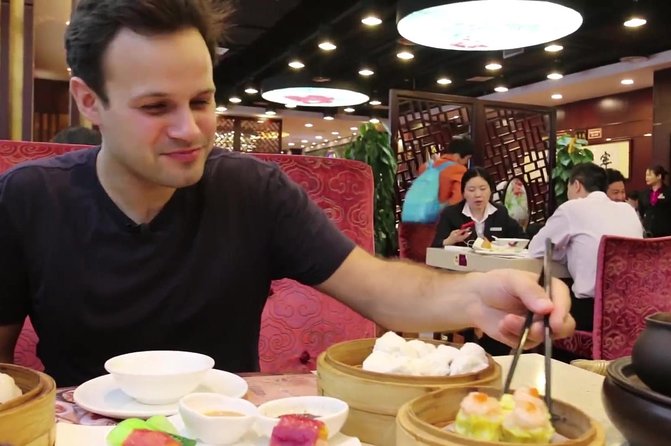
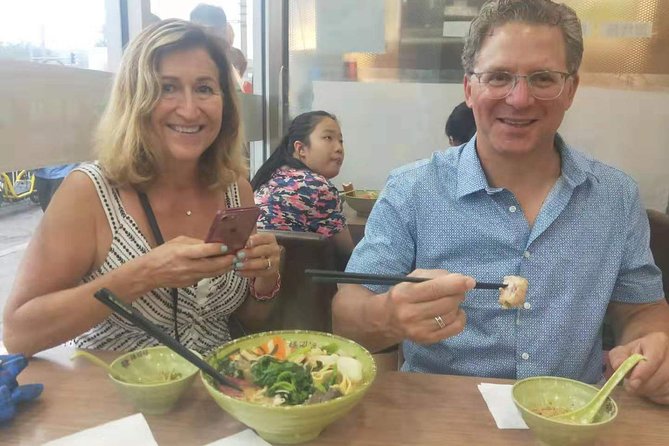
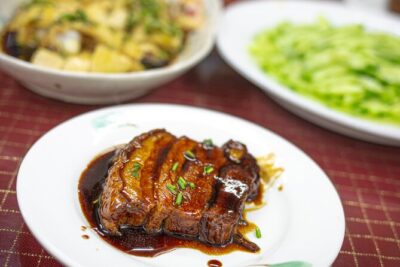
The final restaurant introduces food from Yunnan Province. Expect flower cakes, cold pea cakes, grilled bread covered with rice flour, rice wine, plum liquor, and Cross Bridge rice noodles.
Cross Bridge rice noodles are a useful contrast to the grilled foods and snacks earlier in the night. The meal shifts toward a bowl-based dish, with a different regional style and a more settled restaurant setting.
The flower cakes provide a sweeter note, which is welcome because the route leans heavily toward savory foods. One person suggested adding more sweet food to the experience, so do not expect a dessert-focused tour. There are sweet items, but they arrive alongside many other tastes rather than as a final pastry course.
The optional bamboo worm is for adventurous eaters and costs extra. You are not required to order it. Ask your guide about the dish and the additional price before deciding, particularly if your group has different comfort levels with unusual ingredients.
What the guides add to the food
The guide is central to the experience. The food itself is easy to find in theory, but ordering across several small restaurants and stalls can be difficult without Chinese language help or local familiarity.
Guides named in the feedback include Lucy, Kevin, Miko, Bella, Jimmy, and Roy. Their styles differ, but the useful qualities are consistent: explaining dishes, sharing hutong stories, answering questions, and adjusting the pace.
Kevin was especially helpful with an older family member, keeping the walk at a comfortable speed and asking about food preferences. Roy has escorted groups by metro from their hotel and led them to a series of local restaurants. Lucy has taken groups through the hutongs between stops while explaining Beijing culture and daily life.
That information is practical for you. If someone in your party has limited mobility, tell the operator in advance and mention the pace you need. The tour is private, but the route still involves walking between food stops.
The cultural talk is not a separate lecture. It comes while you walk, wait, eat, and move from one place to the next. That keeps the evening relaxed, though the amount of history you receive may depend on your guide and the questions you ask.
How much food do you really get?
This is a tasting tour in name, but it can feel like a full dinner. The route may include three to five Xinjiang kabobs, several Sichuan kabobs, snacks from multiple stalls, a Beijing snack set, drinks, and a Yunnan meal.
You should eat lightly beforehand. I would also treat each serving as something to share. That gives you room for more variety and prevents the last restaurant from becoming a struggle.
The range is the main value. You are not paying for one famous dish. You are paying for access to many foods, guidance through the choices, and a structured route that would be hard to build during a short Beijing visit.
The limitation is that not every dish will suit every palate. Some foods have unfamiliar textures, strong spirits, or flavors that may not appeal to you. That is normal for an experience built around local specialties, but it is worth knowing before you book.
Private tour value at $79.20 per person
At $79.20 per person, the price is reasonable if you want a guided meal with a wide range of tastings and personal help. It is less attractive if you prefer to eat one inexpensive dinner and explore alone.
The private setup is the important part of the price. You get a local guide for your own group, food tastings, hotel-lobby meeting, and help with ordering. You also avoid spending your evening searching for open shops or guessing at unfamiliar menus.
Transport needs a close look. Hotel pickup inside the city is free, but transport from your hotel to the hutong may cost about $5 per person, and taxi or public transport is listed as an additional expense. A private vehicle can be selected, but confirm the final transport cost when booking.
The tour offers group discounts, so the value may improve for a small family or group of friends. Children under four can join free, and children must be accompanied by an adult.
Dietary needs, alcohol, and comfort
Vegetarian options are available, but you must state your needs when booking. Do not wait until the evening, since the route includes meat-heavy stops and the guide needs time to adjust the food choices.
The same applies to allergies and other dietary restrictions. The private format gives the guide more flexibility, but it does not guarantee that every stall can handle every restriction. Clear information before the tour is the safest approach.
Alcohol appears in the route through Erguotou, rice wine, and plum liquor. You can ask your guide to limit or skip alcoholic drinks. If you are traveling with a mixed-age group, confirm how the tastings will be handled for children.
The tour is near public transportation, and most people can participate. Still, expect walking and standing at food stalls and restaurants. Contact the operator if your group needs a slower pace.
Timing, closures, and the end of the evening
The tour lasts about three hours, but the exact food sequence can vary. Shops may close early, and one evening had to skip a couple of places because they were no longer open.
That is a reason to keep your expectations flexible. The point is the overall spread of food and neighborhood access, not a rigid promise that every single snack will appear.
At the end, you can stay in the area and continue exploring, including the Wangfujing direction, or ask your guide for directions and help finding a taxi back to your hotel. The tour does not automatically promise a return transfer unless that option has been arranged.
Free cancellation is available if you cancel at least 24 hours before the start time. Cancellations or changes within 24 hours are not refunded, so check your schedule before the deadline.
Who should book this Beijing food experience?
I would choose this tour for a first visit to Beijing, especially if you want local food but feel unsure about ordering alone. It also suits couples, families, and small groups with different levels of culinary curiosity.
It works well for people who enjoy trying many small dishes rather than sitting through one formal meal. A private guide can make the evening easier for older relatives and can keep a mixed group together.
I would think twice if you dislike walking, want a quiet restaurant dinner, or need a strictly controlled menu. The route includes unusual foods, strong drinks, and stops that may change with opening hours.
Should you book it?
Book this tour if you want a generous introduction to Beijing’s everyday food culture, with a private guide to explain the dishes and manage the route. The best parts are the variety, the hutong walks, and the personal service from guides such as Lucy, Kevin, Miko, and Roy.
Skip it if you want a short snack stop or a fixed menu with no surprises. Come hungry, state dietary needs early, budget for local transport, and treat the bamboo worm as optional. For most first-time visitors who want food beyond the usual restaurant menu, $79.20 buys a useful and filling evening.
FAQ
How long does the Beijing food tour last?
The tour lasts approximately three hours.
Where does the tour begin?
Your local guide meets you in the lobby of your Beijing city-center hotel.
Is hotel pickup included?
Hotel pickup inside the city is free. Transport from the hotel to the hutong may cost about $5 per person, unless a private transport option is selected.
Is transportation included during the tour?
No. You may travel by taxi or public transport at your own expense, or choose a private vehicle option.
What food is included?
Tastings can include Xinjiang lamb kabobs, Sichuan kabobs, jianbing, sesame cakes, sweet dough, mahua, zongzi, baozi, Beijing yogurt, tanghulu, rice cakes, millet porridge, flower cakes, cold pea cakes, and Cross Bridge rice noodles.
Is the tour suitable for vegetarians?
A vegetarian option is available. You must advise the operator of this requirement when booking.
Is the bamboo worm included in the price?
No. The bamboo worm is an optional specialty dish and must be paid for separately.
Can children join the tour?
Yes. Children must be accompanied by an adult, and children under four can join free.
What is the cancellation policy?
You can receive a full refund by canceling at least 24 hours before the experience start time. Cancellations or changes made within 24 hours are not refunded.
Just added around Beijing
- Beijing Private Hutong Food Walking Tour★ 5.0 · 299 reviews
- Experience Beijing Walking Food Tour Private★ 5.0 · 56 reviews
- Authentic Local Food Tour in Center Beijing★ 5.0 · 26 reviews
- Beijing Hutong Breakfast Food Tour★ 5.0 · 155 reviews
- Authentic Old Beijing Hutong Food and Beer Private Tour★ 5.0 · 49 reviews
- Beijing Hutong Breakfast Food Tour★ 5.0 · 120 reviews
- Beijing Walking Food Culture Tour in Hutong and Hidden Places★ 5.0 · 59 reviews
- Beijing Walking Food Tour with a Local Friend★ 5.0 · 73 reviews
Food Tours in China, compared.
Authentic Local Food Tour in Central Shanghai
Read our review →
Beijing Hutong Walking Food and Beer Tour at Hidden Restaurants
Read our review →
Eat Like a Local Through Shanghai’s French Concession
Read our review →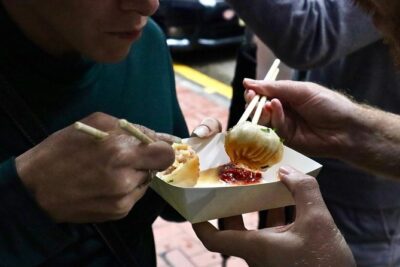
Hong Kong’s Tin Hau Hidden Eats Food Tour with 7+ Local Tastings
Read our review →Browse the lists this tour appears in