
REVIEW · PARIS
Paris Le Marais Food Tour: Full Traditional French Feast
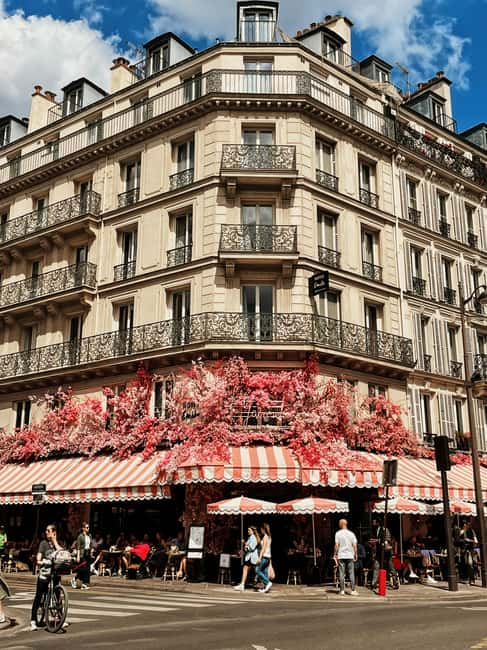
Le Marais is one of the best parts of Paris for a food walk because French classics sit beside Jewish, modern, and neighborhood specialties. This three-and-a-half-hour tour takes you from Place Louis Aragon to Place des Vosges, with stops for macarons, cheese, choux pastry, and a seated bistro dish.
I like the small-group format, capped at 12 people, and the way the walk mixes food with streets, courtyards, and landmarks. Guides such as Yannic, Juliette, Hugo, Emy, and Thomas are often praised for warm storytelling and useful local advice. The main consideration is that the menu changes, and the falafel stop may feel less French than some diners expect.
Key points
- A full meal, not just nibbles: Expect at least four food stops, with at least one serving at each.
- A tour through several sides of Le Marais: The route includes Île Saint-Louis, Rue de Rivoli, Rue des Rosiers, and Place des Vosges.
- Small groups make a difference: The maximum is 12, and many departures are much smaller.
- French classics with a local twist: Macarons, cheese, choux, wine, and a bistro dish may be joined by falafel or another Le Marais specialty.
- Good guide-led context: Food stories, French eating habits, neighborhood history, and small local details are part of the walk.
- Plan for a fair amount of walking: Comfortable shoes matter, and the tour is not suitable for people with mobility impairments.
Why this Le Marais food walk works
At $106 per person, this is not a cheap snack crawl. It is priced more like a compact meal, neighborhood tour, and introduction to French food rolled into one. That matters because the tastings are substantial enough to leave you full, not merely curious.
The experience lasts 210 minutes, giving the guide time to move at a relaxed pace. You are not simply rushed from shop to shop. Some stops involve sitting down, including the main course at a Parisian bistro, while other tastings are quick bites along the route.
I especially like the balance between familiar French food and the particular character of Le Marais. You may taste a classic cheese board and a traditional dish, then try falafel on Rue des Rosiers, one of the neighborhood’s best-known streets. That mix tells you something real about Paris: local food culture is not frozen in a postcard version of France.
The strongest part of the experience is the human element. A good guide turns a macaron into a short lesson about French sweets, and a cheese tasting into a useful explanation of texture, age, and local habits. Names that appear repeatedly among the guides include Yannic, Juliette, Hugo, Emy, Thomas, Nino, and Zakaria. You cannot assume which guide you will receive, but the consistent praise centers on friendly conversation, historical detail, and the ability to adjust the pace or explain things clearly.
More Food Tours in Paris
- Authentic Parisian Gourmet Food Tour with 10 Local Dishes & Wines
★ 5.0 · 4,754 reviews - Montmartre Hill French Gourmet Food and Wine Tasting Walking Tour
★ 5.0 · 2,588 reviews - Devour Paris Ultimate Food Tour
★ 5.0 · 2,087 reviews
Starting at Place Louis Aragon
The tour begins at Place Louis Aragon, a practical place to meet before entering the food-and-history portion of the route. You should arrive ready to walk, since the first part combines sightseeing with tasting rather than beginning with a long sit-down meal.
The meeting point also sets the tone for the tour. You are not being taken straight into a famous restaurant and then sent home. The route uses the streets as part of the experience, with the guide explaining how the places you pass connect to Parisian life and eating habits.
The group size is important here. With a maximum of 12 people, the guide can answer questions without turning every stop into a queue-management exercise. Some departures have been as small as two, three, or four people. A small group also makes it easier to hear the guide on the street and chat with other members over a shared table.
The tour needs at least two people to operate. If that minimum is not reached, it may be rescheduled, so keep that in mind if your Paris schedule is very tight.
Île Saint-Louis and the first tastes
The route heads through Île Saint-Louis, one of the central sights included in the walk. Here, the guide begins linking the neighborhood you see with the food you are about to try.
The precise order and choice of tastings can change with the season and the availability of partner shops. That flexibility is useful for food quality, but it means you should not book expecting a fixed menu. The listed possibilities include macarons, cheese, choux pastry, a main dish, a drink, and a specialty connected with Rue des Rosiers.
Macarons are one of the likely early sweet stops. These are not the same as coconut macaroons. In Paris, the colorful sandwich cookie is made with almond meringue and a filling, and it has become one of the city’s best-known treats. A tasting here gives you a chance to compare the delicate shell and creamy center while learning why the pastry matters in French food culture.
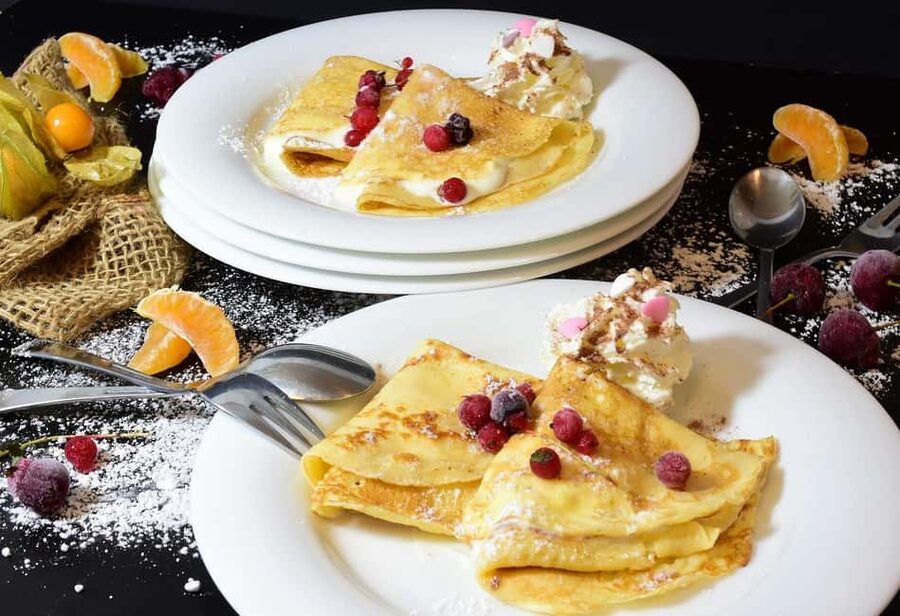
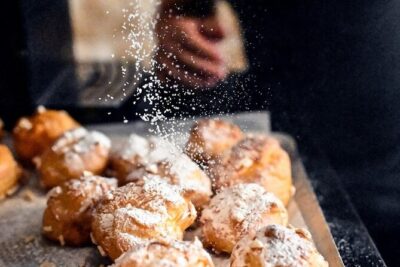
Choux pastry offers a different lesson in texture. These small puffs are filled with cream and finished with sugar pearls. They are light enough to keep the walk comfortable, but sweet enough to make the tasting feel like more than a token sample.
Rue de Rivoli and the rhythm of the route
The walk continues toward Rue de Rivoli, with another sightseeing and food segment. This is where the tour’s pacing becomes useful. Instead of eating everything at once, you get time between tastings to walk, listen, and let the previous bite settle.
You should expect a mixture of historic eateries, modern cafés, and smaller food shops. The tour does not promise that every stop will be a formal French restaurant. That variety is part of its appeal, especially if you want to understand how classic French food fits into present-day Paris.
The guide may also share practical food advice as you go. Several guides are praised for answering questions about French culture and for making the walk feel conversational rather than like a lecture. That is valuable on a first visit because you can ask the questions that come up in the moment, such as how to order, what to look for in a cheese shop, or how a dish fits into a typical French meal.
The amount of food is a major strength. The tour includes at least one serving at every food stop, at least four stops overall, water, and at least one alcoholic drink. Several participants found the portions sufficient for a full evening meal. Still, do not assume the exact number of dishes or the same combination at every departure.
A few more food tours around Paris worth comparing
- Private Montmartre Food Tour with Wine, Cheese & Pastries
★ 5.0 · 1,027 reviews - Paris Le Marais Food Tour With 10+ Tastings, Cheese, Wine & More
★ 5.0 · 985 reviews - Paris Le Marais District Original Food and Wine Tasting Tour
★ 4.5 · 880 reviews - Paris Montmartre Food Tour – A Full French Meal by Do Eat Better
★ 5.0 · 877 reviews
Jardin de l’Hôtel de Sully and the neighborhood story
The Jardin de l’Hôtel de Sully adds a quieter historic setting to the route. It gives the guide a natural pause point between food stops and a chance to explain more about Le Marais beyond its restaurants.
This is where the walk earns some of its price. You are paying not only for the food but also for someone to connect the streets, buildings, shops, and dishes. A self-guided walk could take you through the same area, but you would likely miss the small connections between the neighborhood’s past and its current food scene.
The tour is also useful if you have never spent time in Le Marais. One participant who had not visited the area before left with plans to return, which says something about the route’s ability to introduce the district rather than simply use it as a backdrop.
The drawback is that a food tour cannot linger at every sight. If you want a detailed architectural tour of the Hôtel de Sully or nearby landmarks, this is not the right format. The history is there to support the food walk, not replace it.
Rue des Rosiers and the unexpected neighborhood specialty
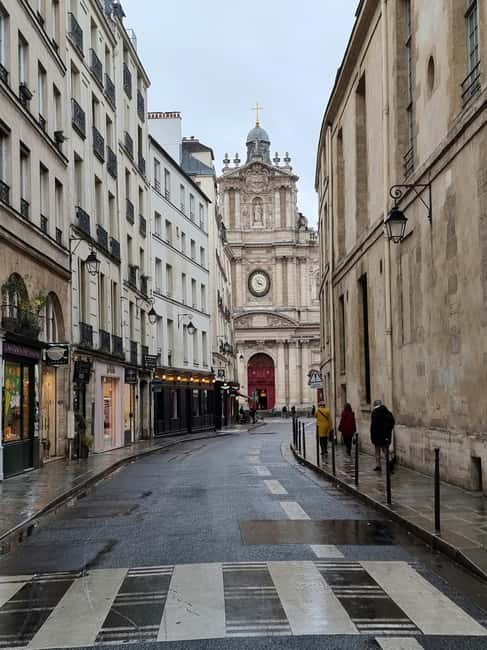
Rue des Rosiers is one of the clearest highlights of the route. It is a picturesque and famous street in Le Marais, and the tour uses it to show how local identity can be more complicated than a standard French menu.
The possible tasting here is falafel, a specialty many people do not expect on a traditional Paris food tour. It makes sense in this part of Le Marais, and it gives the route a strong sense of place. You are not just checking off macarons and cheese. You are tasting something associated with the neighborhood itself.
This is also the tour’s most obvious question mark. One diner would have preferred a more French dish instead of falafel. I think the stop is worthwhile if you want the food history of Le Marais rather than a strictly classic French meal. If your ideal tour means only croque monsieur, pâtisserie, cheese, and wine, you may find this detour less satisfying.
The best approach is to view the falafel as a neighborhood food stop, not as a substitute for a French dish. The traditional elements arrive elsewhere, and the mix makes the tour more honest about the area.
Place des Vosges and the seated main course
The route continues to Place des Vosges, one of the most attractive squares in Paris and the finishing point for the experience. Food is served here as part of the route, and the tour may include a seated main course at a small Parisian bistro.
This seated portion is a real advantage. After several standing tastings and a walk through the district, sitting down with a plate and a drink gives the meal a proper shape. Possible dishes include a traditional Parisian main course, and past combinations have included croque monsieur, wine, cheese, pastries, and other sweets.
The exact dish depends on the day and the partner businesses. That is worth remembering if you have allergies, strong preferences, or a very specific menu in mind. Vegetarian needs have been accommodated for at least some departures, but you should communicate those needs when booking rather than rely on a last-minute adjustment.
Place des Vosges is also a good ending because you are not dropped beside a transit stop with the tour suddenly over. You finish in a central area where you can continue walking, browse the neighborhood, or return to a shop you noticed along the way.
How much food do you actually get?
For $106, the central value question is whether the tastings add up to a meal. In this case, the answer appears to be yes for most appetites. You receive at least four food stops, one serving at each, water, and at least one alcoholic drink.
The meal may include:
- A macaron or other classic French sweet
- Choux pastry with cream and sugar pearls
- A selection of French cheeses
- A seated main dish at a bistro
- A specialty from Rue des Rosiers, possibly falafel
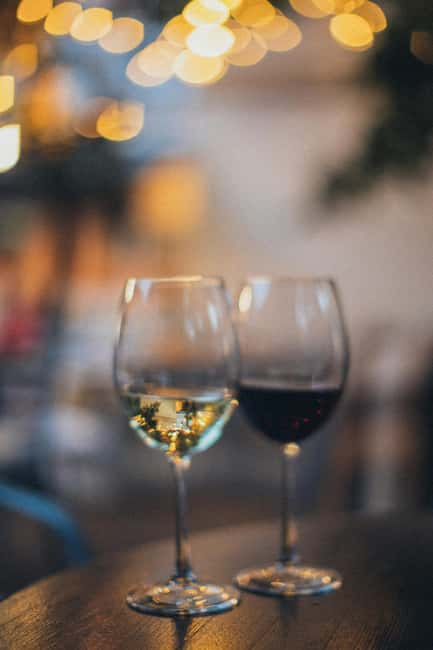
- At least one alcoholic drink, often wine
Some combinations offer two desserts, a cheese platter, a croque monsieur, falafel, and wine. That is generous for a walking tour, especially when the tastings are spread over more than three hours.
I would not book this as a light pre-dinner activity. You may leave full, so plan your evening meal accordingly. The value is strongest if you want one substantial food experience in Le Marais and would otherwise pay separately for several tastings and a restaurant meal.
The walking conditions and practical limits
Wear comfortable shoes. The route covers several parts of Le Marais and includes outdoor walking between stops, so this is not a good choice if you need an accessible, mostly seated outing. The experience is specifically not suitable for people with mobility impairments.
Do not bring luggage or large bags. Pets are not allowed. You should also be ready for the guide to speak in both English and French. The tour is offered in English and French, but bilingual moments may occur, particularly at shops or restaurants.
The guide may adapt the route to the group. One guide has been praised for taking short detours when the group became interested in galleries or shop windows, and another for making small adjustments based on the audience. That can make the experience feel personal, though it also means the exact flow is not rigid.
Free cancellation is available up to 24 hours before the tour, and you can reserve while paying later. Those terms help if your Paris plans are still shifting, but the practical details remain simple: meet at Place Louis Aragon, bring your appetite, and leave room in your schedule for 210 minutes.
Who should book this Paris food tour?
I would choose this tour for a first or second visit to Paris, especially if you want an introduction to Le Marais without spending a full day on a formal food course. It suits couples, families with older children, and solo visitors who like meeting a small group over shared dishes.
It is also a good fit for anyone who wants history with lunch. The guides bring in stories about Paris, French eating customs, and the streets along the route, so you get more than a list of places to eat.
You may want another tour if you need a fixed menu, a strictly French tasting list, or an accessible route with little walking. The falafel stop and changing seasonal menu are part of the experience, not flaws to be corrected.
Should you book the Le Marais food tour?
I would book it if you want a generous, social walk that combines classic French dishes with the food culture of one of Paris’s most interesting neighborhoods. The small groups, seated bistro stop, strong guide feedback, and amount of food make $106 reasonable for a three-and-a-half-hour experience.
Book with two expectations: the menu can change, and Le Marais means more than one version of French cuisine. If you welcome macarons, cheese, choux, wine, a proper main dish, and a local specialty on Rue des Rosiers, this is a smart way to get your bearings and eat well at the same time.
FAQ
How long does the Paris Le Marais food tour last?
The tour lasts 210 minutes, or three and a half hours.
Where does the tour begin and end?
You meet the guide at Place Louis Aragon. The tour finishes at Place des Vosges.
How many food stops are included?
At least four food stops are included, with at least one serving of food at each stop.
What food might I taste?
Possible tastings include macarons, choux pastry, French cheeses, a traditional Parisian main dish, and a Rue des Rosiers specialty such as falafel. The menu can change with the season and partner availability.
Is a drink included?
Yes. Water and at least one alcoholic drink are included.
Is the tour available in English?
Yes. The tour is offered in English and French. The guide may speak both languages during the experience.
Just added around Paris
- The Official Emily in Paris Food Tour★ 4.8 · 39 reviews
- Saint-Germain: Gourmet Chocolate & Pastry Walking Food Tour★ 4.8 · 495 reviews
- Paris: The French Food Highlights Tour★ 4.8 · 28 reviews
- Paris: Taste of Montmartre Food & Wine Walking Tour★ 4.9 · 29 reviews
- Paris: Saint Germain des Prés Guided Foodie Walking Tour★ 4.8 · 146 reviews
- Paris: Guided Champagne & Food Tour in St-Germain-des-Pres★ 4.6 · 26 reviews
- Paris: Notre Dame & Latin Quarter Food Tour with 8+ Tastings★ 4.8 · 60 reviews
- Paris: Montmartre Food Tour with 10 Local Tastings & Wines★ 4.8 · 191 reviews
Food Tours in Paris, compared.
Authentic Parisian Gourmet Food Tour with 10 Local Dishes & Wines
Read our review →
Montmartre Hill French Gourmet Food and Wine Tasting Walking Tour
Read our review →
Private Montmartre Food Tour with Wine, Cheese & Pastries
Read our review →
Paris Le Marais Food Tour With 10+ Tastings, Cheese, Wine & More
Read our review →
Paris Le Marais District Original Food and Wine Tasting Tour
Read our review →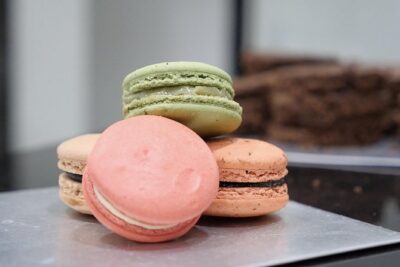
Paris Montmartre Food Tour – A Full French Meal by Do Eat Better
Read our review →
Paris Montmartre Food & Wine Tour with Eating Europe
Read our review →Browse the lists this tour appears in