
REVIEW · PARIS
Montmartre Hill French Gourmet Food and Wine Tasting Walking Tour
Montmartre is best understood one bite and one steep street at a time. This small-group walk begins near the Moulin Rouge, threads through cafés, bakeries, delicatessens, and artists’ squares, then finishes at Sacré-Cœur with a grand view over Paris. Along the way, you may sample macarons, chocolates, cheeses, cured meats, pastries, wine, and other French specialties.
I like the way the tour joins food with neighborhood history, rather than treating Montmartre as a string of photo stops. I also like the small group, capped at 15 people, and the guides’ local ties. Julie, Marie, Oscar, Aude, and Pierre-Edouard are among the guides praised for their warmth and local knowledge.
The main drawback is value for hungry appetites: portions are tasting-size, and several stops may lean toward sweets. At $145.12 per person, you are paying for the guide, the route, the wine-and-cheese setting, and the cultural context, not simply for three hours of snacks.
Key points to know before booking
- Eight tasting stops may include macarons, cheeses, cured meats, chocolates, pastries, wine, roasted chestnuts, and savory French dishes.
- The route climbs Montmartre gradually, but you still need comfortable shoes and moderate physical fitness.
- The tour begins at Place Blanche, across from the Moulin Rouge, and finishes near Sacré-Cœur.
- A small group of up to 15 people keeps the walk more personal and makes shop visits easier.
- Bring water and use a restroom beforehand, since only one bathroom is available around the middle of the route.
- Dietary needs should be shared when booking, and children must be accompanied by an adult.
Why food is the right way into Montmartre
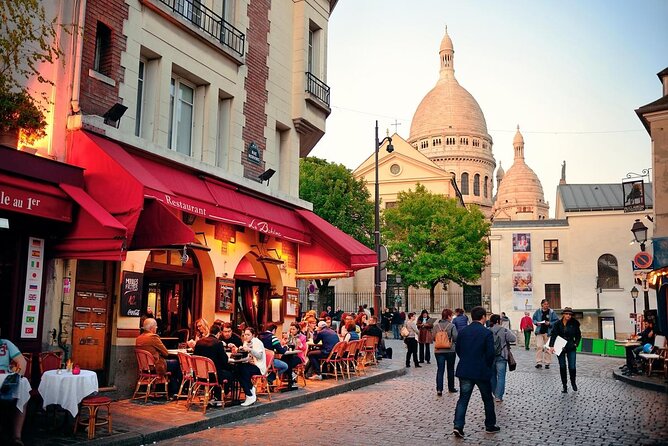
Montmartre can feel like two neighborhoods at once. The lower slopes near Place Blanche are busy and theatrical, with the Moulin Rouge drawing a steady stream of visitors. Higher up, the streets become quieter and more village-like, with small terraces, old houses, art studios, bakeries, and squares where you can pause without rushing.
This tour uses food to connect those different sides of the hill. You are not simply handed a pastry and moved along. Your guide explains what you are tasting, points out local businesses, and links each stop to the neighborhood around it.
That matters in Montmartre, where the famous names can easily take over. Picasso and other artists lived and worked here, but the area was also shaped by cafés, food shops, vineyards, markets, and ordinary Parisian routines. A piece of cheese or a glass of wine becomes more interesting when you understand how it fits into French dining customs.
The tour lasts about three to three and a half hours. That gives the guide time to slow down for stories, let you eat at a reasonable pace, and break up the uphill walk. It is not a quick checklist of landmarks. You should expect a social, food-centered walk with plenty of standing and some stairs or slopes.
More Food Tours in Paris
- Authentic Parisian Gourmet Food Tour with 10 Local Dishes & Wines
★ 5.0 · 4,754 reviews - Devour Paris Ultimate Food Tour
★ 5.0 · 2,087 reviews - Private Montmartre Food Tour with Wine, Cheese & Pastries
★ 5.0 · 1,027 reviews
Starting at Place Blanche and the Moulin Rouge
Your meeting point is 5 Place Blanche, across from the Moulin Rouge. This is a useful place to begin because it puts you at the foot of Montmartre, close to a major Paris Metro station and taxi access.
The Moulin Rouge itself is a quick landmark stop rather than the focus of the experience. Your guide uses the area to set the scene before leading the group uphill. From here, you begin moving into the cobbled streets and older corners of the district.
If you choose a morning departure, the neighborhood may feel calmer. An afternoon tour gives you a livelier feel and may work well if you want the walk to become part of your day’s sightseeing. Either way, arrive ready to walk rather than expecting a seated food event.
The route does not send you straight up the steepest possible path. Guides such as Julie have been praised for winding through side streets and adding pauses, so the ascent is broken into manageable sections. Still, Montmartre is a hill. Wear shoes with good support, and bring a raincoat if the forecast is uncertain.
Macarons, chocolate, cheese, and cured meats
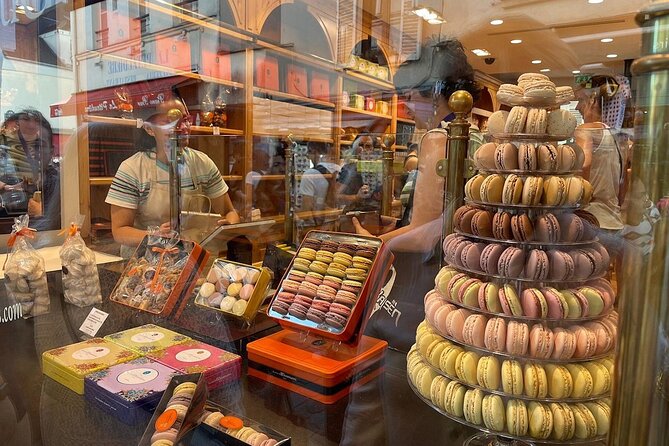
The tasting menu is designed to cover both sweet and savory French favorites. You may try macarons, handmade chocolates, pastries, cured meats, and cheeses, with wine served as part of the experience.
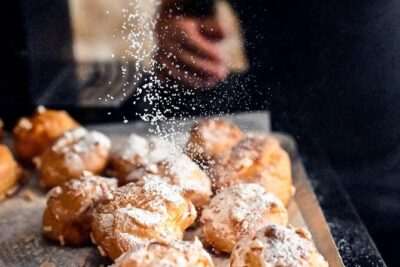
The sweet stops are a major part of the appeal. Macarons and other pastries provide the familiar Paris pleasure, but the tour also gives you a chance to try foods you might otherwise overlook while sightseeing. Some stops may be quick tastings at shops where the guide can help you move past a line.
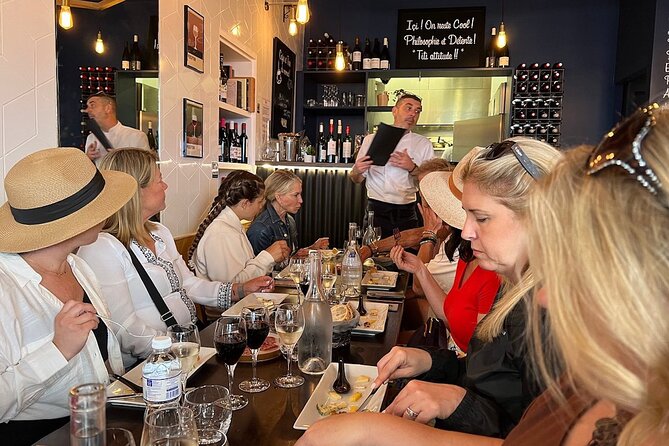
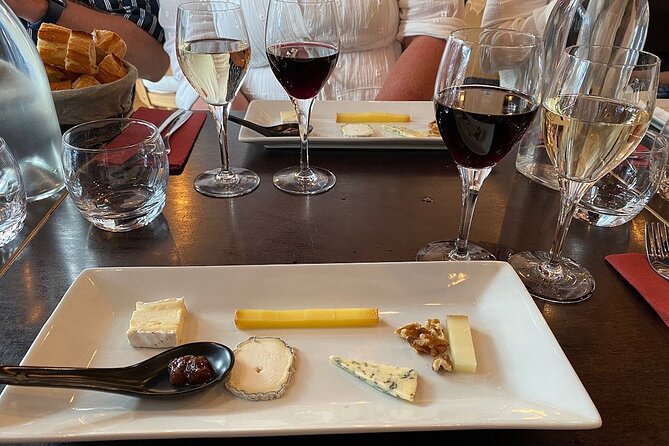
The savory side gives the walk balance. Cheese and cured meats are paired with wine in a sit-down tasting at a well-regarded Montmartre restaurant. This is more than a passing sample. It gives you a chance to sit, rest your legs, and understand the French habit of lingering over a small plate and a glass of wine.
Portions are tasting-size. That is useful because eight stops can become overwhelming if every serving is large. It also explains why some people may find the price high if they judge it only by the amount of food. I would think of the tastings as a guided introduction to French specialties, not as a replacement for lunch.
One practical point: some accounts of the route describe a heavier emphasis on desserts and sweets. If you prefer savory food, ask about the current tasting balance when you book, and tell the operator about dietary requirements in advance.
The Wall of Love and Montmartre’s artistic side
The Wall of Love, or Le Mur des Je t’aime, is a short stop with a simple idea. The words I love you appear in many languages, including Navajo, Inuit, Bambara, and Esperanto.
It is a small attraction, and you spend about five minutes here, but it fits the tone of the neighborhood. Montmartre has long attracted artists, writers, performers, and people drawn to its romantic image. The wall gives the guide a chance to shift the conversation from food to the area’s more playful, sentimental side.
You will want your camera ready, but do not expect a major museum-style visit. This is a brief visual pause between tastings and streets. Its value comes from the guide’s explanation and its place within the larger walk.
The art connection continues as you pass locations linked to Picasso and other early twentieth-century artists. The tour is not an art-history lecture, but it helps you see Montmartre as a working neighborhood with a creative past, not merely a postcard backdrop.
More high-end tasting tours in Paris:
- Paris: Gourmet Food Tour with Over 10 Tastings and Wine
★ 4.8 · 84 reviews - Rome: Gourmet Food Tour with Dinner & Barolo Wine
★ 4.9 · 2,347 reviews - Small Group: Michelin and Local Hawker Food Tour with 9 tastings
★ 5.0 · 1,890 reviews - Bangkok: Michelin Guide Street Food Tour by Tuk Tuk
★ 4.4 · 1,274 reviews
Place du Tertre and the village atmosphere
Place du Tertre is Montmartre’s central artists’ square. It is also one of the most recognizable stops on the hill, with painters, portrait artists, cafés, and visitors gathered around a compact public space.
You spend about ten minutes here. That is enough time to take in the atmosphere and hear why the square became known as the artists’ corner. It is also a good moment to ask your guide about places to eat, shop, or return to later.
The square can be crowded and commercial. That is part of the tradeoff. You get one of Montmartre’s classic scenes, but it will not feel like an undiscovered local secret. The guide helps by placing it in context and steering your attention toward the surrounding streets, where the neighborhood’s older character is easier to notice.
This is also where the food and art themes meet most clearly. Montmartre’s artistic identity is famous, but its cafés, cheese shops, bakeries, and wine culture helped make the district a place where people stayed, talked, worked, and watched the world go by.
The Clos des Vignes and a rare Paris vineyard
One of the more unusual parts of the route is the Clos des Vignes, described as the only vineyard in Paris. It is easy to miss if you are racing between the major sights, yet it says a great deal about Montmartre’s older village identity.
The vineyard adds texture to the wine tasting. Instead of treating French wine as an abstract product, the guide can point to a living reminder that Montmartre once had stronger rural ties. You should not expect a full winery visit or a major vineyard tour. The appeal is the setting and the story.
This stop also helps explain why Montmartre feels different from much of central Paris. Its position on the hill, its former village character, and its narrow streets give the area a distinct rhythm. The walk lets you see that contrast before leading you onward toward the basilica.
A windmill, old streets, and the climb uphill
The route includes an early seventeenth-century windmill, a reminder of Montmartre’s local past. It is another example of how the tour adds smaller landmarks to the better-known attractions.
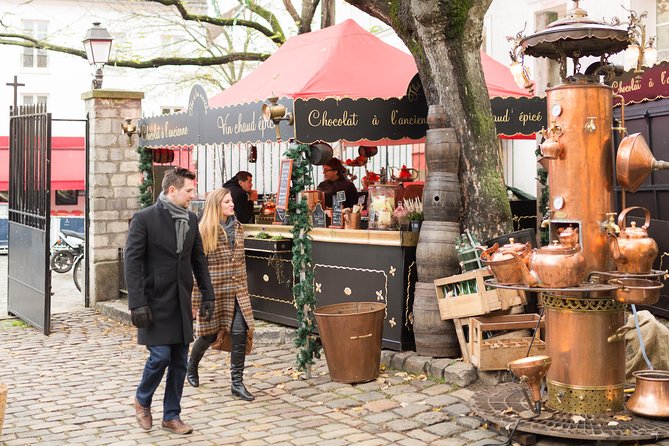
You also pass cobbled lanes, terraces, cafés, old houses, and what the tour describes as hidden mansions. These details make the walk more than a food crawl. I would pay attention between tasting stops, since the setting is one of the main reasons to choose Montmartre in the first place.
The climb is spread through the route rather than handled in one hard push. Guides have been praised for giving the group chances to rest and talk while moving upward. Even so, you should be comfortable walking for several hours and managing uneven streets.
There is only one bathroom available about halfway through the route. Go before meeting the group. Bring your own water, since the tour includes wine and food but does not list bottled water as an inclusion.
Finishing at Sacré-Cœur
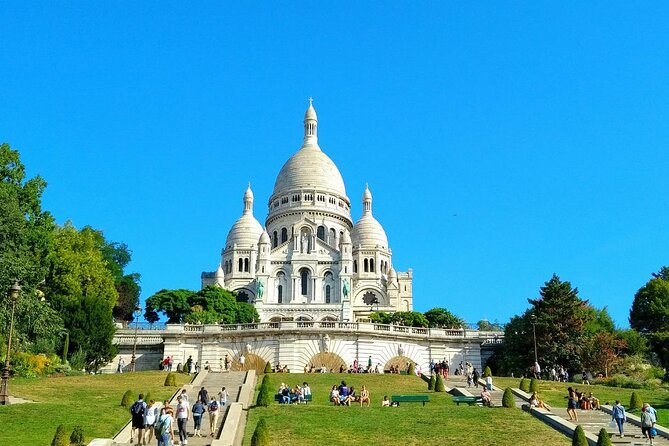
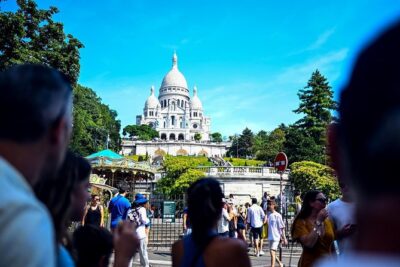
The walk ends in front of the Sacré-Cœur Basilica at 35 Rue du Chevalier de la Barre. This is one of the best possible finishes for a Montmartre tour, because the broad view over Paris rewards the uphill effort.
The basilica itself is not described as an interior visit, so you should think of this as an exterior landmark and viewpoint stop. If you want to go inside, climb farther, or spend time on the steps, plan that as your own follow-up.
The end point is practical as well as scenic. Metro stations and taxis are close by, making it easy to continue into another part of Paris. You may also want to stay in the area for dinner, especially after working up an appetite on the walk.
The final view is the tour’s clearest payoff. Food gives you a reason to move through the neighborhood, but the hilltop panorama gives the whole experience a satisfying finish.
Is $145.12 a fair price?
At $145.12, this is not a bargain food walk. You need to be comfortable paying for more than the food itself.
The price includes a local guide, a small group, wine, a sit-down cheese pairing, and multiple tastings at Parisian food shops. You are also paying for the route planning and for someone to explain what you are seeing, rather than leaving you to guess which bakery or delicatessen is worth entering.
The value is strongest if you are new to Paris, short on time, or unsure how to approach French food culture. It is also good for people who want a gentle introduction to Montmartre before returning later on their own.
The value is weaker if your main goal is to eat a large meal. Some tastings are small, and a few may cost only a couple of euros if purchased separately. You may still want lunch or dinner afterward.
A private-feeling experience can also happen if the booking is light. One pair described having the guide to themselves, while still paying the small-group rate. That kind of good fortune is not guaranteed, but the maximum group size of 15 keeps the standard format reasonably personal.
Who will enjoy this walk most?
I would recommend this experience to first-time Paris visitors who want a clear introduction to Montmartre without spending hours researching food shops and historic corners.
It also suits families with older children and teenagers. Children must be accompanied by an adult, and the food variety gives younger people something to look forward to beyond monuments. Keep in mind that the tour includes alcohol, so the wine portion is for adults.
Food-focused couples, friends, and solo visitors should also find the format easy to enjoy. The small group creates natural conversation, while the stops give you regular breaks from walking.
You should think twice if you have limited mobility, dislike hills, or want a formal museum tour. The pace is broken up, but this remains a three-hour walking experience on cobbled streets and slopes.
Share dietary requirements at booking. The operator has accommodated dietary restrictions, but advance notice is important because the route depends on prepared tastings at several businesses.
Practical details before you go
The tour is offered in English, although a multilingual guide may operate the experience. Guides named in detailed accounts include Julie, Marie, Oscar, Aude, Manon, Eliott, Emiline, and Pierre-Edouard. The exact guide depends on the date.
The experience is offered in morning and afternoon time slots. Since the route ends near Sacré-Cœur rather than returning to Place Blanche, plan your next activity from the basilica area.
Confirmation arrives within 48 hours, subject to availability. You can cancel for a full refund up to two full days before the start time. A cancellation caused by poor weather offers a different date or a full refund, since the walk requires suitable conditions.
Bring water, wear comfortable shoes, and carry a raincoat. Eat lightly beforehand, but do not arrive completely full. The food is spread across the route, and you will want room for both the sweet and savory stops.
Should you book the Montmartre food and wine walk?
Book it if you want Montmartre explained through food, local stories, and a gradual climb to Sacré-Cœur. The strongest parts are the guide-led route, the mix of sweet and savory tastings, the wine-and-cheese pause, and the final Paris view.
Skip it if you want full-sized meals, a low price, or a purely art-focused tour. The tasting portions are not designed to replace lunch, and the hill still demands steady walking.
For most first visits, I think the tour earns its place as a useful half-day introduction. Come hungry but not ravenous, wear proper shoes, and judge the price as payment for food, access, storytelling, and a well-planned neighborhood walk.
FAQ
How long does the Montmartre food and wine tour last?
The experience lasts approximately three to three and a half hours.
Where does the tour begin?
It begins at 5 Place Blanche, 75009 Paris, across from the Moulin Rouge.
Where does the tour finish?
The walk finishes in front of Sacré-Cœur Basilica at 35 Rue du Chevalier de la Barre, 75018 Paris.
What food and drinks are included?
Included tastings may feature macarons, cheeses, cured meats, chocolates, pastries, and other French specialties. Wine tasting and alcoholic beverages are also included.
How many people can join the tour?
The maximum group size is 15 people.
Is the tour suitable for children?
Children may join, but they must be accompanied by an adult.
What should I bring or wear?
Wear comfortable shoes, bring a raincoat, and carry your own water. You should also have a moderate level of physical fitness for the hilly walking route.
More Walking Tours in Paris
- Le Marais Walking Food Tour with Cheese, Wine & Pastries
★ 4.7 · 339 reviews - Reykjavik Food Walk – Local Foodie Adventure in Iceland
★ 5.0 · 18,952 reviews - Little Havana Food and Walking Tour in Miami
★ 5.0 · 8,882 reviews - New Orleans Food Walking Tour of the French Quarter with Small-Group Option
★ 5.0 · 6,118 reviews
More Food and Wine Tours in Paris
- Paris Le Marais Food Tour With 10+ Tastings, Cheese, Wine & More
★ 5.0 · 985 reviews - Paris Le Marais District Original Food and Wine Tasting Tour
★ 4.5 · 880 reviews - Paris Montmartre Food & Wine Tour with Eating Europe
★ 5.0 · 718 reviews - Paris Culinary Tour: 11 Tastings & 2 Wines in Le Marais
★ 4.8 · 625 reviews
Just added around Paris
- Le Marais Walking Food Tour with Cheese, Wine & Pastries★ 4.7 · 339 reviews
- Le Marais: Pastry and Chocolate Food Tour★ 4.5 · 52 reviews
- Paris: Gourmet Food Tour with Over 10 Tastings and Wine★ 4.8 · 84 reviews
- Paris: Champagne and Oysters Food Tour★ 4.5 · 46 reviews
- A Morning in Paris Food Tour: Croissants, Baguettes & Chocolate★ 5.0 · 556 reviews
- Paris: French Macaron Culinary Class with a Chef★ 4.9 · 591 reviews
- Paris Culinary Tour: 11 Tastings & 2 Wines in Le Marais★ 4.8 · 625 reviews
- Paris Montmartre Food & Wine Tour with Eating Europe★ 5.0 · 718 reviews
Food Tours in Paris, compared.
Authentic Parisian Gourmet Food Tour with 10 Local Dishes & Wines
Read our review →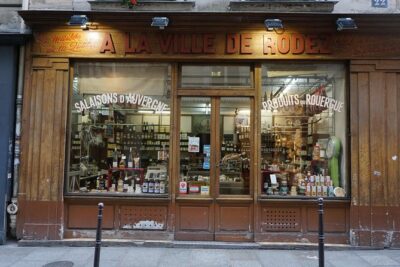
Private Montmartre Food Tour with Wine, Cheese & Pastries
Read our review →
Paris Le Marais Food Tour With 10+ Tastings, Cheese, Wine & More
Read our review →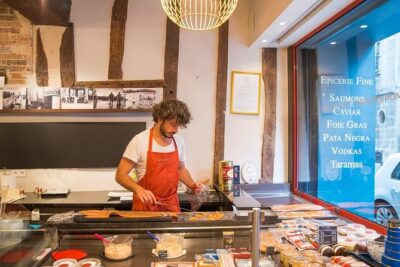
Paris Le Marais District Original Food and Wine Tasting Tour
Read our review →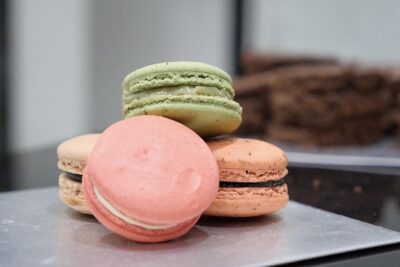
Paris Montmartre Food Tour – A Full French Meal by Do Eat Better
Read our review →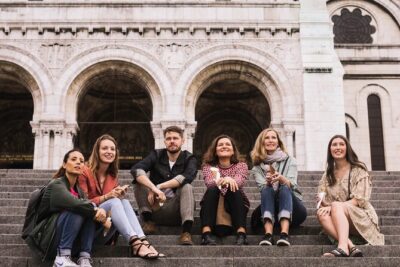
Paris Montmartre Food & Wine Tour with Eating Europe
Read our review →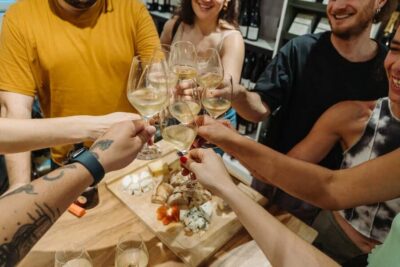
Paris Culinary Tour: 11 Tastings & 2 Wines in Le Marais
Read our review →Browse the lists this tour appears in