
REVIEW · STREET FOOD TOURS
Hong Kong: Street Food Tour with Locals – Dim Sum and Wonton
Hong Kong’s food story comes alive in Sheung Wan, where a bowl of wonton noodles can lead to tales of Chinese laborers, post-war hardship, and the city’s rise from opium port to financial center. This is not just a crawl from one snack to the next. It is a walking lesson in how ordinary food reflects Hong Kong’s past.
I like the mix of small local food stops and clear historical context. I also like the generous range: dim sum, roast meats, tea, herbal drinks, egg tarts, and sweets can all appear in one morning or afternoon. The main drawback is firm: this tour cannot handle vegetarian or halal diets, and the final menu can change with availability.
Key points to know before you book
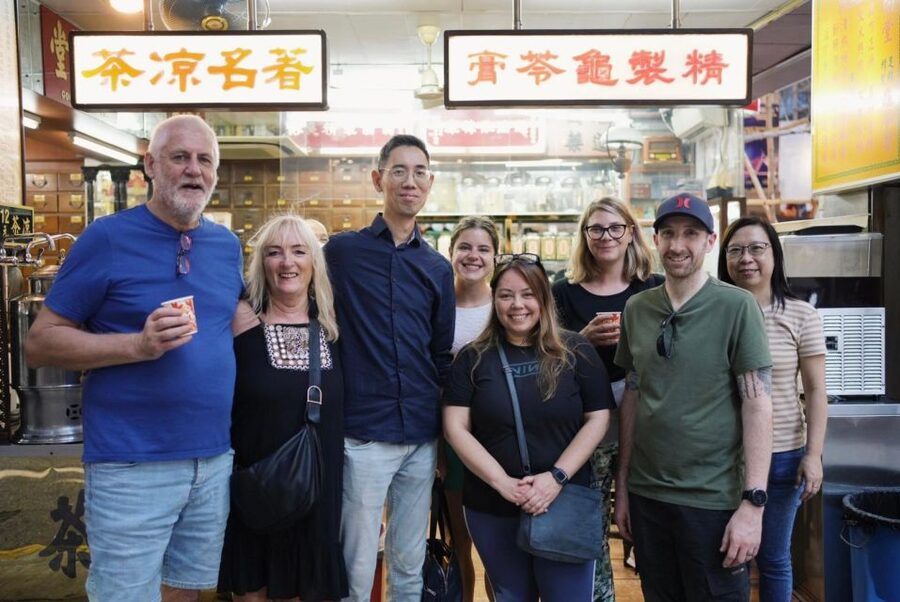
- Wing Lok Street leads you into old Sheung Wan, a district tied to dried seafood, Chinese trade, and the movement of labor overseas.
- You may taste 10 or more items, including har gow, wonton noodles, BBQ pork, pork belly, egg tarts, egg waffles, tea, and herbal drinks.
- Local guides make the difference, with guides such as Hody, Jasmine, Michael, Stephen, Alice, Summer, Wing, and Isaac praised for warmth, humor, and personal stories.
- The food is filling, so plan this as a meal rather than a light appetizer walk.
- Silk-stocking milk tea is strained through cloth, not actual stockings, and the explanation adds a nice bit of local food theater.
- You walk from Sheung Wan toward Central, finishing near Central Market after roughly three hours.
Why this tour tells Hong Kong through food
Many Hong Kong food tours focus on famous dishes and leave it at that. This one gives you a useful reason for eating each dish. Dim sum is tied to the old tradition of tea drinking and small snacks, while Cha Chaan Teng food grew from post-war working life and limited budgets.
That context helps you read the city as you walk. Sheung Wan is not a polished dining quarter built for visitors. Its streets hold dried seafood shops, old cafés, market spaces, food stalls, and family-run restaurants. You see how Cantonese cooking moved between homes, tea houses, workrooms, and restaurant counters.
Your English-speaking guide also adds a personal layer. Guides including Hody, Jasmine, Michael, Stephen, Alice, Summer, Simeone, Wing, Wind, and Isaac have led this experience. The strongest part of the guiding style is the link between food and daily life. Childhood memories, family eating habits, local customs, and practical explanations make the dishes easier to understand.
The tour has a very strong 4.8 rating from 673 reviews, and the praise is remarkably consistent: good food, plenty of it, and guides who keep the group comfortable. That does not mean every single dish will suit your taste. It does mean the format is dependable for first-time visitors who want help ordering and eating in places they might not find alone.
More tours led by locals in the world:
- Naples: Street Food Walking Tour with Local Guide
★ 4.9 · 4,976 reviews - Rome: Street Food Tour with Local Guide
★ 4.8 · 4,077 reviews - Eat Like a Local: Venice 3-Hour Small-Group Food Tasting Tour
★ 5.0 · 3,137 reviews
Starting at Sheung Wan MTR Station
The meeting point is Sheung Wan MTR Station, Exit E2. Pay attention when leaving the train. You need to find the exit from the platform area, because once you reach the concourse for Exits A through D, you cannot walk across to Exit E.
The official starting point is listed as Open Piazza, with the meeting instructions directing you to Sheung Wan Station Exit E2. I would arrive early enough to get your bearings without rushing. This is a walking tour in a dense part of Hong Kong, and the first few minutes are better spent locating the guide than trying to read a map while people stream past you.
Wear comfortable shoes. The route involves a moderate amount of walking, and the food stops are spread across Sheung Wan and Central rather than packed into one building.
Wing Lok Street and the dried seafood trade
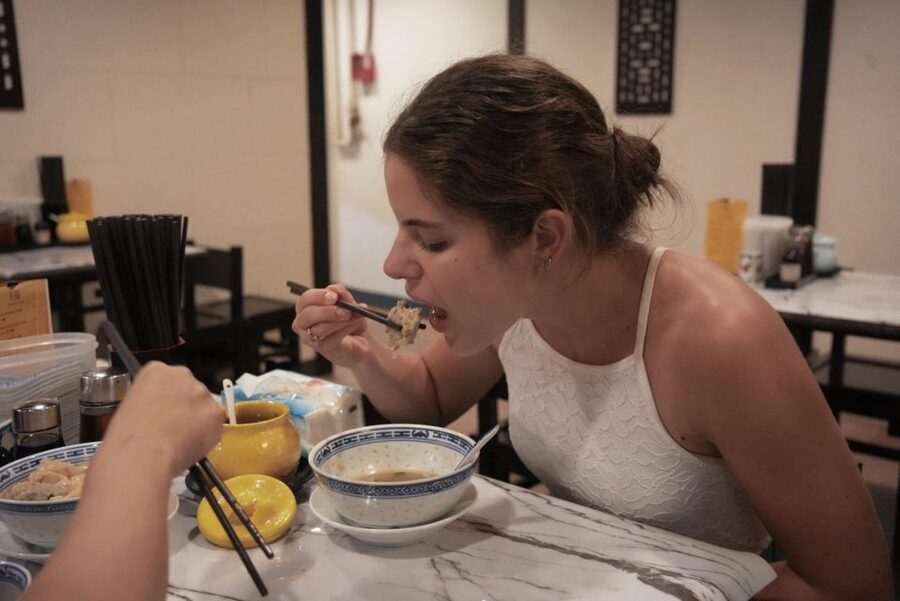
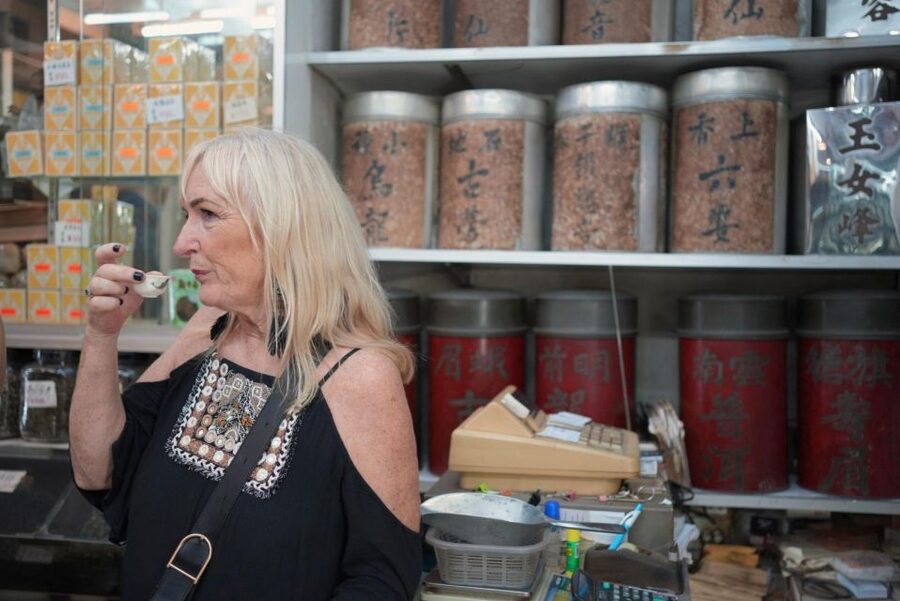
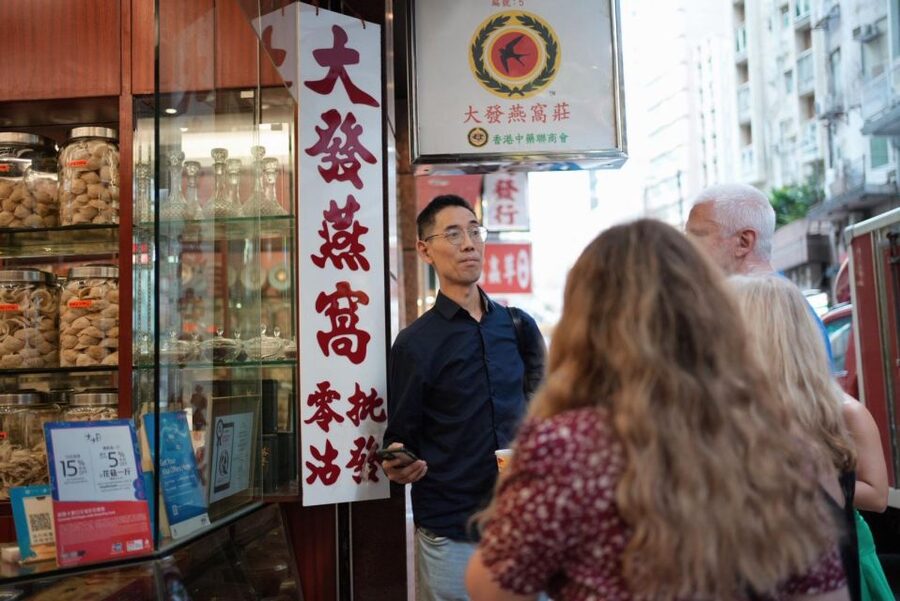
Wing Lok Street is an effective opening stop because it gives you a look at an older commercial side of Hong Kong. The area is known for dried seafood and luxury Chinese ingredients, including shark fin, bird’s nest, and cordyceps.
You will hear about products that can cost as much as HKD 200,000 per catty. The point is not simply to admire expensive goods. Your guide explains why these ingredients carried status and how food, gift giving, health beliefs, and Chinese commerce became linked.
This section also connects Sheung Wan to the movement of Chinese laborers around the world. The district helped send workers overseas, and that labor trade played a part in Hong Kong’s shift from a 19th-century opium hub to an industrial and financial center.
I like this early historical stop because it prevents the tour from becoming a string of disconnected snacks. You are not only being told that an ingredient is rare. You are being shown the business culture around it, in the streets where that trade still has a visible presence.
Small food stops instead of polished dining rooms
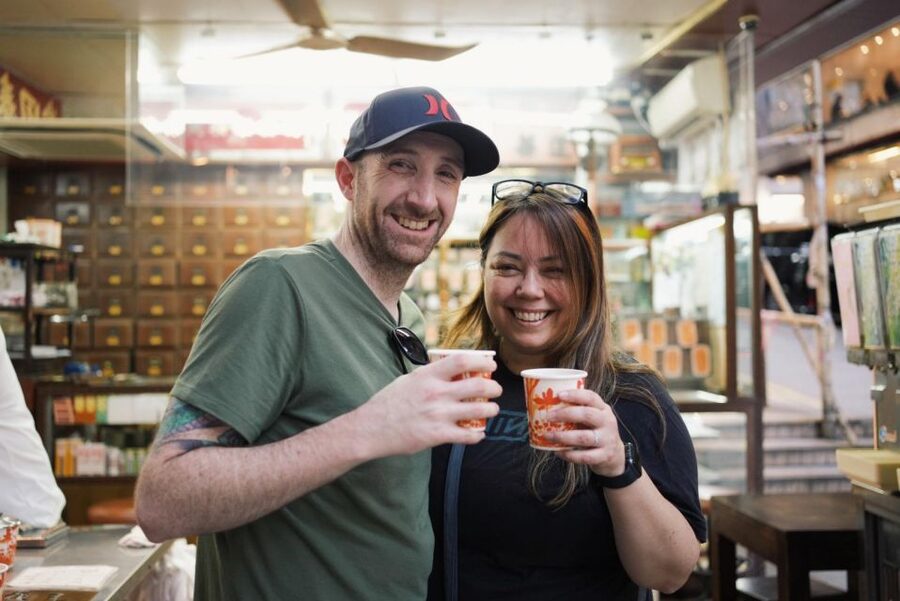
The tour moves through the sort of places where Hong Kong residents eat quickly, cheaply, and often. You may stop at family-run restaurants, food centers, local cafés, street food counters, and older tea shops.
The route includes seven or eight food stops, though the exact menu and sequence can change. That flexibility matters in Hong Kong, where opening hours, supplies, and crowd levels can affect what is available on the day.
The best approach is to treat the tour as a guided introduction rather than a fixed tasting menu. You should expect the broad categories to remain similar, but a particular dessert or drink may be replaced by another local option.
Several people who took the tour found the pacing comfortable, even with many stops. That is important because Hong Kong food tours can easily become rushed. Here, the guide has to balance eating, walking, explanations, and space for the group to keep up.
More street food nights in the world:
- Dubai: Old Town, Creek, Museums, Souks, & Street Food Tour
★ 4.8 · 10,816 reviews - Ho Chi Minh City Street Food Tour & Sightseeing By Motorbike
★ 5.0 · 9,413 reviews - Medellin: Comuna 13 Graffiti Tour, Cable Car & Street Food
★ 4.8 · 9,046 reviews - Dubai: Old Town, Souks, Street Food, Guided Tour & Abra Ride
★ 4.9 · 7,170 reviews
Cha Chaan Teng classics and silk-stocking milk tea
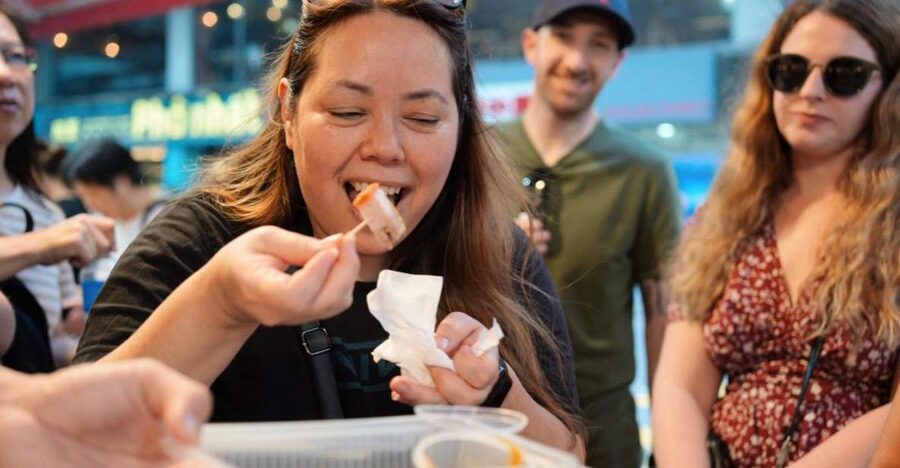
A Cha Chaan Teng is one of the most useful stops for understanding modern Hong Kong food. These cafés developed as practical, affordable places serving a mix of local and Western-influenced food.
You may try silk-stocking milk tea, a strong, smooth drink strained through a cloth sack. The name sounds more dramatic than the method. It is not made with silk stockings. Your guide explains the cloth filtering process and the role of the drink in local café culture.
Crispy French toast may also appear. The name is misleading, since this is a Hong Kong-style café dish rather than a traditional French breakfast. It is exactly the kind of food that shows how Hong Kong adapted outside ideas into its own everyday cooking.
You may also try a Mandarin Duck, a local combination of tea and coffee. It is an unusual drink for many first-time visitors and a good example of the city’s habit of combining strong, contrasting flavors.
This stop is especially useful if you plan to eat independently after the tour. You learn what a Cha Chaan Teng is, what to look for, and why the menu does not fit neatly into Western categories.
Wonton noodles and Chiu Chow technique
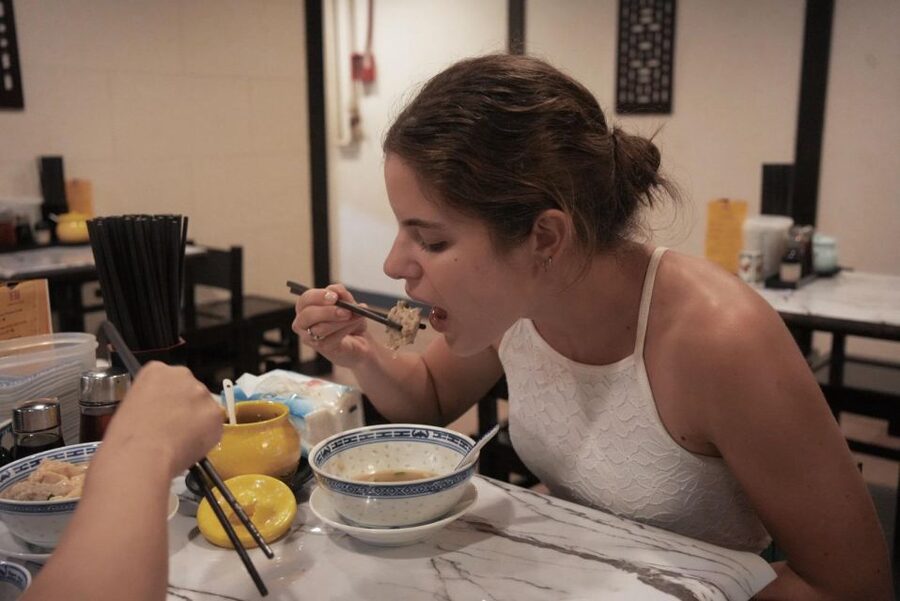
Wonton noodles are one of the tour’s central dishes. You may watch cooks prepare shrimp-filled wontons and serve them with noodles in a flounder-based broth.
This is a good place to slow down and notice technique. The wonton wrapper, shrimp filling, texture of the noodles, and clean seafood broth each matter. Your guide can explain how Chiu Chow traditions differ from other Chinese regional styles, though the exact demonstration depends on the restaurant and what is being prepared that day.
The dish has been a highlight for many people, and it is easy to see why. It is familiar enough to be approachable, but the handmade details make it more than a generic noodle soup.
Come hungry. The portions across the tour are not necessarily full restaurant meals at every stop, but together they add up quickly. Several people finished so full that they skipped dinner, while others found the amount just right because the tastings were spread out.
Dim sum, har gow, and the rise of everyday snacks
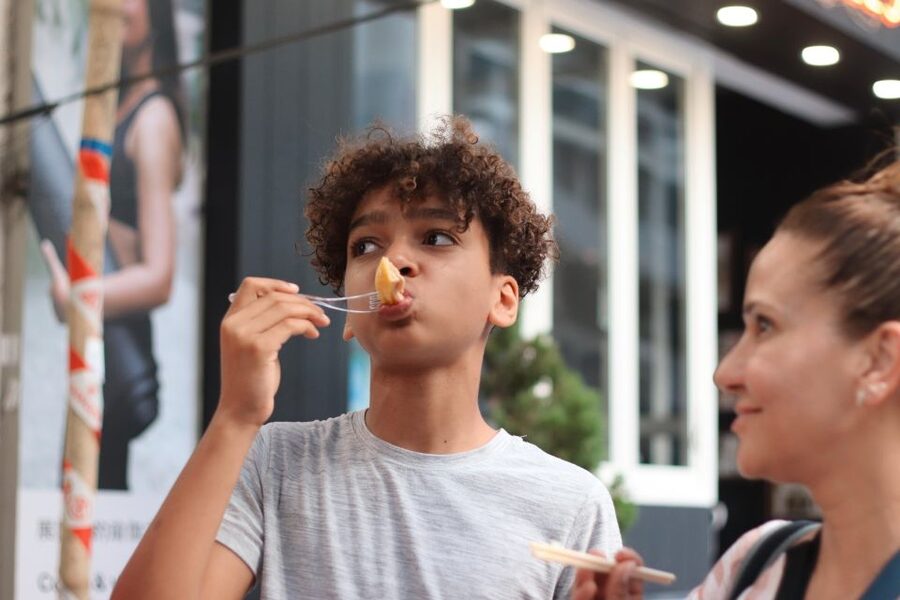
Dim sum provides the tour’s most obvious link between food and social life. You may taste bamboo-steamed har gow, the translucent shrimp dumplings that many visitors associate with Cantonese cooking.
The guide may point out details that are easy to miss, such as the ingredients used in the wrapper. One person with Cantonese family roots was surprised to learn that sweet potato is used in the har gow wrapping. Small details like that make the stop useful even if you already know the basic dish.
You also learn how dim sum shifted from a higher-status tea-house custom into an everyday meal enjoyed by a much wider public. That change mirrors Hong Kong itself: traditions adapt, prices shift, and foods move from formal settings into ordinary neighborhood life.
Dim sum is a strong reason to book this tour if you are unsure how to order in a traditional setting. You get a guided introduction without having to decode a full menu while a busy dining room waits.
Roast meats, egg tarts, and sweet stops
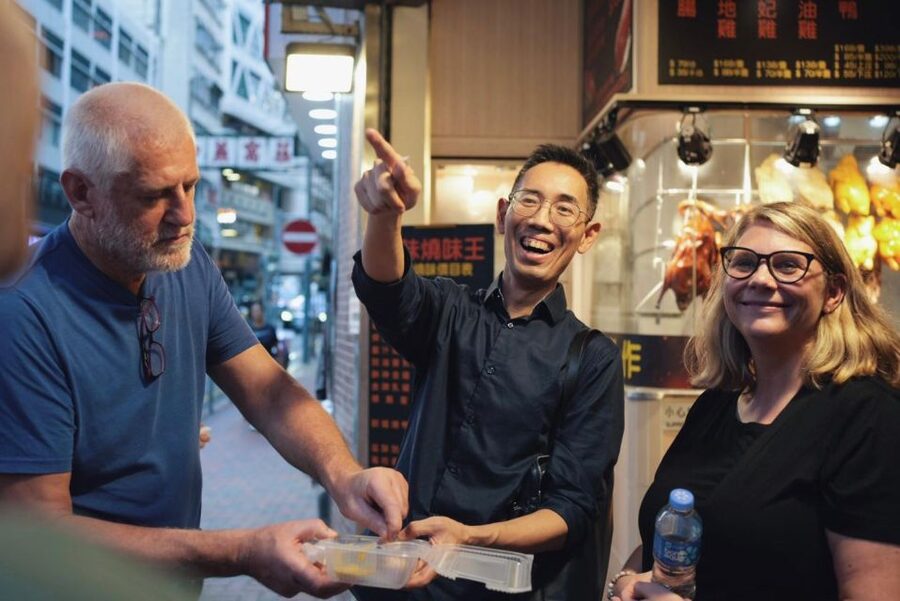
The savory tastings usually include BBQ pork and may include roast pork or pork belly. These dishes add a different texture and flavor from the seafood-heavy wontons and dumplings.
BBQ pork was a clear favorite for several people, while roast meats more generally helped make the tour feel like a full meal. You may also try an egg tart, a soft custard pastry with a crisp shell, and Hong Kong-style egg waffles.
The egg waffle is especially fun because it looks unlike a standard Western waffle. Its small rounded pockets give it a light, snackable character, though the exact version depends on the stop.
I appreciate the sweet and savory balance. A tour built only around dumplings and noodles can become repetitive. Desserts and pastries give your palate a break, while the guide can explain how bakery food and café snacks fit into local life.
Herbal drinks and old social spaces
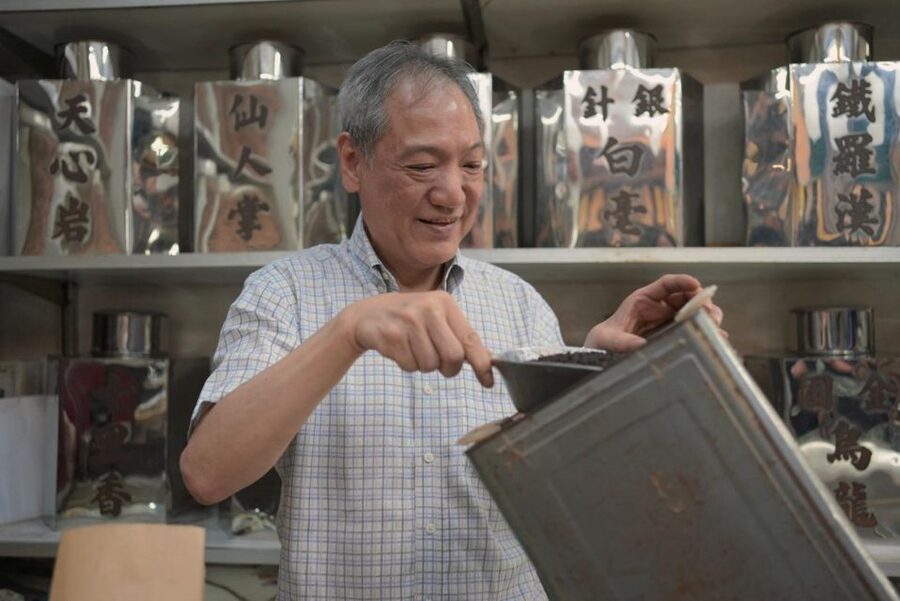
A herbal tea stop adds a less familiar side of Hong Kong eating. You may taste Five Flowers tea or the much more bitter 24 Flavors tea.
These drinks are connected to traditional ideas about balance and health, and they are part of the city’s older street culture. The guide may also explain how herbal tea shops served as social spaces, especially in the decades after the 1950s.
Do not expect these drinks to taste like sweet bottled tea. Some are bitter by design. That is part of the point, and the tasting works best when you approach it as a piece of local custom rather than a drink chosen for easy refreshment.
This is one of the tour’s more valuable surprises. It takes you beyond the dishes most visitors already know and shows how food culture includes remedies, habits, and neighborhood meeting places.
Walking toward Queen’s Road Central
The route continues toward Queen’s Road Central, where the food tastings and city history come together. You may see how old commercial streets sit beside the polished office towers and retail districts associated with modern Hong Kong.
One guide also pointed out a location connected with a scene from The Dark Knight while walking near the long escalator area. That is an incidental detail rather than a promised feature, but it shows how the route can connect food with recognizable city sights.
The walking is not a sightseeing tour in the usual sense. You will not spend long periods at major monuments. Instead, you move through working streets and commercial areas, with food and local history leading the way.
The finish is at Central Market. That gives you a useful onward point for exploring, shopping, or finding your way back to the MTR. Hotel pickup and drop-off are not included, so you handle your own transport to the meeting point and after the tour.
Is 51 dollars a fair price?
At $51 per person, this tour is not the cheapest way to eat in Hong Kong. You can certainly buy individual snacks for less.
The value comes from the number of tastings, the local guide, and the time saved finding suitable places. Ten or more bites across seven or eight stops can amount to a substantial meal. You also get explanations that are difficult to gather by simply walking into cafés at random.
The price makes the most sense for a first visit, a short stay, or anyone who wants a planned introduction before exploring alone. It is less compelling if you already know Sheung Wan well and prefer choosing each restaurant yourself.
The tour also has free cancellation up to 24 hours before the start, with a reserve-now, pay-later option. Poor weather can lead to an alternative date or full refund. Those terms are useful in Hong Kong, where heat and rain can affect a walking route.
Who should book this food walk?
I would recommend it to first-time visitors, curious eaters, solo visitors who want company, and families with older children. A 13-year-old enjoyed the experience, and the mix of history, sweets, noodles, and dumplings gives the tour broad appeal.
It also suits people who feel nervous about ordering unfamiliar food. Guides such as Wing have been especially good at explaining dishes and offering options when possible.
You should not book it if you need vegetarian, vegan, or halal food. The tour cannot accommodate dietary restrictions, halal food is not provided, and the itinerary includes meat and seafood. People with allergies should discuss their needs before booking, but the supplied information does not promise that every restriction can be handled.
Should you book it?
Book this tour if you want Hong Kong food with context, not just a checklist of famous bites. The strongest features are the local cafés, the Sheung Wan history, the large range of food, and guides who bring in personal memories and practical explanations.
Skip it if you want a quiet seated meal, a fixed menu, or a route designed around vegetarian food. For everyone else, $51 buys a filling three-hour introduction to the city’s everyday food culture, with enough useful knowledge to continue eating well after the tour ends.
FAQ
How long does the Hong Kong street food tour last?
The tour lasts three hours.
How much does the tour cost?
The price is $51 per person.
Where does the tour meet?
Meet at Sheung Wan MTR Station Exit E2. Find the exit while you are still near the train platform, because you cannot reach Exit E after entering the concourse for Exits A through D.
Where does the tour finish?
The tour finishes at Central Market.
What food might I taste?
You may taste 10 or more items, including dim sum, har gow, wonton noodles, BBQ pork, roast meats, egg tarts, egg waffles, silk-stocking milk tea, herbal teas, and other local snacks. The menu can change based on availability.
Is the tour suitable for vegetarians?
No. The tour is not suitable for vegetarians, and halal food is not provided.
Is hotel pickup included?
No. Hotel pickup and drop-off are not included.
What should I bring?
Bring comfortable shoes because the tour involves a moderate amount of walking. The tour also depends on favorable weather. If poor weather causes cancellation, you can choose another date or receive a full refund.
Just added around the world
- Milan: Street Food Walking Tour★ 4.7 · 180 reviews
- Milan’s Full-Meal Gourmet Food Tour – More Than Tastings★ 4.8 · 81 reviews
- Kolkata Midtown Madness- A Street Food & Nightlife Tour★ 4.9 · 49 reviews
- Milan: Delicious Food Tour and City Center Sightseeing★ 4.8 · 111 reviews
- Mexico City: Authentic Downtown Food Tour★ 4.9 · 260 reviews
- Miami: Intimate Sailing in Biscayne Bay w/ Food and Drinks★ 4.7 · 34 reviews
- Mexico City: Vegan and Vegetarian Street Food Adventure★ 4.8 · 65 reviews
- Miami: Little Havana Cuban Food and Culture Walking Tour★ 4.8 · 223 reviews
Street Food Tours, compared.
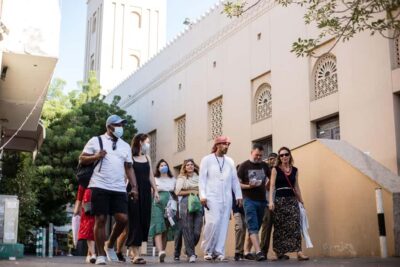
Old Town, Creek, Museums, Souks, & Street Food Tour
Read our review →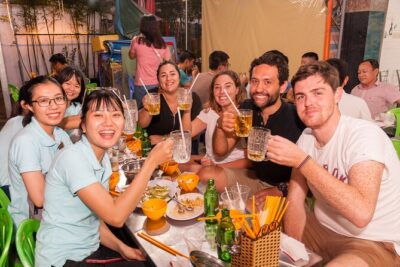
Ho Chi Minh City Street Food Tour & Sightseeing By Motorbike
Read our review →
Old Town, Souks, Street Food, Guided Tour & Abra Ride
Read our review →
Small Group Hanoi Street Food Tour with a Real Foodie
Read our review →
Saigon By Night and Street Food By Motorbike | Opt: Ao Dai Riders
Read our review →
Private Street Food Tour by Motorbike/Car with Local Students
Read our review →Browse the lists this tour appears in