
REVIEW · CHINA
Small-Group Hong Kong Island Food Tour
Hong Kong’s food story makes most sense one bite at a time. This small-group tour links an old yum cha house, a family-run noodle shop, a dried seafood street, a traditional bakery, and a roast-meat restaurant while you walk from Sheung Wan to Wan Chai. The Cantonese and British influences are easy to taste: dim sum and wonton noodles sit beside milk tea and egg tarts.
I like two things here. First, the guide gets you into places that can feel hard to approach on your own, especially if you do not read Chinese or know how local ordering works. Second, the route gives you more than food: you see markets, medicine shops, tea sellers, the Mid-Levels Escalator, and Hong Kong’s old double-decker tram. The main catch is simple: arrive hungry, and do not expect much choice if you are vegetarian, gluten-free, or allergic to seafood.
Key points
- Five substantial food tastings: Dim sum, wonton noodle soup, Hong Kong milk tea, char siu with rice, and a dan tat egg tart.
- A useful eastward route: Walk from Sheung Wan through Central and finish in Wan Chai, with the Ding Ding tram connecting the districts.
- Local, old-school settings: Expect family-run shops, a tea house with nearly a century of history, an old bakery, and the city’s oldest wet market.
- A small group of up to nine: That size makes it easier to hear the guide and ask questions while eating.
- Guides who add more than food facts: Ivy, Andy, Alex, Mel, Sinclair, and Jane have all led this experience, sharing Cantonese customs, local history, and practical city advice.
- A four-hour morning schedule: Meet at 9:30 a.m. in Sheung Wan and finish in Wan Chai, with no hotel pickup.
Why Hong Kong food makes a good first tour
This is not a tour built around a single famous dish. It is a compact lesson in how Hong Kong eats. Cantonese cooking supplies the backbone, while British rule left its mark on milk tea, custard tarts, and the city’s cafe culture.
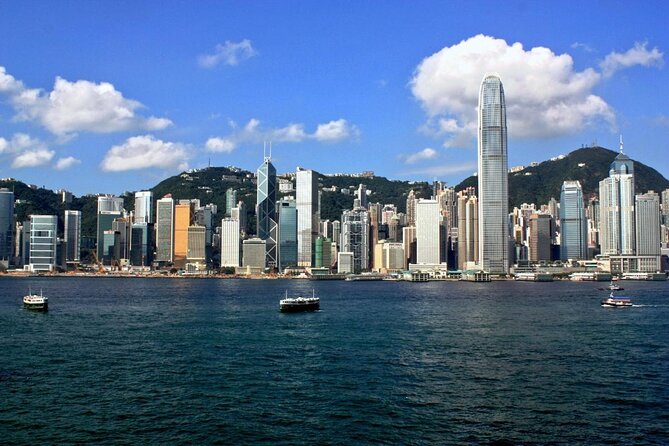
The route also helps you understand the city’s neighborhoods. Sheung Wan is lined with traditional Chinese businesses, dried seafood sellers, tea shops, and old markets. Central brings the Mid-Levels Escalator and restored heritage sites. Wan Chai supplies roast meat, bakeries, and the tram ride that ties the morning together.
I see this as a strong first-day activity because the guide handles the small barriers that can make local dining awkward. You do not need to guess which restaurant to enter, point at an unfamiliar menu, or work out how to share dishes. The guide explains what is arriving and how to eat it.
The group limit is nine people. That is small enough for conversation, though the experience can still feel social rather than private. English is the tour language, and the guides praised in the feedback include Ivy, Andy, Alex, Mel, Sinclair, and Jane. The specific guide depends on the date, but the consistent strength is the mix of food explanations and local stories.
A few more food tours around China worth comparing
- Authentic Local Food Tour in Central Shanghai
★ 5.0 · 1,382 reviews - Beijing Hutong Walking Food and Beer Tour at Hidden Restaurants
★ 5.0 · 1,132 reviews - Shanghai: 3-Hour Local Food Tasting Tour
★ 4.9 · 806 reviews
Sheung Wan starts with trolley-served dim sum
Meet at 28 Des Voeux Road West in Sheung Wan at 9:30 a.m. The exact directions are sent after booking, so give yourself time to reach the meeting point by public transport.
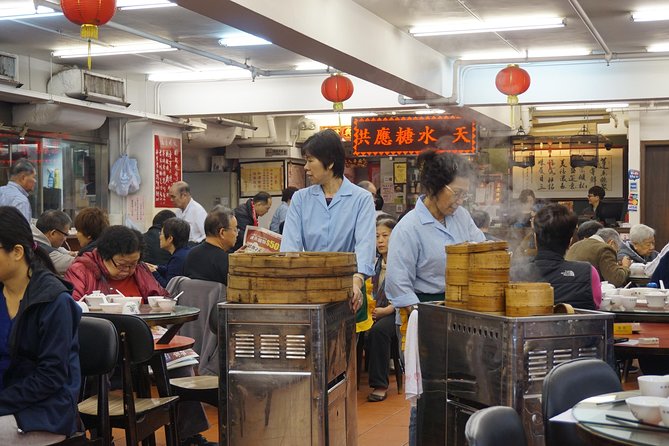
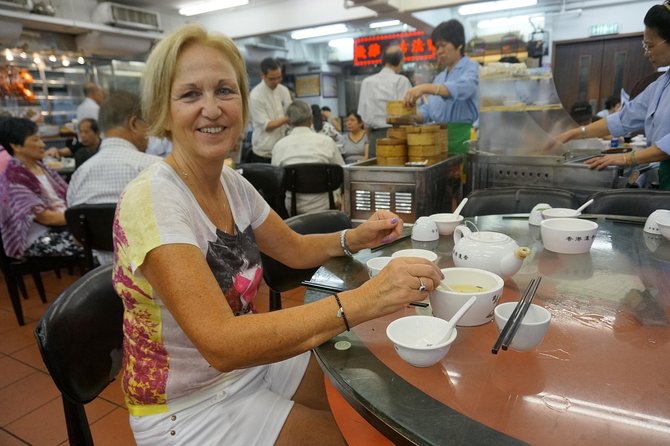
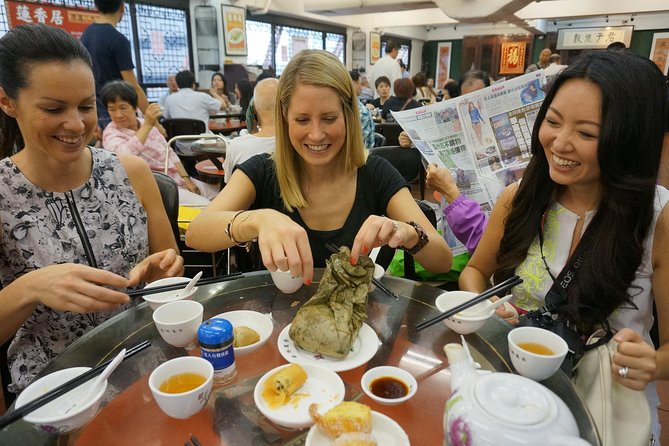
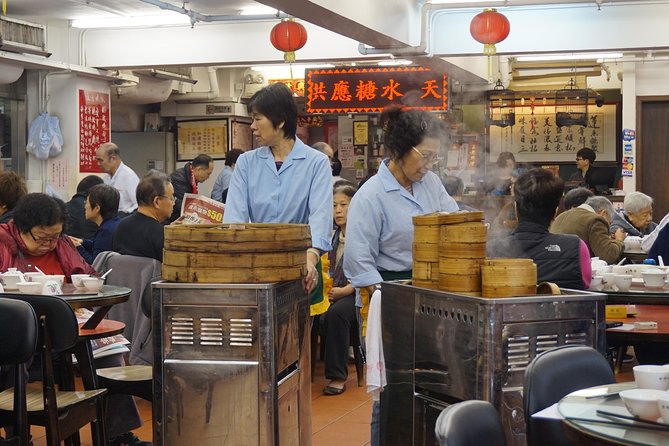
The opening stop is an old tea house where yum cha, or dim sum, is served from a trolley. This is a useful introduction because yum cha is not only a meal. It is a social ritual, and the room itself matters. Expect a crowded, lively setting with a long local tradition rather than a polished dining room designed for sightseeing.
Dim sum is served in small portions, which lets you try several items without filling up too early. The guide helps explain what is on the table and can help with ordering or serving. The tea house has been operating for almost 100 years, giving the first meal a sense of place that a modern restaurant cannot copy.
After breakfast, you move through Sheung Wan’s traditional businesses. The area mixes old Chinese trades with newer shops, and the contrast is part of the appeal. I would pay attention to the storefronts and street activity between tastings, since the walking is not just a way to burn calories between restaurants.
Dried seafood, tea sweets, and Graham Street Market
The route pauses on Seafood Street, the stretch of Des Voeux Road West known for dried seafood shops. Dried fish and other preserved products are common in Chinese cooking and traditional tonics. The displays may be unfamiliar, but that is exactly why this stop is useful. You get a quick explanation of ingredients that rarely appear in a standard sightseeing program.
At Kai Fat Tea, a small shop on a narrow Sheung Wan road, you sample preserved fruit sweets and other Chinese candies. The shop has been operating for more than 30 years. This is a lighter stop, but it helps show how tea culture and sweet snacks fit into daily life.
The tour also passes a family-run soy sauce producer, a Chinese medicine shop dating from the 1940s, and the city’s oldest wet market. Some of these visits may be brief, and the route is best understood as an introduction rather than a long shopping session. Still, these stops give context to the food on your plate. You see where seasonings, preserved goods, produce, and traditional remedies fit into the local economy.
Graham Street Market has more than a century of history and remains one of the better places to see ordinary food shopping. Its sloped street is lined with stalls selling vegetables and live seafood. You may find the market crowded and visually intense, but it is a genuine working market, not a staged attraction. Keep your attention on the guide and watch your footing on the slope.
Wonton noodles at a family-run institution
Next comes wonton noodle soup at a family-run business dating from the 1960s and recommended by the Michelin Guide. The dish looks modest: noodles, broth, and wontons. Its appeal is precision. Thin noodles, a clean broth, and properly made wontons leave little room for poor technique.
This stop is one of the best reasons to take the tour rather than simply collect a list of famous foods. The guide can explain how Cantonese cooks judge the texture of the noodles and why a simple bowl can be difficult to get right. You also avoid the uncertainty of choosing among similar-looking noodle shops.
Portions across the morning are intended to add up to a full meal. Several people have found the food generous enough that they were full by the end, so do not eat breakfast before arriving. If you are a light eater, share where possible and tell the guide early. The tour is not designed around dietary substitutions.
Same city, a completely different plate:
- Xi’an Evening Food Tour by TukTuk
★ 5.0 · 715 reviews - Eat Like A Local: Shanghai Night Food Tour
★ 5.0 · 616 reviews - Tuktuk Food Tour Through Chengdu’s Local Eats
★ 5.0 · 435 reviews - Eat Like a Local Through Shanghai’s French Concession
★ 5.0 · 353 reviews
Milk tea and the British side of Hong Kong
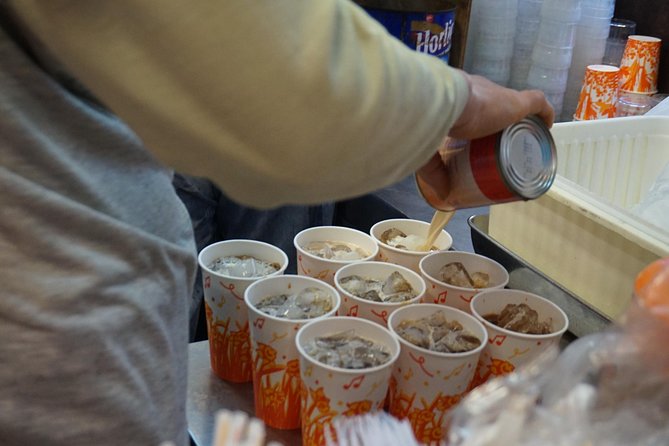
Hong Kong milk tea is a direct reminder that food changes under outside influence. It grew from the city’s British colonial period but became part of local life in its own form. The tea is usually stronger and more concentrated than the mild tea many visitors expect, with evaporated or condensed milk adding body.
The tour gives you a cup while explaining the drink’s place in Hong Kong culture. This is more useful than treating milk tea as just another sample because it connects a familiar British idea to a distinctly Hong Kong habit.
You may also hear about the city’s cafe culture and post-1950s Western influences. The focus remains practical and food-centered, but this section helps explain why Hong Kong cuisine cannot be placed neatly into a single category. Cantonese cooking is central, yet the city’s everyday food reflects trade, migration, and colonial history.
A Ding Ding ride from Central toward Wan Chai
The route continues through Central and the Western District, with stops around Gough Street and the Mid-Levels Escalator. The escalator runs about 800 meters and rises 135 meters toward Conduit Road. You will not ride the full system as a sightseeing attraction, but seeing it in use gives you a quick look at how Hong Kong residents handle the city’s steep streets.
Tai Kwun, the restored Central Police Station compound, is also part of the wider route. It combines heritage buildings with art, performances, and lifestyle spaces. The tour does not promise a full visit inside, so think of this as a passing point rather than a museum stop.
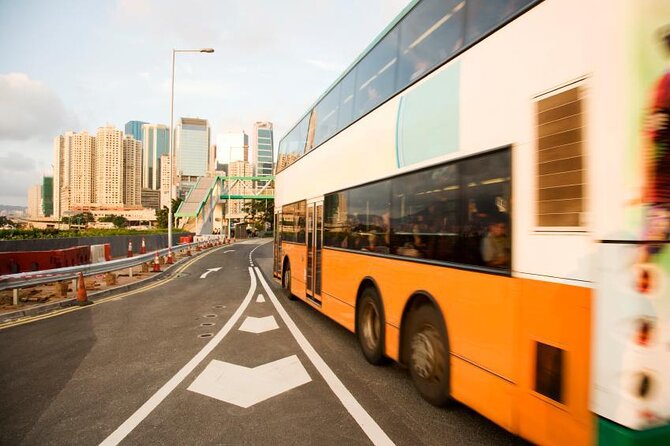
Then comes the Ding Ding tram. Hong Kong’s electric tram system began in 1904 under British rule and uses double-decker cars. The ride is short, about 20 minutes, but it is a welcome change from walking and provides a close look at the city from street level.
There is a small wording issue in the tour details. The inclusions list says the tram ride is included, while the description says the ride is at your own expense. I would carry a little cash or a transit payment method and confirm the current arrangement when booking. Either way, the fare is a minor cost compared with the value of having the guide explain where to board and using the ride as part of the route.
Char siu rice in Wan Chai
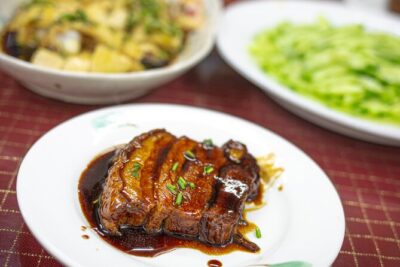
In Wan Chai, you stop at another family-run restaurant with roots reaching back to the Qing dynasty. It is recommended by the Michelin Guide and known for English char siu, or Cantonese roast pork, served with rice.
The phrase English char siu refers to a local style shaped by the city’s old connections with Britain, not to a standard roast found in England. Expect slices of roasted meat, rice, and homemade sauces. The guide can point out the differences between the roast meats and explain how texture, glaze, and fat affect the dish.
This is a substantial tasting, and it is one of the places where the tour can feel like a real meal rather than a string of tiny samples. The restaurant’s age and family operation also fit the broader theme: Hong Kong’s food traditions survive through working businesses, not only through formal culinary displays.
Wan Chai itself is a fitting final neighborhood. It has old streets, local restaurants, offices, and newer shops packed close together. The tour gives you a useful orientation to the district before ending near Southorn Playground.
Egg tarts finish the morning on a sweet note
The last food stop is a bakery on Hennessy Road with about 60 years of history. You receive a dan tat, the Cantonese egg tart influenced by the English custard tart. The pastry and egg custard are simple, but the contrast with the savory dishes makes it a sensible finish.
The bakery was once a favorite of a former Hong Kong governor, a detail that adds local color without turning the stop into a celebrity hunt. The egg tart travels well, so you may want to buy another if the bakery permits, although the provided tasting is the portion included in the tour.
The route ends in Wan Chai, near Southorn Playground. This open recreation ground is used by office workers, sports players, and people taking a break. It is a practical endpoint because you are left in an active neighborhood with easy access to more food, shopping, and transport.
What the $115.52 price gets you
At $115.52 per person, this is not the cheapest way to eat in Hong Kong. You could buy individual bowls of noodles, dim sum, milk tea, roast pork, and an egg tart for less if you already know where to go.
The price makes more sense if you value access and explanation. It covers a professional English-speaking guide, five major tastings, traditional sweets, the tram experience, and the time spent moving between districts. You are also paying to enter local places with someone who can manage language barriers and explain what you are eating.
I consider the value strongest for a first visit, solo visitors, and anyone who wants a clear introduction without spending days researching restaurants. It is less compelling if you already know Hong Kong’s food scene or prefer to choose every dish yourself.
The maximum group size is nine, which helps protect the experience from becoming a large walking crowd. Hotel pickup and drop-off are not included, so you need to reach Sheung Wan and arrange your onward transport from Wan Chai.
Who should book this food walk
Book it if you want a food-led introduction to Hong Kong Island with enough neighborhood sightseeing to give the meal context. It suits curious eaters who are comfortable trying seafood, pork, wheat noodles, dairy, and pastry.
It also works well for solo visitors. The small group gives you company, and the guide can make it easier to share dishes and ask questions. Several guides, including Ivy, Andy, Mel, Alex, and Sinclair, have been praised for friendly conversation, clear explanations, and practical help beyond the meal itself.
The tour is not suitable for vegetarians, people avoiding gluten, or anyone with seafood allergies. Children aged five and under cannot join this group format. A private food tour is suggested for that age group.
Wear comfortable shoes. The route includes sloped streets, market areas, walking through several districts, and the Mid-Levels Escalator. Bring a camera if you like street scenes, but keep your hands free enough to eat and move through busy areas.
Final verdict: a strong first taste of Hong Kong
I would book this tour early in a Hong Kong stay, ideally on your first or second morning. It gives you a working map of Sheung Wan, Central, and Wan Chai, then leaves you with a list of foods and neighborhoods to explore on your own.
The best part is the combination of old eateries and useful local explanation. You get dim sum from a long-running tea house, wonton noodles from a family business, milk tea, roast pork rice, and an egg tart, but you also see the shops and markets that support everyday cooking.
Skip it if you need strict dietary control, dislike group meals, or want a private guide. For everyone else, the $115.52 cost is fair for a four-hour route that handles the hard parts of local dining and gives you a full introduction to Hong Kong’s Cantonese and British-influenced food culture.
FAQ
Where does the Hong Kong Island food tour begin?
The tour begins at 28 Des Voeux Road West in Sheung Wan, Hong Kong. The start time is 9:30 a.m., and directions to the meeting point are sent after booking.
Where does the tour finish?
The tour ends in Wan Chai, near the final food and sightseeing stops.
How long does the tour last?
The experience lasts approximately four hours.
What foods are included?
The included tastings are dim sum or yum cha, wonton noodle soup, Hong Kong milk tea, char siu barbecue pork, egg tart, and traditional dried fruit sweets.
Is the Ding Ding tram ride included?
The inclusions list identifies the Ding Ding tram ride as included, but the tour description also says the tram is at your own expense. Confirm the current arrangement when booking and carry a payment method for the fare.
Is the tour suitable for vegetarians or people with food allergies?
No. The tour is not suitable for vegetarians, people following a gluten-free diet, or people with seafood allergies.
What is the maximum group size?
The tour has a maximum of nine participants per booking.
Can children aged five or younger join?
No. The group tour is not suitable for children aged five and under. A private food tour is suggested for that age group.
Just added around China
- Private Hong Kong’s Hidden Eats Food Tour with 7+ Local Tastings★ 5.0 · 27 reviews
- Small Group Kowloon Michelin Rated Street Food and Culture Tour★ 5.0 · 170 reviews
- The 10 Tastings of Hong Kong With Locals: Private Street Food Tour★ 4.5 · 124 reviews
- Private Kowloon Michelin Rated Street Food & Culture Tour★ 5.0 · 42 reviews
- Private Food Tour: Hong Kong Island★ 5.0 · 78 reviews
- Kowloon Night Street Food Tour with a Local: Private & Customized★ 4.5 · 72 reviews
- Tram & Treats – Private Culinary tour of Hong Kong★ 5.0 · 26 reviews
- Hong Kong Food Tour: Central and Sheung Wan Districts★ 5.0 · 333 reviews
Food Tours in China, compared.

Authentic Local Food Tour in Central Shanghai
Read our review →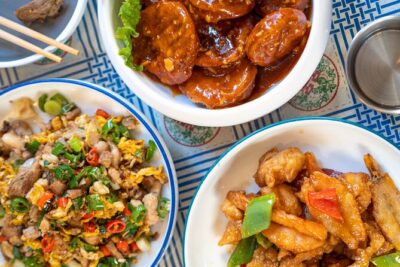
Beijing Hutong Walking Food and Beer Tour at Hidden Restaurants
Read our review →
Eat Like a Local Through Shanghai’s French Concession
Read our review →
Hong Kong’s Tin Hau Hidden Eats Food Tour with 7+ Local Tastings
Read our review →Browse the lists this tour appears in