
REVIEW · CHINA
Private Food Tour: Hong Kong Island
Hong Kong’s food culture makes the most sense when you eat it in the neighborhoods where it developed. This private food tour begins in Sheung Wan with trolley-served dim sum, then works through wonton noodles, milk tea, roast meat, and an egg tart while your guide explains the Cantonese and British influences behind each bite.
I like the personal pace, especially for families or first-time visitors who want help with ordering and getting around. I also like the route itself: you see dried seafood shops, a wet market, old streets, the Mid-Levels Escalator, and Wan Chai instead of hopping between isolated restaurants.
The main drawback is dietary. This is not suitable for vegetarians, gluten-free diners, or people with seafood allergies, and the four-hour schedule includes a fair amount of walking and public transport.
Key points to know before booking
- Five substantial food tastings: Dim sum, wonton noodles, milk tea, roast meat with rice, and an egg tart form the main food stops.
- Private guiding: Only your group takes part, so the pace and conversation can be adjusted more easily than on a shared tour.
- Sheung Wan starts the story: Dried seafood shops, tea sellers, medicine stores, and Graham Street Market show everyday Cantonese food culture.
- The tram ride costs extra: The Ding Ding tram is part of the route, but you pay the small fare yourself.
- Guides make a difference: Andy and Mel are named in the feedback, with Andy praised for a comfortable pace and Mel for humor, clear English, and tailoring the day to the group.
- Come hungry: The tour begins with dim sum breakfast, so skip breakfast beforehand.
Why this Hong Kong food tour works
At $236.69 per person, this is not a bargain food crawl. You are paying for a private guide, several dishes, neighborhood interpretation, and help using Hong Kong’s public transport system. For a couple or small family, the price can make sense if you value personal attention and want more than a list of restaurant addresses.
The food alone would not justify the cost for everyone. Hong Kong is full of inexpensive places to eat. The value comes from putting the dishes into context and making the city easier to read. Your guide connects dim sum to the old tea-house tradition, explains why milk tea became such a familiar local drink, and points out the Chinese and British threads running through the food.
You also get a useful first look at Hong Kong Island. The tour begins at 28 Des Voeux Road West in Sheung Wan and ends in Wan Chai. Hotel pickup can be arranged, but this remains a walking and public transport tour, not a private car ride.
The tour lasts about four hours. That is enough time for a strong introduction, though not enough to linger at every market, temple, shop, and meal. I would treat it as a food-focused neighborhood walk with sightseeing along the way, not as a full historical tour of Hong Kong Island.
More private food tours in China:
- Beijing Private Hutong Food Walking Tour
★ 5.0 · 299 reviews - The 10 Tastings of Hong Kong With Locals: Private Street Food Tour
★ 4.5 · 124 reviews - Kowloon Night Street Food Tour with a Local: Private & Customized
★ 4.5 · 72 reviews
Sheung Wan and the first dim sum breakfast
Sheung Wan is a good place to begin because old Chinese trades still sit beside modern shops and offices. The district has a distinctly local feel, with dried seafood businesses, tea sellers, traditional medicine shops, narrow lanes, and steep streets.
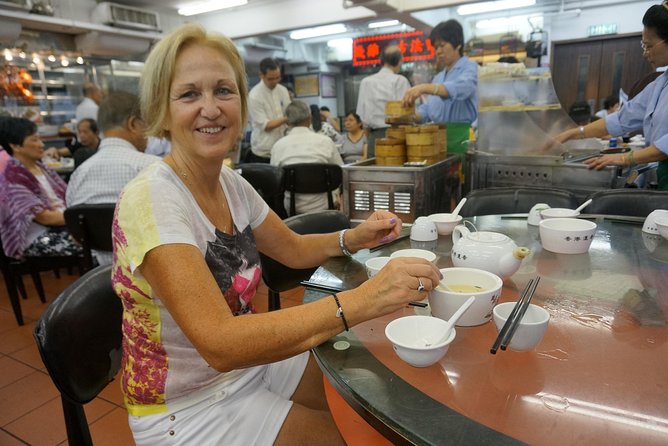
Your first food stop is a tea house with a history stretching back nearly a century. Dim sum is served by trolley, which adds a bit of theater to breakfast. You choose from small Cantonese dishes as the carts move through the dining room, and the restaurant’s age and busy atmosphere are part of the experience.
This is more useful than simply being handed a plate of dumplings. Your guide can help explain what you are seeing and make the first meal less intimidating if you are new to dim sum. The tour description promises a variety of dim sum rather than a fixed list of individual dishes, so the exact selection may depend on what is being served that morning.
The timing matters. Since dim sum is the opening meal, do not eat breakfast before arriving. You should have a healthy appetite, but this is not an eating contest. The tour includes several more tastings, and the food adds up.
Dried Seafood Street and the working food trade
From the tea house, the walk continues toward the section of Des Voeux Road West commonly known as Seafood Street. Shops here sell dried seafood used in Chinese cooking and traditional tonics.
For you, the value of this stop is visual and cultural rather than culinary. Dried products can look unfamiliar, and a guide gives you a way to understand why these shops matter. It is one of the places where Hong Kong’s food traditions are treated as part of daily life, not as a staged attraction.
You may also visit a Chinese medicine shop during the wider walk. The route is not limited to eating. It gives you a look at the ingredients, shops, and customs that shape what appears on local tables.
Keep an open mind here, but do not expect a formal tasting at every stop. The food is concentrated at the main restaurants and bakery. The market and specialty shops help explain the background.
Kai Fat Tea and small local sweets
Kai Fat Tea is tucked into a narrow road in Sheung Wan. The shop sells tea, assorted candies, and Chinese sweets made with fruit and other natural ingredients.
This is a short stop, about 15 minutes, but it breaks up the heavier meals. You can taste assorted candies and local snacks while your guide explains another side of Hong Kong’s food culture. Tea is not just a drink here. It also forms part of the old tea-house setting introduced at breakfast.
The stop is best seen as a quick look at local flavors rather than a major meal. If you are hoping to buy a large selection of gifts, the available time may feel limited. Still, it adds variety and gives you something lighter between savory dishes.
A few more food tours around China worth comparing
- Authentic Local Food Tour in Central Shanghai
★ 5.0 · 1,382 reviews - Beijing Hutong Walking Food and Beer Tour at Hidden Restaurants
★ 5.0 · 1,132 reviews - Shanghai: 3-Hour Local Food Tasting Tour
★ 4.9 · 806 reviews - Xi’an Evening Food Tour by TukTuk
★ 5.0 · 715 reviews
Graham Street Market and old neighborhood Hong Kong
Graham Street Market has more than a century of history and is one of the route’s better places to watch ordinary shopping unfold. Food stalls line the sloped street, selling produce and live seafood.
You will not simply walk through a polished food hall. This is a working market, and that makes it useful for understanding what people cook at home and where ingredients come from. Your guide can point out items you might otherwise pass without recognizing.
The market also shows how quickly Hong Kong changes. Traditional stalls share the city with new businesses and redevelopment. The tour gives you a brief visit rather than a long shopping session, so use your time for observation and questions.
The streets can be steep, and the walking is not entirely flat. Most people can take part, but comfortable shoes are sensible. If you have mobility concerns, tell the operator before booking so the private format can be used to discuss your needs.
Central, Gough Street, and the Mid-Levels Escalator
The route moves into Central, one of Hong Kong Island’s oldest and most active districts. Here, sloped streets and narrow lanes bring together temples, colonial-era buildings, shops, restaurants, and modern city life.
Gough Street offers a calmer stretch with colonial-style buildings, small boutiques, and restaurants. It is a good reminder that Hong Kong is not only towers and shopping centers. You get a sense of how Chinese and European communities once occupied the same part of the island, often in very different ways.
The Mid-Levels Escalator provides both transport and a moving view of city life. The outdoor escalator system runs about 800 meters and takes roughly 15 minutes. You can ride while watching the streets rise around you.
This is a smart inclusion because it saves your legs on part of the uphill route and gives you a distinctive Hong Kong experience. It is not a sightseeing ride in the conventional sense, so do not expect a narrated attraction or a special viewing platform. The point is to use the city as residents do.
The route may also pass Tai Kwun, the restored former Central Police Station compound. Tai Kwun now includes heritage spaces, contemporary art, performing arts, and lifestyle venues. It adds another layer to the walk, though the food remains the main subject.
Wonton noodles and the art of simplicity
One of the strongest food stops is a family-run noodle shop dating from the 1960s. It has been recommended by the Michelin Guide and is known for wonton noodles.
Wonton noodle soup looks simple: noodles, broth, and dumplings. That simplicity is exactly why it is a useful dish to taste with a guide. When a local specialty uses only a few central ingredients, texture and technique matter. Your guide can explain what makes the dish a Hong Kong classic and why a small family shop can build its reputation around one specialty.
This stop is likely to feel more focused than the dim sum breakfast. Instead of choosing from a trolley, you receive a dish that represents a specific local style. It also provides a welcome change in texture and format after the morning’s smaller plates.
Portions across the tour are described as tastings, but five food stops can still be filling. If you are a light eater, ask your guide about portion sizes early in the tour. The private format should make that conversation easier.
Milk tea and the British influence
Traditional Hong Kong milk tea is one of the clearest food links to the city’s British colonial past. You will stop for a cup during the walk.
Milk tea appears everywhere in Hong Kong’s food culture, from casual eateries to old-style tea restaurants. The drink is a small stop, but it helps explain how outside influence became part of local daily life. This is not simply an English drink copied into Hong Kong. It developed its own place in the city’s routines and tastes.
The tour’s broader food story is strongest when it shows these overlaps. Dim sum and wonton noodles point to Cantonese traditions. Milk tea and egg tarts show how imported ideas were adapted locally. Roast meat adds another classic Cantonese flavor.
The Ding Ding tram to Wan Chai
At some point, you board Hong Kong’s electric tram system, known locally as Ding Ding. The system began operating in 1904 under British rule and includes double-decker trams.
The ride is short, about 20 minutes, and takes you toward Wan Chai. You pay the tram fare yourself. That is a minor extra cost, but it is worth knowing in advance, especially if you are carrying only a tour voucher or card.
The tram is part of the city experience rather than just a way to get from one restaurant to another. You ride at street level and watch Hong Kong pass by from a distinctly local form of transport. Your guide handles the route, which helps if you are unfamiliar with the system.
The tram can be busy, and you should not expect a private carriage or a guaranteed seat. That is part of public transport. If you want a private vehicle between stops, this is not the right tour.
Roast meat in Wan Chai
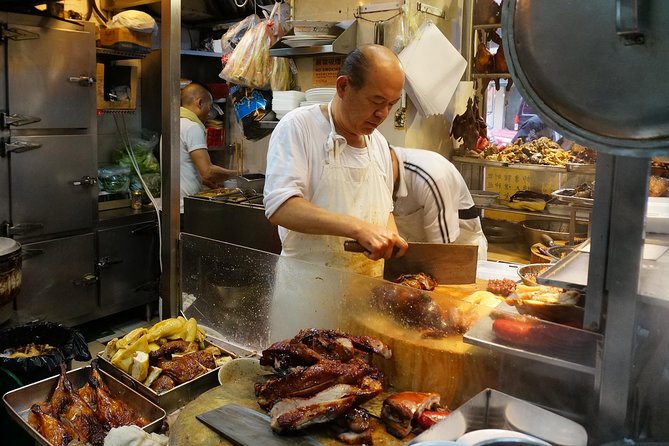
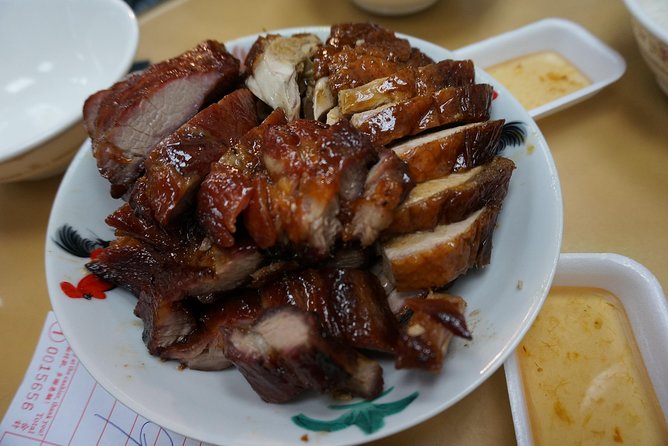
In Wan Chai, you visit another family-run restaurant, one said to date back to the Qing dynasty. The specialty is English roast meat, or char siu, served with rice and homemade sauces. You taste a mixture of traditional roasted meats rather than just one item.
This is one of the more filling stops. Roast meat with rice gives the tour a proper meal, and the sauces show how much flavor can come from small adjustments to a familiar dish. The English reference is also a reminder that food labels in Hong Kong can carry a complicated local meaning.
Wan Chai itself is a worthwhile setting. The district mixes old tenement buildings, temples, bars, restaurants, and newer businesses. The route gives you a short introduction rather than a full neighborhood tour, but it is enough to see the contrast between old and new.
The egg tart finish on Hennessy Road
The final food stop is an established bakery on Hennessy Road, where you try a Hong Kong egg tart. In Cantonese, it is called dan tat. The local version takes the idea of an English custard tart and gives it a Chinese bakery identity.
This is a sensible finish because it is smaller and sweeter than the roast meat course. The bakery has operated for about 60 years and was a personal favorite of a former Hong Kong governor, which gives the stop a little local character without turning it into a formal attraction.
The egg tart is included, and it serves as the tour’s dessert. The walk may continue through Southorn Playground, a place where office workers, sportsmen, and local residents spend time. The final stop is in Wan Chai, so you can continue exploring the district afterward.
Guides, pace, and the private format
The private setup is the tour’s biggest practical advantage. You are not trying to keep up with a large group while crossing busy streets or squeezing into small restaurants. Your guide can spend more time answering questions and adjust the pace for your party.
Andy is specifically praised for a comfortable pace, humor, strong English, and an ability to make the tour work well for a group of older adults. Mel is praised for clear English, warmth, humor, and tailoring the experience to a family’s preferences. Your guide may be someone else, but these comments show what to look for: a person who can handle both food and city orientation.
The tour can work well during a cruise stop. One family used it as a way to spend a port day and arranged transportation to and from the tour. If you are visiting on a tight ship schedule, confirm your timing carefully. The experience itself is about four hours, and hotel pickup can affect the total time.
The operator says most people can participate, but tell them if you are bringing children. Food allergies and dietary restrictions matter here. Seafood is part of the food culture featured along the route, and the tour is explicitly not suitable for people with seafood allergies, vegetarians, or gluten-free diners.
Who should book this tour?
I would choose this tour if you are visiting Hong Kong for the first time, want a guided introduction to local food, or prefer a private day with room for questions. It is also a good fit for families with adult children, couples, and cruise passengers who want a planned route through Hong Kong Island.
It suits people who enjoy walking, markets, public transport, and small family-run food businesses. You should be comfortable with several tastings rather than a single sit-down meal and with the possibility of busy restaurants and uneven city streets.
I would skip it if your main goal is luxury dining, a private car, or a flexible afternoon with long stops at museums and markets. I would also skip it if your diet rules out seafood, gluten, or animal products.
Is the $236.69 price worth it?
For a solo diner, the price is difficult to justify on food value alone. Hong Kong’s everyday meals can cost far less, and you could visit many of these neighborhoods independently with planning.
For a small private group, the calculation improves. You receive a guide for four hours, five main tastings, local transport guidance, and a connected story about Sheung Wan, Central, and Wan Chai. You also avoid the uncertainty of choosing unfamiliar restaurants on your own.
Free cancellation is available until 24 hours before the start time. The tour is often booked well ahead, with an average booking lead time of about 60 days, so reserve early if you need a specific date.
Final verdict: book it for the city story, not just the food
Book this private tour if you want Hong Kong’s food and neighborhoods explained together. The strongest parts are the trolley dim sum breakfast, the old noodle shop, the market walk, the Ding Ding ride, and the easy conversation that comes with a private guide.
The price is high, and the tour is not friendly to several common dietary restrictions. But for an interested first-time visitor, especially a family or cruise passenger, it offers a useful four-hour introduction with real local texture. Come hungry, wear good shoes, and expect a walking tour that uses Hong Kong rather than simply looking at it.
FAQ
How long does the private food tour last?
The tour lasts approximately four hours.
Where does the tour begin?
The standard meeting point is 28 Des Voeux Road West in Sheung Wan, Hong Kong.
Where does the tour end?
The tour ends in Wan Chai, after the egg tart stop.
Is hotel pickup available?
Hotel pickup can be offered, but the tour remains a walking experience using Hong Kong’s public transport system. Hotel pickup and drop-off are not included unless you book the five-hour option with pickup included.
What food is included?
The tastings include a variety of dim sum, traditional milk tea, wonton noodles, barbecue roast meat, and an egg tart. Assorted candies and local snacks are also included.
Do I pay separately for the tram?
Yes. The Hong Kong Ding Ding tram ride is part of the route, but the tram fare is at your own expense.
Is the tour suitable for vegetarians or people with food allergies?
No. The tour is not suitable for vegetarians, gluten-free diners, or people with seafood allergies.
Can children join the tour?
Children may be able to participate, but you should inform the operator when booking that you are traveling with children.
Just added around China
- Private Hong Kong’s Hidden Eats Food Tour with 7+ Local Tastings★ 5.0 · 27 reviews
- Small Group Kowloon Michelin Rated Street Food and Culture Tour★ 5.0 · 170 reviews
- Small-Group Hong Kong Island Food Tour★ 5.0 · 343 reviews
- The 10 Tastings of Hong Kong With Locals: Private Street Food Tour★ 4.5 · 124 reviews
- Private Kowloon Michelin Rated Street Food & Culture Tour★ 5.0 · 42 reviews
- Kowloon Night Street Food Tour with a Local: Private & Customized★ 4.5 · 72 reviews
- Tram & Treats – Private Culinary tour of Hong Kong★ 5.0 · 26 reviews
- Hong Kong Food Tour: Central and Sheung Wan Districts★ 5.0 · 333 reviews
Food Tours in China, compared.
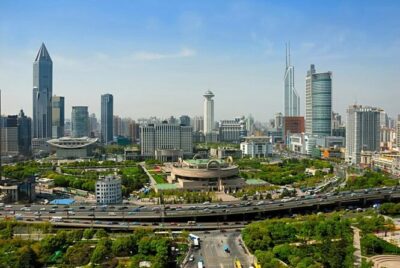
Authentic Local Food Tour in Central Shanghai
Read our review →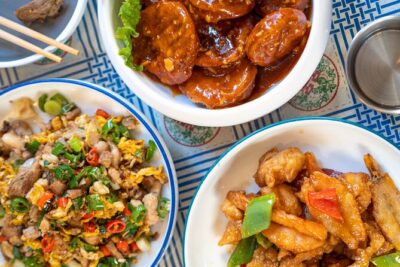
Beijing Hutong Walking Food and Beer Tour at Hidden Restaurants
Read our review →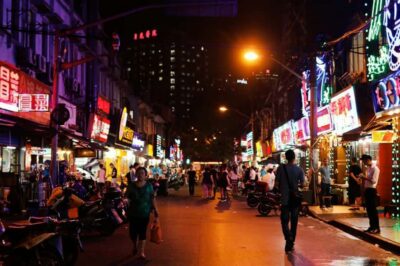
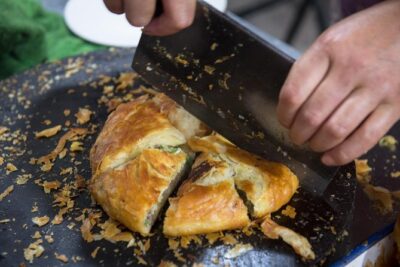
Eat Like a Local Through Shanghai’s French Concession
Read our review →
Hong Kong’s Tin Hau Hidden Eats Food Tour with 7+ Local Tastings
Read our review →Browse the lists this tour appears in